
Last Updated: August 10, 2026 | Reviewed by Content Editorial Team
Living comfortably in Irving, Texas typically requires a budget of about $1,600 to $2,400 per month for a single individual, or $4,200 to $5,800 per month for a family of four, depending on your choice of neighborhood and lifestyle. While the average rent for a standard 716 sq ft apartment sits near $1,316 per month—approximately 19% below the U.S. national average—total living costs expand when accounting for electric utilities, internet, groceries, and transportation. This comprehensive guide breaks down neighborhood rental rates, essential utility costs, required income thresholds, and practical budgeting strategies to help you navigate moving to or living in Irving.
Direct Answer: What is the Cost of Living in Irving, TX?
The overall cost of living in Irving, TX is approximately 1% below the national average. The average rent in Irving is ~$1,316/month for a 1-bedroom apartment and ~$1,697/month for a 2-bedroom. To live comfortably as a single resident, you need roughly $1,600–$2,400 per month ($52,600+ gross annual income), balancing higher-than-average summer electricity bills (+13%) with significant savings on transit, fuel, and Texas’s 0% state income tax.
At a Glance: Estimated Monthly Living Cost Breakdown in Irving, TX
| Expense Category | Single Adult Budget | Family of 4 Budget | vs. National Average |
|---|---|---|---|
| Housing (Rent / Mortgage) | $1,294 – $1,316 | $2,086 – $2,600 | 12% to 19% Lower |
| Utilities & Energy | $284 – $350 | $450 – $600 | 13% Higher |
| Groceries & Food | $350 – $420 | $950 – $1,200 | 2% Lower |
| Transportation & Gas | $180 – $260 | $450 – $650 | 11% Lower |
| Healthcare & Insurance | $150 – $220 | $500 – $750 | 1% Higher |
| Estimated Total Monthly | $2,258 – $2,566 | $4,436 – $5,800 | ~1% Lower Overall |
Key Takeaways
- Rent Baseline: Studio apartments average $1,294/mo, one-bedrooms $1,316/mo, two-bedrooms $1,697/mo, and three-bedrooms $2,086/mo.
- Neighborhood Price Gap: Affordable areas like Garden Oaks average $1,268/mo, whereas master-planned communities like Las Colinas reach median rents of $2,091/mo.
- Utility Budgeting: Expect to spend $325–$570 monthly on utilities, phone, internet, and insurance due to electric rates running ~13% above national averages during summer heat waves.
- Transportation Advantage: Transit and gas costs run 11% below national averages, enhanced by direct DART rail connections to DFW Airport and Downtown Dallas.
- Recommended Salary: Following the 30% rule, you should earn at least $4,386 per month ($52,632 annually) to comfortably afford the average Irving apartment.
Overview of Irving’s Rental Market

Irving’s rental market offers strong value within the Dallas-Fort Worth metroplex. Renters enjoy rates noticeably below the national norm while maintaining direct access to major job centers, corporate headquarters, and transportation hubs.
Average apartment rent in Irving sits at roughly $1,316 per month for a typical 716 sq ft unit—about 19% below the national average of $1,629.
Broad inventory across the city allows renters to target options ranging from entry-level studios to luxury high-rises. Year-over-year rent adjustments have remained modest, providing predictability for household budgeting.
Unit size drives significant price differentials across the market:
- Studio Apartments: ~$1,294 / month
- 1-Bedroom Apartments: ~$1,316 / month
- 2-Bedroom Apartments: ~$1,697 / month
- 3-Bedroom Apartments: ~$2,086+ / month
If minimizing housing expenses is your top goal, budget-friendly neighborhoods such as Las Brisas Hills, Hardrock Estates, and Mandalay Place offer lower price points. Conversely, master-planned developments such as Fairway Vista, Urban Center Irving, and La Villita command premium rates.
Current Average Rent and Market Trends

At an average of $1,316 per month for a 716 sq ft apartment, rental rates in Irving have demonstrated long-term stability. While broader inflationary pressures affect consumer goods, rental growth in Irving has remained gentle, tracking around 0.7% year-over-year.
Average Rent Trend
Citywide rental averages fluctuate depending on seasonal demand and localized inventory additions. According to census data tracked by the U.S. Census Bureau QuickFacts, median gross rent across all occupied housing units in Irving sits near $1,619 per month, reflecting a mix of older single-family homes, townhomes, and multi-family complexes.
Unit-Size Price Gaps
Understanding unit-size price gaps is essential when evaluating space versus cost. Moving from a studio or 1-bedroom to a 2-bedroom unit introduces a price jump of nearly $380 per month, while expanding to a 3-bedroom unit adds another $390+ monthly premium.
Note: Single-family house rentals in Irving run significantly higher than standard apartments, typically averaging between $2,350 and $2,800 per month depending on square footage, garage space, and private yard amenities.
Rent by Property Type: Studios, Apartments, and Houses

Choosing between an apartment and a detached home impact your overall housing budget. Apartments offer shared amenities and lower baseline rent, whereas single-family houses provide private outdoor spaces, driveways, and larger floor plans at a higher cost.
At a Glance: Property Type Cost Comparison
| Studio Apartment | $1,250 – $1,300 / mo (~500–600 sq ft) |
| 1-Bedroom Apartment | $1,300 – $1,400 / mo (~700–750 sq ft) |
| 2-Bedroom Apartment | $1,650 – $1,800 / mo (~1,000–1,100 sq ft) |
| 3-Bedroom Single-Family Home | $2,400 – $2,800 / mo (~1,500–2,000 sq ft) |
Neighborhood Rent Guide: Commute, Lifestyle, and Pricing Profiles
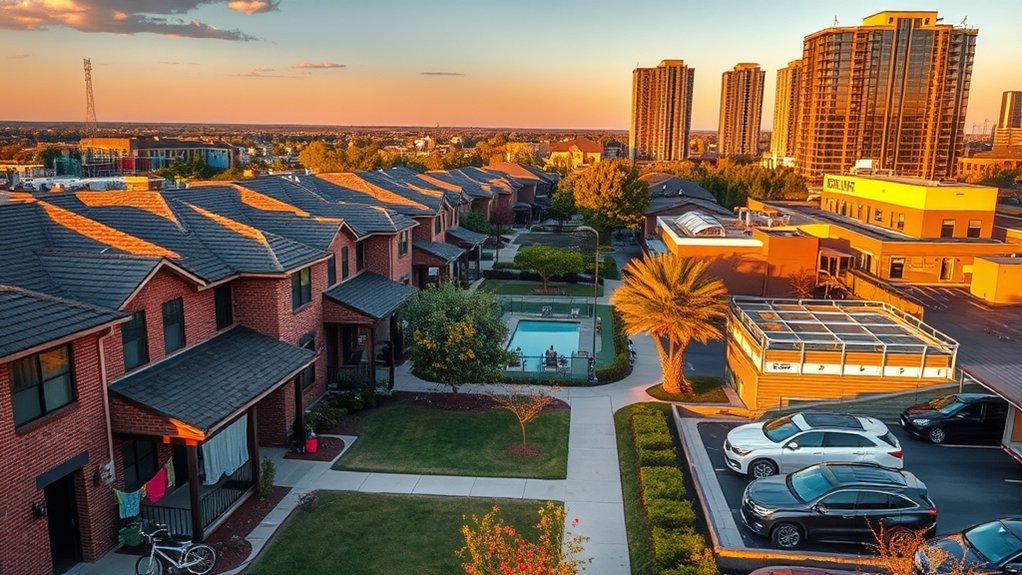
Location within Irving heavily determines your monthly housing commitment. The city is geographically and economically split between the upscale, master-planned developments in North Irving and the older, more budget-friendly communities in South and Central Irving.
1. North Irving & Las Colinas (Upscale / Business District)
Average Rent: $1,800 – $2,200+/month
Best For: Corporate professionals, luxury apartment seekers, transit commuters.
Commute & Access: Immediate access to SH-114, John W. Carpenter Freeway, and DART Orange Line. Home to Toyota Music Factory, Lake Carolyn, and Fortune 500 corporate hubs.
2. Valley Ranch & Hackberry Creek Periphery (Mid-Range Suburban)
Average Rent: $1,350 – $1,650/month
Best For: Families, hybrid workers, quiet residential living.
Commute & Access: Positioned near I-635 (LBJ Freeway) and President George Bush Turnpike (PGBT). Offers canal walking paths, master-planned parks, and suburban shopping plazas.
3. Garden Oaks & South/Central Irving (Budget-Friendly)
Average Rent: $1,200 – $1,300/month
Best For: Entry-level budgets, airport workers, value seekers.
Commute & Access: Fast access to Airport Freeway (SH-183) and I-30. Features older garden-style complexes with lower baseline rents, situated minutes from DFW Airport’s southern entrances.
Monthly Essentials: Utilities, Internet, and Texas Power Grid Survival

Rent is only one portion of your total shelter expense. Monthly utilities, internet connection, cell phone service, and mandatory renters insurance add between $325 and $570 to your living costs.
Pro Tip (Texas Electric Deregulation): Texas operates on a deregulated electricity market managed by ERCOT. Residents in Irving must choose a Retail Electric Provider (REP). Always compare fixed-rate contracts on Power to Choose before moving to lock in a consistent kWh rate before summer peak demand (July–September).
According to data compiled by Payscale’s Cost of Living Index, energy bills in Irving run roughly 13% above the national average due to summer air-conditioning demands. Typical monthly essential breakdowns include:
- Electricity & Gas: ~$239 / month (Can surge to $300+ in July/August)
- Water, Sewer & Trash (City of Irving): ~$45 – $70 / month
- High-Speed Internet (300+ Mbps): ~$50 – $80 / month
- Mobile Phone Plan: ~$100 – $225 / month (depending on lines)
- Renters Insurance: ~$10 – $25 / month
Texas Tax Advantages and Local Sales Tax Considerations
One of the primary financial attractions of moving to Irving, Texas is the state’s tax structure. Understanding how state and local taxes impact your paycheck is essential for accurate budget planning.
- 0% State Income Tax: Texas imposes no personal state income tax. Compared to states like California (up to 13.3%) or New York (up to 10.9%), a worker earning $60,000 saves between $3,000 and $5,000 annually in take-home pay.
- 8.25% Combined Sales Tax: Irving collects an 8.25% combined sales tax (6.25% Texas State + 1.0% City of Irving + 1.0% DART transit tax). Groceries and prescription drugs are exempt from general sales tax.
- Property Tax Indirect Effect: While renters do not pay direct property tax, Dallas County’s relatively high effective property tax rates (often 2.0%–2.4%) are factored into landlord overhead and rental baseline pricing.
Grocery, Food, and Healthcare Expenses in Irving

Grocery Price Breakdown
Grocery prices in Irving track closely with national benchmarks, sitting approximately 2% below the U.S. average. A single resident can expect to spend between $350 and $420 per month on home-cooked groceries, shopping at major regional chains like H-E-B, Kroger, Tom Thumb, or Aldi.
Typical staple costs at local supermarkets include:
- Loaf of Fresh Bread: ~$4.03
- Gallon of Whole Milk: ~$4.67
- Carton of Eggs (12 ct): ~$4.61
- Fresh Bananas (1 lb): ~$0.76
- Fast Food Combo / Burger: ~$5.70
Healthcare Costs Overview
Healthcare costs in Irving sit approximately 1% above national averages. Out-of-pocket medical expenses for routine care average:
- Doctor Visit: ~$156
- Dentist Checkup: ~$125
- Optometrist Exam: ~$142
- Prescription Medication: ~$23
- Veterinary Visit: ~$75
Transportation and Commuting Costs
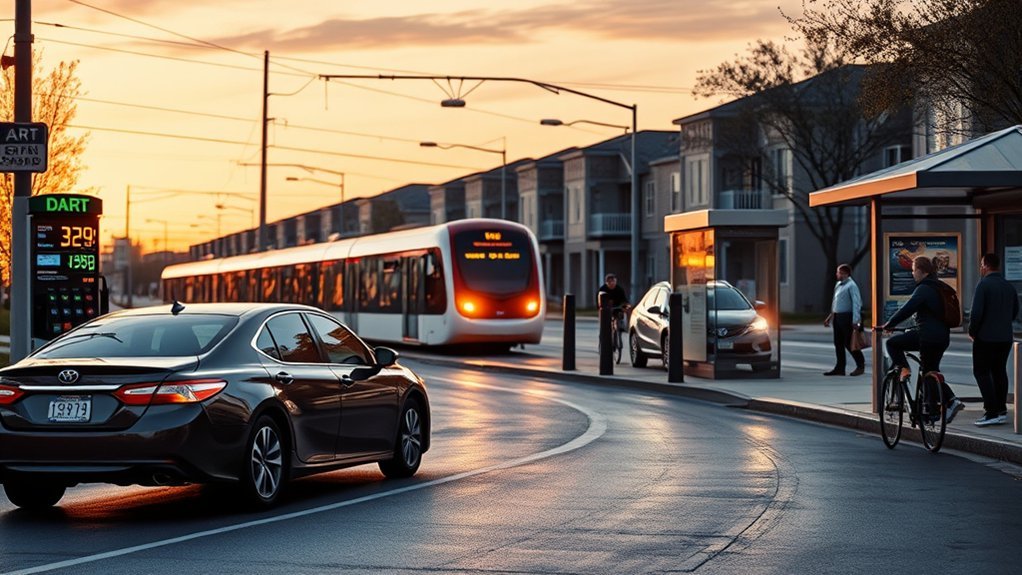
Transportation expenses in Irving offer genuine relief compared to major coastal metros, running about 11% below the national average according to regional price indexes from the U.S. Bureau of Labor Statistics.
Irving benefits from central positioning in the DFW metroplex, served by Dallas Area Rapid Transit (DART) light rail lines (Orange Line) connecting directly to DFW International Airport and Downtown Dallas. A local DART monthly pass runs ~$96. Gas prices typically sit comfortably below national averages at ~$2.71 per gallon.
Suggested Income and Budgeting for Irving Renters
Financial advisors widely recommend applying the standard 30% rule, which dictates that your gross monthly income should equal at least three times your monthly rent.
Warning: Failing to account for peak summer energy bills can strain tight budgets. Always budget an extra $100–$150 per month between June and September for air conditioning costs.
To comfortably afford average rents in Irving, aim for the following income targets:
- 1-Bed Apartment ($1,316/mo rent): Minimum gross income of $4,386 / month ($52,632 / year).
- 2-Bed Apartment ($1,697/mo rent): Minimum gross income of $5,656 / month ($67,872 / year).
- Single-Family Home ($2,500/mo rent): Minimum gross income of $8,333 / month ($100,000 / year).
Factors That Drive Rent and Cost-of-Living in Irving

Housing Supply and Demand
Irving acts as a major corporate hub, hosting corporate headquarters in Las Colinas. Strong job growth creates steady housing demand, though ongoing multi-family construction helps keep rent growth controlled.
Local Wage Levels
According to census metrics, median household income in Irving sits around $81,830 per year. Strong earning power across local corporate, tech, healthcare, and logistics sectors supports local rental rates.
Amenities and Location Premiums
Walkable urban centers, golf courses, resort-style pools, and luxury complexes command significant premiums. Units near Lake Carolyn or the Toyota Music Factory in Las Colinas carry noticeable location surcharges over older garden-style complexes in South Irving.
Frequently Asked Questions
What is the overall cost of living in Irving, TX?
The overall cost of living in Irving, TX is balanced—sitting approximately 1% below national averages. While housing expenses run roughly 12% to 19% below national averages, utility costs run about 13% higher due to intense summer cooling demands.
What is the average cost of living per month in Texas?
Average monthly living expenses in Texas range from $3,000 to $4,500 for a single adult, covering rent, utilities, food, transport, and personal expenses. Texas’s lack of a state income tax helps stretch disposable income further.
How much should rent cost per month in Irving?
Rent should ideally consume no more than 30% of your gross monthly income. For an average $1,316 1-bedroom apartment in Irving, a recommended gross monthly income is approximately $4,386 ($52,632 per year).
Is Irving, TX a good place to live?
Yes, Irving is widely considered a convenient and livable city. It features diverse neighborhoods, strong corporate job opportunities, central access between Dallas and Fort Worth, direct DART light rail transit, and proximity to DFW International Airport.
Conclusion
Irving offers an attractive balance of affordable housing, strong job opportunities, and central accessibility within the DFW metroplex. By budgeting $1,600 to $2,400 monthly for total personal expenses—and keeping electricity rate seasonality in mind—you can comfortably settle into one of Texas’s most dynamic corporate and suburban communities.
Sources
- U.S. Census Bureau QuickFacts — Housing statistics, median gross rent, and household income for Irving, TX.
- U.S. Bureau of Labor Statistics — Dallas-Plano-Irving economic indicators, CPI trends, and employment metrics.
- Payscale Cost of Living Calculator — Regional price indices for energy, groceries, healthcare, and transportation in Irving, TX.
- Dallas Area Rapid Transit (DART) — Public transit fares, Orange Line routes, and regional rail connectivity.