
What’s in This Article
- Istanbul at a Glance: Key Cost of Living Figures and Comparisons
- Typical Monthly Budgets: Single, Couple and Family Breakdowns
- Housing and Utilities: Rents, Buying Prices and Neighbourhood Differences
- Food, Groceries and Eating Out: Market Prices and Dining Costs
- Transportation, Services and Leisure: Monthly Expenses and Memberships
- Salaries, Childcare and Education Costs for Residents and Expats
- Frequently Asked Questions
- Conclusion
Istanbul can feel affordable at first, but rent, school fees, and daily bills can change your budget fast. You may need about ₺28,500 net per month to match average local income, but many renters need much more for central housing. A one-bed city-centre flat averages about ₺38,800, while three-bedroom homes can reach about ₺70,600. Use this guide to compare rent, food, transport, utilities, childcare, and school costs before you plan your move.
Quick Answer
A single person in Istanbul should plan for rent plus about ₺10,000–₺20,000 in monthly living costs, depending on lifestyle. Central rent often costs more than the average local net salary, so neighborhood choice matters. Families need a much larger budget because childcare and international school fees can exceed housing costs.
Key Takeaways
- Rent creates the biggest cost gap between central and outer Istanbul neighborhoods.
- Average local net income may not cover a central one-bedroom apartment alone.
- Groceries, transport, utilities, and internet can add several thousand lira each month.
- Private childcare and international schools can dominate family budgets.
- Living outside the center can lower rent, but commute time and transport costs still matter.
Istanbul at a Glance: Key Cost of Living Figures and Comparisons

Istanbul’s cost-of-living index of 38.8 sits only slightly above the Turkish average of 37.4. Still, you’ll see a sharp split between housing and other expenses. Rent has a lower index of 19.3, but central apartments still feel costly against local wages.
A city-centre one-bedroom apartment averages about 38,778 TL, with a common range of 25,000–60,000 TL. Outside the centre, one-bedroom rents average about 25,180 TL, with many listings between 20,000 and 40,000 TL.
The average monthly net salary after tax is about 28,486.66 TL. That means rent and utilities often shape your whole budget, especially if you live alone.
Cost databases often list non-rent monthly costs at about 740.1 USD for one person and 2,701.0 USD for a family of four. Converted to lira, those numbers can shift with exchange rates, so use them as estimates rather than fixed local prices.
Basic utilities for a 915 sq ft apartment average about 2,809.52 TL. Internet with 60 Mbps or faster service averages about 591.09 TL, and a monthly public transport pass can cost about 2,120 TL.
Compared with Dallas, Istanbul may cost about 39.7% less overall, with rents about 56.9% lower. That comparison helps expats, but local buying power still depends on salary, rent, and currency changes.
Typical Monthly Budgets: Single, Couple and Family Breakdowns

To plan your Istanbul budget, start with rent, then add food, transport, utilities, and personal costs. A single person spends less than a couple or family, but rent can still take most income.
Use the main benchmarks as planning ranges. Single non-rent costs may sit around 740.1 USD equivalent, while a couple’s mid-range household spending may reach 1,500–2,000 USD equivalent. A family of four may spend about 2,701 USD equivalent before rent and school costs.
Pay close attention to rent ranges, because they create the largest budget swing. A city-centre one-bedroom can range from 25,000 to 60,000 TL, while a 3-bed city-centre flat averages about 70,557 TL. Understanding construction costs in other regions can also help you compare housing markets when planning a move.
Single Person Essentials
For one person, the baseline budget should cover groceries, transport, utilities, internet, and a small dining budget. Rent sits outside this baseline and usually creates the largest cost.
If you rent an apartment, a one-bedroom in the city centre can cost more than the average local net salary. Living outside the centre can reduce rent by about 35–40% in many cases.
Utilities for a 915 sq ft unit average about 2,809.52 TL. Internet costs about 591.09 TL, which matters if you work from home.
A transport pass can cost about 2,120 TL per month. Occasional dining also adds up, since an inexpensive meal may cost about 350 TL.
Couple Shared Expenses
Couples can reduce some costs by sharing rent, utilities, and internet. Non-rent spending often falls between single and family levels, depending on meals, leisure, and commute habits.
You’ll usually split food, personal items, utilities, internet, and discretionary costs. If both people commute daily, two monthly transport passes can add a large line item.
Rent still dominates. Many couples choose an outer district or a 2-bed outside centre to get more space for less money.
Shared utilities plus internet may range from about 2,327 to 3,400 TL in common examples. If both people use public transport, gyms, and restaurants, plan several thousand more lira each month.
Family Monthly Breakdown
Families face higher total costs, but the largest drivers are easy to spot. Rent, food, childcare, and school fees shape most family budgets.
For a family of four, non-rent costs may reach about 2,701 USD equivalent, or about 112,353.9 TL depending on exchange rates. A 3-bedroom city-centre apartment averages about 70,557.43 TL, so housing dominates family monthly expenses.
With an average monthly net salary near 28,486.66 TL, many families need two incomes or employer support. Childcare and school costs can make the gap much wider.
Private preschool may average about 43,883.08 TL per month. International school fees can approach 778,867.16 TL per year, so you should model education before choosing a neighborhood.
Note: Cost-of-living estimates can change quickly with inflation and exchange rates, so treat each number as a planning range.
Housing and Utilities: Rents, Buying Prices and Neighbourhood Differences

Neighbourhood choice drives both upfront costs and monthly bills in Istanbul. A central 1-bedroom averages about ₺38,778 per month, with common prices from ₺25,000 to ₺60,000.
Outside the centre, a one-bedroom averages about ₺25,180, with many rentals from ₺20,000 to ₺40,000. Three-bedrooms average about ₺70,557 in central areas and about ₺43,496 outside the centre.
District-level rent estimates vary widely. Beşiktaş often sits near ₺6,000–₺7,500 per m², Şişli near ₺5,500–₺6,500, Kadıköy near ₺5,000–₺6,000, and Beyoğlu near ₺4,500–₺5,500.
You should compare Istanbul rent per month with purchase prices per square meter. Central purchase prices average about ₺10,412/m², while outer areas may average about ₺5,377/m².
Buying also brings transaction costs, which may add about 4–6%. Investors should compare those costs with rental yields before buying.
Central areas may offer 5–7% net rental yields, while emerging districts may offer 8–11% gross yields. Monthly utilities also affect investor cash flow and resident budgets.
Food, Groceries and Eating Out: Market Prices and Dining Costs

Food and dining costs in Istanbul can feel moderate, but they vary by venue, district, and season. An inexpensive restaurant meal averages about 350 TL, with common prices from 200 to 500 TL.
Food and dining in Istanbul vary by venue, neighbourhood and seasonal supply.
A mid-range three-course dinner for two averages about 1,500 TL, with a broad range from 900 to 3,500 TL. A McMeal at McDonald’s costs about 250 TL in many examples.
For groceries, check unit prices before you build your weekly budget. Milk can cost about 140 TL per gallon, bread about 24–27 TL per pound, and chicken fillets about 90–119 TL per pound.
Bottled water in a 1.5 L size may cost about 23–24 TL. Draft beer can range from about 194 to 350 TL, while a mid-range bottle of wine may cost about 500 TL.
A typical monthly grocery budget for one person may run about US$150–US$250, or roughly ₺6,000–₺11,000 depending on exchange rates and shopping habits. A family of four may spend about US$300–US$450, but imported goods and specialty diets can raise that total. Regular maintenance and preventative measures can also help you plan for unexpected household costs beyond food.
Use these benchmarks to compare food, groceries, and eating out across neighborhoods. Local markets can help you spend less than tourist-heavy restaurants.
Transportation, Services and Leisure: Monthly Expenses and Memberships
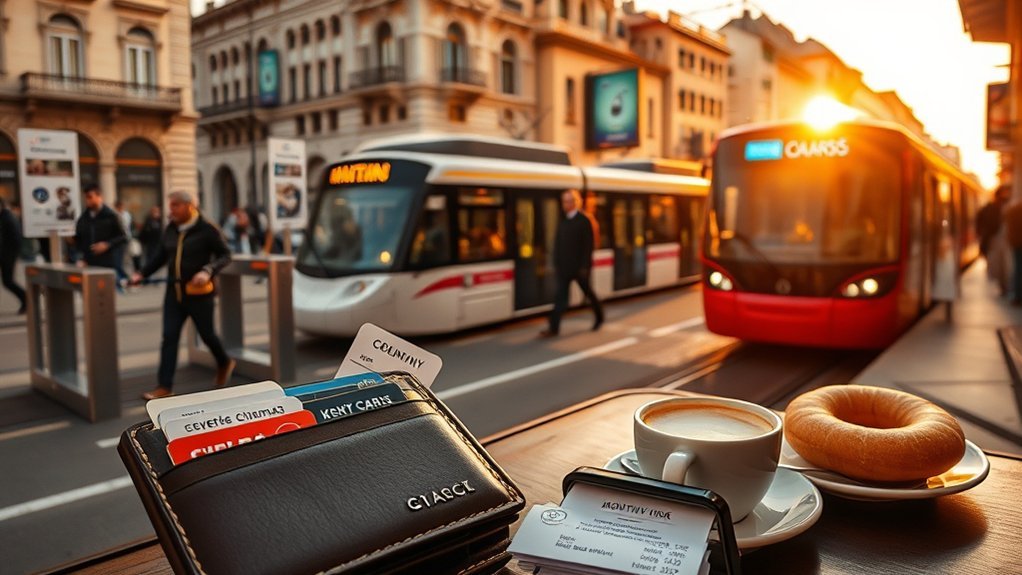
Regular transport, phone service, utilities, and leisure memberships can add several thousand lira to your monthly budget. A monthly public transport pass may cost about 1,389–2,120 TL, while one-way fares often sit near 20–30 TL.
Mobile plans with 10 GB or more average about 471 TL, with many plans from 300 to 800 TL. Home internet with 60 Mbps or faster unlimited service often costs about 427–591 TL.
You should choose a monthly pass if you commute often. If you travel only a few days per week, one-way tickets may cost less.
A mobile phone plan near 470.70 TL gives you a more predictable cost than prepaid top-ups. Home internet at 427–591 TL supports work, streaming, and online school needs.
Basic utilities may cost about 1,911–2,810 TL for an 85 m² apartment. A central gym membership may add about 1,541–2,499 TL. You can also compare long-term savings from home fitness equipment when you review your fitness budget.
Add these items to rent before you choose a district. A cheaper apartment can still cost more overall if it creates a long or costly commute.
Pro tip: Price your commute before signing a lease, because transport time can reduce the value of cheaper rent.
Salaries, Childcare and Education Costs for Residents and Expats

The average monthly net salary in Istanbul is about ₺28,487. Use that number as a basic benchmark for rent, childcare, and daily spending.
Childcare ranges from about ₺19,759 to ₺43,883 per month for private full-day preschools. Premium international preschools can exceed ₺83,333 per month.
International primary school tuition often falls between ₺451,311 and ₺778,867 per year. Top schools can charge up to about ₺1,440,000 per year.
These education and childcare costs can reshape household budgets. A family of four may face monthly non-rent costs near ₺112,354, and schooling can push total costs far higher. Understanding cost considerations related to housing and education can help families plan before moving to Istanbul.
Average Net Salaries
Salaries in Istanbul average about 28,486.66 TL net per month after tax. Many households, especially expat families and higher-paid local families, still see childcare and schooling reduce disposable income.
Salaries in Istanbul vary by sector, role, and experience. The average monthly net salary can hide a wide gap between young professionals and senior employees.
For planning, compare monthly income after tax with rent, utilities, education, and transport. Employer school support can also change the real value of an expat salary package.
- Compare average net wages to private preschool and international school costs.
- Model cases where education consumes 30–50% of net income.
- Factor employer school support into total compensation.
Childcare and Preschool
Childcare and preschool costs in Istanbul vary by curriculum, location, and provider. For many families, these fees can equal or exceed a large share of net income.
Local private preschool tuition may range from about 12,000 TL to 83,333 TL per month. Typical private full-day preschool costs average about 19,758.89–43,883.08 TL.
Compare those costs with the average net salary of about 28,486.66 TL. Waiting lists are common, so you should apply 6–12 months ahead and include enrollment fees in your budget.
Expat childcare often depends on employer school subsidies. Without support, out-of-pocket private preschool fees can strain even strong household budgets.
| Item | Typical range |
|---|---|
| Local private preschool | 12,000–83,333 TL/month |
| Private full-day average | 19,758.89–43,883.08 TL/month |
International School Fees
International school fees can quickly exceed typical local earnings. Annual international primary tuition averages about ₺778,867, with a common range from ₺400,000 to ₺1,440,000.
Private full-day preschool averages about ₺43,883 per month, with many fees from ₺25,000 to ₺83,333. Compare those fees with the average monthly net salary of about ₺28,487 before you choose a school.
Many expat families receive an education allowance or schooling allowance in relocation packages. You should negotiate this support before accepting a move.
- International school fees: plan for high variability by school and curriculum.
- Education allowance: negotiate support before relocation.
- Tuition costs: budget per child by month and by year.
Warning: School fees, deposits, and enrollment charges can change your first-year budget much more than rent alone.
How to Build a Realistic Istanbul Budget
Start with the district where you expect to live, then price rent for your household size. After that, add utilities, internet, transport, groceries, and school or childcare costs.
Build three versions of your budget: low, middle, and high. This helps you see how much your costs change if rent, currency rates, or school fees rise.
You should also keep a setup fund for deposits, furniture, moving costs, and agency fees. These first-month costs can be much higher than your regular monthly budget.
Frequently Asked Questions
What Is a Good Salary to Live in Istanbul?
A good salary depends on your rent, district, and family size. A single person may need about 40,000–70,000 TL net for a more comfortable lifestyle, while families with private school costs may need much more.
What Is the Average Rent in Istanbul?
A city-centre one-bedroom averages about 38,778 TL per month. Outside the centre, similar flats may average about 25,180 TL, though size, building age, transit access, and furnishing can change the price.
Is $1000 Dollars Enough in Turkey?
$1,000 may cover a modest lifestyle in some Turkish cities, but it usually won’t cover central Istanbul rent and normal expenses comfortably. You’ll need a strict budget, local shopping habits, and a lower-cost district.
What Is the Average Salary in Istanbul in US Dollars?
The average Istanbul salary may convert to roughly $850–1,000 per month, depending on the exchange rate. Currency changes, taxes, job sector, and remote income can change your real spending power.
Is Istanbul Cheaper Than Other Major Cities?
Istanbul can be cheaper than many large U.S. or Western European cities, especially for rent and public transport. Local salaries are also lower, so affordability depends on whether you earn in lira or foreign currency.
Conclusion
Istanbul’s most important cost lesson is simple: rent and school fees decide your real budget. You can lower monthly costs by choosing an outer district, using public transport, and shopping at local markets.
Before you move, build a budget with rent, utilities, groceries, transport, childcare, and a setup fund. Then compare that total with your actual monthly income, not just the city average.
With careful neighborhood choices and clear cost limits, you can balance Istanbul’s quality of life with a budget that works.