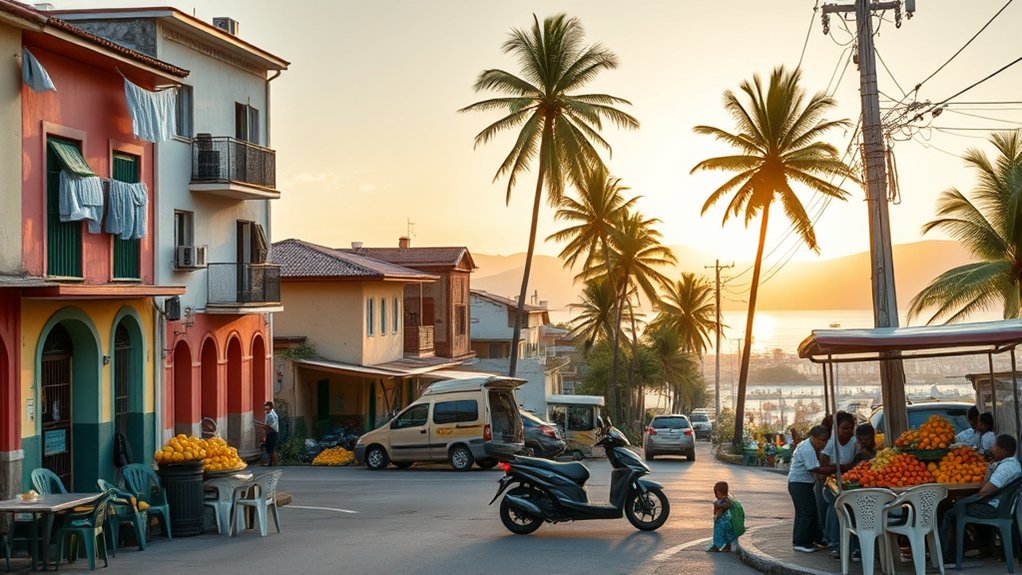
The cost of living in São Tomé and Príncipe in 2026 runs about STN 18,600–26,600 (~$850–$1,215) a month for a single person, about STN 37,700 (~$1,720) for a couple, and about STN 50,600 (~$2,310) for a family of four before school fees. These figures use about STN 21.9 per US dollar, the Banco Central de São Tomé e Príncipe rate in early October 2026. Local fish, fruit, and shared taxis are cheap. Imported food, internet, backup power, and medical evacuation cover are not. Price data for this small island nation (often written Sao Tome and Principe) is thin, so treat every number below as a planning benchmark. You’ll find rents, utilities, food, fuel, healthcare, taxes, visas, and sample budgets.
Quick Answer
- Single person: STN 18,600 (~$850) on a lean budget outside the center; STN 26,600 (~$1,215) for a comfortable life in central São Tomé.
- Couple: about STN 37,700 (~$1,720) a month in a central one-bedroom.
- Family of four: about STN 50,600 (~$2,310) before school fees; about STN 58,900 (~$2,690) with two children in a fee-paying school.
- Rent, one-bedroom: about STN 4,400 (~$200) outside the center and STN 6,400 (~$295) in central São Tomé city.
- Utilities and internet: about STN 5,150 (~$235) for an 85 m² apartment with air conditioning; broadband adds about STN 1,500 (~$70).
- Fuel: gasoline STN 31 per liter (~$1.42) since April 2026.
- Inflation: 9.7% year on year in June 2026, driven mostly by food.
Exchange Rate, Inflation, and Wages in 2026

Three numbers shape what São Tomé and Príncipe costs you this year.
The exchange rate. The dobra (STN) is pegged to the euro at STN 24.5 per euro. On October 7, 2026, the Banco Central de São Tomé e Príncipe quoted the US dollar at STN 21.74 to buy and STN 22.07 to sell. This guide uses a midpoint of about STN 21.9. Because of the peg, your dollar budget moves with the euro. The European Central Bank reference rate was about $1.12 per euro in early October 2026, down from about $1.14 in late September.
Inflation. The national statistics office (INE) reported annual inflation of 9.7% in June 2026 for São Tomé city, down from 10.5% a year earlier. Food and non-alcoholic drinks accounted for 8.2 points of that rate. Vegetables such as green beans, cabbage, and carrots jumped more than 14% in a single month. The World Bank says inflation fell to a four-year low of 8.6% in April 2026 before rising again after fuel price changes. It also projects growth of only 0.4% in 2026 because of power outages.
Wages. In October 2025 the government approved raising the lowest public-sector pay to STN 3,000 (~$137) a month. That is a STN 1,600 legal minimum plus a STN 1,400 salary complement, up from STN 2,500 in total. Crowd-sourced averages put the typical net salary in São Tomé city at about STN 5,900 (~$270) a month. Many local households live on far less than the budgets in this guide.
| Indicator | Value | Date / Source |
|---|---|---|
| Exchange rate | STN 24.5 per euro; about STN 21.9 per US dollar | October 2026, central bank |
| Annual inflation (São Tomé city) | 9.7% | June 2026, INE |
| Lowest public-sector pay | STN 3,000 (~$137) a month | Approved October 2025 |
| Average net salary | about STN 5,900 (~$270) | Crowd-sourced, 2026 |
| Gasoline / diesel | STN 31 / STN 30 per liter | April 2026, government |
| Standard VAT rate | 15% | Since June 1, 2023 |
At STN 21.9 per dollar, a single person’s lean budget of STN 18,600 is more than three times the average local net salary.
Rent and Housing
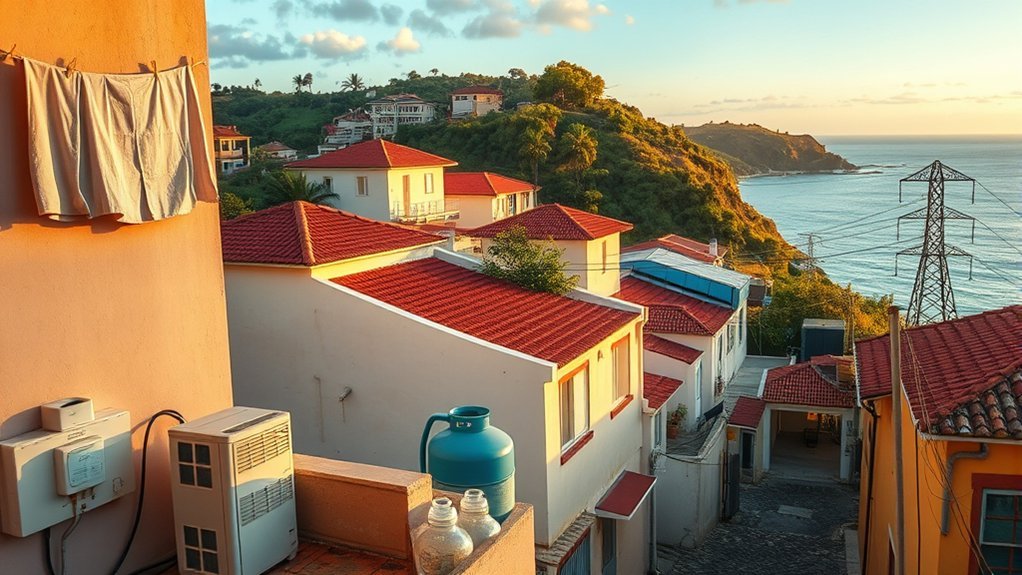
Almost all rental data comes from São Tomé city, where most foreigners live. The figures below are crowd-sourced averages last updated in July 2026. Only six people contributed prices over the past 12 months, so one or two new reports can move them a lot.
| Home Type | City Center (STN) | Outside Center (STN) | Approx. USD |
|---|---|---|---|
| 1-bedroom apartment | 6,440 | 4,410 | $295 / $200 |
| 3-bedroom apartment | 21,020 | 10,000 | $960 / $455 |
| Purchase price per m² | about 41,300 | about 25,800 | $1,885 / $1,180 |
The three-bedroom figure in the center is the least reliable number in this guide. Large furnished homes rented to embassies, NGOs, and oil or aid staff can cost far more, while a simple local house can cost much less. Get a written quote for the exact property.
Where to Live
Price data for towns outside the capital is too thin to list, so this table compares areas on practical cost factors instead.
| Area | What to Expect | Cost Impact |
|---|---|---|
| São Tomé city center | Shops, banks, embassies, best internet and taxi access | Highest rents, lowest transport costs |
| São Tomé outskirts (e.g. Trindade, Guadalupe road) | Quieter, more local housing | Lower rent, more shared-taxi trips |
| Coastal and rural São Tomé (e.g. Neves, Santana) | Fewer services, patchier power and signal | Cheap housing, higher costs for backup power and travel |
| Príncipe (Santo António) | Very small town, limited shops | Few rentals; imported goods and flights add cost |
Before you sign, ask whether the rent includes furniture, water, electricity, security, internet equipment, or a generator. Test the water pressure, phone signal, and outlets during the viewing. Expect to pay at least the first month upfront and confirm any deposit terms in writing.
Utilities, Internet, and Phone
Basic utilities (electricity, water, and garbage) for an 85 m² apartment average about STN 5,160 (~$235) a month in crowd-sourced data. That assumes regular air conditioning. A single person in a small flat who uses fans can spend much less, roughly STN 1,500–2,500 (~$70–$115).
Electricity is the weak point. The state utility EMAE began raising tariffs in January 2025 for the first time since 2007, with a plan to lift prices about 20% by 2030. The World Bank describes power as costly and unreliable, and outages hit the economy hard in 2025. Budget for a UPS, surge protection, or shared generator access if you work online.
| Service | Monthly Cost (STN) | Approx. USD |
|---|---|---|
| Utilities, 85 m² apartment | 5,160 | $235 |
| Utilities, small flat with fans | 1,500–2,500 | $70–$115 |
| Broadband internet (60 Mbps+) | 1,510 | $70 |
| Mobile plan (calls + 10 GB data) | 700 | $32 |
| Bottled water for drinking | varies; about 46 per 1.5 liters | about $2.10 |
Broadband alone costs about a quarter of the average local net salary. Remote workers should keep a mobile data plan as a backup. The US State Department warns that tap water is not safe to drink anywhere in the country, so add bottled or filtered water to your budget.
Food: Groceries and Dining Out
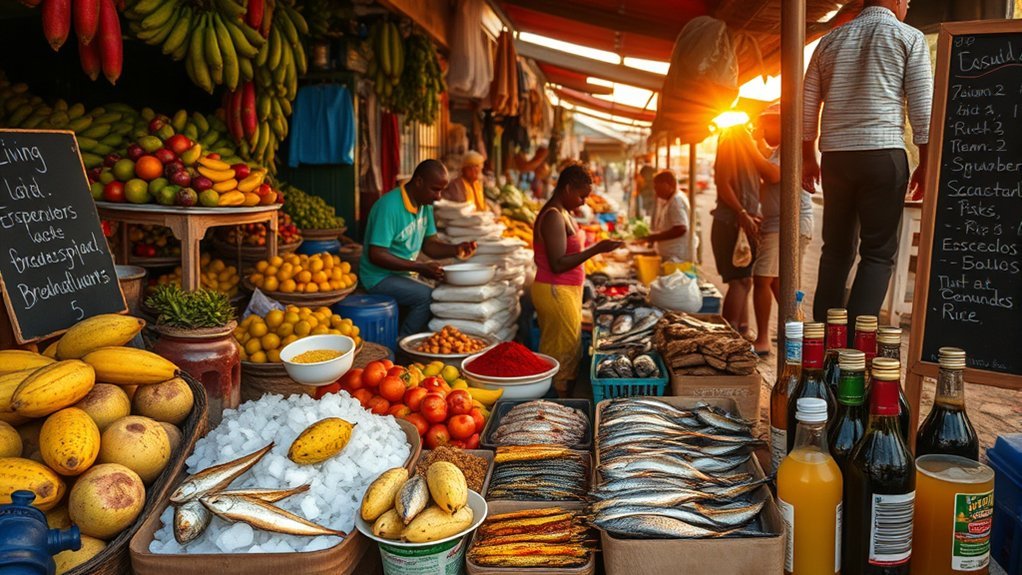
Food is the main driver of inflation in São Tomé and Príncipe, and imported items are where grocery bills climb. A single person who cooks with local fish, rice, bananas, breadfruit, and seasonal produce can spend about STN 5,500 (~$250) a month. Buying imported cheese, meat, and packaged goods pushes that well higher.
Crowd-sourced prices from July 2026:
| Item | Typical Cost (STN) | Approx. USD |
|---|---|---|
| Milk (1 liter) | 35 | $1.60 |
| Fresh bread (1 lb loaf) | 20 | $0.93 |
| Rice (1 kg) | 46 | $2.10 |
| Eggs (12) | 110 | $5.00 |
| Chicken fillets (1 kg) | 440 | $20.20 |
| Beef (1 kg) | 550 | $25.00 |
| Local cheese (1 kg) | 440 | $20.20 |
| Bananas (1 kg) | 40 | $1.80 |
| Tomatoes (1 kg) | 78 | $3.60 |
| Mid-range bottle of wine | 179 | $8.20 |
Meat, eggs, and cheese cost as much as or more than in Europe. Fish bought at the market and local fruit are the cheapest way to eat well.
Eating out:
- Meal at an inexpensive restaurant: about STN 200 (~$9.25)
- Three-course dinner for two at a mid-range restaurant: about STN 1,010 (~$46)
- Fast-food style combo meal: about STN 180 (~$8.15)
- Cappuccino: about STN 51 (~$2.35)
- Local beer (0.5 liter, shop): about STN 35 (~$1.60)
Transportation and Fuel
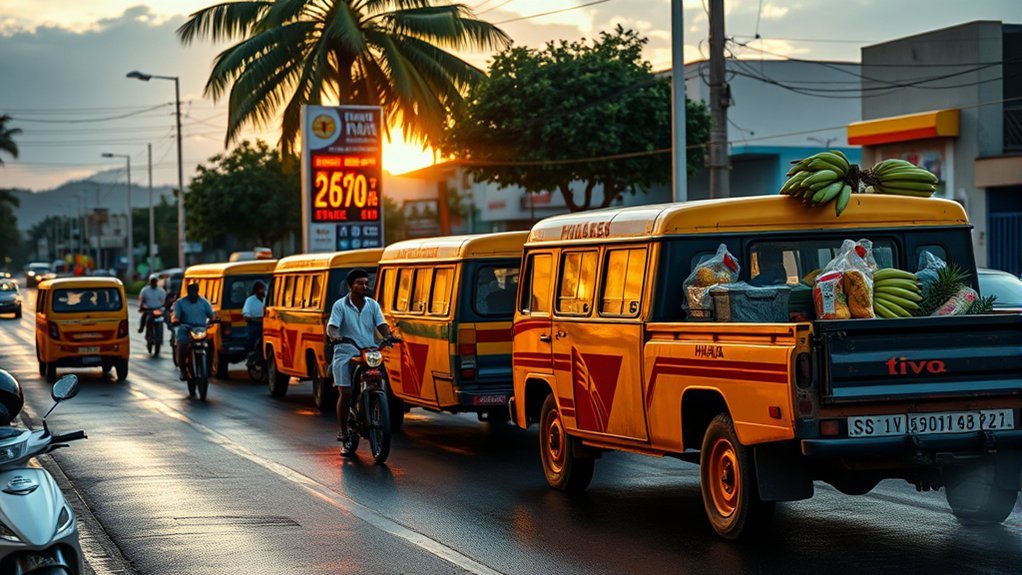
There are no buses, trains, or subways. The US State Department says shared taxis (hiaces) are the only public transport, and the Government of Canada notes that motorcycle taxis (motoqueiros) are also common. Both governments warn about road safety. Agree on the fare before you ride and carry small bills.
Fuel prices are set by the government. They fell four times in 2025, then rose in April 2026 when the government added STN 3 per liter to gasoline and diesel.
| Item | Cost (STN) | Approx. USD |
|---|---|---|
| Gasoline (1 liter) | 31 | $1.42 |
| Diesel (1 liter) | 30 | $1.37 |
| Kerosene (1 liter) | 19 | $0.87 |
| Shared taxi, one way (crowd-sourced) | about 31 | about $1.40 |
| Private taxi, 1 mile (crowd-sourced) | about 94 | about $4.30 |
| New compact car (VW Golf or similar) | about 556,000 | about $25,400 |
No monthly transit pass exists. A commuter taking two shared rides each workday spends about STN 1,000–1,400 (~$45–$65) a month. Owning a car means paying for imported parts, tires, and insurance, and repairs can wait weeks for parts. Getting to Príncipe usually means a domestic flight, so budget separately if you plan to travel between the islands.
Healthcare and Insurance
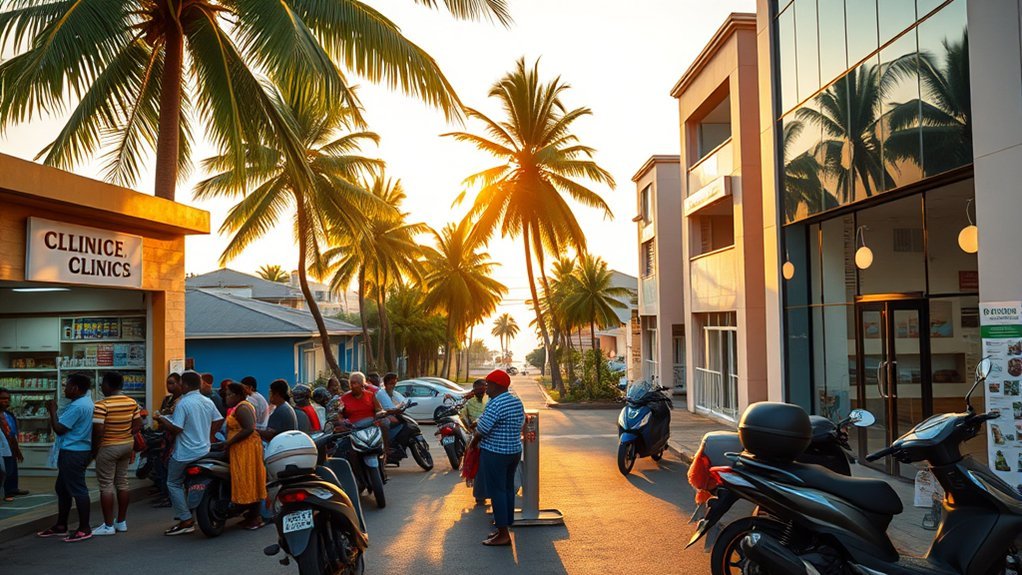
Healthcare is the biggest financial risk of living here. In September 2026 the US State Department lowered its advisory to Level 2 (Exercise increased caution), citing limited medical services. Hospital Central Ayres de Menezes on São Tomé is the only hospital in the country. Most providers want cash upfront, and medicines, including antibiotics, can run short.
The UK government says many conditions need evacuation to Europe, South Africa, Ghana, or Gabon. The Canadian government warns that evacuation is costly and may be delayed, so international health insurance that covers medical evacuation is essential. Premiums depend on age, insurer, and coverage limits; get quotes before you move.
- Routine care: local clinics handle basic illness and vaccinations, usually for cash.
- Medicines: bring a supply of prescription drugs in original packaging with your doctor’s prescription.
- Malaria: it is present, so budget for prevention, repellent, and nets.
- Insurance: check evacuation limits, destination rules, deductibles, and pre-existing condition exclusions.
Schools and Childcare
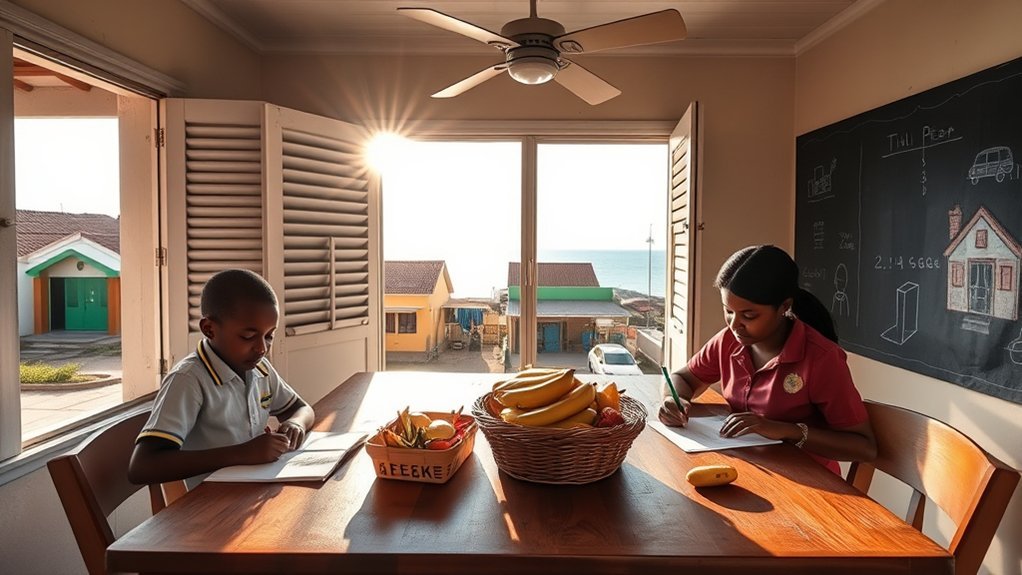
Portuguese is the official language and the language of instruction. The Escola Portuguesa de São Tomé e Príncipe follows the Portuguese national curriculum from primary through secondary school and is the main choice for many foreign families. Ask the school directly for current fees, places, and enrollment rules.
- Private full-day preschool: about STN 5,160 (~$235) a month per child (crowd-sourced).
- International or foreign-curriculum primary school: about STN 49,600 (~$2,265) a year per child (crowd-sourced).
- Extras: uniforms, books, transport, and Portuguese tutoring if your child doesn’t speak the language.
For two children in fee-paying primary school, tuition adds about STN 8,300 (~$380) a month.
Leisure and Entertainment
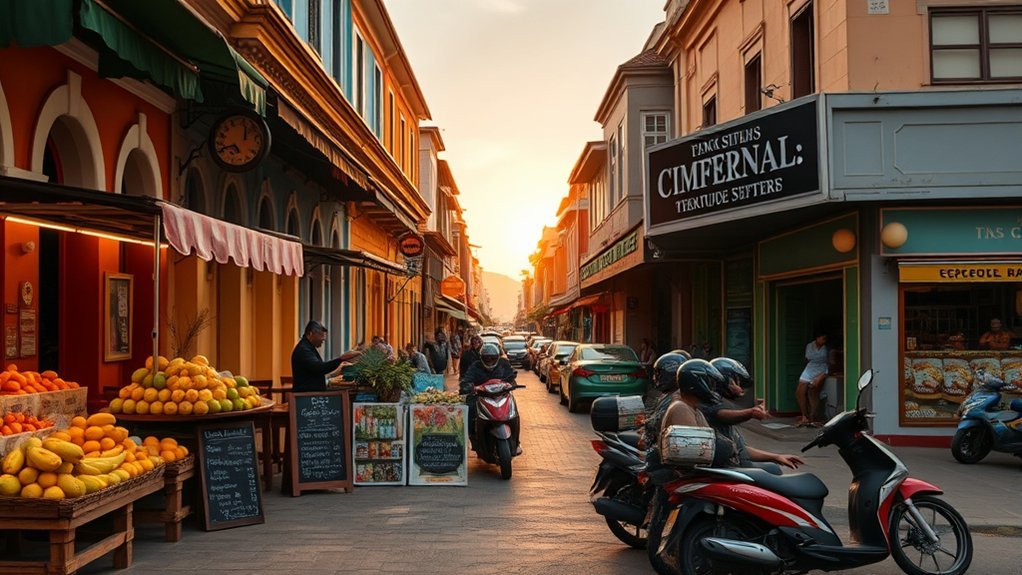
Beaches, hiking in the rainforest, and local cafés keep leisure cheap. Imported drinks, resort dining, and guided tours do not.
- Gym membership: about STN 770 (~$35) a month
- Cinema ticket: about STN 460 (~$21)
- Tennis court, one hour: about STN 570 (~$26)
A leisure allowance of STN 1,500–3,000 (~$70–$135) a month covers occasional meals out, coffee, and a gym.
Taxes: VAT and Income Tax
- VAT (IVA): a VAT code took effect on June 1, 2023, replacing the old consumption tax. The standard rate is 15%, with special rates of 7.5%, 7%, and 2%. It is built into shelf prices.
- Personal income tax (IRS): progressive, with a top rate of 25%. Employers withhold it from salaries.
- Foreign income: if you live here on remote or pension income, ask a local accountant how residency rules apply to you. Your home country’s tax rules still apply too.
Visas and Residence
US and UK citizens can visit for up to 15 days without a visa, according to the US State Department and the UK government. Visitors pay a 20 euro (about STN 490 or $22) entry fee on arrival, payable in dollars or dobras. You must show a passport valid for six months and proof of yellow fever vaccination.
To stay longer, work, or study, apply through the Migration and Borders Service (SMF), which runs the e-visa (eVisaST) and residence visa services. Fees and document lists change, so check the SMF fee page or ask the embassy before applying.
One-Time Setup Costs
| Item | Cost (STN) | Approx. USD |
|---|---|---|
| Entry fee on arrival | about 490 (20 euros) | $22 |
| First month’s rent (1-bed outside center) | 4,410 | $200 |
| Deposit (assume one month; confirm with landlord) | 4,410 | $200 |
| Backup power (UPS, surge protector) | varies | price locally |
| Mosquito nets and water filter | varies | price locally |
| Evacuation-cover health insurance | varies by age | get quotes |
Bring cash. The Canadian government says foreign bank cards can’t be used at ATMs, and credit cards work mainly at large hotels. The US State Department suggests carrying $100 notes, since banks and exchange offices often refuse small bills.
Sample Monthly Budgets
These budgets combine the prices above. Health insurance is a placeholder allowance; your quote may be higher or lower.
| Expense (STN) | Single, Lean | Single, Comfortable | Couple | Family of Four |
|---|---|---|---|---|
| Rent | 4,400 (1-bed outside) | 6,400 (1-bed center) | 6,400 (1-bed center) | 10,000 (3-bed outside) |
| Utilities | 2,000 | 4,000 | 4,500 | 5,200 |
| Internet + mobile | 2,200 | 2,200 | 2,900 | 2,900 |
| Groceries | 5,500 | 6,500 | 11,000 | 16,000 |
| Eating out + leisure | 1,500 | 3,000 | 4,000 | 3,500 |
| Transport | 1,000 | 1,500 | 2,500 | 3,000 |
| Health insurance allowance | 2,000 | 3,000 | 6,400 | 10,000 |
| Total (STN) | 18,600 | 26,600 | 37,700 | 50,600 |
| Total (USD) | $850 | $1,215 | $1,720 | $2,310 |
Family of four: add about STN 8,300 (~$380) a month for two children in fee-paying primary school, for a total of about STN 58,900 (~$2,690).
For a deeper look at income targets, see our guide to the salary needed to live in São Tomé.
Money-Saving Tips
- Eat local. Market fish, bananas, breadfruit, and fruit cost far less than imported meat and cheese.
- Cut the air conditioning. It is the main reason utility bills reach STN 5,000 or more.
- Use shared taxis. Save private taxis for luggage, late nights, or rural trips.
- Test internet first. A cheap house is no bargain if you need two connections or daily trips into town.
- Carry the right cash. Large dollar notes or euros get better treatment at banks and exchange offices.
- Keep a buffer. With inflation near 10% and food prices volatile, leave room in your budget.
- Never skip evacuation cover. It protects you from the single largest expense you could face.
How São Tomé and Príncipe Compares With Nearby Countries
São Tomé and Príncipe is cheaper for rent than the oil-rich mainland capitals nearby, but its isolation makes imported goods expensive. Like São Tomé, both Gabon and Equatorial Guinea use a currency tied to the euro (the CFA franc), so their dollar costs move the same way. Compare the cost of living in Gabon, one of the evacuation destinations the UK government lists, and the cost of living in Equatorial Guinea, the closest mainland neighbor. For another small Portuguese-speaking island nation, see the cost of living in Cape Verde. Many residents also weigh the cost of living in Angola and the cost of living in Portugal, which have close ties to São Tomé through flights, work, and study.
Frequently Asked Questions
How much does it cost to live in São Tomé and Príncipe per month?
A single person should plan on about STN 18,600–26,600 (~$850–$1,215) a month, depending on whether you rent outside or in central São Tomé city. A couple needs about STN 37,700 (~$1,720), and a family of four about STN 50,600 (~$2,310) before school fees. These figures use about STN 21.9 per US dollar (October 2026).
What currency is used in São Tomé and Príncipe?
The currency is the dobra (STN). It is fixed at STN 24.5 per euro, so its dollar value moves with the euro. In early October 2026 one US dollar bought about STN 21.9. Bring cash in euros or large US dollar notes, because foreign cards work in few places.
How much is rent in São Tomé city in 2026?
Crowd-sourced averages put a one-bedroom at about STN 6,400 (~$295) in the center and STN 4,400 (~$200) outside it. A three-bedroom runs about STN 10,000 (~$455) outside the center and up to about STN 21,000 (~$960) in the center. The sample is very small, so get written quotes.
What is the minimum wage in São Tomé and Príncipe?
In October 2025 the government approved raising the lowest public-sector pay to STN 3,000 (~$137) a month, made up of a STN 1,600 legal minimum plus a STN 1,400 salary complement. Crowd-sourced data puts the average net salary at about STN 5,900 (~$270) a month.
How much does gas cost in São Tomé and Príncipe?
Fuel prices are set by the government. Since April 2026, gasoline costs STN 31 per liter (~$1.42) and diesel STN 30 per liter (~$1.37). Check for later adjustments before you budget for a car.
Do I need a visa to live in São Tomé and Príncipe?
US and UK citizens can visit for up to 15 days without a visa, and the UK government says visitors pay a 20 euro entry fee on arrival. Longer stays, work, or study require a visa or residence permit through the Migration and Borders Service (SMF).
Is healthcare expensive in São Tomé and Príncipe?
Routine care is limited rather than expensive, but most providers want cash upfront and serious cases often need evacuation to Europe, South Africa, Ghana, or Gabon. That makes insurance with medical evacuation cover the most important health cost to budget for.
Conclusion
São Tomé and Príncipe can be affordable if you live like a local: a modest home outside the center, market food, and shared taxis. A single person can manage on about STN 18,600 (~$850) a month, while a comfortable life in central São Tomé city costs closer to STN 26,600 (~$1,215). The real budget risks are imported food, unreliable power, internet, and healthcare that may require evacuation. Price data is thin, so confirm rent, school fees, and insurance quotes directly before you commit, and keep an emergency reserve on top of your monthly budget.
Sources
- Banco Central de São Tomé e Príncipe – exchange rates, October 2026
- European Central Bank – EUR/USD reference rates
- INE São Tomé e Príncipe – consumer price index, June 2026
- World Bank – São Tomé and Príncipe overview
- Forbes África Lusófona – public-sector minimum pay, October 2025
- Forbes África Lusófona – fuel price increase, April 2026
- Miranda Alliance – VAT code enters into force
- US Department of State – São Tomé and Príncipe travel advisory
- UK Foreign Travel Advice – entry requirements
- UK Foreign Travel Advice – health
- Government of Canada – travel advice for São Tomé and Príncipe
- Serviço de Migração e Fronteiras (SMF) – visas and residence
- DGAE Portugal – Escola Portuguesa de São Tomé e Príncipe
- Numbeo – São Tomé crowd-sourced prices, July 2026