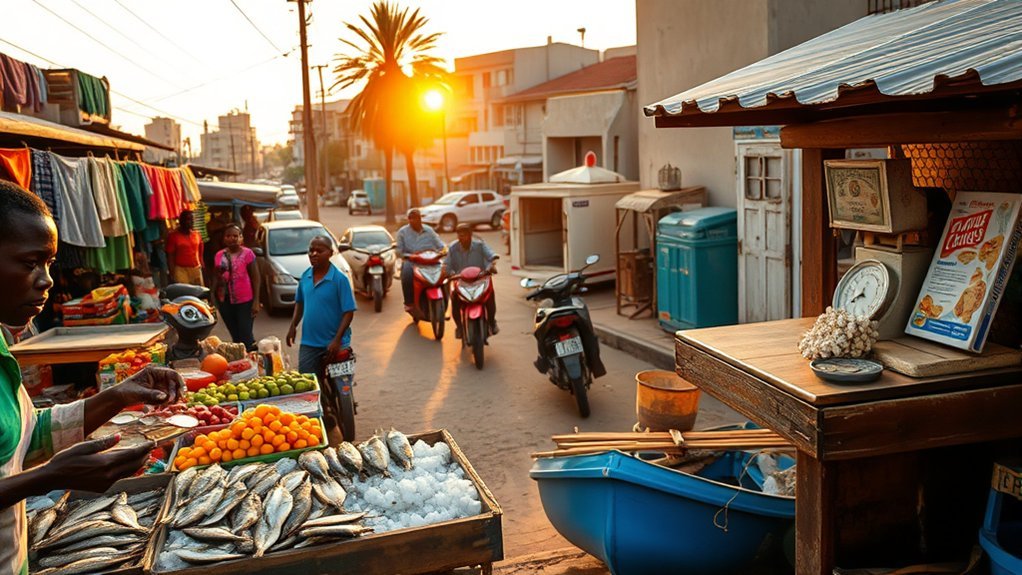
The cost of living in Senegal in 2026 is about 400,000–565,000 CFA francs (~$685–$965) a month for a single person living simply in Dakar, and about 960,000–1,115,000 CFA (~$1,640–$1,905) for a comfortable single life in a central apartment. A couple should plan on roughly 1.27–1.49 million CFA (~$2,170–$2,545), and a family of four on about 1.81–2.16 million CFA (~$3,095–$3,690) before international school fees. These figures use a rate of about 585 CFA per US dollar (October 5, 2026). Rent is the biggest swing factor. A one-bedroom averages about 252,600 CFA (~$432) outside central Dakar and about 475,000 CFA (~$812) in the center. Electricity got cheaper in January, but fuel went up in August. Below you’ll find Dakar rents, Senelec power rates, food prices, transit fares, taxes, residence costs, and sample budgets.
Quick Answer
- Single person: 400,000–565,000 CFA (~$685–$965) on a lean budget; 960,000–1,115,000 CFA (~$1,640–$1,905) for a comfortable one.
- Couple: 1.27–1.49 million CFA (~$2,170–$2,545) a month.
- Family of four: 1.81–2.16 million CFA (~$3,095–$3,690) before international school fees.
- Rent, one-bedroom in Dakar: about 252,600 CFA (~$432) outside the center; about 475,000 CFA (~$812) in the center.
- Electricity: 82 CFA per kWh for the first 150 kWh a month, rising to 159.36 CFA above 250 kWh.
- Transit: 400–500 CFA per BRT ride; 500–1,500 CFA per TER ride in second class.
- Minimum wage: about 64,200 CFA (~$110) a month plus a 26,000 CFA transport allowance.
Exchange Rate, Inflation, and Wages in 2026
Three numbers shape what Senegal costs you this year.
The exchange rate. Senegal uses the West African CFA franc (XOF), shared by eight countries in the UEMOA zone. According to the Central Bank of West African States (BCEAO), it has been fixed at 655.957 CFA per euro since 1999. That means its dollar value moves with the euro. The euro traded near $1.12 in early October 2026, which works out to about 585 CFA per dollar. If you earn in euros, your budget is stable. If you earn in dollars, a weaker euro makes Senegal cheaper and a stronger one makes it dearer.
Inflation. Prices are rising slowly. The national statistics agency (ANSD) reported annual inflation of 1.2% in August 2026. Prices jumped 2.0% in that single month, though, as fresh vegetables rose about 34% at the end of the growing season and a fuel price increase fed into transport fares. Housing, water, electricity, and gas costs were 0.9% lower than a year earlier, helped by the January power tariff cut.
Wages. The guaranteed minimum wage (SMIG) is 370.526 CFA per hour, in force since July 2023. On a 40-hour week that is about 64,200 CFA (~$110) a month. Employees also get a monthly transport allowance of 26,000 CFA (~$44). Crowd-sourced data puts the average net salary in Dakar at about 199,000 CFA (~$341) a month.
A one-bedroom in central Dakar costs about 2.4 times the average local net salary. Expats on foreign income and local families live in very different price worlds.
Rent in Dakar and Other Cities
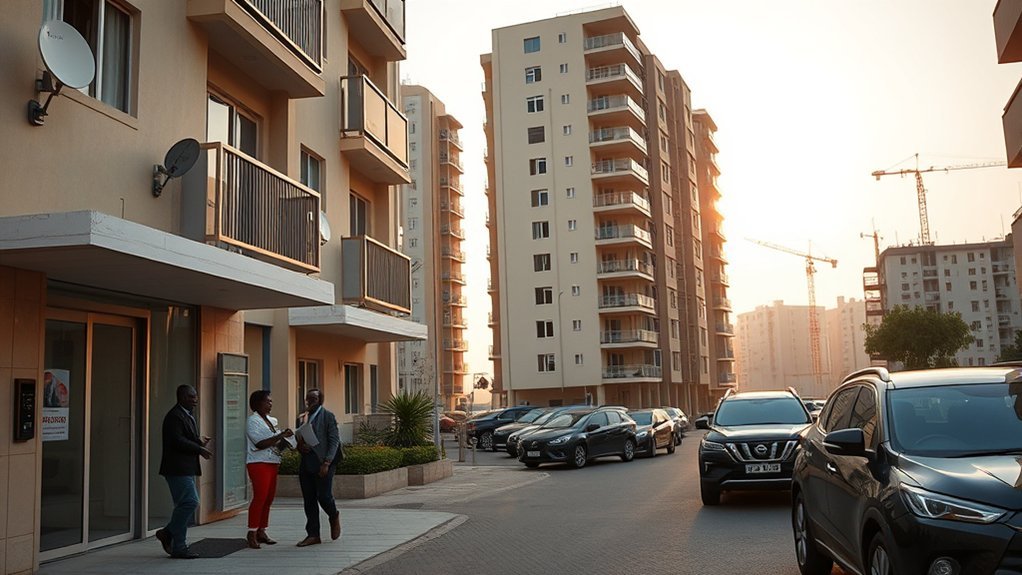
Housing creates the largest gap between a modest budget and a high one. The table uses crowd-sourced averages from Numbeo, updated October 2, 2026. The Dakar figures rest on about 200 price reports from 18 contributors, so treat them as a guide rather than a quote.
| Apartment | Dakar Average | Dakar Typical Range | Senegal Average |
|---|---|---|---|
| 1-bed, city center | 475,000 CFA (~$812) | 300,000–600,000 CFA | 442,857 CFA (~$757) |
| 1-bed, outside center | 252,600 CFA (~$432) | 150,000–350,000 CFA | 252,600 CFA (~$432) |
| 3-bed, city center | 1,017,333 CFA (~$1,739) | 700,000–1,500,000 CFA | 1,017,333 CFA (~$1,739) |
| 3-bed, outside center | 535,833 CFA (~$916) | 350,000–765,000 CFA | 502,143 CFA (~$858) |
Nearly all reported prices come from Dakar. Data for Thiès, Saint-Louis, Mbour, Saly, and Ziguinchor is too thin to give reliable averages. Rents there are generally well below Dakar’s, but so is access to private clinics, international schools, and imported goods.
Dakar Neighborhoods
Where you live in Dakar matters more than which city you pick.
- Top-end areas: Almadies, Ngor, Mermoz, Fann, Point E, and the Plateau business district. These are where most expats, embassies, and international schools are, and where central rents near or above 475,000 CFA for a one-bedroom apply.
- Mid-range areas: Sacré-Cœur, Ouakam, Yoff, and Liberté. Good access to the Corniche and the BRT line, with lower rents than the coast.
- Lower-cost areas: Parcelles Assainies, Grand Yoff, Pikine, Guédiawaye, Keur Massar, and Rufisque. Rents can sit at the bottom of the 150,000–350,000 CFA range, but traffic can turn short distances into long commutes.
- New town: Diamniadio, on the TER line about 30 km from the center, has newer buildings and lower rents but fewer services.
Buying Property
Crowd-sourced purchase prices average about 2.86 million CFA (~$4,890) per square meter in central Dakar and about 886,000 CFA (~$1,515) per square meter outside the center. The sample is small. Land title checks are essential in Senegal, so use an independent notary and confirm the seller’s title before paying any deposit.
Renting as a Foreigner
Landlords commonly ask for a deposit plus several months of rent in advance, and agents often charge a fee of about one month’s rent. Ask for every amount in writing before you agree. Check water pressure, water storage, ventilation, air conditioners, backup power, and locks. Photograph the property and sign an inventory on move-in day.
Utilities, Internet, and Phone
Electricity is where Senegal’s bills swing most, because air conditioning is the main load. Senelec’s household tariffs fell about 10% on January 1, 2026. The energy regulator’s 2026 tariff schedule sets these rates for small domestic meters:
| Monthly Use | Postpaid Rate (CFA/kWh) | Woyofal Prepaid Rate (CFA/kWh) | Approx. USD/kWh |
|---|---|---|---|
| 0–150 kWh | 82.00 | 82.00 | $0.14 |
| 151–250 kWh | 136.49 | 136.49 | $0.23 |
| Above 250 kWh | 159.36 | 136.49 | $0.23–$0.27 |
At these rates, 150 kWh a month costs about 12,300 CFA (~$21) and 300 kWh costs about 33,900 CFA (~$58), before taxes and fixed charges. A family running two air conditioners through the hot season can use far more. Prepaid Woyofal meters charge the second-tier rate for all use above 150 kWh, which makes them cheaper for heavy users.
Other monthly costs, from October 2026 crowd-sourced averages:
- Basic utilities for an 85 m² apartment (electricity, cooling, water, garbage): about 118,944 CFA (~$203), with a typical range of 79,000–150,000 CFA.
- Home internet (60 Mbps or more, unlimited): about 27,160 CFA (~$46).
- Mobile plan with calls and 10 GB+ data: about 6,825 CFA (~$12).
- Bottled water: tap water is not considered safe to drink, so budget a few thousand CFA a month for bottled or filtered water.
Food: Groceries and Eating Out
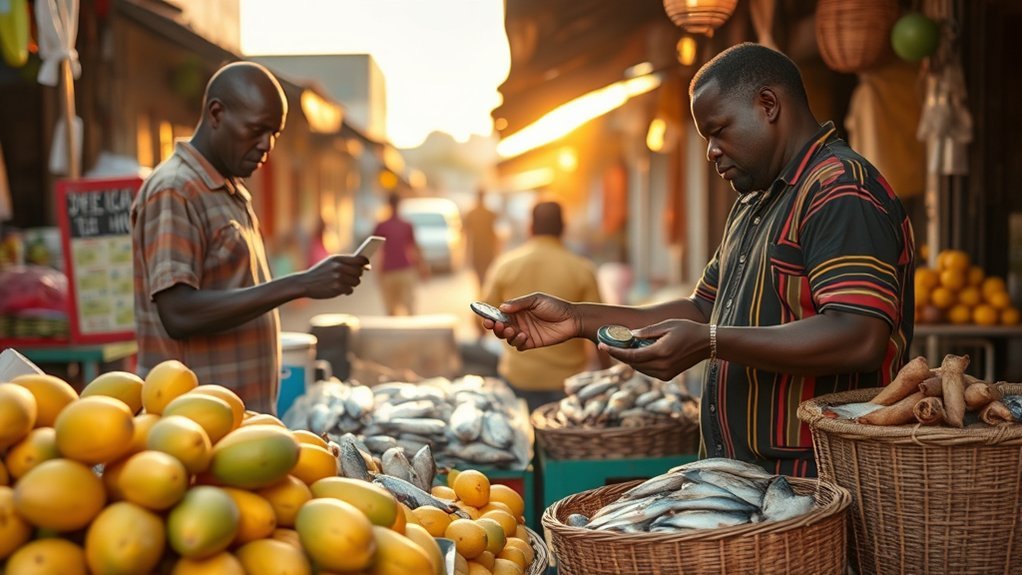
Local food is cheap and imported food is not. Rice, onions, fish, millet, and seasonal vegetables from markets such as Kermel, Tilène, or Castors keep bills down. Imported cheese, wine, cereal, and packaged goods in supermarkets push them up fast.
Average Dakar prices, October 2026:
| Item | Typical Cost (CFA) | Approx. USD |
|---|---|---|
| Milk (1 liter) | 1,497 | $2.56 |
| Fresh bread (1 lb loaf) | 386 | $0.66 |
| White rice (1 lb) | 447 | $0.76 |
| Eggs (12) | 1,447 | $2.47 |
| Chicken fillets (1 lb) | 2,393 | $4.09 |
| Beef (1 lb) | 2,948 | $5.04 |
| Local cheese (1 lb) | 4,612 | $7.88 |
| Tomatoes (1 lb) | 465 | $0.79 |
| Onions (1 lb) | 249 | $0.43 |
| Bottled water (1.5 liters) | 392 | $0.67 |
| Mid-range bottle of wine | 10,000 | $17.09 |
A single person who cooks mostly local food can eat for about 100,000–120,000 CFA (~$170–$205) a month. Add imported staples and that rises to about 180,000 CFA (~$310). These are our estimates built from the item prices above.
Eating out at a local restaurant is still good value. A plate of thiéboudienne or yassa at a neighborhood eatery costs well under the average below. Typical prices:
- Meal at an inexpensive restaurant: about 3,000 CFA (~$5.13)
- Three-course dinner for two at a mid-range restaurant: about 31,000 CFA (~$53)
- Fast-food combo meal: about 6,500 CFA (~$11)
- Cappuccino: about 1,975 CFA (~$3.38)
- Domestic draft beer (pint): about 1,500 CFA (~$2.56)
Transportation
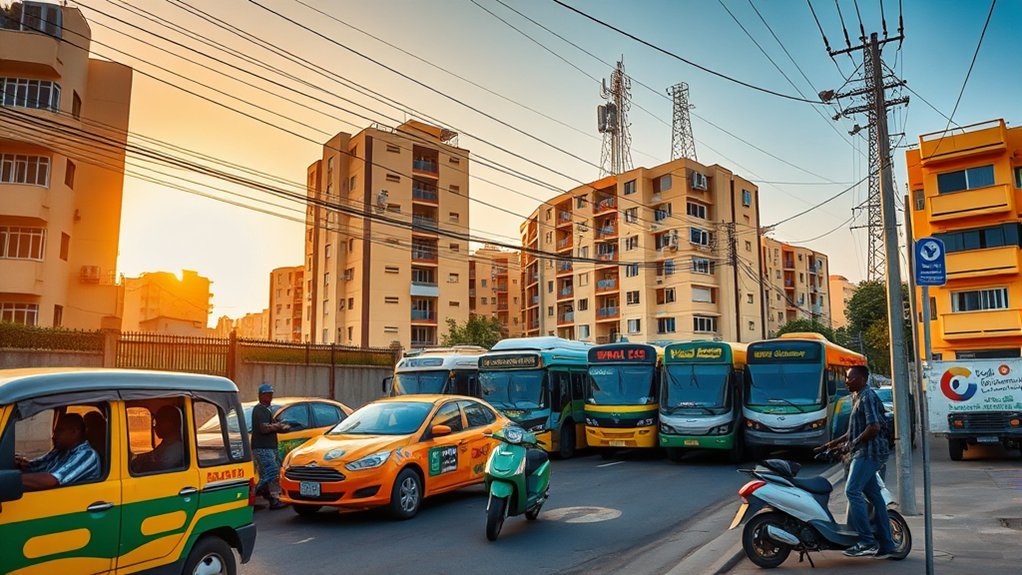
Dakar’s transit options have improved a lot in the past few years. The TER commuter train links central Dakar with Diamniadio, and the BRT bus rapid transit line crosses the city from Guédiawaye to the Plateau.
| Mode | 2026 Fare (CFA) | Approx. USD | Notes |
|---|---|---|---|
| BRT, single zone | 400 | $0.68 | 500 CFA for trips crossing zone lines |
| BRT, monthly pass | 17,000–22,000 | $29–$38 | one zone to all zones |
| TER, second class | 500 / 1,000 / 1,500 | $0.85–$2.56 | one, two, or three zones |
| TER, first class | 2,500 | $4.27 | single ticket |
| TER, monthly pass | 15,000–45,000 | $26–$77 | one to three zones |
| Dakar Dem Dikk bus | about 150–350 | $0.26–$0.60 | by distance |
| Yellow taxi | about 700–5,000 | $1.20–$8.55 | negotiate before you get in |
BRT fares come from Au-Senegal’s September 2026 BRT guide, and the TER operator’s offers page lists the single tickets, 10-trip packs, and one- to three-zone passes. Children under five ride the TER free.
Other transport costs:
- Fuel: the government raised pump prices on August 15, 2026, putting premium gasoline at 990 CFA per liter and diesel at 755 CFA. That is about $1.69 and $1.29 per liter, or roughly $6.40 and $4.90 per gallon.
- Cars: a new Toyota Corolla or similar costs about 28 million CFA (~$47,900). Used cars are common, but import duties keep prices high.
- Ride-hailing: several apps operate in Dakar, which removes the need to haggle and helps at night.
A commuter using the BRT or TER every workday spends about 15,000–45,000 CFA (~$26–$77) a month with a pass. Someone relying on taxis can easily spend 60,000 CFA (~$103) or more.
Healthcare and Insurance
Dakar has the country’s best hospitals and private clinics. According to the US State Department, facilities outside Dakar are extremely limited, ambulances outside the capital are unreliable, and hospitals usually want payment up front. The same page strongly recommends insurance that covers medical evacuation.
How people pay for care:
- Employees: formal-sector employers enroll staff in a company health insurance scheme (IPM), which covers part of medical costs.
- Cash visits: a short private doctor visit runs about 25,000 CFA (~$43), based on a small crowd-sourced sample. Tests, imaging, and medicines are extra.
- Private and international plans: most expats buy international health insurance with evacuation cover. Premiums depend on age, deductible, and whether you include US coverage, so get quotes before you move.
Malaria is present across Senegal. Talk to a travel clinic about antimalarial medicine and vaccines such as yellow fever, and budget for repellent and bed nets.
Schools and Childcare
Families face the widest cost range of any group.
- Private preschool or kindergarten: about 188,000 CFA (~$322) a month, full day.
- International primary school: crowd-sourced data averages about 6.1 million CFA (~$10,390) a year, with a very wide range of 2.3–17.5 million CFA.
- International School of Dakar: 2026–2027 tuition runs from $12,000 (about 7.0 million CFA) for pre-kindergarten to $32,100 (about 18.8 million CFA) for grades 11 and 12, plus a $250 application fee and a capital development fee.
- French and bilingual private schools: many families choose French-curriculum or bilingual schools, which usually cost less than American-curriculum ones.
For a family with two children at the top international school, tuition alone can add 1.2–3.1 million CFA (~$2,000–$5,350) a month.
Taxes: VAT and Income Tax
- VAT: the standard rate is 18%, with a reduced 10% rate for tourism services. It is included in shelf prices.
- Tax residency: Senegalese tax residents are taxed on their worldwide income. Salary is taxable in Senegal if the work is done there or the employer is based there.
- Income tax: rates are progressive, from 0% to 43%. Income is split into family shares (parts), and each share is taxed on the scale below.
| Annual Taxable Income (CFA) | Approx. USD | Rate |
|---|---|---|
| 0–630,000 | $0–$1,077 | 0% |
| 630,001–1,500,000 | up to $2,564 | 20% |
| 1,500,001–4,000,000 | up to $6,838 | 30% |
| 4,000,001–8,000,000 | up to $13,675 | 35% |
| 8,000,001–13,500,000 | up to $23,077 | 37% |
| 13,500,001–50,000,000 | up to $85,470 | 40% |
| Over 50,000,000 | over $85,470 | 43% |
Brackets are from PwC’s Senegal tax summary, last reviewed August 2026. If you’ll live in Senegal long-term, get advice from a local accountant, especially if you also file taxes at home.
Visas and Residence Costs
US, EU, UK, and ECOWAS citizens can enter Senegal without a visa for stays of up to 90 days. Your passport needs at least six months of validity. A yellow fever certificate is required if you arrive from a country with yellow fever risk.
To stay longer, you apply for a foreigner’s identity card (carte d’identité d’étranger) through the police foreigners’ division. According to Le Petit Journal Dakar’s residence guide, the main costs are:
- Fiscal stamp: 15,000 CFA (~$26) per application.
- Deposit: 75,000 CFA (~$128) per person, paid to the Caisse de Dépôts et Consignations and refunded when you leave Senegal for good.
- Annual stamp: 10,000 CFA (~$17) each year to keep the card valid.
- Documents: a letter to the interior minister, a medical certificate, a criminal record extract, a birth certificate, a residence certificate, proof of employment or a sponsor, and three photos.
Non-residents must declare cash above 1 million CFA (~$1,710) on arrival.
One-Time Setup Costs
Budget for these before your first normal month:
- Rent deposit and advance: often two to three months of rent up front, plus an agent fee of about one month.
- Residence card: about 90,000 CFA (~$154) for the stamp and refundable deposit.
- Furnishing an unfurnished apartment: air conditioners, a fridge, a water filter, curtains, and basic furniture can run from a few hundred thousand CFA to well over 1 million CFA.
- Backup power: an inverter or small generator if your building has frequent outages.
- Temporary housing: a furnished short-stay apartment or hotel while you search.
- Health cover from day one: international insurance with evacuation cover.
Sample Monthly Budgets
These budgets are for Dakar and combine the averages above. Lean budgets assume an apartment outside the center and limited air conditioning. Comfortable budgets assume a central apartment, regular air conditioning, and private health cover. All figures are in CFA.
| Expense | Single, Lean | Single, Comfortable | Couple | Family of Four |
|---|---|---|---|---|
| Rent | 150,000–250,000 | 350,000–475,000 | 350,000–475,000 | 500,000–700,000 (3-bed) |
| Utilities | 40,000–60,000 | 119,000 | 119,000–150,000 | 150,000–200,000 |
| Internet + mobile | 15,000–34,000 | 34,000 | 41,000 | 48,000 |
| Groceries | 100,000–120,000 | 180,000 | 300,000 | 450,000 |
| Eating out + leisure | 30,000 | 130,000 | 200,000 | 150,000 |
| Transport | 22,000–30,000 | 60,000 | 90,000 | 120,000 |
| Health cover or buffer | 20,000 | 60,000–90,000 | 120,000–180,000 | 200,000–300,000 |
| Gym / preschool | — | 26,000 | 52,000 | 188,000 (one child) |
| Other | 20,000 | — | — | — |
| Total (CFA) | 400,000–565,000 | 960,000–1,115,000 | 1.27–1.49 million | 1.81–2.16 million |
| Total (USD) | $685–$965 | $1,640–$1,905 | $2,170–$2,545 | $3,095–$3,690 |
For comparison, Numbeo’s crowd-sourced estimate of monthly costs without rent in Dakar is about 498,500 CFA (~$852) for one person and 1.75 million CFA (~$2,997) for a family of four. Those figures assume a more international lifestyle than our lean budget. International school tuition for two children would add 1.2–3.1 million CFA a month to the family budget.
Money-Saving Tips
- Live near the BRT or TER. A monthly pass costs less than a few days of taxis.
- Use a Woyofal prepaid meter. Heavy users pay the 136.49 CFA rate instead of 159.36 CFA above 250 kWh, and you can track use day by day.
- Shop at markets. Buy fish, rice, vegetables, and fruit at neighborhood markets and save the supermarket for imports you can’t do without.
- Eat local. A neighborhood lunch plate costs a fraction of a meal in Almadies.
- Negotiate rent and taxis. Both are open to bargaining. Agree on a taxi fare before you get in.
- Look one area inland. Sacré-Cœur, Ouakam, or Liberté usually cost less than the coast.
- Plan around the euro. If you earn in dollars, the CFA follows the euro, so keep a buffer for exchange-rate swings.
Safety and Practical Notes
Senegal is one of the more stable countries in West Africa. The US State Department rates it Level 1 (exercise normal precautions), except the Casamance region in the south, which is Level 2 because of crime and landmines. Petty theft is the most common problem in Dakar, especially on the Corniche and in markets. Heat and humidity peak from June to October, which is also the rainy season and when power bills rise. Flooding affects some outer suburbs in the rains, so ask about it before you rent.
How Senegal Compares With Nearby Countries
Dakar is one of the pricier capitals in West Africa, mainly because of rent. A simple life costs more than in Banjul or Bamako but less than a comfortable expat life in Abidjan.
| Country | Single, Simple (USD/month) | Single, Comfortable (USD/month) |
|---|---|---|
| Senegal (Dakar) | $685–$965 | $1,640–$1,905 |
| The Gambia (Greater Banjul) | $350–$415 | $745–$980 |
| Mali (Bamako) | $360–$580 | $865–$1,545 |
| Mauritania (Nouakchott) | $560–$660 | $1,075–$1,195 |
| Cape Verde (Praia) | $730–$945 | $1,210–$1,525 |
If you’re weighing options, see our guides to the cost of living in The Gambia, which is much cheaper but has fewer services, and the cost of living in Mali, which uses the same CFA franc. For a nearby Atlantic option, compare the cost of living in Mauritania and the cost of living in Cape Verde. If you’re choosing between West Africa’s two big French-speaking business hubs, our guide to the cost of living in Ivory Coast covers Abidjan.
Frequently Asked Questions
How much money do you need to live in Senegal per month?
A single person needs about 400,000–565,000 CFA (~$685–$965) a month for a simple life in Dakar, and about 960,000–1,115,000 CFA (~$1,640–$1,905) for a comfortable one in a central apartment. A couple should budget about 1.27–1.49 million CFA (~$2,170–$2,545), and a family of four about 1.81–2.16 million CFA (~$3,095–$3,690) before international school fees.
How much is rent in Dakar in 2026?
Crowd-sourced averages from October 2026 put a one-bedroom apartment at about 475,000 CFA (~$812) a month in central Dakar and about 252,600 CFA (~$432) outside the center. A three-bedroom averages about 1.02 million CFA (~$1,739) in the center and about 536,000 CFA (~$916) outside it.
Is $1,000 a month enough to live in Senegal?
Yes, for a single person living simply. At about 585 CFA per dollar, $1,000 is roughly 585,000 CFA. That covers a one-bedroom outside central Dakar, local food, the BRT or TER, and limited air conditioning. It does not cover a central apartment in Almadies, Mermoz, or the Plateau with private health insurance.
What is the minimum wage in Senegal?
The guaranteed minimum wage (SMIG) is 370.526 CFA per hour, in force since July 2023. On a 40-hour week that is about 64,200 CFA (~$110) a month. Employees also receive a transport allowance of 26,000 CFA (~$44) a month.
What currency does Senegal use, and what is the exchange rate?
Senegal uses the West African CFA franc (XOF). It is fixed at 655.957 CFA per euro, so its dollar value moves with the euro. In early October 2026, one US dollar bought about 585 CFA.
How much does electricity cost in Senegal?
Since January 1, 2026, Senelec’s household rate is 82 CFA per kWh for the first 150 kWh a month, 136.49 CFA for 151–250 kWh, and 159.36 CFA above 250 kWh on postpaid meters. A home using 300 kWh pays about 33,900 CFA (~$58) before taxes and fees. Heavy air-conditioning use pushes bills much higher.
Is Dakar more expensive than Abidjan?
They are close. A one-bedroom in central Dakar averages about 475,000 CFA, compared with about 395,000 CFA in central Abidjan, so rent in Dakar’s best areas tends to be higher. Day-to-day costs such as food and transport are broadly similar because both cities use the same CFA franc.
Conclusion
Senegal is affordable if you live like a local and expensive if you live like an expat in central Dakar. A single person can get by on about 400,000–565,000 CFA (~$685–$965) a month outside the center, while a comfortable life in Almadies or Mermoz costs closer to 1 million CFA (~$1,700). Rent, air conditioning, private health cover, and international schools explain most of the difference. Power got cheaper in 2026 and inflation is low, but fuel rose in August and the dollar value of your budget moves with the euro. Pick your neighborhood first, check the transit line nearby, and get written quotes for rent and insurance before you commit.
Sources
- BCEAO – History of the CFA franc and euro parity
- Pound Sterling Live – EUR/USD history, 2026
- APA News – ANSD inflation, August 2026
- PaySpace – Senegal SMIG and transport allowance, July 2023
- Numbeo – Senegal and Dakar crowd-sourced prices, updated October 2, 2026
- CRSE – Senelec tariff schedules from January 1, 2026
- APA News – fuel price increase, August 15, 2026
- Au-Senegal – BRT Dakar lines and fares
- TER Dakar – tickets and passes
- US State Department – Senegal travel advisory and entry requirements
- International School of Dakar – 2026–2027 tuition and fees
- PwC – Senegal personal income tax
- PwC – Senegal VAT and other taxes
- Le Petit Journal Dakar – getting a foreigner’s card in Senegal
- World Bank – country income classifications