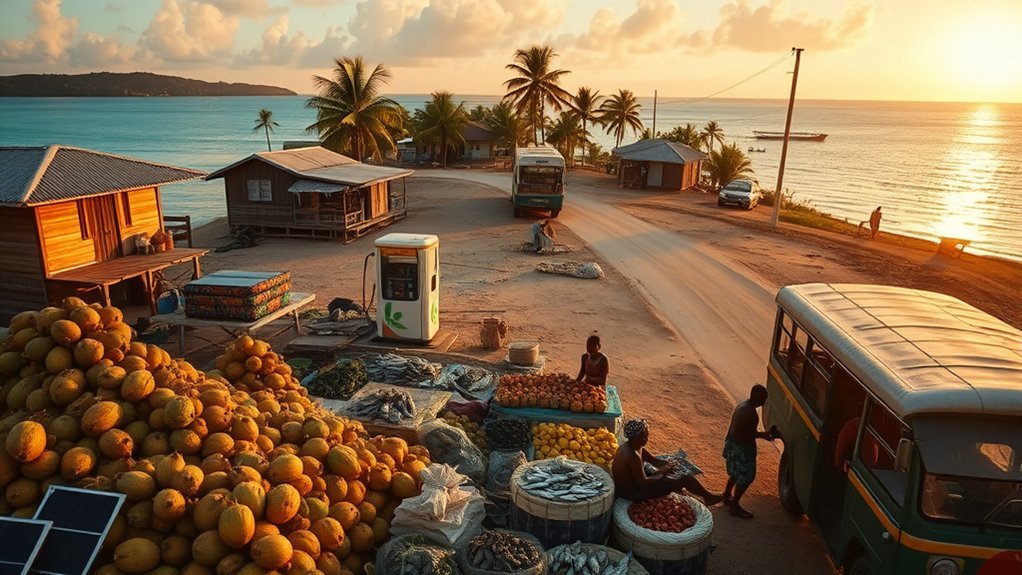
The cost of living in Kiribati in 2026 is roughly A$730–A$1,260 (~$505–$875) a month for a single person living a simple, local-style life in South Tarawa, and about A$2,040–A$3,650 (~$1,415–$2,530) for a foreigner who wants Western-standard housing, air conditioning, and imported food. A family of four living simply should plan on roughly A$1,700–A$2,800 (~$1,180–$1,940). Kiribati uses the Australian dollar, and all US dollar figures here use the Reserve Bank of Australia rate of US$0.6933 per A$1 (October 2, 2026). Be aware that Kiribati is one of the hardest countries in the world to price. Public data is thin, the two main crowd-sourced databases disagree sharply, and almost everything except fish, coconuts, and local labor is imported. Below you will find what can and cannot be known about rent, food, utilities, transport, healthcare, wages, and visas.
Last updated: October 4, 2026 · Author: Theo Ramirez
Quick Answer
- Single person, local-style: about A$730–A$1,260 (~$505–$875) a month in South Tarawa.
- Single person, expat-standard: about A$2,040–A$3,650 (~$1,415–$2,530) a month.
- Family of four, local-style: about A$1,700–A$2,800 (~$1,180–$1,940) a month.
- Rent, one-bedroom: crowd-sourced estimates range from about A$211–A$309 (~$146–$214) to a single report of A$1,200 (~$832) for a central unit.
- Currency: the Australian dollar (AUD). Cash is still king outside hotels and banks.
- Prices: inflation was 0.7% in the year to March 2026, after 8.0% in the year to September 2024, according to the Kiribati National Statistics Office.
- Healthcare: very limited. Most prescription and non-prescription medicines are generally not available, and serious cases need medical evacuation.
What Can and Cannot Be Known About Prices
Kiribati has about 136,500 people spread across 33 islands and a huge stretch of ocean, according to the World Bank’s Kiribati data. Most people with cash jobs live on South Tarawa. Few foreigners live there, so price databases have very little to work with.
Two crowd-sourced databases show the problem clearly:
- One model (updated June 2026) estimates a single person’s costs at about $526 (~A$759) a month including rent, with a central one-bedroom at about $214 (~A$309). Its basket is built from two locations only, South Tarawa and London on Kiritimati (Christmas Island).
- Another database has just 14 price reports from one contributor in the past year, last updated in March 2025. That single contributor reported A$1,200 (~$832) for a central one-bedroom and A$450 (~$312) a month for utilities.
Both can be true at once. Local housing on Tarawa is cheap and basic. The small supply of secure, Western-style houses with reliable power, water tanks, and air conditioning costs far more, and that is what most foreign workers rent. Treat every number below as a range, and get real quotes before you commit.
If an employer is bringing you to Kiribati, ask whether housing, power, and water are provided. That single benefit can be worth more than half of a foreigner’s monthly budget.
Exchange Rate, Inflation, and Wages
The exchange rate. Kiribati uses the Australian dollar as its currency. The Reserve Bank of Australia set the rate at US$0.6933 per A$1 on October 2, 2026. Your purchasing power moves with the Australian dollar, not with anything local.
Inflation. The Kiribati National Statistics Office CPI release for March 2026, published in August 2026, shows prices up just 0.7% from a year earlier. That follows a sharp 8.0% rise in the year to September 2024. The IMF’s Kiribati page projects inflation of about 4.5% for 2026. Because nearly all goods arrive by ship, a delayed vessel or a jump in fuel prices can push up shop prices quickly.
Wages. Cash incomes are low. WageIndicator lists the legal minimum wage at A$1.30 an hour for local businesses and A$3.00 an hour on overseas-funded projects, a rate set in 2016. At 40 hours a week, that is roughly A$225 (~$156) and A$520 (~$361) a month. A crowd-sourced estimate puts average take-home pay at about $181 (~A$261) a month. GDP per person was about $2,559 in 2025, according to the World Bank.
Nearly half of household spending in Kiribati goes on food, according to the National Statistics Office summary of its latest household income and expenditure survey. Rural households grow or catch about 15% of what they eat.
Housing and Rent
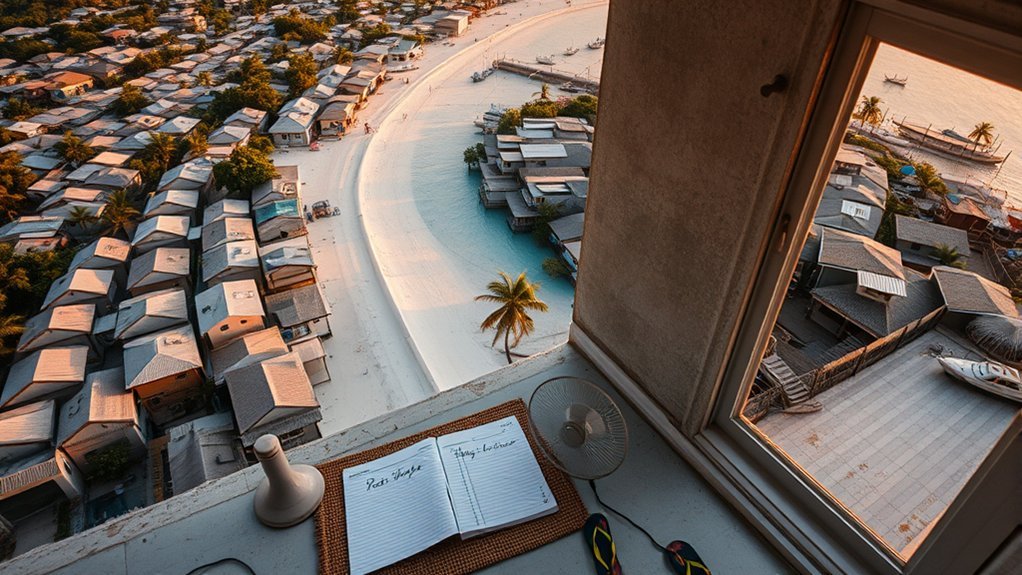
Most housing on South Tarawa is family-owned. Formal rentals are few, and listings are rarely published online, so most foreigners find a place through their employer, a church or aid organization, or word of mouth.
| Housing Type | Crowd-Sourced Estimate (AUD) | Approx. USD | Notes |
|---|---|---|---|
| 1-bed, central (local standard) | A$309 | $214 | modeled, June 2026 |
| 1-bed, cheaper area | A$211 | $146 | modeled, June 2026 |
| 3-bed, central | A$649 | $450 | modeled, June 2026 |
| 3-bed, cheaper area | A$434 | $301 | modeled, June 2026 |
| 1-bed, central (single report) | A$1,200 | $832 | one contributor, March 2025 |
What to Check Before You Rent
- Water. Ask about rainwater tanks and how often the piped supply runs. Fresh water is scarce on the atolls.
- Power. Check the wiring, backup options, and how electricity is billed. Air conditioning is the main reason expat power bills run high.
- Security and storm protection. Look at doors, windows, and how close the house sits to the shoreline. King tides and coastal flooding are a growing problem on low-lying Tarawa.
- What is included. Furniture, appliances, and repairs are expensive to source, so a furnished house can be worth a higher rent.
- Commute. South Tarawa is one long, narrow road. Living near work saves time and fares.
Food and Groceries
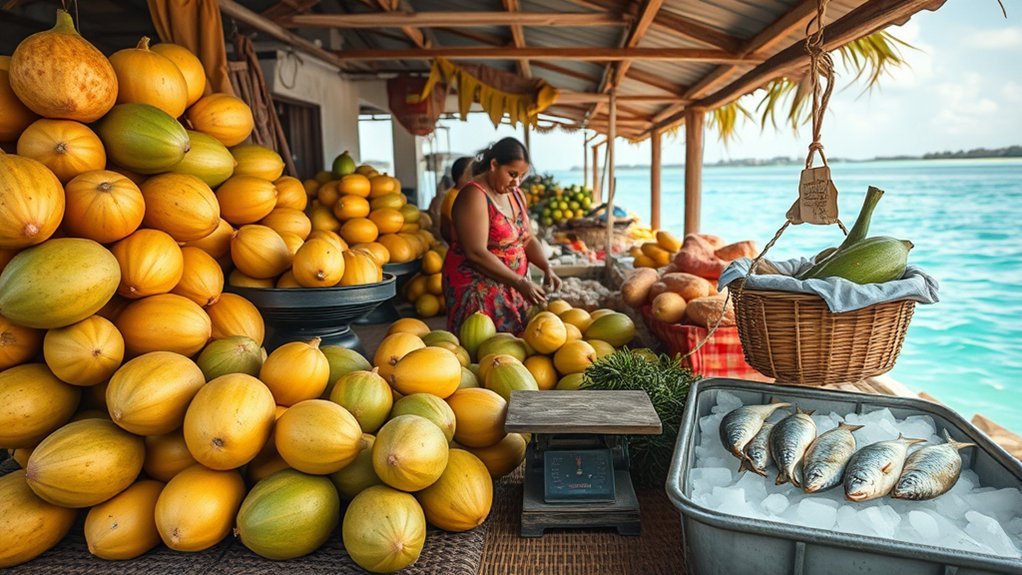
Food is the biggest everyday cost for most households. Rice, flour, sugar, tinned fish, and frozen chicken are imported staples. Fresh fruit and vegetables are limited and expensive, while fish, coconut, breadfruit, and pandanus are local foods.
The two crowd-sourced sources give very different grocery prices:
| Item | Model Estimate (AUD) | Single Report (AUD) |
|---|---|---|
| Milk (1 liter) | A$1.76 | A$3.30 |
| Eggs (12) | A$2.45 | A$9.60 |
| Bread | A$1.07 (0.5 kg) | A$2.63 (1 lb) |
| Rice (1 kg) | A$1.72 | — |
| Chicken breast | A$6.42 per kg | A$3.86 per lb |
| Inexpensive meal / lunch | A$5.48 | A$7.25 |
The higher figures are closer to what a newcomer buying imported goods in a Tarawa supermarket should expect. The lower ones reflect a modeled basket that leans on local staples. A single person who cooks and buys mostly imported food should plan on about A$600–A$900 (~$415–$625) a month. Someone eating like a local, with rice, fish, and basic staples, can spend far less.
The UK government advises visitors not to eat locally caught shellfish or lagoon fish on Tarawa, and to drink only boiled or bottled water. Budget for bottled water or a good filter.
Eating Out and Entertainment
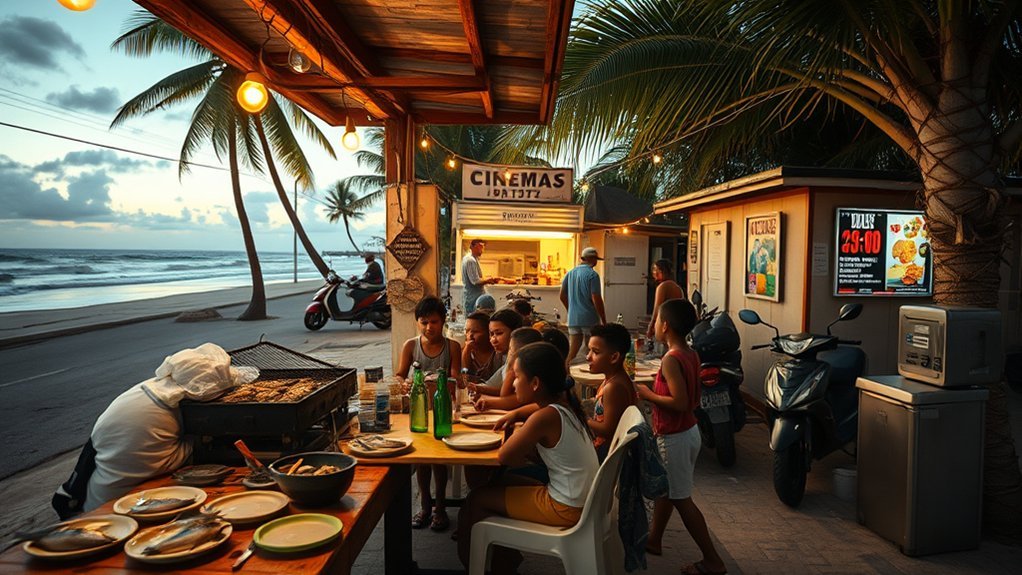
Restaurants on South Tarawa are few and mostly simple. A cheap meal costs about A$5–A$7.25 (~$4–$5) depending on the source, and a mid-range dinner for two around A$40 (~$28) in the single crowd-sourced report. A cappuccino runs about A$4.50 (~$3.12) where you can find one. Hotel restaurants charge the most.
Nightlife is limited to a handful of hotel bars and local venues. Most social life revolves around family, church, sport, and community events in the maneaba (meeting house), which cost little or nothing.
Transportation and Fuel
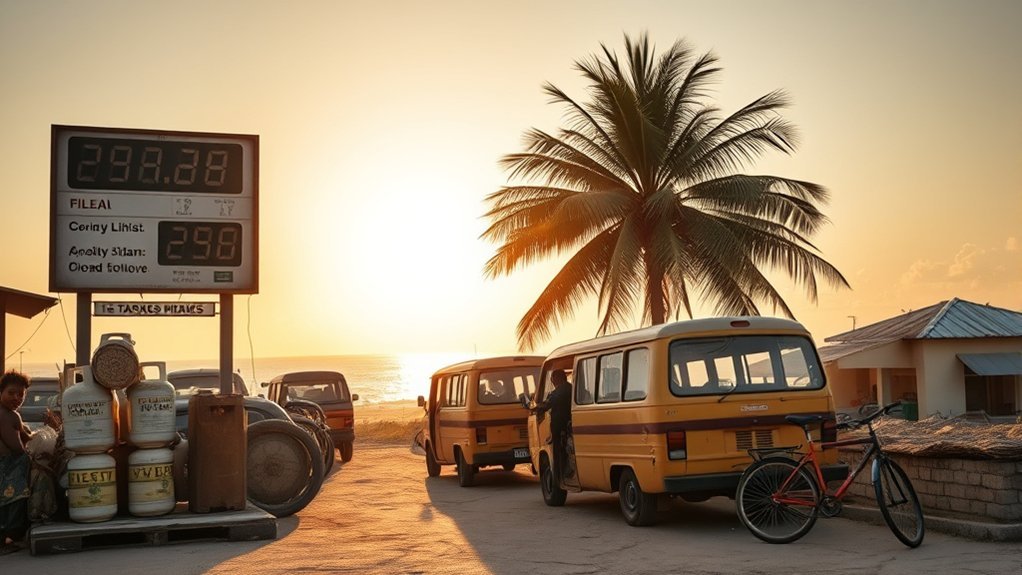
Privately run minibuses run up and down the main South Tarawa road. A ride costs roughly A$0.55–A$2.50 depending on the source and distance. An 8 km taxi ride is estimated at about A$10 (~$7), and gasoline at about A$1.49–A$2.90 per liter (~$1.03–$2.01).
- Roads: traffic drives on the left. The US State Department notes a growing number of road accidents.
- Inter-island travel: flights and ferries to the outer islands are infrequent, and ferry cancellations are common. Build extra time and money into any trip.
- International flights: there is no direct service from the US, and most connections run through other Pacific hubs such as Fiji. Leaving Kiribati by air costs a A$20 departure tax.
- Cars and motorbikes: vehicles, parts, and repairs are all imported. Many residents use motorbikes or minibuses instead.
Utilities, Internet, and Phone
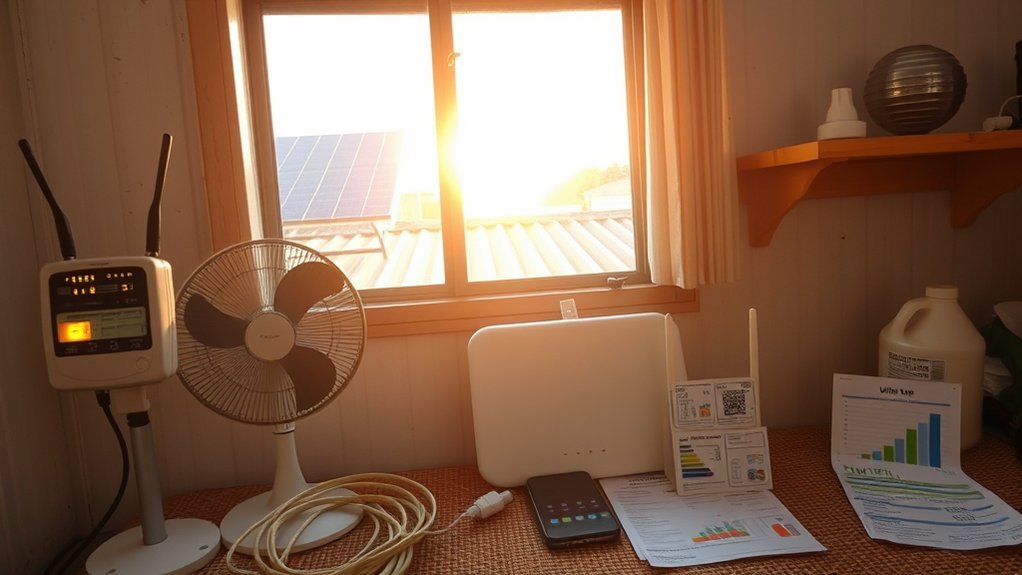
Utility estimates vary widely. The modeled figure is about A$59 (~$41) a month for one person and A$91 for a family, which fits a modest local house with fans. The single crowd-sourced report put basic utilities at A$450 (~$312) a month, which is more realistic for an air-conditioned expat house. Electricity, much of it generated from imported diesel, is the main cost.
Almost the whole population has access to electricity (97.7%), and about 89% use the internet, according to the World Bank. Home internet is estimated at about A$36 (~$25) a month for a 50 Mbps plan, but speed, reliability, and coverage vary by address. Vodafone Kiribati is the main provider of mobile, fixed-line, and broadband service, and it also runs the MPAiSA mobile money service. Remote workers should test the connection at the exact house before signing a lease.
Healthcare and Insurance
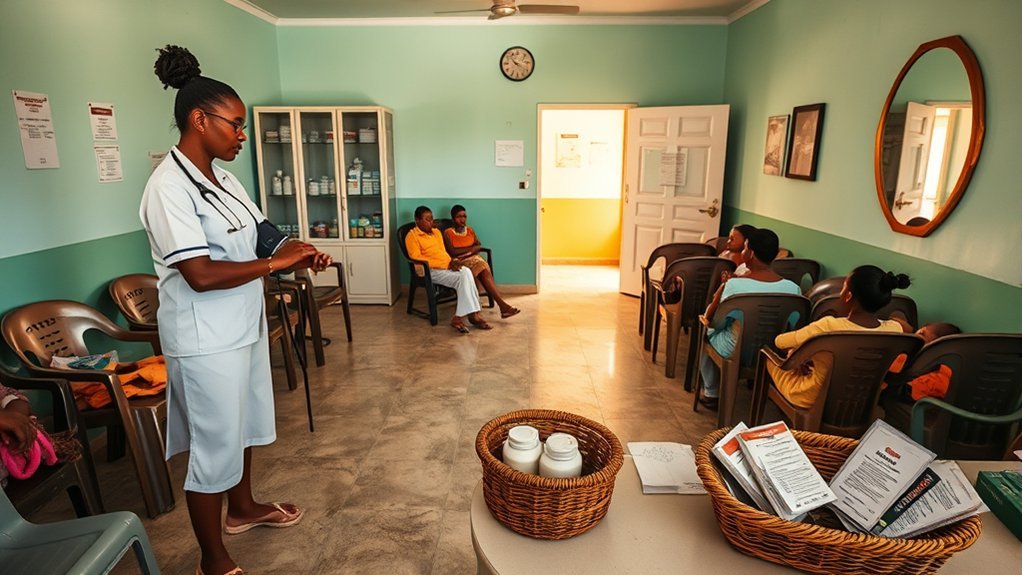
Healthcare is the biggest risk in any Kiribati budget. The UK government’s Kiribati health advice describes the general hospital in Tarawa as modest, with nurse practitioners serving other areas. It warns that prescription and non-prescription medicines are generally not available and that non-basic treatment usually requires medical evacuation. The US State Department adds that hospital accommodations are inadequate, most providers accept only cash, and evacuation can cost thousands of dollars.
- Routine visits: a doctor’s visit is estimated at about A$27 (~$19) in crowd-sourced data.
- Overseas referral: specialist care usually means travel to Fiji, Australia, or New Zealand. A WHO policy brief on overseas medical referral notes that patients in Pacific island countries often face out-of-pocket costs for referral care.
- National spending: health spending was 14.81% of GDP in 2021, according to WHO country data, but much of it is public and aid-funded.
- Insurance: comprehensive international cover with air ambulance evacuation and repatriation is essential. Premiums depend on age, cover, and medical history, so get quotes before you go.
- Medicines: bring enough of any regular prescription to last, plus a basic first-aid kit.
Visas and Entry
US citizens can visit for up to 30 days without a visa, according to the US State Department’s Kiribati page. British citizens can stay up to one month and apply for extensions of up to three more months through the Ministry of Foreign Affairs and Immigration. You need a passport valid for at least six months, a return or onward ticket, and proof of enough money for your stay.
Working or living in Kiribati long term requires a work permit and residence approval, usually arranged by an employer. Most foreigners in Kiribati work for government, aid agencies, churches, or regional organizations.
Kiribati is rated Level 1, “Exercise Normal Precautions,” by the US State Department, and crime is low. The main risks are health, road safety, unreliable transport, and climate hazards such as coastal flooding.
One-Time Setup Costs
- Flights: long, multi-leg trips, usually via Fiji. Book early, since seats are limited.
- Shipping and supplies: many newcomers ship or carry household items, electronics, and medicines, because local stock is limited and expensive.
- Health insurance with evacuation: buy before you travel.
- Housing deposit and furnishing: depends on the landlord. Furniture and appliances cost more than in Australia.
- Water filter and backup power: worth budgeting for if the house lacks them.
- Departure tax: A$20 each time you leave by air.
Sample Monthly Budgets
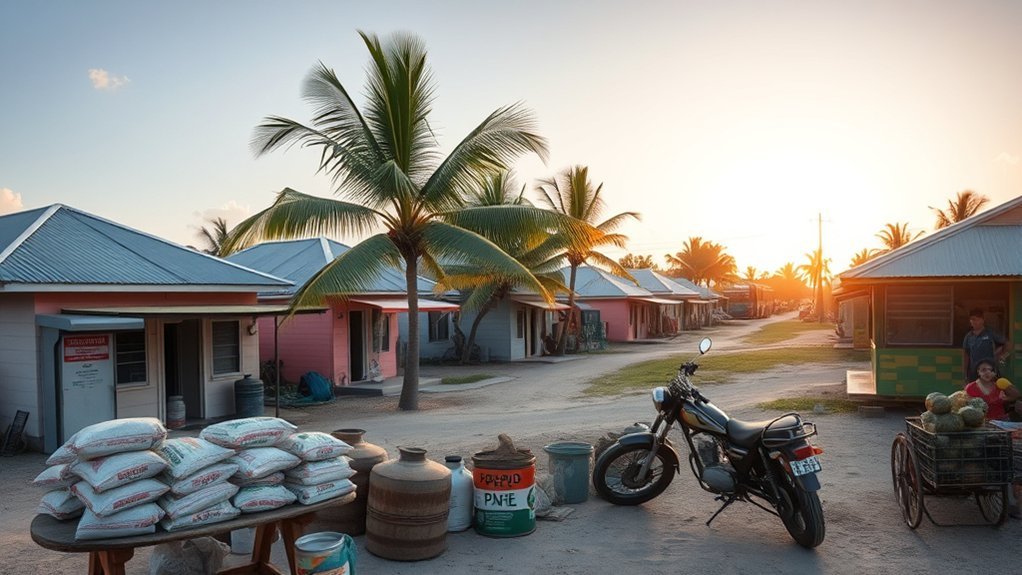
Because data is so thin, these are planning ranges built from the crowd-sourced estimates above, not measured averages. The local-style budget assumes simple housing on South Tarawa, mostly local food, fans instead of air conditioning, and minibuses. The expat-standard budget assumes a secure Western-style house, air conditioning, imported groceries, and taxis or a vehicle.
| Expense (AUD) | Single, Local-Style | Single, Expat-Standard | Family of Four, Local-Style |
|---|---|---|---|
| Rent | 210–350 | 800–1,500 | 430–650 |
| Utilities | 60–120 | 250–450 | 90–200 |
| Internet + mobile | 40–80 | 80–150 | 60–120 |
| Food and household | 320–450 | 600–900 | 900–1,300 |
| Transport | 30–110 | 110–250 | 60–200 |
| Health and personal | 70–150 | 200–400 | 160–330 |
| Total (AUD) | 730–1,260 | 2,040–3,650 | 1,700–2,800 |
| Total (USD) | $505–$875 | $1,415–$2,530 | $1,180–$1,940 |
Cross-check: the modeled crowd-sourced basket puts a single person at about $526 (~A$759) and a family of four at about $1,270 (~A$1,832) a month including rent. That sits inside the local-style ranges above. It does not cover expat-standard housing or evacuation-level insurance.
Salaries and Purchasing Power
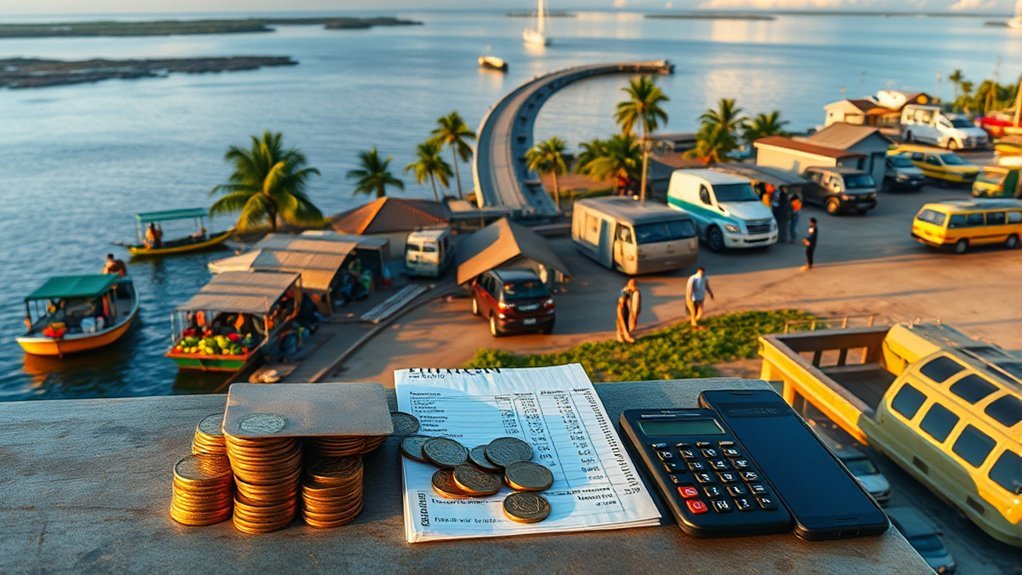
For most i-Kiribati families, cash income is small and spread across a large household. A minimum-wage worker in a local business earns roughly A$225 (~$156) a month, far less than the cost of a single imported-goods diet. Many households rely on fishing, subsistence food, remittances from seafarers and workers abroad, and family sharing. Remittances were about 6.5% of GDP in 2025, according to the World Bank.
Foreigners are usually on government, aid, or regional-organization packages paid in Australian or US dollars. These often include housing, flights, and insurance. If you are weighing an offer, check exactly which of these is covered, since they are the most expensive parts of living in Kiribati.
Money-Saving Tips
- Ask your employer for housing. It is the single biggest cost for foreigners.
- Eat local where it is safe. Ocean fish, breadfruit, and coconut cost less than imported food. Avoid lagoon fish on Tarawa.
- Use fans and run air conditioning only at night. Power is the largest utility cost.
- Ship or carry supplies. Bring medicines, electronics, and favorite foods with you.
- Ride minibuses instead of taxis for daily trips.
- Keep a cash emergency fund. Cards work at most hotels, but much of daily life runs on cash, and evacuation or flight changes can come suddenly.
How Kiribati Compares With Nearby Countries
Using one crowd-sourced model for all countries (updated June 2026), Kiribati looks cheap next to its Pacific neighbors, mainly because local-standard housing is so basic. Expat-standard costs are much closer together across the region.
| Country | Single Person, With Rent | Single Person, Excl. Rent |
|---|---|---|
| Kiribati | $526 | $300 |
| Tuvalu | $714 | $366 |
| Fiji | $908 | $433 |
| Marshall Islands | $1,498 | $537 |
| Solomon Islands | $1,501 | $586 |
For more detail, see our guides to the cost of living in Tuvalu, another remote atoll nation, and the Marshall Islands cost guide, its northern neighbor. Compare the cost of living in Micronesia, our guide to living costs in Fiji, the main transit hub for Kiribati, and expenses in the Solomon Islands.
Frequently Asked Questions
How much does it cost to live in Kiribati per month?
A single person living simply in South Tarawa needs about A$730–A$1,260 (~$505–$875) a month. A foreigner wanting Western-standard housing, air conditioning, and imported food should plan on about A$2,040–A$3,650 (~$1,415–$2,530). These are planning ranges, because public price data for Kiribati is very limited.
Is Kiribati expensive to live in?
It depends on how you live. Local housing and local food are cheap, but almost all other goods are imported by sea, so groceries, fuel, electricity, and anything you need to replace cost more than in Australia. For foreigners, housing and health insurance with evacuation cover are the biggest costs.
What currency does Kiribati use?
Kiribati uses the Australian dollar. On October 2, 2026, the Reserve Bank of Australia rate was US$0.6933 per A$1. Cards work at most hotels, but much of daily life runs on cash.
How much is rent in Kiribati?
Crowd-sourced estimates put a central one-bedroom at about A$309 (~$214) for local-standard housing, while a single report from a contributor put a central one-bedroom at A$1,200 (~$832). Western-style houses with reliable water and power are scarce and cost the most.
What is the minimum wage in Kiribati?
WageIndicator lists A$1.30 an hour for local businesses and A$3.00 an hour on overseas-funded projects, rates set in 2016. That works out to roughly A$225 and A$520 a month for full-time work.
Is healthcare good in Kiribati?
No. The UK government says the Tarawa hospital has modest facilities, medicines are generally not available, and non-basic treatment usually needs medical evacuation. Carry comprehensive insurance that covers air ambulance evacuation and treatment overseas.
Do Americans need a visa for Kiribati?
No, not for short visits. US citizens can stay up to 30 days without a visa with a passport valid for six months, a return ticket, and enough funds. Working or living there requires a work permit and residence approval.
Conclusion
Kiribati is not cheap or expensive in any simple sense. Local life on South Tarawa runs on little cash, while a foreigner who wants a secure house, air conditioning, imported food, and proper insurance can spend about A$2,040–A$3,650 (~$1,415–$2,530) a month. The data behind any figure is thin, so get real quotes for housing, power, and insurance, and find out what an employer will cover. Bring medicines and supplies, keep a cash reserve, and plan for slow, infrequent transport. With that preparation, a Kiribati budget can be realistic.
Sources
- Reserve Bank of Australia – exchange rates, October 2, 2026
- Kiribati National Statistics Office – consumer price index releases
- Kiribati National Statistics Office – household income and expenditure survey summary
- International Monetary Fund – Kiribati country page
- World Bank – Kiribati data
- WageIndicator – Kiribati minimum wage
- Crowd-sourced cost databases – Kiribati, Tuvalu, Fiji, Marshall Islands, Solomon Islands (June 2026) and Kiribati single-contributor data (March 2025)
- UK FCDO – Kiribati health advice
- UK FCDO – Kiribati entry requirements
- US State Department – Kiribati country information
- World Health Organization – Kiribati country data
- WHO Asia Pacific Observatory – overseas medical referral in Pacific Island Countries (2020)