
The cost of living in Iceland in 2026 runs about ISK 360,000–396,000 (~$2,950–$3,240) a month for a single person living simply, and about ISK 508,000–565,000 (~$4,155–$4,625) for a comfortable single life in central Reykjavík. A couple should plan on roughly ISK 598,000–744,000 (~$4,890–$6,085). These figures use the Central Bank of Iceland rate of about ISK 122 per US dollar (early October 2026). Rent is the biggest cost by far. A one-bedroom in central Reykjavík averages about ISK 304,000 (~$2,490) a month, and even outside the center it averages about ISK 249,000 (~$2,035). Inflation has also picked up again, to 5.9% in September. Below you’ll find Reykjavík rents, utilities, groceries, bus fares, the new kilometer fee for drivers, healthcare, 2026 tax brackets, and sample budgets.
Quick Answer
- Single person: ISK 360,000–396,000 (~$2,950–$3,240) on a lean budget; ISK 508,000–565,000 (~$4,155–$4,625) for a comfortable one in central Reykjavík.
- Couple: ISK 598,000–744,000 (~$4,890–$6,085) a month in a Reykjavík one-bedroom.
- Family of four: about ISK 756,000–1,042,000 (~$6,185–$8,525), depending on rent and whether you run a car.
- Rent, one-bedroom in Reykjavík: about ISK 249,000 (~$2,035) outside the center and ISK 304,000 (~$2,490) in the center.
- Utilities: about ISK 10,700 (~$88) a month for an 85 m² apartment, thanks to cheap geothermal heat; broadband adds about ISK 10,300 (~$84).
- Bus fare in the capital area: ISK 690 per ride, or ISK 12,000 (~$98) for a 30-day pass.
- Typical net salary: about ISK 565,000 (~$4,620) a month in Reykjavík, based on crowd-sourced averages.
Exchange Rate, Inflation, and Interest Rates in 2026
Three numbers shape what Iceland costs you this year.
The exchange rate. The Central Bank of Iceland listed official rates of about ISK 122.23 per US dollar, ISK 137.20 per euro, and ISK 161.35 per British pound in early October 2026. A strong króna makes Iceland even more expensive for anyone paid in dollars or euros.
Inflation. Consumer prices rose 0.39% in September alone, and annual inflation reached 5.9%, up from 5.6% in August and the highest since August 2024. Transport costs led the increase. The housing, water, and energy group, which is the largest part of the index, was up about 6.5% over the year, according to Statistics Iceland data summarized by Trading Economics.
Interest rates. The central bank’s policy rate has been 8.00% since August 19, 2026, with the next decision due October 7. High rates keep mortgages expensive, so many newcomers rent for years before buying. Crowd-sourced data puts a 20-year fixed mortgage rate at about 9.3%.
At ISK 122 per dollar, a single person’s lean budget of about ISK 360,000 a month equals roughly $2,950. That is more than many people spend in a mid-sized US city, mostly because of rent.
Why Is Iceland So Expensive?

Iceland is a small island market far from major suppliers. Most food, clothing, cars, and household goods are imported, so shipping costs and a 24% VAT are built into shelf prices. With only a few large grocery and retail chains, there is limited price competition.
Housing supply has also lagged behind population growth and tourism. Short-term rentals and a fast-growing capital area keep rents high in and around Reykjavík.
On the other side of the ledger, wages are high, heating is cheap, and public services such as schools and healthcare cost residents relatively little. Whether Iceland feels affordable depends mostly on whether you earn an Icelandic salary.
Cost of Living by City
Most people who move to Iceland live in the capital area, which includes Reykjavík, Kópavogur, Hafnarfjörður, and Garðabær. The table uses crowd-sourced averages from Numbeo (Reykjavík and national figures updated October 2, 2026; Akureyri updated May 2026).
| Area | 1-Bed, City Center | 1-Bed, Outside Center | 3-Bed, City Center | 3-Bed, Outside Center |
|---|---|---|---|---|
| Reykjavík | ISK 304,111 (~$2,490) | ISK 248,667 (~$2,035) | ISK 420,455 (~$3,440) | ISK 333,000 (~$2,725) |
| Akureyri* | ISK 220,000 (~$1,800) | ISK 220,000 (~$1,800) | — | ISK 263,000 (~$2,150) |
| Iceland average | ISK 296,417 (~$2,425) | ISK 239,353 (~$1,960) | ISK 413,462 (~$3,385) | ISK 328,938 (~$2,690) |
*Akureyri figures come from only three contributors, so treat them as a rough guide.
A few patterns stand out:
- Reykjavík has the highest rents and the best job market, bus network, and services.
- Outer capital-area towns such as Hafnarfjörður and Mosfellsbær can be somewhat cheaper, but the gap is smaller than in most countries. A one-bedroom outside central Reykjavík still averages about ISK 249,000.
- Akureyri, the main town in the north, appears roughly 20–25% cheaper on rent, and its city buses are free to ride. Jobs are fewer, though.
- Rural areas can have lower rents, but you will almost certainly need a car, and rental supply is thin.
Housing and Rent
Rent will usually take 40–55% of a single earner’s take-home pay in Reykjavík. Expect central one-bedrooms around ISK 300,000 and outer one-bedrooms around ISK 240,000–250,000. Three-bedroom family homes average ISK 330,000–420,000.
Renting in Iceland
- Deposits: landlords commonly ask for a security deposit or a bank guarantee worth several months of rent. Budget for it in cash before you arrive.
- Leases: many leases are indexed to the consumer price index, so rent rises with inflation during the contract. Ask about indexation before you sign.
- Rent subsidy: legal residents with a registered lease and low or moderate income may qualify for housing benefits (húsnæðisbætur). This depends on income, household size, and a registered rental contract.
- Shared housing: renting a room in a shared flat is the most common way for new arrivals and students to cut costs.
Buying a Home
With a policy rate of 8% and mortgage rates near 9%, buying is costly in 2026. Many Icelanders use inflation-indexed mortgages, which have lower monthly payments but a balance that grows with inflation. Foreigners from outside the EEA face extra restrictions on buying property. Get local advice before you commit.
Utilities, Internet, and Phone
Utilities are one place where Iceland is cheap. Geothermal hot water heats almost every home, and hydro and geothermal power keep electricity prices low.
| Item | Typical Monthly Cost (ISK) | Approx. USD |
|---|---|---|
| Basic utilities, 85 m² apartment (heat, electricity, water, waste) | 10,700 | $88 |
| Broadband internet (60+ Mbps) | 10,300 | $84 |
| Mobile plan with 10 GB+ data | 3,900 | $32 |
Electricity is billed in two parts: the energy itself and a separate distribution charge from the local network company. ON Power’s 2026 price list sets household energy at ISK 11.41 per kWh including VAT (about $0.09), before distribution. Heating bills rise in winter, but even then they are far below what homes pay in most of Europe.
Food: Groceries and Dining Out

A single person who cooks most meals spends about ISK 60,000–90,000 (~$490–$735) a month on groceries. Couples should plan on about ISK 140,000–160,000. Bónus and Krónan are the main budget chains; convenience stores and late-night shops cost noticeably more. Food carries the reduced 11% VAT rate.
Average Reykjavík prices (crowd-sourced, October 2026):
| Item | Typical Cost (ISK) | Approx. USD |
|---|---|---|
| Milk (1 liter) | 252 | $2.06 |
| Bread (1 lb loaf) | 484 | $3.96 |
| Rice (1 lb) | 199 | $1.63 |
| Eggs (12) | 873 | $7.14 |
| Chicken fillets (1 lb) | 1,346 | $11.01 |
| Beef (1 lb) | 2,318 | $18.96 |
| Local cheese (1 lb) | 1,239 | $10.14 |
| Tomatoes (1 lb) | 359 | $2.94 |
| Mid-range bottle of wine | 2,900 | $23.73 |
Meat, eggs, and fresh produce are where Icelandic grocery bills climb. Local dairy, fish, bread, and simple staples keep them down. Alcohol is sold only at state-run Vínbúðin stores and is heavily taxed.
Eating out is expensive. Common Reykjavík prices:
- Meal at an inexpensive restaurant: about ISK 3,800 (~$31)
- Three-course dinner for two at a mid-range restaurant: about ISK 16,500 (~$135)
- Fast-food combo meal: about ISK 3,250 (~$27)
- Cappuccino: about ISK 830 (~$6.80)
- Domestic draft beer (pint): about ISK 1,700 (~$14)
Buying lunch out every workday at ISK 3,800 would cost about ISK 80,000 (~$655) a month, more than a full month of groceries for one person.
Transportation: Buses, Cars, and the Kilometer Fee
In the capital area, the Strætó bus network covers most daily trips. Strætó’s current prices are:
- Single adult fare: ISK 690 (~$5.65), with fare capping at 3 rides a day or 9 a week through the Klapp app or card.
- 30-day adult pass: ISK 12,000 (~$98).
- Annual adult pass: ISK 120,000 (~$980).
- Discounts: 50% for ages 12–17, seniors 67+, and students (passes only); 70% for disabled riders; free for children 11 and under.
Outside the capital area, buses are infrequent, and most people drive.
Car costs. New and used cars are expensive, and insurance, winter tires, and parking add up. Since January 1, 2026, every passenger car, including electric and hybrid models, pays a kilometer fee of ISK 6.95 per km (for vehicles up to 3.5 tonnes), which replaced the old fuel-tax approach. Driving 1,000 km a month costs about ISK 6,950 (~$57) in kilometer fees alone. Gasoline averages about ISK 250 per liter (~$2.05, or about $7.75 per gallon) in Reykjavík, based on October 2026 crowd-sourced prices.
Taxis start at about ISK 820 (~$6.70) plus about ISK 555 (~$4.55) per mile, so even short rides cost more than ISK 2,000.
Healthcare and Insurance Costs
Iceland has a tax-funded public health insurance system run by Icelandic Health Insurance (Sjúkratryggingar Íslands).
- Waiting period: new residents generally wait six months after registering their domicile before they are covered. Citizens of EEA and Nordic countries may be exempt if they transfer coverage from their home system. Everyone else needs private health insurance for the gap.
- Co-payments: insured residents pay fees for doctor visits, tests, and medicines, but a monthly and annual cap limits how much any person pays.
- Health centers (heilsugæsla): your local health center is the first stop for routine care.
Children, seniors, and people with disabilities pay reduced co-payments. Dental care for adults is largely paid out of pocket.
Schools and Childcare
- Public schools: compulsory education for ages 6–16 is free. Classes are in Icelandic, with extra language support for immigrant children in many schools.
- Preschool (leikskóli): municipal preschools are heavily subsidized, with fees set by each municipality. Waiting lists in Reykjavík can be long, especially for children under two.
- Private preschool: crowd-sourced reports put full-day private preschool at about ISK 157,000 (~$1,280) a month in Reykjavík.
- International school: crowd-sourced data puts international primary school at about ISK 3.74 million (~$30,630) a year. Few such schools exist, so places are limited.
- Universities: public universities charge a modest annual registration fee rather than tuition, while private universities charge tuition.
Taxes: VAT and Income Tax
- VAT: the standard rate is 24%. A reduced 11% rate applies to food, books, hotel stays, passenger transport, and geothermal hot water and electricity for home heating.
- Pension: employees pay 4% of salary into a pension fund, and employers add 11.5%.
- Personal tax credit: ISK 72,492 a month (ISK 869,898 a year) in 2026, prorated for the days you live in Iceland.
Skatturinn’s 2026 withholding brackets combine state and municipal tax:
| Monthly Income (ISK) | Annual Income (ISK) | Combined Rate |
|---|---|---|
| 0–498,122 | 0–5,977,464 | 31.49% |
| 498,123–1,398,450 | 5,977,465–16,781,400 | 37.99% |
| Above 1,398,450 | Above 16,781,400 | 46.29% |
Example: on a gross salary of ISK 700,000 a month, the 4% pension contribution is ISK 28,000, and income tax after the personal credit is about ISK 150,400. Take-home pay is about ISK 521,600 (~$4,265).
Salaries vs. Cost of Living
Iceland’s high prices come with high pay. Crowd-sourced averages put typical net salaries at about ISK 565,000 (~$4,620) a month in Reykjavík and ISK 579,000 (~$4,740) nationally. Iceland has no statutory minimum wage; minimum pay is set by collective agreements for each sector, and most workers are union members.
For a single person on an average salary, a central one-bedroom takes more than half of take-home pay. That is why so many people share flats or live outside the center. Two earners make the numbers much easier. Statistics Iceland reported unemployment of 6.8% in August 2026, so job hunting may take longer than in recent years.
Visas and Residence Permits
- EEA and EFTA citizens can live and work in Iceland freely, but must register their residence with Registers Iceland to get an ID number (kennitala).
- US citizens can visit visa-free for up to 90 days within the Schengen Area. The EU’s ETIAS travel authorization is due to start for US visitors in the last months of 2026.
- Non-EEA nationals who want to live in Iceland need a residence permit from the Directorate of Immigration. Most are tied to a job offer for a skilled position, family reunification, or study.
- Remote workers employed abroad can apply for a long-term visa, which carries a high monthly income requirement. Check the current threshold with the Directorate of Immigration.
You need a kennitala to open a bank account, sign most leases, and get a phone contract, so start that process early.
One-Time Setup Costs
Budget for these before your first month:
- Rental deposit or guarantee: often worth one to three months of rent, or ISK 250,000–900,000 (~$2,045–$7,365) for a one-bedroom.
- Private health insurance: needed for the six-month waiting period if you are not covered by an EEA or Nordic system.
- Winter clothing: a proper coat, boots, and layers are essential from October to April.
- Furniture: many long-term rentals are unfurnished.
- Car: if you live outside the capital area, a car, winter tires, and insurance are a large upfront cost.
- Permit fees and documents: residence permit fees, translations, and certified records for non-EEA applicants.
Sample Monthly Budgets
These budgets combine the averages above, in Icelandic krónur. Lean budgets assume a one-bedroom outside central Reykjavík and a bus pass. Comfortable and couple budgets assume a central one-bedroom.
| Expense | Single, Lean | Single, Comfortable | Couple | Family of Four |
|---|---|---|---|---|
| Rent | 239,000–249,000 | 304,000 | 304,000–340,000 | 333,000–420,000 (3-bed) |
| Utilities | 10,700 | 10,700–15,000 | 12,000–16,000 | 15,000–20,000 |
| Internet + mobile | 14,000 | 14,000 | 18,000 | 18,000–22,000 |
| Groceries | 60,000–75,000 | 80,000–90,000 | 140,000–160,000 | 180,000–230,000 |
| Eating out + leisure | 15,000–25,000 | 60,000–80,000 | 80,000–120,000 | 60,000–100,000 |
| Transport | 12,000 | 12,000–30,000 | 24,000–60,000 | 90,000–130,000 (car) |
| Childcare + activities | — | — | — | 40,000–80,000 |
| Gym | — | 12,300 | — | — |
| Health + other | 10,000 | 15,000–20,000 | 20,000–30,000 | 20,000–40,000 |
| Total (ISK) | 360,000–396,000 | 508,000–565,000 | 598,000–744,000 | 756,000–1,042,000 |
| Total (USD) | $2,950–$3,240 | $4,155–$4,625 | $4,890–$6,085 | $6,185–$8,525 |
Single person: Numbeo’s Reykjavík estimate for one person is about ISK 198,300 (~$1,620) a month before rent. Add a central one-bedroom and you land near the comfortable column.
Family of four: the low end assumes an outer three-bedroom, municipal preschool, and one car. Numbeo’s crowd-sourced Reykjavík estimate for a family of four is about ISK 752,800 (~$6,160) a month before rent, which reflects a higher-spending household. Housing benefits and child benefits can lower costs for residents with modest incomes.
Leisure and Everyday Expenses
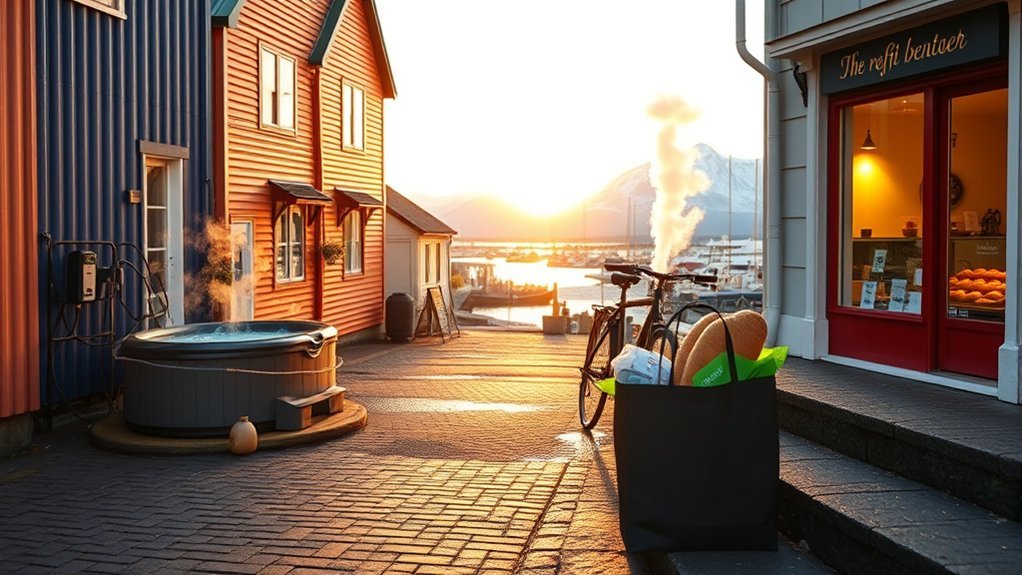
Paid entertainment is expensive, but some of the best things in Iceland are cheap.
- Gym membership: about ISK 12,300 (~$100) a month in Reykjavík.
- Cinema ticket: about ISK 2,400 (~$20).
- Public swimming pools: geothermal pools are a daily habit for many residents, and annual cards bring the cost per visit down sharply.
- Free options: hiking, walking paths, beaches, and the northern lights cost nothing beyond transport.
A modest leisure budget of ISK 15,000–30,000 a month works if you mostly stick to pools and the outdoors. Regular restaurant meals and nights out push it far higher.
Money-Saving Tips
- Share a flat for your first months. It cuts the largest cost and gives you time to learn the rental market.
- Shop at Bónus and Krónan and buy local fish, dairy, and bread instead of imported products.
- Use the bus and fare capping. A 30-day pass at ISK 12,000 is far cheaper than running a car in Reykjavík.
- Bring lunch. A packed lunch saves tens of thousands of krónur a month.
- Buy alcohol rarely, and at Vínbúðin, not in bars.
- Check housing and child benefits once you are a registered resident.
- Watch the exchange rate if you earn abroad. A strong króna raises your costs in dollar terms.
How Iceland Compares With Nearby Countries
Iceland is one of the most expensive countries in Europe, especially for rent. The table uses crowd-sourced national averages converted to US dollars (updated August–October 2026).
| Country | 1-Bed, City Center | 1-Bed, Outside Center | Single Person, Excl. Rent |
|---|---|---|---|
| Iceland | $2,425 | $1,960 | $1,565 |
| Ireland | $1,773 | $1,564 | $1,151 |
| Norway | $1,359 | $1,062 | $1,404 |
| Denmark | $1,156 | $912 | $1,286 |
| Finland | $865 | $711 | $1,062 |
| Sweden | $864 | $690 | $1,043 |
Rent in Iceland runs well above even Norway and Ireland. For more detail, see our guides to the cost of living in Norway, the closest match on everyday prices, the cost of living in Denmark, and our Ireland living cost guide. If you want Nordic life with lower rents, compare living expenses in Sweden and monthly costs in Finland.
Frequently Asked Questions
How much money do you need to live in Iceland per month?
A single person needs about ISK 360,000–396,000 (~$2,950–$3,240) a month for a simple life, and about ISK 508,000–565,000 (~$4,155–$4,625) for a comfortable one in central Reykjavík. A couple should budget about ISK 598,000–744,000 (~$4,890–$6,085), and a family of four about ISK 756,000–1,042,000 (~$6,185–$8,525).
How much is rent in Reykjavík in 2026?
A one-bedroom apartment averages about ISK 304,000 (~$2,490) a month in central Reykjavík and about ISK 249,000 (~$2,035) outside the center. A three-bedroom averages about ISK 420,000 (~$3,440) centrally and ISK 333,000 (~$2,725) outside.
Is it cheaper to live in Iceland or the US?
For most people the US is cheaper. Crowd-sourced data puts Iceland’s overall costs about 45% higher than the US average, and rents about 34% higher. Heating, public schools, and healthcare cost Icelandic residents less, but rent, food, alcohol, and cars cost more.
What is the average salary in Iceland?
Crowd-sourced averages put typical take-home pay at about ISK 565,000 (~$4,620) a month in Reykjavík. Iceland has no statutory minimum wage; minimum pay is set by sector collective agreements.
Can US citizens live in Iceland?
Yes, but they need a residence permit to stay longer than 90 days. Most permits are based on a job offer, family ties, or study. Remote workers employed abroad can apply for a long-term visa with a high income requirement. New residents usually wait six months for public health insurance.
How much are bus fares in Reykjavík?
A single adult Strætó fare costs ISK 690 (~$5.65), and a 30-day adult pass costs ISK 12,000 (~$98). Young people, seniors, and students get 50% off, and children 11 and under ride free.
Conclusion
Iceland is one of the most expensive places to live in Europe, and 2026 has not made it cheaper. Rents in Reykjavík average around ISK 250,000–300,000 for a one-bedroom, inflation is back near 6%, and a strong króna raises costs for anyone paid abroad. A single person needs about $2,950–$3,240 a month to live simply, or $4,155–$4,625 for a comfortable life in central Reykjavík. High wages, cheap geothermal heat, and free public schools balance the picture for people who earn locally. Line up housing and work first, budget for the deposit and six months of private health cover, and the rest is manageable.
Sources
- Central Bank of Iceland – exchange rates and policy rate
- Statistics Iceland – consumer prices and labor market
- Trading Economics – Iceland inflation, September 2026
- Numbeo – Reykjavík, Akureyri, and Iceland crowd-sourced prices (May–October 2026)
- ON Power – household electricity prices 2026
- Strætó – bus fares
- Ísland.is – kilometer fee 2026
- Icelandic Health Insurance
- Skatturinn – 2026 withholding tax brackets
- PwC – Iceland individual income tax
- PwC – Iceland personal tax credit 2026
- PwC – Iceland VAT and pension contributions
- WageIndicator – Iceland minimum wage
- US State Department – Iceland country information
- UK FCDO – Iceland travel advice