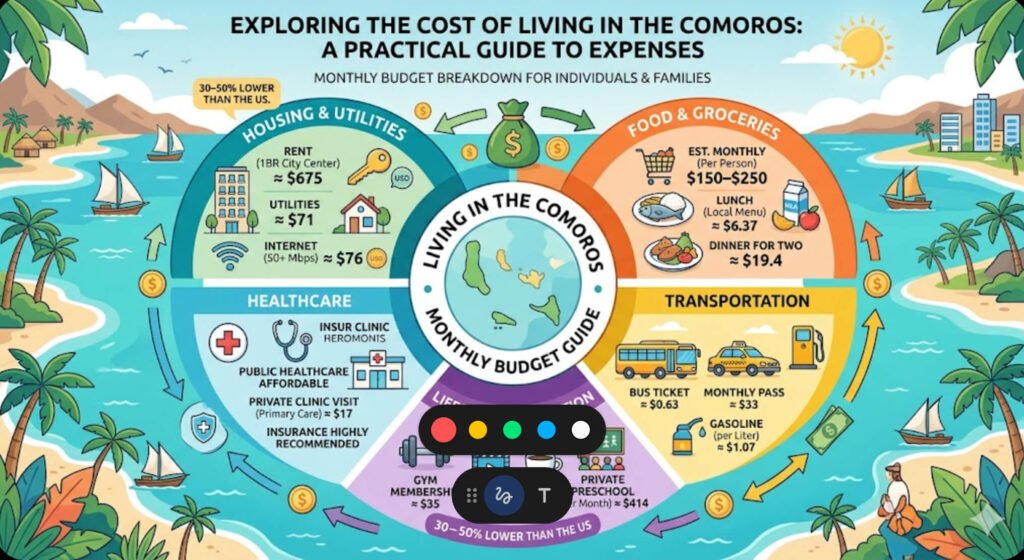
The cost of living in the Comoros in 2026 runs about KMF 497,000–583,000 (~$1,135–$1,330) a month for a single foreigner renting an apartment in or near Moroni, and about KMF 1.09–1.21 million (~$2,490–$2,765) for a family of four before school fees. These figures use the fixed euro peg of KMF 491.96775 per euro, which works out to about KMF 438 per US dollar (October 2, 2026). The Comoros is one of the least-documented countries in this region, so treat every price below as a guide, not a quote. Crowd-sourced data comes from a small number of reports, and most of it reflects imported goods and expat-standard housing. Local life costs far less: the average after-tax salary is only about KMF 66,600 (~$152) a month. Below you’ll find rents, food prices, utilities, health care, safety notes, and sample budgets.
Quick Answer
- Single person: KMF 497,000–583,000 (~$1,135–$1,330) a month with rent; about KMF 205,000 (~$468) without rent.
- Couple: about KMF 757,000 (~$1,725) a month in a central one-bedroom.
- Family of four: about KMF 1.09–1.21 million (~$2,490–$2,765) a month before school fees.
- Rent, one-bedroom: about KMF 244,000 (~$556) in a cheaper area; KMF 298,000 (~$680) in the center.
- Utilities: about KMF 30,800 (~$70) for one person; home internet adds about KMF 33,400 (~$76).
- Currency: the Comorian franc is pegged to the euro at KMF 491.96775. Cash rules; cards and ATMs are scarce.
- Visa: issued on arrival for about €30, payable in cash.
What We Know and Don’t Know About Prices
The Comoros has no large expat community and very few public price surveys. The figures in this guide come from three kinds of sources:
- Official economic data from the World Bank, the IMF, and the Banque Centrale des Comores. These are reliable but describe the whole economy, not what you’ll pay for an apartment.
- Crowd-sourced price averages updated in June 2026. These give useful item-by-item prices, but they rest on few reports. One major crowd-sourced database recorded no new Comoros entries in the 12 months before its last update.
- Government travel advice from the UK and US, which covers visas, money, safety, and health care.
What this means for you: rents and imported goods are likely accurate within a broad range, but local market prices may be lower than shown. Expect prices to differ between the three islands. Grande Comore (Ngazidja), home to Moroni, has the most housing, shops, and services. Anjouan (Ndzuwani) and Mohéli (Mwali) are smaller and less served. Before you sign anything, check prices in person or through a trusted local contact.
Currency, Inflation, and the Economy in 2026
The exchange rate. The Banque Centrale des Comores keeps the Comorian franc fixed at KMF 491.96775 per euro. The dollar rate moves with the euro. Using the European Central Bank’s reference rate of $1.1225 per euro on October 2, 2026, one US dollar buys about KMF 438. If you earn in euros, your purchasing power is stable. If you earn in dollars, it changes with the euro.
Inflation. Prices rose an average of 3.3% in 2025, down from 5.1% in 2024. In its latest country outlook, the World Bank estimates 2026 inflation at about 6.1%, driven by higher energy and food import costs linked to the Middle East conflict. The IMF projects a lower 3.7% for 2026. Because the Comoros imports most of its food and all of its fuel, global price swings reach local shelves quickly.
Incomes. According to World Bank data, GDP per person was about $2,056 in 2025, for a population of about 883,000. Gross national income per person was $1,950. Remittances from Comorians abroad, many of them in France, equaled about 21% of GDP in 2023 and keep many households afloat. The World Bank projects poverty (under $4.20 a day) to fall to about 16.5% in 2026.
A foreigner’s single budget of about KMF 500,000 a month is seven to eight times the average local take-home salary. Most Comorians live in family-owned homes, eat local food, and spend a small fraction of the figures in this guide.
Monthly Budget Breakdown
Crowd-sourced estimates updated in June 2026 put total monthly costs at about $1,196 for one person and $2,726 for a family of four, both including rent in the center. Here’s how that breaks down:
| Category | One Person | Family of Four |
|---|---|---|
| Rent + utilities | KMF 319,000 (~$728) | KMF 533,800 (~$1,218) |
| Food | KMF 155,200 (~$354) | KMF 400,100 (~$913) |
| Transport | KMF 13,600 (~$31) | KMF 36,600 (~$84) |
| Total without rent | KMF 205,100 (~$468) | KMF 660,900 (~$1,508) |
| Total with rent | KMF 524,200 (~$1,196) | KMF 1,194,700 (~$2,726) |
On these numbers, the Comoros costs about the same as the world average, which surprises many people. The reason is simple: a small island market imports most goods, and housing built to foreign standards is scarce. Daily life on local terms is far cheaper.
Housing: Rent and Utilities
Rent
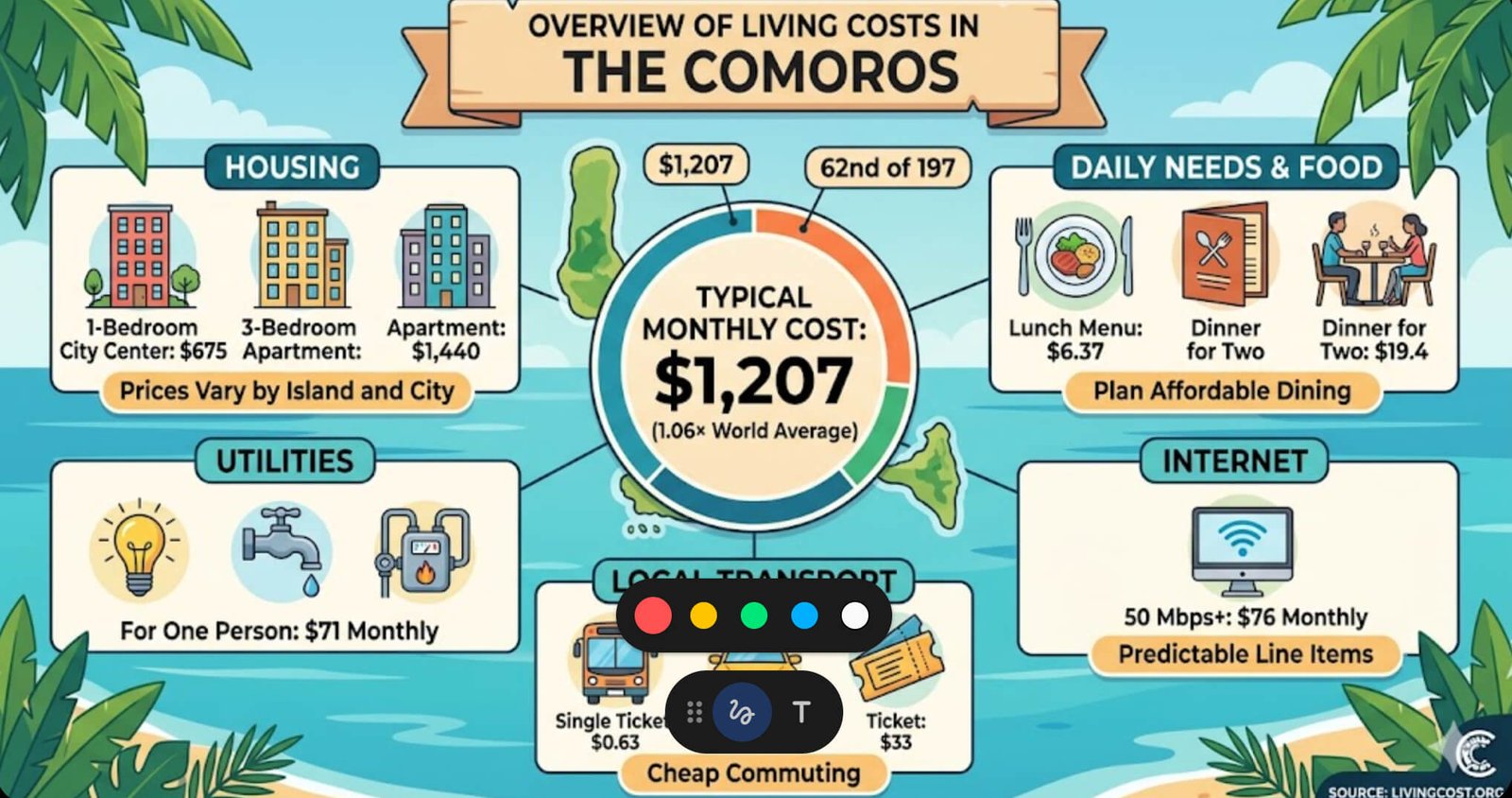
Rent is the largest cost for any newcomer. Crowd-sourced averages (June 2026):
| Apartment | City Center | Cheaper Area |
|---|---|---|
| One-bedroom | KMF 298,000 (~$680) | KMF 243,700 (~$556) |
| Three-bedroom | KMF 633,300 (~$1,445) | KMF 512,800 (~$1,170) |
“City center” here effectively means Moroni and the areas around it. There is no formal rental market in the way you’d find in Nairobi or Port Louis. Most rentals are found by word of mouth, through employers, or through local agents. A few things to know:
- Furnished, secure houses that meet foreign standards are limited and command the prices above. NGOs, embassies, and international employers compete for them.
- Simple local houses rent for much less, but may lack steady water, a backup generator, or air conditioning.
- Payment is in cash, often several months in advance. Get a written agreement and a receipt for each payment.
- Anjouan and Mohéli have fewer rental options. Ask your employer or a local contact for help before you arrive.
Utilities and Internet
Utilities (electricity and water) average about KMF 30,800 (~$70) a month for one person and KMF 47,800 (~$109) for a family. Home internet at 50 Mbps or more averages about KMF 33,400 (~$76) a month, which is high for the region.
Electricity reaches about 92% of the population, according to World Bank data for 2024. Supply is not always reliable, and the UK government notes that power and water outages also affect hospitals. If you can, choose a home with a backup generator or solar system and a water tank. Running a generator adds fuel costs that aren’t in the averages above.
Food: Groceries and Dining Out
A single person spends about KMF 155,000 (~$354) a month on food, based on crowd-sourced estimates that include some imported goods. You can spend less by cooking local staples such as rice, fish, cassava, bananas, and coconut, which are sold at markets in every town.
Average prices (June 2026 crowd-sourced data):
| Item | Typical Cost (KMF) | Approx. USD |
|---|---|---|
| Milk (1 liter) | 1,950 | $4.44 |
| Bread (0.5 kg) | 250 | $0.57 |
| Rice (1 kg) | 770 | $1.76 |
| Eggs (12) | 2,260 | $5.16 |
| Chicken breast (1 kg) | 1,960 | $4.48 |
| Beef round steak (1 kg) | 5,520 | $12.60 |
| Cheese (1 kg) | 3,470 | $7.92 |
| Bananas (1 kg) | 540 | $1.23 |
| Tomatoes (1 kg) | 1,860 | $4.24 |
| Potatoes (1 kg) | 2,030 | $4.63 |
| Bottled water (1 liter) | 390 | $0.88 |
Bread, rice, and bananas are cheap. Milk, eggs, potatoes, and tomatoes are expensive because much of the supply is imported or flown in. Expect gaps on the shelves when a supply ship is late.
Eating out is affordable by Western standards:
- Lunch menu at a simple restaurant: about KMF 2,770 (~$6.30)
- Dinner for two at a restaurant: about KMF 8,410 (~$19)
- Fast-food meal: about KMF 3,590 (~$8.20)
- Cappuccino: about KMF 790 (~$1.80)
The Comoros is a Muslim country, and alcohol is available only in some hotels and restaurants. During Ramadan, many eateries close during the day.
Transportation
Getting around is cheap if you use shared taxis and minibuses, the main form of public transport on each island.
- Local transport ticket: about KMF 270 (~$0.62)
- Monthly transport spending: about KMF 14,500 (~$33) for regular use
- Taxi ride (8 km): about KMF 3,870 (~$8.80)
- Gasoline: about KMF 450 per liter (~$1.02, or about $3.86 per gallon)
Roads are a real constraint. The UK’s travel advice says the main ring road on Grande Comore is reasonably maintained, but most other roads are in poor condition. A UK photocard driving license is valid for up to three months.
Travel between islands is by small plane or passenger boat. The same advice warns that boats can be overloaded, in poor condition, and without life jackets, and some have capsized with many deaths. Many residents fly between islands for this reason, which adds to the cost of living on Anjouan or Mohéli.
Healthcare and Insurance
Health care is the biggest risk in a Comoros budget. The UK government describes medical facilities on all three islands as basic, and most are private. The US State Department notes that care is severely limited outside Moroni, that there are no ambulance services, and that most hospitals require payment up front in cash. Serious cases usually need evacuation abroad.
What this means for your budget:
- Medical evacuation insurance is essential. Both the UK and US governments strongly recommend it. Premiums depend on your age, coverage area, and deductible, so get quotes before you move.
- Keep a cash reserve for clinic visits, tests, and medicine, since you will usually pay first and claim later.
- Bring a supply of any regular medicine. Pharmacies may not stock specific brands or doses.
- Check vaccinations and malaria advice with a travel clinic before you go.
Local public health insurance is very limited. Most residents pay directly for care.
Schools and Childcare
Education options for foreign families are few.
- Private preschool: about KMF 180,600 (~$412) a month, based on crowd-sourced data.
- International primary school: about KMF 6.3 million (~$14,400) a year. Choices are very limited.
- Public schools: teaching is mainly in French, and resources are limited.
Two children in international primary school add roughly KMF 1.05 million (~$2,400) a month to a family budget. Some families choose online schooling or boarding schools abroad instead.
Taxes, Money, and Banking
- Consumption tax: the Comoros charges a 10% consumption tax on goods and services, according to Trading Economics, citing the Ministry of Finance. It’s built into most prices.
- Income tax: if you’re paid by a local employer, tax is withheld from your salary. Foreign remote workers should get advice on tax residency, as published guidance in English is scarce.
- Cash economy: the US State Department says the Comoros mostly uses cash, and credit cards aren’t widely accepted. Euros are often accepted, with change given in francs.
- ATMs: the UK government notes that there are few ATMs and that card payments often fail. Bring enough euros to cover your first weeks, and plan how you’ll access money after that.
Visas and Entry Requirements
Most visitors need a visa, which is issued on arrival. The UK’s Comoros entry requirements list a €30 visa fee at Hahaya airport (Prince Said Ibrahim International) and other entry points, and a passport valid for at least six months from arrival. The US State Department quotes €30–€50, payable in cash in euros or US dollars.
For longer stays, you’ll need a residence permit through your employer or the immigration authorities in Moroni. Requirements and fees are not published online in a reliable form, so ask your employer or the Comoros embassy in your country before you move.
Safety and Practical Tips
The US State Department rates the Comoros at Level 2: Exercise Increased Caution (January 12, 2026), citing crime, unrest, and health. The UK government says crime levels are low, but pickpocketing happens in markets and crowded places, and walking at night carries more risk.
Political tension is the main concern. Protests occur from time to time, especially after elections, and have blocked roads and access to the airport. A protester was killed in January 2024. There is also anti-French sentiment linked to the dispute over Mayotte. Avoid demonstrations and follow local news.
Other practical tips:
- Dress modestly and respect local customs, especially during Ramadan.
- Learn some French. It is widely used in government and business, while English is rare.
- Same-sex relations are illegal and can lead to prison and fines.
- Keep copies of your passport and visa, and carry cash in small notes.
One-Time Setup Costs
Budget for these before your first month:
- Visa on arrival: about €30–€50 (KMF 14,760–24,600) in cash.
- Rent in advance: often several months up front, in cash. For a central one-bedroom, three months is close to KMF 900,000 (~$2,050).
- Temporary housing: a hotel or guesthouse while you search.
- Backup power and water: a generator, inverter, or water tank if the home lacks one.
- Insurance: a medical evacuation policy before you travel.
- Household setup: imported furniture and appliances cost more than on the mainland, so ask what’s included in the rent.
Sample Monthly Budgets
These budgets combine the crowd-sourced averages above for a foreigner living to a modest international standard. “Other” covers household items, phone credit, and small leisure costs.
| Expense (KMF) | Single, Lean | Single, Comfortable | Couple | Family of Four |
|---|---|---|---|---|
| Rent | 243,700 | 298,000 | 298,000 | 512,800–633,300 |
| Utilities | 30,800 | 30,800 | 47,800 | 47,800 |
| Internet | 33,400 | 33,400 | 33,400 | 33,400 |
| Food | 155,200 | 155,200 | 310,400 | 400,100 |
| Transport | 13,600 | 13,600 | 27,200 | 36,600 |
| Gym | — | 11,500 | — | — |
| Other | 20,000 | 40,000 | 40,000 | 60,000 |
| Total (KMF) | about 497,000 | about 583,000 | about 757,000 | 1.09–1.21 million |
| Total (USD) | ~$1,135 | ~$1,330 | ~$1,725 | $2,490–$2,765 |
These totals do not include medical evacuation insurance, generator fuel, international schooling, or flights between islands. A family with two children in international school should add roughly KMF 1.05 million (~$2,400) a month.
Salary vs. Cost of Living
The gap between local incomes and foreign budgets is wide. The average after-tax salary is about KMF 66,600 (~$152) a month, based on crowd-sourced data, and gross national income per person works out to about $163 a month. A central one-bedroom alone costs about four and a half times the average local salary.
This is why most Comorians don’t rent on the open market. Families live in inherited homes, grow or buy food locally, and receive money from relatives abroad. If you’re moving for a local job, negotiate housing, health insurance, and flights as part of your package.
Money-Saving Tips
- Get housing through your employer. Employer-arranged housing is usually safer, better maintained, and easier to secure.
- Buy local. Fish, rice, bananas, cassava, and coconut cost far less than imported dairy, potatoes, and packaged food.
- Shop at markets and buy fruit in season.
- Use shared taxis instead of private cars or taxis for daily trips.
- Earn or save in euros. The fixed peg means your euro budget won’t lose value to the franc.
- Keep an emergency fund in cash and in an account you can reach from abroad, in case you need medical evacuation.
How the Comoros Compares With Nearby Countries
On crowd-sourced estimates, the Comoros costs more than most of its larger neighbors, mainly because so much is imported and foreign-standard housing is scarce. Total monthly costs for one person, including rent, compare as follows:
| Country | Single Person, Monthly (USD) |
|---|---|
| Madagascar | about $574 |
| Tanzania | about $654 |
| Mauritius | about $787 |
| Comoros | about $1,196 |
| Seychelles | about $1,637 |
For a cheaper island option, see our guide to the cost of living in Madagascar. Living costs in Mauritius are lower, with far better health care and banking. The Seychelles cost of living guide shows the most expensive option in the region. On the mainland, compare the cost of living in Tanzania and monthly expenses in Mozambique.
Frequently Asked Questions
How much money do you need to live in the Comoros per month?
A single foreigner needs about KMF 497,000–583,000 (~$1,135–$1,330) a month, including rent near Moroni. A couple should budget about KMF 757,000 (~$1,725), and a family of four about KMF 1.09–1.21 million (~$2,490–$2,765) before school fees and insurance.
How much is rent in Moroni?
Crowd-sourced averages put a one-bedroom at about KMF 298,000 (~$680) a month in the center and about KMF 244,000 (~$556) in cheaper areas. A three-bedroom costs about KMF 513,000–633,000 (~$1,170–$1,445). Data is limited, so check prices locally.
What currency is used in the Comoros?
The Comorian franc (KMF), pegged to the euro at KMF 491.96775. In early October 2026, one US dollar bought about KMF 438. Euros are widely accepted, and most payments are made in cash.
What is the average salary in the Comoros?
Crowd-sourced data puts the average after-tax salary at about KMF 66,600 (~$152) a month. Gross national income per person was $1,950 in 2025, according to the World Bank.
Is the Comoros safe for foreigners?
The US State Department rates the Comoros at Level 2: Exercise Increased Caution, citing crime, unrest, and limited health care. Crime is generally low, but avoid protests, take care at night, and carry medical evacuation insurance.
Do you need a visa to visit the Comoros?
Yes. Most visitors get a visa on arrival for about €30, paid in cash. Your passport must be valid for at least six months from the date you arrive.
Conclusion
The Comoros is not a cheap place for foreigners, even though local incomes are among the lowest in the region. Imported food, scarce foreign-standard housing, and costly internet push a single budget to about $1,135–$1,330 a month near Moroni. The fixed euro peg keeps prices stable for euro earners, but limited health care, a cash-only economy, and unreliable power add hidden costs. Arrange housing and evacuation insurance before you arrive, bring enough euros for your first weeks, and confirm local prices in person, since published data is thin.
Sources
- Banque Centrale des Comores – fixed euro parity and exchange rates
- European Central Bank – euro reference rates, October 2, 2026
- World Bank – Comoros overview and 2026 outlook
- World Bank Open Data – Comoros
- IMF – Union of the Comoros
- Trading Economics – Comoros inflation (2025) and sales tax rate
- LivingCost and Numbeo – Comoros and regional crowd-sourced prices (June 2026 and earlier)
- UK FCDO – Comoros entry requirements
- UK FCDO – Comoros safety and security
- UK FCDO – Comoros health
- US Department of State – Comoros travel advisory