The cost of living in Brazil in 2026 runs about R$3,400 (~$655) a month for a single person living simply in a mid-sized city, and about R$6,450 (~$1,240) for a comfortable single life in central São Paulo, before private health insurance. A couple in São Paulo should plan on roughly R$7,900 (~$1,520), and a family of four R$14,300–R$18,400 (~$2,735–$3,530) before school fees. These figures use an exchange rate of about R$5.22 per US dollar (October 2, 2026). Rent drives most of the difference: a central one-bedroom averages about R$4,570 (~$875) in Rio de Janeiro but closer to R$1,940 (~$370) nationally. Wages are low by US standards, so dollar earners go much further than locals. Below you will find city rents, utilities, food, transport, healthcare, the new 2026 income tax rules, visas, and sample budgets.
Quick Answer
- Single person: about R$3,400 (~$655) on a lean budget; about R$6,450 (~$1,240) for a comfortable one in São Paulo.
- Couple: about R$7,900 (~$1,520) a month in central São Paulo.
- Family of four: about R$14,300–R$18,400 (~$2,735–$3,530) before private school fees.
- Rent, one-bedroom: R$1,265–R$2,680 (~$245–$515) outside city centers; R$1,940–R$4,570 (~$370–$875) in the center, depending on the city.
- Utilities: about R$380–R$670 (~$70–$130) a month for an 85 m² apartment; internet adds about R$105–R$115 (~$20–$22).
- Transit: R$5.30 per bus ride in São Paulo; monthly passes run R$180–R$415.
- Minimum wage 2026: R$1,621 (~$310) a month.
Exchange Rate, Inflation, and Wages in 2026
Three numbers shape what Brazil costs you this year.
The exchange rate. The real traded at about R$5.22 per US dollar on October 2, 2026, according to Trading Economics currency data. That is about 2% stronger than a year ago, but well below the record low of R$6.75 per dollar in December 2024. The real weakened about 2% in September ahead of the October elections, so expect swings. A R$5,000 budget costs about $960 at today’s rate.
Inflation. IPCA consumer inflation eased to 4.22% in August 2026, down from 4.44% in July and inside the central bank’s target band. Housing costs were up 4.9% and transport 3.0% over the year.
Wages. The national minimum wage is R$1,621 a month in 2026, the highest level on record. Crowd-sourced data put the average take-home salary at about R$2,710 (~$520) nationally and R$4,460 (~$855) in São Paulo.
A typical Brazilian salary of about R$2,700 after tax barely covers rent and basics in a big-city center. Remote workers earning in dollars or euros have far more purchasing power than local workers.
Cost of Living by City
Rent varies more between cities than any other expense. The table uses crowd-sourced averages from Numbeo (updated September–October 2026).
| City | 1-Bed, City Center | 1-Bed, Outside Center | Basic Utilities (85 m²) | Monthly Transit Pass |
|---|---|---|---|---|
| Rio de Janeiro | R$4,567 (~$875) | R$2,679 (~$515) | R$672 (~$129) | R$255 |
| São Paulo | R$3,298 (~$630) | R$2,108 (~$405) | R$528 (~$101) | R$243–R$411 |
| Florianópolis | R$3,256 (~$625) | R$2,490 (~$477) | R$426 (~$82) | R$414 |
| Belo Horizonte | R$2,922 (~$560) | R$1,438 (~$276) | R$378 (~$72) | R$345 |
| Recife | R$2,586 (~$496) | R$1,309 (~$251) | R$580 (~$111) | R$193 |
| Brasília | R$2,530 (~$485) | R$1,382 (~$265) | R$489 (~$94) | R$181 |
| Curitiba | R$2,525 (~$484) | R$1,492 (~$286) | R$515 (~$99) | R$360 |
| Brazil average | R$1,943 (~$372) | R$1,265 (~$243) | R$422 (~$81) | — |
A few patterns stand out:
- Rio de Janeiro has the highest central rents, driven by beachside neighborhoods such as Copacabana, Ipanema, and Leblon.
- São Paulo has the most jobs and the highest crowd-sourced salaries. Rents in Pinheiros, Vila Madalena, and Jardins run well above the city average.
- Florianópolis is popular with remote workers and is no longer cheap. Rents outside the center are close to central São Paulo.
- Belo Horizonte, Curitiba, Brasília, and Recife offer the best value among large cities, especially outside the center.
Housing: Rent and Buying Property
Rent by Apartment Size
| City | 3-Bed, City Center | 3-Bed, Outside Center |
|---|---|---|
| São Paulo | R$7,605 (~$1,460) | R$5,064 (~$970) |
| Rio de Janeiro | R$6,720 (~$1,290) | R$3,812 (~$730) |
| Florianópolis | R$6,778 (~$1,300) | R$5,278 (~$1,010) |
| Brasília | R$5,676 (~$1,090) | R$2,863 (~$550) |
| Recife | R$4,473 (~$860) | R$3,124 (~$600) |
Condomínio, IPTU, and Guarantees
The advertised rent is rarely the full housing cost in Brazil.
- Condomínio: the monthly building fee for security, staff, elevators, and amenities. In São Paulo and Rio it often adds hundreds of reais, more in buildings with pools and 24-hour doormen.
- IPTU: the municipal property tax, usually passed on to tenants in monthly installments. In São Paulo it runs roughly 1–1.5% of a property’s assessed value a year.
- Rental guarantee: landlords usually ask for a local guarantor (fiador), a rental insurance policy (seguro fiança), a title deposit, or a cash deposit of up to three months’ rent. Foreigners without a local credit history often use insurance or furnished short-term rentals at first.
- Furnished rentals: cost more but usually need only a deposit, which suits newcomers.
Buying Property
Crowd-sourced data put São Paulo purchase prices at about R$13,700 per square meter (~$2,630) in the center and R$10,400 (~$2,000) outside it. Mortgage rates are high, at about 11–12% for a 20-year loan.
Utilities, Internet, and Phone
Basic utilities (electricity, water, gas, and garbage) for an 85 m² apartment average about R$422 (~$81) a month nationwide. Bills run higher in hot cities such as Rio and Recife, where air conditioning matters, and lower in mild Belo Horizonte.
| Service | Typical Monthly Cost | Approx. USD |
|---|---|---|
| Basic utilities (85 m², national) | R$422 | $81 |
| Basic utilities (85 m², São Paulo) | R$528 | $101 |
| Home internet (60+ Mbps) | R$105–R$114 | $20–$22 |
| Mobile plan (10 GB+) | R$66–R$82 | $13–$16 |
Fiber internet is widely available in big cities and is good value. Prepaid mobile plans are easy to set up once you have a CPF (tax ID) number.
Food: Groceries and Dining Out
A single person who cooks most meals spends about R$900–R$1,100 (~$170–$210) a month on groceries. Couples should plan on about R$2,000. Street markets (feiras) and bulk stores (atacarejos) such as Assaí and Atacadão are cheaper than neighborhood supermarkets.
Average São Paulo prices (October 2026):
| Item | Typical Cost (BRL) | Approx. USD |
|---|---|---|
| Milk (1 liter) | 6.14 | $1.18 |
| White bread (1 lb loaf) | 8.45 | $1.62 |
| Rice (1 lb) | 3.16 | $0.61 |
| Eggs (12) | 14.07 | $2.70 |
| Chicken fillets (1 lb) | 12.01 | $2.30 |
| Beef (1 lb) | 24.41 | $4.68 |
| Local cheese (1 lb) | 28.27 | $5.42 |
| Apples (1 lb) | 6.31 | $1.21 |
| Potatoes (1 lb) | 3.24 | $0.62 |
| Mid-range bottle of wine | 50.00 | $9.59 |
Eating out ranges from cheap lunch counters to expensive restaurants. Typical prices:
- Meal at an inexpensive restaurant: about R$34 (~$6.50) nationally, R$45 (~$8.60) in São Paulo
- Three-course dinner for two at a mid-range restaurant: about R$170 (~$33) nationally, R$250 (~$48) in São Paulo
- Fast-food combo meal: about R$45 (~$8.60) in São Paulo
- Cappuccino: about R$12.90 (~$2.45)
- Domestic draft beer (pint): about R$15 (~$2.90) in São Paulo
The prato feito (PF) or prato do dia, a set lunch of rice, beans, meat, and salad, is the cheapest way to eat out on weekdays. Many “por quilo” buffets charge by the weight of your plate.
Transportation and Getting Around
Public transport is affordable, but quality and safety vary by city.
| São Paulo Fare (2026) | Cost (BRL) | Approx. USD |
|---|---|---|
| Bus ride (up to 4 boardings in 3 hours) | 5.30 | $1.02 |
| Bus + metro/CPTM integration | 9.38 | $1.80 |
| Monthly pass, bus only | 257.53 | $49 |
| Monthly pass, metro/CPTM only | 262.43 | $50 |
| Monthly pass, bus + metro/CPTM | 411.13 | $79 |
These fares took effect January 6, 2026, per SPTrans’s official fare page. In other cities, crowd-sourced monthly passes run about R$180 in Brasília, R$255 in Rio, and R$345–R$414 in Belo Horizonte and Florianópolis.
Other transport costs:
- Ride-hailing: Uber and 99 are cheap and widely used, and are often safer than hailing taxis on the street at night. A taxi meter starts around R$6–R$9.
- Fuel: gasoline costs about R$6.40–R$6.50 per liter, or roughly $4.70 per gallon.
- Cars: cars and insurance are expensive relative to local wages, and traffic in São Paulo is heavy. Most newcomers in big cities skip owning one.
- Domestic flights: distances are long, so flying is often the practical way to travel between regions.
Healthcare and Insurance
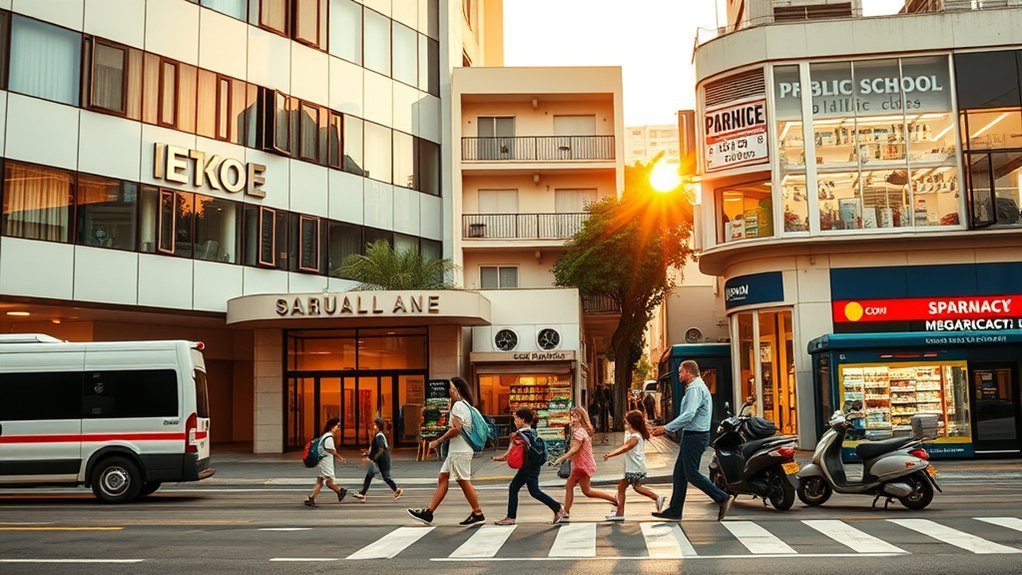
Brazil has a universal public health system, the Sistema Único de Saúde (SUS), which provides free care from primary clinics to complex procedures. Waiting times can be long, and quality varies by region, so many middle-class Brazilians and most expats also buy private health plans (planos de saúde).
- SUS: free at the point of use. You will need a SUS card (Cartão SUS), which requires a CPF.
- Private health plans: regulated by the national agency ANS. Prices depend heavily on age, city, network, and whether the plan is individual or through an employer. Get several quotes before you budget, since premiums rise sharply for people over 59.
- Employer plans: many employers in São Paulo and Rio include a health plan, which is a major benefit to weigh when comparing job offers.
- Visa insurance: some visa categories require proof of health insurance valid in Brazil.
Schools and Childcare
- Private preschool: about R$2,670 (~$510) a month in São Paulo, full day.
- International primary school: about R$81,900 (~$15,700) a year per child in São Paulo. Top bilingual and international schools charge more, plus enrollment fees and materials.
- Public schools: free and taught in Portuguese. Quality varies widely, so most middle-class families pay for private schools.
For a family with two children in international school, tuition alone adds about R$13,650 (~$2,615) a month.
Taxes: Income Tax, Social Security, and Consumption Taxes
Brazil changed its income tax in 2026, and most low and middle earners now pay less.
- Income tax (IRPF): monthly rates run from 0% to 27.5%. The base table taxes income above R$2,428.80, but a new 2026 reduction wipes out the tax entirely on monthly income up to R$5,000 and phases it out gradually up to R$7,350, according to the Receita Federal’s 2026 tax tables. Above that, the top rate of 27.5% applies on income over R$4,664.68, less a fixed deduction.
- Social security (INSS): employees pay 7.5% to 14% depending on salary, with contributions capped at a salary of R$8,475.55, per PwC’s Brazil tax summary. Employers pay about 20% on top.
- Consumption taxes: Brazil’s state ICMS and federal taxes are built into shelf prices. A major tax reform is gradually replacing them with a dual VAT (CBS and IBS) over the next several years.
- Tax residency: foreigners usually become tax residents after 183 days in Brazil within 12 months, or immediately on arrival with a permanent visa. Residents are taxed on worldwide income.
Visas and Income Requirements
Entry rules depend on your nationality:
- US citizens: need a visa again since April 2025. The State Department’s Brazil page notes that an e-visa is available and must be approved before travel.
- UK and EU citizens: can visit visa-free for up to 90 days for tourism. Overstays are fined per day.
- Digital nomad visa: requires foreign income of at least US$1,500 a month or US$18,000 in funds, according to the Foreign Ministry’s visa page. You must work only for foreign employers or clients.
- Retirement visa: requires a pension of at least US$2,000 a month.
Once in Brazil, residents register with the Federal Police and receive a national migration registry card (CRNM). You will also need a CPF tax number for nearly everything, from leases to phone plans.
Safety and Practical Tips
The US State Department rates Brazil Level 2: Exercise Increased Caution because of crime and kidnapping. It warns about armed robbery, “express kidnappings” in which victims are forced to withdraw cash or make app transfers, and drink spiking in Rio. It advises avoiding favelas, areas within 160 km of land borders, and Brasília’s satellite cities after dark. Safety varies block by block, so it shapes rent: secure buildings in safer neighborhoods cost more, and that premium is worth paying.
Practical tips:
- Use ATMs inside shopping malls or bank branches.
- Keep a separate phone with limited banking access when you go out at night.
- Use Pix, Brazil’s instant payment system, for most payments once you have a local bank account.
- Learn basic Portuguese. Outside tourist areas, little English is spoken.
One-Time Setup Costs
Budget for these before your first month:
- Visa fees: vary by nationality and visa type; check the Brazilian consulate that serves you.
- Rental guarantee: up to three months’ rent as a deposit, or the cost of a rental insurance policy.
- First month’s rent, condomínio, and IPTU: due at signing.
- Furnishing: many long-term rentals are unfurnished. Secondhand furniture keeps costs down.
- Health coverage gap: international insurance until a Brazilian plan starts.
- Document costs: sworn translations and apostilled documents for visa and residence applications.
Sample Monthly Budgets
These budgets combine the averages above. The lean column assumes a one-bedroom outside the center in Recife, Brasília, or Belo Horizonte; the other columns assume central São Paulo. They exclude private health insurance, which depends heavily on age.
| Expense (BRL) | Single, Lean | Single, Comfortable (São Paulo) | Couple (São Paulo) |
|---|---|---|---|
| Rent (1-bed) | 1,400 | 3,298 | 3,298 |
| Utilities | 450 | 528 | 600 |
| Internet + mobile | 170 | 193 | 200 |
| Groceries | 900 | 1,100 | 2,000 |
| Eating out + leisure | 300 | 900 | 1,300 |
| Transport | 200 | 262 | 525 |
| Gym | — | 180 | — |
| Total (BRL) | 3,420 | 6,461 | 7,923 |
| Total (USD) | ~$655 | ~$1,240 | ~$1,520 |
Family of four: crowd-sourced estimates put a family of four at about R$13,350 (~$2,560) a month before rent in São Paulo. Adding a three-bedroom outside the center brings the total to about R$18,400 (~$3,530). In Brasília, the same approach gives about R$14,300 (~$2,735). International school for two children adds roughly R$13,650 (~$2,615).
Salary vs. costs: the minimum wage of R$1,621 does not cover a one-bedroom in any major city center, and the average São Paulo take-home pay of about R$4,460 covers a lean budget but not the comfortable one. Many Brazilians share housing or live with family.
Money-Saving Tips
- Choose a mid-sized city. Belo Horizonte, Curitiba, and Recife rents run 40–60% below Rio’s center.
- Compare total housing cost. Add condomínio and IPTU before comparing listings.
- Shop at feiras and atacarejos for produce and staples.
- Eat a prato feito at lunch instead of dinner out.
- Use monthly transit passes or ride-hailing instead of owning a car.
- Plan around the exchange rate. The real can move 5–10% in a few months, so keep a buffer if you earn in dollars.
How Brazil Compares With Nearby Countries
Brazil sits in the middle of South America’s cost range. Crowd-sourced figures for September–October 2026 compare São Paulo with two other large Latin American capitals:
| City | 1-Bed, City Center | 1-Bed, Outside Center | Single Person, Excl. Rent | Avg. Net Salary |
|---|---|---|---|---|
| São Paulo | ~$633 | ~$405 | ~$699 | ~$856 |
| Bogotá | ~$752 | ~$426 | ~$678 | ~$768 |
| Lima | ~$732 | ~$336 | ~$581 | ~$648 |
Central São Paulo rents now sit below Bogotá and Lima in dollar terms, while daily costs are similar and salaries a bit higher. For neighboring options, see our guides to the cost of living in Argentina, living costs in Uruguay, and what it costs to live in Paraguay. Farther north and west, compare our Colombia cost of living guide and our guide to monthly expenses in Peru.
Frequently Asked Questions
How much money do you need to live in Brazil per month?
A single person needs about R$3,400 (~$655) a month for a lean life in a mid-sized city and about R$6,450 (~$1,240) for a comfortable one in São Paulo, before private health insurance. A couple in São Paulo should budget about R$7,900 (~$1,520).
Is $1,000 a month enough to live in Brazil?
Yes, in most cities. At about R$5.22 per dollar, $1,000 is roughly R$5,200. That covers a comfortable single budget in Belo Horizonte, Curitiba, Recife, or Brasília, or a lean one in São Paulo outside the center. It is tight in central Rio or Florianópolis.
How much is rent in São Paulo in 2026?
A one-bedroom averages about R$3,300 (~$630) a month in the center and R$2,110 (~$405) outside it. A three-bedroom costs about R$7,600 (~$1,460) in the center and R$5,060 (~$970) outside. Condomínio fees and IPTU are usually extra.
What is the minimum wage in Brazil in 2026?
The 2026 minimum wage is R$1,621 a month, or about $310 at the current exchange rate.
Do US citizens need a visa for Brazil?
Yes. Since April 2025, US citizens need a visa for any purpose, and an e-visa is available. UK and EU citizens can visit visa-free for up to 90 days.
Which Brazilian city is cheapest to live in?
Among major cities, Recife, Brasília, and Belo Horizonte have the lowest rents outside the center, at about R$1,300–R$1,440 for a one-bedroom. Rio de Janeiro and São Paulo are the most expensive.
Conclusion
Brazil is affordable for anyone earning in dollars or euros, but city choice matters more than anything else. A single person can live comfortably in central São Paulo for about $1,240 a month, or for much less in Belo Horizonte, Curitiba, or Recife. Rio and Florianópolis now cost more than many expect. Budget for condomínio and IPTU on top of rent, price a private health plan for your age, and factor in safety when you pick a neighborhood. The 2026 income tax cut helps local earners, while US citizens should remember the visa requirement before booking.
Sources
- Trading Economics – USD/BRL exchange rate, October 2026
- Trading Economics – Brazil IPCA inflation, August 2026
- Trading Economics – Brazil minimum wage 2026
- SPTrans – São Paulo fares 2026
- Ministério da Saúde – Sistema Único de Saúde (SUS)
- Receita Federal – 2026 income tax tables
- PwC – Brazil social security and other taxes
- US State Department – Brazil country information
- US State Department – Brazil travel advisory
- UK FCDO – Brazil entry requirements
- Ministry of Foreign Affairs – visas for foreigners
- Numbeo – Brazil, São Paulo, Rio de Janeiro, Brasília, Florianópolis, Belo Horizonte, Curitiba, Recife (crowd-sourced data)