Welding rod cost for common stick-welding electrodes (SMAW) is about $9 to $40 for many U.S. retail packs. Small 2 lb E6013 packs can start around $8.99–$9.99, while many 5 lb E6013 and E7018 packs sell for roughly $28–$36. Specialty stainless, aluminum, and cast-iron electrodes can cost much more per pound, and professional bulk packages can exceed $170.
This guide focuses on consumable stick-welding electrodes, which are commonly called welding rods. TIG filler rods, brazing rods, carbon-gouging electrodes, and plastic welding rods are different products and should not be compared directly with SMAW electrode prices. Also see our guides to welding electrode costs, 50 lb welding rod prices and welding rod prices by type and size.
Quick Answer
- Many common stick-welding electrode packs cost about $9–$40 at major U.S. retailers.
- A 2 lb E6013 pack can cost about $8.99–$9.99.
- Many current 5 lb E6013 and E7018 packs fall around $28–$36.
- Specialty alloys can cost far more per pound than mild-steel electrodes.
- Bulk packs can lower the cost per pound, but low-hydrogen electrodes such as E7018 need proper dry storage after opening.
- Compare classification, package weight, current requirements, diameter, and cost per pound before buying.
Current Welding Rod Price Snapshot
The examples below were checked on September 7, 2026. Retail prices can change by location, promotion, stock level, and package configuration.
| Electrode Example | Package | Listed Price | Approx. Price/lb. |
|---|---|---|---|
| Chicago Electric E6013, 1/16 in. | 2 lb | $8.99 | $4.50 |
| Vulcan E6013, 1/8 in. | 2 lb | $9.99 | $5.00 |
| Lincoln Electric Fleetweld 37 E6013, 3/32 in. | 5 lb | $34.98 | $7.00 |
| Hobart E6010, 1/8 in. | 5 lb | $34.99 | $7.00 |
| Lincoln Electric Fleetweld 7018AC E7018, 1/8 in. | 5 lb | $35.98 | $7.20 |
| Lincoln Electric Excalibur E7018 MR H4R, 1/8 in. | 30 lb | $170.44 | $5.68 |
Quick value check: divide the package price by its weight. For example, a $35 five-pound box costs $7 per pound, while a hypothetical $30 ten-pound box would cost $3 per pound. This makes it easier to compare packages that look very different on the shelf.
Overview of Welding Rod Pricing

Current welding-rod prices span a wider range than one simple box-price estimate suggests. Lowe’s currently describes a typical welding-rod price around $26, with its category ranging from approximately $8 to $40, while specialty and industrial packages can exceed that range.
A basic E6013 pack may cost less than $10 when sold in a small two-pound package. Five-pound E6013, E6010, and E7018 boxes commonly move into the upper-$20s to mid-$30s, depending on brand and diameter.
Package weight matters as much as sticker price. A large carton costs more upfront but can cost less per pound. However, bulk buying only saves money if you will use the electrodes before storage, moisture, or damage becomes a problem.
Factors Influencing Welding Rod Costs
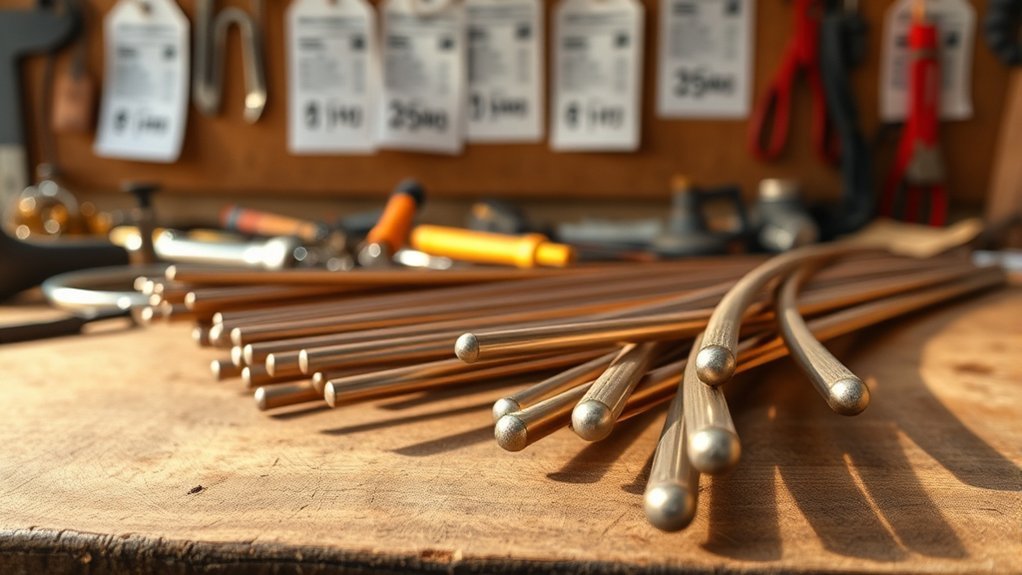
Five factors explain most welding-electrode price differences:
- AWS classification and alloy: common carbon-steel electrodes usually cost less per pound than specialty stainless, aluminum, nickel, or cast-iron electrodes.
- Package size: larger cartons usually require more cash upfront but can reduce the cost per pound.
- Diameter and availability: diameter affects pricing, but a smaller diameter is not automatically cheaper. Stock level and demand can change the relationship.
- Packaging and moisture control: low-hydrogen electrodes may use moisture-resistant packaging and require controlled storage after opening.
- Retailer, location, and promotions: the same classification may carry different prices across stores or during member promotions.
For occasional home use, the cheapest price per pound is not always the cheapest overall purchase. A smaller package can make more sense if you will not use a bulk carton or cannot store opened low-hydrogen electrodes correctly.
Comparison of Common Welding Rod Types

E6010, E6011, E6013, and E7018 are among the most common stick electrodes for carbon-steel work. Their price differences matter, but current type, penetration, base-metal condition, welding position, and storage requirements should decide which one you buy.
| Electrode | Typical Current | Penetration | Common Use |
|---|---|---|---|
| E6010 | DCEP | Deep | Pipe roots, field repair, moderate surface contamination |
| E6011 | AC or DCEP | Deep | General repair, farm work, AC-machine use |
| E6013 | AC or DC | Light to medium | Clean mild steel, sheet metal, practice and light fabrication |
| E7018 | Usually DCEP or AC, depending on product | Moderate | Structural and higher-strength carbon/low-alloy steel work requiring low hydrogen |
Always check the manufacturer’s data sheet for the exact electrode you buy. Current compatibility and approved positions can vary by formulation even within the same general AWS classification.
Pricing Overview of Electrodes
Current mild-steel electrode prices show why package size should be normalized before comparing brands. A two-pound E6013 package around $9–$10 works out to about $4.50–$5 per pound. Some five-pound E6013 and E7018 boxes are closer to $6–$7+ per pound, while a 30 lb E7018 MR package can bring the unit cost back down.
That does not mean the largest box is automatically the best buy. For low-hydrogen electrodes, storage becomes part of the real cost. If opened rods absorb too much moisture and cannot be used for the intended work, the apparent bulk saving disappears.
Types of Welding Rods
Stick-electrode classifications tell you much more than price. For common carbon-steel electrodes, the first two digits in E6010, E6011, or E6013 indicate a minimum 60,000 psi tensile-strength class, while E7018 belongs to a 70,000 psi class. The remaining digits relate to welding position and coating/current characteristics.
- E6010: deep-penetrating, fast-freeze electrode commonly used for pipe and root passes. Lincoln Electric specifies DCEP for Fleetweld 5P+.
- E6011: another deep-penetrating electrode that can run on AC as well as DCEP, making it useful with a wider range of machines.
- E6013: smoother, lighter-penetrating general-purpose electrode that runs on AC or DC and is widely used for clean mild steel and beginner practice.
- E7018: low-hydrogen electrode used where strength and hydrogen control matter. Many products run on DCEP or AC, but you should follow the exact manufacturer’s data sheet.
For a deeper explanation of the designation system, see Lincoln Electric’s guide to AWS Classifications.
Specialty vs. General Use
Specialty electrodes can look expensive even when the package is small because the alloy content and application are different from standard mild-steel rods. Current Home Depot listings, for example, show one-pound E312-16 stainless electrodes above $40, a half-pound E4043 aluminum electrode around $39, and a one-pound cast-iron electrode around $27.
| Category | Current Example | Price Signal |
|---|---|---|
| General mild steel | E6013 | About $9–$35 in checked 2–5 lb examples |
| Low hydrogen | E7018 | About $28–$36 for many checked 5 lb examples |
| Stainless specialty | E312-16 | About $41–$43 for a checked 1 lb example |
| Aluminum specialty | E4043 | About $39 for a checked 0.5 lb example |
| Cast-iron specialty | Cast-iron electrode | About $27 for a checked 1 lb example |
These are dated retail examples, not fixed national prices. Confirm the exact classification, package weight, and current listing before ordering.
Pricing for Specialty Welding Rods

Specialty welding electrodes can cost several times more per pound than common E6013 or E7018 mild-steel rods. The alloy itself is a major reason: stainless, aluminum, nickel-based, and cast-iron consumables are made for different metallurgical requirements.
Do not compare carbon arc-gouging electrodes, brazing rods, TIG filler rods, or plastic welding rods directly with stick-welding filler electrodes. They perform different jobs and follow different pricing patterns.
Before buying an expensive specialty electrode, confirm the base metal, required filler classification, welding process, machine polarity/current capability, and any applicable welding procedure or code.
Budget-Friendly Options for Welding Rods

If your job uses common mild steel, small E6013 packs are among the lowest-cost current options:
- Chicago Electric 1/16 in. E6013: $8.99 for 2 lb at the time of checking.
- Vulcan 1/8 in. E6013: $9.99 for 2 lb at the time of checking.
- Vulcan E7018: Harbor Freight also lists several small and larger E7018 packages, but verify your required diameter and storage needs before choosing only by price.
For a hobbyist, buying the smallest package that suits the job can be cheaper overall than buying bulk material that sits unused. For frequent welding, calculate the cost per pound and compare bulk packages.
Where to Buy Welding Rods at Competitive Prices
Compare at least two sellers because electrode pricing can vary by diameter, package weight, local stock, and promotions. Major U.S. retailers currently listing common stick electrodes include Harbor Freight, Home Depot, Lowe’s, and Tractor Supply.
Online Retailers Overview
- Harbor Freight: useful for small E6011, E6013, and E7018 packs, including several current $8.99–$9.99 two-pound options.
- Home Depot: carries common Lincoln and Forney mild-steel electrodes plus specialty stainless, aluminum, and cast-iron options.
- Lowe’s: its current welding-rod category reports a typical price around $26 and a broad category range of roughly $8–$40.
- Tractor Supply: stocks Hobart and other stick electrodes in multiple classifications and diameters.
When comparing online listings, check the full package weight. A lower sticker price can still mean a higher cost per pound.
Local Supply Stores
A local welding-supply shop can be useful when you need a specific classification, fresh sealed low-hydrogen electrodes, technical guidance, or industrial package sizes that home-improvement stores do not stock.
Ask for the exact AWS classification, diameter, package weight, storage condition, and price per pound. For low-hydrogen electrodes, also check whether the package is sealed and how the rods should be handled after opening.
If you are budgeting for more than consumables, see our guides to welding startup costs and overall welding service costs.
Tips for Selecting the Right Welding Rod for Your Project
Choose the electrode for the weld first and compare prices second. A cheap rod that does not match the base metal, machine, position, or procedure is not a bargain.
- Confirm the process. Make sure you need a stick/SMAW electrode rather than TIG filler, MIG wire, or a brazing rod.
- Identify the base metal and required classification. Follow the drawing, welding procedure, code requirement, or manufacturer recommendation where applicable.
- Check your welder’s output. E6010, E6011, E6013, and E7018 do not all use the same current or polarity.
- Match the welding position. Confirm that the exact electrode is approved for the position you will use.
- Select the diameter. Match diameter to material thickness, joint design, position, and the amperage range published for that electrode.
- Consider storage. Low-hydrogen electrodes such as E7018 require much tighter moisture control than many general-purpose electrodes.
- Compare package value. Divide price by package weight, then decide whether you can realistically use and store the larger package.
This sequence prevents a low shelf price from becoming an expensive mistake.
Frequently Asked Questions
How Much Do Welding Rods Cost?
As of September 7, 2026, many common U.S. retail packs of stick-welding electrodes cost about $9–$40. Two-pound E6013 packs can start around $8.99–$9.99, while many five-pound E6013 and E7018 boxes run around $28–$36. Specialty alloys and bulk industrial packages can cost considerably more.
Which Welding Rod Is Best for Beginners?
E6013 is a common beginner choice for clean mild steel because it runs on AC or DC, produces a relatively smooth arc, and has lighter penetration than E6010 or E6011. E6011 is useful when you need deeper penetration or must work with an AC machine on less-clean steel. Always match the rod to your actual project rather than choosing only by skill level.
How Do I Store Welding Rods Properly?
Keep electrodes dry and follow the manufacturer’s storage instructions. Low-hydrogen electrodes need special attention. Lincoln Electric states that opened low-hydrogen electrodes should be kept in heated storage, typically 250–300°F (120–150°C), and exposure limits depend on the electrode type. See Lincoln Electric’s official storing and redrying guidelines.
Can I Use Any Welding Rod for My Project?
No. Electrode classification must match the base metal, welding process, required strength, position, machine current/polarity, and any applicable welding procedure or code. Check the manufacturer’s data sheet when you are unsure.
What Safety Gear Do I Need When Welding?
Use an appropriate welding helmet, protective gloves, flame-resistant clothing, and suitable footwear. Welding also produces fumes, so use appropriate ventilation or local fume extraction for the work and material involved. NIOSH notes that welding fumes can affect the respiratory system and recommends controlling exposure with appropriate engineering controls and other protection when needed. See the NIOSH welding-fume guidance.
How Long Do Welding Rods Last?
There is no universal “several hours to a few days” lifespan for welding rods. Properly stored unopened electrodes can remain usable far longer. The more important issue is moisture exposure after opening, especially with low-hydrogen electrodes such as E7018. Follow the manufacturer’s exposure, holding, and redrying rules, and do not use electrodes with damaged coating, contamination, or other visible deterioration for critical work.
Do Welding Rods Expire?
Welding rods do not have one universal expiration period. Condition and storage matter more than a simple calendar age. Moisture, damaged flux, rust, contamination, and improper storage can make an electrode unsuitable even when it is not very old.
Are There Eco-Friendly Welding Rod Options Available?
There is no single recognized welding-electrode classification that automatically means “eco-friendly.” Treat environmental or sustainability claims as product-specific claims and verify them through manufacturer documentation or the product’s safety and technical data. Choosing the correct electrode and package size can also reduce wasted consumables.
Conclusion
For common stick-welding electrodes, a practical 2026 shopping range is about $9–$40 for many retail packs, but specialty alloys and industrial cartons can cost substantially more. Compare the AWS classification, current type, diameter, package weight, price per pound, and storage requirements before buying.
For occasional projects, a smaller box may save money overall. For frequent welding, larger packages can lower your cost per pound as long as you can store the electrodes correctly.