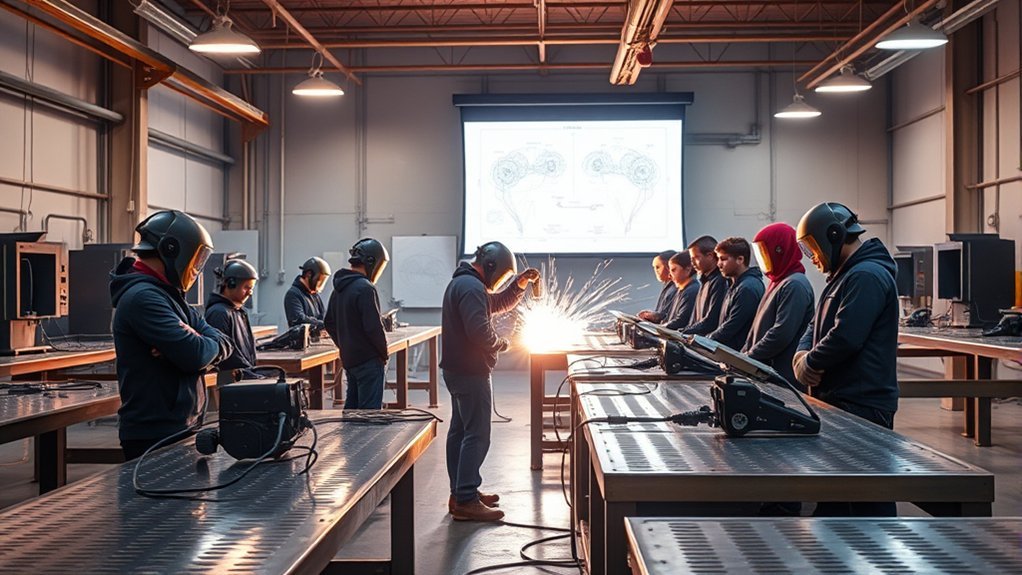
Welding trade school cost varies widely, but current official examples run from about $6,000 for a 300-hour community-college course to $26,485 for a 40-week private welding program. Your true cost can be higher once you add required gear, books, testing, transportation, housing, and lost work time. Compare the full cost of attendance, hands-on training hours, financial-aid eligibility, completion outcomes, and certification options before you enroll.
Quick Answer
Current official examples show welding programs ranging from about $6,000 for a 300-hour community-college course (the Community College of Philadelphia publishes $6,000 on one page and $8,485 on another, so confirm the current figure) to $26,485 for a 40-week private program. In the Hobart programs compared below, published cost works out to about $18.92–$21.52 per clock hour, although what is included differs. Add required gear, books, testing, travel, housing, and lost income before comparing your final net cost.
Key Takeaways
- There is no single national price for welding school; current published programs can differ by tens of thousands of dollars.
- Compare tuition, required fees, tools, gear, books, travel, housing, and lost work time.
- A school certificate is not the same as an AWS performance certification.
- For 2026–27, the maximum Federal Pell Grant is $7,395; since July 1, 2026, approved short-term workforce programs may also qualify for Workforce Pell.
- Use wage, completion, job-placement, and debt data to judge whether a program is worth the cost.
At a Glance
| Typical Training Time | Several weeks to about one year for many certificates or diplomas; about two years for an associate degree |
| Common Entry Requirements | Often a high school diploma or GED, basic math, minimum age rules, and the ability to meet shop-safety requirements |
| Main Cost Categories | Tuition, registration and lab fees, PPE, tools, books, consumables, travel, housing, and testing |
| Current Published Examples | About $6,000 (possibly up to $8,485) for a 300-hour course; $18,080 for a 24-week program; $26,485 for a 40-week program |
Overview of Welding Trade School Cost

Welding school costs vary too much for one national average to describe every program. A short noncredit course at a public college may cost far less than a full-time private program with more lab hours, processes, and included equipment.
As of August 10, 2026, official school pages provide useful real-world examples:
| Published Program | Length | Published Cost | Approx. Cost per Clock Hour |
|---|---|---|---|
| Community College of Philadelphia Welding Technology | 300 hours | About $6,000 (another college page lists $8,485); confirm what materials are included | $20.00 at $6,000 ($28.28 at $8,485) |
| Hobart Structural Welding Program | 24 weeks / 840 hours | $18,080 projected total ($15,400 tuition + $1,525 equipment + $1,155 materials) | $21.52 |
| Hobart Pathways Welding Program | 40 weeks / 1,400 hours | $26,485 projected total | $18.92 |
What the per-hour math shows: the published totals differ by roughly $18,000 or more, yet the two Hobart programs work out to about $18.92–$21.52 per clock hour, and the Community College of Philadelphia course to about $20.00 (or $28.28 if the $8,485 figure applies). Per-hour cost is a rough guide and does not make the programs equivalent. It shows why total price should be compared alongside clock hours, included equipment and materials, supervised booth time, and the specific welding processes or qualifications offered.
If location is part of your decision, compare the same cost categories in our Missouri welding school cost guide and California welding school cost guide.
These examples are not a national price guide. They show why you should compare the same cost categories at every school. One program may advertise tuition only, while another lists tuition, equipment, materials, and required fees together.
The lowest advertised tuition is not always the lowest total cost. Compare the full amount you must pay to complete the program.
Pro Tip: Ask each school for a written breakdown of tuition, mandatory fees, gear, books, testing, refund rules, and estimated living costs. Compare the final totals side by side.
For broader comparisons, see our welding training cost breakdown and welding school tuition, fees and ROI guide.
Types of Welding Programs Available
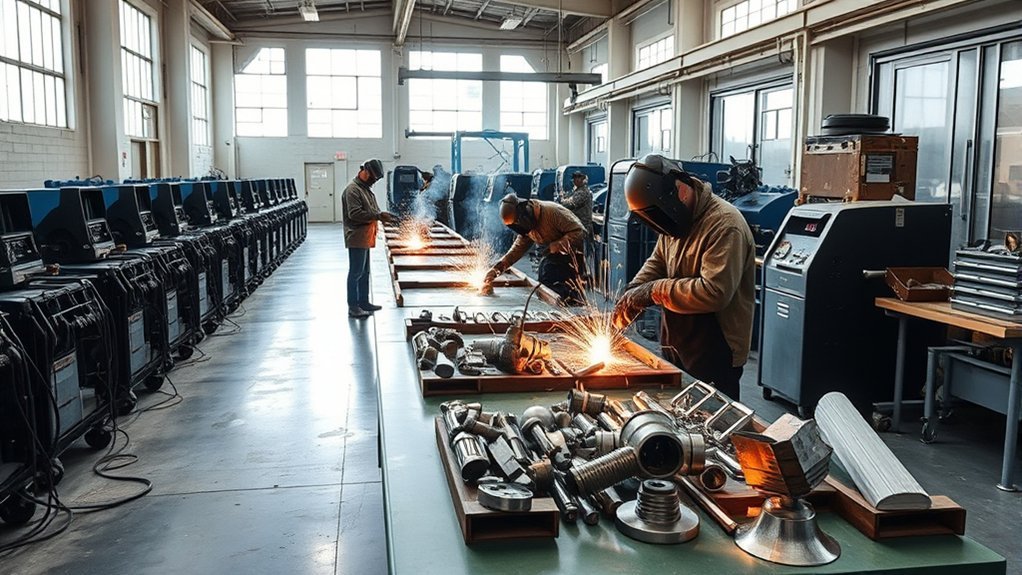
Your best program depends on the kind of welding job you want, how quickly you need to enter the workforce, and whether you may continue into supervision, inspection, engineering technology, or another degree.
Certificate Programs Overview
Certificate programs usually focus on hands-on skills and may run from several weeks to about one year. The curriculum may cover shielded metal arc welding, gas metal arc welding, flux-cored arc welding, gas tungsten arc welding, blueprint reading, cutting, fabrication, and shop safety.
A certificate can be a good fit when you want focused training and a faster path into entry-level work. Check how many hours are spent welding in the lab. A short program with limited booth time may not give a beginner enough practice for a demanding qualification test.
Diploma Programs Details
Diploma programs are often longer than basic certificates and may combine welding practice with math, print reading, metallurgy, fabrication, and employability skills. Program names are not standardized, so a “diploma” at one school may be similar to a “certificate” at another.
Compare clock hours, processes taught, welding positions, materials, class size, and included testing instead of choosing by credential name alone.
Associate Degree Options
An associate degree usually takes about two years and includes general education courses along with technical training. It may be useful if you want broader preparation for roles in fabrication, quality control, production, supervision, or later college study.
The degree route can cost more because it lasts longer. However, public-college tuition, in-district rates, grants, and transfer options may lower the net price. Use the U.S. Department of Education’s College Navigator to compare tuition, fees, program level, graduation data, and other school information.
Apprenticeships and Employer-Sponsored Training
School is not the only path. Some employers, unions, military programs, and registered apprenticeships combine paid work with training. These routes can reduce tuition costs, but openings may be competitive and training may focus on the employer’s work rather than a broad set of welding processes.
Ask local fabrication shops, contractors, unions, workforce agencies, and community colleges about paid training or tuition-assistance programs before taking on private student debt.
Factors Affecting Tuition Rates

Program length matters, but it is only one part of the price. Tuition can also change based on the school type, residency rules, lab access, equipment, class size, and the number of welding processes taught.
Program Length and Duration
Longer programs usually cost more because they include more instruction and lab hours. Still, cost per hour can be more useful than the total alone. Divide the published program cost by the number of clock hours, then compare what is included.
A 300-hour program and a 1,400-hour program are not direct substitutes. The longer program may offer more practice, but you should still confirm that its extra time supports the jobs and qualifications you want.
Institution Type Differences
Public community colleges may charge lower in-district tuition, while private career schools often use one program price. Private programs may offer frequent start dates, full-day schedules, or more concentrated shop training. Public programs may offer transferable credits and broader student services.
Neither school type is automatically better. Compare net price, completion rate, debt, schedule, lab time, employer relationships, and refund terms.
Location-Based Costs
Your location affects both tuition and living expenses. Public colleges may charge different rates for in-district, in-state, and out-of-state students. Transportation, parking, rent, food, and the ability to keep working can cost more than expected.
Do not rely on generic “urban” or “rural” averages. Use the school’s current cost-of-attendance estimate and your own monthly budget.
Training Content and Lab Access
Programs that include more processes, pipe welding, stainless steel, aluminum, fabrication, blueprint reading, destructive testing, or certification preparation may cost more. Ask how much individual booth time students receive and whether consumables are included or rationed.
Note: A low-cost program can be a strong value when it provides enough supervised practice, safe equipment, current instruction, and a clear path to local employment.
Additional Expenses to Consider
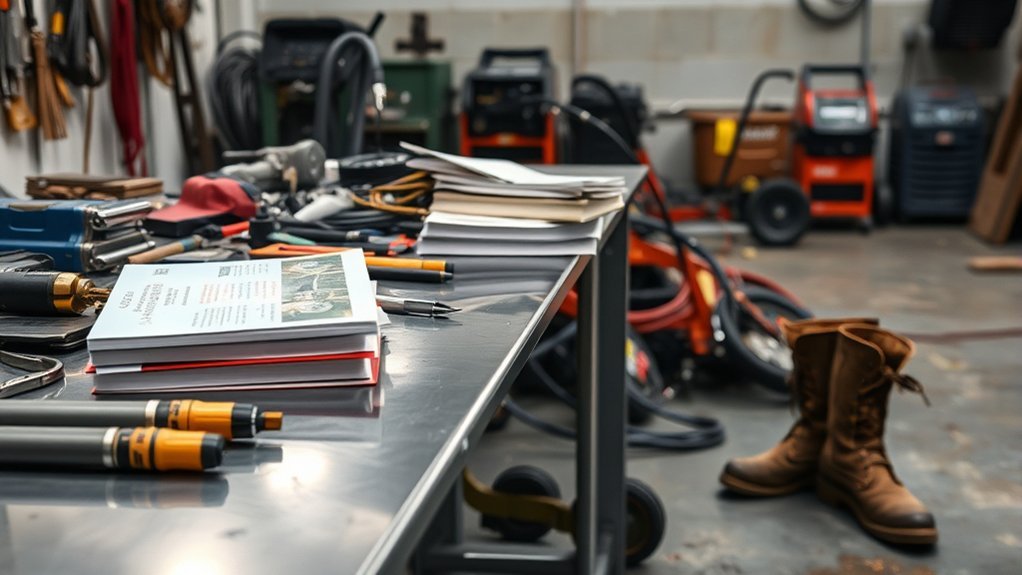
Tuition is only one part of your budget. Depending on the school, you may also pay for:
- Registration, technology, lab, insurance, and graduation fees
- A welding helmet, jacket, gloves, safety glasses, boots, hearing protection, and respirator fit testing when required
- Hand tools, measuring tools, grinders, clamps, and tool storage
- Books, online access codes, blueprints, and training materials
- Metal, electrodes, wire, gas, coupons, and other consumables
- A physical exam, drug screen, background check, or immunizations for certain employers or placements
- AWS or employer qualification testing, retesting, and certification maintenance
- Transportation, parking, meals, housing, and child care
- Lost income if the class schedule reduces your work hours
Current published examples show how these charges can change the total. For its 24-week Structural program, Hobart lists $1,525 for equipment plus $1,155 for training materials on top of $15,400 tuition. The Community College of Philadelphia publishes about $6,000 for its 300-hour course on one page and $8,485 on another, so confirm what is included before you enroll.
Warning: Do not buy a welding machine before the school confirms that you need one. Many programs provide shop machines, and a personal machine may not match the processes, power supply, or code work used in class.
Calculate Your True Welding School Cost
Use this simple formula:
Total cost = tuition + required fees + gear and tools + books and consumables + testing + travel and living costs + lost income − grants and scholarships.
Then separate grants and scholarships from loans. Loans lower what you pay today, but they do not lower the total cost because you must repay principal and interest.
Financial Aid and Scholarship Opportunities

Federal grants and loans may be available when you meet student eligibility rules and attend an eligible school and program. For the 2026–27 award year, the maximum Federal Pell Grant is $7,395, although your actual award depends on eligibility and enrollment.
Since July 1, 2026, Workforce Pell can extend Pell Grant access to approved short-term workforce programs. A short welding course does not qualify automatically: the program must meet federal requirements and receive the required state and U.S. Department of Education approvals.
The Federal Student Aid eligibility guide explains the main requirements. You can also use the Federal School Code search to find participating colleges and career schools.
The AWS Foundation offers welding scholarships for trade-school, community-college, and degree students. Its current listings include up to 800 annual $1,000 Welder Training Scholarships for eligible short-term certificate students, plus national and district awards with different amounts and requirements.
- Submit the FAFSA as early as possible and meet school and state deadlines.
- Apply for school, employer, union, workforce, state, and AWS scholarships.
- Ask whether aid covers tools, books, transportation, or only tuition.
- Compare the grant-and-scholarship amount before comparing loan offers.
- Review the refund policy because withdrawing can leave you owing money.
Pro Tip: Ask the financial-aid office for your estimated net price and total borrowing in writing. Do not judge affordability from the monthly payment alone.
How to Compare Welding Schools Before You Enroll
A strong program should be transparent about cost, training, safety, and outcomes. Use this checklist during tours and admissions calls:
- Verify the school. Check institutional accreditation or recognition in the U.S. Department of Education’s accreditation database, along with state approval or licensing. Accreditation does not guarantee quality, but it helps you confirm the school’s status.
- Compare total price. Request tuition, all mandatory fees, gear, books, testing, and living-cost estimates.
- Review the curriculum. Match the welding processes, materials, positions, blueprint reading, fabrication, and safety training to local job postings.
- Ask about lab time. Find out the student-to-instructor ratio, weekly booth hours, equipment condition, and consumable limits.
- Check outcomes. Ask for completion, withdrawal, placement, and median debt data. Confirm how the school defines “placed.”
- Confirm testing options. Ask which qualification tests are included, which code or procedure they use, and who pays for retesting.
- Read the refund policy. Understand deadlines, nonrefundable fees, and what happens if you leave early.
- Speak with employers. Ask local welding employers which programs they hire from and which skills new workers often lack.
School Certificate vs. Welding Certification
A school certificate shows that you completed a training program. A welding certification or qualification shows that you passed a performance test for a specific process, material, position, and procedure.
The AWS Certified Welder program is performance-based and does not require a specific course or prior certification. Tests are given through AWS Accredited Test Facilities, and the facility sets the exam fee.
For 2026, AWS lists a $70 Certified Welder application fee and a $105 yearly maintenance subscription; the CW exam itself is priced by the testing facility. Ask whether your school includes the test, application, and maintenance costs or only prepares you for the performance test.
Red Flags to Avoid
- Pressure to sign or borrow money during the first visit
- No written list of mandatory fees or refund terms
- Guaranteed jobs, guaranteed salaries, or vague “up to” earnings claims
- Very little individual welding time
- Outdated, unsafe, or poorly maintained equipment
- Placement numbers that exclude many graduates or count unrelated jobs
- No clear answer about which tests, codes, or credentials are included
Career Prospects After Graduation
Welding can lead to work in manufacturing, construction, repair, fabrication, shipbuilding, energy, and other industries. Pay varies by location, employer, schedule, overtime, union status, skill level, and the type of work.
The latest U.S. Bureau of Labor Statistics wage release lists a median hourly wage of $25.84 and a mean annual wage of $56,760 for welders, cutters, solderers, and brazers in May 2025. The BLS Occupational Outlook Handbook projects 2% employment growth from 2024 to 2034, which is slower than the average for all occupations, but it also projects about 45,600 openings per year, mostly from replacement needs.
| BLS Measure | Latest Figure Used Here | What It Means |
|---|---|---|
| Median hourly wage | $25.84 in May 2025 | Half earned more per hour and half earned less |
| Mean annual wage | $56,760 in May 2025 | Average annual wage across surveyed jobs |
| Projected growth | 2% from 2024 to 2034 | Slower than the average for all occupations |
| Projected openings | About 45,600 per year | Most openings are expected from workers changing occupations or leaving the workforce |
Specialized work can pay more, but broad salary promises are unreliable. For example, underwater welding is part of commercial diving and requires diving training, medical fitness, and added safety skills. Aerospace, pipeline, pressure-vessel, and inspection work may also require experience and specific qualifications. A school credential alone does not guarantee access to these jobs.
Warning: Welding exposes workers to fumes, ultraviolet radiation, burns, eye injury, electrical shock, fire, and other hazards. Choose a program that teaches ventilation, PPE, hot-work controls, and safe equipment use in line with OSHA welding safety guidance.
Is Welding School Worth the Investment?
Welding school can be worth the cost when the program gives you enough hands-on practice, matches local hiring needs, has reasonable completion and placement outcomes, and does not require unmanageable debt. It may be a poor value when the price is high, lab time is limited, or the school relies on salary promises instead of verified outcomes.
Estimate a simple payback period by dividing your net school cost by the expected increase in annual earnings. For example, a $12,000 net cost divided by an $8,000 annual income increase equals a 1.5-year simple payback period. This example does not include taxes, loan interest, unemployment, overtime, or lost wages, so use conservative numbers.
- Compare the program’s net price with lower-cost public and apprenticeship options.
- Check whether local employers require school, prefer experience, or hire trainees.
- Avoid borrowing more than you can reasonably repay on an entry-level wage.
- Value lab hours, instruction quality, safety, and employer connections—not just the credential name.
Frequently Asked Questions
Are payment plans available for welding school tuition?
Many schools offer installment plans, but the terms differ. Ask about the down payment, due dates, service fees, late fees, automatic withdrawals, and refund policy. A payment plan spreads out the bill; it does not reduce the price. The Community College of Philadelphia, for example, publishes a down payment and two-installment option for its welding course.
Can I work while attending welding school?
Yes, especially when the school offers evening, weekend, or part-time classes. Full-time programs can be harder to combine with a job because welding labs may require fixed attendance. Compare the weekly class and study schedule with your commute and work hours before enrolling.
What are the prerequisites for a welding program?
Many programs require a high school diploma or GED, basic math, and a minimum age, but rules vary. Some short courses have fewer requirements. Physical demands and shop-safety rules may also apply. Check the school’s written admissions standards rather than assuming every program uses the same prerequisites.
How long does welding school take?
A focused course may take several weeks or months, many certificate and diploma programs take under a year, and an associate degree usually takes about two years. Compare clock hours and lab time as well as calendar length. Two programs with the same number of months may provide very different amounts of practice.
Do trade schools provide job-placement assistance?
Many provide résumé help, interview practice, employer visits, job leads, or career fairs. Assistance is not a job guarantee. Ask for recent placement data, the definition of a placed graduate, the types of jobs counted, and whether the school continues helping after graduation.
Do I need to buy my own welding machine?
Usually not. Most in-person programs provide welding machines in the lab, though students may need PPE and hand tools. Get the required-equipment list before buying anything. A personal machine can be useful for practice only when you have a safe, ventilated space and the correct electrical service.
Does graduating from welding school make me a certified welder?
Not automatically. Graduation gives you the school’s certificate, diploma, or degree. A performance certification requires you to pass a test for a specific procedure. Ask whether testing is included, which organization or code recognizes it, what positions and materials it covers, and how the credential is maintained.
Can welding school be free with financial aid?
Sometimes your out-of-pocket tuition can fall to zero if grants, scholarships, employer assistance, or other non-loan aid fully cover the eligible charges. For 2026–27, the maximum Federal Pell Grant is $7,395. Workforce Pell can also apply to approved short-term workforce programs beginning July 1, 2026, but a welding program must be specifically eligible; short length alone does not qualify it.
How much does AWS Certified Welder certification cost in 2026?
AWS lists a $70 Certified Welder application fee and a $105 yearly maintenance subscription for 2026. The performance-test fee is not a single national price; each AWS Accredited Test Facility sets its own exam charge. Ask the facility for the test, retest, and any material or coupon fees before scheduling.
Conclusion
Welding school prices can range widely because programs differ in length, lab time, equipment, fees, and credential level. Start with the full published cost, subtract grants and scholarships, and then compare training quality and local job outcomes. A program is more likely to be worth it when it builds tested skills without leaving you with debt that an entry-level wage cannot support.
Sources
- National Center for Education Statistics — College Navigator — school, program, tuition, and outcome comparison data
- Federal Student Aid — Eligibility Requirements — federal financial-aid rules
- AWS Foundation Scholarships — current welding scholarship options and award ranges
- AWS Certified Welder Program — performance-test requirements and certification details
- U.S. Bureau of Labor Statistics — Welders, Cutters, Solderers, and Brazers — education, work environment, pay, and job outlook
- Occupational Safety and Health Administration — Welding Hazards and Solutions — welding health and safety risks
- Federal Student Aid — Federal Pell Grants — 2026–27 maximum Pell Grant amount
- U.S. Department of Education — Workforce Pell Grant Final Rule — short-term workforce-program eligibility changes effective July 2026
- American Welding Society — 2026 Program Price List — Certified Welder application and maintenance fees