
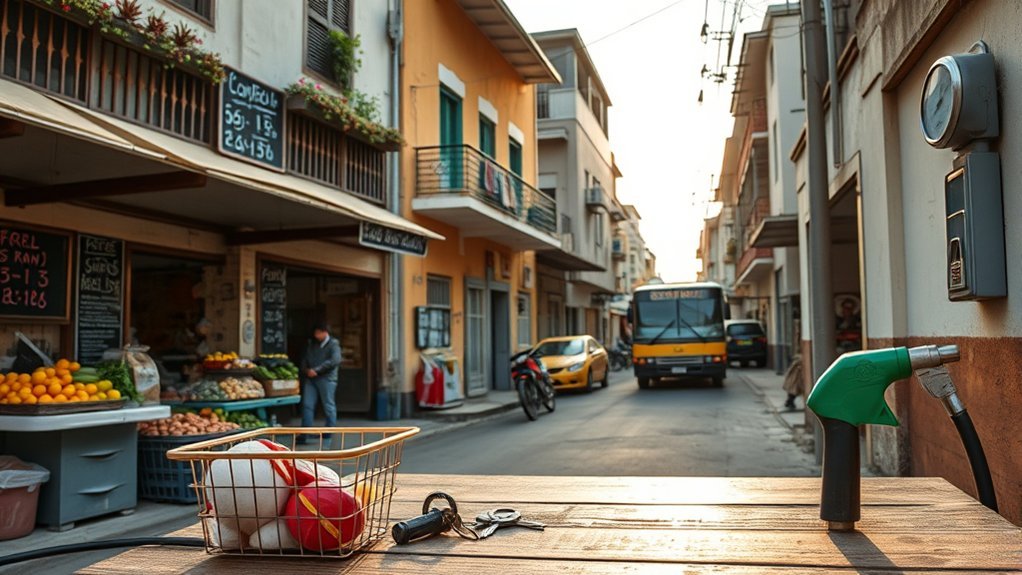
The cost of living in Honduras in 2026 runs about L27,000 (~$1,000) a month for a single person living simply on the mainland, and about L38,000 (~$1,410) for a comfortable single life in Tegucigalpa or San Pedro Sula. A couple should plan on roughly L50,000 (~$1,865), and a family of four about L79,000 (~$2,940) before private school fees. Roatán and the Bay Islands cost much more, with one-bedroom rents around $550–$850. These figures use an exchange rate of about L26.82 per US dollar (October 2, 2026). The lempira has been stable this year, and the IMF expects inflation of about 4.4% in 2026, so prices are rising steadily but not fast. Below you’ll find city rents, utilities, food, the 2026 minimum wage, taxes, safety, and sample budgets.
By: Theo Ramirez
Quick Answer
- Single person: L27,000 (~$1,000) on a lean budget; L38,000 (~$1,410) for a comfortable one.
- Couple: about L50,000 (~$1,865) a month.
- Family of four: about L79,000 (~$2,940) before private school fees.
- Rent, one-bedroom: about L11,000 (~$410) outside the center and L13,400 (~$500) in the center, national average. Roatán runs $550–$850.
- Utilities: about L3,350 (~$125) a month for an 85 m² apartment; internet adds about L1,040 (~$39).
- Minimum wage 2026: L9,597–18,957 (~$358–$707) a month, depending on sector and company size.
- Sales tax: 15% on most goods; 18% on alcohol and tobacco.
Exchange Rate, Inflation, and Wages in 2026
Three numbers shape what Honduras costs you this year.
The exchange rate. The lempira moves slowly under the central bank’s managed system. It traded at about L26.82 per dollar on October 2, 2026, close to the year’s high of L26.94 in late August and up from about L26.34 in January. All dollar figures in this guide use L26.82.
Inflation. The IMF projects consumer price inflation of about 4.4% and real GDP growth of about 3.3% for Honduras in 2026. Energy and food are the main drivers, so electricity and grocery bills tend to rise faster than rent.
The minimum wage. Honduras sets its minimum wage by sector and company size. The Ministry of Labor’s 2026 wage table, in force since January 2026 under a two-year tripartite deal, ranges from L9,596.64 a month for small farms (1–10 workers) to L18,957.14 for large restaurants and hotels (151+ workers). Manufacturing ranges from L13,110.80 to L18,530.19.
At about L26.82 per dollar, the lowest 2026 minimum wage equals about $358 a month and the highest about $707. The crowd-sourced average net salary is about L14,400 (~$536).
Cost of Living by City
Rents vary a lot between Honduras’s main cities and the islands. The table uses crowd-sourced averages from Numbeo (national data updated August 2026; city pages July 2026 for Tegucigalpa and San Pedro Sula) and Roatán data from November 2025. The Roatán figures come from very few contributors and are listed in US dollars, as island landlords usually quote them.
| City | 1-Bed, City Center | 1-Bed, Outside Center | Basic Utilities (85 m²) | Internet |
|---|---|---|---|---|
| Tegucigalpa | L12,131 (~$452) | L12,563 (~$468) | L3,833 (~$143) | L928 (~$35) |
| San Pedro Sula | L15,000 (~$559) | L11,250 (~$419) | L3,459 (~$129) | L1,161 (~$43) |
| Roatán | $850 (~L22,800) | $550 (~L14,750) | not enough data | $100 (~L2,680) |
| Honduras average | L13,389 (~$499) | L10,979 (~$409) | L3,345 (~$125) | L1,038 (~$39) |
A few patterns stand out:
- Tegucigalpa is the capital and has the most government, embassy, and NGO jobs. Its cool mountain climate keeps air conditioning costs down. Central and outer rents are similar because the safest neighborhoods, such as Lomas del Guijarro and Colonia Palmira, are spread across the city.
- San Pedro Sula is the business and manufacturing hub. It is hot, so electricity bills climb with air conditioning.
- Roatán and the other Bay Islands cost far more for housing, imported food, and internet. Rents are quoted in dollars, and electricity on the islands is more expensive than on the mainland.
- La Ceiba, Copán Ruinas, and smaller towns are cheaper, but there is too little current data to give reliable averages. Ask locally.
Housing and Rent
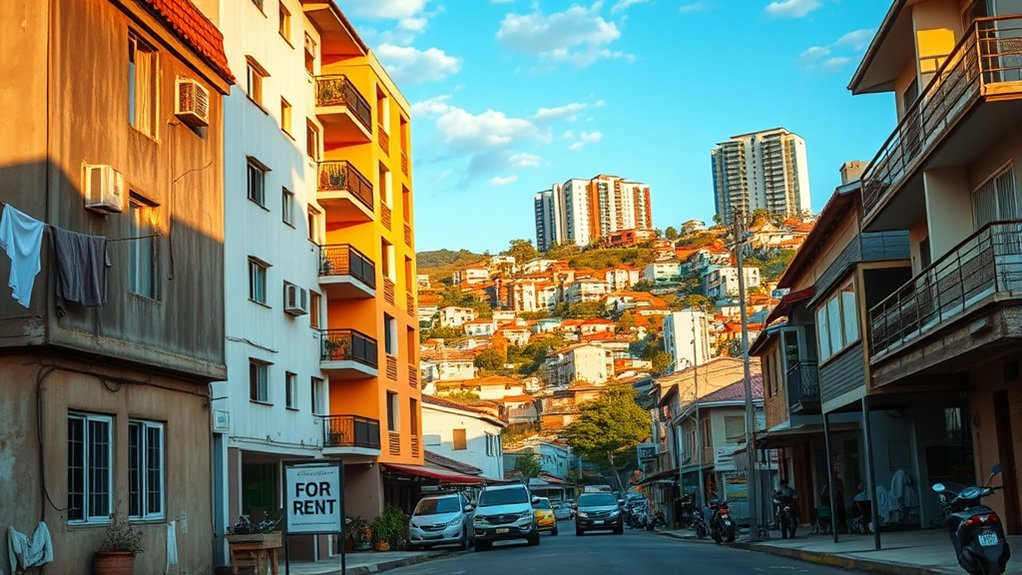
National averages for August 2026:
| Apartment | City Center | Outside Center |
|---|---|---|
| 1 bedroom | L13,389 (~$499) | L10,979 (~$409) |
| 3 bedrooms | L25,471 (~$950) | L19,566 (~$730) |
In Roatán, a three-bedroom runs about $1,250 outside the center and $2,000 in the center, based on very limited data.
What to check before signing:
- Security: gated communities (residenciales) with guards cost more but are common for foreigners.
- Water: many homes have a cistern and pump because public supply can be irregular.
- Electricity: ask for recent bills, especially in hot areas where air conditioning drives costs.
- What’s included: condo fees, water, internet, and security are sometimes in the rent.
Buying property: foreigners can buy, but the US State Department warns that fraudulent deeds are common and some Americans have found others living on land they bought. Use an independent Honduran attorney and verify the title before paying anything.
Utilities, Internet, and Phone
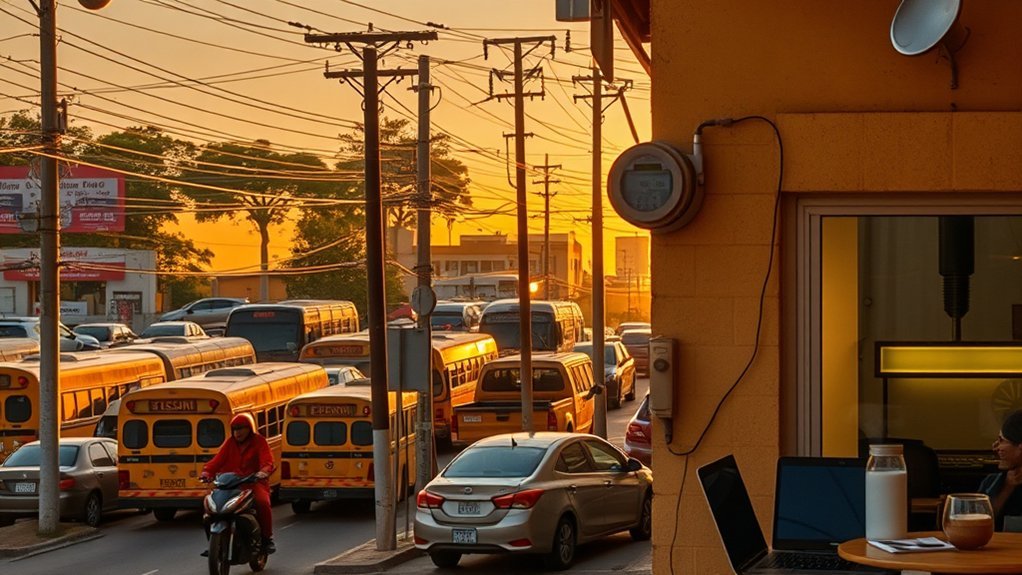
Basic utilities (electricity, water, garbage) for an 85 m² apartment average about L3,345 (~$125) a month nationwide, from about L3,460 in San Pedro Sula to L3,830 in Tegucigalpa. Air conditioning can double that in hot areas. World Bank data shows that 95.5% of Hondurans had electricity in 2024, but outages still happen, especially in storm season.
- Home internet (60+ Mbps): about L1,040 (~$39) a month nationally; about $100 in Roatán.
- Mobile plan with 10 GB+ of data: about L540 (~$20) a month.
- Drinking water: most households buy 5-gallon jugs (garrafones) rather than drinking tap water.
Food: Groceries and Dining Out
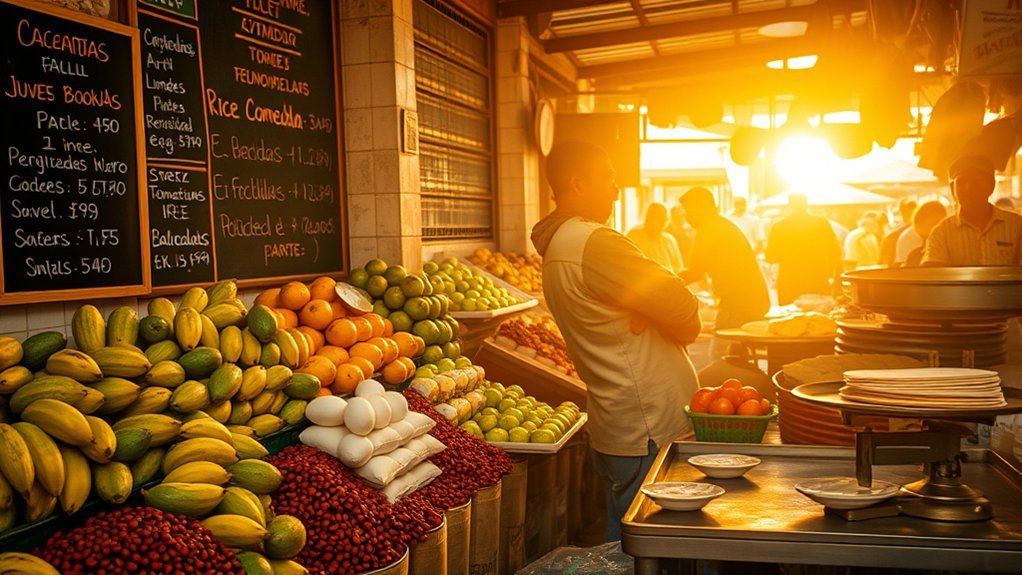
Local staples are cheap; imported brands cost about what they do in the US or more. Average national prices in August 2026:
| Item | Typical Cost (L) | Approx. USD |
|---|---|---|
| Milk (1 liter) | 38.16 | $1.42 |
| Bread (1 lb loaf) | 48.77 | $1.82 |
| Eggs (12) | 47.91 | $1.79 |
| Chicken (1 lb) | 68.84 | $2.57 |
| Beef (1 lb) | 102.85 | $3.83 |
| Meal at an inexpensive restaurant | 200 | $7.46 |
| Dinner for two, mid-range restaurant | 853 | $31.80 |
| Fast-food combo meal | 224 | $8.34 |
A single person cooking mostly at home spends about L6,000–8,000 (~$225–$300) a month on groceries. Comedores (small family restaurants) serve a plato típico of rice, beans, plantain, cheese, and meat for less than a sit-down restaurant. Baleadas, the national street food, cost very little. Tourist areas such as West Bay in Roatán charge much more.
Basic foods such as rice, beans, and fresh produce are exempt from Honduras’s sales tax. Most other goods carry the 15% ISV, and alcohol and tobacco carry 18%, according to the US International Trade Administration.
Transportation and Getting Around
Buses are cheap: a one-way ticket costs about L19 (~$0.71) and a monthly pass about L1,500 (~$56). Gasoline runs about L27.75 per liter (~$1.03, or ~$3.92 per gallon) nationally, and about L31 in Tegucigalpa.
Safety shapes transport choices more than price. The State Department advises avoiding public buses, using carefully chosen radio taxis or app-based rides, and agreeing on taxi fares in advance. US government staff may not travel between cities after dark, except on the route between Tegucigalpa and its airport. Many foreigners use ride-hailing apps in Tegucigalpa and San Pedro Sula or buy a car.
- Taxi: the meter or flag fare starts around L52 (~$1.93) nationally and L100 in Tegucigalpa. Most taxis are unmetered, so agree on the price first.
- Car ownership: add insurance, maintenance, and secure parking. Used cars cost more than in the US because of import duties.
- Intercity: first-class bus lines between Tegucigalpa, San Pedro Sula, and La Ceiba are safer than local buses. Ferries and short flights connect La Ceiba with Roatán and Utila.
Healthcare and Insurance
Honduras has a public system and the IHSS social security system for formal workers, but most foreigners use private hospitals in Tegucigalpa and San Pedro Sula. Care in rural areas and on the islands is limited, and serious cases often go to the mainland or abroad.
- Private care: hospitals often require payment up front, according to the State Department. US Medicare does not cover care abroad.
- Insurance: local private plans and international plans with evacuation cover are both available. Premiums depend on age and plan, so get quotes. Our budgets set aside L1,500–10,000 (~$55–$375) a month for health costs.
- Prescriptions: many common medicines are sold at pharmacies at lower prices than in the US, but bring a supply of anything specialized.
Schools and Childcare
Public schools teach in Spanish and quality varies. Most foreign families use private bilingual schools.
- International primary school: about L91,945 (~$3,430) a year per child on average, with top schools in Tegucigalpa and San Pedro Sula charging much more.
- Private preschool: about L5,583 (~$208) a month.
- Bono educativo: the labor ministry also publishes a yearly education bonus table for eligible workers with school-age children, alongside the minimum wage.
Taxes and Salaries
- Sales tax (ISV): 15% on most goods and services, 18% on alcohol and tobacco. Basic foods, medicines, and fuel are exempt.
- Income tax (ISR): Honduras uses a progressive scale with an exempt band that the tax authority (SAR) updates each year; the 2026 table was set by Acuerdo SAR-01-2026. Check the current band before you sign a work contract.
- US citizens still file US tax returns on worldwide income, so get cross-border tax advice.
Salaries: the crowd-sourced average net salary is about L14,400 (~$536) nationally and about L16,500 (~$615) in Tegucigalpa. A comfortable foreign-style budget of L38,000 is more than twice the average local salary.
Visas and Residency
US citizens can visit Honduras without a visa for up to 90 days with a passport valid for six months beyond arrival and a return ticket. Honduras is part of the CA-4 agreement with Guatemala, El Salvador, and Nicaragua, so time in all four countries counts toward the same 90-day limit.
For longer stays, the National Migration Institute (INM) offers residence categories for retirees (pensionados), people with steady passive income (rentistas), investors, and family members. Each has a minimum monthly income or investment requirement. Confirm the current amounts and documents with the INM or a Honduran immigration attorney before you apply, since requirements change.
Safety
The US rates Honduras Level 3, “Reconsider travel,” because of crime and terrorism (advisory issued August 25, 2026). Gracias a Dios department is Level 4, “Do not travel.” Violent crime, including armed robbery and kidnapping, is common in parts of the big cities, and motorcycle robberies target people leaving ATMs.
In practice, safety costs money: gated housing, app-based rides, and avoiding night travel all push budgets up. The Bay Islands and some mainland neighborhoods are calmer, but the same precautions apply.
One-Time Setup Costs
- Deposit and first month’s rent: usually one month’s deposit plus the first month.
- Residency paperwork: attorney fees, document authentication, and translations.
- Furnishing: many rentals are unfurnished. Appliances and air conditioners are the biggest items.
- Water and power backup: a cistern pump or small inverter if the home lacks one.
- Car: a used car if you plan to drive rather than use apps.
- Health cover: international insurance until a local plan starts.
Sample Monthly Budgets
These budgets combine the national averages above for mainland Honduras. Roatán budgets run roughly $500–$1,000 a month higher because of rent and imported food.
| Expense | Single, Lean | Single, Comfortable | Couple | Family of Four |
|---|---|---|---|---|
| Rent | 11,000 (1-bed, outside center) | 13,400 (1-bed, center) | 13,400 (1-bed, center) | 19,600 (3-bed, outside center) |
| Utilities | 2,800 | 3,300 | 3,800 | 4,500 |
| Internet + mobile | 1,600 | 1,600 | 1,800 | 1,800 |
| Groceries | 6,000 | 8,000 | 13,000 | 24,000 |
| Transport | 1,500 | 3,500 | 5,000 | 7,000 |
| Health | 1,500 | 3,000 | 6,000 | 10,000 |
| Eating out + leisure | 2,500 | 4,000 | 6,000 | 8,000 |
| Other (household, help) | — | 1,000 | 1,000 | 4,000 |
| Total (L) | 26,900 | 37,800 | 50,000 | 78,900 |
| Total (USD) | ~$1,000 | ~$1,410 | ~$1,865 | ~$2,940 |
Family of four: Numbeo’s national estimate for a family of four is about L62,800 (~$2,340) a month before rent. Adding a three-bedroom outside the center gives about L82,400 (~$3,070), close to our budget. International school for two children adds about L15,300 (~$570) a month.
Single person: Numbeo puts one person at about L17,600 (~$655) before rent. Adding a central one-bedroom gives about L31,000 (~$1,155).
Money-Saving Tips
- Choose Tegucigalpa for lower power bills. The cooler climate means little or no air conditioning.
- Eat at comedores and markets. A plato típico or baleadas cost far less than tourist restaurants.
- Rent in lempiras on the mainland. Dollar-priced rentals aimed at foreigners cost more.
- Use ride-hailing apps instead of owning a car if you live and work in one city.
- Visit Roatán before moving there. Island costs are much higher than mainland averages suggest.
- Keep a buffer for electricity and food price rises, which run ahead of general inflation.
How Honduras Compares With Nearby Countries
Honduras sits at the lower middle of Central America for living costs. Compare with our guide to the cost of living in Guatemala, which has similar rents and a larger expat scene in Antigua, and the El Salvador cost breakdown, which uses the US dollar. To the south, see our Nicaragua monthly budget guide, and for a Caribbean coast alternative with English as the official language, the cost of living in Belize.
Frequently Asked Questions
How much money do you need to live in Honduras per month?
A single person needs about L27,000 (~$1,000) a month for a simple mainland life and about L38,000 (~$1,410) for a comfortable one in Tegucigalpa or San Pedro Sula. A couple should budget about L50,000 (~$1,865), and a family of four about L79,000 (~$2,940) before private school.
Can you live in Honduras on $1,000 a month?
Yes, on the mainland with a one-bedroom outside the center, home cooking, and buses or shared rides. It is tight in Roatán, where a one-bedroom alone costs about $550–$850.
How much is rent in Honduras in 2026?
A one-bedroom averages about L13,400 (~$500) in city centers and L11,000 (~$410) outside them. A three-bedroom averages about L25,500 (~$950) in the center. Roatán one-bedrooms run about $550–$850.
What is the minimum wage in Honduras in 2026?
The 2026 minimum wage ranges from L9,596.64 a month for small agricultural employers to L18,957.14 for large restaurants and hotels, about $358 to $707. It depends on the sector and the number of employees.
Is Roatán more expensive than mainland Honduras?
Yes. Roatán rents are quoted in dollars and run about $550–$850 for a one-bedroom, compared with about $410–$500 on the mainland. Internet, electricity, and imported food also cost more on the island.
Is Honduras safe to live in?
The US rates Honduras Level 3, Reconsider travel, because of crime and terrorism, and Gracias a Dios department Level 4. Many foreigners live there safely by choosing gated housing, using app-based rides, and avoiding travel after dark.
Conclusion
Honduras is affordable by US standards, especially on the mainland. A single person can live simply for about $1,000 a month, or comfortably for about $1,400 in Tegucigalpa or San Pedro Sula, while Roatán costs considerably more. Prices are rising about 4% a year and the lempira is stable, so budgets hold up better than in many neighboring countries. Safety drives many costs, from gated housing to private transport, so build those into your plan from the start and visit before you sign a lease.
Sources
- IMF – Honduras country page (2026 inflation and growth projections)
- Secretaría de Trabajo y Seguridad Social – 2026–2027 minimum wage table
- Servicio de Administración de Rentas – income tax (ISR)
- International Trade Administration – Honduras taxes and tariffs
- World Bank – Access to electricity, Honduras
- US Department of State – Honduras travel advisory, August 25, 2026
- Exchange-Rates.org – USD/HNL history, 2026
- Numbeo and Wise – crowd-sourced Honduras, Tegucigalpa, San Pedro Sula, and Roatán price averages, 2025–2026

1 thought on “Cost of Living in Honduras 2026: Budgets, Rents, and Expats Tips”
Pingback: Cost Of Living In Honduras: 2026 Monthly Budget Guide