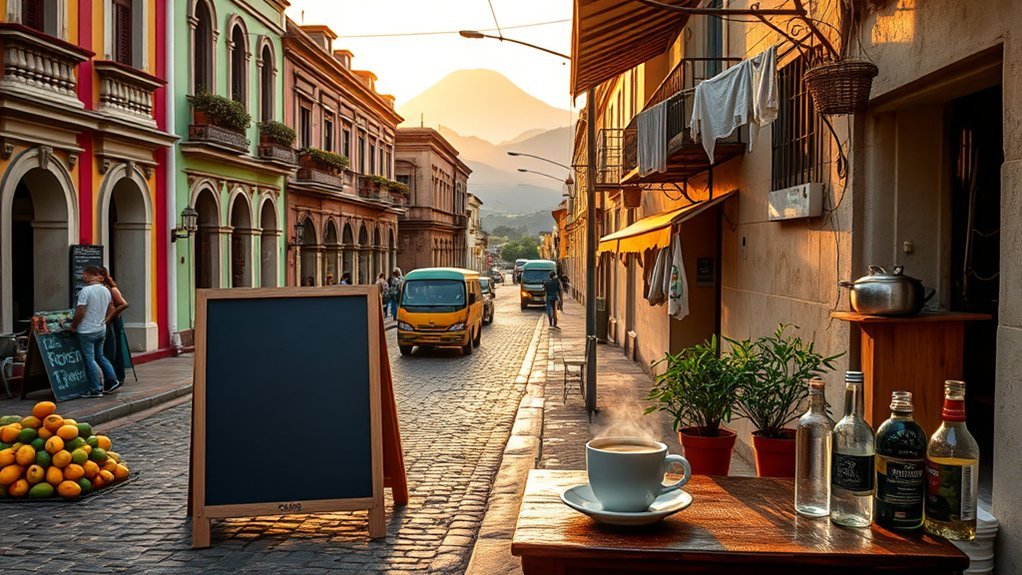
The cost of living in Guatemala in 2026 is about Q5,700–Q8,200 (~$745–$1,075) a month for a single person living simply in Quetzaltenango or an outer zone of the capital, and about Q11,700–Q15,600 (~$1,530–$2,040) for a comfortable single life in Guatemala City or Antigua. A couple should plan on roughly Q17,450–Q22,550 (~$2,285–$2,950), and a family of four on about Q27,200–Q32,700 (~$3,555–$4,285) before private school fees. These figures use the Banco de Guatemala reference rate of Q7.64 per US dollar (October 3, 2026). Rent is the biggest swing factor. A one-bedroom outside the center averages about Q3,870 (~$505) nationally, while central Guatemala City and Antigua average Q6,300–Q6,700 (~$825–$875). Below you’ll find city-by-city rents, utilities, grocery prices, transport, healthcare, taxes, residency fees, and sample budgets.
Quick Answer
- Single person: Q5,700–Q8,200 (~$745–$1,075) on a lean budget; Q11,700–Q15,600 (~$1,530–$2,040) for a comfortable one.
- Couple: Q17,450–Q22,550 (~$2,285–$2,950) a month in Guatemala City or Antigua.
- Family of four: about Q27,200–Q32,700 (~$3,555–$4,285) including a three-bedroom, before private school fees.
- Rent, one-bedroom: about Q3,000–Q4,150 (~$390–$545) outside the center; Q6,300–Q6,700 (~$825–$875) in central Guatemala City or Antigua.
- Utilities: about Q440–Q555 (~$58–$73) a month for an 85 m² apartment; fiber internet starts around Q229 (~$30).
- Gasoline: about Q10.20–Q10.40 per liter (~$5.05–$5.15 per gallon).
- Minimum wage 2026: Q4,252 a month for non-farm jobs in the Guatemala City region, including the Q250 incentive bonus.
Exchange Rate, Inflation, and Minimum Wage in 2026
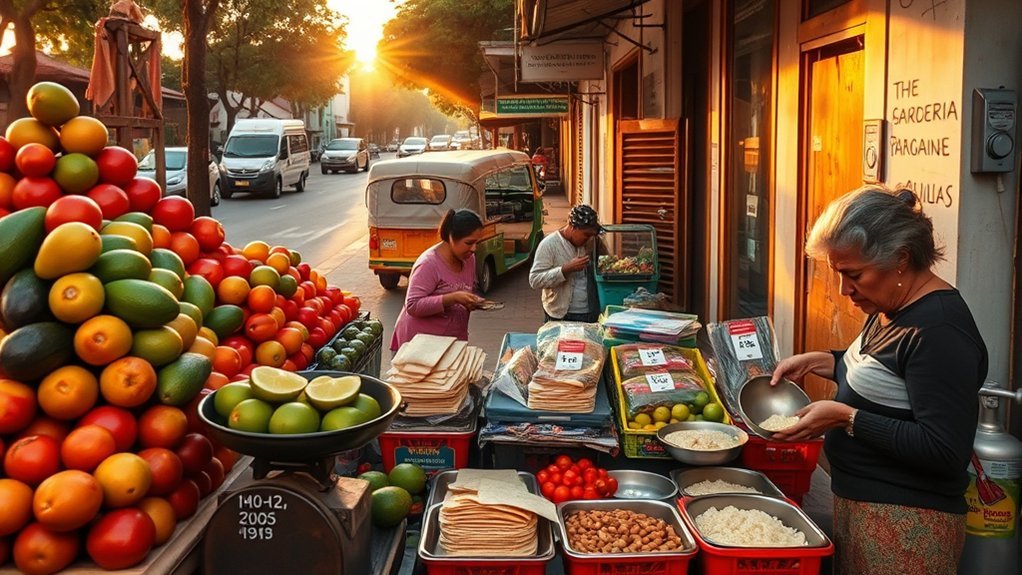
The exchange rate. The quetzal is one of the most stable currencies in Latin America. The Banco de Guatemala reference rate was Q7.64136 per US dollar for October 3, 2026, almost unchanged from about Q7.62–Q7.66 in July. All dollar figures in this guide use Q7.64. Banks, ATMs, and card networks add their own margins, so the rate you actually get will be a little worse.
Inflation. The central bank reported annual inflation of 3.37% in August 2026, up from 2.70% in July and the highest reading since mid-2024. Transport and food drove the increase. The bank’s policy rate stands at 3.50%.
The minimum wage. Guatemala sets separate minimum wages by sector and region. According to WageIndicator’s summary of the 2026 rates, effective January 1, 2026, the monthly minimums including the Q250 incentive bonus are:
| Sector | District 1 (Guatemala region) | District 2 (rest of country) |
|---|---|---|
| Non-agricultural | Q4,252.28 (~$557) | Q4,066.90 (~$532) |
| Agricultural | Q4,041.20 (~$529) | Q3,875.89 (~$507) |
| Export and maquila | Q3,659.73 (~$479) | Q3,471.10 (~$454) |
Workers also receive a 13th-month payment (aguinaldo) in December and a 14th payment (Bono 14) in July. Many Guatemalans work in the informal economy and earn less than these minimums.
At Q7.64 per dollar, the top 2026 minimum wage equals about $557 a month. Many local families live on one or two salaries at this level, mostly by renting outside tourist areas and eating local food.
Cost of Living by City
Rents vary more between cities than any other expense. The table uses crowd-sourced averages updated between September and October 2026. Guatemala City has the most price reports. Antigua has fewer, and Quetzaltenango data is very thin, so treat those figures as rough guides and check current listings.
| City | 1-Bed, City Center | 1-Bed, Outside Center | 3-Bed, Outside Center | Basic Utilities (85 m²) |
|---|---|---|---|---|
| Guatemala City | Q6,303 (~$825) | Q4,152 (~$543) | Q6,244 (~$817) | Q555 (~$73) |
| Antigua Guatemala | Q6,700 (~$877) | Q3,995 (~$523) | Q9,168 (~$1,200) | Q440 (~$58) |
| Quetzaltenango (Xela)* | about Q3,000 (~$393) | about Q3,000 (~$393) | no data | about Q555 (~$73) |
| Guatemala average | Q6,330 (~$828) | Q3,871 (~$507) | Q6,835 (~$895) | Q543 (~$71) |
*Quetzaltenango figures come from very few reports. Use them only as a starting point.
How the main areas differ:
- Guatemala City is split into numbered zones. Zones 10, 14, 15, and 16 have modern towers, security, malls, and the highest rents. Other zones are cheaper but need careful research, and the US government advises against travel to Zone 18.
- Antigua is the most expensive place to rent a furnished home. Tourism, language schools, and short-term rentals push central prices above the capital’s.
- Quetzaltenango (Xela) is Guatemala’s second city and the classic low-cost base for Spanish students. Rooms in shared homes and homestays keep budgets low.
- Lake Atitlán towns such as San Marcos and San Pedro vary widely. Popular lakeside homes rent at tourist prices, while quieter villages cost less but have fewer services and depend on boats.
- Smaller towns have the lowest rents, but specialist healthcare, reliable internet, and English-language services may be limited.
Housing: Rent and Buying
Renting
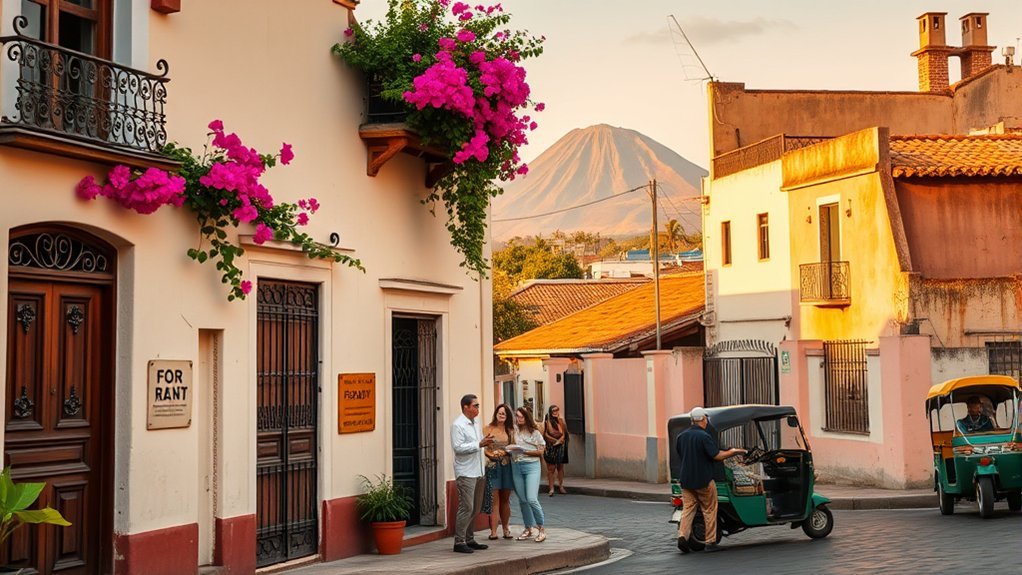
Most newcomers rent a furnished room or apartment first, then look for a local lease once they know the area. Local leases advertised in Spanish usually cost less than furnished listings aimed at visitors.
Before you sign, check:
- Whether electricity, water, gas, internet, and building fees are included.
- How often water service is cut and whether the building has a storage tank and pump.
- Security: gated entry, guards, locks, and safe parking.
- Internet type and real speed at the exact address.
Landlords usually ask for the first month’s rent plus a deposit of one or two months. Some ask for a fiador (guarantor), references, or proof of income. Furnished short-term rentals may require less paperwork but cost more.
Buying Property
Foreigners can buy property in Guatemala, with some limits near borders and coastlines. Crowd-sourced asking prices average about Q1,620 per square foot (~$212) in city centers and Q805 per square foot (~$105) outside them, but prices vary hugely by zone. Mortgage rates are high, averaging about 11.6% for a 20-year loan, so most foreign buyers pay cash. Hire a local lawyer (notario) to check the title in the property registry before you pay a deposit.
Utilities, Internet, and Phone
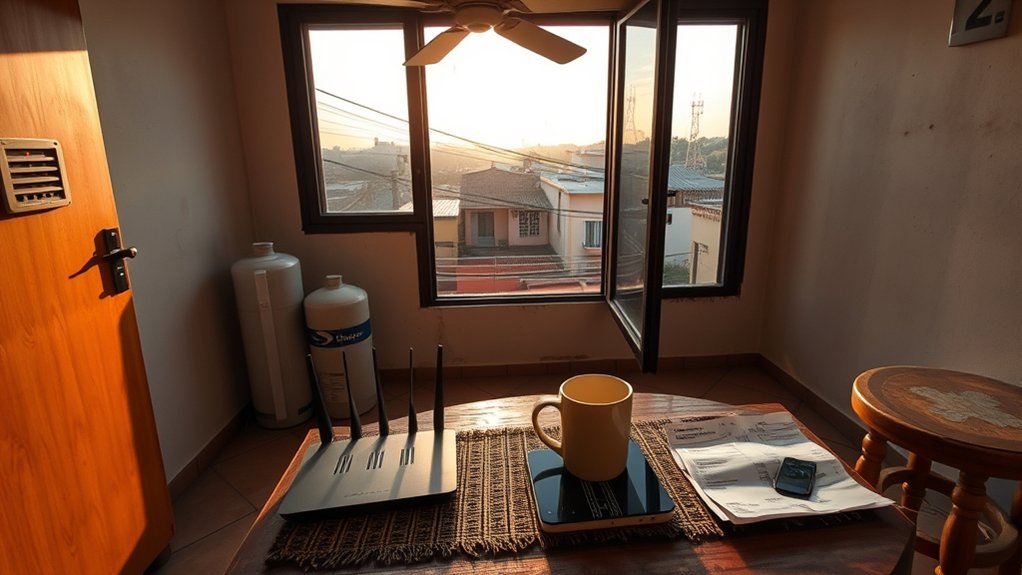
Basic utilities (electricity, water, and garbage) for an 85 m² apartment average about Q543 (~$71) a month nationally and about Q555 (~$73) in Guatemala City. Bills are lower in the cool highlands, where few homes need air conditioning, and higher on the hot Pacific and Caribbean coasts. Cooking gas usually comes in refillable cylinders.
Internet depends on the street, not just the city. Fiber is common in serviced urban areas, while rural homes may rely on fixed wireless or mobile data. Current published plans include:
- Claro fiber: 150 Mbps from Q229 (~$30) a month, 250 Mbps from Q259 (~$34), and 550 Mbps from Q329 (~$43).
- Tigo fixed wireless: 5 Mbps for Q170 (~$22) up to 30 Mbps for Q270 (~$35), useful where fiber does not reach.
- Mobile plans: Tigo and Claro are the two main networks. Postpaid plans with large data allowances average about Q220–Q250 (~$29–$33) a month; prepaid bundles cost less.
Remote workers should test upload speed and video-call stability at the address before signing, and keep a mobile hotspot as backup.
Food: Groceries and Dining Out
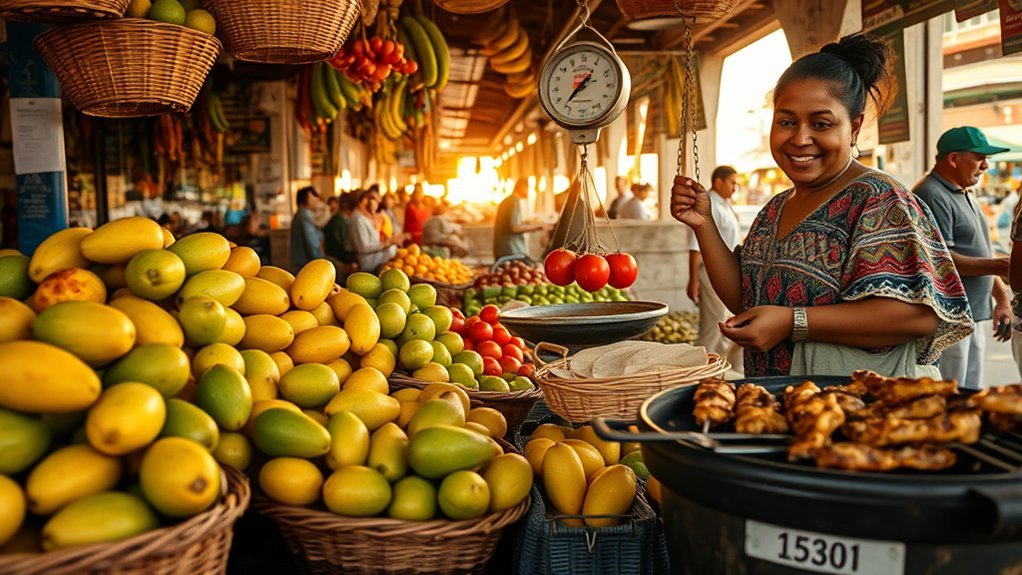
A single person who cooks mostly local food spends about Q1,500–Q2,000 (~$195–$260) a month on groceries. Someone who buys imported cheese, cereal, wine, and packaged foods can spend Q2,500–Q3,000 (~$325–$395). Markets are cheapest for produce, tortillas, beans, and eggs. Supermarkets such as La Torre, Paiz, and Walmart are better for packaged goods.
Average national prices in October 2026 (crowd-sourced):
| Item | Typical Cost (GTQ) | Approx. USD |
|---|---|---|
| Milk (1 liter) | 15.79 | $2.07 |
| Bread (1 lb loaf) | 23.28 | $3.05 |
| Rice (1 lb) | 7.10 | $0.93 |
| Eggs (12) | 18.94 | $2.48 |
| Chicken fillets (1 lb) | 33.91 | $4.44 |
| Beef (1 lb) | 42.49 | $5.56 |
| Tomatoes (1 lb, Guatemala City) | 5.62 | $0.74 |
| Mid-range bottle of wine | 62.40 | $8.17 |
Eating out is good value at comedores and local restaurants. Common prices:
- Meal at an inexpensive restaurant: about Q52–Q60 (~$6.80–$7.85)
- Three-course dinner for two at a mid-range restaurant: about Q380 (~$50)
- Fast-food combo meal: about Q60 (~$7.85)
- Cappuccino: about Q26–Q27 (~$3.40–$3.55)
- Domestic beer (pint, at a bar): about Q25 (~$3.25)
Food prices rose 3.05% in the year to August 2026. Restaurants in Antigua, Zone 10, and shopping malls charge well above these averages.
A menú del día (set lunch) at a neighborhood comedor costs far less than a sit-down restaurant meal and is one of the easiest ways to eat well on a budget.
Transportation and Getting Around
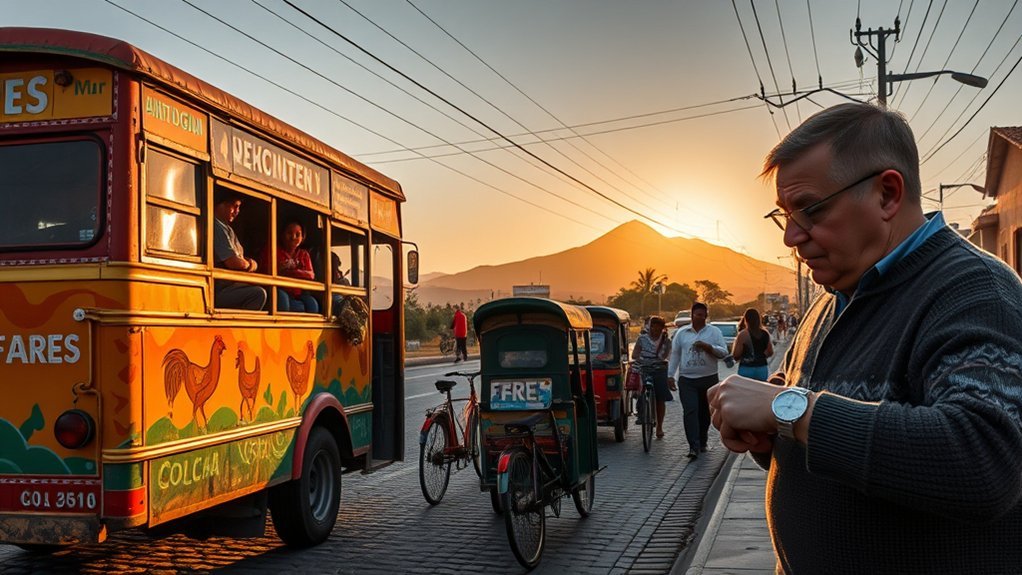
Public transport is cheap but varies a lot in quality and safety.
- Guatemala City: the TransMetro and newer bus lines cost a few quetzales a ride. Crowd-sourced data put a monthly pass at about Q109 (~$14).
- Intercity “chicken buses”: cheap but crowded, and the US government warns against using them because of robberies and crashes. Tourist shuttles cost more but are safer.
- Ride-hailing and taxis: Uber and InDrive operate in Guatemala City and Antigua. Regular taxis start at about Q40 (~$5.25); agree on the fare first if there is no meter.
- Gasoline: about Q10.22 per liter nationally and Q10.42 in Guatemala City (~$5.05–$5.15 per gallon).
- Lake boats: lanchas between Lake Atitlán towns add a regular cost if you live there.
A public-transport user may spend Q200–Q400 (~$25–$50) a month. Someone who uses ride-hailing daily in the capital can spend Q800–Q1,200 (~$105–$155). Traffic in Guatemala City is heavy at rush hour, so living near work or school saves both time and money.
Healthcare and Insurance Costs

Guatemala has three tiers of care: public hospitals and health centers, the social security system (IGSS) for formal-sector employees, and private hospitals and clinics. The best private hospitals are in Guatemala City. Care outside the capital is more limited, and complex cases are often sent there or abroad.
- IGSS: employees and employers contribute through payroll. Foreign residents working for a Guatemalan company are usually enrolled.
- Private insurance: most expats buy local or international plans. Premiums depend on age, deductible, and whether US treatment and medical evacuation are included, so get quotes for your own age.
- Cash visits: private consultations are affordable by US standards, but hospital stays, imaging, and imported medicines can be expensive.
Budget for routine care, an insurance premium, and an emergency reserve for bills that must be paid upfront.
Schools, Childcare, and Spanish Classes
- Private preschool: about Q2,600–Q2,700 (~$340–$355) a month, full day.
- International primary school: about Q51,000 (~$6,685) a year in Guatemala City and about Q57,400 (~$7,515) as a national average, plus registration, uniforms, transport, and meals.
- Public schools: free and taught in Spanish, but quality varies widely.
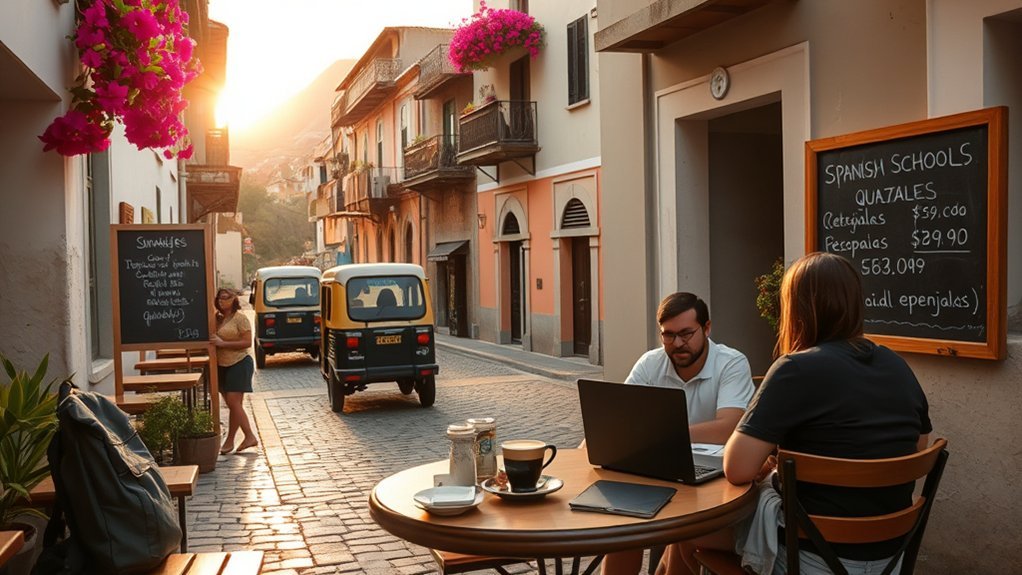
- Spanish schools: Antigua and Xela are known for one-to-one immersion classes. Weekly packages of about 20 hours often cost roughly $130–$250, more if they include a homestay with meals. Confirm what the price includes before you pay.
For a family with two children in international school in Guatemala City, tuition alone adds about Q8,500 (~$1,115) a month.
Taxes: VAT and Income Tax
- IVA (VAT): 12% on most goods and services, included in shelf prices. Fuel, alcohol, and tobacco carry extra excise taxes.
- Income tax on wages (ISR): according to PwC’s tax summary, employees pay 5% on taxable income up to Q300,000 a year and 7% on the amount above that. Guatemala taxes income earned in the country, so foreign-source income is generally not taxed there.
- Social security (IGSS): deducted from local salaries on top of income tax.
- Home-country taxes: US citizens must keep filing US returns while living abroad.
Salaries vs Cost of Living
The average monthly net salary is about Q5,000 (~$655) nationally and about Q6,500 (~$850) in Guatemala City, based on crowd-sourced data. A one-bedroom outside the center in the capital costs about Q4,150, so a single earner on an average salary would spend most of it on rent alone. That is why many Guatemalans live with family, share housing, or rent in outer municipalities.
For newcomers with foreign income, the picture is very different. A remote worker or retiree with $2,000 a month can live comfortably in Guatemala City or Antigua, and $1,000 covers a simple life in Xela.
Visas and Residency
US, Canadian, UK, and EU citizens can visit Guatemala without a visa. Visitors normally receive up to 90 days, and that period is shared across the CA-4 region (Guatemala, El Salvador, Honduras, and Nicaragua). You can apply once to the Instituto Guatemalteco de Migración for an extension of up to 90 more days. Tourist status does not allow you to work.
For longer stays, the migration institute’s residence page lists temporary residence categories for students, investors, workers, researchers, religious workers, artists, and athletes. Fees are:
| Fee | Amount (USD) |
|---|---|
| Application intake | $25 |
| Temporary residence, 1 year | $200 |
| Temporary residence, 2 years | $300 |
| Temporary residence, 3–5 years | $500 |
| Student residence | $100 per year |
Applications usually need a passport, police records from your home country, apostilled and translated documents, and proof of the activity that supports your category. Many applicants hire a local lawyer to handle the process, which adds legal fees. Rules and fees change, so confirm with the institute before you apply.
Safety and Where to Live
The US State Department rates Guatemala at Level 3, “Reconsider Travel,” because of crime and terrorism risks from gangs and criminal groups (advisory issued March 12, 2026). It lists San Marcos and Huehuetenango departments, Zone 18 in Guatemala City, and the city of Villa Nueva as “Do Not Travel” areas.
Security affects your budget directly:
- Apartments in gated buildings with guards cost more but reduce risk.
- Using Uber or trusted taxis at night instead of buses adds to transport costs.
- Avoid showing phones and jewelry, and keep copies of your documents.
Most expats live in Zones 10, 14, 15, and 16 of the capital, in Antigua, around Lake Atitlán, or in Xela. Talk to several residents before you choose a neighborhood.
One-Time Setup Costs
- Deposit and first month’s rent: usually two to three months’ rent, for example Q8,300–Q12,500 (~$1,085–$1,635) for a one-bedroom outside central Guatemala City.
- Temporary housing: a few weeks in a furnished rental or hotel while you search.
- Residence paperwork: $225–$525 in government fees plus legal and translation costs.
- Furnishing: unfurnished apartments may lack appliances, which adds several thousand quetzales.
- Internet installation: sometimes free with a contract, sometimes charged.
- Insurance: health insurance paid upfront.
Sample Monthly Budgets
These budgets combine the averages above. The lean column assumes Xela or an outer zone of the capital, buses, and mostly local food. The comfortable and couple columns assume Zones 10–15 of Guatemala City or Antigua, ride-hailing, and private insurance.
| Expense (GTQ) | Single, Lean | Single, Comfortable | Couple |
|---|---|---|---|
| Rent (1-bed) | 2,500–3,500 | 5,000–6,700 | 6,300–8,000 |
| Utilities | 400–550 | 550–650 | 650–750 |
| Internet + mobile | 300–450 | 575 | 800 |
| Groceries | 1,500–2,000 | 2,200–2,800 | 3,800–4,500 |
| Eating out + leisure | 500–800 | 1,500–2,200 | 2,500–3,500 |
| Transport | 200–400 | 800–1,200 | 1,200–2,000 |
| Health insurance + care | 300–500 | 800–1,200 | 1,600–2,400 |
| Gym | — | 300 | 600 |
| Total (GTQ) | 5,700–8,200 | 11,700–15,600 | 17,450–22,550 |
| Total (USD) | $745–$1,075 | $1,530–$2,040 | $2,285–$2,950 |
Family of four: crowd-sourced estimates put a family of four’s costs at about Q20,940 (~$2,740) a month before rent. Add a three-bedroom in Guatemala City (Q6,244 outside the center to Q11,796 in the center) and the total is about Q27,200–Q32,700 (~$3,555–$4,285). International school for two children adds roughly Q8,500 (~$1,115) a month.
Retirees: a retired couple in Antigua or Xela who eat locally and skip a car can stay near the low end of the couple column. Private health insurance is the cost that rises most with age.
Activities and Entertainment
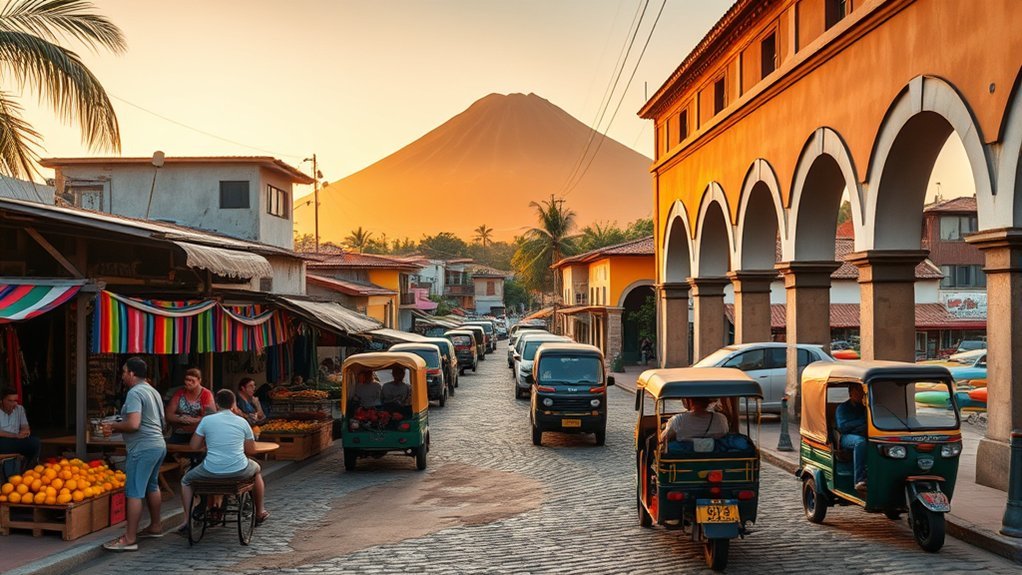
Entertainment can be cheap if it centers on markets, plazas, cafés, and day trips. A gym membership costs about Q300–Q315 (~$40) a month and a cinema ticket about Q50 (~$6.55). Guided volcano hikes such as Acatenango, lake tours, and weekend trips add up quickly. Compare tour operators on safety, gear, and guide ratios, not only on price.
Money-Saving Tips
- Pick your city first. A one-bedroom in Xela can cost half of one in central Antigua.
- Rent locally. Search Spanish-language listings and ask around once you arrive, rather than booking a furnished tourist rental for months.
- Shop at the market. Produce, tortillas, beans, and eggs cost far less there than in supermarkets.
- Eat the menú del día. A set lunch at a comedor costs less than many grocery-store meals.
- Use ride-hailing smartly. It is often cheaper and safer than street taxis, but daily trips add up.
- Check fiber coverage before you sign. Fast fiber at Q229 a month beats paying for weak fixed wireless.
- Avoid ATM fees. Withdraw larger amounts less often, and decline the machine’s currency conversion.
How Guatemala Compares With Nearby Countries
Guatemala is one of the cheaper places to live in Central America, though Antigua and Guatemala City’s best zones are pricier than most of the region outside Costa Rica. If you’re comparing options, see our guide to the cost of living in El Salvador, which uses the US dollar, and our breakdown of living costs in Honduras. For English-speaking Belize next door, compare the Belize cost of living guide, and for a pricier but popular expat base, see what it costs to live in Costa Rica.
Frequently Asked Questions
How much money do you need to live in Guatemala per month?
A single person needs about Q5,700–Q8,200 (~$745–$1,075) a month for a simple life in Xela or an outer zone of the capital, and about Q11,700–Q15,600 (~$1,530–$2,040) for a comfortable one in Guatemala City or Antigua. A couple should budget about Q17,450–Q22,550 (~$2,285–$2,950).
How much is rent in Guatemala City?
A one-bedroom averages about Q6,303 (~$825) a month in the center and about Q4,152 (~$543) outside it. A three-bedroom averages about Q11,796 (~$1,544) in the center and Q6,244 (~$817) outside. Zones 10, 14, and 15 cost the most.
Is $1,000 a month enough to live in Guatemala?
Yes, for a simple life. At Q7.64 per dollar, $1,000 is about Q7,640, which covers a lean budget in Quetzaltenango or an outer area with local food and buses. It does not cover a furnished apartment in central Antigua or Zone 10 with regular restaurants and private insurance.
What is the minimum wage in Guatemala in 2026?
For non-agricultural work in the Guatemala City region, the 2026 minimum wage is Q4,252.28 a month (about $557), including the Q250 incentive bonus. Rates are slightly lower for agricultural and export work and in the rest of the country.
How long can a US citizen stay in Guatemala?
US citizens usually receive up to 90 days, shared with El Salvador, Honduras, and Nicaragua. You can apply once for an extension of up to 90 more days. Longer stays need a residence permit.
Is Guatemala cheaper than the United States?
Yes, in most areas. Rent, local food, public transport, and services cost much less. Imported goods, cars, international schools, and secure apartments in the best zones narrow the gap.
Conclusion
Guatemala offers a wide range of budgets. A single person can live simply on about $745–$1,075 a month in Xela or an outer area, or comfortably on about $1,530–$2,040 in Guatemala City or Antigua. The quetzal is stable and inflation is moderate, so dollar budgets hold their value. Security and neighborhood choice matter more here than in many countries, and they affect rent and transport costs. Pick your city and zone first, check the travel advisory, and price private health insurance before you commit.
Sources
- Banco de Guatemala – reference exchange rate
- Banco de Guatemala – inflation and policy rate
- WageIndicator – Guatemala minimum wages 2026
- Numbeo – Guatemala, Guatemala City, Antigua Guatemala, Quetzaltenango (crowd-sourced prices, 2025–2026)
- Claro Guatemala – home internet plans
- Tigo Guatemala – fixed wireless internet plans
- PwC – Guatemala individual income tax
- PwC – Guatemala VAT and other taxes
- Instituto Guatemalteco de Migración – temporary residence
- US Department of State – Guatemala travel advisory