Author: Logan Barrett | Last Updated: September 7, 2026 | Current Data Reference: Central Bank of The Gambia rate as of September 6, 2026 and GBoS July 2026 inflation data
For one person living in The Gambia, a practical 2026 planning budget is about GMD 21,000 to GMD 35,000 per month for a lean local-style lifestyle, GMD 35,000 to GMD 60,000 for a moderate lifestyle, and GMD 60,000 to GMD 100,000+ for a more comfortable expatriate-style lifestyle. Using the Central Bank of The Gambia valuation of GMD 72.17 per US dollar on September 6, 2026, those tiers equal roughly $291–$485, $485–$831, and $831–$1,386+ respectively.
Your actual cost depends most on housing, imported food, air-conditioning and backup power, private transport, healthcare, and schooling. Treat the figures below as dated planning benchmarks rather than fixed national averages.
Quick Answer
A lean single-person budget in The Gambia starts near GMD 21,000–35,000 per month. A more typical private-apartment budget is around GMD 35,000–60,000, while furnished coastal housing, imported groceries, air-conditioning, private transport, and international medical cover can push spending to GMD 60,000–100,000+ per month.
Key Takeaways
- A lean local-style single-person budget is about GMD 21,000–35,000 per month.
- A moderate budget is closer to GMD 35,000–60,000, including private housing, utilities, internet, groceries, and occasional taxis.
- A comfortable expatriate-style budget can reach GMD 60,000–100,000+ when furnished housing, imported goods, cooling, private transport, and medical cover are included.
- GBoS reports annual inflation of 7.0% for July 2026, so re-check prices before committing to a lease or long-term budget.
- Budget in Gambian dalasi first. Card, bank, bureau, and remittance exchange rates can differ from the Central Bank valuation rate.
What Is the Cost of Living in The Gambia in 2026?
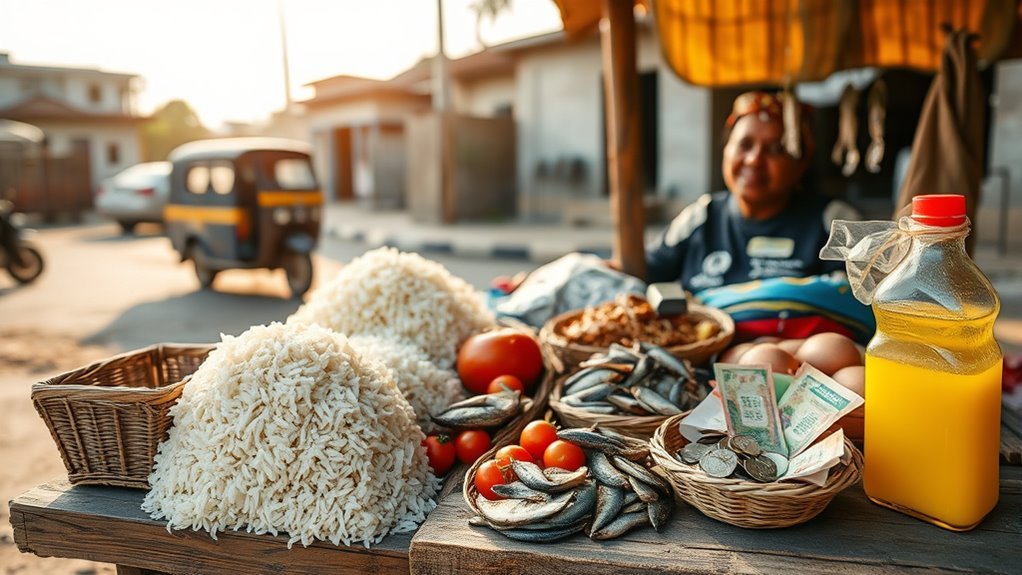
A useful way to budget is to separate three lifestyles: GMD 21,000–35,000 for a lean local-style budget, GMD 35,000–60,000 for a moderate private-apartment budget, and GMD 60,000–100,000+ for a comfortable expatriate-style budget.
These are planning tiers, not official national averages. As a cross-check, Expatistan currently estimates a single person’s monthly costs at about GMD 42,161, but explicitly warns that its Gambia estimate is based on only a few data points. LivingCost gives a separate estimate of about $578 per month including rent. Both sit broadly inside the moderate planning tier, but their methodologies differ.
How to use these figures: This guide combines official exchange-rate, inflation, immigration, utility-infrastructure, and travel-advice sources with crowd-sourced consumer-price data and current rental listings. The Gambia has relatively small online consumer-price samples, so use the figures as planning benchmarks and request current local quotes before making financial commitments.
| Lifestyle | Estimated Monthly Budget | What It May Cover |
|---|---|---|
| Lean local-style budget | GMD 21,000–35,000 About $291–$485 USD |
Basic or shared housing, mostly local food, shared transport, basic utilities, mobile data, and minimal leisure spending. |
| Moderate single-person budget | GMD 35,000–60,000 About $485–$831 USD |
Private apartment, utilities, internet, mixed local and imported groceries, occasional taxis, and limited dining out. |
| Comfortable or expatriate-style budget | GMD 60,000–100,000+ About $831–$1,386+ USD |
Furnished coastal housing, heavier air-conditioning use, imported groceries, private transport, restaurants, and a larger healthcare reserve. |
For family planning, Expatistan currently estimates about GMD 131,177 per month for a family of four, but the provider warns that its Gambia estimate is based on only a few data points. Treat that figure as a rough cross-check rather than a guaranteed family budget.
The Gambia Bureau of Statistics reports annual inflation of 7.0% for July 2026. Re-check food, fuel, and imported-goods prices regularly rather than relying on one annual budget.
How Much Does Housing Cost in The Gambia?
Basic one-bedroom rents in current crowd-sourced data can start around GMD 6,000–10,000 per month outside central areas, while larger or furnished coastal properties can cost several times more. Property size, furnishings, air-conditioning, security, water storage, backup electricity, and proximity to the coast all affect the final price.
Numbeo’s June 2026 Gambia snapshot reports one-bedroom rents outside a city center at roughly GMD 6,000–10,000 and three-bedroom city-center rents at roughly GMD 16,000–20,000. These are small-sample crowd-sourced figures, so current listings are a useful second check.
For example, current listings from Songhai Properties include:
- Kotu: two-bedroom unfurnished house at GMD 180,000 per year, equivalent to about GMD 15,000 per month before the listed security deposit.
- Kololi: three-bedroom house at GMD 350,000 per year, equivalent to about GMD 29,167 per month.
- Brufut: furnished three-bedroom house with a pool at GMD 350,000 per year, also about GMD 29,167 per month.
- Cape Point: furnished four-bedroom house listed at GMD 600,000 per year, equivalent to about GMD 50,000 per month.
Important: Annual asking prices are not the same as a national average. Confirm whether the quoted amount is monthly or annual and whether utilities, security, furniture, maintenance, water, or generator costs are included.
What Are the Rental Deposit and Advance Payment Requirements?
Some higher-cost properties are advertised annually or with substantial upfront payment requirements, so always confirm the payment schedule in writing. However, Gambian rent law also includes tenant protections.
The National Assembly publishes the Rent Amendment Act 2024. Reporting on the enacted law states that where monthly rent is GMD 7,000 or less, a landlord cannot require more than one month’s rent in advance. For higher-rent properties, confirm the current legal position and written lease terms before paying a large advance.
- Confirm included utilities: Verify whether water, waste collection, security, internet, and generator fuel are included or billed separately.
- Inspect backup power and water systems: Check whether the property has working CashPower, water storage, solar batteries, an inverter, or a generator.
- Review the lease in writing: Confirm lease duration, payment schedule, notice period, deposit conditions, and responsibility for repairs.
- Visit during both day and evening: Check road access, drainage, noise, lighting, water pressure, and power reliability before signing.
Pro Tip: Compare total occupancy cost, not rent alone. A cheaper home may cost more overall if you separately fund generator fuel, batteries, water storage, security, or frequent maintenance.
How Much Do Utilities, Electricity, and Internet Cost?
A June 2026 crowd-sourced snapshot puts basic utilities for an 85 m² apartment at roughly GMD 1,500–3,000 per month, while 60 Mbps-or-faster broadband is reported at about GMD 2,500–5,500. Air-conditioning and backup generation can raise electricity costs substantially, so calculate your own usage rather than treating the basic-utility figure as a ceiling.
Electricity commonly uses CashPower prepaid service. QCell’s QPower service allows customers to purchase NAWEC CashPower from a phone, while NAWEC’s mobile app also supports CashPower purchases.
For mobile data, Africell’s current published bundles include 10 GB for GMD 950, 15 GB for GMD 1,490, and 20 GB for GMD 1,790. Compare current offers from all local providers before choosing a plan.
Power reliability also belongs in the budget. NAWEC reported electricity-supply challenges in June 2026, including an emergency arrangement to reduce the risk of severe load shedding. Current FCDO guidance also warns that power cuts can disrupt water supplies, communications, and other services.
Warning: If you need reliable electricity for remote work or continuous cooling, ask specifically about solar batteries, inverter capacity, generator fuel responsibility, and water storage before renting.
What Are Food Prices and Daily Essential Costs in The Gambia?
Numbeo’s current modeled minimum food basket is about GMD 11,363 to GMD 14,043 per person per month, depending on the basket used. These figures model a minimum food requirement rather than actual household spending. Imported brands, packaged foods, restaurant meals, and specialty products can push your real food budget higher.
The following Greater Banjul price ranges come from Numbeo’s June 2026 crowd-sourced snapshot:
| Item | Reported Price Range |
|---|---|
| Milk, 1 liter | GMD 80–125 |
| Fresh white bread, 500 g | GMD 10–75 |
| White rice, 1 kg | GMD 50–125 |
| Eggs, 12 pack | GMD 116–174 |
| Chicken fillets, 1 kg | Around GMD 200 in the Banjul sample |
| Beef, 1 kg | GMD 325–450 |
| Tomatoes, 1 kg | GMD 50–150 |
| Bottled water, 1.5 liters | GMD 25–100 |
Because the Banjul sample is small, use these numbers as a market snapshot, not guaranteed supermarket prices.
How Can You Reduce Food Costs in The Gambia?
- Buy seasonal vegetables, fruit, fish, rice, and legumes at local markets.
- Compare the per-kilogram cost of staples before buying bulk quantities.
- Limit imported dairy, cereal, snacks, and specialty packaged products if you are on a tight budget.
- Plan meals around products that are locally available rather than imported substitutes.
- Budget separately for filtered or bottled drinking water if that is part of your household routine.
How Much Does Transportation Cost in The Gambia?
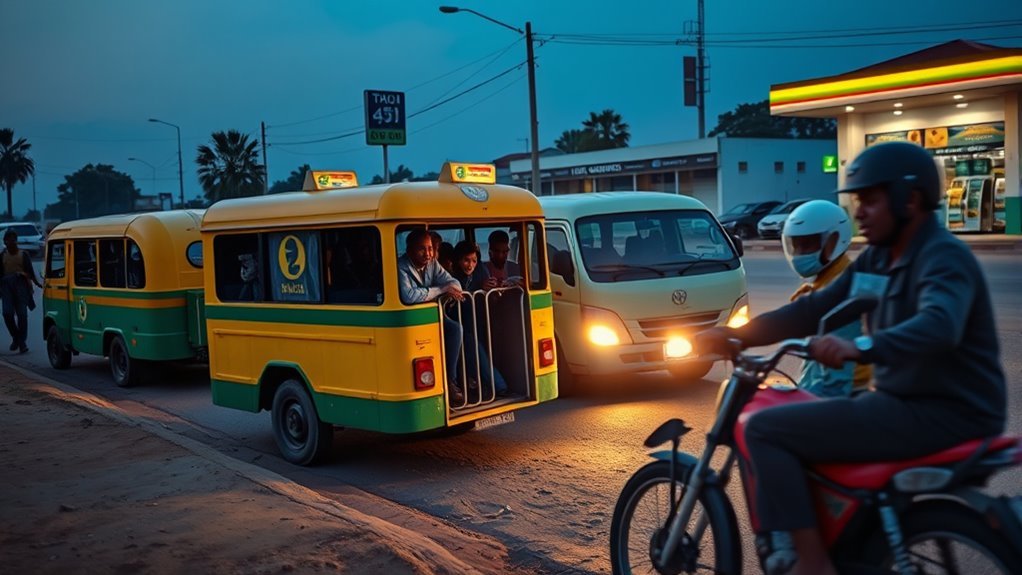
Shared local transport remains inexpensive on a per-trip basis, with a June 2026 crowd-sourced fare range of roughly GMD 10–25 per route leg. Private taxis cost much more and are generally negotiated before the trip.
What Are Public and Shared Transport Fares?
Numbeo’s June 2026 data puts a one-way local transport fare at around GMD 10–25. A standardized nationwide monthly transit pass is not something you should assume is available for every route.
For a simple commute calculation:
- Find the fare for every route leg you use.
- Multiply the one-way total by two for a round trip.
- Multiply by your expected number of travel days.
- Add extra money for evening travel, route changes, and occasional private taxis.
For example, one GMD 10–25 leg each way over 22 workdays equals about GMD 440–1,100 per month. Two separate route legs each way would roughly double that figure.
How Much Do Taxis Cost in The Gambia?
Private taxi fares should be agreed before departure. As a rough crowd-sourced reference, Numbeo reports a taxi benchmark of approximately GMD 50 per kilometer, but actual negotiated fares can vary by route, time, luggage, and vehicle type.
| Transport Option | Planning Figure | Best For |
|---|---|---|
| Shared local transit | GMD 10–25 per route leg | Budget daily commuting on established routes |
| Private taxi | Negotiated before departure | Direct travel, luggage, evening journeys |
| Taxi distance benchmark | Around GMD 50 per km in June 2026 crowd-sourced data | Rough distance-based planning only |
| 22-day shared commute | About GMD 440–1,100 for one leg each way | Simple monthly commute estimate |
The UK Foreign, Commonwealth & Development Office warns of poor road conditions, potholes, limited road lighting, and flooding during the June-to-October rainy season. Some local taxis may also be poorly maintained.
Warning: After dark or during heavy rain, prioritize a roadworthy vehicle and a trusted driver rather than choosing transport only by the lowest fare.
What Are Current Fuel and Vehicle Running Costs?
Petrol is GMD 109.80 per liter for September 2026, while diesel is GMD 120 per liter and kerosene is GMD 112.64 per liter. The September petrol price is roughly $1.52 per liter using the September 6 Central Bank valuation rate.
These pump prices are reviewed periodically, so check the latest government or local press announcement before estimating a long-term vehicle budget. Vehicle ownership also adds insurance, servicing, registration, tires, repairs, and other running expenses.
How Much Do Dining Out, Gyms, and Entertainment Cost?
June 2026 crowd-sourced data shows a wide gap between inexpensive meals and tourist-oriented dining. Current planning benchmarks include:
- Inexpensive restaurant meal: about GMD 300–678 per person.
- Three-course mid-range dinner for two: about GMD 4,235–7,500, excluding drinks.
- Fast-food style combo: about GMD 593–678.
- Monthly gym membership: about GMD 1,500–2,000.
- Cinema ticket: about GMD 200–300.
Tourist strips, hotel restaurants, imported drinks, and premium venues can cost more than these crowd-sourced ranges.
What Are Healthcare, Insurance, and Medical Costs?
International health insurance that includes emergency medical evacuation is strongly recommended for expatriates and long-stay visitors. Medical facilities in The Gambia are limited, and a serious illness or injury can create a much larger cost than routine monthly living expenses.
According to FCDO Health Guidance, medical facilities are very limited and medical evacuation can be very expensive. Private clinics treat fee-paying patients. U.S. travel guidance similarly warns that serious conditions may require evacuation to Senegal, Europe, or the United States.
Include the following in your financial planning:
- International insurance that explicitly covers medical evacuation.
- Cash or accessible funds for consultations, tests, medicines, and upfront treatment charges.
- A dedicated emergency reserve.
- A sufficient supply of essential prescribed medicines, subject to applicable travel and import rules.
Warning: Read the policy wording before buying insurance. Confirm that emergency evacuation from The Gambia is included rather than assuming ordinary travel-medical coverage includes it.
How Much Do Childcare and Schooling Cost in The Gambia?
Private and international schooling can become one of the largest family expenses, but current fees should be obtained directly from each school.
For example, Marina International School provides a school-fee download through its finance and admissions information, but families should confirm the current academic-year document directly before budgeting.
Ask each school for a written breakdown covering:
- Application, registration, and admission fees.
- Annual or term tuition.
- Examination charges.
- Uniforms, books, and device requirements.
- Transport and meal plans.
- Extracurricular fees and other levies.
How Do Banking, Currency Exchange, and Cards Work?
The Gambia remains primarily a cash-based economy. FCDO guidance says an increasing number of hotels and restaurants accept Visa, but card acceptance remains limited and ATMs outside the Senegambia tourist area are relatively scarce and can be unreliable.
- Use GMD for your working budget: Commercial-bank, exchange-bureau, card, and remittance rates can differ from the Central Bank valuation rate.
- Keep more than one payment method: Do not rely on a single ATM or card.
- Check withdrawal charges: Your home bank and the local ATM operator may both impose fees.
- Keep emergency cash securely: Power or network outages can temporarily affect electronic payments and ATMs.
What One-Time and Visa/Permit Fees Should You Plan For?
Long-term residents should separate recurring monthly expenses from one-time relocation and immigration costs.
What Are the Current Residence Permit Fees?
The Gambia Immigration Department currently lists the following non-refundable residence-permit fees, while noting that fees are subject to change:
| Permit | Published Fee |
|---|---|
| Residence Permit A — ECOWAS | GMD 3,100 |
| Residence Permit B — ECOWAS | GMD 3,600 |
| Residence Permit A — non-ECOWAS | GMD 5,700 |
| Residence Permit B — non-ECOWAS | GMD 7,700 |
| Non-Gambian ID Card | GMD 750 |
Permit A is for people intending to reside without gainful employment, while Permit B is for people intending to reside and work. The Immigration Department states that the published non-ECOWAS permit costs incorporate the listed Alien Card component.
Other irregular relocation expenses can include:
- Rental deposits or advance payments: Terms depend on the property and applicable rent-law protections.
- Backup utility equipment: Solar batteries, inverters, water tanks, or a generator if not supplied by the landlord.
- Vehicle costs: Purchase or import expenses, registration, servicing, repairs, and insurance.
- Household setup: Furniture, appliances, cooling equipment, and water treatment or storage.
- Emergency reserves: Medical treatment, evacuation excesses, repairs, or temporary accommodation.
What Are Example Monthly Budgets for The Gambia?
Lean Single-Person Budget: GMD 21,000–35,000 ($291–$485 USD)
This tier is most realistic for someone using basic or shared housing, buying mainly local food, limiting air-conditioning, using shared transport, and keeping discretionary spending low.
- Basic or shared housing.
- Local-market groceries and home cooking.
- Basic electricity and water.
- Shared public transport.
- A modest mobile-data plan.
- Little restaurant or leisure spending.
Moderate Single-Person Budget: GMD 35,000–60,000 ($485–$831 USD)
This tier can support a private apartment, internet, normal utilities, a mix of local and imported food, occasional taxis, and some dining or leisure.
- Private one-bedroom or modest rental.
- CashPower, water, mobile service, and home internet.
- Local-market groceries plus selected supermarket imports.
- Shared transport with occasional private taxis.
- Some restaurant, gym, or entertainment spending.
Comfortable Expatriate Budget: GMD 60,000–100,000+ ($831–$1,386+ USD)
This tier is more appropriate when you choose furnished or larger coastal accommodation, substantial air-conditioning, more imported groceries, frequent private transport, restaurants, and international health insurance.
Pro Tip: Track every expense during your first 30–60 days. Separate rent, local food, imported goods, electricity, transport, medical costs, and one-time setup expenses so you can build a personal budget instead of relying indefinitely on national averages.
Frequently Asked Questions
What is the average monthly salary in The Gambia?
There is no single official salary figure that represents the whole Gambian workforce. The World Bank reported in June 2026 that about 81% of workers are in the informal sector. Earnings therefore vary widely by occupation, employer, location, and whether work is formal or informal.
What is the monthly cost of living in The Gambia?
Use roughly GMD 21,000–35,000 for a lean single-person lifestyle, GMD 35,000–60,000 for a moderate lifestyle, and GMD 60,000–100,000+ for a comfortable expatriate-style lifestyle. These are planning tiers rather than official national averages.
How much is rent in The Gambia?
Basic one-bedroom rents in June 2026 crowd-sourced data can start around GMD 6,000–10,000 outside central areas. Larger and furnished coastal properties cost more; current listing examples in Kotu, Kololi, Brufut, and Cape Point work out to roughly GMD 15,000–50,000 per month depending on size and furnishing.
How much are utilities and internet in The Gambia?
Basic utilities for an 85 m² apartment are reported at about GMD 1,500–3,000 per month in June 2026 crowd-sourced data, while 60 Mbps-or-faster internet is around GMD 2,500–5,500. Heavy air-conditioning or backup-generator use can increase the real total.
Is public transport expensive in The Gambia?
Shared local transport is inexpensive by international standards, with a June 2026 one-way fare range of about GMD 10–25 per route leg. Private taxis are more expensive and should normally be negotiated before travel.
Is The Gambia inexpensive for expatriates?
The Gambia can be inexpensive for expatriates who rent modest housing, buy local food, and use shared transport, but a Western-style lifestyle costs much more. Furnished coastal rentals, imported groceries, continuous cooling, private transport, international insurance, and private schooling can quickly move a household into a much higher budget tier.
Summary & Final Budget Advice
The cost of living in The Gambia varies more by lifestyle than one national average can show. For one person, use GMD 21,000–35,000 per month as a lean planning tier, GMD 35,000–60,000 as a moderate tier, and GMD 60,000–100,000+ for a comfortable expatriate-style budget.
Before relocating, confirm the exact rent and payment schedule, current CashPower and internet costs, your commute, current fuel prices, health-insurance coverage, and immigration fees in Gambian dalasi. Keep a separate emergency reserve for medical treatment, power or water problems, repairs, and temporary accommodation.
For regional comparisons, see the site’s guides to the cost of living in Senegal and the cost of living in Ivory Coast.
Sources & References
- Central Bank of The Gambia — Current official daily valuation exchange rates.
- Gambia Bureau of Statistics (GBoS) — July 2026 CPI and inflation data.
- Numbeo: Gambia Cost of Living — June 2026 crowd-sourced rent, utilities, transport, dining, and consumer-price benchmarks.
- Numbeo: Gambia Food Prices — Modeled minimum food baskets and grocery prices.
- Expatistan: Gambia — Single-person and family cross-check estimates with small-sample warning.
- LivingCost: The Gambia — Independent cost-of-living cross-check.
- Songhai Properties — Current rental listing examples for Kotu, Kololi, Brufut, Cape Point, and nearby areas.
- National Assembly of The Gambia — Rent Amendment Act 2024 — Current rent-law source.
- Gambia Immigration Department — Residence Permit A/B categories and published permit fees.
- NAWEC — June 2026 electricity-supply advisory and emergency arrangement.
- NAWEC Mobile App — CashPower and utility-payment functionality.
- Africell Gambia — Current mobile-data bundles.
- World Bank: The Gambia Economic Update — Labor-market and informal-sector data.
- FCDO Safety & Security Guidance — Cash use, roads, flooding, ATMs, and power disruption.
- FCDO Health Guidance — Healthcare availability and medical evacuation.
- The Standard: September 2026 Fuel Prices — September petrol, diesel, and kerosene pump-price announcement.