
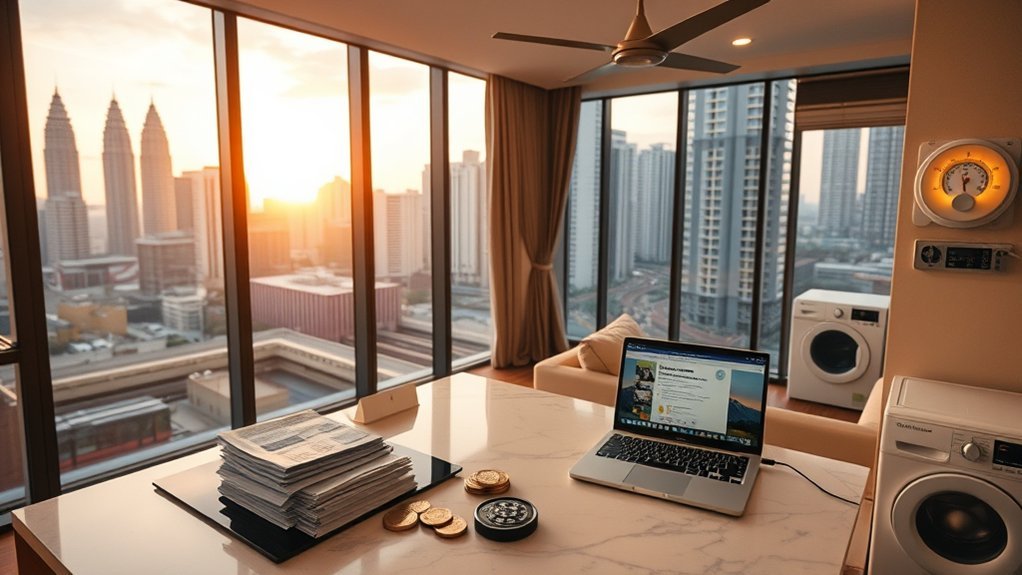
You’ll typically need about 3,000–3,500 RM a month to cover a city-centre 1-bedroom apartment, utilities and transport. Outside the centre you can drop to roughly 1,700–2,300 RM. Utilities plus internet run about 367 RM, a monthly transit pass costs ~50 RM, groceries stay affordable and hawker meals often come in under 10 RM. Expect higher setup costs for deposits, furniture and visas at the start. Keep this baseline in mind if you want a detailed monthly breakdown and saving tips.
Quick Answer
Here’s the quick picture for budgeting in Kuala Lumpur:
- City-centre basics usually total 3,000–3,500 RM per month.
- 1-bedroom rent averages 2,632 RM in the centre and 1,547 RM outside — you can save over 1,000 RM by moving a few stops out.
- Food is one of the cheapest parts, especially at hawker centres.
- Public transport stays very affordable at 50 RM for a monthly pass.
- Average net salary sits around 5,883 RM, so comfortable living is realistic for most jobs.
Cost Breakdown: Housing, Rent and Utilities

How much will housing and utilities eat into your Kuala Lumpur budget? A city centre 1-bedroom apartment averages about 2,632 RM per month, while outside-centre units drop to roughly 1,547 RM. That rent gap is why moving a few train stations away can shave about 1,085 RM monthly from your housing bill.
City-centre one-bedrooms average about 2,632 RM a month, while moving out a few stations cuts rent to ~1,547 RM.
For larger spaces, city centre 3-bedrooms run near 4,782 RM, versus roughly 2,000–2,765 RM outside centre depending on the area.
Basic utilities for a typical apartment, including internet, average about 367 RM per month. Expect electricity to be the biggest variable at 150–350 RM depending on AC use, water around 10–20 RM, and internet 100–130 RM.
Combining central rent, utilities and transport commonly lands you in the 3,000–3,500 RM monthly costs range for a comfortable urban lifestyle. Long-term savings can be achieved by choosing more economical housing options. Use these figures to model realistic housing and utilities budgets. Check the latest data on Numbeo.
Food, Groceries and Dining Out Expenses

Wondering what you’ll spend on food in Kuala Lumpur? Groceries and dining out are both affordable and varied. Staples like milk, rice, eggs and chicken keep home cooking cheap. Bottled water and a cappuccino stay inexpensive for daily use. If you cook most meals, your costs will stay low.
Dining out ranges widely. Hawker centres serve meals under 10 RM and give the best value for quick, authentic food. Mid-range restaurants cost about 20 RM for two on average, though dinners can run 30–60 RM depending on venue and area. A McMeal is roughly 20 RM and a domestic 0.5 l beer is often near 18 RM. Overall, your food expenses will depend on how often you eat out versus cook, but Kuala Lumpur’s mix of low-cost hawker centres and affordable mid-range restaurants keeps costs competitive. Additionally, regular maintenance on your vehicle can help prevent costly repairs that could impact your budget.
Transportation, Communication and Monthly Services
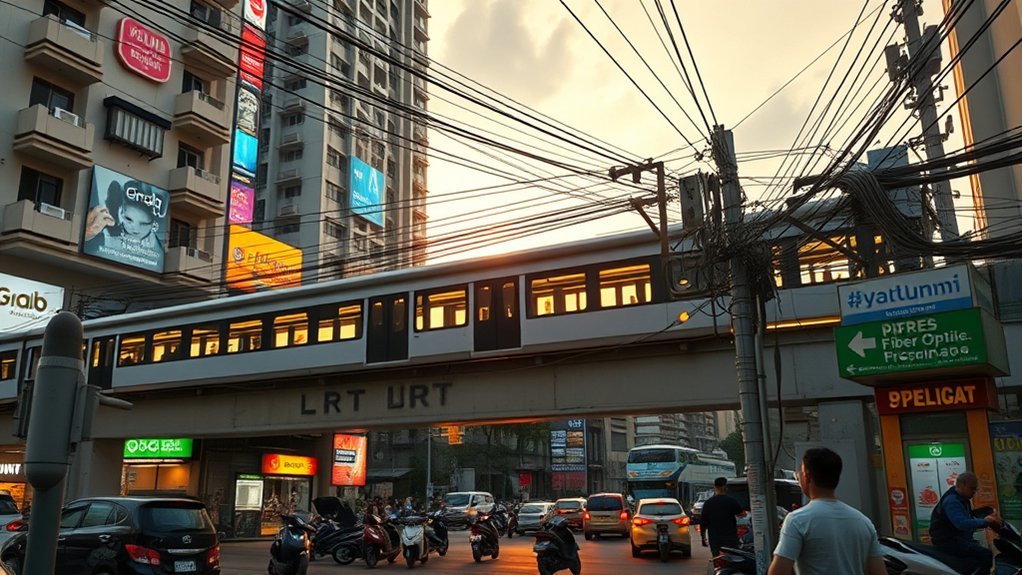
After food, your next regular expenses will likely be transportation, communication and other monthly services. Public transit is common: a one-way ticket is 3 RM and a monthly pass about 50 RM, so monthly transportation cost can stay low if you rely on transit. If you use e-hailing, expect ride costs of 8–25 RM; six rides per week average ~180 RM monthly.
After food, expect transportation, communication and monthly services to shape your budget — transit keeps costs low; e-hailing raises them.
- Factor: monthly pass (50 RM) vs. e-hailing (~180 RM) — your commuting patterns determine the cheaper option.
- Fuel: gasoline price is 2.08 RM/liter — driving raises monthly cost quickly, especially from central KL.
- Services: internet service ~110 RM/month (60 Mbps, unlimited); basic utilities plus internet combine with rent and utilities to form a significant monthly footprint. Understanding average living costs can help you budget effectively. Details on passes are available at Rapid KL.
Use these figures to model scenarios by area; central KL typically increases overall costs.
Salaries, Job Market and Affordability Factors
Curious what your take-home will buy you in KL? With an average salary of 5,883 RM net, you can map affordability against concrete costs. Housing and utilities dominate monthly expenses: expect central 1-bed apartments around 2,632 RM, and moving a few train stations out typically trims rent prices by over 1,000 RM. Public transport is cheap — single rides at 3 RM or a 50 RM monthly pass — so commuting choices materially affect housing affordability. Car ownership raises costs despite low fuel (≈2.08 RM/l), so weigh driving against cheaper transit. The job market offers varied pay: expat living standards often look higher but come with premium rents in Bukit Bintang, KLCC and Mont Kiara. If your sector pays near or above the average salary, Kuala Lumpur’s cost of living will feel reasonable; if not, housing affordability and utilities will quickly consume your budget. Use these datapoints to balance job offers, commute and lifestyle. Additionally, understanding building costs in various markets can provide insight into long-term financial planning when considering real estate investments.
Moving, Setup Costs and Money Management
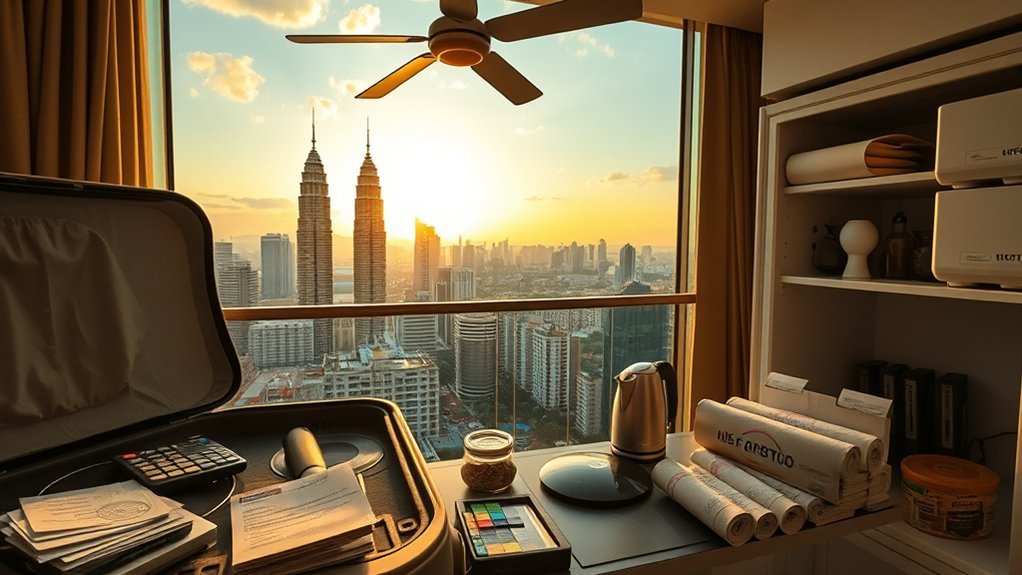
How much will you need to get settled in Kuala Lumpur? Moving and setup costs and initial expenses commonly range RM9,000–RM25,000. Major line items: visa fees (RM500–RM3,000), security deposits (2+1 months, RM4,500–RM9,000), furniture/setup (RM3,000–RM10,000), initial groceries (RM500–RM1,000), and transportation setup (RM500–RM2,000).
- Calculate upfront: add rent (first month), security deposits, furniture, visa — typical total RM9,000–RM25,000 depending on housing costs and furnishing choices.
- Estimate monthly: central rent for furnished 1–2 BR RM2,500–RM4,000; utilities RM230–RM370; transport footprint RM50–RM200; baseline RM3,000–RM3,500.
- Manage cash flow: hold 2–3 months’ expenses in reserve, itemize utilities (electricity RM150–RM350, water RM10–RM20, internet RM100–RM130), and prioritize essential furniture to reduce upfront burden. Additionally, consider consulting with a board-certified surgeon if you plan to undergo cosmetic procedures after your move, as this can influence your overall budget.
You’ll move faster and with less stress if you budget precisely and compare housing locations against ongoing rent and utilities.
Frequently Asked Questions
How Much Are Utilities in Kuala Lumpur?
Utilities in Kuala Lumpur cost about 150–350 RM monthly for basic services; expect around 260–370 RM typical for an 85m² apartment when you include internet. Heavy AC use raises electricity; internet adds ~110 RM if not included.
Is 100 USD a Lot in Malaysia?
You’re right to doubt it being “a lot”; it’s modest. You’ll get about 440 MYR, which can cover several weeks of basic transport, some meals, or part of rent/utilities, but won’t fund a comfortable central month.
How Much Salary to Live Comfortably in Kuala Lumpur?
You’d need about 5,000–6,500 RM net monthly to live comfortably in Kuala Lumpur; that covers utilities, food, transport, modest entertainment, and a one-bedroom rent or contributes toward larger housing, depending on your lifestyle choices.
How Much Is Monthly Rent in Kuala Lumpur?
You’ll pay about 1,550–2,630 RM for a 1‑bedroom depending on location; 3‑bedrooms run roughly 2,765–4,782 RM. You’ll save around 1,085 RM by moving a few train stations outward.
Conclusion
You now have the numbers to plan smartly: rent and utilities usually take the biggest slice, food and transport add predictable monthly costs, and one-time setup expenses can be budgeted up front. Don’t forget salaries and job prospects when weighing affordability — follow the data, not assumptions. As the adage goes, “A stitch in time saves nine”: build an emergency buffer early, track spending, and you’ll keep your Kuala Lumpur move efficient and financially stable.

1 thought on “Kuala Lumpur Cost of Living 2026: Rent, Food, Transport & Tips”
Pingback: Average Living Cost In Hong Kong: Prices, Rent & Utilities