
The average cost of living in Rome for a single person ranges between €1,850 and €2,500 per month in 2026. Living costs depend heavily on whether you rent a private apartment or share a flat. While housing and rent remain the single largest expense in the Italian capital, everyday costs like groceries, espresso, and public transportation remain relatively affordable compared to other Western European capitals.
Quick Answer
In 2026, a single renter in Rome should plan about €1,850–€2,500 per month, depending mainly on rent and lifestyle. A central one-bedroom averages about €1,096, while an outside-centre unit averages about €803. Sharing a flat can reduce the total to roughly €1,200–€1,600 per month.
Key Takeaways
- Housing controls the budget. A central one-bedroom averages about €1,096, compared with roughly €803 outside the centre.
- Living alone usually requires €1,850–€2,500 a month. A central location, frequent dining, private healthcare, or car ownership can push the total higher.
- Sharing offers the largest saving. A student or young professional renting a room may manage on approximately €1,200–€1,600 a month.
- Public transport is inexpensive. A 100-minute ticket costs €1.50, a monthly personal pass costs €35, and an annual pass costs €250.
- Local pay can feel tight against rent. A June 2026 crowdsourced snapshot placed average monthly net salary near €1,762.
Note: The figures below are planning ranges based on price data checked in June and July 2026. Actual rent, bills, insurance, taxes, and healthcare costs depend on the property, contract, household, residency status, and spending habits.
Is Rome Expensive to Live In?

Rome is moderately expensive by European capital-city standards and expensive compared with many smaller Italian cities. The biggest pressure comes from rent rather than everyday transport or basic groceries.
Numbeo’s June 2026 Rome snapshot reports an average net monthly salary of about €1,762. This is crowdsourced rather than an official wage survey, but it illustrates the affordability problem: a central one-bedroom averaging around €1,096 can consume more than 60% of that income before utilities, food, or transport.
A person earning close to Rome’s reported average net salary may need shared housing, an outer neighbourhood, or strict discretionary spending to avoid using most of their income on rent and essential bills.
A single person renting outside the centre can often plan around €1,850–€2,200 per month. A comfortable central lifestyle is more likely to cost €2,200–€2,700 or more. Students and young professionals sharing a flat may keep their total near €1,200–€1,600.
| Household or lifestyle | Planning range per month | Typical housing choice |
|---|---|---|
| Student or flat-share renter | €1,200–€1,600 | Private room with shared kitchen and bathroom |
| Single person outside the centre | €1,850–€2,200 | Studio or one-bedroom near public transport |
| Single person living centrally | €2,200–€2,700+ | Central studio or one-bedroom |
| Couple sharing a one-bedroom | €2,500–€3,400 | One-bedroom in a central or connected residential area |
| Family of four | €3,300–€5,000+ | Two- or three-bedroom, usually outside the historic centre |
These totals include ordinary rent, household bills, groceries, public transport, mobile service, moderate dining, and basic personal spending. They do not include international-school tuition, major childcare bills, frequent private healthcare, debt payments, extensive travel, or luxury shopping.
Monthly Housing Costs and Rent Breakdown

Rome has a clear divide between central and outer-neighbourhood rents. Numbeo’s June 2026 data places a one-bedroom at about €1,096 in the city centre and €803 outside the centre. Actual listings cover a much wider range, especially for furnished, renovated, or short-term properties. For step-by-step guidance on signing contracts and landlord negotiations, see our complete guide on renting an apartment in Italy.
Asking-price data from Immobiliare.it’s June 2026 Rome market report puts residential rent at an average of €18.66 per square metre per month citywide. Centro Storico averaged €27.41 per square metre. Citywide asking rents were 3.32% higher than a year earlier.
| Rental type | June 2026 average | Reported range |
|---|---|---|
| One-bedroom in the city centre | €1,096 | €1,000–€1,570 |
| One-bedroom outside the centre | €803 | €650–€1,000 |
| Three-bedroom in the city centre | €2,192 | €2,000–€3,000 |
| Three-bedroom outside the centre | €1,542 | €1,400–€2,000 |
| Room in a shared flat | Often €500–€700 | Varies by location, room size, and included bills |
Studios and compact one-bedrooms may appear around €900–€1,100, but renovated central units can cost considerably more. Outer districts and areas connected by metro, tram, or regional rail generally offer better value than Centro Storico, Prati, Parioli, or other premium locations.
What Are the Upfront Costs to Rent an Apartment in Rome?
Monthly rent is only one part of moving into a Rome apartment. Before signing, prepare for some combination of:
- First month’s rent
- A security deposit, usually 2 to 3 months of rent written into the contract
- Agency commission, which may be quoted as a month of rent or 10%–15% of annual rent
- VAT (22%) on an agency fee, where applicable
- Utility activation, card, modem, or account-transfer charges
- Furniture, linens, kitchenware, and other setup purchases
- Condominium charges (spese condominiali) that may not be included in advertised rent
Ask the landlord or agency whether the quoted price includes condominium fees, heating, water, internet, and the municipal waste charge known as TARI. A cheaper advertised rent can become less attractive when several charges are added separately.
Residential rental contracts generally need to be registered within 30 days. The Agenzia delle Entrate RLI service provides official rental-contract registration information.
Warning: Do not transfer a deposit solely because a listing appears urgent or unusually cheap. Verify the property, the landlord or authorised agent, the contract terms, included charges, and payment recipient before sending money.
Utilities, Internet and Home Services
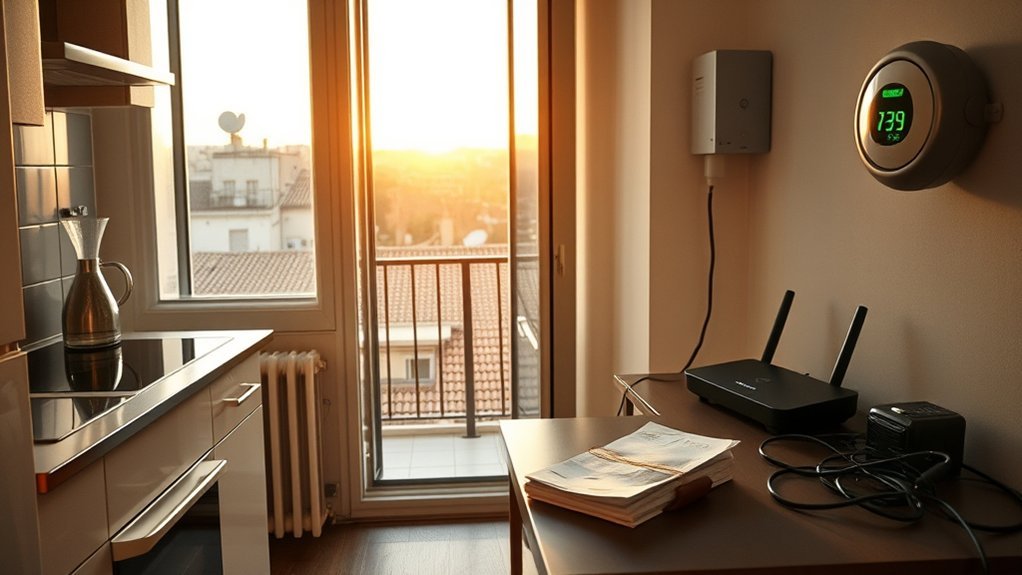
Basic utilities for an 85 m² apartment average about €183 per month, with a reported range of approximately €160–€235. This normally covers electricity, heating, cooling, water, and garbage, although the exact items included in a tenant’s bill depend on the property and contract.
A smaller and energy-efficient flat may cost less, while an older apartment with inefficient heating can cost more in winter. Air-conditioning use can also raise summer electricity bills.
| Home expense | Typical planning amount | What affects it |
|---|---|---|
| Basic utilities for 85 m² | About €183 | Apartment efficiency, season, heating, and household size |
| Broadband internet | About €28 | Provider, speed, installation, and modem charges |
| Mobile plan with 10 GB or more | About €10 | Data allowance and promotional period |
| Internet plus mobile | Approximately €35–€50 | Setup fees and number of mobile lines |
Housekeeping rates vary by provider, employment arrangement, and booking platform. A rough planning allowance is around €10–€15 or more per hour. Home or contents insurance is also quote-based. Do not assume earthquake, accidental-damage, theft, or tenant-liability cover is included unless the policy states it clearly.
Pro Tip: Ask for the apartment’s recent winter and summer utility bills before signing. Actual bills are more useful than a generic estimate, especially in older buildings.
Grocery Prices and Food Budget

A single person who cooks most meals at home can plan around €250–€350 per month for groceries. A careful shopper using discount supermarkets, markets, store brands, and seasonal produce may spend less. Imported foods, premium meat, specialty diets, alcohol, and convenience meals raise the total.
| Grocery item | Typical June 2026 price |
|---|---|
| Milk, 1 litre | €1.55 |
| Eggs, 12 | €4.16 |
| Chicken fillets, 1 kg | €10.68 |
| Beef round, 1 kg | €16.95 |
| Tomatoes, 1 kg | €2.06 |
| Potatoes, 1 kg | €1.27 |
| Apples, 1 kg | €2.19 |
| Bananas, 1 kg | €2.10 |
| Water, 1.5 litres | €0.44 |
| Mid-range wine, one bottle | €4.00 |
| Domestic bottled beer, 0.5 litre | €1.39 |
Meal planning is the simplest way to control food costs. Cooking five or six days a week and choosing local produce leaves more room for cafés and restaurants without pushing the monthly food budget too far above €350.
Eating Out, Cafés and Nightlife Costs

Dining can be affordable when you choose neighbourhood cafés, bakeries, pizzerias, and simple trattorias. Tourist-heavy streets near major monuments tend to charge more.
- Inexpensive restaurant meal: about €15
- Three-course mid-range meal for two, without drinks: about €60
- Fast-food combo meal: about €10
- Regular cappuccino: about €1.93
- Draft domestic beer, 0.5 litre: about €5
- Cocktail or aperitivo: commonly €10–€15, depending on the venue
A simple local dinner for two can remain below a formal mid-range meal, but dinner plus several drinks may easily reach €70–€100 or more. Standing at the bar for coffee is often cheaper than table service in a prime tourist location.
People who eat out once or twice a week might budget €150–€300 per month for restaurants and cafés. Frequent restaurant meals, delivery, cocktails, and nightlife can raise that amount quickly.
Transportation and Commuting Expenses

Rome’s buses, trams, metro, and urban rail services provide the most economical way to commute. Delays and crowding can occur, so the cheapest housing option is not always the best choice if it creates a long or unreliable daily journey.
Current fare details are published by ATAC, Rome’s public-transport operator.
| Transport item | Current cost | Details |
|---|---|---|
| BIT ticket | €1.50 | Valid for 100 minutes, subject to ATAC usage rules |
| Monthly personal Roma pass | €35 | Unlimited eligible travel during the charged calendar month |
| Annual Roma pass | €250 | Valid for 365 days from activation |
| Petrol, 1 litre | About €1.71 | Market prices fluctuate |
How Much Do Taxis Cost in Rome?
Rome’s official municipal taxi tariff uses different starting fees and progressive kilometre rates:
- Weekday starting fee, 6 a.m. to 10 p.m.: €3.50
- Saturday, Sunday, and holiday starting fee: €5
- Night starting fee, 10 p.m. to 6 a.m.: €7.50
- Minimum ordinary ride: €9
- Progressive distance rates: €1.31, €1.42, and €1.70 per kilometre as the meter advances
- Fiumicino Airport to or from inside the Aurelian Walls: fixed €55
- Ciampino Airport to or from inside the Aurelian Walls: fixed €40
Driving also adds insurance, parking, fuel, servicing, and possible restricted-traffic-zone costs. Rome’s ZTL areas make a private car inconvenient for many central residents. For most daily commuters, a €35 monthly public-transport pass costs far less than operating a car.
Entertainment, Health and Personal Spending

Leisure spending is flexible. A cinema ticket averages about €10, while a monthly fitness-club membership averages roughly €59, with options ranging from basic gyms to premium clubs. Museums, theatre, concerts, sporting events, and short trips vary widely.
What Should You Budget for Nightlife and Leisure?
A modest evening might involve a neighbourhood dinner and one drink. A more expensive night can include cocktails, table service, taxis, and ticketed entertainment. Useful monthly planning ranges are:
- Light leisure budget: €100–€200
- Moderate dining and entertainment: €250–€450
- Frequent nightlife and events: €500 or more
A cinema visit for two usually starts near €20 before snacks. Theatre, concert, and museum prices depend on the event, seating, discounts, and venue.
How Does Healthcare Coverage Work for Expats in Rome?
Healthcare costs depend heavily on whether you are registered with Italy’s National Health Service, known as the SSN, covered through another eligible arrangement, privately insured, or paying fully out of pocket.
The Italian Ministry of Health explains that some foreign residents who are not automatically required to join may be able to register voluntarily by paying an annual contribution. Eligibility and charges depend on immigration and residency status.
A short private consultation in Rome may cost around €90, but specialists, tests, procedures, and clinics set different prices. SSN specialist care may require a ticket payment unless the patient qualifies for an exemption.
| Personal expense | Planning amount | Notes |
|---|---|---|
| Private doctor visit | Often around €70–€150 | Specialty, clinic, and appointment length affect price |
| Monthly gym membership | About €40–€92 | Average is close to €59 |
| Men’s haircut | About €18–€25 | Central salons may charge more |
| Prescription medicine | Varies | Depends on the medicine, prescription, and reimbursement status |
| Private health insurance | Quote required | Age, exclusions, deductible, and coverage level matter |
Do not choose health insurance from a single generic average. Compare inpatient cover, outpatient visits, pre-existing-condition exclusions, waiting periods, deductibles, emergency treatment, and whether the policy satisfies your visa or residence requirements.
Salaries, Taxes and Financial Considerations

Rome’s living costs can look reasonable to someone earning a high foreign salary but feel difficult on local pay. Numbeo’s June 2026 snapshot reports average monthly take-home pay of approximately €1,762. Because this is a crowdsourced figure, treat it as a broad comparison rather than a guaranteed salary for a particular occupation. If you are a digital nomad moving to Italy, read our breakdown of the Italy Digital Nomad Visa requirements.
How Far Does an Average Salary Go in Rome?
A central one-bedroom averaging €1,096 would use about 62% of a €1,762 monthly net income. An outside-centre one-bedroom averaging €803 would use about 46%, before utilities, groceries, transport, healthcare, and savings.
| Cost item | Typical amount | Share of €1,762 net pay |
|---|---|---|
| One-bedroom in the city centre | €1,096 | About 62% |
| One-bedroom outside the centre | €803 | About 46% |
| Utilities, internet, mobile, and transit | About €255–€305 | About 14%–17% |
This explains why many residents share housing, live with family, choose a smaller property, or commute from an outer district. Buying a home does not automatically remove financial pressure because mortgage payments, interest, taxes, condominium costs, repairs, and insurance remain.
What Are the 2026 Tax Brackets in Italy?
Italy’s national personal income tax, known as IRPEF, is progressive. For 2026, the national brackets are:
- 23% on taxable income up to €28,000
- 33% on the portion over €28,000 and up to €50,000
- 43% on the portion over €50,000
The current structure is documented by the Italian Chamber of Deputies. A higher rate applies only to the portion of taxable income within that bracket, not to all income.
Regional and municipal additions and INPS social-security contributions may also apply. Actual take-home pay depends on gross salary, employment status, contract type, deductions, credits, dependants, and deductible expenses. Healthcare expenses, mortgage interest, rent-related benefits, and family provisions may affect the final calculation when eligibility rules are met.
Note: These tax figures are general information, not personal tax advice. Employees, self-employed workers, remote workers, pensioners, and new residents may be taxed differently. Confirm your position with a qualified Italian tax professional.
Realistic Monthly Budgets in Rome
The following examples combine housing, utilities, food, transport, and moderate discretionary spending. They are planning tools rather than fixed minimums.
| Expense | Student or shared flat | Single outside centre | Single central |
|---|---|---|---|
| Rent | €500–€700 | €750–€1,000 | €1,000–€1,570 |
| Utilities and internet | €80–€130 | €170–€250 | €180–€270 |
| Groceries | €250–€300 | €250–€350 | €250–€350 |
| Transport and mobile | €45–€60 | €45–€70 | €45–€90 |
| Dining, health, and personal spending | €250–€410 | €350–€530 | €450–€650 |
| Estimated total | €1,200–€1,600 | €1,850–€2,200 | €2,200–€2,700+ |
What Is the Cost of Living in Rome for Couples and Families?
A couple sharing a one-bedroom can often plan around €2,500–€3,400 per month. Rent does not double when two people live together, but food, transport, mobile plans, healthcare, and leisure increase.
A family of four may need approximately €3,300–€5,000 or more. A three-bedroom outside the centre averages about €1,542, while a central one averages about €2,192. Childcare, private healthcare, a car, larger utility bills, and school-related costs can push the total higher.
Private preschool averages more than €400 per child per month in current crowdsourced data. International primary-school tuition can exceed €14,000 per child per year, so families considering private or international education need a separate school budget.
Moving to Rome: Legal and Practical Costs
A monthly cost-of-living estimate does not cover every relocation expense. New residents should also plan for:
- Codice Fiscale application: Mandatory tax code registration needed before signing lease contracts, setting up utility accounts, or opening Italian bank accounts.
- Permesso di Soggiorno fees: Non-EU residents must apply for a residence permit within 8 days of arrival (approx. €70–€150 depending on visa duration).
- Visa application and document administrative costs
- Certified translations, legalisation, or apostille services
- Temporary accommodation while searching for a long-term rental
- Deposit, first rent, agency commission, and utility activation
- Travel, shipping, storage, or replacement furniture
- Private health cover or voluntary SSN registration where required
- Tax advice for foreign income, investments, remote work, or self-employment
EU, EEA, Swiss, and non-EU residents do not all follow the same immigration and healthcare rules. Non-EU citizens should confirm the correct visa before moving through the Italian Ministry of Foreign Affairs or the Italian consulate responsible for their legal place of residence.
Pro Tip: Keep a moving fund separate from your normal monthly budget. Three to six months of essential expenses provides protection against a delayed job start, rental problem, medical bill, or unexpectedly high utility charge.
Tips to Cut Costs in Rome
Rome rewards residents who choose housing and transport carefully. The following changes make the largest difference:
- Share a flat. A room commonly costs far less than a private studio or one-bedroom.
- Compare total housing cost, not rent alone. Include condominium fees, utilities, TARI, internet, and commute costs.
- Live near dependable transport rather than a famous landmark. An outer area with a direct metro or rail connection may offer a better daily routine than a cheaper but poorly connected property.
- Use a monthly or annual transit pass. A €35 monthly pass or €250 annual pass is inexpensive compared with regular taxi use or car ownership.
- Cook at home most days. A €250–€350 grocery budget is easier to control than frequent restaurant and delivery spending.
- Use residential-area cafés and trattorias. Prices around major attractions are often higher.
- Track winter and summer bills separately. Heating and air conditioning can create seasonal spikes.
- Review tax credits and deductions. Eligibility may depend on employment, income, rent, healthcare expenses, and family circumstances.
- Build a healthcare allowance. Even an SSN-registered resident may occasionally use private appointments or pay ticket charges.
- Avoid unnecessary car ownership. Parking, insurance, maintenance, fuel, and restricted-traffic rules add costs that a rent-only comparison misses.
Sources
- Numbeo: Cost of Living in Rome — June 2026 snapshots for rent, groceries, utilities, dining, transport, leisure, childcare, and reported net salary.
- Immobiliare.it: Rome Real Estate Market — June 2026 asking rents per square metre and year-over-year changes.
- ATAC: Tickets and Passes — official BIT, monthly, and annual public-transport fares.
- Roma Capitale: Official Taxi Tariff — starting fees, progressive rates, minimum fares, and airport prices.
- Italian Chamber of Deputies: Personal Income Tax — current 2026 IRPEF brackets.
- Italian Ministry of Health: Foreign Residents and the SSN — healthcare-registration guidance for foreign residents.
Frequently Asked Questions
How much does it cost to live in Rome per month?
A student or shared-flat renter may need about €1,200–€1,600 per month. A single renter living outside the centre should plan around €1,850–€2,200, while a comfortable central lifestyle often costs €2,200–€2,700 or more. Couples commonly need €2,500–€3,400, and families may need €3,300–€5,000 or more.
Can you live in Italy on $3,000 a month?
A $3,000 monthly budget can support a comfortable Rome lifestyle for one person when rent is controlled and the money is available after taxes. Exchange rates change, so compare the amount with current euro costs before moving. Visa, healthcare, tax, and emergency-fund requirements must be budgeted separately.
Is it expensive for an American to live in Rome?
Rome may feel affordable to an American earning a strong U.S.-based income, but it can feel expensive on a typical local salary. Rent, exchange rates, Italian tax residency, healthcare eligibility, visa costs, and the need for private insurance can significantly change the comparison.
Is it cheaper to live in Italy or the USA?
There is no universal answer. Rome may offer cheaper public transport, café culture, and healthcare access than many large U.S. cities, but local wages are also lower. Housing, taxes, insurance, car use, household size, and the specific U.S. city determine which location costs less.
What salary do you need to live comfortably in Rome?
A single renter may want net income of at least €2,200–€2,500 per month for a comfortable lifestyle with some savings. Someone sharing housing may manage on less. A central apartment, car, frequent dining, private healthcare, or dependants can raise the required income considerably.
How much should a student budget for Rome?
A student renting a room should plan around €1,200–€1,600 per month, including rent, shared bills, groceries, transport, mobile service, study costs, and modest leisure. Tuition, visa fees, private insurance, deposits, and travel are separate.
Conclusion
Living in Rome means balancing cobblestone streets, espresso stops, neighbourhood markets, and historic surroundings against a demanding rental market. The city is manageable when you choose housing carefully, use public transport, cook regularly, and understand what your rental price includes.
A shared flat can keep a student or young professional near €1,200–€1,600 per month. A single renter should more realistically plan for €1,850–€2,500, with central convenience and frequent entertainment pushing the total higher. Couples and families benefit from sharing housing costs but need larger food, healthcare, childcare, and school allowances.
The safest approach is to compare live rental listings, request recent utility bills, confirm contract and healthcare rules, and keep a separate relocation and emergency fund. With those steps in place, Rome can offer strong cultural, food, and transport value without turning every month into a financial surprise.