
A single person typically needs between €1,780 and €2,250 per month to live comfortably in Madrid, while a family of four averages €3,500 to €4,700 per month. Housing represents your largest expense: expect €1,000–€1,100 for a one-bedroom apartment in outer districts or €1,300–€1,600 in central neighborhoods. Non-rent expenses average roughly €750–€850 per month, covering groceries (€200–€300), utilities and fibre internet (€180–€220), public transport (€20–€55), and private health insurance (€50–€90). Cross-reference localized expense figures against authoritative sources such as Numbeo’s Madrid cost of living data and the Instituto Nacional de Estadística (INE).
Quick Answer: Monthly Budget Breakdown by Scenario
Estimated monthly expenditure comparison across typical household profiles in Madrid:
| Expense Category | Student / Flatshare | Single Professional | Family of Four |
|---|---|---|---|
| Housing / Rent | €450 – €650 (Room) | €1,000 – €1,400 (1-Bed) | €1,650 – €2,300 (3-Bed) |
| Utilities & Internet | €60 – €80 (Share) | €180 – €220 | €280 – €350 |
| Groceries | €180 – €220 | €200 – €300 | €700 – €800 |
| Transport | €20 (Youth Pass) | €39 – €55 | €120 – €180 |
| Health Insurance | €45 – €60 | €60 – €90 | €180 – €250 |
| Leisure & Dining | €150 – €200 | €300 – €450 | €600 – €800 |
| ESTIMATED TOTAL | €905 – €1,270 | €1,779 – €2,515 | €3,530 – €4,680 |
What You’ll Spend Monthly in Madrid: A Realistic Budget Breakdown

A realistic baseline budget for living independently in Madrid starts at €1,780 to €2,250 per month for a single professional renting a one-bedroom flat. Your accommodation choice serves as the primary budget anchor, determining more than half of your total monthly outlay.
Non-rent operational costs average €750–€850 per month. A standard 85 m² apartment incurs €150–€180 in basic utilities (electricity, water, heating, and building garbage fees), with home fibre internet adding €30–€40. Supermarket staples at national chains like Mercadona and Carrefour generally cost €200–€300 per person each month.
To assess your net income against local costs, compare these standard benchmark tiers:
- Minimum Survival Budget (€1,000 – €1,250/month): Requires renting a single room in a flatshare, cooking entirely at home, and relying on public transport.
- Comfortable Solo Living (€2,000 – €2,500/month): Covers a private one-bedroom apartment, regular weekend dining, private medical cover, and gym memberships.
- Family Baseline (€3,500 – €4,700/month): Supports a three-bedroom home, public or subsidised concertado schooling, family groceries, utilities, and domestic leisure.
Renting in Madrid: Prices, Neighbourhoods, and Tenant Rules

Rental rates in Madrid vary significantly between central historic districts and surrounding residential quarters. Prime central areas such as Salamanca, Chamberí, and Retiro average €1,350 to €1,700 per month for a one-bedroom property. Trendy inner-ring neighborhoods like Malasaña, Chueca, and La Latina range between €1,100 and €1,400, while well-connected peripheral districts like Carabanchel, Tetuán, and Vallecas offer one-bedroom options between €850 and €1,100.
Tenant Protections and Agency Fees: Under Spain’s national Housing Law (Ley de Vivienda), real estate agency fees (*honorarios de agencia*) for standard long-term residential leases (*arrendamiento de vivienda habitual*) are paid by the property owner, not the tenant. By law, standard rental deposits (*fianzas*) are limited to one month’s legal deposit (held by the regional authority, IVIMA) plus a maximum of two months of additional contractual guarantee.
Neighbourhoods and Average Rental Rates
Madrid’s radial transit network makes living outside the immediate core practical without sacrificing accessibility. The table below outlines standard monthly rental benchmarks by zone type:
| Neighbourhood Type | Key Areas | Est. 1-Bed Rent / Month | Est. Room Rent / Month |
|---|---|---|---|
| Prime Centre | Salamanca, Chamberí, Retiro, Centro | €1,350 – €1,700 | €550 – €750 |
| Trendy / Central | Malasaña, Chueca, La Latina, Arganzuela | €1,100 – €1,400 | €500 – €650 |
| Budget / Well-Connected | Carabanchel, Tetuán, Vallecas, Usera | €850 – €1,100 | €350 – €480 |
Rental Document Checklist and Search Strategies
Rental demand peaks from July through October with university and corporate intakes. Major listing portals include Idealista and Fotocasa for direct long-term apartments, while platforms like Badi, Spotahome, and Uniplaces cater to shared flat rentals and mid-term stays.
Landlords typically require a complete documentation pack before arranging contracts:
- Identification: Valid Passport or NIE / TIE card.
- Proof of Solvency: Spanish employment contract (contrato de trabajo) showing completion of any trial period, along with your last 3 monthly payslips (nóminas).
- Non-Spanish Income: If working remotely under the Digital Nomad Visa or relocating with foreign income, provide Spanish bank statements showing sufficient liquid savings or tax returns.
- Deposit Funds: One month legal deposit (fianza) plus one to two months additional guarantee.
Buying Property: Prices per Square Metre, Taxes, and Mortgages

Madrid real estate purchase prices average approximately €5,900/m² across central districts (Salamanca, Chamberí, Centro) and roughly €3,600/m² in outer residential municipalities and suburbs. Total closing costs require budgeting an additional 8% to 11% on top of the agreed purchase price.
Madrid property closing costs include a flat 6% Property Transfer Tax (ITP) for resale homes or 10% VAT for new builds, plus notary, registry, and legal fees.
When purchasing residential real estate in the Community of Madrid, transaction taxes follow clear regional rules:
- Resale Residential Properties: Subject to Property Transfer Tax (Impuesto sobre Transmisiones Patrimoniales or ITP) set at a regional rate of 6% in Madrid.
- New Build Properties: Subject to national VAT (IVA) of 10%, plus Documented Legal Acts tax (AJD) of 0.75%.
- Legal and Administrative Costs: Notary fees (€800–€1,200), Land Registry fees (€400–€700), and bilingual conveyance lawyer / gestor fees (typically 1% of purchase price).
- Mortgage Conditions: Spanish fiscal residents can secure financing up to 80% Loan-to-Value (LTV), while non-resident buyers generally require a 30% to 40% cash deposit (60–70% LTV).
- Immigration Note: Spain’s real estate investment path for residency (the Golden Visa) has been terminated; prospective relocators should examine the Digital Nomad Visa, Non-Lucrative Visa, or standard employment routes.
Utilities, Internet, Mobile Plans, and Health Cover
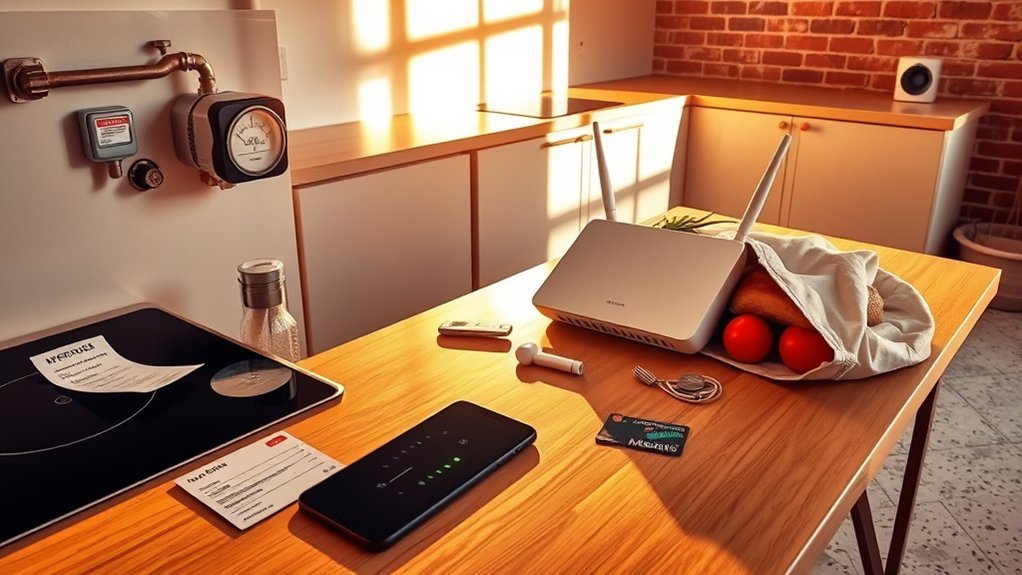
For an average 85 m² apartment, standard utilities (electricity, water, municipal rubbish collection, and building community fees if not landlord-covered) range from €150 to €185 per month. Air-conditioning during July and August and gas heating in December through February represent the primary seasonal drivers of electricity and gas consumption.
Private Health Insurance: Non-EU nationals relocating under Spanish visa schemes (such as the Digital Nomad Visa or Non-Lucrative Visa) must maintain private comprehensive medical insurance without copayments (sin copago). Leading authorized providers (Sanitas, Adeslas, DKV, Quirónsalud) charge €50 to €90 per month per adult depending on age and coverage.
Key strategies to manage monthly utility expenses:
- Telecom Bundles: Combine high-speed fibre (300–600 Mbps) and 5G mobile lines via low-cost operators such as Digi, O2, or Pepephone for €30–€40 total per month.
- Electricity Tariffs: Choose between regulated hourly tariffs (PVPC) and fixed-rate plans from providers like Endesa, Iberdrola, or TotalEnergies based on your peak-hour usage.
- Heating Verification: Check if an apartment includes building-wide central heating (calefacción central) within the base rent before signing.
Groceries and Eating Out: Supermarkets, Markets, and Dining

A single person spends approximately €200 to €300 per month on groceries by purchasing staples at major supermarket chains such as Mercadona, Carrefour, Lidl, and Dia. A family of four typically allocates €700 to €800 per month.
Common supermarket prices across Madrid:
- Fresh Milk (1L): €0.95 – €1.15
- Loaf of Fresh Bread (500g): €1.20 – €1.50
- Free-Range Eggs (Dozen): €2.50 – €3.00
- Chicken Breast Fillets (1 kg): €7.20 – €8.00
- Spanish Olive Oil (1L Extra Virgin): €8.00 – €10.50
- Rice or Pasta (1 kg): €1.25 – €1.60
Dining Out: Madrid offers accessible daily dining options. The traditional weekday lunch set menu (Menú del Día) includes two courses, bread, a drink, and dessert/coffee for €12 to €16 in most neighborhoods. A casual dinner for two at a mid-range restaurant costs €45 to €65, a draft beer (caña) with a complimentary tapa costs €2.00–€3.00, and an espresso/café con leche runs €1.50–€2.20.
Transport, Leisure, and Daily Expenses: Commuting and Lifestyle Costs

Madrid possesses an extensive and reliable public transit network managed by the Consorcio Regional de Transportes de Madrid (CRTM), integrating the Metro, municipal EMT buses, and Cercanías commuter trains.
Monthly transit passes cost €20 for youth under 26 and €39–€55 for adults, while single metro tickets cost €1.50–€2.00.
Commuter transit and lifestyle expense details:
- Public Transport Cards: A rechargeable Tarjeta Multi costs €2.50, loaded with a 10-Journey Metrobús ticket for €12.20 (Zone A). The personalized monthly pass (Abono 30 Días) covers unlimited travel across central zones.
- Youth Discount: The Abono Joven provides flat-rate travel across all transit zones (A through E) for €20 per month for residents under 26 years old.
- Taxis & Rideshares: Official city taxis run on fixed meters (base rate €2.55–€3.15, plus ~€1.15–€1.40/km). Uber, Cabify, and Bolt operate widely across the city.
- Fitness & Entertainment: Gym memberships at standard chains (Basic-Fit, VivaGym, Altafit) cost €30–€45/month; municipal sports centers (polideportivos) provide lower entry fees. Cinema tickets cost €8–€11, and major museums (Prado, Reina Sofía) offer dedicated free evening entry hours.
Childcare and Education: Nursery, School Fees, and Grants

Educational options in Madrid fall into three main categories: state-funded public schools, state-subsidised semi-private schools (colegios concertados), and private or international schools.
Nursery and Early Childhood (Ages 0–3)
Early childhood schooling (educación infantil) is divided between public municipal nurseries and private centers:
- Public Nurseries (Escuelas Infantiles Públicas): Basic tuition is heavily subsidised or tuition-free in the Community of Madrid for core educational hours (9:00 to 13:00/16:00), with parents paying modest monthly meal/dining fees (comedor, approximately €100–€150/month).
- Private Nurseries: Private guarderías average €350 to €550 per month for full-day care. Working mothers are eligible for a regional childcare tax credit (*cheque guardería*) up to €1,100 annually to offset private nursery costs.
Primary and Secondary Schooling Options
From age 3 through 18, schooling structure choices determine family budgets:
- Public Schools (Colegios Públicos): Tuition is 100% free for all registered residents with an empadronamiento certificate. Parents cover textbooks, stationery materials (€100–€250/year), and optional lunchroom supervision (comedor, ~€130–€165/month).
- Semi-Private Schools (Colegios Concertados): Subsidized by the government, these schools charge voluntary foundation contributions of €100 to €250 per month, plus uniforms and dining services.
- International and Private Schools: Fully private British, American, or International Baccalaureate (IB) schools (e.g., Hastings, Runnymede, International College Spain) charge tuition between €6,000 and €22,000 per academic year, excluding transport and enrollment fees.
Frequently Asked Questions
What Is the Average Cost of Living in Madrid?
The average monthly cost of living in Madrid for a single person ranges between €1,780 and €2,250 including rent for a one-bedroom apartment. Non-rent living expenses average approximately €750 to €850 per month, covering groceries (€200–€300), utilities and internet (€180–€220), public transport (€20–€55), and leisure.
How Much Do You Need to Live Comfortably in Madrid?
A single professional needs approximately €2,200 to €2,500 net per month (around €36,000–€42,000 gross annually) to live comfortably in central Madrid with private housing, dining out, and savings. A family of four requires roughly €4,000 to €4,800 per month for a three-bedroom flat, utilities, activities, and schooling.
Is €50,000 a Good Salary in Madrid?
Yes, €50,000 gross per year (yielding roughly €2,900 to €3,050 net monthly across 12 payments) is an above-average salary in Madrid. It comfortably supports an independent lifestyle in central neighborhoods, full private health cover, dining out, and meaningful monthly savings.
Is 1000 Euros a Month Enough to Live in Madrid?
No, €1,000 per month is not enough to live alone in Madrid, as private one-bedroom rents generally start around €1,000. On a €1,000 budget, you must rent a room in a shared apartment (€400–€600/month), cook at home, use subsidized youth transit passes, and strictly manage discretionary spending.
Conclusion
Madrid delivers a high quality of life with overall living costs that remain substantially lower than European peers like London, Paris, or Amsterdam, while offering world-class public infrastructure and healthcare. Securing accommodation outside prime tourist districts saves €300 to €500 every month on rent. By structuring your budget around documented housing rates, municipal transit passes, and realistic utility expenditures, you can manage your relocation to Madrid efficiently and avoid unexpected costs.