Author: Editorial Team | • Last Updated: August 2026 • Published: March 2026
The estimated cost of living in Liberia ranges from $400 to $850 per month for a single person on a lean local budget, and $700 to $1,700 per month for a moderate setup with private housing, backup generator access, and reliable mobile broadband. Expenses vary sharply depending on your location in Monrovia or outer counties, housing standard, power source, and reliance on imported goods.
Quick Answer
Plan on roughly $400–$850 a month for a lean solo setup in Liberia and about $700–$1,700 for a private, moderate setup. These are planning ranges, not official averages. Rent, backup power, imported food, fixed broadband, and exchange-rate changes can move the total sharply.
Key Takeaways
- A low-cost solo budget may fall near $400–$850, but private central housing in Monrovia and expatriate-style spending can push the total above $1,000.
- Crowdsourced rent estimates suggest roughly $95–$136 outside central areas and about $209–$250 for a central one-bedroom, but actual central listings in neighborhoods like Sinkor or Mamba Point often command higher rates.
- Electricity (LEC pre-paid meters), generator fuel, water delivery, compound security, and fixed broadband represent major operational costs.
- Liberian dollars (LRD) and U.S. dollars (USD) circulate together in a dual-currency cash system, making exchange-rate tracking vital.
- Confirm rent terms, utility arrangements, data coverage, and daily transport options directly before committing to a final budget.
Cost of Living in Liberia in 2026
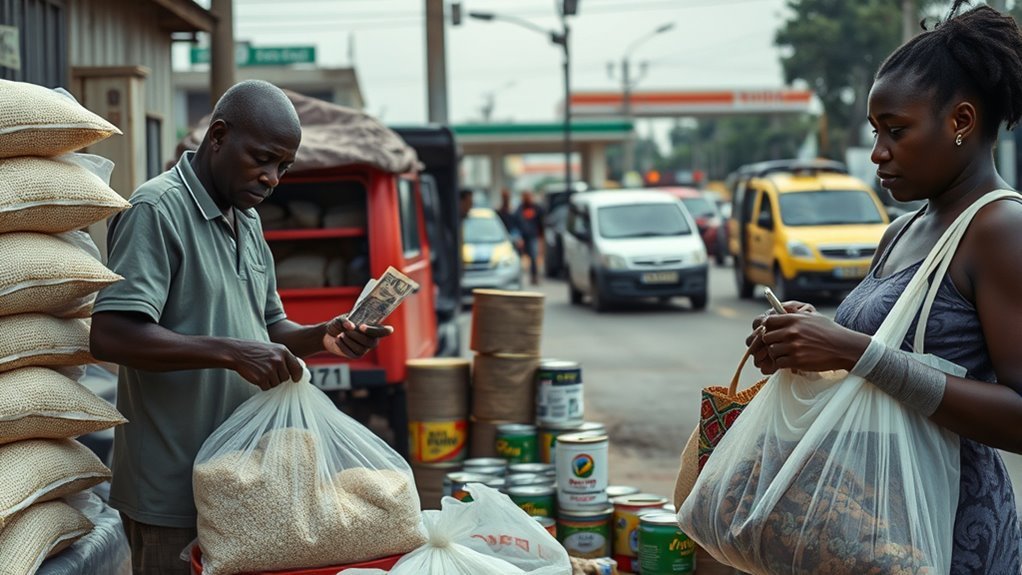
A June 2026 third-party cost model estimated that one person could spend approximately $515 a month including basic rent. That figure serves strictly as a baseline. It represents a theoretical basket rather than an official government household budget and does not account for fully furnished housing, imported supermarket items, private vehicle travel, high-speed broadband, or extensive private generator usage.
To establish a realistic budget, evaluate costs line-by-line across major spending categories: housing, food, electricity/power generation, transport, and telecommunications.
Note: Liberia does not publish a single official monthly cost-of-living total. The detailed rent and household ranges in this guide combine third-party price observations with official data on national inflation, currency, telecom tariffs, fuel regulations, and electricity utility rates.
Liberia’s headline inflation stood at 5.0% year over year in June 2026. Transport prices rose 9.1%, while restaurants and hotels increased by 11.9%, illustrating why older price lists can quickly understate current living costs. Source: Liberia Institute of Statistics and Geo-Information Services.
How to Read Liberia Cost Estimates
Online cost estimates for Liberia vary widely because they represent drastically different living standards. Before comparing totals, evaluate what is included in each calculation:
- Household type: Shared housing, unfurnished flats, furnished expat apartments, and private compound homes carry vastly different baseline costs.
- Location: Premium central Monrovia districts (Mamba Point, Sinkor, Mamba Point/Congo Town) operate under different pricing dynamics than outer areas like Paynesville or Brewerville.
- Power and water: Check whether rent includes grid power or backup generators. Households operating private generators or purchasing trucked water face direct fuel and delivery expenses.
- Food choices: Purchasing local produce from open markets keeps food spending low; reliance on imported packaged groceries and Western-style restaurants increases monthly bills significantly.
- Transport: Shared yellow taxis and commercial motorbikes (peh-peh) are low-cost options, whereas private vehicle ownership requires budgeting for imported fuel and maintenance.
- Connectivity: Standard mobile data plans cost far less than dedicated fixed fiber or satellite broadband connections.
Official inflation metrics also reflect geographic limits. LISGIS CPI reporting collects market pricing predominantly in major Monrovia trade centers, meaning national figures may not reflect county-level price movements in rural areas.
Housing Costs in Liberia by City
Crowdsourced and local listing data indicate that a basic one-bedroom apartment outside central districts averages $95–$136 per month, while a central one-bedroom typically runs $209–$250. However, fully furnished properties with compound security and generator backup in prime Monrovia locations command significantly higher rates.
| Home type | Indicative range | Budgeting note |
|---|---|---|
| One bedroom outside central area | About $95–$136 | Typically unfurnished; basic utility access. |
| One bedroom in central area | About $209–$250 | Central Monrovia; listings in Sinkor/Mamba Point may exceed this range. |
| Three bedrooms outside central area | About $267–$300 | Verify water supply, security provisions, and parking access. |
| Three bedrooms in central area | About $475–$650 | Serviced diplomatic/expat properties often cost substantially more. |
Lease terms in Liberia frequently require payment advance (ranging from 6 to 12 months upfront). Always confirm whether quoted rates include property taxes, security fees, or generator fuel sharing before signing an agreement.
City Center Versus Outside-Center Rent
Central Monrovia neighborhoods offer proximity to international agencies, commercial offices, restaurants, and medical centers. However, central properties come at a clear premium—especially when gated security and private generator capacity are standard features.
Renting outside central districts (such as parts of Paynesville or outer Bushrod Island) lowers upfront rent but can increase daily transit times, fuel consumption, and road toll or wear expenses during rainy season conditions.
Neighborhood and Lease Price Gaps
Neighborhoods like Sinkor, Mamba Point, and Congo Town feature wide price variations. Mamba Point hosts diplomatic facilities and high-end serviced units, while Sinkor spans multiple streets with options ranging from standard local apartments to premium secure complexes.
Before making a deposit or advance lease payment, verify:
- The exact lease duration covered by upfront cash payments.
- Furnishing lists and operational condition of provided appliances.
- Primary grid (LEC) meter details vs. secondary generator scheduling.
- Water source dependability (well pump, city pipe, or truck delivery storage).
- Responsibility for structural repairs versus routine tenant upkeep.
- Installed fiber or wireless internet equipment status.
Warning: Never budget based on advertised rent alone. Generator fuel, water delivery, compound security, appliances, and upfront advance payment requirements can double your initial housing outlay.
Food, Transport, and Utility Costs
Food and Grocery Budget
A lean single food budget ranges from $180 to $250 per month when shopping primarily at local markets (e.g., Waterside or Red Light) for domestic staples like cassava, rice, plantains, fish, and seasonal vegetables. A broader diet incorporating imported dairy, packaged goods, and occasional meals at Western-style eateries typically increases food expenditures to $250–$400+ monthly.
According to LISGIS data, annual food inflation was 4.9% in mid-2026, while restaurant/catering costs rose more sharply. Building a 10%–15% buffer into food budgeting accommodates seasonal pricing shifts for imported goods.
Local Transport and Fuel
Public transit in urban centers relies on shared taxis, minibuses (keh-keh), and motorbikes. Short urban routes cost relatively little, putting a modest commuting budget around $15–$50 per month. Commuters relying on private vehicle transport or dedicated hired drivers generally spend $100–$300+ monthly on fuel and vehicle upkeep.
Fuel costs fluctuate based on international markets and official price caps. The Liberia Ministry of Commerce and Industry publishes official petroleum ceiling circulars setting maximum allowed retail prices for gasoline and fuel oil.
Electricity, Water, and Household Services
Utility pricing in Liberia depends heavily on whether your residence relies on the Liberia Electricity Corporation (LEC) grid or standalone power generation. The Liberia Electricity Regulatory Commission tariff framework outlines official kilowatt-hour rates for pre-paid residential meters.
Comprehensive monthly household utility budgeting should account for:
- Pre-paid LEC electricity tokens for basic lighting and refrigeration.
- Diesel or gasoline fuel for private backup generators during load-shedding.
- Inverter system battery maintenance or solar panel installation amortizations.
- Purchased truck delivery water or filtration system maintenance.
- Refuse collection and residential compound security fees.
Simple single-person utility expenses range from $40 to $150 monthly, whereas larger homes operating air conditioning and private generators often see monthly utility totals of $200–$500+.
Internet, Mobile Data, and Monthly Essentials
Mobile networks provide the primary internet access for most residents. Telecommunications operators Orange Liberia and Lonestar Cell MTN offer prepaid high-speed mobile data bundles. For instance, Orange Liberia data packages include options such as a $10 monthly 10GB pack or a $25 monthly 28GB pack. Maintaining dual-SIM access ensures continuous connectivity across both major mobile networks.
For remote professionals requiring fixed high-volume broadband, home fiber or point-to-point wireless connections are available in major parts of Monrovia, though setup fees and monthly subscription rates are notably higher than basic mobile data options.
Pro Tip: Test indoor signal strength for both Orange and Lonestar Cell MTN at your exact address before subscribing to long-term data plans, as network performance can vary by neighborhood.
Sample Monthly Budgets for Liberia
The sample budgets below illustrate how individual lifestyle parameters create significantly different total monthly expenses in Liberia.
| Expense category | Lean solo setup | Moderate solo setup | Family of three setup |
|---|---|---|---|
| Housing / Rent | $95–$200 | $200–$500 | $300–$900 |
| Food & Groceries | $180–$250 | $250–$400 | $500–$900 |
| Transportation | $15–$50 | $40–$120 | $80–$250 |
| Utilities & Power Backup | $40–$150 | $80–$250 | $100–$350 |
| Mobile Data & Telecom | $10–$50 | $25–$180 | $25–$180 |
| Healthcare & Miscellaneous | $50–$150 | $100–$250 | $200–$1,000+ |
| Estimated Total | $390–$850 | $695–$1,700 | $1,205–$3,580+ |
Family and Remote-Worker Budget Estimates
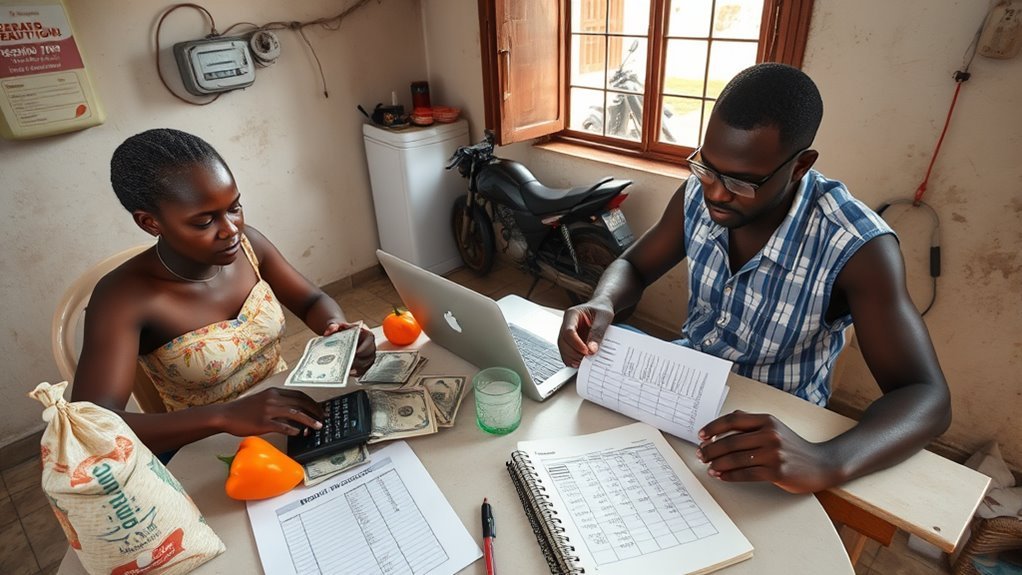
A family of three living in Monrovia generally requires $1,200 to $3,600+ monthly depending on private schooling choices, residential utility backup systems, vehicle travel, and medical insurance coverage. For remote professionals, monthly expenses average $700–$1,700, reflecting private accommodations, redundant mobile connections, power backup equipment, and an emergency contingency buffer.
Family Costs to Verify
- Education: Tuition fees at international or private schools, plus uniforms, books, and transportation.
- Healthcare: Comprehensive private medical cover, outpatient clinic fees, and emergency evacuation insurance.
- Living space: Multi-bedroom homes require higher utility basements and additional security staffing.
Remote-Worker Infrastructure Needs
- Dual data subscriptions (Orange Liberia and Lonestar Cell MTN).
- Inverter battery setups or portable power stations to bridge utility outages.
- Cash reserves for foreign currency exchange and transaction fee coverage.
Cheapest Cities in Liberia
While statistical price models place outer urban centers like Sanniquellie (~$486/mo), Kakata (~$487/mo), Greenville (~$487/mo), and Yekepa (~$487/mo) slightly below Monrovia (~$518/mo baseline), these figures reflect theoretical baseline baskets rather than guaranteed cost differences.
| City | Modeled monthly total | Interpretation note |
|---|---|---|
| Monrovia | About $518 | Primary commercial center; highest housing variety and access to services. |
| Sanniquellie | About $486 | Lower overall baseline; limited formal rental listings. |
| Kakata | About $487 | Proximity to Monrovia provides trade advantages; compare actual property quotes. |
| Greenville | About $487 | Coastal location; verify transport access during wet season months. |
| Yekepa | About $487 | Mining sector presence; confirm local utility stability and housing availability. |
When evaluating locations outside Monrovia, factor in potential trade-offs regarding health infrastructure, road conditions, and utility grid stability.
Currency and Exchange-Rate Planning
Liberia operates a dual-currency system where both Liberian Dollars (LRD) and U.S. Dollars (USD) are legal tender. Larger obligations like apartment rent, major utility bills, and imported retail goods are typically quoted and settled in USD. Daily market purchases, local transportation fares, and small retail transactions often use LRD.
Always verify exchange rates via the Central Bank of Liberia official rates portal. In practical terms, ensure your USD bank notes are clean, un-torn, and recent series, as local vendors may reject damaged notes.
Costs Often Missed in a Liberia Budget
- Upfront Rent Advances: Landlords routinely request 6 to 12 months of rent in advance.
- Clean USD Cash Handling: Banks and vendors enforce strict physical quality rules on USD currency notes.
- Mobile Money Fees: Cash-in/cash-out transaction charges via Orange Money or Lonestar Cell MTN Mobile Money.
- Water Deliveries: Bulk water truck refills during dry season periods.
- Surge Protection: Power strips, voltage stabilizers, and UPS units to protect electronics against grid voltage fluctuations.
How to Build Your Own Liberia Budget
- Obtain specific rent terms: Confirm advance payment rules, security inclusions, and utility metering.
- Calculate power requirements: Determine expected LEC electricity consumption versus generator fuel costs.
- Assess daily transit routes: Factor in work, school, market, and medical trips across dry and wet seasons.
- Include a contingency reserve: Retain a 15% emergency buffer for healthcare, repairs, or unexpected currency shifts.
Frequently Asked Questions
How much money do you need to live in Liberia?
A practical 2026 planning range is approximately $400–$850 a month for a lean solo lifestyle and $700–$1,700 for a private, moderate setup. There is no official national average, and your real total depends heavily on housing, power, food choices, transport, and connectivity.
Can you live in Liberia on $500 a month?
It may be possible with simple housing outside premium central areas, home-cooked local food, low transport costs, and limited electricity or internet use. It is less realistic for furnished central housing, frequent taxis, fixed broadband, air conditioning, or regular imported purchases.
How much do you need to live comfortably in Liberia?
Comfort is subjective, but a solo renter may plan for approximately $900–$1,700 a month to allow for private housing, dependable power and connectivity, varied food, transport, healthcare, and an emergency buffer. Premium housing or expatriate-oriented services can require more.
Is Monrovia more expensive than other Liberian cities?
Third-party models generally place Monrovia above smaller cities, but the available samples are limited. Monrovia also has the widest selection of premium housing and services. Compare actual listings and essential-service access rather than relying only on a city ranking.
What currency should you use for a Liberia budget?
Use both U.S. dollars and Liberian dollars. The Liberian dollar is the official currency, and the U.S. dollar is also legal tender. Check the Central Bank of Liberia’s current exchange rate before converting large payments.
What is the average monthly income in Liberia?
There is no dependable current national take-home-pay figure covering every formal and informal worker. In March 2026, Liberia’s Ministry of Labour referred to a statutory minimum monthly wage of $143 for covered workers. Actual pay varies by sector, occupation, location, and employment status.
Conclusion
Monthly living expenses in Liberia depend significantly on housing standards, power backup requirements, and shopping preferences. While a modest solo setup can operate around $400–$850 per month, maintaining a moderate or expat-style lifestyle with continuous electricity and broadband typically requires $700–$1,700+ monthly.
Base your planning on verified local rent quotes, confirm utility arrangements upfront, and maintain a flexible cash reserve in both USD and LRD.
Sources
- Liberia Institute of Statistics and Geo-Information Services: June 2026 CPI Report.
- Central Bank of Liberia: Legal Tender Information and Daily Exchange Rates.
- Liberia Electricity Regulatory Commission: Utility Tariff Framework.
- Orange Liberia Data Bundles & Pricing.
- Liberia Ministry of Commerce and Industry: Petroleum Notices.
- Liberia Ministry of Labour: Statutory Minimum Wage Statements.