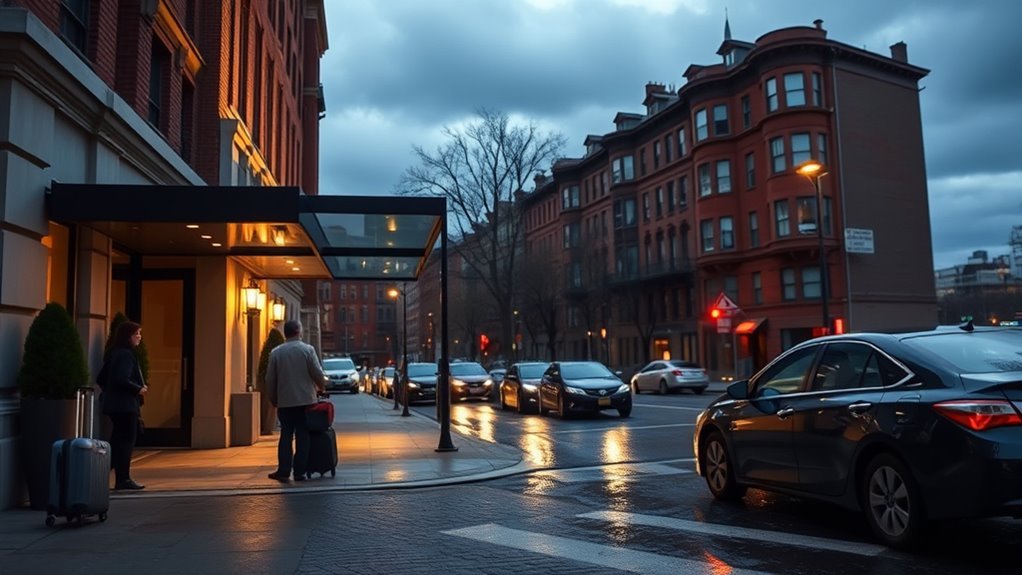
A 3-star hotel in Boston can cost as much as an upscale hotel in a less expensive city. The price changes with your travel dates, neighborhood, major events, and room type. To understand the real 3-star hotel cost in Boston, you need both a reasonable nightly budget and the full price after lodging tax and required fees.
Quick Answer
For a 3-star hotel in Boston, use $300 to $450 per night before tax as a flexible planning budget, not a measured citywide average. KAYAK’s changing 3-star estimates vary across its page. Meet Boston reported a $301.97 nightly average across all hotel classes in 2025. Boston’s 14.95% lodging tax increases your final cost.
Last checked: October 31, 2026. Boston’s lodging tax, published hotel-market statistics, and referenced event dates were checked against official sources. Booking-platform prices change frequently.
Key Takeaways
- Boston’s 2025 hotel market averaged $301.97 per night across all classes, but individual 3-star rates may be higher or lower.
- January and December tend to offer lower prices. October had the highest citywide average rate in 2025 at $386.46.
- The 2027 Boston Marathon and university commencement dates are important periods to consider when budgeting.
- Downtown, Back Bay, the Waterfront, and Seaport may cost more, while transit-accessible neighborhoods can offer better value.
- A 3-star classification does not guarantee free breakfast, parking, a pool, or a kitchenette. Compare the exact room and included services.
How Much Does a 3-Star Hotel Cost in Boston?
)
Boston does not have one reliable nightly price that applies to every 3-star hotel. A practical starting budget is about $300 to $450 per room before tax for dates without unusual demand. Treat this as a planning allowance, not an official average or a guaranteed booking rate.
During an October 2026 check, KAYAK’s Boston 3-star hotel page displayed approximately $474 in its pricing insights. However, another section of the same page displayed $268. Its estimates can also change with search context and data updates, so neither figure should be presented as a permanent Boston average.
A more consistent historical benchmark comes from Meet Boston’s official hotel statistics. The city’s average daily rate, or ADR, was $301.97 in 2025, with average annual occupancy of 77.3%.
ADR measures the average revenue per occupied hotel room. It covers all hotel categories in the reported market, not just 3-star properties. That distinction matters because a citywide ADR cannot establish the exact cost of a 3-star room.
| Benchmark | Current Evidence | How to Use It |
|---|---|---|
| KAYAK 3-star pricing | An October 2026 page check showed $474 in pricing insights and $268 in its FAQ. | Shows why live booking data cannot be treated as one fixed average. |
| Boston citywide ADR | $301.97 in 2025 across all hotel classes | A verified historical benchmark for the overall market. |
| Practical 3-star budget | About $300 to $450 before tax | An estimated starting allowance, not a statistical average. |
| Possible low-season range | About $160 to $250 before tax | Possible with flexible winter dates, but not guaranteed. |
| High-demand dates | $400 to $500 or more | Allow extra money during conventions, graduations, major events, and busy fall periods. |
A cheaper room may be available in December or January, especially outside the city center. During major events, even a basic hotel can cost substantially more than the ordinary planning range.
The most useful Boston hotel price is the complete booking total for your actual dates, room type, guest count, and location, not a broad citywide average.
What Factors Affect Boston Hotel Prices?
Location, season, and local events are major reasons Boston hotel prices change. Room occupancy, cancellation rules, and included services also affect what you pay. Two hotels with similar star ratings can offer very different overall value.
| Factor | Effect on Price | What to Check |
|---|---|---|
| Location | Downtown, Waterfront, Back Bay, Fenway, and Seaport hotels may carry higher rates. | Walking distance, transit connections, and daily transportation costs. |
| Season | Winter is generally cheaper. Spring events and fall demand can raise rates. | Monthly hotel trends and weather conditions. |
| Events | Conventions, graduations, sports, concerts, and festivals can produce sharp price increases. | Major events during your arrival and departure dates. |
| Room occupancy | Rooms for three or four guests can cost more or require another room category. | Maximum occupancy, bed count, and additional guest charges. |
| Cancellation terms | Nonrefundable rates can be cheaper but carry greater financial risk. | Refund deadline, prepayment terms, and cancellation penalties. |
| Included services | Breakfast, parking, and larger rooms may increase the rate but improve overall value. | Included amenities and separate charges. |
Major Boston Events That Can Increase Hotel Demand
Boston attracts visitors for sporting events, university ceremonies, and business meetings. Certain dates deserve special attention because several groups of travelers may need rooms at once.
For upcoming trips, these confirmed dates provide useful examples:
- April 19, 2027: The Boston Athletic Association’s Boston Marathon takes place on Patriots’ Day. Hotels along the race route and in central Boston may see stronger demand.
- May 27, 2027: Harvard University’s Commencement is scheduled for this date. Cambridge and nearby Boston hotels may attract visiting families.
- May 26–28, 2027: MIT’s Commencement celebrations are scheduled across these three days, with the main ceremony on May 27.
These dates do not establish a specific price increase. They identify periods when an early hotel search is particularly useful.
Convention schedules near the Seaport and Back Bay, Fenway Park games, concerts, and fall university events can also affect room availability. A high-demand weekday may cost more than a quiet weekend.
Boston Hotel Taxes and the Real Total
Boston’s combined hotel room-occupancy tax is 14.95%. This includes the 5.7% Massachusetts state tax, Boston’s 6.5% local tax, and a 2.75% convention-center assessment.
For example, a $300 nightly room rate produces $44.85 in lodging tax. The estimated total becomes $344.85 for one night, before other optional purchases or additional charges that may apply.
Warning: A hotel advertised at $300 per night does not necessarily cost only $300. Boston’s 14.95% lodging tax adds $44.85, bringing the room-and-tax estimate to $344.85. Always check the final payment amount and any applicable mandatory charges before booking.
| Base Nightly Rate | Estimated 14.95% Tax | Estimated Total |
|---|---|---|
| $200 | $29.90 | $229.90 |
| $250 | $37.38 | $287.38 |
| $300 | $44.85 | $344.85 |
| $375 | $56.06 | $431.06 |
| $450 | $67.28 | $517.28 |
The estimates assume that the base price is taxable at the standard Boston rate. They do not include separate purchases such as meals, parking, or room upgrades.
How to Calculate the Total Cost of Your Stay
For a straightforward booking with no additional mandatory property fees, use this formula:
Room rate × number of nights × 1.1495 = estimated room total after lodging tax.
For example, a $300 room booked for three nights has a base cost of $900. Adding 14.95% lodging tax gives an estimated total of $1,034.55, before optional extras.
If the quoted room rate already includes tax, do not add tax again. Also remember that a hotel’s incidental deposit or temporary payment-card hold may affect the amount available on your card without being a final room charge.
Are Mandatory Hotel Fees Included in Advertised Prices?
The Federal Trade Commission’s Rule on Unfair or Deceptive Fees took effect on May 12, 2025.
For covered short-term lodging, businesses must prominently display the total price including mandatory charges they know and can calculate in advance. Government taxes and genuinely optional purchases may be listed separately under the rule, subject to disclosure requirements.
Therefore, the displayed total before tax may already include mandatory property charges. Review the final payment summary to understand what is included, what is optional, and what you owe at the property.
Comparing Boston Neighborhoods by Hotel Cost
Boston hotel prices vary considerably by neighborhood. Central locations can offer convenience, but they may cost more during busy periods. Outer neighborhoods and nearby cities can offer alternatives if you are comfortable using public transportation.
Price and Location Tradeoffs
| Area | Typical Price Position | Best For | Watch For |
|---|---|---|---|
| Downtown and Financial District | Usually higher | Freedom Trail sightseeing, business trips, and short visits | Compact rooms and expensive parking |
| Waterfront and Seaport | Often higher, especially during conventions | Harbor activities, convention-center events, and business trips | Event-related rate increases and transportation needs |
| Back Bay | Mid-high to high | Shopping, restaurants, architecture, and transit access | Convention and fall weekend demand |
| Fenway and Kenmore | Highly variable | Fenway Park, colleges, hospitals, and entertainment venues | Games, concerts, and graduation periods |
| East Boston and Logan Airport | Sometimes lower than the central core | Early flights, short stopovers, and airport connections | Aircraft noise, transfer time, and fewer nearby tourist attractions |
| Dorchester, Roxbury, and outer areas | Can be lower | Travelers willing to use subway, bus, or rideshare services | Transit distance and late-night transport options |
| Cambridge and Somerville | Variable, not automatically cheaper | Harvard, MIT, university visits, and Red Line access | University events and separate municipal hotel-tax rules |
Cambridge and Somerville are separate cities rather than Boston neighborhoods. Their lodging costs, local taxes, and transportation needs should be assessed separately.
Where Can You Find Better-Value Hotels?
Start by comparing properties near subway or rapid-transit stations. A hotel outside Downtown Boston can offer a lower nightly price while still providing reasonable access to major attractions.
East Boston, parts of Dorchester, the outer South End, Cambridge, Somerville, and airport-area properties are worth comparing. However, their prices are not always lower, especially during university events and other busy periods.
A hotel that requires a longer journey may also increase your daily transportation costs. Compare the total cost of staying there with a more central property.
Pro Tip: Use both a map and a transit view when comparing hotels. A room within walking distance of a subway station may offer more practical value than a cheaper property that requires several rideshare trips.
When Is a More Expensive Central Hotel Worth It?
A central hotel can be worthwhile for a short visit because it may save transportation time and money. Downtown, Back Bay, the Waterfront, and Seaport are convenient when most activities are concentrated nearby.
For a longer visit, a less central hotel with extra space, breakfast, or a refrigerator may offer better overall value.
Think about your daily plans rather than only your room rate. Walking to several attractions may outweigh the apparent savings from a distant hotel.
What Amenities Do 3-Star Hotels in Boston Include?
)
A 3-star hotel in Boston is generally a mid-range accommodation, not a luxury property. It often provides a private bathroom, basic in-room comforts, and selected guest services. However, the star classification alone does not guarantee a particular amenity.
There is no single mandatory hotel star-rating system across the United States. Different travel organizations and booking platforms may classify the same hotel differently.
AAA’s explanation of hotel ratings helps distinguish professional property classifications from guest reviews. AAA also operates its own Diamond rating program, which is not identical to a booking platform’s star system.
Common Amenities to Compare
Rather than assuming all 3-star hotels offer the same services, review these details for the exact property and room:
- Wi-Fi: Confirm whether internet access is included in the room and public areas.
- Breakfast: Check whether it is complimentary, included with your room package, or charged separately.
- Parking: Review the daily rate, availability, vehicle restrictions, and in-and-out privileges.
- Room size: Older properties may have smaller rooms, especially in central locations.
- Bed configuration: Check whether your booking includes a king, queen, two beds, or another arrangement.
- Air conditioning: Look for recent reports about cooling performance during summer stays.
- Elevator access: Important if you have heavy luggage or mobility needs.
- Fitness center or pool: These facilities vary between properties.
- Refrigerator or kitchenette: May be available only with certain room categories.
- Accessibility: Confirm the precise features you require, including accessible entrances, bathrooms, and rooms.
- Housekeeping: Check whether daily service is included or provided on a reduced schedule.
Example: Amenities at Hampton Inn & Suites Boston Crosstown Center
One property from the hotel’s comparison list provides a useful example of why individual amenities matter.
The official Hampton Inn & Suites Boston Crosstown Center information lists free hot breakfast, free Wi-Fi, an indoor pool, and a fitness center.
Its published self-parking charge was $30 per day during this check. That is a separate cost to consider if you plan to drive.
Another Boston 3-star hotel may include different services. A lower room price does not automatically mean a lower total stay cost.
Note: A 3-star hotel can receive excellent guest reviews without becoming a 4-star property. Star classifications describe the property’s category and facilities, while review scores reflect guest opinions and experiences.
When Should You Book a 3-Star Hotel in Boston?
The best booking time depends on your travel dates and how flexible you can be. Booking far ahead can secure a suitable room, while last-minute deals are sometimes possible when rooms remain unsold.
During this review, KAYAK’s Boston 3-star page suggested booking at least seven days before arrival for better prices. That is a data-based suggestion, not a guarantee that a particular booking window will be cheapest.
A Practical Booking Strategy
For ordinary dates, compare rates early enough to understand your options. For major events or rooms with strict requirements, starting one to three months ahead can reduce the risk of limited availability.
- Start with your exact dates: Search using the correct guest count and room requirements.
- Compare several suitable properties: Include central and transit-accessible locations.
- Check refundable rates: Consider paying slightly more for flexibility if your plans could change.
- Set a price alert: Monitor changes without repeating the same search manually.
- Compare matching room conditions: Make sure the cheaper rate has the same bed type, occupancy, and refund terms.
- Confirm the replacement first: If you find a better refundable deal, secure it before canceling the original reservation.
Which Months Are Cheapest for Boston Hotels?
January and December generally offer some of the lowest Boston hotel rates. October was the most expensive month in the verified 2025 citywide hotel data.
Meet Boston’s 2025 figures show January averaging $194.66 and December averaging $215.29 across all hotel classes. October reached $386.46, with occupancy of 87.8%.
The complete monthly data offers a clearer comparison than relying on changing 3-star estimates from a booking site.
| Month | Meet Boston 2025 Citywide ADR | 2025 Hotel Occupancy |
|---|---|---|
| January | $194.66 | 54.3% |
| February | $210.46 | 67.7% |
| March | $262.19 | 75.0% |
| April | $323.71 | 81.5% |
| May | $357.70 | 83.8% |
| June | $347.46 | 85.3% |
| July | $302.57 | 84.5% |
| August | $299.70 | 85.8% |
| September | $356.08 | 85.3% |
| October | $386.46 | 87.8% |
| November | $272.81 | 75.0% |
| December | $215.29 | 61.7% |
Source: Meet Boston hotel statistics, using Pinnacle Advisory Group data. These figures cover the overall hotel market in 2025, not only 3-star properties. They are historical averages, not future booking quotes.
The table shows that hotel demand usually increases from spring through fall. However, lower citywide rates do not guarantee that every 3-star hotel will be affordable during those periods.
Can You Save Money With a Last-Minute Booking?
Sometimes. A hotel with unsold rooms may discount them close to arrival. However, the opposite can happen when a popular event leaves few rooms available.
Last-minute booking works best when you can change your dates, accept different neighborhoods, or choose between several properties.
It is less suitable for a graduation, convention, concert, wedding, or major sporting event where your travel dates are fixed.
3-Star and Mid-Range Boston Hotels to Compare
Boston has several established mid-range hotels worth comparing. Their value depends on the date, exact room, location, and included services. The properties below are comparison candidates rather than guaranteed low-price recommendations.
- Hampton Inn & Suites Boston Crosstown Center: Located at 811 Massachusetts Avenue. Its published amenities include free hot breakfast, Wi-Fi, an indoor pool, and a fitness center. Account for parking and travel distance to your main attractions.
- The Verb Hotel: Located at 1271 Boylston Street near Fenway Park. This music-themed property can be convenient for sports and entertainment visits, but event nights may affect prices.
- Harborside Inn: Located at 185 State Street in central Boston. Its location near Faneuil Hall, the Waterfront, and public transportation can be attractive for sightseeing.
- DoubleTree by Hilton Boston-Downtown: Located at 821 Washington Street near the Theater District and Tufts Medical Center. Compare the exact room rate, breakfast terms, and parking arrangements.
Other properties appearing in Boston 3-star hotel searches include The Revolution Hotel, Embassy Suites by Hilton Boston at Logan Airport, and Hampton Inn by Hilton Boston Seaport District.
The best choice is not necessarily the hotel with the lowest advertised rate. Compare total cost, recent guest reviews, accessibility, travel time, and cancellation terms. Confirm the current star classification on your chosen booking platform because classifications can differ.
How to Find Better Deals on 3-Star Hotels in Boston
)
Finding a better Boston hotel deal requires comparing the complete booking conditions, not simply sorting by the lowest nightly rate. A slightly higher rate may provide better value if it includes breakfast, a preferred room, or easier transportation.
- Enter the correct number of guests: Include all adults and children so the search returns suitable rooms.
- Use flexible dates: Compare nearby arrival and departure dates to find potential savings.
- Compare full stay totals: Include the room price, tax, and applicable required charges.
- Check cancellation terms: Make sure a lower rate does not expose you to an unwanted nonrefundable charge.
- Match room types: Compare the same occupancy, bed count, and meal plan rather than different room categories.
- Compare direct hotel rates: Some properties offer loyalty benefits or different cancellation options through their official sites.
- Consider public transportation: A lower-priced room near a useful subway connection can reduce travel costs.
- Read recent guest reviews: Focus on cleanliness, room size, noise, temperature control, and service.
- Check parking charges: A hotel that looks cheaper may cost more if you need overnight parking.
- Review payment terms: Understand deposits, prepaid rates, and charges collected at check-in.
These checks make it easier to compare two offers fairly and avoid paying more than expected.
How to Get More Value From Your Boston Hotel Stay
You can improve the value of a 3-star hotel stay by reducing expenses beyond the room itself. Meals, local travel, parking, and extra room charges can make a noticeable difference over several nights.
- Consider breakfast value: An included breakfast may be helpful for families, but less useful if you plan to eat at local cafés.
- Choose suitable room space: For three or four travelers, a larger room may be more comfortable and avoid the need for another booking.
- Use public transportation from Logan Airport: According to Massport, Boston Logan has public transportation connections. The Silver Line 1 serves airport terminals and South Station, with free service from the airport toward downtown and a free transfer to the Red Line.
- Consider traveling without a car: For a central sightseeing trip, parking costs and traffic can make driving less practical.
- Use suitable loyalty benefits: Free hotel loyalty programs may provide member rates, points, or selected property benefits.
- Keep the cancellation deadline: Record the final date for a free cancellation if your reservation permits one.
- Track your complete budget: Include the room total, applicable taxes, meals, transportation, and any optional purchases.
For example, a hotel close to your main attractions may be worth more than a cheaper room requiring frequent paid transportation. Your best-value stay depends on the entire trip, not just one night’s price.
Frequently Asked Questions
How much does a 3-star hotel cost per night in Boston?
Use about $300 to $450 per night before tax as a flexible planning budget, not a verified average. Boston’s actual 3-star hotel prices change with dates, demand, and location. Winter deals can cost less, while major events may push prices above $500.
How much tax will I pay on a Boston hotel?
Boston’s combined hotel lodging tax is 14.95%. This includes state, local, and convention-center charges. A $300 base room rate therefore becomes approximately $344.85 after lodging tax, before separately purchased services or other applicable charges.
What is the cheapest month for Boston hotels?
January and December are generally among the cheapest months for Boston hotels. Meet Boston recorded citywide averages of $194.66 in January and $215.29 in December 2025. These figures cover all hotel classes, so an individual 3-star hotel’s rate may differ.
Is a 3-star hotel considered luxury?
No. A 3-star hotel is generally classified as mid-range accommodation. It may offer comfortable rooms and useful amenities, but it does not necessarily provide the extensive facilities or personalized services associated with luxury hotels. Classification systems can vary by provider.
How far ahead should I book a Boston hotel?
KAYAK’s checked Boston 3-star guidance suggests booking at least seven days before arrival, but no booking window guarantees the lowest rate. For graduations, conventions, major sports events, or rooms with special requirements, begin comparing earlier and consider a refundable reservation.
Are hotels outside Downtown Boston always cheaper?
No. Cambridge, Somerville, Fenway, and airport-area properties can also be expensive during busy periods. Compare the complete room cost with transit access, parking, and travel time. A central hotel may offer better value even if its nightly rate is higher.
Do 3-star Boston hotels include free breakfast and parking?
Not necessarily. Breakfast, parking, Wi-Fi, fitness centers, and kitchenettes depend on the property and room package. Some hotels include breakfast but charge separately for parking. Review the exact included amenities and booking terms before paying.
Conclusion
For a Boston 3-star hotel, use approximately $300 to $450 per night before tax as a flexible starting budget rather than a fixed market average. Boston’s 14.95% lodging tax and optional expenses can increase the total. January and December may offer better prices, while major events and busy fall periods can cost more. Compare actual checkout totals for the same dates and room conditions before booking.
Sources
- KAYAK — Boston 3-Star Hotels: Changing 3-star hotel estimates, seasonal pricing insights, and booking-window guidance; reviewed October 2026.
- Meet Boston — Hotel Statistics: Official published 2025 monthly hotel average daily rates and occupancy figures.
- City of Boston — FY26 Local Revenue: Boston’s 14.95% combined room-occupancy tax.
- Massachusetts Department of Revenue — Room Occupancy Excise Tax: State room tax, local tax authority, and convention-center assessments; updated April 8, 2026.
- Federal Trade Commission — Rule on Unfair or Deceptive Fees: Mandatory lodging-fee disclosures and government-tax exclusions.
- AAA — Can I Trust Hotel Ratings?: Hotel classification and rating-system differences.
- Massport — Boston Logan International Airport: Airport information and transportation context.
- Boston Athletic Association — Boston Marathon: April 19, 2027 event date.
- Harvard University — Commencement Schedule: May 27, 2027 commencement date.
- MIT — Commencement Schedule: May 26–28, 2027 commencement dates.
- Hilton — Hampton Inn & Suites Boston Crosstown Center: Hotel amenities, breakfast, Wi-Fi, and published parking charge.