A 1-star hotel in the USA is not always as cheap as the label suggests. Rates change by destination, travel date, neighborhood, room type, and the website assigning the star category. As of July 28, 2026, the most useful national benchmark is a median nightly base price of about $156, but lower-cost listings can start near $57 before taxes.
Quick Answer
As of July 2026, there is no official U.S. government average for 1-star hotels. One large third-party dataset of 2,314 properties lists a $208 average and $156 median nightly base price, with listings from $57. Because averages are skewed by expensive markets and outliers, compare destination-specific medians and total checkout prices.
Key Takeaways
- A current national sample lists a $208 average and $156 median for 1-star hotels before taxes and fees.
- The median is usually a better planning number because a few expensive properties can pull the average upward.
- A 1-star label is not a federal grade and does not guarantee Wi-Fi, breakfast, parking, housekeeping, or a private bathroom.
- Compare the total price, cancellation policy, deposit, neighborhood, and recent reviews before booking.
- There is no single nationwide peak season or permanently cheapest U.S. city.
What Is the Average Cost of a 1-Star Hotel in the USA for 2026?
As of July 28, 2026, a current third-party analysis of 2,314 U.S. 1-star hotels lists an average nightly base price of $208 and a median of $156. The same dataset displays listings from about $57. Its prices are shown before taxes and may change with dates, availability, and season.
The median is the more useful starting point for most travelers. It represents the middle of the sampled prices, while the $208 average can be pulled upward by expensive properties in coastal, resort, and high-demand markets.
Note: Full-year 2026 is not complete, and no federal agency publishes an official national average specifically for 1-star hotels. Current figures should be treated as dated estimates from a particular booking-data sample, not a guaranteed rate.
| Pricing measure | Current figure | How to use it |
|---|---|---|
| 1-star sample average | $208 | Shows the arithmetic mean but can be distorted by expensive outliers. |
| 1-star sample median | $156 | A better general planning benchmark for the middle of the sample. |
| Lowest displayed starting price | From $57 | A changing lead price, not a rate available for every city or date. |
| 2025 U.S. all-hotel ADR | $160.54 | Industry context covering all hotel classes, not a 1-star price. |
| May 2026 U.S. all-hotel ADR | $168.51 | A single-month all-hotel benchmark, not a full-year figure. |
The $156 median is generally more useful than the $208 average because it is less affected by a small number of unusually expensive 1-star listings.
For broader context, CoStar reported a $160.54 average daily rate for all U.S. hotels in 2025. Its May 2026 all-hotel figure was $168.51. These numbers should not be used as 1-star averages, but they demonstrate why a platform’s small or unusual 1-star sample may not follow the broader market.
What Affects 1-Star Hotel Prices?
The star label is only one part of the price. Two basic hotels with similar rooms can have very different rates because of their location, dates, policies, and included services.
- Exact travel dates: Weekends, holidays, school breaks, conventions, concerts, sports events, and festivals can change rates quickly.
- Neighborhood: Downtown, airport, beach, theme-park, university, and highway locations have different demand patterns.
- Room and occupancy: A room for two adults may cost more than a single-occupancy rate. Extra-person and child policies vary.
- Cancellation terms: A refundable room commonly costs more than a prepaid, nonrefundable rate.
- Parking and transportation: A cheaper suburban room may cost more overall if it requires paid parking, rideshares, or a rental car.
- Bathroom and room type: Some low-cost listings have shared bathrooms, smaller rooms, exterior corridors, or limited reception hours.
- Taxes and optional services: Local lodging taxes, pet charges, breakfast, early check-in, and other optional services can increase the final bill.
- Rating source: One booking platform may classify a property differently from another.
Pro Tip: Search with the same dates, number of guests, room type, and cancellation terms on every website. Comparing a prepaid single room with a refundable double room will produce a misleading price comparison.
Comparing 1-Star Hotel Prices by State
State comparisons can reveal broad differences, but they require caution. Some states have hundreds of sampled 1-star listings, while others have fewer than ten. A state containing an expensive resort area may also have a surprisingly high average even when cheaper highway motels are available elsewhere.
Regional Price Differences
The table below uses current pages from the same third-party dataset so the figures are more comparable. Rates are base-price estimates before taxes and fees and can change after the publication date.
| State | Sample | Average | Median | Listings from |
|---|---|---|---|---|
| California | 59 | $233 | $127 | $86 |
| New York | 69 | $246 | $192 | $74 |
| Texas | 165 | $182 | $132 | $51 |
| Florida | 8 | $143 | $135 | $62 |
| Nevada | 8 | $113 | $124 | $64 |
| South Carolina | 39 | $244 | $211 | $68 |
California shows why the median matters. Its $233 sampled average is much higher than its $127 median, suggesting that a smaller number of expensive listings pull the mean upward. Florida and Nevada have only eight sampled properties each, so those state-level figures should not be treated as complete market measurements.
Popular States for Travelers
A state name alone is not enough to predict the cost. Beach towns in Florida, ski areas in Colorado, resort communities in South Carolina, and major cities in California can cost much more than inland or highway locations in the same state.
When comparing popular destinations, search the actual city or neighborhood for your exact dates. Then check whether a lower room price creates additional transportation, parking, or meal costs.
Finding Cheap 1-Star Hotels in Major Cities
Major-city prices change too quickly for a permanent list of New York, San Francisco, Chicago, or Los Angeles averages to remain reliable. A convention, holiday weekend, sports event, or sold-out concert can change the available rate within hours.
Comparison of Location Options
Compare at least three location types:
- City center: Usually closer to attractions and transit, but often more expensive.
- Outer neighborhood: May offer a lower rate while retaining public-transit access.
- Airport or highway area: Can be cheaper, but noise, parking, shuttle hours, and travel time may reduce the value.
A $110 room requiring $50 in daily parking and transportation may cost more than a $145 room near the places you plan to visit. Calculate the entire trip cost rather than selecting the lowest room rate.
Budget-Friendly Booking Tips
- Search exact dates: Do not rely on a general city average.
- Use a map: Check the hotel’s distance from public transit, attractions, and safe late-night transportation.
- Compare matching rate plans: Keep cancellation terms, occupancy, bed type, and breakfast options the same.
- Book a refundable option when practical: Recheck the price before the free-cancellation deadline.
- Compare direct and third-party totals: A direct rate is not automatically cheaper, but it may offer better change support.
- Read recent low and mid-range reviews: They often reveal recurring problems that the overall score hides.
Essential Features of a 1-Star Hotel Stay
A 1-star label generally suggests basic lodging with limited facilities, but it does not create a universal amenity standard. AAA uses its own inspected Diamond program, while Forbes Travel Guide applies a separate luxury-focused Star Rating system. Booking websites may use their own hotel-class labels.
Verify the following before paying:
| Feature | What to confirm |
|---|---|
| Bathroom | Private or shared, shower or tub, and whether toiletries are supplied. |
| Wi-Fi | Whether it is free, available in rooms, and suitable for your needs. |
| Parking | Daily cost, security, vehicle-size limits, and in-and-out privileges. |
| Breakfast | Included, paid, limited to certain rates, or unavailable. |
| Housekeeping | Daily, by request, or only between longer stays. |
| Reception | Whether the front desk is open 24 hours and how late arrivals are handled. |
| Climate control | Air conditioning, heating, and whether controls are inside the room. |
| Accessibility | Accessible entrance, elevator, bathroom setup, and confirmed room assignment. |
Evaluating the Value of Your 1-Star Hotel Experience
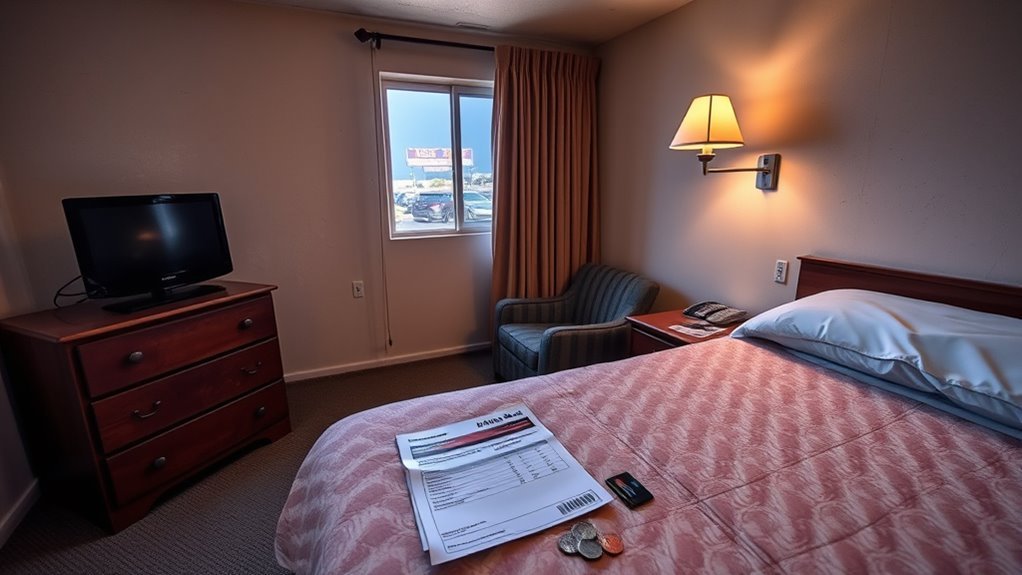
Value depends on whether the room meets your actual needs, not merely whether it has the lowest advertised rate. A clean, well-located basic room can offer better value than a cheaper property with poor transportation, paid parking, or weak cancellation terms.
Essential Amenities Offered
Before booking, review the room description and recent guest photos for:
- Bed size and the number of beds
- Private or shared bathroom
- Air conditioning or heating
- Wi-Fi availability
- Parking charges
- Reception and check-in hours
- Elevator access
- Smoking or nonsmoking status
- Pet rules and pet charges
- Accessibility features
Do not assume that breakfast, daily housekeeping, a refrigerator, a microwave, or free parking is included merely because another 1-star property offers it.
Cost vs. Quality Comparison
Calculate the usable cost of the stay with this simple approach:
Total lodging cost = displayed mandatory room price + taxes + selected optional services + transportation and parking costs.
A refundable incidental hold is not normally a permanent charge, but it can temporarily reduce your available credit or bank balance. Check the amount, accepted payment method, and expected release time before arrival.
Warning: A very low advertised rate may be prepaid and nonrefundable. Confirm the total, cancellation deadline, deposit, incidental hold, and minimum check-in age before entering payment details.
Seasonal Variations: When to Book for the Best Rates
There is no nationwide September-to-June off-season. The cheapest period depends on the destination:
- Beach destinations: Prices may rise during warm-weather weekends and school vacations.
- Ski markets: Winter weekends and holiday periods can be the most expensive.
- Business districts: Weekday demand may be stronger than weekend demand.
- National-park gateways: Rates often follow park access, weather, and school calendars.
- University towns: Graduation, move-in, homecoming, and major sports weekends can cause sharp increases.
- Event cities: Conventions, festivals, concerts, and international sporting events can temporarily raise rates across all hotel classes.
Booking early is useful when rooms are limited, but it does not guarantee the lowest rate. A practical strategy is to reserve an acceptable refundable room, monitor prices, and rebook only when the savings exceed any cancellation or change cost.
Tips for Scoring Deals on 1-Star Hotels
- Compare total prices: Look beyond the first number shown in search results.
- Shift the trip by one or two days: Avoiding a high-demand night can reduce the total substantially.
- Search nearby neighborhoods: Keep transportation time and cost in the calculation.
- Check both 1-star and 2-star filters: A 2-star property may be cheaper because star categories and samples are inconsistent.
- Review direct-booking terms: Compare support, payment timing, loyalty benefits, and cancellation conditions.
- Check recent reviews: Focus on cleanliness, noise, locks, pests, hot water, air conditioning, and staff availability.
- Confirm the rate by room type: Shared-bathroom and nonrefundable rooms may appear first because they are cheaper.
- Save the confirmation: Keep the room description, total price, and cancellation terms available offline.
Under the FTC’s Rule on Unfair or Deceptive Fees, businesses advertising short-term lodging prices must prominently disclose the total price including known mandatory charges. Taxes, government charges, and optional services may still be disclosed separately before payment.
What to Expect From a 1-Star Hotel Experience
A 1-star hotel usually focuses on a place to sleep rather than extensive services. You may find a comfortable basic room, but the star category alone does not predict cleanliness, safety, staff quality, or maintenance.
- Simple room setup: Expect basic furnishings with fewer decorative or convenience features.
- Limited service: Reception hours, housekeeping frequency, and maintenance response may be limited.
- Fewer on-site facilities: A restaurant, gym, pool, business center, or meeting room may not be available.
- Variable bathroom arrangements: Some properties offer only private bathrooms, while others include shared-bathroom rooms.
- Property-specific quality: Recent reviews and guest photos are more useful than the star label for judging current condition.
At check-in, inspect the door lock, smoke alarm, bathroom, bedding, and room temperature. Report serious problems immediately and keep photos if the room differs materially from the listing.
Budget-Friendly Alternatives to 1-Star Hotels
A different accommodation category may provide better value than the available 1-star listings:
- Two-star hotels: These can sometimes cost less because they are more common and face greater competition.
- Independent motels: Useful for road trips, especially when parking is included.
- Hostels: Dorm beds may reduce costs for solo travelers, while private rooms should be compared with hotel totals.
- Campgrounds: Potentially economical for travelers who already own the required equipment and have suitable weather.
- Vacation rentals: May work well for families or groups, but cleaning charges, service fees, parking, and cancellation terms matter.
- University or institutional lodging: Some destinations offer seasonal rooms when student housing is unused.
Compare privacy, transportation, cancellation flexibility, security, and the final cost rather than assuming that one accommodation type is always cheaper.
Frequently Asked Questions
What is the average cost of a 1-star hotel in the USA?
As of July 2026, one third-party dataset covering 2,314 U.S. 1-star hotels lists a $208 average and $156 median nightly base price, with listings from about $57. These prices are before taxes and can change by date and destination.
Why can a 1-star hotel cost more than a 2-star hotel?
Star categories are not perfectly standardized, and the number of sampled 1-star properties is much smaller. Expensive outliers, resort locations, unusual property types, and limited inventory can raise the sampled 1-star average above the 2-star average.
What U.S. city has the cheapest 1-star hotels?
No city is permanently the cheapest. Hotel rates depend on the exact dates, local events, neighborhood, available inventory, and the website’s classification system. Compare several lower-demand cities using identical dates and room requirements.
Does a 1-star hotel include Wi-Fi and breakfast?
Not necessarily. Wi-Fi, breakfast, parking, private bathrooms, air conditioning, and daily housekeeping depend on the property and rate plan. Verify each feature in the room description before booking.
Are hotel taxes included in the displayed price?
Known mandatory hotel charges must generally be included in the prominently displayed total price under the FTC fee rule. Taxes and government charges may be disclosed separately before payment, so review the final checkout amount.
Does one star mean the hotel is dirty or unsafe?
No. A star or hotel-class label mainly describes the expected facility and service level. It does not guarantee current cleanliness, maintenance, or neighborhood conditions. Check recent reviews, guest photos, inspection information, and the property’s exact location.
Conclusion
A realistic 2026 budget for a 1-star hotel in the USA starts with the current $156 sampled median, not a promise that every room will cost that amount. Lower rates near $57 may appear for selected places and dates, while resort areas, major cities, and event periods can cost much more.
Use the star label only as an initial filter. Compare the total checkout price, taxes, cancellation terms, deposit, bathroom type, parking, reception hours, and recent reviews. Checking both 1-star and 2-star options can also uncover a better room for less money. The best deal is the property that meets your needs at the lowest total trip cost, not simply the listing with the lowest first-page rate.
Sources
- Budget Your Trip: USA Hotel Prices by Star Rating — current 1-star sample size, average, median, starting price, and before-tax qualification.
- CoStar: 2025 U.S. Hotel Performance — 2025 industry-wide occupancy, ADR, and RevPAR.
- CoStar: May 2026 U.S. Hotel Performance — current monthly all-hotel ADR context.
- CoStar and Tourism Economics: Q2 2026 Forecast Assumptions — current demand, hotel-tier, event, and rate-trend context.
- Federal Trade Commission: Rule on Unfair or Deceptive Fees FAQ — upfront lodging-price and mandatory-fee disclosure requirements.
- AAA Diamond Program — inspected hotel-designation methodology and the distinction between rating systems.