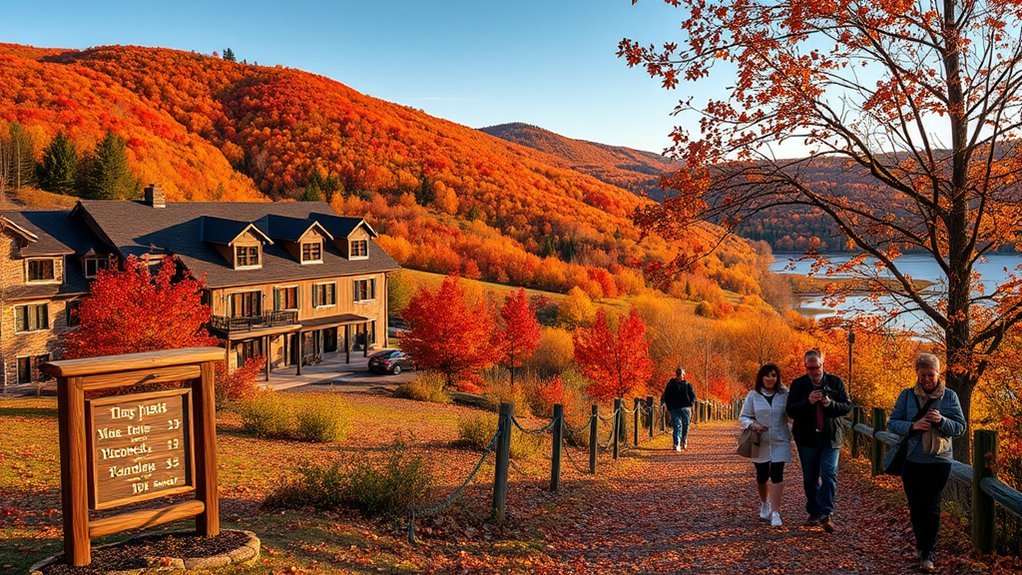
Vermont fall foliage hotel prices in 2026 do not have one reliable statewide “peak-season average.” A better budget comes from current market snapshots and published property rates. In a recent Stowe price-trend snapshot, Expedia showed average base rates of about $247 in September and $264 in October for commonly viewed hotels, before taxes and fees. High Hill Inn in East Montpelier publishes 2026 fall rates of $175-$475 from September 1 through October 15. Vermont Tourism says peak color generally builds during the last week of September and the first or second week of October, although the exact timing changes by location, elevation, and weather. For Stowe, official destination guidance says booking about nine months to a year ahead gives the best availability, while midweek rates tend to be lower.
Last updated: August 10, 2026. Price check: August 10, 2026. Hotel prices are dynamic, so the figures below are planning snapshots and published examples rather than guaranteed rates for your exact dates.
Vermont Fall Foliage Hotel Prices: 2026 Snapshot
| Area / Property | 2026 Price Example | What the Figure Means |
|---|---|---|
| Stowe | About $247 in September; $264 in October | Expedia price-trend averages for commonly viewed Stowe hotels; base rates exclude taxes and fees and can change. |
| High Hill Inn, East Montpelier | $175-$475 | Published fall room range for September 1-October 15, 2026. |
| Wildflower Inn, Northeast Kingdom | Midweek rooms from $220; sample Tuesday $235 vs. foliage-weekend $302 | Property-published July 2026 example showing how the day of week can affect the same room. |
| WilloughVale, Westmore | $395 for selected lakeview cottages in September-October | Published 2026 seasonal rate; selected cottages also have a two-night minimum and additional tax/service charges. |
Sources: Expedia Stowe price trends, High Hill Inn rates, Wildflower Inn fall pricing, and WilloughVale rates and policies.
For a broader year-round comparison, see the site’s guide to Vermont hotel prices in 2026. This page focuses specifically on foliage-season lodging.
Best Times to Visit for Affordable Leaf Peeping
If hotel cost matters as much as color, do not assume one September or October week is automatically cheapest statewide. Vermont Tourism says foliage normally develops first in higher elevations and northern Vermont, then progresses into lower elevations and southern areas. Typical peak color often falls from the last week of September through the first or second week of October, but weather can move that window.
For a current planning reference, use the official Vermont Tourism foliage timing guide and, once seasonal reporting begins, the official weekly foliage report.
Midweek travel is one of the more dependable ways to reduce lodging pressure. Go Stowe says midweek rates tend to be lower than weekends, and a July 2026 Wildflower Inn example in the Northeast Kingdom showed the same room at $235 on a Tuesday versus $302 on a nearby foliage weekend. That is a property-specific example, not a guaranteed statewide discount.
Understanding Peak Foliage Season and Its Impact on Rates
Peak foliage creates a concentrated period of lodging demand, especially in well-known destinations such as Stowe and Woodstock. The important budgeting effect is not a universal percentage increase; it is reduced room choice, tighter weekend availability, minimum-stay rules at some properties, and potentially higher prices for the dates everyone wants.
The timing also varies across Vermont. The state tourism office says colors usually begin earlier in northern Vermont and at higher elevations before shifting toward valleys and southern areas. Because the 2026 foliage season has not occurred yet as of this August 10 update, no source can know the exact 2026 peak dates in advance. Use the state’s live foliage reports during September and October rather than treating a predicted weekend as guaranteed.
Vermont Fall Foliage Hotel Prices: Popular Spots vs. Hidden Gems
Popular destinations can be difficult to book during foliage season, but a lesser-known region is not automatically cheap. Current 2026 examples illustrate the spread. Expedia’s Stowe trend page recently showed approximately $247 for September and $264 for October before taxes and fees. In the Northeast Kingdom, Wildflower Inn advertises fall midweek rooms starting around $220, while WilloughVale lists selected September-October lakeview cottages at $395.
The better strategy is to compare exact properties and dates rather than assume Stowe is always expensive and a rural town is always inexpensive. Expand your search radius, then compare the same number of nights, number of guests, room type, cancellation terms, taxes, mandatory fees, and minimum-stay rules.
Average Hotel Rates for Leaf Peeping
There is no official Vermont government average specifically for foliage-season hotel rooms. Commercial booking averages also move as inventory, search dates, room types, and demand change. For that reason, use averages only as a planning baseline and verify the final checkout price for your exact stay.
Seasonal Rate Variations
Stowe’s recent Expedia price-trend data provides one useful market snapshot: approximately $247 in September and $264 in October for commonly viewed hotels, excluding taxes and fees. Individual properties can fall well below or above those numbers. High Hill Inn, for example, publishes a broad $175-$475 fall range for September 1 through October 15, 2026.
This spread shows why a single “average Vermont foliage hotel rate” can be misleading. Your destination, weekday or weekend dates, room category, refundability, included amenities, and minimum stay may change your actual trip cost more than a statewide average does.
Booking Strategies for Savings
For Stowe specifically, Go Stowe’s fall foliage guidance says travelers who book roughly nine months to a year ahead have the best availability. It also says midweek rates tend to be lower and that many lodging properties require a two-night minimum during foliage season.
Elsewhere in Vermont, booking rules vary by property. Before paying, compare the total stay cost rather than the first displayed nightly rate. A cheaper-looking room can cost more overall if it carries a longer minimum stay, mandatory service charge, resort fee, or restrictive cancellation policy.
How to Book Smart for the Best Deals
The most reliable way to compare Vermont foliage lodging is to hold the variables constant. Search the same dates, number of guests, room category, bed configuration, and cancellation policy on both the hotel’s direct site and major booking platforms. Then compare the final tax-and-fee-inclusive total.
Best Booking Times
| Strategy | Best Use | What the Evidence Supports |
|---|---|---|
| Book Stowe early | Peak foliage weekends | Go Stowe says roughly 9-12 months ahead provides the best availability. |
| Check midweek dates | Travelers with flexible schedules | Go Stowe reports lower midweek rates; current Northeast Kingdom property pricing also shows a weekday/weekend difference. |
| Follow live foliage reports | Choosing the best region for your dates | Vermont’s official reports track changing conditions during September and October. |
| Recheck refundable bookings | Travelers who booked early | Only rebook when the original cancellation terms permit it and the new total is genuinely lower. |
Flexible Travel Dates
Flexibility can help in two ways. First, moving a stay from Friday-Saturday to Tuesday-Thursday may reduce the nightly rate or improve room selection. Second, Vermont’s foliage develops at different times across the state, so travelers who can change regions as well as dates have more options than travelers fixed on one peak weekend in one famous town.
- Compare Tuesday-Thursday with Friday-Saturday for the exact same property.
- Check both the nightly rate and the required number of nights.
- Search nearby towns instead of assuming the best-known destination is your only option.
- Use Vermont’s live foliage report to choose the region where color is developing during your dates.
Do not depend on a last-minute discount for a peak foliage weekend. Unsold rooms can appear, but popular destinations may instead have limited inventory or stricter stay requirements.
Comparison Shopping Strategies
| What to Compare | Why It Matters | Best Practice |
|---|---|---|
| Exact dates | Foliage weekends can price differently from nearby weekdays | Compare identical check-in and checkout dates first. |
| Room and occupancy | A rate for two guests may not match a family rate | Use the same room type and guest count. |
| Cancellation policy | Nonrefundable rooms often look cheaper | Compare refundable with refundable, not unlike rate plans. |
| Minimum stay | A two-night requirement can change the trip total | Price the complete required stay. |
| Taxes and mandatory fees | The advertised nightly rate is not always the final bill | Compare the checkout total before paying. |
Where to Stay: Luxury Hotels to Cozy B&Bs
Choose your Vermont base by the experience you want, then compare live rates rather than relying on a fixed town-by-town price ranking.
- Stowe: One of Vermont’s best-known foliage destinations. Fall weekends can fill quickly, so early booking gives you more choice.
- Woodstock: A popular classic Vermont base with inns, resorts, and smaller lodging properties. Compare minimum stays and the final total for your exact dates.
- Northeast Kingdom: A quieter alternative for many travelers, but not automatically a budget destination. Current published fall examples range from $220-plus midweek rooms to higher-priced lake accommodations.
- Central Vermont: Properties outside the most famous resort towns can widen your search. High Hill Inn in East Montpelier, for example, publishes fall 2026 rates from $175 to $475 depending on the room and date.
If Stowe is your target, you can also compare the site’s detailed guide to Trapp Family Lodge rates and fees.
Hidden Costs to Expect Beyond Your Hotel Stay
The room rate is only the starting point. Under Vermont law, hotel occupancy is subject to a 9% state rooms tax. You can review the current rule in 32 V.S.A. § 9241. Some municipalities may also have applicable local-option taxes, so use the tax total shown for your specific property and address.
Vermont also has a 3% short-term rental impact surcharge for qualifying short-term rentals. The statute specifically distinguishes those rentals from licensed lodging establishments, so do not automatically add that 3% to a normal hotel quote. See 32 V.S.A. § 9301.
Other charges depend on the property and booking. Resort or service fees, parking, pet fees, breakfast, extra-person charges, and minimum-stay requirements can all change the final cost. WilloughVale, for example, publishes a 7% service charge on the rate page for its accommodations in addition to listed taxes. Always compare the complete checkout total.
Dining Options During Your Leaf Peeping Trip
Meals are a separate part of the foliage-trip budget, but there is no reliable statewide percentage by which restaurant prices increase during peak foliage. Build your food budget from the restaurants you expect to use rather than adding an unsupported seasonal markup.
Local Farm-to-Table Dining
Vermont has many restaurants centered on local and seasonal ingredients, but menu prices and reservation requirements vary widely. In Stowe, destination officials recommend making restaurant reservations in advance during foliage season because the area becomes busy. If dining is an important part of your trip, check current menus while comparing lodging so the full trip budget is realistic.
Scenic Picnic Spots
A picnic or grocery-store meal can reduce dining costs on days when you are driving or hiking. Before planning a stop, check the current access, parking rules, operating hours, and any day-use fee for the specific park or recreation area. Avoid assuming that every scenic pull-off or photographed property is open for public parking or picnicking.
Top Activities to Enjoy While Leaf Peeping
You do not need an expensive attraction every day to enjoy Vermont’s foliage. Scenic drives, town walks, public hiking areas, farm stands, and designated viewpoints can fill much of an itinerary. For current statewide ideas and seasonal planning information, use Vermont Tourism’s official fall guide.
- Scenic drives: Useful for following foliage from one elevation or region to another.
- Hiking and walking: Check trail conditions, parking rules, and access before leaving.
- Town visits: Combine lodging searches with restaurants, shops, and public walking areas.
- Seasonal food stops: Farm stands, bakeries, cider producers, and local markets can fit easily into a driving day.
Because operating dates and fees can change, confirm individual attractions before building them into your budget.
Tips for Finding Discounts and Packages for Leaf Peeping
Start with flexible dates rather than a coupon code. Check midweek stays, nearby towns, and different room categories. Then compare the hotel’s direct price with reputable booking platforms using the same dates and cancellation terms.
Packages can be useful when they include something you would buy anyway, such as breakfast or an activity credit. Do the math on the complete package rather than assuming the word “package” means a discount. Also check whether the rate is prepaid, nonrefundable, subject to blackout dates, or tied to a minimum stay.
If you are planning Stowe during the most competitive foliage period, prioritize availability first. Go Stowe says booking roughly nine months to a year ahead offers the best lodging choice, while midweek travel can improve both availability and price.
Frequently Asked Questions
How Much Are Vermont Hotels During Fall Foliage Season?
There is no single reliable statewide foliage-season average. In a recent 2026 Stowe market snapshot, commonly viewed hotels averaged about $247 in September and $264 in October before taxes and fees. Individual published fall rates vary much more: High Hill Inn lists $175-$475 for September 1-October 15, 2026, while other Vermont lodging examples can exceed that range. Use these as planning examples and check your exact dates.
When Should I Book a Vermont Hotel for Fall Foliage?
For Stowe, official destination guidance says booking approximately nine months to a year ahead gives you the best availability. Other Vermont towns and properties may have different booking patterns, so check their calendars and cancellation terms as soon as your travel dates are reasonably firm.
Are Vermont Foliage Hotels Cheaper Midweek?
They can be. Go Stowe says midweek rates tend to be lower, and Wildflower Inn published a 2026 example in which a late-September Tuesday was $235 for a room priced at $302 on a nearby foliage weekend. That example shows the potential benefit of flexible dates but is not a guaranteed statewide discount.
What Taxes Are Added to Vermont Hotel Rates?
Vermont law imposes a 9% state tax on hotel occupancy. Some locations may have additional applicable local taxes or property fees. Vermont also has a separate 3% impact surcharge for qualifying short-term rentals, but the statute excludes licensed lodging establishments from that short-term-rental definition. Check the final checkout breakdown for your specific accommodation.
What Month Is the Best for Foliage in Vermont?
Late September through early October is the most useful general planning window, but there is no single statewide peak date. Vermont Tourism says colors generally develop first in northern and higher-elevation areas before moving toward lower elevations and southern Vermont. The exact timing changes with weather, so check the official foliage report during your trip season.
What Vermont Town Has the Best Fall Colors?
No single town is guaranteed to have Vermont’s best color on every date. Stowe, Woodstock, the Northeast Kingdom, central Vermont, and southern Vermont can all look different during the same week because foliage progresses by elevation, latitude, and weather. Choose a region that matches your dates and use Vermont’s live foliage report to adjust your route.
Conclusion
For a 2026 Vermont foliage trip, treat hotel prices as live data rather than a fixed statewide number. Current examples range widely, from published fall rooms under $200 at some properties to several hundred dollars per night at others. Stowe’s recent market trend is around the mid-$200s before taxes and fees, but weekends, room type, minimum stays, and individual properties can push the total higher.
Book popular destinations early, compare midweek dates, add the 9% Vermont rooms tax and any property-specific charges, and judge offers by the complete checkout total. During September and October, use Vermont’s official foliage reports to match your travel dates to the regions showing the strongest color instead of paying a premium for a guessed “peak” weekend.