Miami hotel prices change by date, neighborhood, events, and room availability, so there is no single rate that applies throughout 2026. A practical starting budget for a 3-star hotel is about $170 per night before taxes and fees. Low-season searches can fall closer to $110–$130, while popular winter and spring dates may approach $250–$275 or more.
Quick Answer
In 2026, plan on about $170 per night before taxes and fees for a 3-star hotel in Miami. Current search data shows low-season averages near $110–$130 and high-season averages around $250–$275. Airport and inland areas are usually cheaper than Downtown Miami, Brickell, and Miami Beach.
Key Takeaways
- A reasonable 2026 planning figure for a Miami 3-star hotel is approximately $170 per night before taxes and fees.
- Current search averages range from roughly $110 in lower-demand periods to $275 in higher-demand periods.
- Weekend nights generally cost more than weeknights, although events can reverse the normal pattern.
- Miami Beach and Downtown Miami usually cost more than airport, Doral, North Dade, or South Dade locations.
- Taxes can add roughly 13%–14% before resort, destination, parking, and breakfast charges.
Average Costs for 3-Star Hotels in Miami in 2026
Current KAYAK data for 3-star hotels in Miami places the average base rate near $171 per night. The same dataset reports recent weeknight averages around $120 and weekend averages around $174. These figures are useful planning estimates, but they change as hotels adjust inventory and demand.
| Price measure | Current planning figure | What it represents |
|---|---|---|
| Typical 3-star average | About $171 | Dynamic KAYAK search average before taxes and fees |
| Recent weeknight average | About $120 | Sunday through Thursday searches in the recent data window |
| Recent weekend average | About $174 | Friday and Saturday searches in the recent data window |
| Lower-demand monthly average | About $111–$131 | Current June and August trend estimates |
| Higher-demand monthly average | About $275 | Current March trend estimate |
The official Greater Miami Convention and Visitors Bureau report provides useful context. Across all hotel classes, Miami-Dade’s average daily room rate was $218.37 in June 2026 and $283.32 for January through June. Those figures should not be described as 3-star averages because they also include luxury and resort properties.
Note: Hotel pricing pages report snapshots based on recent searches, selected properties, or completed bookings. Always enter your exact dates, number of guests, and room type before treating an average as your expected price.
Taxes and Fees That Affect the Final Price
The advertised room rate is not always the amount charged at checkout. Florida imposes sales tax on transient accommodations, and Miami-Dade has a 1% discretionary sales surtax in 2026. Additional county or municipal lodging taxes depend on the hotel’s location.
- Most Miami-Dade locations: The combined lodging-tax burden is generally about 13%, including Florida sales tax, the county sales surtax, and applicable county transient-rental taxes.
- Miami Beach: The total is generally about 14% because Miami Beach adds a 4% municipal resort tax to the applicable state, surtax, and county convention taxes.
- Surfside and Bal Harbour: Local tax treatment differs from most of Miami-Dade, so check the final booking breakdown.
The Miami-Dade County tourist-tax page explains the county’s transient-rental taxes, while the City of Miami Beach publishes its separate room resort-tax requirements.
For example, a $171 base rate becomes approximately $193–$195 after 13%–14% lodging taxes. That total can increase further if the property charges a resort fee, destination fee, parking fee, or breakfast fee.
Warning: Do not compare hotels using the first nightly price shown in search results. Open the final checkout page and compare the complete stay total, including taxes, mandatory fees, parking, and cancellation terms.
How Seasons Impact Miami Hotel Prices
Miami’s strongest leisure demand often occurs during the cooler winter and early-spring period. Warm-weather events, conventions, cruises, festivals, and school holidays can also create short price spikes that do not follow the usual monthly trend.
Current 3-star search data identifies June and August as lower-cost periods and March as a more expensive month. Summer savings come with tradeoffs, including heat, humidity, frequent showers, and greater tropical-weather uncertainty.
The National Hurricane Center defines the Atlantic hurricane season as June 1 through November 30, with climatological activity peaking around September 10. A summer or early-fall trip can still be enjoyable, but refundable hotel and flight reservations provide valuable protection.
The cheapest month on a trend chart is not automatically the best value. Consider weather, cancellation flexibility, parking, breakfast, and transportation before choosing your dates.
Best Months to Save on Miami Hotel Stays
Lower rates are most likely when you combine a lower-demand month with flexible weekdays and a neighborhood outside the most popular beachfront and business districts.
Off-Peak Travel Seasons
Current KAYAK trend data places June near $111 and August near $131 for its Miami 3-star category. These are base-rate averages rather than guaranteed prices. A major convention, sporting event, holiday weekend, or cruise departure can push selected dates far above the monthly figure.
Late summer can be attractive for travelers who prioritize lower prices and hotel pools over mild weather. Winter and early spring generally provide more comfortable conditions but can carry higher room rates.
Last-Minute Booking Deals
Last-minute discounts are possible when a hotel has unsold rooms, but they are not guaranteed. Waiting can be costly during festivals, conventions, cruise weekends, or major sporting events.
KAYAK’s current data recommends booking approximately 78 days before arrival for the best chance of a favorable 3-star rate. Treat that as a trend rather than a strict rule. A refundable reservation made several weeks ahead can protect you from a price increase while allowing you to rebook if the rate falls.
Pro Tip: Reserve a refundable room about eight to twelve weeks before the trip, then recheck the same hotel every one or two weeks. Cancel and rebook only after confirming that the new rate has equal or better room, fee, and cancellation terms.
Areas Offering the Best Deals on 3-Star Hotels
South Beach and Downtown Miami offer convenient access to attractions, nightlife, dining, and transportation, but they are not normally the cheapest parts of the market. Airport hotels, Doral, North Dade, Central Dade, and South Dade often provide lower base rates.
The following June 2026 figures come from the GMCVB’s official report and cover all hotel classes. They are not 3-star-only prices, but they illustrate how strongly location affects the market.
| Miami-Dade region | June 2026 all-hotel ADR | Best suited to |
|---|---|---|
| South Dade | $96.72 | Travelers with a car and plans in southern Miami-Dade |
| North Dade | $133.71 | Travelers prioritizing lower rates over central sightseeing access |
| Airport | $139.50 | Short stays, early flights, and hotels with airport shuttles |
| Doral | $154.33 | Business trips, families, and travelers using a car |
| Downtown Miami | $241.35 | PortMiami, events, museums, and urban transit access |
| Miami Beach | $267.87 | Beach access and travelers willing to pay for location |
Wynwood and the Design District can provide distinctive boutique options, but inventory is smaller and event demand can raise prices. The Art Deco area places you near South Beach attractions, though resort fees and parking can erase an apparently low base rate.
Compare the cost of transportation before choosing an inland hotel. A lower room rate may not save money if you must pay for daily parking, rideshares, or a rental car.
Essential Amenities in 3-Star Hotels
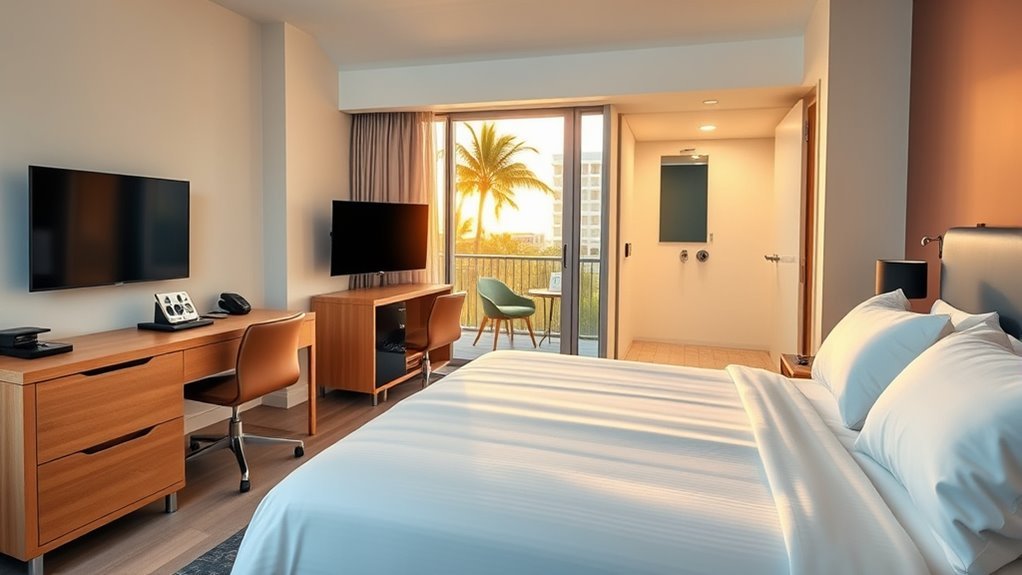
A 3-star hotel generally aims to provide comfortable midrange accommodation, but the category does not guarantee a specific list of services. Star systems can vary by booking platform, country, or rating organization. AAA’s professional system describes its comparable Three Diamond level as offering comprehensive amenities, style, and comfort.
Check the individual property page for these features:
- Wi-Fi: Confirm whether it is free in both rooms and public areas.
- Pool: Outdoor pools are common, but maintenance or weather can affect availability.
- Fitness center: Equipment and operating hours vary widely.
- Parking: Downtown and beach parking can add a substantial daily cost.
- Airport or port shuttle: Verify the route, schedule, reservation requirement, and fee.
- Breakfast: It may be complimentary, charged separately, or included only with selected rates.
- Mini-fridge or kitchenette: These features can reduce meal costs on longer stays.
- Accessibility: Confirm the exact room layout and accessible features directly with the hotel.
Finding Breakfast Options at Miami Hotels
Breakfast can change the true value of a room, especially for couples and families. Do not assume that every 3-star hotel includes it.
Homewood Suites by Hilton Miami Downtown/Brickell currently advertises a daily free hot breakfast. SpringHill Suites Miami Downtown/Medical Center also lists complimentary breakfast.
In contrast, the official listing for Best Western Plus Miami Intl Airport Hotel & Suites Coral Gables says breakfast is available at a nominal charge. AC Hotel Miami Brickell serves breakfast at AC Kitchen, but inclusion depends on the selected package, status benefits, or rate plan.
Compare the room-only rate with the breakfast-included rate. A $15 increase may be worthwhile for two guests, while a larger premium may not provide good value if you prefer a nearby café.
Key Factors That Affect Hotel Prices in Miami
- Exact travel dates: A monthly average can hide a major festival, cruise weekend, convention, or sporting event.
- Neighborhood: Beachfront, Brickell, Downtown, and convention-area hotels often charge a location premium.
- Day of the week: Weekend leisure demand commonly raises Friday and Saturday prices, while business districts may behave differently during large weekday events.
- Cancellation policy: Fully refundable rates normally cost more than prepaid, nonrefundable rates.
- Room type and occupancy: Suites, balconies, views, extra beds, and additional guests can raise the rate.
- Taxes and mandatory fees: These can add 13%–14% or more before parking and optional services.
- Length of stay: Some hotels discount longer visits, while others impose minimum stays during high-demand periods.
- Availability: As the hotel fills, its remaining rooms may be priced substantially higher.
Budget-Friendly Tips for Booking 3-Star Hotels
- Search with exact dates and guest counts. A generic Miami average cannot account for your weekend, event, or room requirements.
- Compare the final total. Include taxes, resort or destination fees, parking, breakfast, and transportation.
- Check at least three areas. Compare your preferred location with an airport hotel, Doral, or another inland district.
- Start around eight to twelve weeks ahead. Current trend data suggests approximately 78 days, but high-demand events may require earlier action.
- Book a refundable option when practical. This lets you secure a room and continue watching for a better rate.
- Recheck the identical room and policy. A cheaper listing may be nonrefundable, exclude breakfast, or add a mandatory fee.
- Review hotel-member rates. Free loyalty accounts can unlock lower rates or useful benefits, although the public rate may occasionally remain cheaper.
- Value included amenities. Free breakfast, parking, a shuttle, or a kitchenette may justify a slightly higher room price.
- Read recent reviews for hidden costs. Look for comments about noise, deposit holds, parking, resort fees, and shuttle reliability.
Frequently Asked Questions
How much does a 3-star hotel cost per night in Miami?
A practical 2026 planning figure is about $170 per night before taxes and fees. Current search averages can range from roughly $110–$130 in lower-demand periods to approximately $250–$275 during higher-demand months. Your exact price depends on the dates, neighborhood, room type, and cancellation policy.
What is the cheapest time to book a 3-star hotel in Miami?
Current trend data identifies June and August as lower-priced months for Miami 3-star hotels. Weeknights can also cost less than Friday and Saturday stays. Always check the event calendar and weather risks because a specific week may not follow the monthly average.
How much should I add for Miami hotel taxes?
Allow roughly 13% in much of Miami-Dade and about 14% in Miami Beach before property-specific charges. Tax treatment can vary by municipality and taxable fee, so use the final booking breakdown for the exact amount.
Is a 3-star hotel considered luxury?
No. A 3-star hotel is normally a midrange property focused on comfort, practical services, and selected amenities. Luxury hotels generally provide more extensive service, premium facilities, upscale rooms, and a higher staff-to-guest service level.
How far in advance should I book a Miami 3-star hotel?
Begin comparing rates about eight to twelve weeks before arrival. Current KAYAK data suggests approximately 78 days, but book earlier for holidays, conventions, cruises, festivals, and major sporting events. A refundable rate lets you continue checking for reductions.
Are Miami Beach hotels more expensive than hotels in Miami?
They often are. Miami Beach properties charge for beach access and a high-demand location, and the city has its own room resort tax. Airport, Doral, North Dade, and South Dade hotels frequently have lower base rates, although transportation and parking can reduce the savings.
Conclusion
For a Miami 3-star hotel in 2026, use about $170 per night before taxes and fees as a starting budget rather than a guaranteed rate. Lower-demand dates may fall near $110–$130, while winter, spring, event, and weekend stays can reach $250–$275 or more.
The best value comes from comparing the complete checkout total across several neighborhoods. Check taxes, mandatory fees, parking, breakfast, transportation, and cancellation terms before booking. A refundable reservation made eight to twelve weeks ahead gives you a room while preserving the opportunity to rebook if the price falls.
Sources
- Greater Miami Convention and Visitors Bureau Research and Statistics — June 2026 regional occupancy, average daily room rates, and RevPAR.
- KAYAK Miami 3-Star Hotel Insights — current average price, seasonal trends, weekday and weekend rates, and booking-window data.
- Miami-Dade County Tourist and Restaurant Taxes — county transient-rental and convention-tax requirements.
- Florida Department of Revenue 2026 Discretionary Sales Surtax Information — Miami-Dade’s current 1% discretionary sales surtax.
- AAA Guide to Hotel Ratings — differences among hotel rating systems and expected midrange amenities.
- National Hurricane Center Tropical Cyclone Climatology — Atlantic hurricane-season dates and climatological peak.