
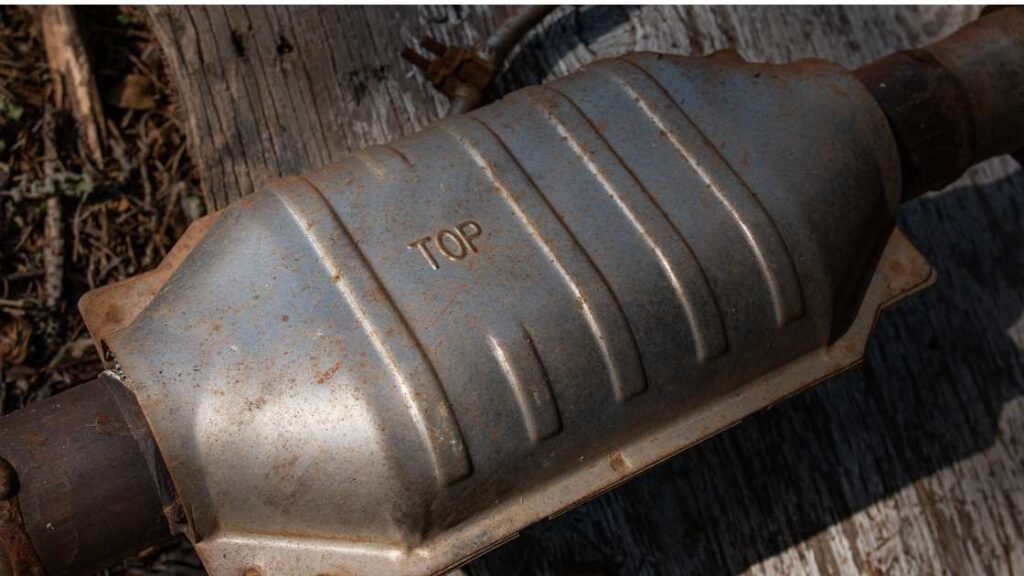
Catalytic converter welding cost is usually about $350–$1,000 for a straightforward legal universal converter cut and welded into a healthy exhaust. Labor alone is often $150–$400. If the vehicle needs a direct-fit, CARB-listed, OEM, or manifold-integrated assembly, the total can rise to $1,000–$4,500 or more. The right price depends on diagnosis, legal fitment, exhaust condition, sensor damage, and vehicle design.
Quick Answer
Expect to pay about $350–$1,000 to have a legal universal catalytic converter cut and welded into a simple exhaust system. Labor alone is often $150–$400. Vehicle-specific, CARB-listed, OEM, or manifold-integrated replacements commonly cost $1,000–$4,500 or more. Always confirm fitment, emissions legality, and warranty coverage first.
Last updated: October 25, 2026
This guide is for DIY-minded U.S. vehicle owners and repair shoppers. It covers federal emissions guidance, with additional California CARB notes. Prices are planning estimates rather than guaranteed quotes and may not include taxes, diagnostic charges, towing, or related repairs.
Key Takeaways
- A straightforward universal weld-in is usually the lowest-cost option, but the converter must be approved for the vehicle and installation state.
- A direct-fit converter costs more but normally uses factory-style flanges, brackets, bends, heat shields, and sensor locations.
- Check the federal emissions warranty before paying. A qualifying catalytic converter may be covered for up to 8 years or 80,000 miles.
- A P0420 or P0430 code does not automatically prove the converter is bad. Exhaust leaks, misfires, fuel-control faults, and oxygen-sensor problems must be ruled out.
- Do not install a straight pipe, hollow the converter, move sensors, or use an unapproved part to reduce the price.
At a Glance
| Time Required | About 1–3 hours for a simple weld-in; several hours or longer for rusted, manifold-integrated, or multi-converter systems |
| Difficulty | High; requires exhaust fabrication, safe vehicle lifting, hot-work controls, and emissions-fitment knowledge |
| Tools Needed | Vehicle lift or rated jack stands, exhaust cutter or saw, welder, measuring tools, scan tool, welding PPE, ventilation, and fire extinguisher |
| Cost | Approximately $350–$1,000 for a simple legal weld-in; $1,000–$4,500+ for many direct-fit, OEM, CARB-listed, or manifold assemblies |
Catalytic Converter Welding Cost: How Much Does It Cost to Weld One?
A basic weld-in replacement generally costs less than a vehicle-specific assembly because the universal converter itself is simpler. The shop must still confirm that the converter is approved for the application, measure the exhaust, remove the old unit, fabricate the connections, position the new converter correctly, weld it without leaks, and verify the repair.
| Service | Typical 2026 U.S. Planning Range | What the Range Assumes |
|---|---|---|
| Universal replacement converter, welded in | $350–$1,000 installed | One accessible converter, healthy nearby pipe, legal federal or approved state application, and limited fabrication |
| Labor-only simple weld-in | $150–$400 | The customer or shop already has the correct converter and no major pipe or sensor repair is needed |
| Direct-fit aftermarket replacement | $1,000–$3,500+ | Vehicle-specific flanges, brackets, bends, heat shields, and sensor fittings |
| OEM or manifold-integrated replacement | $1,500–$4,500+ | High part cost, tight engine-bay access, multiple converters, or substantial disassembly |
| National full-replacement benchmark | $2,280–$2,480 | RepairPal’s current national estimate, excluding taxes, fees, location adjustments, and related repairs |
RepairPal’s current national estimate puts a complete catalytic converter replacement at $2,280–$2,480, but a straightforward universal weld-in can cost much less when the vehicle, state rules, and existing exhaust allow it.
How these ranges were built: The figures in this guide are planning ranges, not a single national average. They were rechecked in September 2026 against current national replacement data and recent consumer cost guides. RepairPal currently lists a full replacement average of $2,280–$2,480, while ConsumerAffairs reports sample vehicle quotes averaging roughly $900–$4,500. A simple universal weld-in can sit below those full-replacement figures because the part and fabrication scope may be smaller.
Typical Cost Breakdown
| Line Item | Possible Cost | Why It Varies |
|---|---|---|
| Universal converter | About $100–$600+ | Federal versus CARB application, converter loading, pipe size, engine size, and manufacturer |
| Direct-fit or manifold converter | About $500–$3,500+ | OEM-style tubing, multiple catalyst bricks, brackets, heat shields, and limited production volume |
| Diagnosis | About $100–$250 | Scan data, exhaust testing, leak checks, temperature checks, and sensor evaluation |
| Fabrication and welding labor | About $150–$400+ | Pipe access, alignment, number of cuts, rust, hangers, and local labor rates |
| Oxygen sensor | About $150–$300 each installed | Sensor type, seized threads, wiring damage, and access |
| Pipe, flanges, gaskets, or hangers | About $25–$500+ | Rust, theft damage, broken studs, missing flanges, and custom tubing |
Note: A low advertised converter price is not the installed price. A complete quote may include diagnosis, fabrication, sensors, gaskets, taxes, disposal, towing, and repair of damage caused by theft or rust.
Use This 4-Check Decision Before Choosing a Converter
- Check warranty first. If the original converter may still be covered, get the manufacturer or dealer’s coverage decision before buying an aftermarket part.
- Confirm the diagnosis. Do not buy a converter only because P0420 or P0430 is stored; rule out leaks, misfires, fuel-control problems, and sensor faults first.
- Confirm legal fitment. Match the converter to the vehicle application, emissions label, converter position, and state rules. Pipe diameter alone is not enough.
- Compare the installed total. A cheaper universal part can lose its price advantage if rust repair, sensor work, extra tubing, or several hours of fabrication are required.
What Changes the Final Price?
Vehicle design and converter legality usually affect the price more than the weld itself. Ask for an itemized estimate so you can compare the same work across shops.
Universal Weld-in Versus Direct-fit Converter
A universal converter is a cost-effective part that can fit more than one application, but it normally requires cutting, welding, or other fabrication. A direct-fit converter is shaped for a specific vehicle and usually attaches with factory-style flanges and brackets. Converter manufacturer MagnaFlow describes direct-fit units as bolt-on replacements and universal units as parts that normally require professional fabrication.
A universal converter cannot be chosen by pipe diameter alone. It must also have the correct emissions application, catalyst capacity, orientation, body size, inlet and outlet configuration, and oxygen-sensor arrangement.
Vehicle Type and Emissions Package
Luxury vehicles, hybrids, trucks, performance models, and vehicles with multiple converters often cost more. Some vehicles place one or more converters close to the engine or build them into the exhaust manifold. Those designs can require removal of shields, intake parts, sensors, brackets, or other components before the converter is accessible.
The underhood emissions label also matters. A federal converter that physically fits may still be illegal for a vehicle or state that requires a CARB-listed application.
Local Labor Rates and Exhaust Condition
A clean, accessible exhaust may take only a few hours. Rusted pipe, broken studs, seized oxygen sensors, crushed tubing, missing hangers, or theft damage can turn a simple weld-in into a larger exhaust repair. Metro-area rates and dealership labor can also be higher than independent exhaust-shop pricing.
Underlying Engine Problems
A converter can fail again if the shop replaces it without correcting the cause. Common converter-damaging conditions include:
- Persistent ignition misfires that send unburned fuel into the exhaust
- A rich fuel mixture caused by injector, sensor, or fuel-pressure problems
- Oil consumption that coats or contaminates the catalyst
- Coolant entering the combustion chamber
- Physical impact, severe overheating, or a broken internal substrate
- Exhaust leaks that affect oxygen-sensor readings
Pro Tip: Ask the shop to write the diagnosed cause of failure on the estimate. Paying for a converter before fixing an active misfire, oil-burning problem, or rich-running condition can lead to another expensive failure.
Diagnose the Problem Before Replacing the Converter
A check-engine light and a catalyst-efficiency code are reasons to test the system, not automatic proof that the converter must be replaced. P0420 refers to catalyst efficiency below threshold on bank 1, while P0430 refers to bank 2 on engines that have two banks.
What a Proper Diagnosis May Include
- Scanning current, pending, and history trouble codes
- Checking freeze-frame data and fuel trims
- Looking for active or recent misfire codes
- Inspecting the exhaust for leaks before and near the oxygen sensors
- Comparing upstream and downstream oxygen-sensor activity
- Checking converter temperature and exhaust restriction when appropriate
- Inspecting for oil use, coolant loss, rich operation, or damaged wiring
- Confirming that the converter has not been physically broken, melted, stolen, or hollowed out
Signs of a Failing or Missing Catalytic Converter
- Check-engine light with P0420, P0430, or related fuel and misfire codes
- Reduced power or an engine that struggles as speed and load increase
- Rattling from a loose or broken internal substrate
- Excess heat beneath the vehicle
- Failed emissions inspection
- A sudden loud exhaust after theft or pipe damage
- Exhaust odor entering the cabin
Warning: Stop driving and arrange a tow if the converter glows red, the vehicle loses substantial power, smoke appears beneath the car, the floor becomes unusually hot, or exhaust fumes enter the cabin. A severely restricted or overheated converter can create a fire and health hazard.
Legal Rules: Can You Weld a Catalytic Converter?
Yes. A qualified shop can weld in a replacement catalytic converter when the repair restores a compliant emissions configuration. The weld is not the legal issue. The converter application, number of converters, installation position, sensor arrangement, documentation, and effect on emissions are what matter.
Federal Requirements
The EPA Tampering Policy says federal anti-tampering rules apply for the vehicle’s entire life, even after its emissions warranty has ended. Repair work should restore the emissions-related component to its certified or original configuration.
- Use a converter listed by its manufacturer for the specific vehicle application.
- Install the same type and number of converters used in the approved configuration.
- Keep oxygen sensors in their proper locations.
- Do not install a straight pipe, hollow shell, simulator, spacer, tune, or other device that disables emissions monitoring or control.
- Do not represent a converter as “EPA approved” unless an applicable agency document actually supports that wording.
- Retain the part number, application information, warranty paperwork, and installer invoice.
EPA’s longstanding aftermarket catalytic converter guidance also addresses when aftermarket units may be installed and the records installers should keep.
California and Other CARB-Rule States
In California, an aftermarket converter must be exempted from the state’s anti-tampering rules and listed for the exact application. Use the CARB aftermarket converter guidance and CARB converter database to verify:
- Make and model
- Model year
- Engine size
- Test group or engine family from the underhood emissions label
- Converter location and quantity
- CARB Executive Order number
- Part number covered by that Executive Order
State rules are not uniform. As of September 2026:
- California: An aftermarket converter must have a CARB Executive Order and be listed for the exact vehicle application.
- Colorado: Colorado’s aftermarket-converter rule has required CARB-compliant aftermarket converters since January 1, 2021 for covered spark-ignition vehicles under 14,001 pounds GVWR.
- New York: New York DEC rules require a new CARB aftermarket converter or OEM replacement for specified CARB or 50-state-certified vehicles, including model years 1993, 1994, and 1996 or newer.
- Maine: Maine DEP rules require an OEM or CARB-certified aftermarket converter for covered model-year 2001 and newer gasoline vehicles under 14,000 pounds GVW that were CARB- or 50-state-certified.
Rules can change and application details matter. Verify the requirements where the vehicle will be registered or inspected before ordering a converter.
Warning: A converter can fit the pipe and still be illegal for the vehicle. Never approve installation based only on diameter, overall length, or the seller’s use of broad terms such as “universal” or “50-state.” Match the exact application and Executive Order where required.
Check the Emissions Warranty Before Paying
EPA guidance states that catalytic converters are among the specified major emissions-control components that may receive federal coverage for the first 8 years or 80,000 miles, whichever comes first, on qualifying light-duty vehicles. The electronic emissions-control unit and onboard emissions diagnostic device are also specified major components.
Coverage is not automatic in every case. Vehicle age, mileage, maintenance, the cause of failure, modifications, and the terms in the warranty booklet can affect eligibility. Before authorizing an aftermarket replacement:
- Check the vehicle’s original in-service date and current mileage.
- Read the emissions-warranty section of the owner’s warranty booklet.
- Call the manufacturer or an authorized dealer with the VIN.
- Ask whether recalls, service campaigns, warranty extensions, or emissions settlements apply.
- Obtain the coverage decision in writing when possible.
- Keep diagnostic reports and maintenance records.
The EPA explains the federal warranty categories in its frequently asked transportation and emissions questions.
Note: The vehicle manufacturer’s emissions warranty and the replacement converter manufacturer’s part warranty are separate. Ask what each warranty covers, how long it lasts, and whether labor is included.
What Does a Professional Weld-in Repair Include?
A straightforward professional installation commonly follows this sequence:
- Confirm the diagnosis. The technician verifies that converter replacement is justified and checks for conditions that could damage the new unit.
- Verify legal fitment. The shop confirms the vehicle application, emissions label, pipe size, converter type, state requirements, and sensor locations.
- Inspect the surrounding exhaust. Rusted or damaged pipe, flanges, hangers, heat shields, wiring, and sensors are identified before cutting begins.
- Measure and mark the installation area. The new converter must fit without striking the internal substrate or placing stress on the exhaust.
- Remove the failed converter. The technician cuts the pipe or unbolts the existing assembly while protecting nearby fuel, brake, electrical, and body components.
- Position the replacement. Exhaust-flow direction, ground clearance, sensor placement, converter orientation, and original location are checked.
- Weld and support the exhaust. The joints are made gas-tight and the system is aligned so the converter is not carrying the weight of unsupported pipe.
- Check for leaks and interference. The shop inspects the joints, hangers, shields, wiring, and clearance around the body.
- Verify the repair. Trouble codes are addressed, scan data is reviewed, and the vehicle is road-tested or checked according to the shop’s procedure.
- Document the installation. The invoice should show the converter manufacturer, part number, application, and CARB Executive Order when applicable.
Many uncomplicated weld-ins take about 1–3 hours. Rust, custom bends, theft damage, multiple converters, manifold access, or seized sensors can extend the repair to half a day or longer.
DIY Versus Professional Repair
DIY replacement may reduce labor expense when the owner already has safe lifting equipment, fabrication tools, welding experience, ventilation, fire controls, and the correct legal converter. Buying those tools for one repair can erase the savings.
If the problem is ordinary pipe, flex-pipe, muffler, or hanger welding rather than converter replacement, see our exhaust pipe welding cost guide for broader exhaust-repair pricing.
| Repair Type | Typical Cost Range | Main Risk |
|---|---|---|
| DIY universal replacement when tools are already owned | About $200–$800+ for the converter, tubing, consumables, and hardware | Wrong application, unsafe lifting, fire, poor weld penetration, exhaust leaks, or inspection failure |
| DIY after buying welding and lifting equipment | Often $700–$2,000+ | Tool cost can exceed professional labor, while legal fitment and workmanship risks remain |
| Professional universal weld-in | About $350–$1,000 installed | The quote can rise if the exhaust, sensors, or underlying engine problem needs repair |
| Professional direct-fit replacement | About $1,000–$4,500+ | High part cost, particularly on OEM, CARB, manifold, hybrid, and multi-converter systems |
Warning: Never work beneath a vehicle supported only by a floor jack. Welding and cutting must be done in a fire-safe, well-ventilated area with suitable protective equipment and a ready fire extinguisher. Protect fuel and brake lines, wiring, insulation, undercoating, sensors, and nearby combustible materials. Follow the vehicle service information before disconnecting the battery or welding near electronic systems.
For workplaces, OSHA’s general welding and cutting requirements call for hot-work areas to be made fire-safe, combustible materials to be removed or protected, suitable fire-protection equipment to be ready, and adequate ventilation to be used where required. DIY owners should follow the vehicle manufacturer’s service information and equivalent hot-work precautions.
When a Universal Weld-in Makes Sense
- The converter manufacturer lists the exact vehicle application.
- The installation is legal in the vehicle’s registration and inspection jurisdiction.
- The original converter is outside applicable warranty coverage.
- The pipe around the converter is structurally sound.
- The shop can maintain the correct location, orientation, sensor position, and converter count.
- The owner wants the lowest practical installed price without bypassing emissions controls.
When Direct-fit Is the Smarter Choice
- The vehicle uses a manifold-integrated converter.
- The original assembly includes complex bends, brackets, heat shields, or multiple catalyst sections.
- The surrounding pipe is heavily rusted or damaged.
- The vehicle has strict application-specific inspection requirements.
- A direct-fit unit reduces fabrication risk or installation time.
- The manufacturer or warranty provider requires an OEM or specified replacement assembly.
Can You Bring Your Own Converter?
Some shops install customer-supplied parts, while others refuse them because of fitment, legality, quality, and warranty concerns. A shop that accepts the part may warranty only its welds and labor—not the converter or the cost of removing it if it fails.
Before buying a converter yourself, ask the shop to confirm the exact part number in writing. Also ask about:
- Customer-supplied-part policies
- Labor warranty length
- Charges for a part that does not fit
- CARB documentation requirements
- Whether the old converter must be retained temporarily
- Who handles a converter manufacturer’s warranty claim
Basics of Catalytic Converters
A catalytic converter contains a heat-resistant substrate coated with catalytic materials. As hot exhaust passes through it, chemical reactions reduce harmful pollutants before they leave the tailpipe.
Function and Importance
- Oxidation: Helps convert carbon monoxide and unburned hydrocarbons into carbon dioxide and water.
- Reduction: Helps convert nitrogen oxides into nitrogen and oxygen.
- Compliance: A missing, damaged, or inefficient converter can trigger warning lights and emissions-test failures.
- Drivability: A physically clogged converter can restrict exhaust flow and reduce engine power.
Materials and Composition
The substrate is commonly a high-temperature ceramic or metallic honeycomb covered with a washcoat and precious-metal catalysts. Platinum, palladium, and rhodium are used because they support the required oxidation and reduction reactions at exhaust temperatures.
| Metal | Primary Role |
|---|---|
| Platinum | Supports oxidation reactions |
| Palladium | Supports oxidation reactions in many gasoline applications |
| Rhodium | Supports reduction of nitrogen oxides |
These valuable materials contribute to converter cost and helped make catalytic converters attractive theft targets during periods of high scrap demand.
Catalytic Converter Theft: Cost and 2026 Context
Catalytic converter theft increased sharply during the pandemic-era precious-metal market, then declined in many areas as metal prices changed and lawmakers, insurers, scrap buyers, and police responded. The threat has not disappeared, and local theft rings can still cause sudden spikes.
Current Theft Trend
The latest broad national figure cited by Consumer Reports in January 2026 was roughly 14,000 reported catalytic-converter thefts in 2024, based on National Insurance Crime Bureau data. That was a 68% decline from 2023. Insurance-claim data does not capture every theft, so treat it as a trend indicator rather than a complete count.
State Farm reported a 74% reduction in its own catalytic-converter theft claims during the first half of 2024 compared with the same period in 2023, from more than 14,800 claims to more than 3,800.
A local 2026 example shows why prevention still matters. An April 2026 Southern California investigation recovered about 1,800 allegedly stolen converters valued by authorities at approximately $500,000. That case shows continued regional activity, but it does not establish a new national trend.
Impact on Vehicle Owners
- Replacement cost: The converter, installation labor, and related exhaust repair can cost hundreds or thousands of dollars.
- Sensor and wiring damage: Thieves may cut oxygen-sensor wiring or damage nearby tubing and heat shields.
- Towing: A vehicle with cut pipes or hanging components may need to be transported rather than driven.
- Downtime: Application-specific converters can be back-ordered.
- Insurance deductible: Coverage may apply, but the owner normally remains responsible for the deductible.
Long-term Solutions and Prevention
A security device cannot guarantee that a converter will not be stolen, but it can increase the time, noise, and effort needed to remove it.
Security Devices and Parking
- Converter shields: Vehicle-specific metal panels that block easy access.
- Cages or cable systems: Barriers that make fast cutting more difficult.
- VIN or identification marking: Etching or high-temperature marking may help identify a recovered converter.
- Tilt or vibration alerts: Some alarms can react when a vehicle is raised or disturbed.
- Parking placement: Use a locked garage or a well-lit, camera-covered location when possible.
- Fleet positioning: Park lower-clearance vehicles around higher-clearance trucks or vans to restrict access.
Insurance Coverage
| Coverage Type | Typical Treatment of Converter Theft |
|---|---|
| Comprehensive | May cover theft and related vehicle damage after the deductible, subject to the policy |
| Liability | Does not normally pay for theft of or damage to the insured vehicle’s own converter |
| Collision | Generally applies to collision damage rather than ordinary theft losses |
Report the theft to police and the insurer promptly. Photograph the damage, save the police-report number, and ask whether the insurer requires a specific shop, inspection, or estimate before work begins.
AAA notes that comprehensive coverage can cover stolen factory-installed parts such as catalytic converters, subject to the policy, coverage limits, and deductible. Liability-only coverage does not pay for theft of your own vehicle parts.
How to Compare Catalytic Converter Repair Quotes
Do not compare only the bottom-line number. Ask each shop to identify the following:
- Diagnostic charge and test results
- Converter manufacturer and part number
- Federal or CARB application status
- CARB Executive Order number when required
- Universal, direct-fit, manifold, aftermarket, or OEM part type
- Number of converters being replaced
- Fabrication, welding, gaskets, flanges, and hangers
- Oxygen-sensor replacement or wiring repair
- Repair of rusted or theft-damaged pipe
- Part warranty and labor warranty
- Taxes, disposal charges, towing, and diagnostic fees
- Work needed to correct the original cause of converter failure
Pro Tip: An independent exhaust or muffler shop may offer lower fabrication labor than a dealership, but legal application and workmanship still matter. Get two or three written, itemized quotes when the vehicle is safe to leave unrepaired long enough to compare them.
Frequently Asked Questions
How long does it take to weld in a replacement catalytic converter?
A straightforward universal weld-in often takes about 1–3 hours. Rust, tight access, custom bends, multiple converters, oxygen-sensor damage, broken studs, or theft-related pipe damage can extend the repair to several hours or longer.
Should I weld my catalytic converter?
Welding in a new, properly listed converter is common when the vehicle and state rules allow a universal application. Do not patch, gut, bypass, relocate, or modify the converter in a way that changes the certified or original emissions configuration.
Is it worth fixing a catalytic converter?
Usually, yes. A working converter is required for emissions compliance and may be necessary for registration or inspection. Replacement can also restore power when the old converter is physically restricted. Check warranty coverage and the vehicle’s overall value before approving a high-cost OEM or manifold repair.
How much does it cost to fix a hole in a catalytic converter?
If the converter shell itself is cracked or perforated, replacement with the correct legal converter is normally the dependable repair. A shop may be able to weld a leak in adjacent exhaust pipe for roughly the normal fabrication-labor range, provided the converter and surrounding metal remain serviceable.
Can I drive with a bad catalytic converter?
A vehicle with a mild efficiency fault may still run, but continued driving can increase emissions and worsen the underlying problem. Stop driving and arrange a tow for major power loss, a glowing converter, smoke, severe heat, hanging exhaust parts, or fumes entering the cabin.
Does a P0420 code always mean the catalytic converter is bad?
No. P0420 reports catalyst efficiency below the expected threshold, but exhaust leaks, misfires, fuel-control problems, sensor faults, oil consumption, or coolant contamination can contribute to the code. The system should be diagnosed before a converter is ordered.
Can a shop weld in a CARB-compliant universal converter?
Yes, but only when that exact converter part number and Executive Order cover the vehicle’s model year, engine, test group, converter position, and application. The shop must also follow the installation conditions and preserve the approved emissions configuration.
Will a shop install a catalytic converter that I bought?
Some shops will, but others will not accept customer-supplied emissions parts. Confirm the exact part number with the shop before purchase and ask whether its labor warranty excludes problems caused by incorrect fitment, converter failure, or missing compliance paperwork.
Can a catalytic converter be repaired instead of replaced?
Sometimes the problem around the converter can be repaired—for example, an adjacent pipe leak, loose heat shield, damaged wiring, or a separate engine fault. If the converter shell is perforated, the substrate is melted or broken, the unit is restricted, or testing confirms that catalyst efficiency is no longer acceptable, replacement with the correct legal converter is normally the dependable repair.
Does insurance cover catalytic converter theft?
Comprehensive auto coverage may pay for a stolen catalytic converter and related theft damage, minus the deductible and subject to the policy. Liability-only coverage does not normally cover theft of your own converter. Report the theft promptly and follow your insurer’s claim instructions before repairs begin.
Related guides: straight pipe a truck cost | coolant leak repair cost, since coolant in the cylinders can destroy a converter.
Conclusion
Budget approximately $350–$1,000 for a straightforward legal universal catalytic converter weld-in and $1,000–$4,500 or more for many direct-fit, OEM, CARB-listed, or manifold-integrated replacements. Before approving the repair, verify the diagnosis, check federal emissions-warranty eligibility, match the converter to the vehicle and state rules, and request an itemized quote.
The invoice should identify the converter manufacturer, part number, application, warranty, and CARB Executive Order when required. It should also explain any diagnostic work, oxygen-sensor replacement, pipe repair, or underlying engine problem included in the total. The cheapest converter is not a bargain if it is illegal, incorrectly sized, poorly installed, or damaged again by an unresolved misfire or fuel-control fault.
Sources
- U.S. Environmental Protection Agency: Transportation and Emissions Frequently Asked Questions — federal emissions-warranty coverage
- U.S. Environmental Protection Agency: Tampering Policy — federal anti-tampering and certified-configuration guidance
- U.S. Environmental Protection Agency: Aftermarket Catalytic Converter Guide — replacement-converter installation and documentation principles
- California Air Resources Board: Aftermarket Catalytic Converters — California application and Executive Order requirements
- Colorado Department of Public Health and Environment: Aftermarket Catalytic Converters — Colorado CARB-compliant replacement requirements
- New York State Department of Environmental Conservation: Motor Vehicle Pollution Controls — New York aftermarket converter requirements
- Maine Department of Environmental Protection: Catalytic Converter Standards — Maine aftermarket converter requirements
- RepairPal: Catalytic Converter Replacement Cost Estimate — current national parts-and-labor benchmark
- ConsumerAffairs: Cost to Replace a Catalytic Converter — 2026 sample vehicle quote range
- Consumer Reports: How to Prevent Catalytic Converter Theft — 2024 national theft trend cited from NICB data
- State Farm: Catalytic Converter Theft Claims — first-half 2024 claim trend
- AAA: Does Car Insurance Cover Theft? — comprehensive coverage for stolen vehicle parts
- Occupational Safety and Health Administration: Welding and Cutting Requirements — workplace hot-work fire prevention, ventilation, and safety controls

2 thoughts on “How Much Does It Cost to Weld a Catalytic Converter in 2026?”
Pingback: Average Living Cost In Madrid: Expenses, Rent & Groceries
Pingback: Average Living Cost In Kuala Lumpur: Expenses, Rent & Utilities