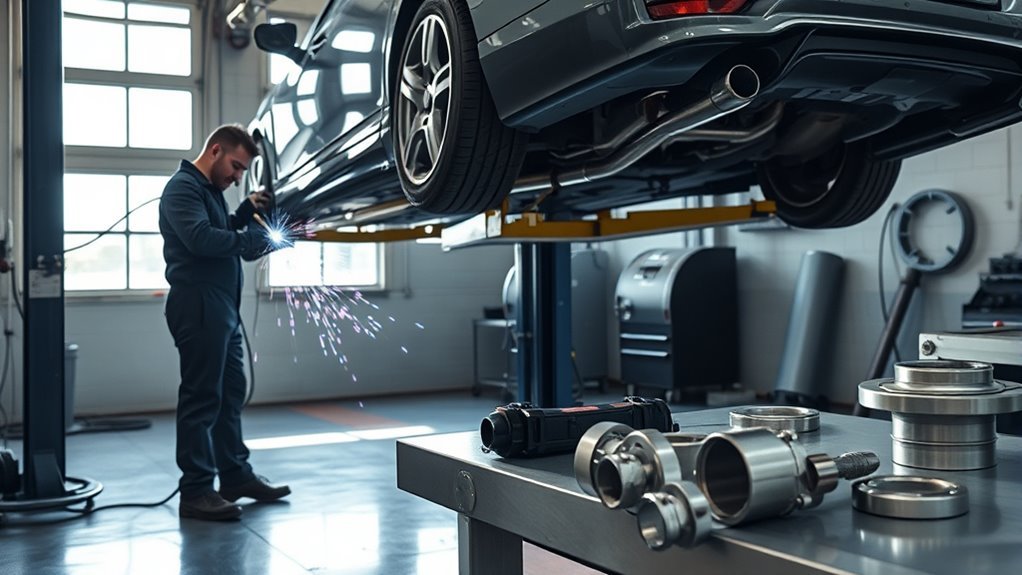
Exhaust pipe welding cost is usually about $20 to $150 for a small leak, seam or short pipe repair, and about $150 to $300 or more when rust, new pipe or custom fitting is involved. These are rough shop-estimate ranges, not a national price list, so get a written quote. A small exhaust leak can sound minor, but the wrong repair can cost more later. This guide explains typical exhaust welding costs, when repair makes sense, when replacement is smarter, and how to avoid unsafe or illegal exhaust work.
Quick Answer
A basic exhaust cut-and-weld often costs about $20 to $150 for a small leak, seam, or pipe repair. Rust, tight access, added pipe, broken hangers, stainless steel, or custom fitting can push the bill higher. Always ask whether the quote includes cutting, welding, parts, and leak testing.
Key Takeaways
- Basic exhaust welding can be affordable when the damage stays in one small, reachable area.
- Rust is the biggest price changer because the shop must cut back to solid metal before welding.
- Replacement costs can climb fast when the pipe, muffler, manifold, catalytic converter, or hangers also need work.
- Never approve work that removes or bypasses required emissions parts such as catalytic converters or oxygen sensors.
- DIY welding only makes sense if you have welding skill, safe vehicle support, ventilation, and proper protective gear.
At a Glance
| Time Required | About 30 minutes to 2 hours for many shop repairs; longer for heavy rust, broken bolts, or manifold access. |
| Difficulty | Easy for a qualified exhaust shop; moderate to advanced for DIY welding. |
| Tools Needed | Lift or jack stands, grinder, welder, clamps, pipe section, PPE, ventilation, and leak-test tools. |
| Cost | About $20 to $150 for many simple welds; $150 to $300+ when pipe, hangers, rust repair, or custom fitting are involved. |
What’s in This Article
- What the Exhaust System Does
- Signs Your Exhaust Needs Repair
- Typical Cost Range for Cutting and Welding an Exhaust
- Exhaust Pipe Repair vs Full Replacement
- Manifold and Muffler Repair Costs Compared
- Factors That Influence Exhaust Welding Prices
- DIY Welding: Tools, Safety, and When to Hire a Pro
- When Exhaust Welding May Not Be Legal or Safe
- How to Find the Best Local Shop and Get a Fair Price
- Frequently Asked Questions
What the Exhaust System Does
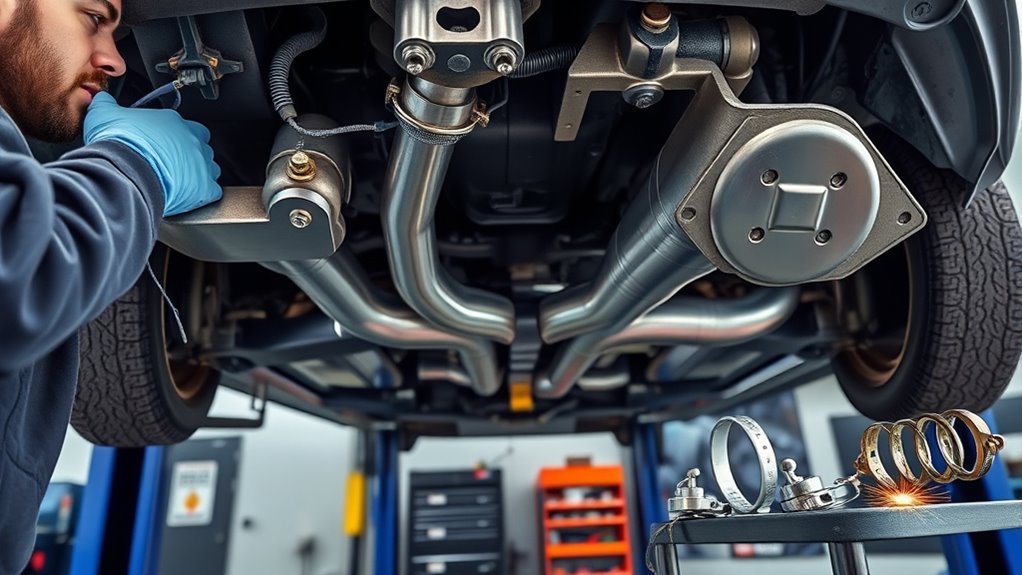
Think of the exhaust system as your engine’s waste pipeline. It moves hot combustion gases away from the engine, lowers sound, and helps control emissions before gases leave the tailpipe.
You rely on the exhaust manifold, pipes, catalytic converter, muffler, resonator, hangers, and tailpipe to work together. The U.S. Environmental Protection Agency lists transportation-related pollutants such as nitrogen oxides, volatile organic compounds, and particulate matter as contributors to poor air quality.
The catalytic converter helps reduce harmful exhaust pollutants. Mufflers and resonators use chambers, tubes, and baffles to reduce sound. Pipes and hangers keep the system sealed, routed safely, and away from heat-sensitive parts.
Rust, leaks, crushed pipes, failed hangers, and damaged converters can raise noise, hurt drivability, and create inspection problems. Regular checks help you repair one damaged section before a small leak spreads into a larger repair.
Signs Your Exhaust Needs Repair
An exhaust leak usually gives you clues before the system fails completely. The sooner you catch those signs, the easier it is to weld a small section instead of replacing multiple parts.
- Louder exhaust noise: A sudden rumble, roar, or ticking sound can point to a leak.
- Exhaust smell near the cabin: Fumes near the doors, floor, or vents need quick attention.
- Rattling underneath: Loose hangers, heat shields, or broken pipe sections can rattle over bumps.
- Visible rust holes: Flaking pipe, pinholes, and cracked seams often get worse after wet or salty driving.
- Failed inspection: Exhaust leaks or missing emissions parts can trigger inspection failure in many areas.
- Hanging tailpipe or muffler: A low or loose exhaust part can break, drag, or contact the road.
Note: If you smell exhaust inside the vehicle, stop driving when safe and get the system checked. Exhaust fumes can enter through floor leaks, open seams, or damaged pipe near the cabin.
Exhaust Pipe Welding Cost: Typical Range for Cutting and Welding

You can expect cutting and welding an exhaust to cost about $20 to $150 for many small repairs. These ranges are rough planning estimates from typical small-shop pricing and vary by shop and region, so treat them as a starting point for your own quotes. The final price depends on shop rates, rust level, access, material, and whether the shop must add pipe, clamps, hangers, gaskets, or a flex section.
Simple welds often cost less at a local muffler shop. More complex jobs cost more when the technician must cut out old metal, shape new pipe, weld around tight spaces, and test the system for leaks.
Labor usually drives the bill, so ask for a parts-versus-labor breakdown. That makes it easier to compare two or three quotes for the same repair.
Typical Price Range
Basic exhaust cutting and welding jobs often start near the shop minimum. A small seam repair, hanger weld, or short pipe weld may sit near the low end if the surrounding metal is clean and easy to reach.
Expect a higher quote when the shop must cut out rust, fit a sleeve, add a pipe section, repair a flex pipe, or work near the catalytic converter. Custom pipe work, stainless steel, and TIG welding can also raise the price.
| Repair Type | Typical Cost | What Changes the Price |
| Small seam or pinhole weld | About $20 to $100 | Shop minimum, access, and metal condition |
| Cut out and weld in a short pipe section | About $75 to $200 | Pipe size, rust cleanup, bends, clamps, and hangers |
| Flex pipe or custom fitting | About $150 to $300+ | Part cost, fitment, welding time, and nearby rust |
| Full pipe or component replacement | Several hundred dollars to $1,000+ | Vehicle-specific parts, catalytic converter, manifold, and labor |
Most shops use metal inert gas welding for common exhaust repairs. Some jobs may need tungsten inert gas welding when the material, fit, or finish needs more control.
Ask whether the quote covers only the weld or includes cutting, pipe, clamps, hangers, gaskets, and leak testing. That one question helps you avoid a surprise final bill.
Regional Price Differences
Location can change the price by a lot. A small independent shop in a lower-cost town may charge less than a shop in a high-rent metro area.
National chains may charge more because they often have higher overhead and set pricing systems. Local muffler shops may offer better prices for simple cuts and basic MIG welds.
If the job needs TIG welding, custom pipe work, or extra rust removal, expect a higher price in almost any region. Skill, access, and time matter more than location for complex repairs.
Get local quotes and check recent reviews before you choose a shop. A cheap weld that leaks next month does not save you money.
Labor Versus Parts
For an exhaust cut-and-weld job, labor usually matters more than parts. The technician may spend time lifting the vehicle, cutting the bad section, cleaning metal, fitting parts, welding, and leak testing.
Small parts can still add to the bill. Clamps, short pipe sections, flanges, gaskets, hangers, and high-temp sealant may raise the total.
Original equipment manufacturer parts can cost much more than universal exhaust parts. That price gap matters if the shop must replace a muffler, resonator, or formed pipe section.
Ask for a line-item estimate before the shop starts. You should see labor, parts, shop supplies, and taxes listed separately.
Exhaust Pipe Repair vs Full Replacement
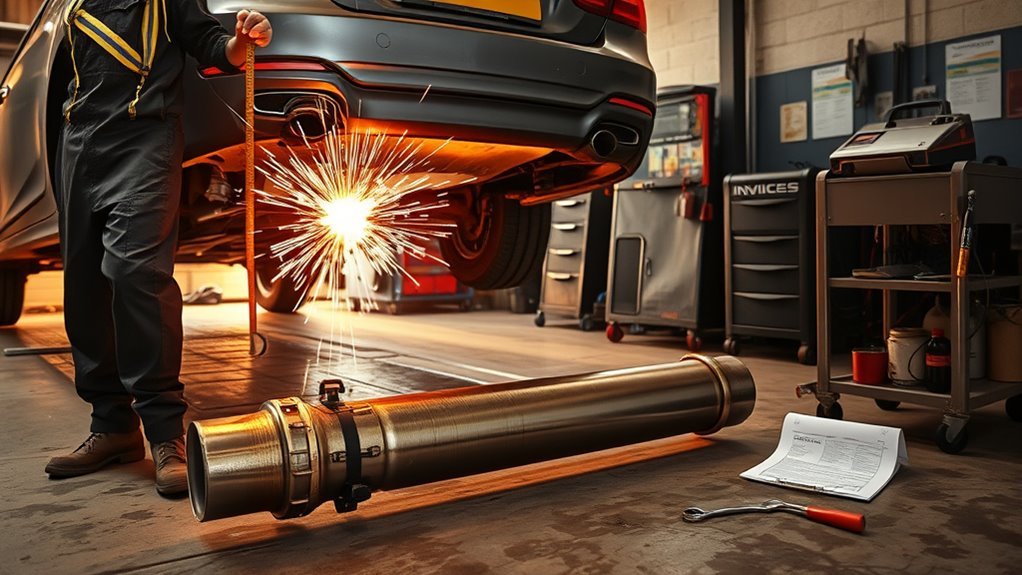
If the damage stays in one small area, cutting and welding the pipe can cost much less than full replacement. Many localized exhaust pipe repairs stay affordable because the shop repairs only the failed section.
A full system replacement can cost several hundred dollars or more. RepairPal’s national estimator lists exhaust pipe replacement at roughly $1,237 to $1,295 (check the current estimate) before taxes, fees, location differences, and related repairs. Your local quote may be lower with universal parts, but the comparison shows why a clean weld can be worth pricing first.
Choose repair when the metal around the hole still looks solid. Choose replacement when rust covers long sections, several parts leak, or the pipe crumbles when touched.
| Option | Best When | Avoid When |
| Weld repair | One small hole, crack, seam leak, or broken hanger with solid metal nearby. | The pipe is thin, flaky, or rusted across a long section. |
| Clamp or sleeve | Slip-fit joints, temporary repairs, or removable pipe sections. | The joint cannot seal, the pipe is crushed, or the clamp may hit the body. |
| Replacement | Multiple leaks, failed flex pipe, broken flange, bad converter, or heavy corrosion. | A small weld would safely restore the system for much less. |
Use these checks before you decide:
- Inspect the rust around the hole or crack.
- Check whether the damaged pipe has enough solid metal for welding.
- Ask the shop to price both repair and replacement.
- Ask how long each option should last.
- Choose the option that gives the best service life, not just the lowest bill.
Note: Welding works best when the nearby metal still has enough thickness to hold a clean weld. If the pipe flakes apart during cleaning, replacement usually makes more sense.
Manifold and Muffler Repair Costs Compared

Manifold and muffler repairs sit in very different price ranges. A muffler or pipe weld often costs far less because the shop can reach the part more easily.
A cracked exhaust manifold can cost much more to repair because it sits close to the engine. RepairPal’s national estimator lists exhaust manifold replacement at roughly $1,527 to $1,740 (check the current estimate) before taxes, fees, location differences, and related repairs.
Use component condition, parts availability, and future rust risk to choose the cost-effective option. A cheap repair may not help if the rest of the part will fail soon.
Manifold Crack vs Replacement
A cracked exhaust manifold can sometimes be welded, but heat and stress make this repair harder than a basic pipe weld. Many manifold jobs cost more because the technician must remove nearby engine parts, deal with broken studs, and replace gaskets.
Welding may make sense for a small crack in a serviceable manifold. Replacement may make more sense when the crack runs near a flange, bolt hole, or heavily stressed area.
Before you approve manifold work, ask the shop to check these points:
- Inspect the crack location and nearby metal thickness.
- Check the gasket, studs, and flange surface.
- Compare the welding quote with full replacement.
- Ask how long the shop expects the repair to last.
Base your choice on expected service life, not only the first repair price.
Muffler Repair vs Swap
Muffler repair often makes sense when the damage stays near a seam, inlet, outlet, or small rust spot. A basic weld can stop noise and leaks without replacing the whole muffler.
A full muffler swap may work better when the shell has deep rust or the inside baffles have failed. Aftermarket mufflers often cost less than OEM units, but fit and sound can vary.
Consider the muffler type before you approve replacement. Straight-through, chambered, and turbo-style mufflers can change sound, flow, and cabin drone.
Ask the shop whether the new muffler matches your vehicle’s pipe size and hanger layout. Good fitment saves labor and helps prevent leaks.
Factors That Influence Exhaust Welding Prices
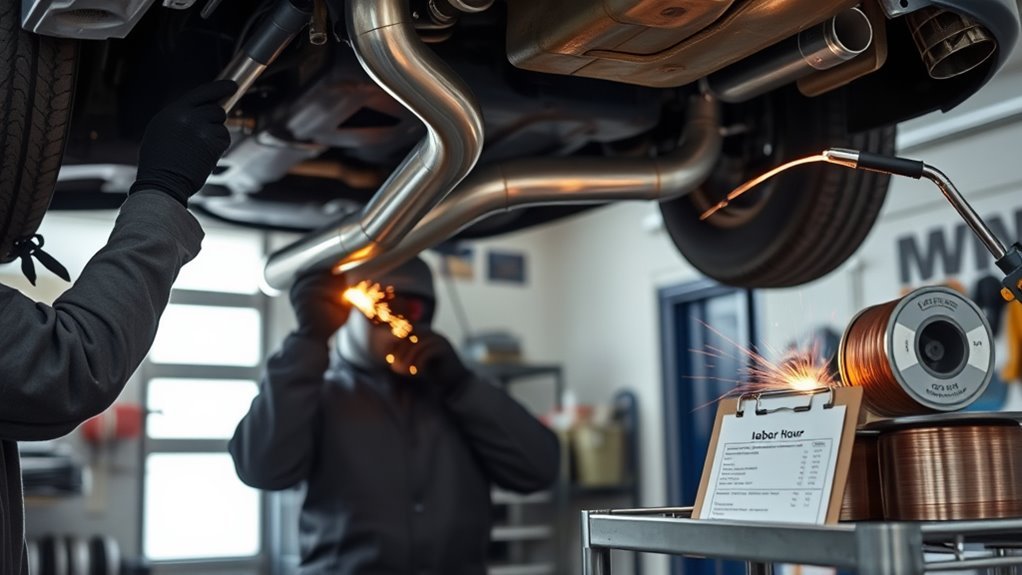
The final price for cutting and welding an exhaust depends on more than one weld. Shop type, geographic labor rates, material, rust, and job complexity all affect the bill.
You’ll usually pay less for simple work at a local independent shop. You may pay more at a chain, dealer, or specialty fabrication shop.
Rust adds time because the technician must cut back to solid metal. Stainless steel, tight spaces, and custom bends can also increase labor.
Watch these main cost factors:
- Shop type: Independent shops, chains, dealers, and fabricators price work differently.
- Labor rates: Higher-cost areas often have higher hourly shop rates.
- Job complexity: Rust, tight access, broken bolts, and custom pipe work add time.
- Materials and methods: Stainless steel and TIG welding can cost more than basic MIG work.
- Parts needed: Pipe sections, clamps, gaskets, hangers, flanges, flex pipes, and sealants add cost.
- Leak testing: A proper post-repair leak check may add time, but it reduces repeat visits.
A fair exhaust quote should explain what failed, what the shop will weld or replace, which parts are included, and whether leak testing is included before you leave.
DIY Welding: Tools, Safety, and When to Hire a Pro
You might consider DIY exhaust repair to save money, but welding under a vehicle carries real risk. Hot metal, sparks, fumes, fuel lines, brake lines, and poor vehicle support can turn a small repair into a dangerous job.
You’ll need a MIG welder, welding helmet, gloves, jacket, eye protection, hearing protection, jack stands, wheel chocks, fire extinguisher, grinder, wire wheel, and cleaning tools. A clean surface helps the weld penetrate instead of sitting on rust.
OSHA warns that welding may produce hazardous fumes and gases and calls for adequate ventilation. Read OSHA’s welding, cutting, and brazing requirements before attempting any hot work.
Disconnect the negative battery cable before you start. Work in a ventilated area, keep sparks away from fuel and brake lines, and remove dry leaves, oil, rags, and other flammable material from the work area.
Use tack welds first to hold the pipe in place. Then adjust wire speed and voltage so the weld penetrates without burning through thin exhaust metal.
Simple patch work may fit a skilled DIYer. Hire a pro for rusted flanges, manifold cracks, catalytic converter areas, structural hangers, stainless steel, or any job near fuel and brake lines.
Warning: Never work under a vehicle supported only by a jack. Use properly rated jack stands on solid, level ground, chock the wheels, and confirm the vehicle is stable before any part of your body goes underneath.
When Exhaust Welding May Not Be Legal or Safe
Exhaust welding can fix leaks, but it should not remove, bypass, or disable required emissions parts. The EPA says tampering with a vehicle’s emissions-control system is illegal under the Clean Air Act.
That means a repair should not cut out a catalytic converter, move oxygen sensors to trick the computer, install a converter delete pipe, or disable any emissions device. A proper repair keeps the exhaust sealed and preserves the original emissions layout.
Noise rules can also matter. A straight pipe, missing muffler, or poorly matched muffler may sound loud enough to violate local noise limits.
Pro Tip: Ask the shop to perform a leak test after welding so you can confirm the exhaust is sealed before you leave.
How to Find the Best Local Shop and Get a Fair Price
Start with local recommendations when you need exhaust welding. Ask friends, neighborhood groups, and car forums for independent muffler shops with proven exhaust work.
Check online reviews, but look beyond the star rating. Search for comments about weld quality, fair pricing, leak fixes, and whether the repair lasted.
Use this checklist before you approve the job:
- Compare two or three written quotes for the same repair.
- Ask whether the quote includes cutting, welding, parts, and leak testing.
- Confirm the shop has experience with exhaust-specific welding.
- Ask whether the repair uses a weld, sleeve, clamp, or replacement section.
- Ask about warranty coverage on welds and parts.
- Ask whether any work is near the catalytic converter or oxygen sensors.
- Request the old damaged part back if a major component gets replaced.
You’ll reduce repeat repairs by choosing a shop with clear pricing and visible exhaust experience. A fair quote should explain what failed, what the shop will replace or weld, and why.
Frequently Asked Questions
Can welding void my vehicle’s warranty?
Welding does not automatically void your whole warranty. The Federal Trade Commission says a manufacturer or dealer generally must prove that an aftermarket part or improper repair caused the damage before denying coverage for that damaged part. Keep receipts and use a qualified shop.
Will welding affect emissions or make my car fail inspection?
A proper weld should not make your car fail inspection if it seals leaks and keeps emissions parts in place. You may fail if the repair bypasses the catalytic converter, changes oxygen sensor placement, disables an emissions device, or leaves an exhaust leak.
Can I use stainless steel patches instead of welding?
You can use stainless steel patches for small holes, but they may not last as long as a clean weld. Clean the area well, clamp the patch tightly, and use high-temperature exhaust sealant only when the patch design calls for it.
How long does a welded exhaust repair typically last?
A good welded exhaust repair can last several years when the surrounding metal stays solid. Road salt, moisture, thin rusted pipe, poor weld prep, and vibration can shorten the repair life.
Is mobile welding more expensive than shop welding?
Mobile welding often costs more because the welder brings tools, travel time, and setup to your location. It can still make sense when the vehicle cannot safely drive to a shop.
How long does exhaust welding take?
A simple exhaust weld may take less than an hour once the vehicle reaches the bay. Rust, broken hangers, custom fitting, broken bolts, or manifold access can turn the job into a longer repair.
Should I weld or clamp an exhaust pipe?
Welding usually gives a stronger and cleaner seal when the metal is in good shape. Clamps can work for some slip-fit joints or temporary repairs, but they may loosen or leak over time if the pipe is rusty or poorly aligned.
Can I drive with a small exhaust leak?
You may be able to drive a short distance to a repair shop if the pipe is secure and you do not smell fumes in the cabin. Do not keep driving if the exhaust is hanging, dragging, loud enough to attract attention, or leaking near the passenger area.
Is exhaust tape a good substitute for welding?
Exhaust tape can help as a short-term patch on some small leaks, but it is not a permanent fix for thin rusted pipe, broken flanges, flex pipes, or leaks near emissions parts. Use it only as a temporary measure until you can get a proper repair.
Conclusion
A basic exhaust cut-and-weld usually costs far less than full replacement when the damage stays in one small area. Get at least two written quotes, ask for a parts and labor split, and make sure the shop checks for leaks after the repair.
Try DIY only when you have welding skill, safe lifting equipment, ventilation, and the right protective gear. A clean, legal, and well-sealed repair helps your car run quieter, pass inspection, and avoid repeat exhaust problems.
Related Exhaust and Car Welding Cost Guides
\n
- \n
- How Much Does Welding the Car Exhaust Cost?
- Muffler Welding Cost
- Car Welding Near Me: Average Repair Prices
- Mobile Welding Costs
\n
\n
\n
\n
Sources
- U.S. Environmental Protection Agency: Smog, Soot, and Other Air Pollution from Transportation — supports transportation pollution and emissions context.
- U.S. Environmental Protection Agency: Tampering and Aftermarket Defeat Devices — supports emissions-control tampering guidance.
- Occupational Safety and Health Administration: Welding, Cutting, and Brazing Requirements — supports welding fumes, ventilation, and hot-work safety.
- Federal Trade Commission: Auto Warranties and Auto Service Contracts — supports warranty guidance for repairs and aftermarket parts.
- RepairPal: Exhaust Pipe Replacement Cost Estimate — supports repair-vs-replacement cost comparison.
- RepairPal: Exhaust Manifold Replacement Cost Estimate — supports manifold replacement cost comparison.