
Florida makes it easy to introduce children to fishing. Anglers under 16 generally do not need an individual recreational freshwater or saltwater fishing license, but they must follow the same seasons, size limits, bag limits, and gear rules as everyone else. Florida residents ages 8–15 may still buy an optional youth license that remains valid until their 17th birthday.
Quick Answer
In Florida, children under 16 can fish without a recreational freshwater or saltwater license, but they must follow all fishing rules and may need to show proof of age. Residents ages 8–15 may buy an optional $17 youth freshwater or saltwater license that remains valid until their 17th birthday, covering them after they turn 16.
Key Takeaways
- Children under 16 generally do not need a Florida recreational fishing license.
- Optional resident youth freshwater and saltwater licenses each cost $17 and are available to residents ages 8–15.
- An age-based youth license remains valid until the holder’s 17th birthday rather than expiring after one year.
- The regular $32.50 freshwater/saltwater combination license is an annual resident license, not a special age-based youth combination license.
- Handling fees apply to online and phone purchases, and license sales are final and nonrefundable.
At a Glance
| Time Required | About 5–10 minutes online once the youth’s customer information is ready |
| Difficulty | Easy |
| Information Needed | Date of birth, last name, identity information, Florida residency documentation when applicable, and payment |
| Base Cost | $17 for either the resident youth freshwater or resident youth saltwater license, plus any applicable transaction fee |
Who Qualifies for a Florida Youth Fishing License?
The Florida Fish and Wildlife Conservation Commission exempts youth under 16 from the state’s individual recreational freshwater and saltwater fishing-license requirements. This exemption applies to both residents and visitors.
An exempt child must still obey all fishing regulations. That includes seasons, legal fishing methods, protected-species rules, daily bag limits, size limits, and location-specific restrictions. An officer may also ask for proof of the child’s age.
Florida residents ages 8–15 may choose to purchase either of these optional licenses:
- Resident Youth Freshwater Fishing License: $17
- Resident Youth Saltwater Fishing License: $17
Each remains valid until the license holder’s 17th birthday. A license bought before age 16 therefore continues to provide coverage during the year in which the child is 16 and would otherwise normally need an individual license.
Note: The optional youth license is a resident product. A nonresident under 16 normally relies on the age exemption. Once the nonresident reaches 16, the appropriate nonresident license is generally required unless another exemption applies.
Age Ranges and License Validity Periods
The easiest way to understand Florida’s youth fishing-license rules is to look at the child’s age on the day of the trip.
| Age | General Florida Rule | Available Option |
|---|---|---|
| Under 8 | No individual recreational fishing license is normally required. | Follow the age exemption and carry proof of age when practical. |
| Ages 8–15 | No individual recreational fishing license is normally required. | A Florida resident may buy an optional $17 youth freshwater or saltwater license. |
| Age 16 | A license is generally required unless another exemption applies. | A youth license purchased at age 8–15 remains valid through age 16. |
| Age 17 and older | The youth license has expired. | Purchase the appropriate standard resident or nonresident license unless exempt. |
A resident youth license bought before age 16 remains valid until the child’s 17th birthday, making it most useful for covering the normally licensed age of 16.
The two $17 youth fishing licenses are age-based. They do not expire after one year. This is different from Florida’s standard annual resident licenses, which are normally valid for 12 months from their effective date.
Florida Youth Fishing License Cost Breakdown
Florida offers separate youth licenses for freshwater and saltwater fishing. Families should choose the one that matches the water and species the child plans to fish.
Products Worth Considering

Enough to Use: you will receive 6 pieces of fishing license holders, and 6 pieces of safety pins, abundant in quantity, enough for you to choose and replace, can meet your different needs; You can also share them with your friends

FISHING LICENSE HOLDER W/ZIP CLOSURE

Secure & Dry - With a clear waterproof zip closure, this heavy-duty badge holder keeps your license and tags protected from the elements. Adventure with confidence.
Youth License Rates
| License | Base Price | Validity and Coverage |
|---|---|---|
| Resident Youth Freshwater Fishing License | $17 | Optional for residents ages 8–15; valid until the 17th birthday; covers freshwater fishing. |
| Resident Youth Saltwater Fishing License | $17 | Optional for residents ages 8–15; valid until the 17th birthday; covers saltwater fishing. |
| Resident Youth Gold Sportsman’s License | $100 | Available after required hunter-safety education; combines fishing, hunting, and listed permits until age 17. |
| Annual Resident Freshwater/Saltwater Combination | $32.50 | A regular annual resident combination license, not a special youth license; valid for 12 months. |
| Resident Saltwater Shoreline License | No cost | For eligible Florida residents fishing from shore or a structure fixed to shore; it does not cover vessel fishing. |
Current official prices and privileges are listed on the FWC’s freshwater license page and saltwater license page.
Duration and Validity
The two resident youth fishing licenses remain valid until the holder turns 17. The expiration is tied to the child’s birthday, not to a one-year anniversary.
The regular $32.50 resident freshwater/saltwater combination license is different. It is an annual product and should not be described as a youth license. A child under 16 generally does not need that combination license because the age exemption already permits recreational fishing in both freshwater and saltwater.
Transaction and Issuance Fees
The displayed license price may not be the final checkout total. According to the FWC’s current ordering information:
- Online sales: A $2.25 handling fee or a $1.75 handling fee plus a 2.95% surcharge is added.
- Phone sales: A $6.25 handling fee plus a 2.95% surcharge is added per person.
- License agents or tax collectors: A small local issuance fee may apply.
- Digital storage: There is no separate charge to store an issued license in the Fish|Hunt FL app.
Warning: Florida recreational license and permit sales are final. License fees, handling charges, and other transaction fees are nonrefundable, so confirm the product, age, residency, and fishing type before completing payment.
How to Purchase a Florida Youth Fishing License
You can buy a Florida youth fishing license online, through the Fish|Hunt FL mobile app, by phone, or in person. A parent or guardian should help confirm that the child is eligible for the resident youth product.
Products Worth Considering

Fishing Guide for Anglers – A must for avid fishermen in Florida. This fish chart features more than 90 fish and shark’s native to Atlantic waters and boasts rules, regulations, limits, and sizes to ensure a fun and legal catch.

Fully Updated for 2026 Regulations: This new edition integrates the 2026 Fishing Regulation Updates, including current seasons and size limits for Gag Grouper, Red Snapper, and the April 1st Lane Snapper changes. No more checking websites while on the water—everything you need is right at your fingertips

[2026 REGULATION ALERT & WATERPROOF DURABILITY]: Stay compliant with crucial 2026 updates for Gag Grouper, Red Snapper, and Lane Snapper not on all printed guides. This essential Florida saltwater fishing gear features 4 double-sided, rugged PVC cards. They are completely waterproof, tear-resistant, and wipe-clean, built to survive harsh conditions from boat splashes to full dunks while staying intact and readable.
Where to Buy
Official purchasing methods include:
- Online: Go Outdoors Florida
- Mobile app: The official Fish|Hunt FL app for Apple and Android devices
- Phone: 888-FISH-FLORIDA, or 888-347-4356
- In person: An authorized license agent or county tax collector’s office
Required Information
Expect to provide or verify the youth’s customer information, including:
- Legal name
- Date of birth
- Last name and an accepted identity identifier for account access
- Florida residency documentation for a resident license
- A valid payment method
For a youth under 18, Florida may accept a Florida school identification card or the accompanying parent’s proof of residency for an in-person purchase. Online resident verification generally requires a Florida driver license or identification card that the state system can verify. Review the FWC’s current residency requirements before starting.
Steps to Complete the Purchase
- Check whether a license is necessary. A child under 16 normally qualifies for the age exemption.
- Choose freshwater or saltwater coverage. The two $17 youth products are separate.
- Confirm resident eligibility. The age-based youth licenses are resident licenses.
- Create or locate the youth’s customer record. Use the child’s information rather than purchasing the license in a sibling’s or parent’s name.
- Review the checkout total. Confirm the base price and added transaction fees.
- Save proof of the license. Print the license or sync it to the Fish|Hunt FL app.
A license stored in the official Fish|Hunt FL app counts as having the license in the holder’s possession. Free online reprints are also available if a paper copy is lost.
Pro Tip: A resident who buys a youth license while the child is 15 receives coverage through the child’s 16th year because the license remains valid until the 17th birthday.
Residency Rules and Exemptions
Florida residency affects which licenses a person may buy and what price applies. For recreational licensing, a resident generally must have declared Florida as the person’s only state of residence and provide accepted documentation.
Common proof includes a Florida driver license or Florida identification card. For youths under 18, a Florida school ID or the accompanying parent’s proof of residency may be accepted in qualifying in-person transactions.
Important Exemptions
- Youth under 16: Exempt from individual recreational freshwater and saltwater fishing licenses and several associated state permits.
- Florida residents age 65 or older: Generally exempt when carrying proof of age and residency.
- Licensed charter, headboat, pier, or recreational vessel: The operator’s applicable license may cover individual saltwater anglers in certain situations.
- Freshwater homestead fishing: A resident may qualify when fishing in the county of residence on the person’s homestead, a spouse’s or minor child’s homestead, or when a minor fishes on a parent’s homestead.
- License-free fishing days: Individual recreational license requirements are waived for qualifying activities on designated days, although all other fishing rules remain in force.
Note: The homestead exemption described by FWC applies to freshwater fishing or hunting in the county of residence. It is not a general exemption for every saltwater or freshwater trip made with a parent.
Where the License Allows a Youth to Fish
The correct license depends on the species being targeted, not simply whether the water looks fresh, brackish, or salty.
- Youth freshwater license: Covers attempts to take native or nonnative freshwater fish.
- Youth saltwater license: Covers attempts to take saltwater fish, crabs, clams, marine plants, and other regulated saltwater organisms.
- Under-16 exemption: Allows an exempt child to participate in either type of recreational fishing without buying an individual license.
A saltwater license generally covers fishing from shore and from a private vessel. The separate no-cost resident shoreline license is more limited: it is not valid when fishing from a vessel, from a shoreline reached by vessel, or while swimming or diving.
State and Federal Waters
Florida requires an applicable saltwater license or exemption when landing saltwater species in Florida, including fish caught beyond state waters. However, a Florida license does not replace federal fishing rules or federal permits.
Florida state waters generally extend from shore to 3 nautical miles in the Atlantic and from shore to 9 nautical miles in the Gulf. Beyond those boundaries, federal seasons, bag limits, gear restrictions, vessel rules, and permit requirements may apply.
Warning: Do not assume a Florida youth saltwater license authorizes every offshore activity. Certain highly migratory species, including federally managed tunas, billfish, swordfish, or sharks, may require a federal permit or compliance with additional federal rules.
Permits and Registrations Beyond the Youth License
Additional permit requirements depend on the angler’s age, the species, the fishing method, and whether the trip occurs in state or federal waters.
Youth under 16 are generally exempt from Florida snook and spiny lobster permit requirements. Once an angler reaches 16, an unexpired youth saltwater license may cover the basic fishing-license requirement, but separate permits or registrations may still be necessary.
| Activity | Rule to Check |
|---|---|
| Taking or attempting to take snook | At age 16, a separate snook permit is normally required in addition to saltwater license coverage. Youth under 16 are generally exempt. |
| Taking or attempting to take spiny lobster | At age 16, a lobster permit is normally required. Youth under 16 are generally exempt, but all season, bag, size, and gear rules still apply. |
| Landing a tarpon | A tarpon tag is required and has no general license exemption. Most recreational tarpon fishing is catch-and-release. |
| Shore-based shark fishing | Anglers age 16 or older must complete the required course and obtain the no-cost shore-based shark fishing permit. |
| Private-vessel reef fishing | The no-cost State Reef Fish Angler designation applies to many anglers age 16 or older. Under-16 anglers are exempt from the designation. |
| Federally managed species | Federal permits and regulations may apply separately from Florida licensing. |
Always check the current Florida saltwater regulations or Florida freshwater regulations for the exact species, waterbody, and trip date.
Combinations, Free Fishing Days, and Special Programs
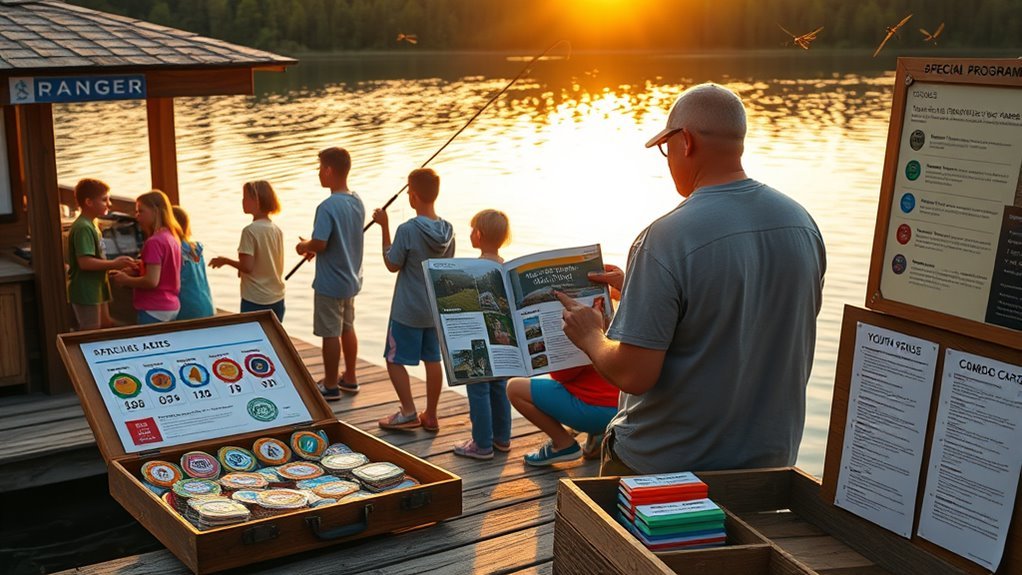
Florida has several options beyond the two basic youth fishing licenses, but they serve different purposes.
Products Worth Considering

【MATERIAL】: oFloral License plate frame is made from premium quality aluminum, which can provide long-lasting protection from corroding, rusting and aging, durability for long lasting usage.Personalized Car Frame Can Perfect to Put on Your Front of Car or for Decorative Purposes Around the House Like in Your Bedroom, Garage, Basement, Ect.

CLASSIC SHELBY - Gear up for the winter with the Shelby Gray Leather Patch Beanie. with the stylish leather Shelby patch, this beanie will stand out from the crowd. It is the Shelby way to stay comfy and warm! Fabric: 100% Acrylic. 3-inch Folding Cuff. Genuine square leather patch with debossed Shelby logo.
Never misplace your fishing license again
Resident Youth Gold Sportsman’s License
The $100 Resident Youth Gold Sportsman’s License is available to residents ages 8–15 who have completed the applicable hunter-safety education. It combines freshwater fishing, saltwater fishing, hunting, and several associated hunting and fishing permits. It remains valid until the holder’s 17th birthday.
Annual Resident Combination License
The $32.50 annual resident freshwater/saltwater combination license provides both types of fishing coverage for 12 months. It is not an age-based youth license. It may become useful once a resident turns 16 if the person does not already hold an unexpired youth license.
License-Free Fishing Days
Florida schedules freshwater and saltwater license-free fishing days. On those days, the individual recreational license requirement is waived for qualifying activities, but seasons, bag limits, size limits, gear rules, and protected-species rules continue to apply.
Lifetime Licenses
Florida residents may also compare lifetime freshwater, saltwater, or Gold Sportsman’s licenses. Lifetime-license prices vary by the purchaser’s age and are separate from the $17 youth products. Families considering a long-term purchase should review the current FWC lifetime-license options.
No official general group discount for buying several youth fishing licenses together is advertised. Families should rely on the listed individual prices rather than expecting a bulk-purchase discount.
Rules, Possession Limits, and Responsible Angling
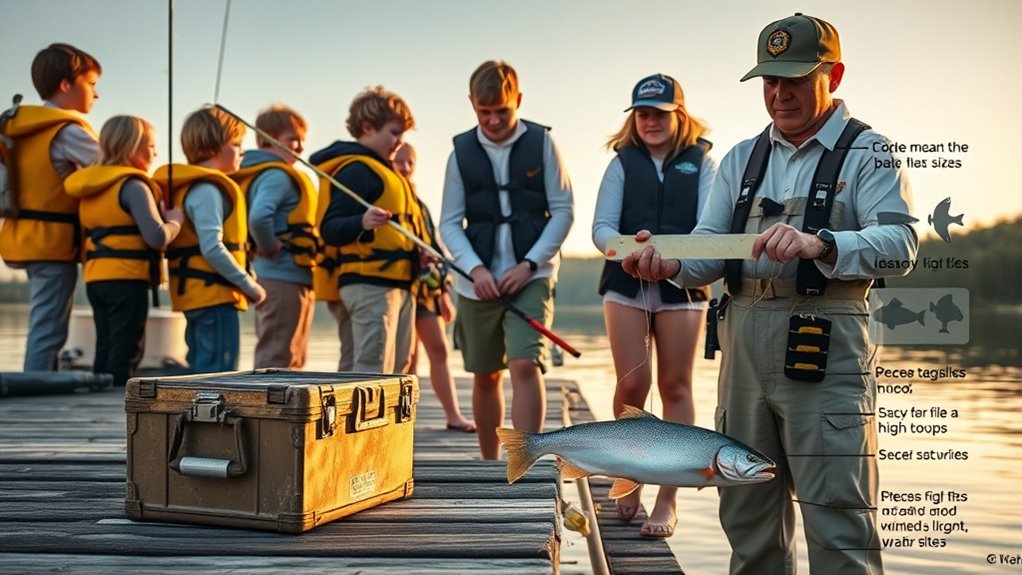
A license exemption does not create an exemption from fishing regulations. A child who actively fishes or harvests fish must follow the rules for the species and location.
Rules That Apply to Youth Anglers
- Open and closed seasons
- Minimum, maximum, and slot-size limits
- Daily bag and vessel limits
- Possession limits
- Legal hooks, traps, nets, and other gear
- Protected-species and catch-and-release requirements
- Area-specific rules for parks, wildlife management areas, sanctuaries, and federal waters
Each properly licensed or legally exempt person who is actively harvesting may generally receive an individual bag limit when the species rule allows it. A nonfishing passenger should not be used to increase the group’s allowable harvest.
Possession limits are not always identical to daily bag limits. For example, Florida’s general freshwater rules restrict possession of freshwater game fish to no more than two days’ bag limit unless a specific exception applies. Always check the rule for the species being kept.
Pre-Trip Checklist
- Confirm whether the child is under 16 or already 16.
- Carry proof of age, the license, or digital proof when applicable.
- Identify whether the target species is freshwater or saltwater.
- Check the current season, size limit, bag limit, and legal gear.
- Verify any snook, lobster, shark, reef-fish, tarpon, or federal permit requirement.
- Check rules for the specific park, pier, management area, or waterbody.
- Bring a measuring device, dehooking tool, and properly fitted life jacket.
Pro Tip: Save the current freshwater or saltwater regulation page on your phone before leaving home. Rules can differ by region, species, season, and state-versus-federal water boundary.
Frequently Asked Questions
Are Florida youth fishing licenses transferable between siblings?
No. Florida fishing licenses and permits are issued to an individual and are nontransferable. Each child who buys an optional youth license must have a separate license issued in that child’s name.
Can a child fish in saltwater with only a freshwater youth license?
A child under 16 normally does not need either license and may fish in freshwater or saltwater under the age exemption. Once the angler reaches 16, a freshwater-only license does not provide saltwater privileges. The angler then needs an unexpired youth saltwater license, another license that includes saltwater coverage, or a valid exemption.
Does a Florida youth fishing license cover both freshwater and saltwater?
No. The $17 resident youth freshwater and $17 resident youth saltwater licenses are separate products. The $100 Resident Youth Gold Sportsman’s License includes broader fishing and hunting privileges for an eligible youth who has completed the required hunter-safety education.
Do youth under 16 need snook or spiny lobster permits?
Youth under 16 are generally exempt from Florida’s individual saltwater license, snook permit, and spiny lobster permit requirements. They must still obey every season, bag, size, location, and gear rule. When the angler turns 16, the appropriate permits may be required even if an age-based youth saltwater license remains valid.
Do youth need a separate fishing-tournament license?
Florida does not have a general separate personal youth tournament license. Normal age, license, and exemption rules apply to participants. The tournament organizer may need an event exemption permit or a black bass tournament exemption permit when the event’s format requires one.
Are Florida fishing-license purchases refundable?
No. FWC recreational license and permit sales are final, and license fees, handling fees, and related charges are nonrefundable. Check the license type, residency, age, species season, and permit need before paying.
Is catch-and-release mandatory for some fish?
Yes. A fish must be released when harvest is prohibited, the season is closed, the fish falls outside the legal size range, the bag limit has been reached, or a location-specific rule requires release. Handle the fish carefully and return it to the water as quickly as possible.
Sources
- Florida FWC — License and Permit Exemptions — youth age exemptions, senior exemptions, homestead rules, and other licensing exceptions
- Florida FWC — Freshwater Recreational Licenses and Permits — youth freshwater license price, validity, and combination-license information
- Florida FWC — Saltwater Recreational Licenses and Permits — youth saltwater license price, shoreline license, and species-permit requirements
- Florida FWC — How to Order a License — purchasing methods, online and phone handling fees, and refund policy
- Florida FWC — Florida Residency Requirements — accepted resident documentation and options for youths under 18
- Florida FWC — Saltwater Recreational Regulations — current species, season, bag-limit, and state-versus-federal-water guidance
Conclusion
Most children under 16 can fish in Florida without buying an individual recreational fishing license, but they must follow every applicable fishing rule and may need to show proof of age. Florida residents ages 8–15 can choose a $17 youth freshwater or saltwater license that remains valid until their 17th birthday.
Before buying, confirm whether the child needs a license, choose the correct freshwater or saltwater product, review the added transaction fees, and remember that purchases are nonrefundable. Before every trip, check current species regulations and any state, federal, park, pier, vessel, or tournament requirements that apply.
