
New York offers a short-term fishing license for residents and visitors who want to fish freshwater for up to a week without buying a full annual license. As of July 28, 2026, the 7-day license costs $12 for New York residents and $28 for nonresidents. The license is generally required for anglers age 16 or older, but exemptions and separate saltwater rules apply.
Quick Answer
New York’s 7-day freshwater fishing license costs $12 for residents and $28 for nonresidents. Anglers age 16 or older generally need it to take freshwater fish, frogs, or baitfish. Buy online, by phone, or from a license-issuing agent, and carry printed or electronic proof while fishing.
Key Takeaways
- The resident 7-day license is $12, while the nonresident license is $28.
- Residents age 70 or older can buy an annual fishing license for $5, which is cheaper than the 7-day permit.
- A freshwater license does not replace New York’s free Recreational Marine Fishing Registry for covered saltwater fishing.
- Printed proof or an electronic license in the HuntFishNY app can be used while fishing.
- Fishing seasons, catch limits, access rules, and special waterbody regulations still apply.
Overview of the 7-Day Fishing License
The New York 7-day fishing license is designed for a short freshwater fishing trip. It allows a license holder to take covered freshwater species during the period printed on the license, provided all seasons, size restrictions, daily limits, gear rules, and waterbody-specific regulations are followed.
According to the New York State Department of Environmental Conservation, a freshwater fishing license is generally required for anyone age 16 or older who fishes for:
- Freshwater fish by angling, spearing, hooking, longbow, or tip-up
- Frogs by permitted methods
- Freshwater baitfish collected for personal use
The license does not guarantee access to every shore, boat launch, reservoir, or private property. Anglers must still obey posted hours, obtain any separate access permit, and receive landowner permission before entering private land.
The current New York Freshwater Fishing Regulations Guide can be read online. Printed copies may also be available from license-issuing agents, and DEC provides instructions for requesting a copy by mail.
Current 7-day license fee: $12 for a qualifying New York resident and $28 for a nonresident.
New York Fishing License Costs
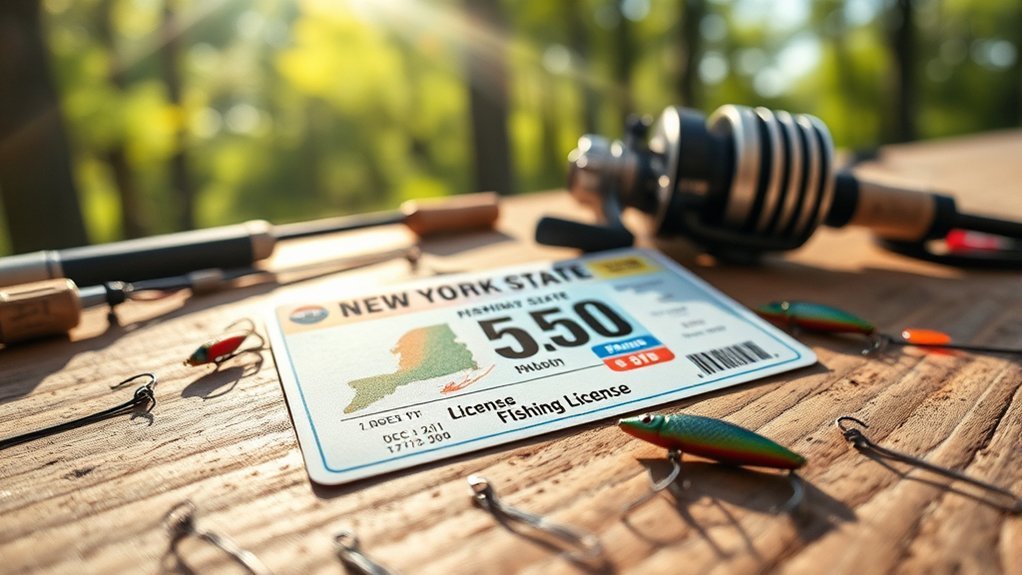
New York offers one-day, seven-day, and annual freshwater fishing licenses. The best choice depends on your residency, age, trip length, and whether you expect to return later in the year.
| License | Resident Fee | Nonresident Fee | Best For |
|---|---|---|---|
| 1-day | $5 | $10 | A single fishing day |
| 7-day | $12 | $28 | A short vacation or multi-day trip |
| Annual | $25 for ages 16–69; $5 for ages 70+ | $50 | Repeat trips during the next 365 days |
Products Worth Considering

Material: Aluminum, making our product sturdy, durable, safe and reliable, capable of withstanding rain and sun exposure.

【MATERIAL】: oFloral License plate frame is made from premium quality aluminum, which can provide long-lasting protection from corroding, rusting and aging, durability for long lasting usage.Personalized Car Frame Can Perfect to Put on Your Front of Car or for Decorative Purposes Around the House Like in Your Bedroom, Garage, Basement, Ect.

Officially licensed product
Cost for New York State Residents
A resident who will fish for only one day can save money with the $5 one-day license. Two separate one-day licenses cost $10, which is still slightly less than the $12 seven-day license. For three or more fishing days within the short-term period, the seven-day option generally offers better value than buying a new one-day permit for each day.
Residents age 70 or older should note an important exception: the resident annual fishing license costs only $5. That annual senior license is cheaper than the $12 seven-day license and remains valid for 365 days.
To qualify for resident pricing, a person generally must maintain a fixed, permanent home in New York for more than 30 days. Simply owning property in the state does not establish residency. DEC may request evidence such as a New York driver’s license, non-driver ID, vehicle registration, lease, voter registration, tax form, or other accepted document.
Pro Tip: A resident age 70 or older should normally choose the $5 annual license instead of paying $12 for a seven-day permit.
Cost for Nonresidents
A nonresident 7-day freshwater fishing license costs $28. A one-day nonresident permit costs $10, so the one-day option is cheaper for one or two fishing days. The seven-day permit becomes the better value when a visitor plans to fish for three or more days during the covered period.
The nonresident annual license costs $50. It can be the better choice for someone planning more than one trip because two seven-day permits would cost $56. It also matches the cost of five separate one-day licenses while providing a full 365 days of coverage.
Qualifying full-time students attending a New York college or university and certain nonresident military members stationed in New York may be eligible for resident pricing. Documentation requirements apply, so applicants should review DEC’s current qualification rules before purchasing.
How to Buy a 7-Day New York Fishing License
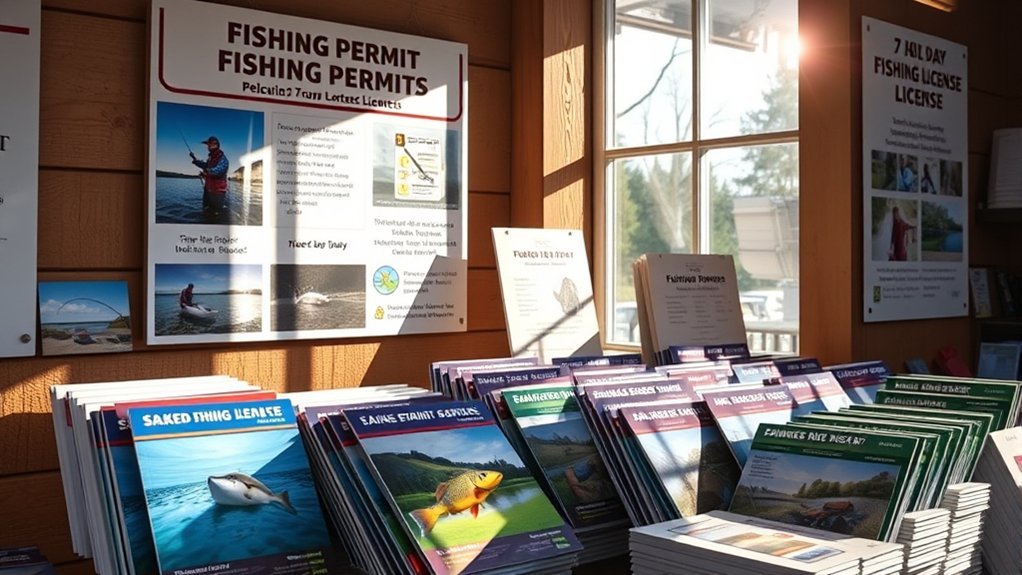
You can buy a New York fishing license online, by phone, or from an authorized license-issuing agent. Use the official DEC fishing-license page to reach the DECALS purchasing system or locate a current agent.
Products Worth Considering

【MATERIAL】: oFloral License plate frame is made from premium quality aluminum, which can provide long-lasting protection from corroding, rusting and aging, durability for long lasting usage.Personalized Car Frame Can Perfect to Put on Your Front of Car or for Decorative Purposes Around the House Like in Your Bedroom, Garage, Basement, Ect.
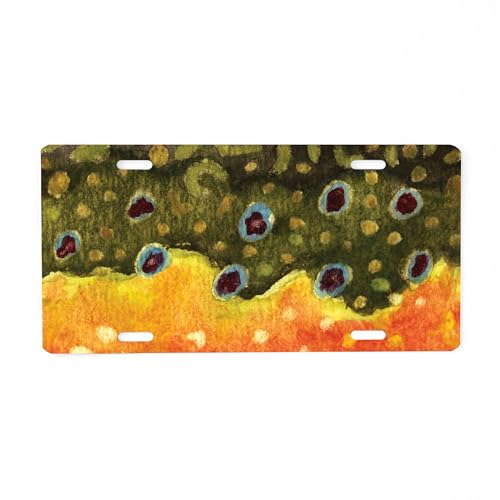
Express yourself with the front license plate design that fits your sense of humor, political views, or promotes your cause and beliefs.

This Largemouth Bass fishing license plate features a black background with silver design elements. Choose with our without the American flag faded into the background!
Online and Phone Purchases
Online purchases are processed through the DEC Automated Licensing System. After completing the transaction, the license is sent by email and remains available in the buyer’s online DECALS account.
You can also purchase by calling 1-866-933-2257. DEC states that phone buyers receive a 12-digit DEC ID that can serve as proof of their fishing privilege. The license is also delivered by email and added to the buyer’s account.
- Email delivery and home printing are available without a printing or mailing charge.
- Online and phone buyers who request printed documents by mail are charged $2.
- Mailed documents may take up to 14 business days to arrive.
- A lost emailed license can normally be printed again from the original email or DECALS account.
- The official HuntFishNY app can display an electronic version of an active license.
In-Person Purchase Locations
Authorized license-issuing agents may include participating town clerks, sporting-goods retailers, tackle shops, and other approved businesses. Participation varies, so use DEC’s agent finder rather than assuming that a particular store or government office sells licenses.
An issuing agent may charge a $1 printing fee when it prints a DECALS transaction. Ask about this charge before completing the purchase.
| Purchase Method | Delivery | Possible Added Fee |
|---|---|---|
| Online through DECALS | Email, account download, home printing, or requested mail | $2 if printed and mailed |
| Phone: 1-866-933-2257 | DEC ID, email, online account, or requested mail | $2 if printed and mailed |
| Authorized issuing agent | Immediate printed transaction | Agent may charge $1 for printing |
Note: Check the spelling of your name, date of birth, address, and other license details immediately. DEC states that incorrect information can make a fishing license invalid.
License Requirements and Proof
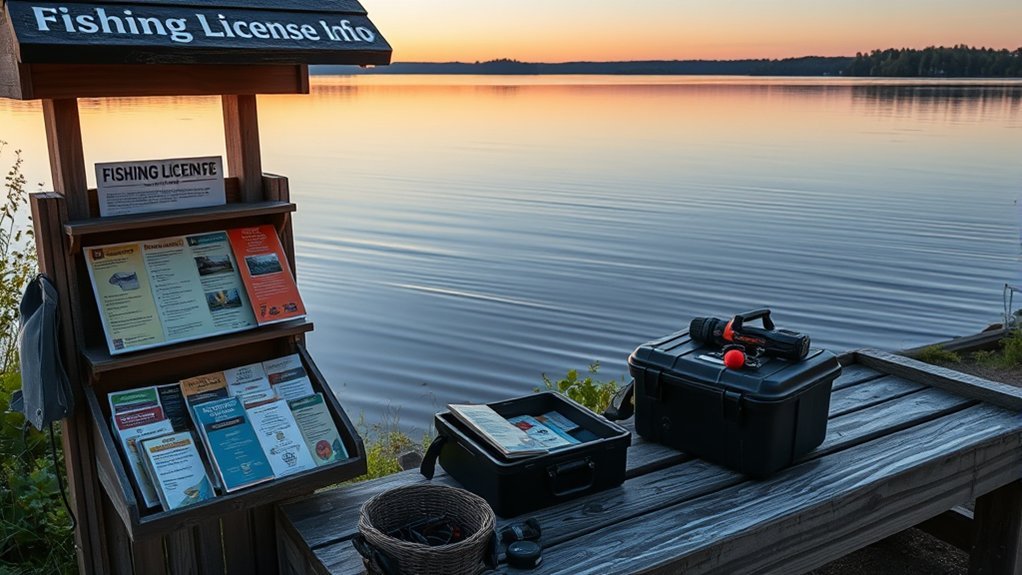
You must have proof of your license available while taking part in an activity covered by it. You must also show it on request to an authorized officer or to the person controlling the land or water where you are fishing.
Accepted proof can include:
- A printed copy on plain paper
- An electronic copy displayed through the official HuntFishNY app
- The valid DEC identification information provided for a qualifying phone transaction
A fishing license belongs only to the person named on it. It cannot be lent, transferred, or shared with another angler. Buying a license also does not grant permission to enter private property.
Before fishing, verify the regulations for the exact waterbody. Special regulations can override general statewide seasons, size limits, daily limits, and legal fishing methods.
Products Worth Considering

Officially Licensed Product
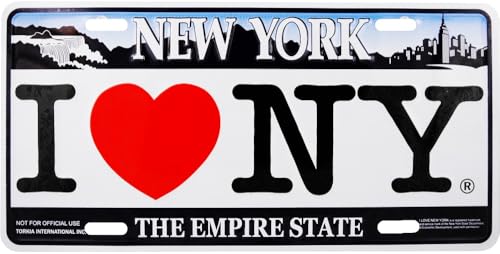
Standard size aluminum license plate for novelty and decor
Laser cut acrylic inlay
Who Does Not Need a Freshwater Fishing License?
Children younger than 16 generally do not need a New York freshwater fishing license. DEC also lists several situations in which an older angler may fish without the standard license:
- Fishing on a licensed fishing preserve
- Fishing during a designated New York Free Fishing Day
- Participating in an approved free learn-to-fish clinic
- A qualifying resident farmer, lessee, or immediate family member fishing on occupied and cultivated farmland
- A farm fish pond license holder or qualifying immediate family member fishing on water covered by that license
- A Native American living and fishing on reservation land
- A patient residing at a qualifying U.S. Veterans Administration hospital or facility in New York
Qualification details matter. For example, owning a private pond does not automatically exempt every visitor from licensing requirements, and ordinary guests at a farm pond may still need a license.
New York Free Fishing Days in 2026
New York designated the following freshwater Free Fishing Days for 2026:
- February 14–15, 2026
- June 27–28, 2026
- September 26, 2026
- November 11, 2026
As of July 28, 2026, the remaining dates are September 26 and November 11. The freshwater license requirement is waived on these days, but seasons, catch limits, legal-method rules, private-property restrictions, and special waterbody regulations remain in effect.
Freshwater, Saltwater, and Border-Water Rules
The 7-day fishing license discussed here is a freshwater license. It does not serve as a general saltwater permit.
Warning: Anglers age 16 or older who fish New York marine waters or covered tidal waters for saltwater and migratory marine species generally must enroll in the free Recreational Marine Fishing Registry. A freshwater license alone does not satisfy this requirement.
The marine registry is free and is normally valid for 365 days. Registration is available online, by phone, or through an issuing agent, although printing or mailing charges may apply.
Fishing Border Waters
Do not assume that a New York license covers both sides of every border water. DEC’s current guidance includes the following examples:
- A New York license does not authorize fishing in the Ontario portions of Lakes Erie or Ontario, the Niagara River, or the St. Lawrence River.
- Special reciprocal-license information applies to Lake Champlain.
- A New York license is accepted along the New York–Pennsylvania boundary portion of the Delaware River and West Branch Delaware River.
- Special boat and ice-fishing provisions apply to Greenwood Lake and Indian Lake.
Check the current border-water table before crossing a state, provincial, or international boundary.
Access Permits and Private Property
Some fishing locations require a separate access permit even when you have a valid fishing license. Examples include certain New York City watershed properties and some Long Island state lands. Posted access hours, parking rules, boat restrictions, and local permits may also apply.
Public fishing rights along a stream normally cover fishing access only. They do not automatically authorize camping, swimming, picnicking, hunting, or other activities on the adjoining private land.
Rules to Check Before Your Trip
A fishing license gives you permission to fish under New York law, but it does not remove species-specific or location-specific restrictions. Before leaving, check:
- Open and closed seasons
- Minimum and maximum fish sizes
- Daily possession and catch limits
- Permitted bait and fishing methods
- Special regulations for the exact lake, stream, river, or reservoir
- Local access hours and night-fishing restrictions
- Boat-launch, parking, and watercraft rules
Night Fishing
A 7-day license does not generally prevent night fishing, but individual waters, parks, reservoirs, preserves, boat launches, and access areas may close after sunset or impose special rules. Confirm both the fishing regulation and the property’s operating hours before planning an overnight trip.
Eating Your Catch
Legal possession does not always mean a fish should be eaten without limits. The New York State Department of Health publishes waterbody-specific advice for eating fish you catch. Advice can vary by location, fish species, fish size, age, pregnancy status, and other factors.
Note: Check the current health advisory for the exact waterbody before keeping fish for a meal, especially when fishing the Hudson River, Great Lakes, New York City waters, or a location with PFAS, mercury, or PCB advice.
Prevent the Spread of Invasive Species
Clean plants, animals, and mud from boats, trailers, waders, anchors, and fishing equipment before leaving an access site. Drain live wells, bilges, bait containers, and other water-holding areas, then dry the equipment before entering another waterbody.
DEC’s Clean, Drain, Dry guidance explains the current prevention steps and additional requirements that can apply to motorized watercraft in and near Adirondack Park.
Tips for a Successful Fishing Trip
A successful trip starts with a valid license, current rules, legal access, and equipment suited to the target species. Check the forecast, water conditions, and launch status before driving to a fishing location.
Essential Fishing Gear Checklist
- A rod and reel suitable for the fish and waterbody
- Hooks, sinkers, floats, line, and legal bait or lures
- Pliers or a hook-removal tool
- A landing net when targeting larger fish
- A ruler or measuring board for checking legal size
- A copy of the current regulations or access to them on your phone
- Printed or electronic proof of your license
- A personal flotation device when boating or when otherwise required
- Drinking water, sun protection, weather-appropriate clothing, and a basic first-aid kit
- A container or disposal plan for unwanted fishing line and other waste
A rod rental is not included with the fishing license. However, New York’s Fishing Rod Lending Program allows patrons at participating libraries and other locations to borrow basic fishing equipment.
Finding a Place to Fish
New York offers lakes, reservoirs, rivers, ponds, and public stream access across the state. Popular regions and waters include:
- The Adirondacks: Lakes, ponds, and streams with opportunities for trout, bass, pike, and other freshwater species
- The Finger Lakes: Large, deep lakes such as Cayuga and Seneca, with waterbody-specific seasons and limits
- Lake Champlain: Bass, pike, trout, salmon, and other species, subject to border and reciprocal-license rules
- The Delaware River: Diverse fishing along the New York–Pennsylvania boundary and its tributaries
- Public fishing-rights streams: Designated stream sections where DEC has obtained public fishing access easements
- Licensed fishing preserves: Managed waters that may offer stocked fish and simplified access for beginners
The official HuntFishNY Tackle Box is the most practical place to begin. It provides waterbody-specific regulations, likely species, stocking information, parking areas, boat launches, access points, and navigation assistance.
Pro Tip: Search the exact waterbody in the Tackle Box before traveling. This helps you catch special regulations, access restrictions, stocking information, and launch details that a general statewide guide may not show immediately.
Frequently Asked Questions
Can I fish at night with a 7-day license?
Usually, but the license does not override special waterbody rules, park hours, reservoir restrictions, or property closures. Check both the current fishing regulations and the operating hours for your access point before fishing after dark.
Are fishing seasons different for each species?
Yes. Seasons, size limits, daily limits, and legal methods can vary by species and waterbody. Special rules for a named lake, river, stream, or reservoir take priority over the general statewide rules.
What fish can I catch with the license?
The license covers legal freshwater fishing for species such as bass, trout, walleye, pike, panfish, and others. The exact species you may target or keep depends on the season, waterbody, legal method, and current catch limits.
Is fishing-rod rental included with the license?
No. The fee covers the fishing privilege only. You must bring, buy, rent, or borrow your equipment separately. Participating locations in New York’s Fishing Rod Lending Program may provide basic gear at no cost.
Can I use a 7-day freshwater license in saltwater?
No. Anglers age 16 or older who fish New York marine and covered tidal waters for saltwater or migratory marine species generally must enroll in the free Recreational Marine Fishing Registry. The freshwater license does not replace that registration.
Does a New York license cover another state or Canada?
Not automatically. Border-water rules differ by location. Some waters have limited reciprocity, while others require a license from the neighboring state, province, or country. Check DEC’s border-water table before crossing the boundary.
Do I need to carry a paper license?
Not necessarily. New York allows anglers to carry a printed license or display electronic proof through the HuntFishNY app. Keep your phone charged and make sure the active license is available before reaching an area with poor service.
Is the 7-day license cheaper than an annual license?
It is cheaper for most single short trips. However, a resident annual license is $25, a nonresident annual license is $50, and the resident annual license for anglers age 70 or older is only $5. Repeat visitors should compare the total cost before buying.
Conclusion
A New York 7-day fishing license is an affordable option for a short freshwater trip, costing $12 for residents and $28 for nonresidents. Before buying, compare it with the one-day and annual options, especially if you are a resident age 70 or older or expect to make more than one trip.
Carry valid proof, confirm the regulations for the exact waterbody, and check separate saltwater, access-permit, border-water, and fish-consumption requirements. With those details handled before departure, you can spend more of your trip fishing and less time resolving licensing or access problems.
Sources
- New York State DEC — Fishing Licenses — current fees, age requirements, exemptions, and border-water information
- New York State DEC — DEC Automated Licensing System — online and phone purchasing, email delivery, mailing fees, and replacement printing
- New York State DEC — General Sporting License Information — residency, proof, license-holder responsibilities, and issuing-agent printing fees
- New York State DEC — Freshwater Fishing Regulations — seasons, catch limits, special waters, and the current regulations guide
- New York State DEC — Recreational Marine Fishing Registry — saltwater and migratory marine fishing requirements
- New York State Department of Health — Fish Consumption Advisories — current advice for eating fish caught in New York waters
