
Michigan anglers do not currently need a separate trout or hatchery stamp. House Bill 5093 would create a new $5 hatchery stamp for certain fish, but it has not become law. The proposal is broader than trout, and its introduced language focuses on fish production and stocking rather than stream restoration. This guide reflects public records available July 29, 2026.
Quick Answer
Michigan does not currently require a separate trout or hatchery stamp. House Bill 5093, introduced in 2025, would create a mandatory $5 hatchery stamp for taking or possessing listed trout, salmon, walleye, pike, musky, lake sturgeon, and related species. As of July 29, 2026, the bill remains in committee and is not law.
Key Takeaways
- Michigan’s current all-species fishing license covers trout and salmon; no separate stamp is required.
- The introduced version of House Bill 5093 proposes a $5 hatchery stamp, not a voluntary trout stamp.
- The proposed stamp would cover 12 listed fish groups and direct the money to aquatic species production and stocking.
- The bill has not passed either chamber, so current license fees and fishing rules still apply.
- The proposal also contains license-allocation, youth-license, senior-discount, and Great Lakes rod-limit provisions.
Proposal at a Glance
| Bill | Michigan House Bill 5093 |
| Proposed Stamp Cost | $5 in the introduced bill |
| Who It Would Affect | People taking or possessing the listed hatchery-supported species |
| Current Status | Introduced and referred to the House Natural Resources and Tourism Committee; not enacted |
| Current Michigan Rule | One all-species license covers trout, salmon, and other fish |
Warning: Do not treat the proposed stamp, species list, fee, or rod provision as current law. Check the official Michigan DNR regulations before fishing because bills can change, stall, or fail.
Background and Current Status of the Hatchery Stamp Proposal
The proposal discussed in Michigan is House Bill 5093. The official bill record shows that it was introduced on October 2, 2025, and referred to the House Natural Resources and Tourism Committee.
The introduced text would change Michigan’s fishing-license structure and create a $5 hatchery stamp. It is not written as an optional donation. It would be an added requirement for taking or possessing certain named fish if the bill became law.
As of July 29, 2026, the official record does not show the bill passing the House or Senate. Michigan anglers therefore continue to follow the current all-species license system.
The draft named April 1, 2026, as an effective date. That date passed without enactment, so it has no legal effect. Any version that advances later would need workable final language and an updated effective date.
Note: Public discussion may refer to a “trout stamp,” “salmon stamp,” or “hatchery stamp.” The introduced bill uses the term hatchery stamp and covers more than trout and salmon.
Historical Context for Michigan Trout and Salmon Licenses
Michigan has used separate trout-and-salmon privileges in the past. Historical state legislation referred to an annual trout and salmon stamp and a lifetime trout and salmon license. That history helps explain why some anglers describe the current proposal as “bringing back” a stamp.
The modern structure is different. Public Act 108 of 2013 moved Michigan to an all-species fishing license beginning in 2014. Today, one annual license covers trout, salmon, warm-water fish, and most other recreational species.
What Historical Claims Can Safely Be Made
Past trout-and-salmon license revenue supported Michigan’s broader fisheries system, but the available bill language does not prove that every dollar was reserved for stream restoration, barrier removal, or a specific biological result. Claims about exact historic outcomes need a dated budget, appropriation record, or program report.
The current proposal should also not be described as a habitat-restoration stamp. Its introduced earmark is for aquatic species production and stocking.
Why Hatchery Funding Is Central to the New Proposal
Michigan operates hatcheries, egg-take stations, stocking vehicles, and related fish-production programs. The DNR says its Fisheries Division is largely supported by fishing-license revenue and federal Sport Fish Restoration funding.
House Bill 5093 tries to create a clearer revenue stream for fish production. Supporters argue that a dedicated stamp would make stocking revenue easier to identify. Critics may still question the added cost, the covered species, and whether the bill gives enough attention to habitat, wild fish, and public access.
Who Would Need the Proposed $5 Hatchery Stamp
No one needs the proposed stamp today. Under the introduced version of House Bill 5093, an individual could not take or possess the following fish without a hatchery stamp:
- Chinook salmon
- Coho salmon
- Atlantic salmon
- Steelhead
- Lake trout
- Brown trout
- Rainbow trout
- Walleye
- Splake
- Pike
- Lake sturgeon
- Musky
The bill uses a species list rather than asking whether a particular fish was actually raised in a hatchery. That means enforcement would not depend on proving whether an individual trout, walleye, or musky was wild or stocked.
Products Worth Considering

Our license plate frame is made of premium Stainless steel, which ensures that the plate frame will never wear out. Corrosion resistant, Personalized Car Frame Can Perfect to Put on Your Front of Car,Decorate your car to make it look more beautiful and unique

Product Material: Our license plate frame is made of premium quality aluminum, which ensures that the plate frame will never wear out. Corrosion resistant, Personalized Car Frame Can Perfect to Put on Your Front of Car,Decorate your car to make it look more beautiful and unique.

【MATERIAL】: oFloral License plate frame is made from premium quality aluminum, which can provide long-lasting protection from corroding, rusting and aging, durability for long lasting usage.Personalized Car Frame Can Perfect to Put on Your Front of Car or for Decorative Purposes Around the House Like in Your Bedroom, Garage, Basement, Ect.
Current Rules for Adult Anglers
Under current Michigan law, anglers age 17 and older need a fishing license to fish public waters. The license is good for all species. The Michigan DNR license page lists annual all-species licenses at $26 for residents and $76 for nonresidents. The state’s 2026 license announcement says each annual license also carries a $1 surcharge.
The 2026 annual license is valid through March 31, 2027. Anglers must still follow species seasons, size limits, possession limits, gear rules, and special-water regulations.
Minors and Adults Who Assist Them
Anglers under 17 may fish without a license, but they must follow all fishing rules. Michigan also offers an optional $2 youth fishing license. Any adult who is actively assisting a minor must have a valid fishing license.
| Angler or Helper | Current Michigan Requirement |
| Angler age 17 or older | Valid all-species fishing license |
| Angler under 17 | No license required; all fishing rules still apply |
| Adult actively assisting a minor | Valid fishing license required |
| Separate trout or hatchery stamp | Not currently required |
Trout Anglers Are Only Part of the Proposed Scope
Calling HB 5093 a trout-only fee understates its reach. The introduced stamp would also apply to salmon, walleye, pike, musky, splake, and lake sturgeon. Anglers should evaluate the proposal as a broad hatchery-and-stocking measure, not as a narrow cold-water conservation program.
Cost Comparison With Current Licenses and Other States

Michigan’s current annual license already includes trout and salmon. The proposed $5 hatchery stamp would be an extra charge for the listed species. The introduced draft also showed higher general-license prices, but those increases are not current law.
| License or Stamp | Price |
| Michigan 2026 resident annual all-species license | $26, plus $1 surcharge |
| Michigan 2026 nonresident annual all-species license | $76, plus $1 surcharge |
| Proposed Michigan hatchery stamp in introduced HB 5093 | $5 extra |
| Illinois 2026 electronic inland trout stamp | $6.50 |
| Tennessee nonresident 10-day all-species license including trout | $61 |
These figures are not perfect apples-to-apples comparisons. Illinois uses a separate trout stamp, while Tennessee’s amount is a short-term nonresident license that includes trout. The comparison shows why the license type, residency, duration, and included species must be stated with every price.
Products Worth Considering

Express yourself with the front license plate design that fits your sense of humor, political views, or promotes your cause and beliefs.

UNIQUE DESIGN: Display your license plate with a frame as unique as you are. Designed to show off your one-of-a-kind style, our lightweight and durable frames are made to withstand all driving conditions.
How the Proposed Stamp Money Would Be Used

The introduced bill says all money from the $5 hatchery stamp must go to the Michigan DNR Fisheries Division and be used for aquatic species production and stocking. It also allows that money to support production and stocking of species that are not on the stamp’s required-species list.
That wording is narrower than the original article’s claims about stream restoration, riparian shading, bank stabilization, barrier removal, monitoring, enforcement, or access projects. Those activities may be funded through other DNR accounts, grants, federal aid, or future amendments, but they are not the stated hatchery-stamp earmark in the introduced bill.
The Michigan DNR funding overview explains that hunting and fishing license fees are the main revenue source for the Game and Fish Protection Fund. It also says the Fisheries Division receives major support from license revenue and federal Dingell-Johnson Sport Fish Restoration funding.
The key policy question is not only whether anglers would pay $5 more, but whether the final law clearly states who pays, what the money can fund, and how results will be reported.
Administrative and Enforcement Considerations

A new stamp would require changes to eLicense, the Hunt Fish mobile app, retail license terminals, receipts, customer support, officer training, and public education. The state would also need to explain whether short-term licenses, youth licenses, free licenses, and combination licenses include or require the stamp.
The introduced text uses a named-species rule. That is simpler than asking an officer to decide whether a fish was hatchery-raised or wild. However, the broad list may create questions for anglers who practice catch-and-release, fish mixed-species waters, or target an unlisted species but incidentally catch a listed one.
HB 5093 also includes a separate Great Lakes rod provision. The introduced draft would allow a hatchery-stamp holder to use an unlimited number of rods from a moving boat on the Great Lakes, while allowing the Natural Resources Commission to reduce the number, but not below two. This provision is not current law and should not be followed unless an enacted law and updated regulations say otherwise.
The bill also discusses how fishing-license revenue would be allocated to the Fisheries Division and refers to a fisheries oversight committee. A complete final law would need clear accounting rules, public reports, audit access, and conflict-of-interest safeguards.
Potential Impacts on Anglers and Access
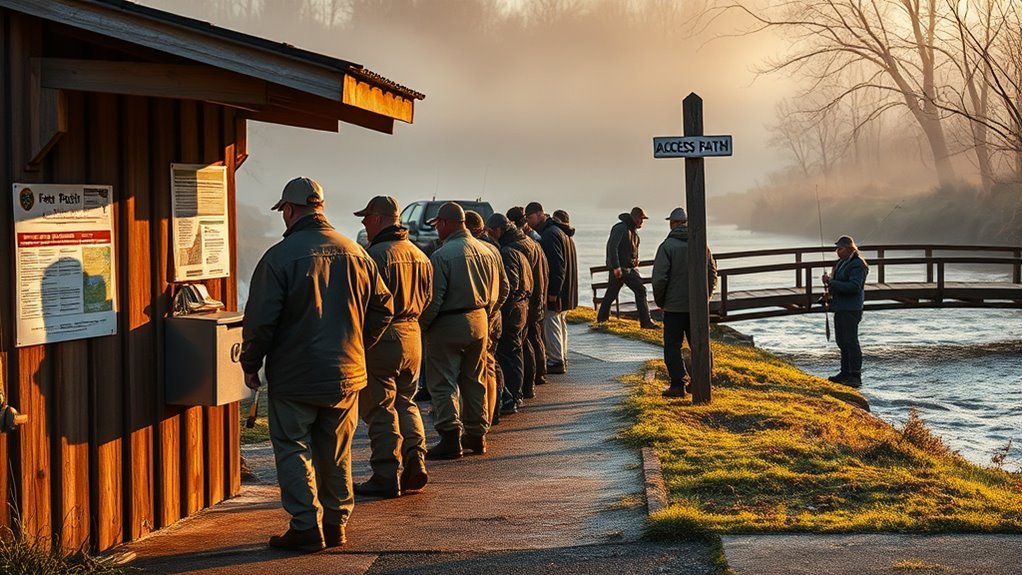
A dedicated stamp could make the connection between angler payments and hatchery production easier to see. It could also create more stable revenue if sales remain strong. Those are policy goals, not guaranteed outcomes.
The added cost may affect occasional anglers, families, seniors, visitors, and people who fish waters where listed and unlisted species mix. A species-based stamp may also charge anglers who pursue naturally reproducing fish even though the money is directed to production and stocking.
Claims that trout stamps automatically increase participation, volunteerism, advocacy, or trout-fishing effort need state-specific evidence. Participation can also be shaped by fish abundance, access, travel cost, weather, regulations, and license simplicity.
- Possible benefit: a visible, dedicated source of hatchery and stocking revenue.
- Possible concern: another fee and another rule to understand.
- Equity question: how youth, seniors, disabled veterans, short-term visitors, and low-income anglers would be treated.
- Management question: whether revenue should support only stocking or also habitat, research, and access.
- Compliance question: how the rule would apply during incidental catches and catch-and-release fishing.
Alternatives to a Dedicated Hatchery Stamp

Michigan could support fisheries without using the exact structure in HB 5093. Each alternative has trade-offs in stability, fairness, administration, and public accountability.
| Alternative | How It Would Work |
| General license increase | Spread added cost across licensed anglers instead of a species list. |
| Optional donation | Let buyers add a voluntary amount at checkout, with lower revenue certainty. |
| Earmark existing license revenue | Set a statutory percentage for Fisheries Division operations and publish annual results. |
| General Fund reimbursement | Reimburse the DNR for legislatively approved discounts and exemptions. |
| Habitat and access grants | Use competitive grants and matching funds for stream, lake, passage, and public-access projects. |
A combined approach may be more durable than relying on one fee. For example, a smaller dedicated production charge could be paired with transparent license allocations and separate habitat grants.
How to Provide Input and Track the Bill

You can follow the proposal through official state pages instead of relying on social-media summaries or old articles.
- Open the HB 5093 bill page and review the history, sponsors, documents, and votes.
- Check the House Natural Resources and Tourism Committee page for meetings, agendas, and testimony opportunities.
- Read the newest bill text or substitute before commenting; introduced language can change during committee work.
- Contact your state representative with a specific position on cost, species coverage, fund use, youth and senior rules, or the Great Lakes rod provision.
- Compare any enacted change with the current Michigan Fishing Regulations before your next trip.
Pro Tip: Save the official bill page and the DNR regulations page. The bill page tells you whether the proposal advances; the DNR page tells you what anglers must follow now.
Frequently Asked Questions
Is a Michigan hatchery stamp required now?
No. Michigan’s current all-species fishing license covers trout, salmon, walleye, pike, musky, and other recreational fish. House Bill 5093 remains a proposal.
Is the proposed stamp voluntary?
No. The introduced bill describes a required $5 hatchery stamp for taking or possessing the listed species. An optional checkout donation would be a different policy.
How much would the Michigan hatchery stamp cost?
The introduced version of House Bill 5093 sets the hatchery stamp fee at $5. That amount could change if lawmakers adopt a substitute or amendment.
Which fish would require the proposed stamp?
The introduced list includes Chinook, coho, and Atlantic salmon; steelhead; lake, brown, and rainbow trout; walleye; splake; pike; lake sturgeon; and musky.
Would the stamp money fund stream restoration?
Not under the introduced earmark. The bill says stamp revenue would be used for aquatic species production and stocking. Habitat work would need another funding source or amended language.
Can I buy the proposed stamp online?
No stamp is available because the bill has not become law. Current Michigan fishing licenses can be purchased through the state eLicense system, the Hunt Fish app, or participating license agents.
Do youth and senior anglers get current discounts?
Under current rules, anglers under 17 may fish without a license and may buy an optional $2 youth license. Michigan residents age 65 or older may buy an $11 senior annual license, with the state’s listed surcharge applying. Proposed changes in a bill do not alter those rules unless enacted.
Would the bill allow unlimited rods on the Great Lakes?
The introduced text would let a hatchery-stamp holder use an unlimited number of rods from a moving boat on the Great Lakes, subject to the Natural Resources Commission’s authority to set a lower number. That provision is not current law.
Is proof of a current fishing license required on the water?
Anglers who need a license should be able to show their valid license or electronic license when requested by an officer. Follow the current DNR license and regulation instructions rather than relying on an unverified enforcement statistic.
Conclusion
Michigan’s active proposal is a $5 hatchery stamp, not a voluntary trout-only donation. The introduced bill would apply to a broad species list and direct the stamp revenue to fish production and stocking. It also contains wider license and Great Lakes rod provisions. Because HB 5093 remains in committee, anglers should keep using the current all-species license rules and watch the official bill record for changes.
Sources
- Michigan Legislature — House Bill 5093 — official status, history, documents, sponsors, and votes.
- Michigan DNR — Fishing License Information — current age rules, license types, and listed fees.
- Michigan DNR — 2026 Fishing Licenses — 2026 prices, surcharge, validity, and season information.
- Michigan DNR — Funding — Game and Fish Protection Fund and Fisheries Division funding sources.
- Illinois DNR — 2026 Fishing License Fees — current inland trout stamp comparison.
- Tennessee Wildlife Resources Agency — License Structure and Fees — current 10-day all-species trout-inclusive license comparison.
