Last updated: September 7, 2026 — rent, utilities, transport, healthcare, tenancy and education figures were refreshed against current 2026 sources.
Direct answer: For one person renting alone, a useful 2026 planning benchmark is about HK$22.0K per month with an average outside-centre one-bedroom or about HK$26.2K with an average city-centre one-bedroom. That combines a current non-rent estimate of roughly HK$8.6K per month with May 2026 average rents of about HK$13,370 outside the centre and HK$17,612 in the city centre. A family of four has a non-rent benchmark of roughly HK$30.3K before housing, so a typical three-bedroom can push the total to roughly HK$56.2K–69.2K per month. These are planning averages, not quotes; your district, housing, school choices and healthcare use can move the total sharply.
Methodology: The non-rent household estimates use Wise’s current 2026 Hong Kong cost guide, converted to HKD at the September 7, 2026 USD/HKD rate. Citywide rent and everyday-price benchmarks use Numbeo’s May 2026 Hong Kong data. Regulated fees, tenancy requirements, transport products and tuition examples are checked against official or provider sources.
Cost of Living in Hong Kong: Monthly Budget Overview
Rent is the biggest variable in most Hong Kong budgets. The table below combines current non-rent estimates with May 2026 citywide apartment averages so you can see how housing changes the monthly total.
| Household | Non-rent benchmark | Outside-centre rent | City-centre rent | Indicative monthly total |
|---|---|---|---|---|
| Single person | ~HK$8.6K | ~HK$13,370 (1-bed) | ~HK$17,612 (1-bed) | ~HK$22.0K–26.2K |
| Family of four | ~HK$30.3K | ~HK$25,909 (3-bed) | ~HK$38,864 (3-bed) | ~HK$56.2K–69.2K |
Treat these as starting points rather than guaranteed budgets. Numbeo’s figures are crowdsourced city averages, and actual rents vary widely by district, building age, floor area and condition. Private schooling, private healthcare, frequent taxis, nightlife and larger homes can raise spending well above these benchmarks.
How Renting Works: Prices, Areas and Lease Basics
May 2026 city averages put a one-bedroom apartment in the city centre at about HK$17,612/month, with a reported range of roughly HK$14,000–25,000. Outside the centre, the one-bedroom average is about HK$13,370, with a reported range of roughly HK$10,000–18,000. For three bedrooms, the averages are about HK$38,864 in the city centre and HK$25,909 outside it. Check the latest city data on Numbeo.
Security deposits are generally equivalent to one to three months’ rent under Estate Agents Authority guidance. Estate-agent commission is not a fixed statutory amount: the rate should be agreed between you and the agent and recorded in the agency agreement. See the Estate Agents Authority’s tenant guidance.
There is no general statutory minimum or maximum tenancy period. A common residential arrangement is a two-year agreement, often structured as one year fixed followed by one year flexible under a break clause. Your actual agreement controls, so check termination notice, repairs, renewal, landlord access, subletting and inventory terms before signing.
Typical Rent Ranges
Location and unit size create a large rent gap. Using May 2026 city averages, a one-bedroom costs about HK$17,612 in the centre versus HK$13,370 outside. A three-bedroom averages about HK$38,864 in the centre and HK$25,909 outside.
- Deposits: landlords generally request one to three months’ rent as security.
- Utilities: basic utilities for an 85 m² apartment average about HK$1,764/month; broadband averages about HK$168.
- Furnishing: confirm which appliances, furniture and fixtures belong to the landlord and record their condition before moving in.
Use the ranges to shortlist districts, then compare actual listings rather than assuming the citywide average will match a particular neighbourhood.
Lease Terms Explained
A standard residential tenancy is commonly arranged for two years, often with a break option after the first year, although Hong Kong law does not impose a general minimum or maximum term. The exact agreement may differ, so read the break clause and notice requirements carefully. The Community Legal Information Centre explains the common “one year fixed, one year flexible” structure.
Before signing, confirm the deposit, agent commission, repair responsibilities, furnishings, renewal terms, access rights, subletting restrictions and early-termination penalties. After execution, a tenancy agreement generally must be stamped within 30 days. Both landlord and tenant are liable for stamp duty, although they can agree how to share the payment. See GovHK’s domestic-property tenancy guidance.
Utilities, Internet and Home Running Costs
For an 85 m² apartment, May 2026 city data puts basic electricity, cooling/heating, water and garbage costs at about HK$1,764/month. Broadband internet of 60 Mbps or faster averages about HK$168/month. Together, that is roughly HK$1,932/month before any separate gas, mobile-phone or premium-service charges.
- Rent still dominates: a one-bedroom averages about HK$17,612 in the centre and HK$13,370 outside it.
- Cooling matters: summer air-conditioning can materially change electricity use.
- Reduce waste: Hong Kong’s EMSD recommends Grade 1 energy-efficient appliances, setting air conditioning around 24–26°C in summer, using efficient lighting and switching off unused appliances.
See the EMSD home energy-saving guidance. Instead of assuming a fixed saving amount, compare your own bills month to month because apartment size, insulation, occupancy and air-conditioning use vary.
Food and Grocery Prices: Markets, Supermarkets and Eating Out
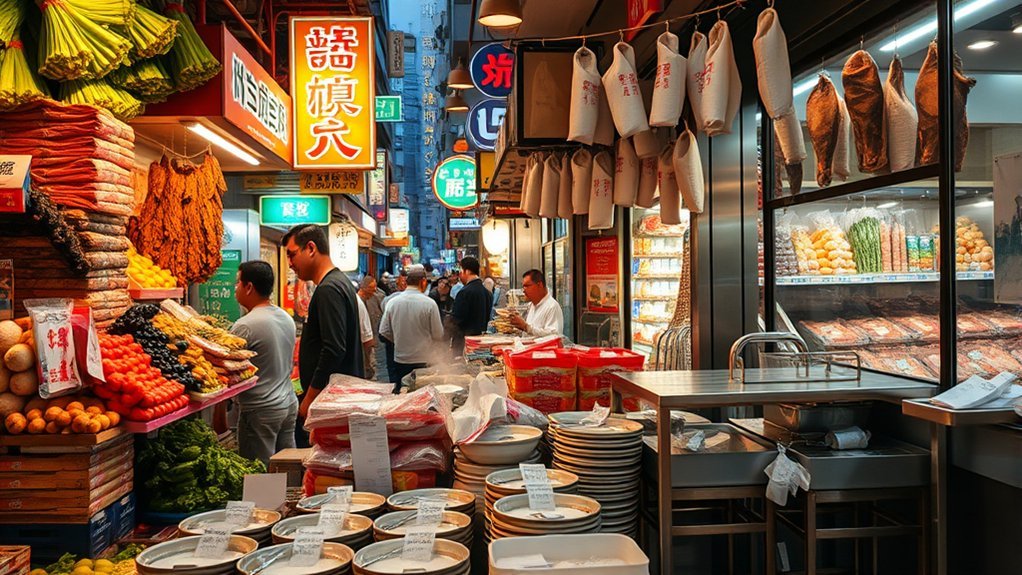
Food spending depends heavily on how often you cook and where you shop. Wet markets and local stores can be cheaper for some fresh foods, while premium supermarkets and imported products raise the bill. For current reference points, May 2026 city data puts an inexpensive restaurant meal at about HK$60 and a three-course mid-range meal for two at about HK$500. A regular cappuccino averages about HK$39.16, while one litre of milk averages about HK$23.71.
Use the table below as a price benchmark rather than treating it as a fixed personal food budget.
| Item | May 2026 average | Reported range |
|---|---|---|
| Inexpensive restaurant meal | HK$60 | HK$45–100 |
| Mid-range meal for two, three courses | HK$500 | HK$300–800 |
| Regular cappuccino | HK$39.16 | HK$25–50 |
| Milk, 1 litre | HK$23.71 | HK$15–37 |
For your own monthly budget, track groceries and dining separately for the first few months. That makes it easier to see whether imported foods, delivery or restaurant meals are driving the total.
Getting Around: Public Transport, Taxis and Car Ownership Costs
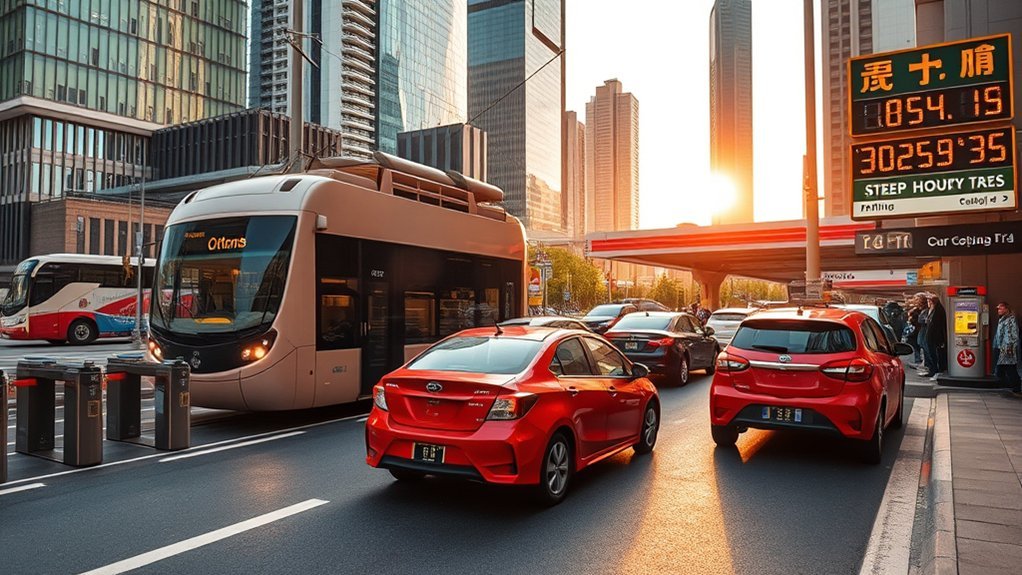
Hong Kong’s MTR, buses, trams and ferries make living without a car practical for many residents. May 2026 city data puts a typical one-way local-transport ticket at about HK$10 and the regular monthly-pass benchmark at about HK$575, although your actual spend depends on route and frequency.
The official MTR City Saver costs HK$460 and provides 40 single journeys within 40 days across 67 designated urban stations. It is aimed particularly at frequent medium- to long-distance cross-harbour commuters. Check current coverage on the MTR City Saver page.
- Public transport: usually the most practical baseline for regular commuting.
- Taxi: useful for late-night or inconvenient routes, but repeated trips can raise your monthly transport budget quickly.
- Car ownership: May 2026 gasoline averages about HK$29.03/L before considering parking, tolls, insurance and maintenance.
Before buying a car, compare its full monthly cost with public transport plus occasional taxis rather than comparing fuel alone.
Healthcare and Insurance Expenses
Hong Kong’s public and private healthcare costs differ sharply. Under the Hospital Authority fee reform effective January 1, 2026, a Family Medicine Outpatient consultation for an eligible person costs HK$150 per attendance, with separate drug charges where applicable. See the Hospital Authority fee schedule.
Private-hospital prices vary by facility and service. St. Paul’s Hospital lists semi-private rooms at HK$1,380–1,480 per day and private rooms at HK$3,800–4,880 on its schedule effective December 11, 2025. Imaging can also be substantial: Hong Kong Adventist Hospital’s January 2026 outpatient MRI schedule includes examples from about HK$7,260 for a lumbar-spine scan without contrast to HK$12,701 for liver or pelvis scans with contrast.
Public Vs Private Costs
If you are eligible for subsidised public care, routine public treatment can cost far less than private care. Private facilities may offer different appointment availability, accommodation and service options, but costs depend on the hospital, doctor, procedure, room class and insurance coverage.
- Public Family Medicine consultation: HK$150 per attendance for eligible persons from January 1, 2026.
- Private accommodation example: St. Paul’s semi-private room HK$1,380–1,480/day; private room HK$3,800–4,880/day.
- Private MRI example: selected 2026 outpatient prices at Hong Kong Adventist Hospital run from roughly HK$7,260 to HK$12,701 depending on the scan and contrast.
Private quotes may include additional professional, medicine, procedure or facility charges, so ask for an itemised estimate before treatment whenever practical.
Health Insurance Options
Choose health insurance around the type of care you expect to use rather than a single premium number. If you mainly expect subsidised public care, compare plans for major unexpected expenses. If you want regular access to private hospitals, check annual limits, room-class limits, deductibles, co-insurance, exclusions, waiting periods and whether outpatient diagnostics are covered.
Before buying a policy, compare its reimbursement limits with actual private-hospital prices. A low premium can still leave a large out-of-pocket balance if the plan’s room or imaging limits are below the facility you choose.
Education and Childcare Costs for Expat Families
Education can transform a family’s Hong Kong budget. Government policy provides 12 years of free primary and secondary education through public-sector schools. Private and international options vary much more widely. May 2026 city data puts private full-day preschool or kindergarten at an average of about HK$8,841/month per child and international primary-school tuition at about HK$179,715/year, but individual schools can differ substantially. See the Education Bureau’s primary and secondary education policy.
For a current school-specific example, Hong Kong International School lists 2026–27 tuition of HK$115,800–136,300 per semester, or HK$231,600–272,600 for two semesters, plus a HK$12,250 capital levy per semester. Other application, entry and programme costs may apply.
University costs also depend on institution and programme. For 2026–27, the University of Hong Kong lists annual undergraduate tuition of HK$224,000 for non-local students in non-STEM faculties and HK$249,000 for non-local STEM students.
- Public-sector school: 12 years of free primary and secondary education under government policy.
- Private preschool benchmark: about HK$8,841/month per child in May 2026 city data.
- HKIS 2026–27 tuition: HK$231,600–272,600/year before the capital levy and other applicable charges.
- HKU 2026–27 non-local undergraduate tuition: HK$224,000–249,000/year depending on STEM status.
Practical Budgeting Tips and Cost-Saving Strategies
Start with housing because changing the apartment can save more than trimming small everyday purchases. Current averages put a one-bedroom at about HK$17,612 in the city centre versus HK$13,370 outside it, a difference of more than HK$4,000 per month at the citywide-average level.
Next, separate fixed and variable home costs. Basic utilities plus broadband average roughly HK$1,932/month for the referenced apartment size and internet plan, but electricity use can rise with air conditioning. EMSD recommends energy-efficient appliances, 24–26°C summer air-conditioning settings and switching off unused equipment rather than relying on a promised fixed percentage saving.
- Price housing first: compare actual listings in several districts before setting the rest of your budget.
- Budget transport from your commute: compare pay-as-you-go fares with products such as MTR City Saver where your route qualifies.
- Separate essentials from discretionary spending: track groceries, restaurants, taxis, subscriptions and entertainment individually.
- For families, price school and healthcare before signing a lease: these costs can outweigh smaller household savings.
Recalculate your budget whenever rent, school fees, insurance or commuting patterns change. Citywide averages are useful for planning, but your actual recurring bills are the figures that determine affordability.
Frequently Asked Questions
What Is the Average Cost of Living in Hong Kong?
A current 2026 planning estimate for one person is roughly HK$8.6K/month before rent. Add an average one-bedroom rent of about HK$13,370 outside the city centre or HK$17,612 in the centre, putting the combined benchmark at roughly HK$22.0K–26.2K/month. Actual spending depends on housing, food, transport, healthcare and lifestyle.
Is $50,000 HKD a Good Salary?
For one person, HK$50,000 per month gives substantially more room than the basic citywide rent-and-living-cost benchmarks in this guide. Whether it feels comfortable still depends on whether HK$50,000 is gross or take-home pay, your rent, MPF and tax position, debt, dependants, travel and savings target. A household paying international-school or private-healthcare costs needs a different calculation.
What Is the Average Rent Price in Hong Kong?
May 2026 city averages are about HK$17,612/month for a one-bedroom in the city centre and HK$13,370 outside it. Three-bedroom averages are about HK$38,864 in the centre and HK$25,909 outside. Individual listings can be well above or below these figures.
Is 25000 HKD a Good Salary?
HK$25,000 can be workable but tight for someone renting alone. An average outside-centre one-bedroom already costs about HK$13,370, leaving roughly HK$11,630 before food, utilities, transport, savings and other costs if HK$25,000 is the amount available to spend. Shared housing or below-average rent creates much more room; a typical city-centre one-bedroom makes the budget considerably tighter.
Conclusion
The cost of living in Hong Kong is driven first by housing and then by your household’s lifestyle, schooling and healthcare choices. For one person, current planning data suggests roughly HK$22.0K/month with an average outside-centre one-bedroom or about HK$26.2K with an average city-centre one-bedroom. For a family of four using a three-bedroom, the combined benchmark is roughly HK$56.2K–69.2K/month.
Use these figures to build a starting budget, then replace every citywide average with the actual rent, commute, school, insurance and recurring bills that apply to you. Rechecking those large costs before signing a lease will give you a much more reliable affordability picture than trying to save a few dollars on individual purchases.