

North Carolina uses separate fishing licenses for inland and coastal waters, so the right nonresident license depends on where you plan to fish and how long you will stay. Fees are also changing on August 1, 2026. This guide explains both fee schedules, exemptions, purchase methods, charter rules, harvest reporting, and other requirements visitors need to know.
Last verified: July 28, 2026
Quick Answer
Anglers age 16 or older generally need a North Carolina license to fish public waters. Through July 31, 2026, nonresident annual and 10-day fees are $38 and $14 for coastal fishing and $54 and $28 for inland fishing. On August 1, those prices rise to $40, $15, $56, and $29.
Key Takeaways
- A coastal license covers coastal and joint waters but not inland waters.
- An inland license covers inland and joint waters but not coastal waters.
- North Carolina’s unified inland/coastal license is not available to nonresidents.
- Children under 16, qualifying private-pond anglers, and everyone fishing on July 4 are among the main exemptions.
- Charter passengers are covered only when the captain or vessel carries a blanket for-hire license.
- Kept flounder, red drum, spotted seatrout, striped bass, and weakfish must be reported when taken from specified waters.
Who Needs a Nonresident Fishing License in North Carolina?
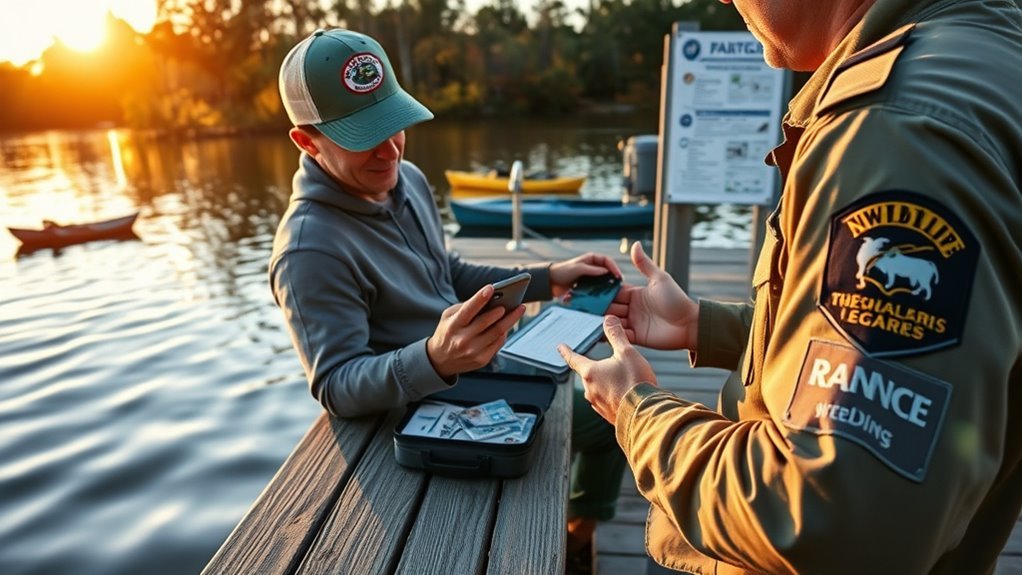
Anyone age 16 or older who uses bait or fishing gear to catch finfish in North Carolina public waters generally needs the license that matches the water classification. The state divides public fishing waters into three categories:
- Inland waters: Freshwater rivers, lakes, reservoirs, and designated public mountain trout waters. A State Inland Fishing License is required.
- Coastal waters: The ocean, sounds, estuaries, and coastal rivers under Division of Marine Fisheries jurisdiction. A Coastal Recreational Fishing License, or CRFL, is required for recreational finfishing.
- Joint waters: Waters jointly managed by the Wildlife Resources Commission and Division of Marine Fisheries. Either a valid inland license or a CRFL is accepted.
In joint fishing waters, a nonresident may use either an inland fishing license or a Coastal Recreational Fishing License.
Pro Tip: Check the North Carolina interactive fishing areas map before buying. Coastal waters are outlined in blue, joint waters in red, and inland waters are not outlined. Zoom in closely because classifications can change along the same river.
Who Is Exempt?
A fishing license is generally not required in the following situations:
- Children under 16: Residents and nonresidents under 16 are exempt from North Carolina fishing-license requirements.
- July 4: Anyone may fish without a license on North Carolina’s annual license-free fishing day. Seasons, size limits, creel limits, gear rules, and other regulations still apply.
- Qualifying private ponds: An inland license is not required when the pond arises within and lies wholly on land belonging to one owner or a single group of joint owners, and legal-size fish cannot enter from or escape into public waters. A pond owned by a government body or public university is not treated as a private pond.
- Blanket-licensed charter or headboat: Paying passengers are covered when the captain or vessel holds a blanket for-hire CRFL.
- Certain military situations: Specific active-duty and home-leave exemptions may apply. Carry the required military documentation.
Note: A charter reservation does not automatically include your fishing license. Ask whether the boat has a blanket for-hire CRFL. Passengers on a non-blanket vessel must obtain their own coastal licenses.
Current Nonresident License Prices and the August 2026 Increase
The 2025–26 license prices remain applicable through July 31, 2026. North Carolina’s published 2026–27 fishing-license schedule takes effect on August 1, 2026.
| Nonresident License | Coverage | Through July 31, 2026 | Beginning August 1, 2026 |
|---|---|---|---|
| Coastal Annual | Coastal and joint waters for 12 months | $38 | $40 |
| Coastal 10-Day | Coastal and joint waters for 10 consecutive days | $14 | $15 |
| State Inland Annual | Inland and joint waters for 12 months | $54 | $56 |
| Inland 10-Day | Inland and joint waters for 10 consecutive days | $28 | $29 |
Warning: Do not confuse the coastal annual price with the coastal 10-day price. Through July 31, those products cost $38 and $14 respectively. Beginning August 1, they cost $40 and $15.
Annual licenses are valid for 12 months from the date of purchase. A 10-day license is valid only for the consecutive dates printed on it. Licenses are nontransferable.
The unified inland/coastal license is available only to North Carolina residents. A nonresident who plans to fish both inland and coastal waters must normally buy one license for each classification. Joint waters are the exception because either license works there.
Products Worth Considering
NORTH CAROLINA STATE FLAG DESIGN: Features a textured, raised North Carolina flag design for an authentic, high-end look and feel.

Team Colored License Plate Measures 6-inches by 12-inches
Four universal mounting slots
Short-Term Options: Ten-Day and Special Trout Licenses
A 10-day license is usually the lowest-cost option for a visitor taking one short trip. Choose it according to the water classification, not simply whether the water appears fresh or salty.
- Coastal 10-Day CRFL: Covers coastal and joint fishing waters. It does not cover inland waters.
- Inland Fishing 10-Day License: Covers inland and joint fishing waters, including public mountain trout waters. It does not cover coastal waters.
- Mountain Heritage Trout Waters 3-Day License: The state currently lists this special license at $8 for residents and nonresidents. It is valid only in officially designated Mountain Heritage Trout Waters. A regular inland license also covers those waters.
The three-day Mountain Heritage license is available online or by calling 833-950-0575. Wildlife Service Agents do not sell that particular product.
Buying two short-term licenses is not always cheaper than an annual license. For example, after August 1, three coastal 10-day licenses would cost $45 before transaction fees, while an annual coastal license would cost $40 and remain valid for 12 months.
Products Worth Considering

6 by 12 inches in size

Decorative Item Only: This product is a vintage-style decorative license plate, crafted as a replica/artifact. It is NOT a real license plate and cannot be used as such. Please comply with all applicable laws—it must NOT be mounted on any vehicle to replace, cover, or imitate an official license plate. Use only for indoor or outdoor decoration where legally permitted.
Where to Buy a Nonresident License
North Carolina licenses are available online, by phone, from participating Wildlife Service Agents, and at state offices. Standard licenses can be issued for immediate use.
Products Worth Considering

FISHING LICENSE HOLDER W/ZIP CLOSURE

【MATERIAL】: oFloral License plate frame is made from premium quality aluminum, which can provide long-lasting protection from corroding, rusting and aging, durability for long lasting usage.Personalized Car Frame Can Perfect to Put on Your Front of Car or for Decorative Purposes Around the House Like in Your Bedroom, Garage, Basement, Ect.

Durable Material: Car license plate is crafted from high-quality ETP (electrolytic tinplate) with 2 layers of clear epoxy lacquer coating making the car tag water-proof, rust-proof, and weather-resistant
Online Purchase
- Open the official Go Outdoors North Carolina licensing system.
- Locate your existing account or enroll as a new customer.
- Confirm that your residency status is nonresident.
- Select inland or coastal coverage based on the official fishing-area map.
- Choose a 10-day or annual term and verify the starting date.
- Review the product name, coverage, price, and transaction fee before paying.
- Save the emailed digital license or print a copy.
The digital license sent by email is valid. You do not need to wait for a card to arrive before fishing. Returning customers should use their existing WRC ID instead of creating a duplicate account.
The 2026–27 license information, effective August 1, lists a $5 transaction fee per total order. Because this article was verified during the transition between license years, review the final checkout total before submitting payment.
Phone and In-Person Purchases
For current licensing assistance, call 833-950-0575, Monday through Friday from 8 a.m. to 5 p.m. Licenses are also available at participating Wildlife Service Agents and from Wildlife Resources Commission or Division of Marine Fisheries offices.
When buying in person, bring a government-issued photo ID. The ID should display the same correct name, address, and date of birth associated with the license account.
Note: Some specialized products, including blocks of ten coastal licenses and certain disability or documentation-based licenses, may not be available from ordinary retail agents.
Rules, Limits, Reporting, and What You Cannot Sell
A fishing license gives you permission to fish in the waters covered by that product. It does not override species seasons, size limits, daily creel limits, possession limits, gear restrictions, closed areas, or emergency proclamations.
Before a coastal trip, check the Division of Marine Fisheries’ current recreational size and bag limits. Coastal rules can change during the year through proclamations. Inland anglers should check the current North Carolina inland fishing regulations.
Mandatory Harvest Reporting
Since December 1, 2025, recreational anglers must report any of the following fish they catch and keep in affected waters:
- Flounder
- Red drum
- Spotted seatrout, also called speckled trout
- Striped bass
- Weakfish, also called gray trout
The requirement applies in coastal waters, joint waters, and inland waters adjacent to coastal or joint waters. Released fish are not reported.
When using the online reporting form, submit the report when the fishing trip ends. Boat trips end when the fish reach the shore or dock. Shore trips end when you stop fishing and stow your gear. Anglers using an approved paper card must complete the follow-up reporting process by midnight the next day.
Through November 30, 2026, the enforcement phase uses verbal warnings for non-reporting. The reporting duty itself is already in effect.
Can You Sell Recreationally Caught Fish?
No. Finfish caught under a standard Coastal Recreational Fishing License are for personal use and cannot be sold. A Recreational Commercial Gear License also does not authorize the sale of seafood taken under that license.
A qualifying organized fishing tournament that intends to sell tournament-caught fish must obtain a separate Recreational Fishing Tournament License to Sell Fish and follow its sale, dealer, and reporting conditions.
Exemptions, Tournament Permits, and Special Event Coverage
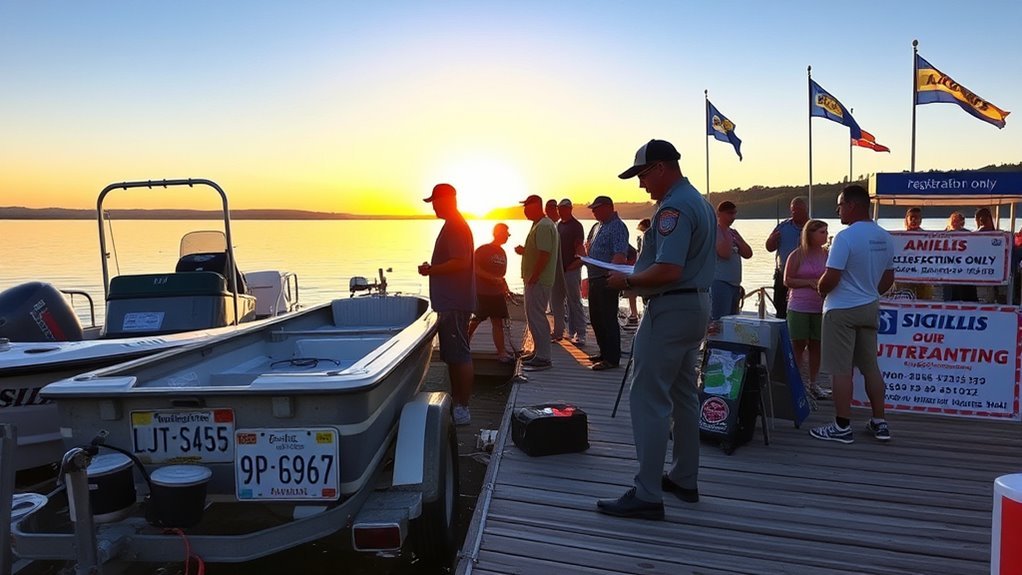
An individual or organization conducting an organized fishing event in coastal or joint waters may apply for a Coastal Recreational Fishing License Exemption Permit. The complete written request must reach the Division of Marine Fisheries at least 30 days before the event.
The exemption can remove the individual CRFL requirement for eligible event participants, but it does not waive seasons, size limits, possession limits, reporting duties, or the prohibition on selling recreationally harvested fish.
If tournament organizers intend to sell fish caught during the competition, they must obtain a Recreational Fishing Tournament License to Sell Fish. This is separate from the event-exemption permit.
Blocks of Ten Coastal Licenses
North Carolina also offers blocks containing ten 10-day coastal licenses for certain private or business-owned vessels. The Division of Marine Fisheries currently lists the block at $150. Important restrictions include:
- The vessel must be at least 23 feet long.
- It must be registered in North Carolina or documented with the U.S. Coast Guard.
- The licenses are tied to the vessel for which they were issued.
- They cannot be transferred or assigned to another vessel.
- They cannot be used on a boat licensed for or engaged in for-hire charter fishing.
- Each individual license is valid for ten consecutive days from its first use.
- The block is available only through Division of Marine Fisheries license offices or by mail.
Applications for event exemptions, tournament-sale licenses, and vessel blocks are available on the official NC DEQ recreational fishing license page.
Tips for Visiting Anglers: Save Money and Stay Compliant
Choose the License by Water and Trip Length
- One short ocean, sound, or coastal-river trip: Buy the coastal 10-day license.
- Several coastal trips within a year: Compare the annual CRFL with the combined cost of multiple short-term products.
- One short lake, reservoir, or inland-river trip: Buy the inland 10-day license.
- Repeated inland trips: An annual inland license may cost less than two short-term products.
- Fishing only joint waters: Either the inland or coastal license is valid.
- Fishing both inland and coastal waters: A nonresident normally needs both products.
- Fishing only designated Mountain Heritage Trout Waters: Consider the special three-day license.
Carry Your License and Photo ID
Anyone using the privileges of an electronic or physical license must carry picture identification and show it to a wildlife enforcement officer on request. Keep the digital license available on your phone or carry a printed copy, and make sure the identifying information matches your photo ID.
Check Boundary-Water Reciprocity
North Carolina honors certain Georgia, Tennessee, and Virginia hook-and-line licenses on specifically identified boundary waters. These agreements do not create statewide reciprocity, and there is no comparable reciprocal agreement with South Carolina.
Examples include defined portions of Chatuge Reservoir, Calderwood Reservoir, Kerr Reservoir, and Gaston Reservoir. Read the official reciprocal fishing-license agreements before relying on another state’s license.
Check Federal Rules Before Going Offshore
North Carolina coastal waters generally extend to three nautical miles offshore. Federal waters generally extend from three to 200 nautical miles offshore. A valid state saltwater license also satisfies the National Saltwater Angler Registry requirement, but it does not replace federal fishing rules or permits.
Federal seasons, bag limits, closed areas, gear rules, and vessel permits may apply. Anglers targeting tuna, sharks, swordfish, or billfish may need an Atlantic Highly Migratory Species permit. Review current NOAA recreational fishing requirements before leaving state waters.
Frequently Asked Questions
Do nonresident licenses cover fishing from rented boats in North Carolina?
Yes, provided your license covers the water where the rental boat is operated. Renting a boat does not create a licensing exemption. Use an inland license in inland waters, a coastal license in coastal waters, or either license in joint waters.
Does a charter boat include my fishing license?
Only when the captain or vessel holds a blanket for-hire Coastal Recreational Fishing License. Passengers aboard a non-blanket for-hire vessel must obtain individual CRFLs. Ask the operator before the trip.
Can I fish in federal waters with a North Carolina nonresident license?
A valid North Carolina saltwater license satisfies the federal National Saltwater Angler Registry requirement, but federal waters have separate seasons, limits, and permit rules. Certain species, including Atlantic tunas, sharks, swordfish, and billfish, may require a federal permit.
Do children need a North Carolina nonresident fishing license?
No. Anglers under age 16 are exempt from North Carolina fishing-license requirements. They must still follow all seasons, size limits, creel limits, gear restrictions, and harvest-reporting rules that apply to the trip.
Is a fishing license required on a private pond open to guests?
An inland license is not required if the water meets North Carolina’s private-pond definition: it lies wholly on privately owned land and fish cannot enter from or escape into public waters. A pond owned by a government entity or public university does not qualify merely because access is controlled.
Does North Carolina require a separate ice-fishing license?
No separate ice-fishing endorsement is listed. An angler age 16 or older generally needs an inland fishing license to fish public inland waters through the ice. Water-specific seasons and closures still apply, and natural ice conditions should be treated as potentially unsafe.
How long is a North Carolina annual fishing license valid?
Unless a product states otherwise, an annual license remains valid for 12 months from its purchase date. A 10-day license is valid only for the consecutive dates shown on the license.
Can a nonresident buy one license for all North Carolina waters?
No. The Unified Inland/Coastal Recreational Fishing License is available only to residents. A nonresident fishing both inland and coastal waters normally needs separate licenses. Either license is sufficient when fishing only in joint waters.
Conclusion
Most nonresident anglers age 16 or older need a North Carolina fishing license, but the correct product depends on the water classification. Buy a coastal license for coastal waters, an inland license for inland waters, or either one for joint waters. Remember that fees rise on August 1, 2026, and nonresidents cannot buy the unified inland/coastal license.
Before fishing, save your digital license, carry photo ID, check current size and bag limits, confirm whether a charter has blanket coverage, and report any required species you keep. A few minutes spent checking the official map and regulations can prevent an expensive licensing or possession violation.
Sources
- North Carolina Wildlife Resources Commission Regulations — effective dates for the 2025–26 and 2026–27 regulations digests.
- North Carolina Fishing License Fees — 2026–27 inland and coastal license prices and coverage.
- North Carolina License Information — purchase methods, identification requirements, exemptions, transaction fees, and reciprocity.
- NC DEQ Recreational Fishing Licenses — coastal-license coverage, joint waters, charter-related products, event permits, and fish-sale restrictions.
- NC DEQ Mandatory Harvest Reporting — reportable species, affected waters, deadlines, and enforcement phases.
- NOAA Recreational Fishing Resources — federal-water boundaries, federal permits, registry requirements, and offshore regulations.
