
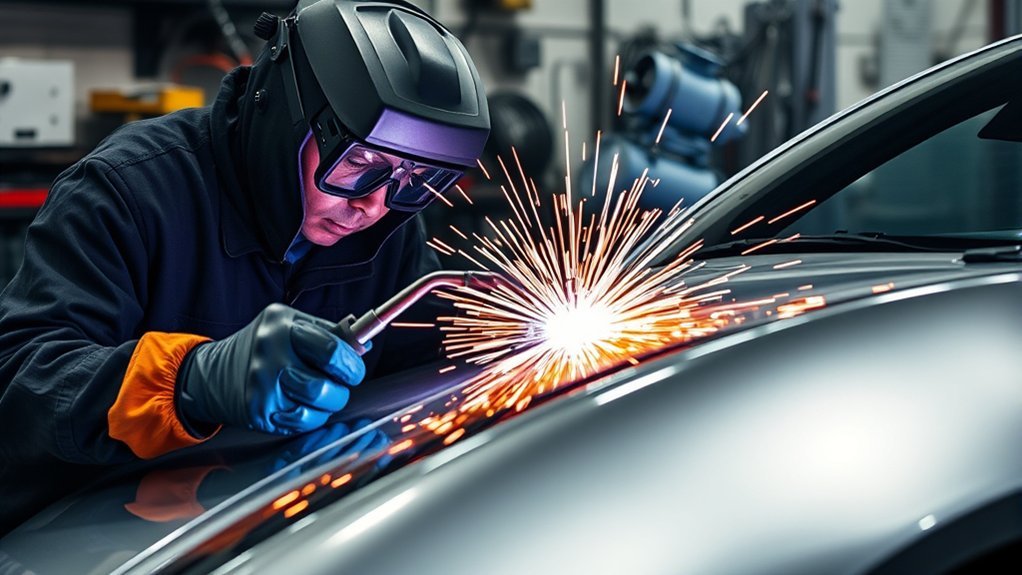
Car welding costs depend on much more than the few minutes or hours spent making the weld. A shop may also need to remove trim, cut away rust, straighten or measure the body, fabricate a patch, protect electronics, restore corrosion coatings, paint the area, align the vehicle, and complete required scans or calibrations. That is why two repairs that look similar from the outside can receive very different estimates.
Quick Answer
Car welding may cost about $100–$300 for a small accessible exhaust or nonstructural weld, $500–$1,500 for a larger rust or panel patch, and $1,500–$5,000 or more for structural, aluminum, or heavily corroded repairs. Teardown, replacement metal, refinishing, corrosion protection, and OEM-required procedures often cost more than the welding itself.
Key Takeaways
- A short weld is not the same as a complete body or structural repair. Cutting, fitting, painting, sealing, and reassembly can make up most of the bill.
- Structural parts must be repaired with the vehicle maker’s approved materials, joint locations, attachment methods, and procedures.
- Rust often extends beyond the visible hole, so the final price may rise after the shop removes paint, trim, undercoating, or damaged metal.
- Hybrid, electric, aluminum, high-strength-steel, and ADAS-equipped vehicles may require specialized training, tools, scans, and calibrations.
- Compare itemized estimates rather than choosing a shop only by its hourly rate.
At a Glance
| Time Required | Less than one hour for a simple accessible weld; one or more days for cutting, panel fitting, structural work, refinishing, alignment, or calibration |
| Difficulty | Moderate for a trained welder performing a basic nonstructural repair; advanced and safety-critical for body, frame, restraint, suspension, hybrid, or EV work |
| Tools Needed | Approved welding or joining equipment, measuring tools, grinder, extraction or ventilation, PPE, fire protection, corrosion materials, and vehicle-specific repair information |
| Cost | About $100–$300 for a small weld, $500–$1,500 for many larger patches, and $1,500–$5,000 or more for extensive structural or specialty-material work |
Factors That Influence Car Welding Costs
The size of the visible crack or rust hole is only one part of the estimate. A shop also has to determine what material is damaged, whether the part is structural, how much access is available, and what must be removed before heat or sparks can be used safely.

These Stanley MaxSteel straight aviation snips are built for clean, controlled cutting through sheet metal and other tough materials. Serrated cutting edges help prevent slippage for more accurate results, while the double pivot action delivers increased cutting power with less effort. Designed for dependable performance, they are a practical choice for metalworking, HVAC tasks, and general workshop use.

This retractable car window shade helps block UVA and UVB rays to make rides more comfortable and protected for passengers. It includes a White Hot heat alert that turns white when the car is too hot, plus dual installation options for a secure fit in many vehicles. The safe-view mesh supports visibility while helping reduce glare, and the easy one-push retraction makes it simple to use when needed.

The DeLonghi Water Filter helps reduce scale buildup and unwanted impurities that can affect your coffee machine's performance and taste. Its active carbon and ion-exchange technology helps improve brew consistency, maintain flavor, and reduce the need for frequent descaling. Designed as an OEM authorized replacement part, it fits select DeLonghi models for reliable everyday maintenance.
Repair location
An accessible exhaust bracket may need little preparation. A rocker panel, floor section, pillar, rail, suspension mounting point, or boxed frame section can require extensive disassembly and precise measuring. Work near wiring, fuel components, airbags, batteries, interior trim, foam, seam sealer, or sound-deadening material also takes longer.
Rust and hidden damage
Welding over thin, flaky, or contaminated metal does not create a durable repair. The technician normally has to cut back to clean, solid metal. Once paint, filler, undercoating, or trim is removed, the damaged area may prove much larger than it first appeared.
Vehicle material
Mild steel is generally easier and less expensive to repair than aluminum or specialized high-strength steel. Some modern steels have strict limits on heating, straightening, and sectioning. Aluminum work may require dedicated tools and a clean work area to avoid contamination.
Structural importance
Parts that carry crash forces, support the passenger compartment, hold seat belts or airbags, or locate suspension components require far more control than a cosmetic bracket or trim mount. Vehicle-specific repair information determines whether a part can be repaired, must be replaced, or can be sectioned only at an approved location.
Finish and corrosion restoration
The completed joint may need grinding, metal finishing, primer, seam sealer, undercoating, paint, and cavity wax. These steps protect the repair from moisture and restore coatings that were removed by cutting, heating, or sanding.
Note: An initial estimate may change after disassembly. Ask the shop how it handles supplements when hidden rust, previous repairs, damaged inner panels, or additional calibration requirements are discovered.
Welding and Joining Methods Used on Cars

The lowest-cost process is not automatically the correct one. The technician should identify the material and consult the vehicle maker’s body-repair instructions before choosing a welding or joining method.
MIG or gas metal arc welding
MIG, also called gas metal arc welding or GMAW, uses a continuously fed wire electrode. It is common in fabrication and many automotive sheet-metal repairs because it is relatively fast and can be used on a range of metal thicknesses. However, the wire, shielding gas, joint design, weld spacing, and heat input must match the repair procedure.
TIG welding
TIG offers precise control and clean welds on steel, stainless steel, and aluminum. It can be useful for custom fabrication, restoration, exhaust components, and certain aluminum work. It is usually slower than MIG and is not automatically the approved choice for a collision-damaged structural part.
Squeeze-type resistance spot welding
Many factory body joints are made with resistance spot welds. A collision-repair procedure may require squeeze-type resistance spot welding to reproduce an approved attachment. The equipment must have enough power and access for the specified panel stack.
MIG brazing
MIG brazing uses a lower-melting filler material and can reduce heat input into some coated or high-strength steels. It should be used only where the vehicle maker specifies or permits it.
Adhesives, rivets, and combined joints
Modern panels may be bonded, riveted, spot-welded, plug-welded, or attached with a combination of methods. Adhesive or rivets should not replace a weld simply because they are easier unless the OEM procedure authorizes the substitution.
Stick and oxy-fuel processes
Stick welding is useful for many heavy fabrication and field-repair jobs, but it is rarely suitable for thin modern body panels. Oxy-fuel equipment remains useful for heating, cutting, and brazing in some fabrication settings, but unrestricted flame heating can damage coatings, electronics, nearby trim, and heat-sensitive automotive steels.
The correct attachment method comes from the vehicle-specific repair procedure—not from whichever welder happens to be available.
Car Welding Cost by Repair Type
The following figures are practical budgeting ranges, not fixed national prices. Local labor rates, vehicle design, rust severity, parts availability, paint requirements, and hidden damage can move an estimate below or above these amounts.
| Repair type | Planning range | What may be included |
| Exhaust crack, hanger, or short accessible weld | About $100–$300 | Cleaning, a small patch or bead, minor pipe fitting, and leak inspection |
| Small nonstructural steel patch | About $200–$600 | Cutting out a limited damaged area, shaping metal, welding, grinding, and basic protection |
| Floor pan or outer rocker patch | About $500–$1,500 | Interior or trim removal, rust cutting, patch fabrication, welding, seam sealing, and undercoating |
| Weld-in rocker, quarter panel, or larger body section | About $1,000–$4,000 or more per side | Panel removal, fitting, approved attachment, corrosion protection, bodywork, primer, paint, and blending |
| Frame rail, pillar, inner rocker, or unibody structural repair | About $1,500–$5,000 or more | Measuring, pulling or replacement, OEM procedures, structural joining, scans, alignment, refinishing, and possible calibration |
| Aluminum or mixed-material repair | Inspection and vehicle-specific quote required | Dedicated tools, material-specific joining, contamination control, special consumables, and trained labor |
A small exhaust weld can sometimes be completed quickly. A structural repair may remain in the shop for several days because the vehicle has to be measured, disassembled, repaired, protected, painted, reassembled, scanned, aligned, and road-tested.
Pro Tip: Ask whether the estimate is for welding only or for a finished repair. A low weld-only quote may exclude panel removal, paint, seam sealer, cavity wax, alignment, scans, calibration, taxes, and replacement parts.
What Labor and Material Charges Cover
There is no single nationwide hourly rate for car welding. A shop may use different rates for body labor, frame work, mechanical work, fabrication, aluminum repair, paint, and diagnostic or calibration procedures. The total number of labor hours usually matters more than the advertised rate alone.
A complete estimate may include:
- Inspection and measurement: Checking rust depth, collision damage, dimensions, suspension mounting points, and nearby safety systems.
- Disassembly: Removing seats, carpet, trim, glass, wiring, fuel-system parts, exhaust components, shields, or interior panels.
- Metal preparation: Removing paint, filler, coatings, corrosion, seam sealer, and damaged metal.
- Replacement material: Purchasing a repair panel, OEM service part, tubing, sheet metal, brackets, fasteners, adhesive, or filler wire.
- Fitting and joining: Measuring, clamping, bracing, test-fitting, welding, brazing, riveting, or bonding.
- Metal finishing: Grinding, dressing welds, smoothing the repair, and preparing the surface for coating.
- Corrosion protection: Applying the specified primer, seam sealer, undercoating, foam, adhesive, or cavity wax at the correct stage.
- Refinishing: Primer, paint, clear coat, texture matching, and blending into nearby panels.
- Diagnostics: Pre-repair and post-repair scans, fault-code checks, and system initialization.
- Mechanical completion: Wheel alignment, fluid replacement, exhaust leak testing, or suspension inspection.
- ADAS calibration: Camera, radar, steering-angle, or other calibration when required by the vehicle maker.
Specialty materials can add cost even when the damaged area is small. Aluminum may require separate tools and work areas. High-strength steels may require approved squeeze-type resistance spot welding, MIG brazing, specific filler wire, or complete part replacement instead of a conventional patch.
When Welding Is Not the Right Repair
A repair shop should not weld every crack or rust hole automatically. Replacement may be safer or more economical when:
- The surrounding metal is too thin or corroded to support a sound joint.
- The crack is in a cast suspension, steering, wheel, or brake component that the manufacturer does not approve for repair.
- The damaged structural part has no approved sectioning procedure.
- Heat would alter a high-strength or ultra-high-strength steel component.
- A fuel tank, high-voltage battery, airbag component, or sensitive electronic module cannot be protected safely.
- The labor needed to fabricate and finish a patch exceeds the cost of an available replacement part.
- The completed repair would cost more than the vehicle’s practical value.
Rust is especially difficult to price before disassembly. Covering corrosion with a plate may hide the hole without restoring the strength, shape, drainage, or corrosion protection of the original structure. A durable repair removes weakened metal and addresses the source of trapped moisture.
Warning: Do not drive a vehicle with suspected damage to a frame rail, pillar, inner rocker, suspension mount, seat-belt mounting point, subframe, steering component, or severely rusted load-bearing area until a qualified technician has inspected it. An online photo or general cost guide cannot confirm roadworthiness.

The ZELUS Weighted Vest adds adjustable resistance to workouts, helping boost strength, endurance, and calorie burn during training sessions. Designed for a secure one-size-fits-most fit, it uses evenly distributed weight and reflective detailing for comfort and visibility while running, walking, or exercising. Practical storage pockets make it easy to carry small essentials as you stay focused on fitness goals.

This silky, lightweight K-beauty face primer visibly smooths skin and minimizes the appearance of pores for a refined, velvety look. Its soft-matte finish helps reduce shine and creates a smooth base that supports longer-lasting makeup wear without feeling heavy. Suitable for all skin types, it works well under powder, liquid, or cream foundation and is designed to glide on evenly for a flawless finish.

OGX Extra Strength Damage Remedy + Coconut Miracle Hair Oil helps hydrate dry, coarse hair while smoothing frizz and flyaways for a silky finish. This nourishing leave-in treatment blends coconut oil, vanilla bean extract, and tiare essence to add softness, shine, and a pleasant scent. It is paraben-free and designed to support a restorative hair care routine for medium to coarse hair types.
DIY Versus Professional Car Welding
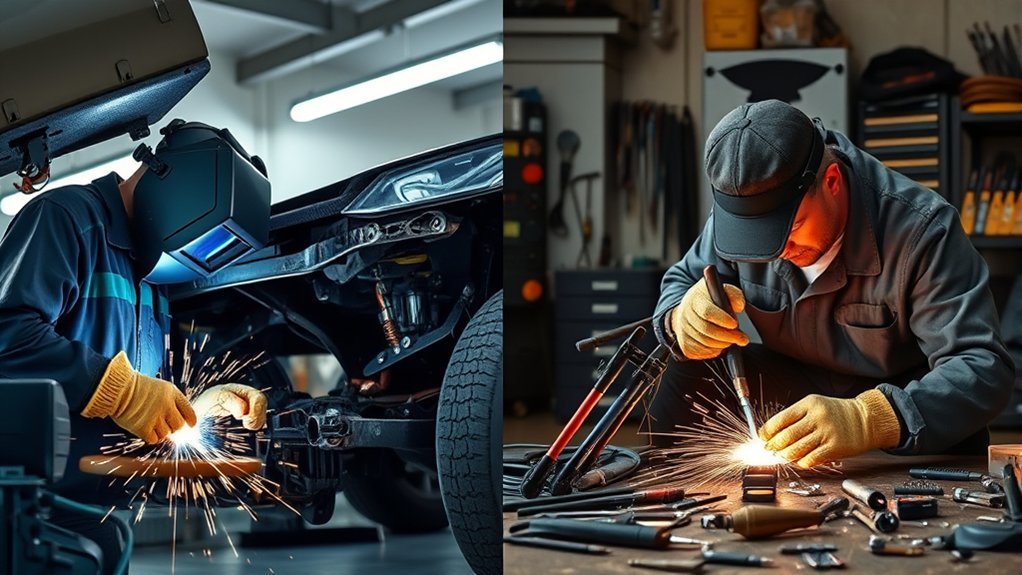
Learning to weld on clean scrap metal can be a useful skill. Welding on a complete vehicle adds fire, fume, electrical, structural, and liability risks that do not exist on a practice coupon.
A suitable DIY project may include a removable nonstructural bracket, a practice patch on scrap sheet metal, or a simple component whose repair is specifically permitted. Even then, the person doing the work needs the correct process, consumables, ventilation, protective equipment, and fire controls.
Professional help is the safer choice when the repair involves:
- Frame rails, pillars, rockers, floors, crossmembers, or unibody structure
- Seat-belt, airbag, suspension, steering, brake, or engine-mount attachment points
- High-strength steel, ultra-high-strength steel, aluminum, magnesium, or mixed materials
- A hybrid or electric vehicle
- Welding near a fuel tank, fuel line, battery, wiring harness, computer, sensor, or interior trim
- Collision dimensions, pulling, wheel alignment, or ADAS calibration
- A repair that must pass a safety or roadworthiness inspection
OSHA identifies welding hazards that include metal fumes, ultraviolet radiation, burns, eye injury, and electrical shock. NIOSH notes that fume exposure varies with the base metal, wire, rods, flux, coatings, and work environment.
Basic protection includes an appropriate welding helmet, safety glasses, welding gloves, flame-resistant clothing, sturdy footwear, ventilation or local fume extraction, hearing protection where needed, and a suitable fire extinguisher. Respiratory protection should be selected through a proper hazard assessment rather than by guessing.
Before welding on a vehicle, the technician must inspect both sides of the work area for carpet, upholstery, wiring, fuel components, seam sealer, foam, cavity wax, and other combustible material. A fire watch may be needed during the work and after the arc stops because heat or sparks can remain hidden inside a panel.
I-CAR’s battery-disconnect guidance includes isolating the vehicle batteries, disabling the high-voltage system where applicable, keeping the work clamp close to the weld, protecting electronics, and following vehicle-maker procedures for restraint systems. Hybrid and EV disabling must be performed exactly as the manufacturer specifies.
Warning: Never weld, cut, or grind near a fuel container, fuel vapor, high-voltage component, undeployed restraint device, or concealed combustible material without the required vehicle-specific procedures and safety controls.
How to Get an Accurate Car Welding Estimate
Photographs can help a shop decide whether it handles the type of work, but a dependable structural or rust estimate normally requires an in-person inspection. Before approving the repair, ask for an itemized estimate that answers the following questions:
- Is the damaged part structural or cosmetic?
- What material is it made from?
- Does the vehicle maker permit repair or sectioning?
- Which welding or joining method will be used?
- How much disassembly is included?
- Does the estimate include cutting back to sound metal?
- Are replacement panels, brackets, fasteners, or adhesives included?
- Are primer, seam sealer, undercoating, cavity wax, and paint included?
- Will the vehicle need scans, alignment, or ADAS calibration?
- How will hidden damage and estimate supplements be authorized?
- What written warranty applies to rust return, cracking, paint, and corrosion?
Look for a shop with experience in the vehicle’s construction and the exact repair type. ASE offers dedicated certification tests for collision repair, estimating, hybrid and electric vehicles, and advanced driver-assistance systems. Certifications do not replace an OEM procedure, but they help demonstrate relevant training.
For structural work, ask whether the shop has access to the manufacturer’s current repair information, the required measuring and joining equipment, and technicians trained for the vehicle’s materials. I-CAR’s structural-repair guidance explains why approved sectioning locations and attachment methods matter to crash performance.
Pro Tip: Compare two or three estimates line by line. One shop may include paint, cavity wax, scans, and calibration while another quote covers only cutting and welding.
Frequently Asked Questions
How long does a typical car welding repair take?
A simple accessible weld may take less than an hour once the area is prepared. A rust patch may require several hours, while a structural panel replacement can take several days after disassembly, measuring, fitting, welding, corrosion protection, painting, reassembly, scanning, alignment, and calibration are included.
Can I weld my car without prior experience?
You should learn on clean scrap metal before attempting any vehicle repair. Structural parts, suspension mounts, restraint-system areas, high-strength steel, aluminum, hybrids, and EVs should be handled by a qualified repair facility. A poor weld can create fire, electrical, corrosion, and crash-safety risks even when it looks acceptable from the outside.
What safety gear is needed for automotive welding?
Use an appropriate welding helmet, safety glasses, welding gloves, flame-resistant clothing, and sturdy footwear. The work also needs suitable ventilation or fume extraction, fire protection, hearing protection where required, and respiratory protection selected through a hazard assessment. Nearby trim, wiring, fuel components, coatings, and hidden cavity materials must be inspected and protected or removed.
Do professional car welding repairs come with a warranty?
Warranty terms vary by shop. Ask for the coverage in writing and check whether it includes the weld, panel fit, paint, seam sealer, corrosion protection, water leaks, rust return, and labor. Some warranties exclude pre-existing corrosion or damage outside the repaired area.
How do I find a reliable automotive welding service?
Choose a shop experienced with the specific vehicle, material, and repair type. Ask about OEM repair-information access, collision-repair training, welding-equipment capability, measuring systems, corrosion protection, EV qualifications, scanning, calibration, and written warranties. Reviews are useful, but technical capability and procedure compliance matter more than price alone.
Can a rusted car frame be safely welded?
Sometimes, but only after a qualified inspection confirms that the manufacturer permits the repair and that enough sound metal remains. Severe corrosion near suspension, steering, body-mount, seat-belt, or crash-load areas may require component replacement or make the vehicle uneconomical or unsafe to repair.
Will car insurance pay for welding repairs?
Collision or comprehensive coverage may pay for welding that is part of a covered loss, subject to the policy, deductible, vehicle value, and insurer estimate. Insurance normally does not cover gradual corrosion, wear, poor prior repairs, or maintenance-related damage. Ask the shop and insurer how supplements will be handled if hidden damage appears.
Conclusion
Car welding can cost around $100 for a small accessible repair or several thousand dollars when structural metal, extensive rust, aluminum, paint, diagnostics, alignment, or calibration are involved. The most useful estimate is not necessarily the lowest one; it is the estimate that clearly identifies the damaged material, approved repair method, included finishing work, and procedure for handling hidden damage.
Use a qualified repair facility for structural, restraint, suspension, hybrid, EV, and mixed-material work. Confirm that the shop follows the vehicle maker’s repair information and restores corrosion protection after welding. Those steps help protect the repair from cracking, rust, electrical damage, and reduced crash performance.
Sources
- Occupational Safety and Health Administration: Welding Hazards and Solutions — welding fumes, ultraviolet exposure, burns, electrical shock, PPE, and work-practice hazards
- CDC/NIOSH: Welding Fumes and Manganese — welding-fume composition, exposure factors, and potential health effects
- I-CAR: Structural Sectioning Procedures for Ford and Lincoln — structural-part definitions, OEM procedures, approved joints, and crash-safety considerations
- I-CAR: Battery Disconnect and Welding Guidance — battery isolation, high-voltage disabling, work-clamp placement, electronics, and restraint-system precautions
- I-CAR: Corrosion Protection During the Repair Process — seam sealer, adhesive, foam, cavity wax, application order, and fire hazards
- National Institute for Automotive Service Excellence: Certification Test Series — collision-repair, estimating, hybrid/EV, and ADAS technician qualifications

Post-it Super Sticky Easel Pads are designed to keep ideas visible and organized during meetings, training sessions, brainstorming, and project planning. The large premium paper resists marker bleed-through and sticks securely to many surfaces, then repositions without surface damage. A sturdy backcard and portable handle make them easy to move between rooms and use with most easel stands.

Drop Stop provides complete coverage for the gap around your seat belt catch, helping keep keys, phones, and other small items from slipping into hard-to-reach spaces. Designed to move with your seat, it installs easily and stays in place without constant readjustment. This original, patented seat gap filler comes with bonus accessories for added convenience and a cleaner, safer driving experience.

The ANCEL AD310 is a compact OBD II scanner designed to quickly diagnose check engine light issues by reading and clearing emission-related trouble codes. It also provides live data, freeze frame, I/M readiness, and vehicle information, making it a practical tool for drivers and home mechanics. With broad compatibility across many 1996 and newer OBD2 vehicles, it is a simple, fast, and portable way to check engine problems.
