
Welding oxygen cost depends on the cylinder size, whether you own or rent the bottle, and how your local supplier handles fills and exchanges. Published prices can help you set a budget, but they are not national averages. Before buying a cylinder, compare the total first-year cost, supplier acceptance rules, refill travel, and the amount of oxygen your torch actually uses.
Quick Answer
As of July 2026, published retail examples put empty owner cylinders at about $210 for 20 cu. ft., $355 for 80 cu. ft., and $475 for 125 cu. ft. One in-store exchange program lists fills from about $38 to $53. Local rental, delivery, cylinder-acceptance, tax, and hazardous-material fees can change the total.
Key Takeaways
- An advertised cylinder price may cover the empty bottle only; oxygen is often sold separately.
- In one current exchange program, the refill cost per cubic foot falls sharply as cylinder size increases.
- An 80 cu. ft. cylinder is a practical middle size for many home shops, while a 125 cu. ft. bottle reduces refill trips.
- Runtime must be calculated from the torch maker’s total oxygen-flow specification, especially when cutting.
- Check the DOT specification, test markings, valve type, and supplier acceptance policy before buying any used or online cylinder.
At a Glance
| Price Basis | Published U.S. retail examples checked July 29, 2026; local prices can differ. |
| Empty Cylinder Examples | 20 cu. ft.: $209.99; 80 cu. ft.: $354.99; 125 cu. ft.: $474.99. |
| Fill or Exchange Examples | 20 cu. ft.: $37.99; 40 cu. ft.: $42.99; 80 cu. ft.: $52.99; 125 cu. ft.: $52.99. |
| Best General Value | A larger cylinder usually means fewer trips and may lower the refill cost per cubic foot, but it is heavier and costs more upfront. |
How Much Does Welding Oxygen Cost?
There is no single national welding oxygen price. Gas suppliers set prices by location, cylinder program, account type, delivery method, and bottle size. Some businesses publish walk-in exchange prices, while large industrial suppliers may require an account or local quote.
Current public examples show that buying a new owner cylinder can cost roughly $210 for a small 20 cu. ft. bottle and about $355–$475 for common 80- to 125-cu. ft. bottles. Published fill or exchange examples are much lower because you are paying mainly for the oxygen and exchange service rather than buying another cylinder.
Note: Confirm whether an advertised price is for an empty cylinder, a filled cylinder, a gas-only fill, or a cylinder exchange. These are different purchases and should not be compared as though they include the same items.

This hardcover cookbook offers fast, approachable recipes designed for busy days and low-energy nights. Caroline Chambers focuses on simple, flavorful meals that help you get dinner on the table without overthinking it. It's a practical pick for home cooks who want quick weeknight inspiration and minimal-fuss cooking.

This multi-purpose restoring cream helps soothe and support weakened, irritated skin while moisturizing areas affected by dryness, cracking, and daily discomfort. Formulated with copper, zinc, panthenol, and hyaluronic acid, it helps purify, calm, and restore the skin barrier for use on both face and body. Fragrance-free and non-comedogenic, it is suitable for the whole family and designed for high-tolerance care.

The ANCEL AD310 is a compact OBD II scanner designed to quickly diagnose check engine light issues by reading and clearing emission-related trouble codes. It also provides live data, freeze frame, I/M readiness, and vehicle information, making it a practical tool for drivers and home mechanics. With broad compatibility across many 1996 and newer OBD2 vehicles, it is a simple, fast, and portable way to check engine problems.
Understanding Welding Oxygen Cylinder Sizes
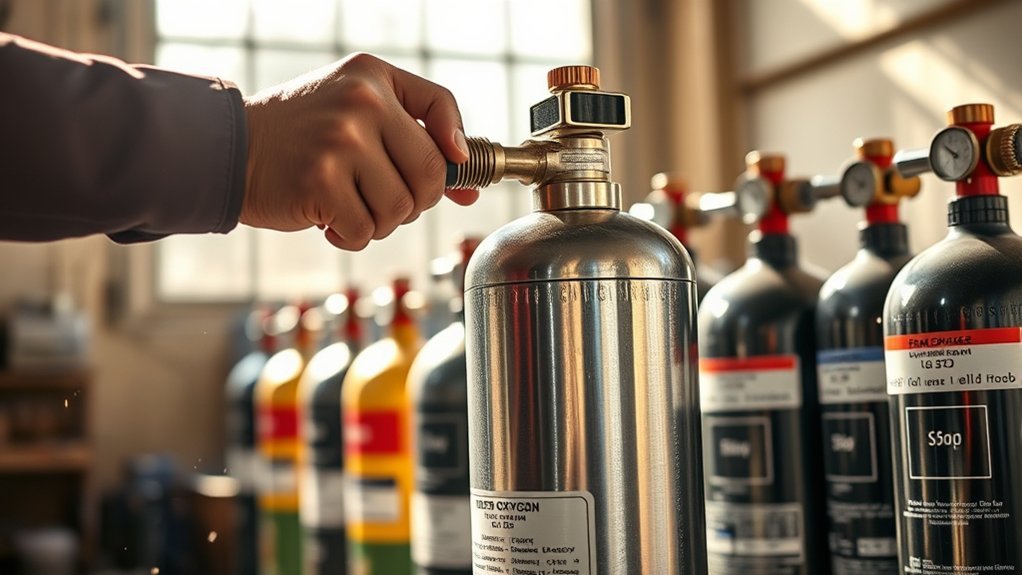
Welding oxygen cylinders are sold in several nominal capacities. Common owner-cylinder sizes include 20, 40, 80, and 125 cubic feet. Exact height, diameter, weight, service pressure, and usable volume vary by manufacturer, so check the product specification rather than relying on the size name alone.
| Nominal Size | Common Use | Portability | Idealized Runtime at 20 CFH |
| 20 cu. ft. | Small repairs, portable kits, occasional use | Easiest to move | About 1 hour |
| 40 cu. ft. | Light home-shop work | Portable with a cylinder cart | About 2 hours |
| 80 cu. ft. | Regular hobby and small-shop use | Moderate; cart recommended | About 4 hours |
| 125 cu. ft. | Frequent shop work and fewer refill trips | Heavy; secure cart needed | About 6.25 hours |
The runtime figures above are simple capacity calculations, not guaranteed operating times. Actual use depends on the torch, tip, fuel gas, metal thickness, leaks, regulator settings, and the reserve pressure you keep in the cylinder.
The 80 cu. ft. cylinder often strikes a useful balance between portability and gas capacity. A 125 cu. ft. cylinder provides more working time and fewer refill trips, but it is heavier and may require a stronger cart and more storage space.
Pro Tip: Estimate runtime with this formula: usable cylinder capacity ÷ total oxygen consumption in CFH. Use the total oxygen figure in your torch or cutting-tip chart, not only the preheat-flow figure.
Aluminum vs. Steel Cylinders
Steel is common for high-pressure shop oxygen cylinders. It is strong and usually costs less than a comparable aluminum cylinder, but damaged paint and long exposure to moisture can allow exterior corrosion.
Aluminum cylinders are lighter for a similar physical size and resist exterior rust. They may cost more, and many smaller aluminum oxygen cylinders are designed for medical or specialized service rather than a typical welding setup.
Material alone does not determine whether a cylinder is suitable. Verify all of the following before buying:
- The cylinder is approved for oxygen service.
- The DOT or authorized specification marking is legible.
- The valve matches the intended regulator; common industrial oxygen equipment in the United States uses a CGA-540 connection.
- The requalification marking is current for that cylinder specification.
- Your intended gas supplier will fill or exchange the brand, size, and ownership type.
Warning: Never identify a compressed gas only by cylinder color. Read the product label, stamped markings, and valve connection. Cylinder colors can vary by supplier and service.
Pricing Breakdown for Welding Oxygen Cylinders
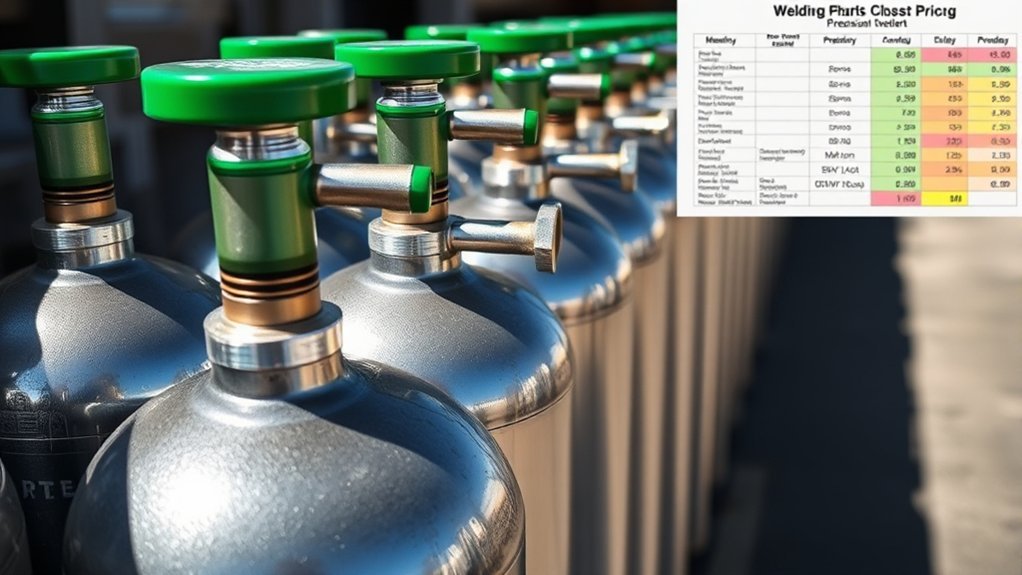
The following figures are published retail examples checked on July 29, 2026. The empty-cylinder prices and fill prices come from the same retailer program where available, which makes the size comparison more consistent. They do not represent a nationwide average.
| Cylinder Size | Empty Owner Cylinder | Fill or Exchange | Fill Cost per Cu. Ft. |
| 20 cu. ft. | $209.99 | $37.99 | About $1.90 |
| 40 cu. ft. | No matching empty-cylinder price published in the checked program | $42.99 | About $1.07 |
| 80 cu. ft. | $354.99 | $52.99 | About $0.66 |
| 125 cu. ft. | $474.99 | $52.99 | About $0.42 |
The comparison shows why larger cylinders can offer better refill value. In this particular program, a 125 cu. ft. fill costs the same as an 80 cu. ft. fill, so the larger bottle delivers more oxygen for each refill dollar. Another supplier may use a different price structure.
Online empty-cylinder prices can also vary by brand, valve, service pressure, shipping availability, and whether the item is in stock. High-pressure oxygen cylinders are normally shipped empty.
In the published refill example, moving from a 20 cu. ft. cylinder to a 125 cu. ft. cylinder cuts the oxygen cost per cubic foot from about $1.90 to about $0.42.
Initial Costs vs. Refill Expenses
Your first-year welding oxygen cost includes more than the gas. It may include the cylinder, deposit, rental or lease charge, delivery, exchange fee, taxes, account charges, and travel to the supplier.
For example, buying the published 80 cu. ft. owner cylinder for $354.99 and obtaining six fills at $52.99 would produce a first-year subtotal of $672.93 before taxes or other charges. That example assumes one fill every two months. Your actual refill schedule should be based on oxygen consumption, not the calendar.
| Supply Method | How It Works | Main Cost Consideration |
| Customer-owned cylinder | You buy the cylinder and pay for fills or exchanges. | High upfront cost, but no ongoing cylinder rent. |
| Rental or lease | The supplier owns the cylinder and charges rent, lease fees, or an account fee. | Lower purchase cost but recurring charges may continue even during light use. |
| Exchange program | You trade an accepted empty cylinder for a filled one. | Fast turnaround, but brand, size, ownership, and test-date rules vary. |
| Delivered gas account | The supplier delivers cylinders and collects empties. | Convenient for higher use, but delivery and hazardous-material fees may apply. |
Pro Tip: Ask whether an exchange transfers your personally owned cylinder into the supplier’s cylinder pool. You may receive a different cylinder of the same size instead of getting your original bottle back.
Factors Influencing Welding Gas Prices
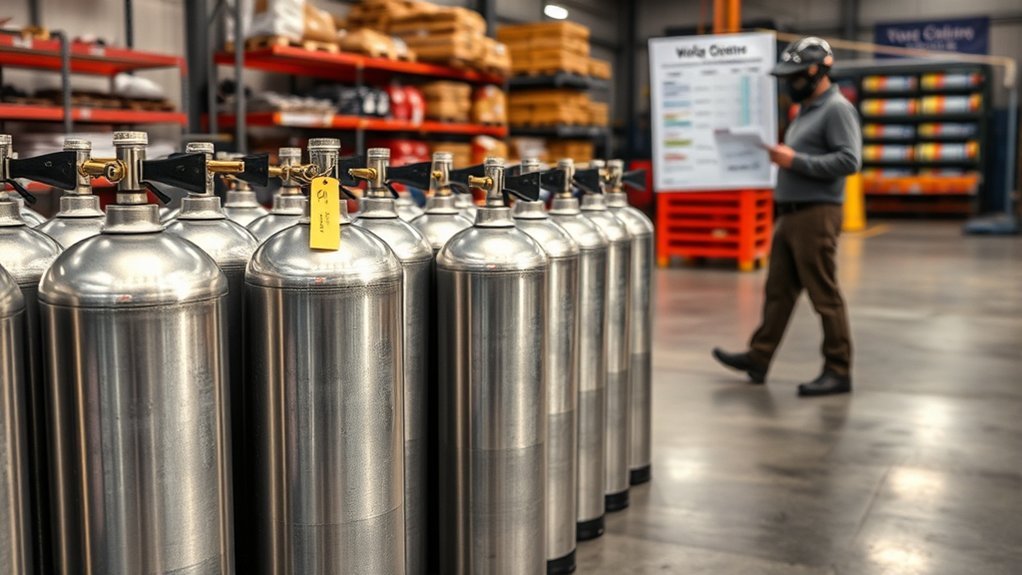
Several factors affect the amount you pay for welding oxygen:
- Cylinder size: Larger bottles cost more to buy but may have a much lower refill cost per cubic foot.
- Ownership model: A customer-owned cylinder avoids rent, while a leased bottle may include recurring fees.
- Location: Competition, transportation distance, and local operating costs affect branch pricing.
- Delivery method: Walk-in exchange is often priced differently from scheduled delivery.
- Account status: Commercial-volume customers may receive contract pricing that is unavailable to occasional buyers.
- Cylinder condition: An expired, damaged, unapproved, or unfamiliar cylinder may be refused or require testing.
- Supplier compatibility: Some programs accept outside brands for an added fee, while others limit exchanges to approved cylinders.
- Additional charges: Taxes, deposits, cylinder rent, delivery, environmental, and hazardous-material charges can change the final total.
Raw material costs can affect new-cylinder prices, but local service policies usually have a greater effect on what an individual buyer pays for a fill or exchange.
Where to Purchase or Refill Welding Oxygen
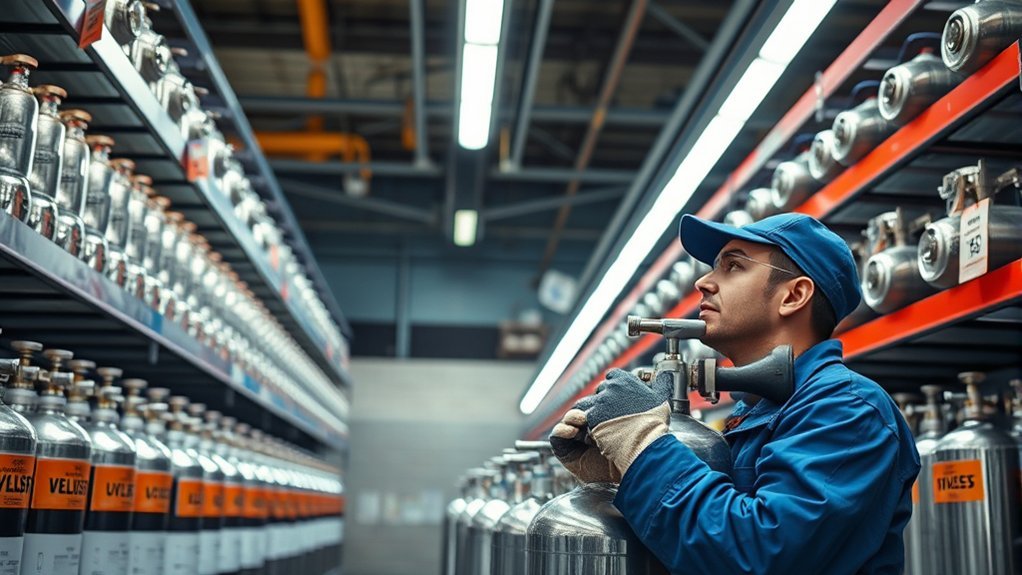
You can obtain welding oxygen from local industrial-gas branches, welding-supply stores, participating hardware or tool retailers, and some online cylinder sellers. Full high-pressure cylinders are commonly handled through local pickup, exchange, or delivery rather than ordinary parcel shipping.

The Veepeak OBDCheck BLE is a Bluetooth OBD-II scanner designed for iOS and Android users who want an easy way to read and clear check engine light codes. It supports generic diagnostics such as freeze frame data, I/M readiness, and live sensor readings through compatible third-party apps. Built for most 1996+ vehicles in the US, it connects over Bluetooth LE and works with popular apps for everyday vehicle troubleshooting and monitoring.

BioSilk Hydrating Therapy Pure Moisture Leave-In Spray helps replenish moisture in dry, coarse hair for a softer, smoother feel. This daily styling spray also helps control frizz, boost shine, and improve manageability while supporting hair against environmental stressors. Formulated with silk and maracuja oil, it is suitable for all hair types, including color-treated hair.

This cordless mini dehumidifier helps keep small spaces dry, fresh, and odor-free without spills, cords, or batteries. Its rechargeable silica gel design is ideal for closets, cabinets, cars, bathrooms, boats, and gun safes, with a moisture indicator that shows when it is ready to recharge. Compact and easy to place or hang, it offers a simple low-maintenance solution for controlling humidity in tight areas.
Local Gas Suppliers
Local industrial-gas suppliers are usually the best place to confirm what is actually available in your area. Suppliers such as Airgas offer oxygen in multiple cylinder sizes, but online pricing may require a delivery ZIP code, account, or quote.
Ask the branch for:
- The price of a gas-only fill and the price of an exchange.
- Whether the price includes the cylinder.
- Rental, lease, deposit, account, delivery, and hazardous-material fees.
- Which cylinder sizes, brands, valves, and test dates it accepts.
- Whether it fills your cylinder or exchanges it for another bottle.
- Whether an outside-brand cylinder carries an added charge.
Online Retail Options
Online sellers can be useful when you want to buy a new owner cylinder. Read the listing carefully because high-pressure oxygen cylinders are often shipped empty. Confirm the DOT specification, service pressure, valve connection, dimensions, test date, shipping restrictions, and local refill acceptance before ordering.
A low online price is not a good value if nearby suppliers will not fill or exchange the cylinder. Call at least one local supplier before placing the order.
Warning: Avoid used cylinders with ground-off, painted-over, unreadable, altered, or missing markings. Do not buy a cylinder represented as supplier-owned, leased, stolen, condemned, or outside its lawful service requirements.
Cylinder Exchange Programs
A cylinder exchange program lets you trade an accepted empty bottle for a filled replacement. This reduces downtime because you do not wait for your exact cylinder to be filled and returned.
Exchange rules vary. A program may accept customer-owned cylinders, cylinders from another brand, or only bottles already in its system. It may also charge more for an outside-brand cylinder. The replacement cylinder should be properly maintained and qualified, but you should still inspect the label, valve, cap, and visible condition before leaving the store.
Close the valve on the empty cylinder, install its protective cap when designed for one, and transport it according to the supplier’s instructions. Clarify all exchange charges before handing over your bottle.
How to Compare Welding Oxygen Quotes
- Choose a capacity. Ask each supplier about the same nominal size, such as 80 cu. ft.
- Separate cylinder and gas prices. Record the owner-cylinder cost, gas fill, exchange charge, rent, lease, and deposit separately.
- Add required fees. Include tax, delivery, hazardous-material, account, and out-of-brand charges.
- Calculate cost per cubic foot. Divide the gas-only fill or exchange price by the cylinder’s nominal capacity.
- Check acceptance before buying. Confirm the DOT specification, valve, brand, ownership type, and requalification date the supplier will accept.
- Include travel and downtime. A slightly higher local price may cost less overall than a distant branch or a slow fill-and-return service.
- Get the quote in writing. Prices given over the phone may exclude fees that appear on the final invoice.
Duration of Welding Oxygen in Cylinders
Welding oxygen duration depends on the cylinder’s usable volume and the torch’s total oxygen consumption. A small welding tip may use relatively little oxygen, while a cutting or heating tip can empty the same cylinder much faster.
Flow Rate Impact
Use this basic formula:
Estimated runtime in hours = usable cylinder capacity in cubic feet ÷ total oxygen consumption in CFH
For example, an 80 cu. ft. cylinder would have an idealized runtime of eight hours at 10 CFH, four hours at 20 CFH, two hours at 40 CFH, or about 1.3 hours at 60 CFH.
Do not assume that every torch operates between 10 and 40 CFH. Published ESAB cutting-tip data shows total oxygen requirements ranging from about 20–25 CFH for small settings to more than 170 CFH for larger settings. Follow the chart for your exact torch, tip, fuel gas, pressure, and metal thickness.
Tank Size Considerations
A larger cylinder does not change the torch’s hourly oxygen demand. It only supplies that demand for a longer period. Larger cylinders also reduce the number of exchange trips, but they are heavier and require secure handling equipment.
A regulator’s cylinder-pressure gauge provides a useful indication of remaining gas, but the marked service pressure differs among cylinders and the reading changes with temperature. For example, a cylinder marked DOT-3AA2015 has a service pressure of 2,015 psig. Do not assume every oxygen cylinder must show that exact pressure when full.
Usage Duration Estimates
| Cylinder | At 20 CFH | At 40 CFH | At 80 CFH |
| 20 cu. ft. | 1 hour | 30 minutes | 15 minutes |
| 40 cu. ft. | 2 hours | 1 hour | 30 minutes |
| 80 cu. ft. | 4 hours | 2 hours | 1 hour |
| 125 cu. ft. | 6.25 hours | About 3.1 hours | About 1.6 hours |
These are theoretical estimates. Allow for a usable reserve, purging, adjustment time, small leaks, pressure changes, and periods when the torch is not operating at one steady flow.
Cylinder Markings and Hydrostatic Testing
Before a supplier fills or exchanges an oxygen cylinder, it checks the cylinder specification, condition, ownership status, and requalification markings. Common crown or shoulder markings can include:
- The DOT or authorized cylinder specification, such as DOT-3AA.
- The marked service pressure.
- A manufacturer or serial identification.
- The original test month and year.
- Later requalification dates and authorized requalifier markings.
- Additional symbols that affect the lawful fill or test interval.
There is no universal rule that an oxygen cylinder must be discarded after five or ten years. Under 49 CFR 180.209, requalification periods depend on the cylinder specification, gas service, test method, and markings. DOT 3A and 3AA cylinders can have 5-, 10-, or 12-year periods in qualifying circumstances, while DOT 3AL cylinders can have 5- or 12-year periods.
A cylinder may remain in service through repeated successful requalifications. It must be removed from service if it is condemned, unlawfully marked, badly damaged, exposed to severe heat, leaking, or rejected by an authorized facility.
Note: Do not stamp, grind, drill, weld, repair, repaint over, or otherwise alter required cylinder markings. Have testing and repair performed only by an authorized facility.
Safety and Handling of Welding Oxygen
Oxygen is not a flammable gas, but it is a powerful oxidizer that can make combustible materials ignite more easily and burn much faster. A high-pressure cylinder also stores substantial mechanical energy. Use equipment rated and cleaned for oxygen service.
Warning: Keep oil, grease, petroleum products, oily gloves, and contaminated tools away from oxygen cylinders, valves, regulators, hoses, and fittings. Oxygen contacting oil or grease can cause violent ignition.
Safe Storage
- Store cylinders upright and secure them against tipping with a suitable chain, strap, rack, or approved cart.
- Keep the valve closed when the cylinder is not in use.
- Install the valve-protection cap hand-tight when the cylinder is designed to accept one and is not connected for use.
- Use a dry, protected, well-ventilated storage area away from heat, traffic, stairs, exits, and falling objects.
- Do not store cylinders in an unventilated locker, cupboard, car trunk, or similar enclosure.
- Keep oxygen away from highly combustible materials, especially oil and grease.
- For workplace storage, OSHA 29 CFR 1910.253 requires oxygen cylinders to be separated from fuel-gas cylinders or combustible materials by at least 20 feet, or by a noncombustible barrier at least 5 feet high with a fire-resistance rating of at least 30 minutes.
Safe Use
- Use the correct oxygen regulator and compatible valve connection.
- Inspect the regulator, hose, torch, check valves, and flashback protection according to the equipment manufacturer’s instructions.
- Keep the cylinder away from sparks, slag, flame, and electrical circuits.
- Do not strike an arc on a cylinder.
- Never use oxygen for ventilation, cooling, cleaning clothing, or blowing dust from a work area.
- Wear eye, face, hand, foot, and body protection suited to the welding or cutting operation.
- Use adequate ventilation and control welding fumes at their source.
Transporting an Oxygen Cylinder
You can transport a welding oxygen cylinder in a suitable vehicle when it is prepared and secured correctly. Before moving it:
- Close the cylinder valve.
- Release pressure from connected equipment according to the equipment instructions.
- Remove the regulator unless the cylinder is secured on a carrier specifically designed for movement with the regulator attached.
- Install the valve-protection cap when the cylinder is designed for one.
- Secure the cylinder upright so it cannot tip, slide, roll, or strike another object.
- Keep the passenger and cargo areas ventilated.
- Travel directly to the destination and unload the cylinder promptly.
- Do not leave it in a closed or hot vehicle.
OSHA’s construction rule requires cylinders transported by powered vehicles to be secured vertically and requires valve caps and regulator removal in the stated circumstances. Transportation by a business or other transportation in commerce may also be subject to federal and state hazardous-material requirements.
What to Do if Oxygen Leaks
If you hear a leak, smell burning material, see damaged equipment, or suspect oxygen enrichment, stop work. Close the valve only if you can do so without entering danger. Remove ignition sources if safe, keep people away, ventilate the area, and contact the gas supplier or emergency services.
Do not attempt to repair a cylinder valve, pressure-relief device, damaged cylinder, or leaking high-pressure fitting unless you are trained and authorized to perform that work.
Frequently Asked Questions
Can I use welding oxygen for medical purposes?
No. Do not breathe or administer industrial welding oxygen as medical oxygen. Medical oxygen is a regulated medical gas with specific certification, manufacturing, labeling, filling, handling, and distribution requirements. Use only approved medical oxygen and suitable medical equipment under appropriate medical direction.
What are the risks of storing welding oxygen at home?
The main risks are cylinder damage, uncontrolled high-pressure release, and faster combustion if oxygen leaks near fuel, oil, grease, clothing, wood, or other combustible material. Store the cylinder upright, restrained, capped when applicable, ventilated, dry, protected from heat, and separated from fuel gas and combustibles.
How often should I replace my oxygen cylinder?
There is no fixed replacement age for every oxygen cylinder. The cylinder must pass inspections and periodic requalification based on its DOT specification, service, test method, and markings. Replace or remove it from service when it is condemned, badly damaged, unlawfully marked, leaking, heat-damaged, or rejected by an authorized facility.
Are there environmental concerns with welding oxygen?
Oxygen itself is not the source of normal welding fumes. Environmental and health concerns arise mainly from energy use, cylinder transport, leaks and wasted gas, base-metal fumes, coatings, consumables, and the cutting or welding process. Use proper ventilation, avoid unnecessary gas flow, repair leaks, and follow local waste rules.
Can I transport welding oxygen in my vehicle?
Yes, when the cylinder valve is closed, the regulator is removed when required, the protective cap is installed, and the cylinder is secured upright in a ventilated vehicle. Do not leave it in a closed or hot vehicle. Businesses should also determine which federal and state hazardous-material transportation rules apply.
Is oxygen flammable?
No. Oxygen does not burn by itself, but it strongly supports combustion. Materials that normally burn can ignite more easily and burn much more intensely in an oxygen-enriched area. This is why oxygen equipment must be kept away from fuel, oil, grease, flame, sparks, and combustible material.
Why might a supplier refuse to fill my oxygen cylinder?
A supplier may refuse a cylinder because the test date is not acceptable, markings are unreadable or altered, the valve or specification is incompatible, the cylinder is damaged, ownership is uncertain, the brand is outside its exchange program, or the bottle does not meet its safety and insurance policies.
Conclusion
Current published examples place a new owner cylinder at roughly $210 for 20 cu. ft., $355 for 80 cu. ft., and $475 for 125 cu. ft., while one fill or exchange program charges about $38–$53 across common sizes. These figures are a starting point rather than a national price guarantee.
For occasional portable work, a 20- or 40-cu. ft. bottle may be convenient. For regular shop use, an 80-cu. ft. cylinder balances capacity and handling. A 125-cu. ft. cylinder can lower the cost per cubic foot and reduce refill trips when you have safe storage and a suitable cart.
Before purchasing, ask local suppliers whether they accept the cylinder, compare every fee, verify the markings and valve, and calculate runtime from the exact torch-tip chart. Proper storage, clean oxygen-rated equipment, current requalification, and secure transportation matter more than finding the lowest advertised price.
Sources
- Northern Tool gas-cylinder listings — published cylinder and fill or exchange price examples checked July 29, 2026.
- OSHA 29 CFR 1910.253 — oxygen-fuel equipment, cylinder storage, separation, handling, and oil or grease precautions.
- 49 CFR 180.209 — compressed-gas cylinder requalification periods.
- U.S. Food and Drug Administration: Certification Process for Designated Medical Gases — medical-gas certification and regulatory requirements.
- ESAB PUROX 4202 cutting-tip data — example oxygen pressure and total-consumption requirements by tip and metal thickness.
- Airgas industrial oxygen supply — oxygen supply forms, cylinder availability, and local-quote purchasing model.

This hardcover edition by Eric Metaxas offers a compelling look at the origins of the United States during the Colonial Period. It blends historical narrative with engaging storytelling, making it appealing for readers interested in American history, early nation-building, and the ideas that shaped the country. A strong choice for history enthusiasts, students, and anyone exploring the foundations of the nation.

This daily devotional helps parents pray purposefully for their children through a full year of Scripture readings, reflections, and guided prayer prompts. Written to encourage faithful family discipleship, it offers practical, biblically grounded support for parents who want to shape their prayers around God's Word. A foreword by Sinclair B. Ferguson adds trusted theological insight and encouragement.

This versatile glass storage set includes multiple container sizes for meal prep, leftovers, and pantry organization. Made from borosilicate glass with airtight, leakproof lids and a built-in vent, it is designed for convenient reheating and reliable food storage. The containers are freezer, microwave, oven, and dishwasher safe for everyday use, while the BPA-free lids help keep food fresh and secure.
