
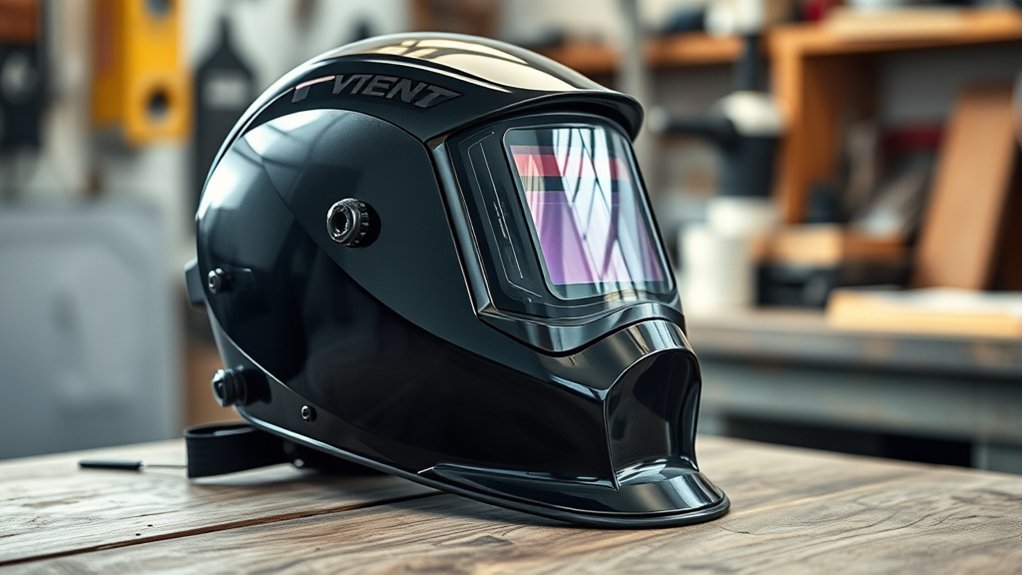
Welding helmet prices vary widely because a basic fixed-shade hood and a professional powered-air respirator system are very different products. Most buyers can expect to spend about $40 to $850 for a standard helmet, while complete welding PAPR systems often cost $2,000 or more. The right choice depends on your welding process, work frequency, safety requirements, and comfort needs.
Quick Answer
A fixed-shade welding helmet usually costs about $40 to $100. Entry-level auto-darkening helmets often run $70 to $200, mid-range models cost roughly $200 to $450, and premium professional helmets can reach $400 to $850. Complete powered-air respiratory welding systems commonly cost $2,000 to $3,200 or more.
Key Takeaways
- Fixed-shade helmets cost less, but auto-darkening helmets are more convenient when you reposition parts or switch processes often.
- A higher price may buy a larger viewing area, better headgear, more arc sensors, low-amperage TIG performance, digital controls, or an integrated grinding shield.
- Check the helmet’s safety markings, supported shade range, impact rating, and manufacturer instructions before comparing cosmetic features.
- Budget for replacement cover plates, batteries, sweatbands, headgear, and possibly an auto-darkening filter cartridge.
- Welding helmets and PAPR welding systems are not interchangeable: a standard helmet does not provide respiratory protection.
Welding Helmet Prices at a Glance
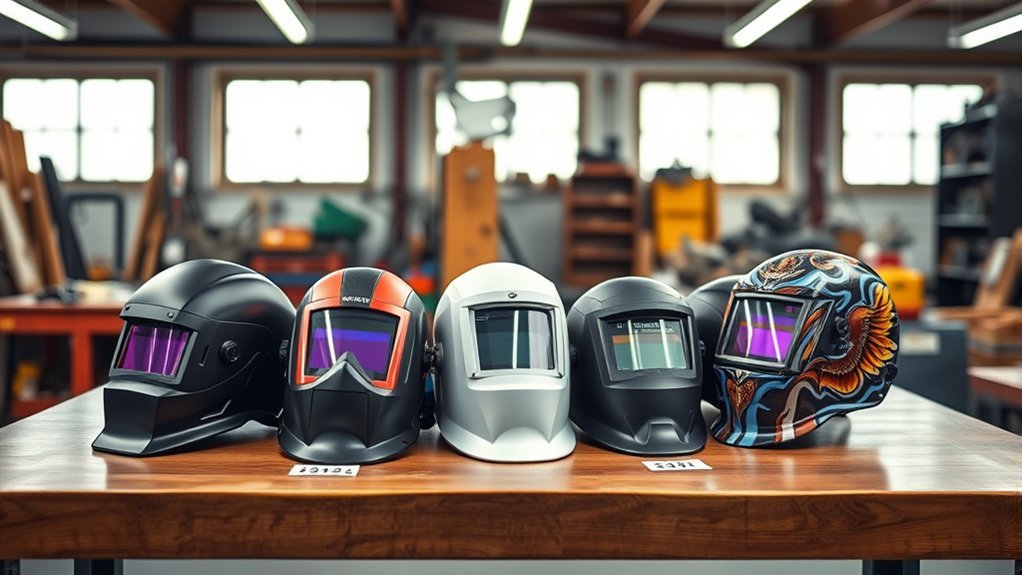
As of July 2026, current U.S. manufacturer listings show how broad the market has become. For example, Lincoln Electric lists its VIKING Industrial Passive helmet near $88 MSRP, its VIKING 1740 near $225 MSRP, and its VIKING 3350 above $600 MSRP. Premium respiratory packages cost much more because they include a blower, battery, filters, belt, hose, and compatible headgear.
At a Glance
| Fixed-Shade or Passive Helmet | About $40–$100 |
| Budget Auto-Darkening Helmet | About $70–$200 |
| Mid-Range Auto-Darkening Helmet | About $200–$450 |
| Premium Professional Helmet | About $400–$850 |
| Complete Welding PAPR System | About $2,000–$3,200+ |
Note: These are rounded U.S. shopping ranges, not guaranteed prices. Manufacturer list prices, dealer prices, graphic shells, rebates, replacement-part bundles, taxes, and regional availability can change the amount you pay.

This hardcover cookbook offers fast, approachable recipes designed for busy days and low-energy nights. Caroline Chambers focuses on simple, flavorful meals that help you get dinner on the table without overthinking it. It's a practical pick for home cooks who want quick weeknight inspiration and minimal-fuss cooking.

This daily devotional helps parents pray purposefully for their children through a full year of Scripture readings, reflections, and guided prayer prompts. Written to encourage faithful family discipleship, it offers practical, biblically grounded support for parents who want to shape their prayers around God's Word. A foreword by Sinclair B. Ferguson adds trusted theological insight and encouragement.

The DeLonghi Water Filter helps reduce scale buildup and unwanted impurities that can affect your coffee machine's performance and taste. Its active carbon and ion-exchange technology helps improve brew consistency, maintain flavor, and reduce the need for frequent descaling. Designed as an OEM authorized replacement part, it fits select DeLonghi models for reliable everyday maintenance.
Factors That Influence Welding Helmet Cost
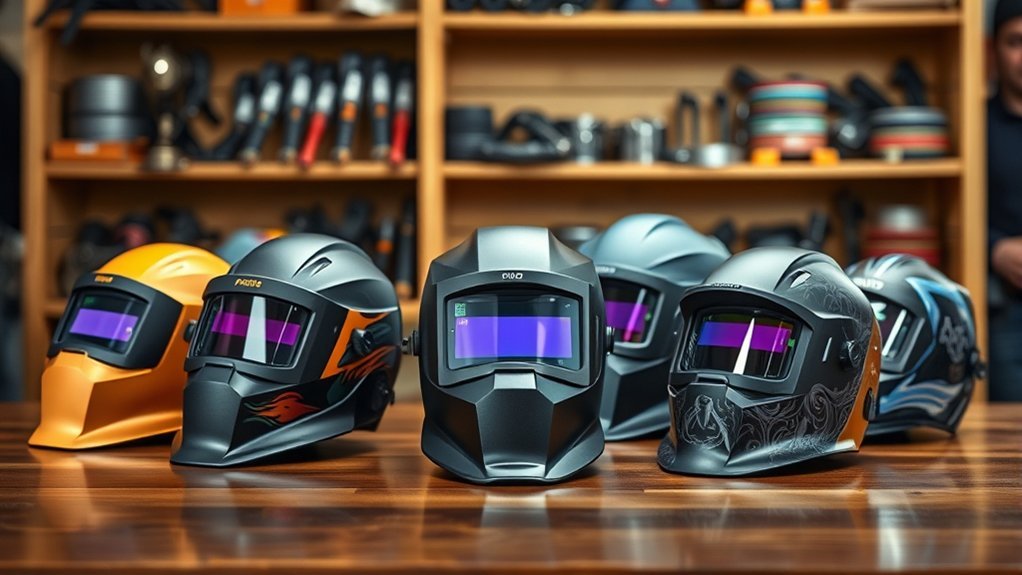
Brand reputation affects price, but the most useful comparison is what the helmet is designed to do. Miller, Lincoln Electric, Jackson Safety, ESAB, and 3M sell products for different work environments, from occasional shop repairs to full-shift industrial welding.
Passive Versus Auto-Darkening Lenses
A passive helmet uses a fixed dark lens. It is simple, dependable, and inexpensive, but you normally raise the hood to position your work and lower it before striking the arc. This can become tiring when you make many short welds.
An auto-darkening filter, or ADF, stays in a lighter state while you set up the joint and switches to a darker welding shade when its sensors detect the arc. Auto-darkening helmets cost more because they contain sensors, electronics, liquid-crystal filter layers, controls, and a power source.
Shade Range, Sensitivity, and Delay Controls
A wider shade range can support more processes, but a large range is valuable only when it covers the shades your work requires. Sensitivity controls affect how readily the helmet responds to an arc, while delay controls determine how quickly the lens returns to its light state after the arc stops.
Low-amperage TIG work can be demanding because the arc may be less intense than high-current MIG or stick welding. TIG welders should check the manufacturer’s minimum TIG amperage rating rather than assuming every auto-darkening helmet will trigger reliably.
Viewing Area and Optical Performance
Larger viewing areas improve peripheral awareness and can make out-of-position work easier, but they also increase the size and cost of the filter. Premium models may use clearer light states, broader color transmission, or highly rated optical classes to make the puddle and joint easier to see.
For example, the Lincoln Electric VIKING 3350 uses a 12.5-square-inch auto-darkening viewing area, variable shades 5 through 13, and adjustable headgear. Miller’s Digital Infinity series uses a 13.4-square-inch viewing area, four arc sensors, and separate weld, cut, grind, and X-Mode settings.
Headgear, Weight, and Balance
A helmet can feel uncomfortable even when its listed weight is low. Headgear design, balance, crown support, pivot position, and rear padding all affect neck strain and pressure points. Welders who wear a helmet for several hours may gain more from comfortable, replaceable headgear than from a decorative shell.
Grinding Shields, Hard-Hat Adapters, and Accessories
Integrated clear grinding shields, side windows, external grind controls, hard-hat adapters, task lights, magnifying lenses, and respiratory-system compatibility all raise the price. Verify that a grinding shield is suitable for impact protection and that any hard-hat adapter is approved for the exact helmet and hard-hat combination.
Replacement Parts and Warranty Coverage
Less expensive helmets are not always cheaper over several years. Check the cost and availability of outside cover plates, inside protection plates, batteries, sweatbands, headgear, seals, and ADF cartridges. Lincoln Electric currently provides a five-year standard warranty for several VIKING auto-darkening series, while other manufacturers may give separate warranty periods for the shell and filter.
Pro Tip: Compare the cost of an outside cover-lens pack before buying the helmet. A model with readily available, reasonably priced cover plates can cost less to own than a cheaper helmet with difficult-to-find parts.
Affordable Welding Helmets
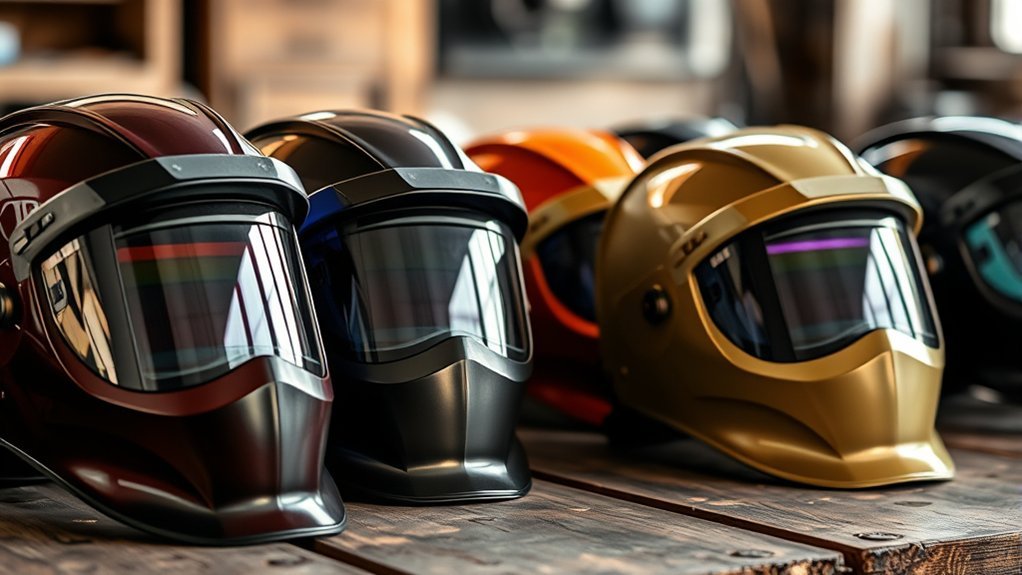
Affordable welding helmets can provide suitable protection when they are properly marked, matched to the process, undamaged, and used according to the manufacturer’s instructions. Price alone does not determine whether a helmet is safe.
Budget-Friendly Options Available
Fixed-shade helmets such as the Lincoln VIKING Industrial Passive Shade 11 are straightforward choices for welders who repeatedly use a process suited to that shade. Older distributor listings may also include passive Jackson models such as the Shadow HSL-1, Shadow HSL 100, Halo X HLX 100, and Halo X Heavy Metal Passive.
Those Jackson model families have often been positioned as basic or value-oriented shells, but their current availability and selling price can vary. Do not rely on an old catalog price when comparing them with a current helmet.
Entry-level auto-darkening helmets generally add a variable shade control, two or more arc sensors, sensitivity or delay adjustment, and a grind setting. They can be a practical upgrade for beginners who frequently stop to reposition parts.
Key Features to Consider
For a passive helmet, confirm that the installed filter shade is appropriate for the welding process and current. Also check that replacement filters and clear protection plates are easy to obtain.
For an auto-darkening helmet, compare the supported shade range, light state, sensor count, switching performance, minimum TIG rating, replaceable battery, controls, and warranty. A fast advertised switching speed does not replace the need for the correct shade and a properly working filter.
Helmet comfort matters at every price. The shell should remain stable when you bend, turn, or nod, without forcing you to overtighten the headband. The helmet should lower smoothly and stop in a position that fully covers your face and neck area as designed.
Comparisons of Popular Models
| Model or Family | Type | Best Fit |
| Jackson Shadow HSL-1 or HSL 100 | Passive shell family | Occasional or repetitive fixed-shade work when compatible parts remain available |
| Jackson Halo X HLX 100 | Passive shell family | Buyers who prefer a lightweight traditional hood and fixed filter |
| Lincoln VIKING Industrial Passive Shade 11 | Current fixed-shade helmet | Simple, economical welding where shade 11 is appropriate |
| Budget variable-shade ADF helmet | Auto-darkening | Beginners and home users who make frequent short welds |
Warning: Do not strike an arc with an unmarked, cracked, badly scratched, improperly assembled, or malfunctioning helmet. If an auto-darkening filter fails to switch to its dark state, stop welding immediately and inspect it according to the manufacturer’s instructions.
Mid-Range Welding Helmets
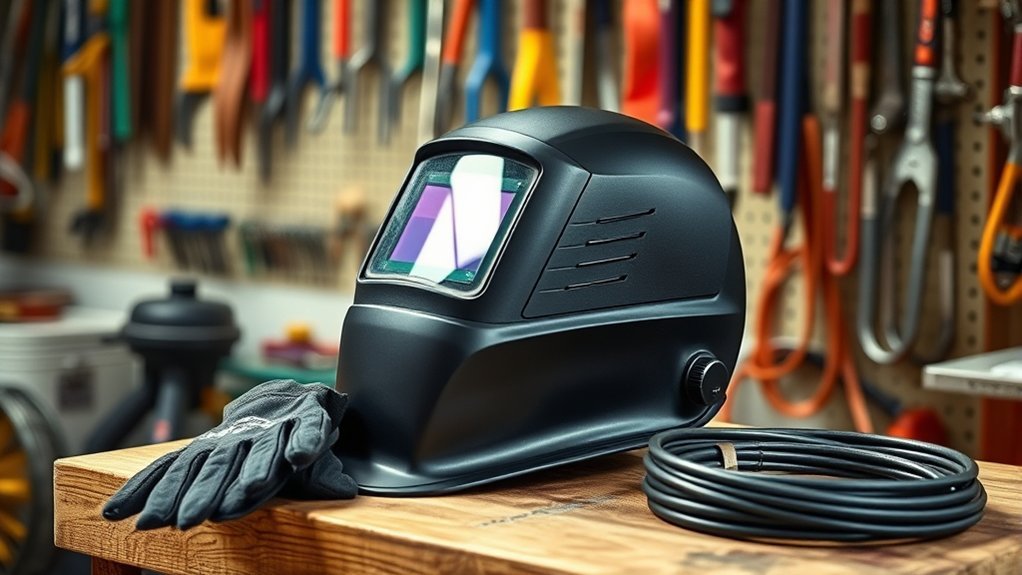
Mid-range welding helmets generally cost about $200 to $450. They suit regular hobbyists, fabrication students, maintenance workers, and professionals who want reliable auto-darkening performance without buying a top-tier model.
Common improvements include a clearer light state, variable welding shades, grind mode, three or four arc sensors, replaceable batteries, better headgear, and a larger viewing area. Some also add memory settings, half-shade adjustment, or improved color transmission.
The Jackson Huntsman 930P Passive, Huntsman 490P Fiber Shell, and Huntsman 451P have appeared in older mid-priced catalogs, although they are passive designs and should not be compared directly with modern electronic helmets solely by price. The current Lincoln VIKING 1740 is a more useful example of an auto-darkening mid-range helmet, with variable shades 9 through 13 and a grind mode.
A mid-range helmet is often the best value when you weld regularly but do not need an extra-large filter, integrated task light, respiratory system, or full digital interface.
Premium Welding Helmets
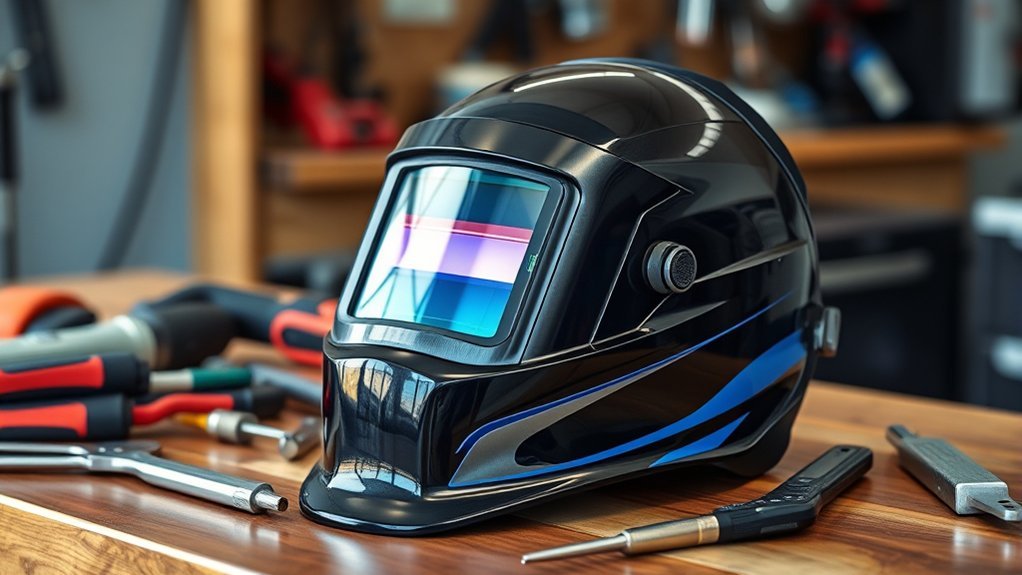
Premium standard welding helmets usually cost about $400 to $850. This tier is aimed at frequent and professional welders who value a wider view, balanced headgear, dependable triggering, replaceable components, and controls that are easy to use while wearing gloves.
Features may include:
- Large viewing areas: A wider field of view can improve joint awareness and out-of-position work.
- Multiple arc sensors: Additional sensors can help when part of the filter is blocked by a fixture or unusual welding position.
- Digital or clearly labeled controls: These can make shade, sensitivity, delay, and mode settings easier to repeat.
- Improved headgear: Better balance and adjustment can reduce pressure during long sessions.
- True-color or broad-spectrum optics: These may provide a more natural view of the workpiece, although they do not eliminate the need for the proper protective shade.
- External grind controls: A glove-friendly button can reduce accidental welding in grind mode when it is designed with a deliberate switching action.
The ESAB Sentinel A60, Lincoln VIKING 3350, and Miller Digital Elite or Digital Infinity series are examples of professional helmet families. Their prices differ by graphics, lens generation, accessories, and seller.
The best premium feature is the one that solves a real problem—poor visibility, unreliable low-amp triggering, uncomfortable headgear, restricted peripheral vision, or repeated switching between welding and grinding.
High-End Welding Helmets and PAPR Systems
A high-end auto-darkening helmet may cost more than $600 without including respiratory protection. The Lincoln VIKING 3350, for example, combines a large viewing area, variable shades 5 through 13, advanced optics, adjustable headgear, and an external grind control.
Powered air-purifying respirator systems occupy a separate category. A welding PAPR uses a battery-powered blower to pull air through compatible filters and deliver it to approved headgear. Current manufacturer pricing for complete systems can exceed $2,000, and hard-hat or specialized packages can exceed $3,000.
The Miller PAPR II with T94-R is one example. The 3M Speedglas G5-03 Pro Air is another helmet platform designed to connect to an approved air-delivery system.
Note: A helmet marked “PAPR compatible” does not provide respiratory protection by itself. Protection depends on the complete approved configuration, correct filters, airflow, maintenance, hazard assessment, and workplace respiratory-protection program.

This retractable car window shade helps block UVA and UVB rays to make rides more comfortable and protected for passengers. It includes a White Hot heat alert that turns white when the car is too hot, plus dual installation options for a secure fit in many vehicles. The safe-view mesh supports visibility while helping reduce glare, and the easy one-push retraction makes it simple to use when needed.

Velveeta Shells and Cheese Original Cup delivers a creamy, comforting mac and cheese experience in convenient single-serve cups. Made with real cheese and shelf-stable for easy storage, it’s a quick microwave meal or side that works for busy nights, kids’ meals, and snack cravings. Each cup includes shell pasta and cheese sauce for rich flavor with minimal prep.

This DEWALT 20V MAX combo kit delivers reliable drilling and fastening power in a compact, jobsite-ready package. The lightweight drill/driver and impact driver are built to fit into tight spaces, while integrated LED work lights help improve visibility in dim areas. With two batteries, a charger, and a storage bag included, it is a convenient solution for professionals and DIY users alike.
How to Choose the Right Welding Helmet for Your Budget
For Occasional Home Repairs
A properly marked fixed-shade helmet can be enough when you perform the same type of weld occasionally and know the required shade. An entry-level auto-darkening helmet may be worth the added cost if you have difficulty keeping the torch or electrode aligned while lowering a passive hood.
For Regular MIG, Flux-Core, or Stick Welding
Look for a comfortable auto-darkening helmet with the required shade range, adjustable sensitivity and delay, replaceable batteries, and readily available cover plates. Three or four sensors can be helpful around fixtures and in awkward positions.
For Low-Amperage TIG
Check the manufacturer’s stated TIG amperage rating. A helmet that performs well during high-current MIG welding may not trigger as consistently on a faint low-amperage TIG arc.
For Frequent Grinding and Setup Work
Choose a helmet with a manufacturer-approved grind mode or an integrated clear grinding shield that has the required impact rating. An external control can be convenient, but it should make the active mode obvious.
For Full-Shift Professional Use
Prioritize balance, headgear support, lens clarity, viewing area, controls, replacement-part availability, and warranty coverage. A comfortable $500 helmet may offer better long-term value than a $200 model that causes pressure points or requires hard-to-find lenses.
For Welding-Fume or Respiratory Hazards
A welding helmet alone is not a fume-control system. Employers and workers should assess the hazard, use ventilation and other controls, and select approved respiratory protection when required. The NIOSH PAPR overview explains that these systems use a battery-powered blower and appropriate filters or cartridges to deliver filtered air to the wearer’s breathing zone.
Choose the Correct Shade and Safety Standard
OSHA requires filter lenses that protect against harmful radiant energy, and the correct minimum shade depends on the operation and arc current. The following selected values come from OSHA’s Personal Protective Equipment guide.
| Operation | Current or Condition | OSHA Minimum Shade |
| Stick/SMAW | Below 60 A | 7 |
| Stick/SMAW | 60–160 A | 8 |
| Stick/SMAW | 160–250 A | 10 |
| MIG/GMAW or Flux-Core/FCAW | Below 60 A | 7 |
| MIG/GMAW or Flux-Core/FCAW | 60–500 A | 10 |
| TIG/GTAW | Below 150 A | 8 |
| TIG/GTAW | 150–500 A | 10 |
| Plasma Arc Welding | Below 20 A | 6 |
| Torch Brazing | General | 3 |
| Carbon Arc Welding | General | 14 |
OSHA advises starting with a shade that is too dark to see the weld zone, then moving to a lighter shade that provides an adequate view without going below the required minimum. Follow the full table, the helmet manual, and your workplace hazard assessment rather than relying only on a general shade range.
Look for the appropriate eye-and-face-protection marking, such as ANSI Z87.1 compliance, on the complete helmet configuration. A marking on one component does not necessarily approve every replacement lens, accessory, or modified combination.
Warning: Standard welding helmets are not automatically suitable for laser welding, heavy overhead molten-metal exposure, grinding, or every cutting operation. Stay within the helmet’s listed shade, temperature, impact, and application limits. Wear suitable safety spectacles under the helmet when required by the manufacturer or workplace rules.
Ongoing Costs and Welding Helmet Maintenance
The purchase price is only one part of the total cost. Common replacement items include:
- Outside cover plates: These take most of the spatter and scratches and may need frequent replacement.
- Inside protection plates: Replace them when scratched, cloudy, cracked, or contaminated.
- Batteries: Some ADFs use replaceable coin cells, while others combine batteries with solar assistance.
- Sweatbands and headgear: Worn padding, stretched straps, or damaged pivots can affect stability and comfort.
- ADF cartridges: A replacement auto-darkening filter can cost a large portion of the original helmet price.
- PAPR filters and prefilters: Respiratory systems add recurring filter, battery, cleaning, and inspection costs.
There is no universal three- or five-year replacement date for every welding helmet. Inspect the complete helmet before each use. Replace cracked shells, damaged seals, badly scratched or pitted plates, loose headgear, unreliable batteries, and any ADF that does not switch correctly.
Clean the helmet according to its manual. For example, 3M instructs users to wipe the filter with a soft cloth and, when needed, apply a mild cleaner to the cloth rather than spraying cleaning material directly onto the ADF. Store the helmet in a clean, dry place away from direct sunlight, high heat, impact, and contamination.
Frequently Asked Questions
How long do welding helmets typically last?
There is no single lifespan for every helmet. A well-maintained shell may remain usable for years, while cover plates, batteries, sweatbands, headgear, or the auto-darkening filter may need earlier replacement. Inspect the helmet before every use and replace any damaged or malfunctioning component immediately.
Can I use a welding helmet for grinding or cutting?
Only when the manufacturer approves the helmet and selected mode for that task. Grinding requires suitable impact protection and clear visibility, normally through an approved grind mode or integrated grinding shield. Cutting also requires the correct filter shade. A fixed dark welding lens is not a general-purpose grinding face shield.
What maintenance does a welding helmet require?
Inspect the shell, headgear, filter, controls, batteries, sensors, and protection plates before use. Replace scratched or damaged plates, clean the helmet only with methods approved in its manual, and store it away from heat, moisture, direct sunlight, and impact.
Are warranties available for welding helmets?
Yes. Coverage commonly ranges from one to five years, but it varies by manufacturer, series, and component. The auto-darkening filter, helmet shell, battery, PAPR blower, and accessories may each have different warranty terms. Read the current warranty before buying.
How do I choose the right helmet size?
Adjust the crown straps, ratchet, forward-and-back position, and tilt so the helmet stays stable without excessive pressure. It should cover the intended face and neck area, lower smoothly, and remain secure when you bend or turn your head. Check the manufacturer’s head-size range when one is provided.
What welding shade should I use?
The correct minimum shade depends on the welding or cutting process, electrode size, material thickness, and current. Use the OSHA shade table, your employer’s hazard assessment, and the equipment manuals. Start darker and move lighter only when needed, without going below the applicable minimum.
Are inexpensive welding helmets safe?
An inexpensive helmet can be suitable when it carries the required markings, uses the correct shade, fits properly, remains undamaged, and is approved for the work. Avoid unmarked products, unclear specifications, unavailable replacement parts, or filters that trigger unreliably.
Conclusion
Welding helmet costs range from roughly $40 for a basic passive model to $850 or more for a premium auto-darkening helmet. Complete PAPR welding systems usually cost several thousand dollars because they add respiratory components, batteries, filters, hoses, and approved headgear.
Choose by safety requirements and working conditions before comparing graphics or digital extras. Confirm the required shade, recognized markings, low-amperage performance, grinding approval, fit, replacement-part cost, and warranty. A properly selected mid-range helmet is often the best value, while premium optics, advanced headgear, or respiratory integration can justify a higher price for demanding professional work.
Sources
- OSHA Personal Protective Equipment Guide — minimum filter shades and welding eye-protection guidance.
- OSHA 29 CFR 1910.133 — workplace eye-and-face-protection requirements.
- OSHA 29 CFR 1910.252 — welding, cutting, and brazing protection requirements.
- 3M Speedglas G5 Welding Filter User Instructions — inspection, cleaning, operating limits, shade options, and ADF warnings.
- Lincoln Electric VIKING 3350 — representative premium helmet pricing and specifications.
- Miller PAPR II with T94-R — representative powered-air welding system configuration and manufacturer price.

This Milwaukee SHOCKWAVE socket adapter set is designed to convert drill and impact driver output for use with sockets, making it a versatile addition to any tool kit. Built for durability and repeated use, the adapters are engineered to deliver reliable performance on demanding fastening tasks. The compact 3-piece set covers common drive sizes for everyday repair and maintenance work.

Experience J.R.R. Tolkien's legendary Middle-earth saga in a compact hardcover boxed set that brings together The Hobbit and The Lord of the Rings. This deluxe collection is ideal for readers who want a portable, collectible edition of the classic fantasy adventures, making it perfect for gifting, re-reading, and building a treasured library. The boxed presentation adds display appeal while the hardcovers offer lasting durability for years of enjoyment.

This multitasking undereye corrector helps instantly even the look of skin tone while reducing the appearance of dark circles, puffiness, and fine lines. Its full-coverage formula is infused with moisturizing, skin-loving ingredients like caffeine, vegan squalane, and hyaluronic acid for a smooth, hydrated finish. Designed for a natural, crease-free look, it delivers complexion-perfecting benefits with a clean, cruelty-free formula.
