
As of August 11, 2026, welding oxygen refill or exchange contents in one national retail program cost $44.99 for 20 CF, $49.99 for 40 CF, $54.99 for 80 CF, and $59.99 for 125 CF. Local welding-gas suppliers can charge differently, and cylinder rent, delivery, account, or requalification fees can raise the total. Larger cylinders cost more per visit but much less per cubic foot in this retail example.
Last updated: August 11, 2026. This guide covers industrial compressed oxygen used for oxy-fuel cutting, brazing, heating, and welding-related torch work; it does not cover medical oxygen.
Research note: Retail prices were rechecked against live Tractor Supply listings on August 11, 2026. Federal cylinder-safety and requalification guidance was rechecked against OSHA, eCFR, and PHMSA sources; torch-consumption guidance was checked against ESAB and Miller sources listed below.
Affiliate disclosure: This page may contain affiliate links or retailer product modules. If you buy through them, we may earn a commission at no extra cost to you.
Quick Answer
A welding oxygen refill or cylinder exchange currently costs about $45 to $60 for 20 to 125 CF cylinders in one national retail program, based on prices checked August 11, 2026. Local welding-gas shops may charge more or less, and rental, delivery, environmental, account, or requalification fees can change the final bill. Request an itemized local quote before visiting.
Key Takeaways
- Published contents-only prices checked August 11, 2026 range from $44.99 for 20 CF to $59.99 for 125 CF.
- The advertised price may not include cylinder rent, delivery, account charges, environmental fees, or requalification.
- An exchange is usually faster than waiting for your original cylinder to be filled and returned.
- Estimate runtime from the torch manufacturer’s oxygen-consumption chart, not from an arbitrary number of weeks or months.
- Use an authorized gas supplier. Do not transfer high-pressure oxygen between cylinders yourself.
At a Glance
| Time Required | An exchange may be completed during the store visit. An on-site or off-site fill may require later pickup. |
| Difficulty | Easy for the customer. Filling and requalification must be handled by an authorized provider. |
| Tools Needed | Valve-protection cap when the cylinder is designed for one, a suitable cylinder cart or restraint, and a properly ventilated transport setup. |
| Cost | About $45–$60 in the current retail examples below, before possible rental, delivery, testing, or account fees. |
How Much Does a Welding Oxygen Refill Cost?
There is no single national welding oxygen refill price. Industrial-gas suppliers set local rates based on the cylinder, customer account, ownership arrangement, delivery method, and regional operating costs.
The following table shows published online prices for oxygen contents in one national retail exchange program checked on August 11, 2026. These are reference prices rather than guaranteed local quotes. Store pricing, availability, accepted cylinder brands, and exchange rules can differ.
| Cylinder Capacity | Published Contents Price | Approximate Cost per CF |
| 20 CF | $44.99 | About $2.25 |
| 40 CF | $49.99 | About $1.25 |
| 80 CF | $54.99 | About $0.69 |
| 125 CF | $59.99 | About $0.48 |
Note: “Contents only” does not mean that any empty cylinder will be accepted. The supplier may require a compatible customer-owned cylinder, proof of ownership, or participation in its exchange program.

This daily devotional helps parents pray purposefully for their children through a full year of Scripture readings, reflections, and guided prayer prompts. Written to encourage faithful family discipleship, it offers practical, biblically grounded support for parents who want to shape their prayers around God's Word. A foreword by Sinclair B. Ferguson adds trusted theological insight and encouragement.

These colorful answer buzzers turn lessons, review games, and family activities into lively game-show style challenges that boost participation and make learning more interactive. Each buzzer has a distinct sound to clearly identify who buzzed in first, while the durable, palm-sized design makes them easy for kids and adults to use in classrooms, homeschools, and group settings.

The Manbook offers a blunt, practical approach to mental toughness, responsibility, and professional growth. Written by Nick Freitas, it is designed to help readers push through excuses, build discipline, and get the job done with focus and confidence. This hardcover edition is a useful pick for anyone looking for straightforward guidance on self-improvement and resilient living.
Factors That Affect Welding Oxygen Refill Cost
The gas itself is only one part of the final bill. Ask for an itemized quote so you can compare suppliers fairly.
- Cylinder capacity: A larger cylinder normally costs more per transaction but less per cubic foot.
- Refill or exchange: A direct fill may let you keep the same cylinder, while an exchange replaces it with another qualified cylinder of the same program or size.
- Ownership: A customer-owned cylinder avoids recurring rent but may create requalification or acceptance costs.
- Rental or lease: Supplier-owned cylinders reduce the initial purchase cost but can involve monthly, daily, or annual rental charges.
- Delivery: Delivery, route, fuel, or minimum-order fees can make a small order expensive.
- Account status: Commercial, loyalty, and volume accounts may receive different gas or rental rates.
- Cylinder condition: A damaged, improperly marked, contaminated, or out-of-test cylinder may be rejected.
- Local market: Prices vary by region, supplier competition, store inventory, and operating costs.
Compare the total annual cost: oxygen contents, cylinder rent, delivery and service fees, requalification, and the time spent making supplier trips.
Refill vs. Exchange vs. Rental
Gas suppliers use several different business models. The lowest posted “refill price” may not be the lowest overall option once cylinder and service charges are included.
| Option | How It Works | Main Trade-Off |
| Direct refill | The supplier fills and returns your cylinder. | You may keep the same cylinder, but filling may not be available while you wait. |
| Exchange | You surrender an accepted empty cylinder and receive a qualified full cylinder. | Fast and convenient, but you usually do not receive the same physical cylinder. |
| Rental or lease | The supplier owns the cylinder and charges rent or a lease fee. | Lower initial cost, but recurring charges continue while you hold the cylinder. |
| Customer ownership | You purchase the cylinder and pay for contents, exchange, or filling. | No ongoing rent, but you must use suppliers that accept the cylinder and address requalification when required. |
How to Compare the True Annual Oxygen Cost
The posted refill price is only one line in the budget. To compare ownership, exchange, and rental plans fairly, use the same annual-cost formula for every supplier:
Annual oxygen cost = (contents or exchange price × fills per year) + cylinder rent or lease + delivery or route fees + account or environmental fees + requalification or valve-service costs you must pay.
- Customer-owned cylinder: Track the cylinder purchase separately as an upfront cost, then compare recurring gas, testing, and service charges.
- Exchange program: Ask whether cylinder qualification and fleet maintenance are included in the exchange system or billed separately.
- Rental or lease: Add the full annual rental charge even if the cylinder sits unused for part of the year.
- Pickup vs. delivery: Include route, fuel, minimum-order, and delivery charges, plus the number of supplier trips you expect to make.
- Local quote discipline: Use the same cylinder size and the same list of fees when comparing suppliers so a low contents price does not hide a higher total.
Why there is no national “average rental fee” here: rental, lease, testing, delivery, and account charges vary too much by supplier and region to publish one reliable U.S. number without a defined quote sample. Use itemized local quotes for those lines.
Choosing the Right Oxygen Cylinder Size
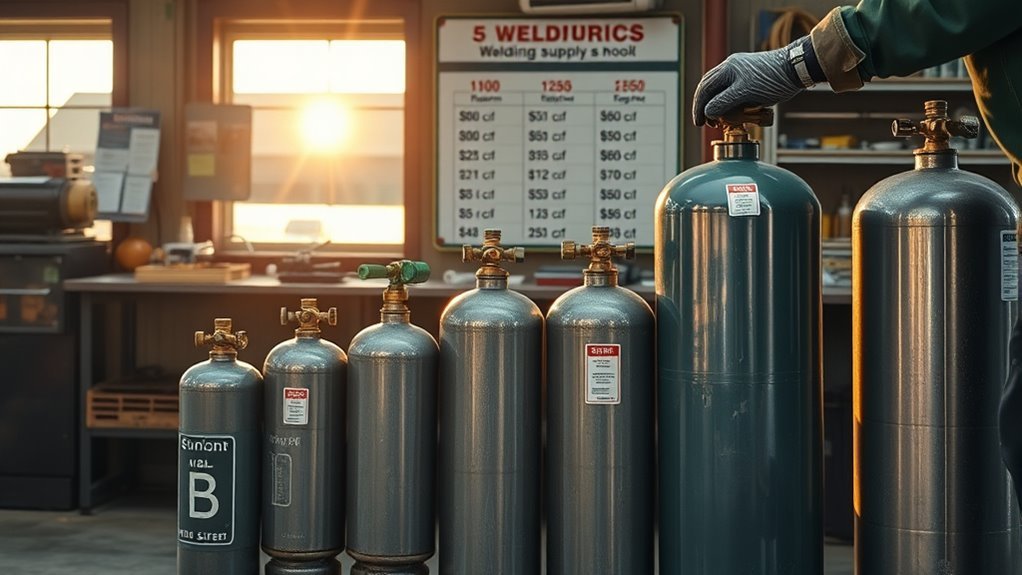
A small cylinder is easier to carry and store, but it has the highest gas cost per cubic foot in the current retail example. Larger 80 CF and 125 CF cylinders offer better value for regular cutting, brazing, or heating work.
- 20 CF: Portable and suitable for brief or occasional jobs, but expensive per cubic foot.
- 40 CF: A modest step up for light hobby use.
- 80 CF: A practical middle size for many home workshops.
- 125 CF: Better cost per cubic foot and fewer supplier trips, but heavier and less convenient to move.
- Larger commercial cylinders: Better suited to shops with suitable handling equipment and higher consumption.
Buying the cylinder can cost far more than the oxygen inside it. For example, the linked 80 CF owner cylinder listing was $489.99 when checked August 11, 2026, before buying the oxygen contents. Compare that upfront expense with the supplier’s annual rental rate and cylinder-acceptance policy before buying.
Pro Tip: Before buying a used cylinder, send the supplier a clear photo of its shoulder stamps, ownership markings, valve, capacity label, and most recent test mark. Confirm in writing that the location will fill or exchange it.
How Long Does a Welding Oxygen Cylinder Last?
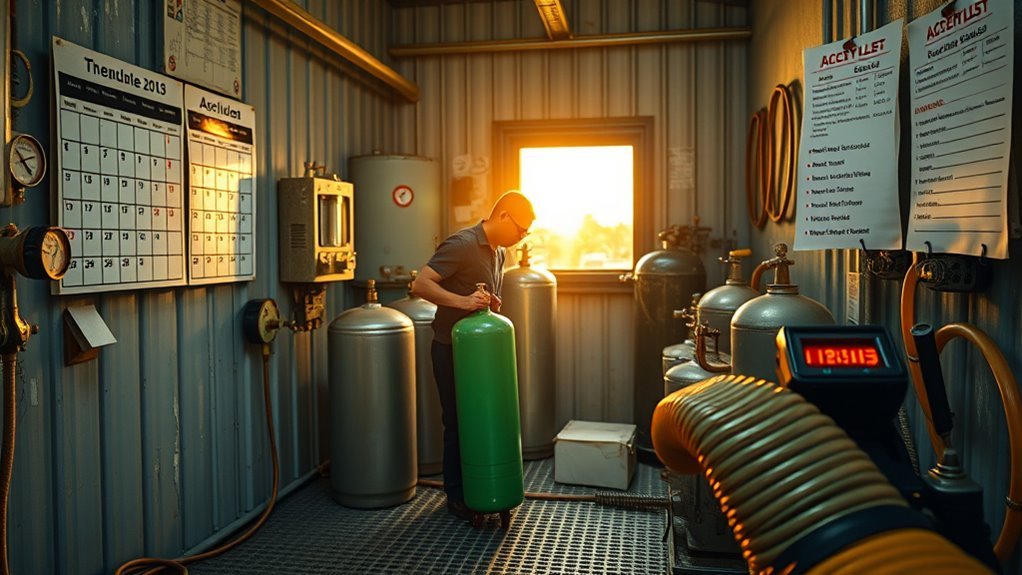
Do not estimate refill frequency by saying a cylinder will last a certain number of weeks or months. Runtime depends on the torch, tip, pressure settings, leaks, purging, and the number of hours you actually use it.
Theoretical runtime in hours = cylinder capacity in CF ÷ oxygen consumption in CFH.
For example, official Victor tip data published by ESAB show that some small cutting setups use about 30–35 cubic feet of oxygen per hour, while another common small-tip range uses roughly 55–60 CFH. Always use the chart supplied for your exact torch and tip.
| Cylinder | At 30 CFH | At 60 CFH |
| 40 CF | About 1.3 hours | About 0.7 hour |
| 80 CF | About 2.7 hours | About 1.3 hours |
| 125 CF | About 4.2 hours | About 2.1 hours |
These are theoretical continuous-flow estimates. Real usable time may be lower because of purging, shutdowns, residual pressure, temperature changes, minor leakage, and differences between nominal and actual gas volume.
How to Read Pressure and Requalification Markings
A pressure gauge is useful, but “full equals 2015 psi” is not a universal rule. Oxygen cylinders can have different service pressures. Read the stamped service pressure on the cylinder shoulder and follow the supplier’s information for that specific cylinder.
Pressure also changes with temperature. A cold cylinder may show a lower pressure than the same cylinder after it warms, even though no oxygen was used. Compare readings only after the cylinder has stabilized at a similar temperature.
Before accepting a cylinder, look for:
- The permanent DOT specification marking
- The stamped service pressure
- The gas-content label identifying oxygen
- The owner or supplier marking
- The most recent month-and-year requalification mark
- Any five-point star placed after an eligible test date
- Damage, fire exposure, deep corrosion, gouges, bulges, or a leaking valve
Under 49 CFR 180.209, the requalification interval depends on the cylinder specification, service, and markings. As checked August 11, 2026, Table 1 lists 5-, 10-, or 12-year periods for DOT 3A and 3AA cylinders depending on the applicable subsection and service. For qualifying 3A or 3AA cylinders used in listed gases including oxygen, § 180.209(b) permits a 10-year interval when all conditions are met and the required five-point star follows the test date. Do not assume every oxygen cylinder qualifies for the longer interval.
Note: Do not identify a compressed-gas cylinder by paint color alone. Read the permanent markings and gas label.

The ANCEL AD310 is a compact OBD II scanner designed to quickly diagnose check engine light issues by reading and clearing emission-related trouble codes. It also provides live data, freeze frame, I/M readiness, and vehicle information, making it a practical tool for drivers and home mechanics. With broad compatibility across many 1996 and newer OBD2 vehicles, it is a simple, fast, and portable way to check engine problems.

The Veepeak OBDCheck BLE is a Bluetooth OBD-II scanner designed for iOS and Android users who want an easy way to read and clear check engine light codes. It supports generic diagnostics such as freeze frame data, I/M readiness, and live sensor readings through compatible third-party apps. Built for most 1996+ vehicles in the US, it connects over Bluetooth LE and works with popular apps for everyday vehicle troubleshooting and monitoring.

This long barrel curling iron is designed to create soft curls and waves while helping hair stay smooth, hydrated, and shiny. Its moisture-focused heat technology and NanoIonic MX help lock in moisture, seal the cuticle, and support long-lasting styles with less frizz. The extended barrel and adjustable heat settings make it easy to style long hair or hard-to-reach sections with comfort and control.
Where to Refill or Exchange Welding Oxygen Cylinders
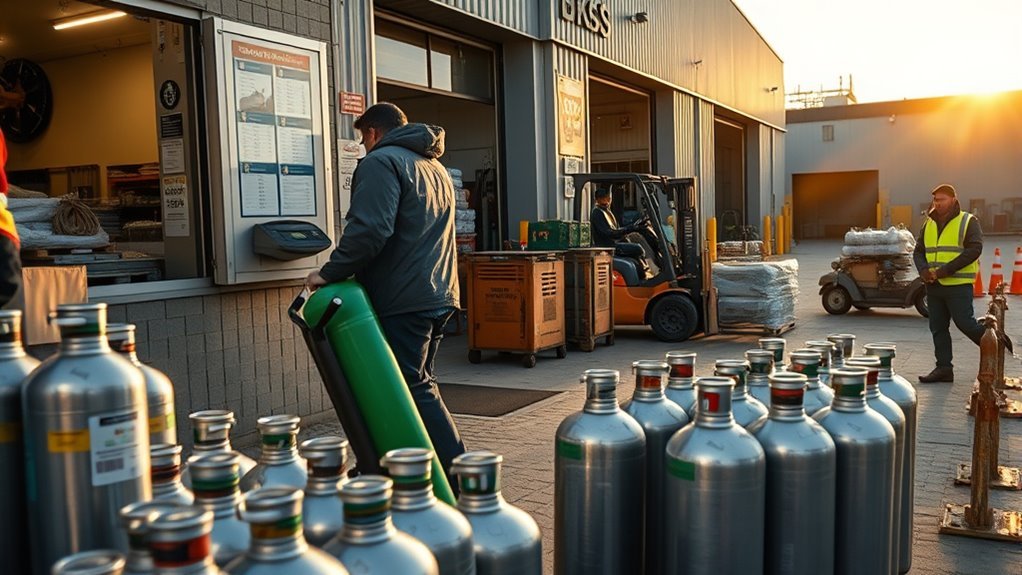
Common sources include welding-supply stores, industrial-gas distributors, farm and hardware retailers with gas-exchange programs, and regional compressed-gas companies. Large suppliers such as Airgas and Linde operate cylinder programs, but products, prices, account requirements, and cylinder acceptance differ by location.
Local Welding and Industrial-Gas Suppliers
A local gas supplier may offer direct filling, immediate exchange, cylinder rental, customer-owned cylinder service, or a combination of these options. Independent suppliers may also be more flexible about uncommon cylinder sizes, but you must confirm their acceptance policy before arriving.
Give the supplier the following information when requesting a quote:
- Gas type: industrial oxygen for welding, cutting, brazing, or heating
- Cylinder capacity in cubic feet
- Cylinder ownership or rental status
- DOT specification and service pressure
- Most recent requalification date
- Valve connection type, when known
- Whether you want the same cylinder refilled or will accept an exchange
- Whether pickup, delivery, rent, or other charges apply
Cylinder Exchange Programs
An exchange program lets you surrender an accepted empty cylinder and receive a full, qualified cylinder. This avoids waiting for the original cylinder to be filled and can simplify requalification because the supplier maintains its exchange fleet.
However, an exchange normally means you will not receive the same physical cylinder. Do not exchange a privately owned or unusually valuable cylinder until you understand the program’s ownership terms.
How to Get a Refill or Exchange Safely
- Identify the cylinder. Read the capacity, gas label, ownership marks, DOT specification, service pressure, and requalification date.
- Call the supplier. Confirm that the branch handles industrial oxygen and accepts your cylinder.
- Request the total price. Ask about gas contents, exchange fees, rent, delivery, environmental charges, account fees, and requalification costs.
- Close and prepare the cylinder. Close the valve. Remove the regulator before movement when required by the cylinder setup and supplier instructions, and install the valve-protection cap when the cylinder is designed to accept one.
- Secure it for transport. Use a suitable cylinder restraint and keep the cylinder from shifting, falling, or striking other objects.
- Use ventilation. Follow the supplier’s instructions and applicable local transport requirements. Do not leave the cylinder in a hot, unventilated vehicle.
- Check the replacement. Verify the oxygen label, valve condition, capacity, service pressure, and current requalification marking before leaving.
- Keep the receipt. Record the date, cylinder size, total cost, added fees, and supplier so you can compare future transactions.
Warning: Oxygen does not burn by itself, but it makes combustible materials burn faster and more intensely. Keep oxygen cylinders, valves, regulators, hoses, hands, and gloves completely free of oil and grease. Secure cylinders, close the valve before movement, remove the regulator when required, and use the valve-protection cap when the cylinder is designed for one.
Warning: Do not substitute an industrial welding-oxygen cylinder for oxygen supplied and labeled for medical or breathing use. Medical gases are subject to dedicated manufacturing, certification, labeling, and safety controls, and breathing applications require appropriate medical equipment and professional guidance.
Tips to Lower Your Oxygen Refill Expenses
The best savings usually come from reducing extra charges and selecting the right supply plan, not from unsafe cylinder handling.
- Compare itemized quotes. A low gas price may be offset by rent, delivery, or service charges.
- Compare cost per cubic foot. Larger cylinders often provide much better gas value.
- Match capacity to actual use. Avoid paying for an oversized rental cylinder that sits unused, but do not choose a tiny cylinder that requires constant trips.
- Ask about account discounts. Some suppliers offer commercial, loyalty, rental, or volume pricing, but eligibility varies.
- Check for leaks. Follow the torch manufacturer’s leak-testing and setup instructions so oxygen is not wasted.
- Use the correct tip and settings. Excess pressure or the wrong tip can waste gas and create an unsafe flame.
- Track every purchase. Record the cylinder capacity, contents price, added fees, and date.
- Review rental usage. If a rented cylinder sits unused for long periods, buying an accepted owner cylinder may eventually cost less.
Warning: Do not transfer high-pressure oxygen between cylinders with a consumer transfill adapter. Have an authorized gas supplier fill or exchange the cylinder using approved equipment and procedures.
Frequently Asked Questions
Is a safety inspection required when refilling an oxygen cylinder?
The supplier will check the cylinder’s condition, markings, valve, and qualification status before accepting it. Formal requalification is not automatically performed at every fill. Its schedule depends on the DOT specification, service, and stamped test markings.
Can I transport a filled oxygen cylinder in a passenger vehicle?
Personal noncommercial transport and transportation in commerce can be governed differently, and state or local rules may add requirements. Ask the supplier before leaving. Close the valve, remove the regulator when required, use the protective cap when the cylinder is designed for one, secure the cylinder against movement, provide ventilation, avoid heat and ignition sources, and unload it promptly.
Do oxygen refills include a new regulator or fittings?
Normally, the quoted gas price covers the oxygen contents or cylinder exchange, not a new regulator, hose, flashback arrestor, or torch fitting. Ask for a separate equipment quote if any component needs replacement or service.
Are discounts available for repeat or bulk oxygen purchases?
Some suppliers offer commercial-account, loyalty, cylinder-rental, or volume discounts. There is no reliable national percentage because eligibility and pricing vary by supplier and region. Ask for the gas price, rental rate, and added fees at each account tier.
How long does an oxygen refill or exchange take?
There is no standard appointment time. An exchange may be completed during the store visit. A direct refill can take longer when the branch does not fill cylinders on site or when the cylinder needs inspection or requalification. Call ahead and ask whether same-visit service is available.
Can an out-of-test oxygen cylinder be refilled?
A cylinder that is due for periodic requalification generally cannot be refilled and offered for transportation until it passes the required requalification. The supplier may send it to an authorized requalifier, charge a testing fee, offer an exchange, or reject it.
Will I receive the same cylinder after an exchange?
Usually not. An exchange program normally gives you another qualified cylinder from the supplier’s accepted fleet. Request a direct refill instead if retaining the same privately owned cylinder is important.
Can welding oxygen be used for breathing?
No. Do not substitute industrial welding oxygen for oxygen supplied and labeled for medical or breathing use. Medical oxygen is subject to dedicated manufacturing, certification, labeling, and safety controls, and breathing applications require appropriate medical equipment and professional guidance.
Conclusion
As checked August 11, 2026, welding oxygen contents in one national retail exchange program run about $45–$60 for common 20–125 CF cylinders, but your final cost can change with supplier policies, cylinder rent, delivery, testing, account charges, and local fees. Compare itemized quotes, calculate runtime from the correct torch-tip chart, and choose a cylinder size that balances portability with cost per cubic foot.
Before transporting or using the cylinder, verify its markings and qualification date, close and protect the valve, secure it properly, and keep every oxygen component free of oil and grease. Use an authorized supplier for all filling and exchange work.
Sources
- OSHA 29 CFR 1910.253: Oxygen-Fuel Gas Welding and Cutting — cylinder identification, movement, storage, valve protection, and oil-and-grease requirements.
- Electronic Code of Federal Regulations: 49 CFR 180.209 — cylinder requalification intervals and qualifying star markings.
- PHMSA Cylinder Requalification Guidance — authorized requalification facilities, testing equipment, inspections, and records.
- PHMSA Interpretation 04-0145 — securing compressed oxygen cylinders against movement and protecting them from damage during applicable transportation.
- Miller: 10 Steps for Safe Oxy-Fuel Torch Setup — leak testing, purging, regulator adjustment, and following the correct tip chart.
- ESAB Victor Type 101 Cutting-Tip Data — manufacturer oxygen-consumption rates used for runtime examples.
- FDA: Current Good Manufacturing Practice, Certification, Postmarketing Safety Reporting, and Labeling Requirements for Certain Medical Gases — dedicated manufacturing, certification, labeling, and safety requirements for medical gases.

The DEWALT TSTAK Mobile Storage unit delivers a spacious, stackable solution for organizing and transporting tools with ease. Its telescopic handle, durable 7-inch wheels, and bi-material top handle make moving loads more comfortable, while rust-resistant metal latches and side latches support secure stacking with other TSTAK units. Built for convenience and mobility, it is ideal for professionals and DIY users who need dependable on-the-go storage.

This hardcover cookbook offers fast, approachable recipes designed for busy days and low-energy nights. Caroline Chambers focuses on simple, flavorful meals that help you get dinner on the table without overthinking it. It's a practical pick for home cooks who want quick weeknight inspiration and minimal-fuss cooking.

OGX Extra Strength Damage Remedy + Coconut Miracle Hair Oil helps hydrate dry, coarse hair while smoothing frizz and flyaways for a silky finish. This nourishing leave-in treatment blends coconut oil, vanilla bean extract, and tiare essence to add softness, shine, and a pleasant scent. It is paraben-free and designed to support a restorative hair care routine for medium to coarse hair types.
