
Quick Answer: Welding Machine Cost in 2026
Current U.S. welding machine prices vary from roughly $120 for compact entry-level machines to about $6,850 for large engine-driven models in major-retailer listings checked on September 7, 2026. Portable electric MIG, TIG, stick, and multiprocess machines usually occupy much narrower price bands. The right budget depends on the welding process, output amperage, input voltage, duty cycle, aluminum capability, included accessories, and whether you need a machine only or a complete ready-to-weld setup.
Last updated: September 7, 2026. Prices below are planning ranges based on current U.S. major-retailer listings, not official national averages. Retail prices, packages, promotions, shipping, and taxes can change.
| Welding Machine Type | 2026 Planning Range | Best Fit | Main Cost Drivers |
|---|---|---|---|
| Basic Flux-Core / MIG | About $120 – $600+ | Home repairs, learning, light fabrication | Gas capability, output, input voltage, wire-feed system |
| MIG | About $300 – $1,300+ | Automotive, fabrication, general shop work | Duty cycle, amperage, spool-gun support, dual voltage |
| TIG / Stick-TIG | About $250 – $2,500+ | Precision work, stainless steel, aluminum with suitable AC TIG | AC/DC capability, pulse, high-frequency start, torch and controls |
| Stick | About $150 – $600+ for many portable units | Repair, farm work, thicker steel, outdoor work | Output, duty cycle, dual voltage, cable package |
| Multiprocess | About $220 – $2,400+ for many portable/electric or compact engine-driven examples | Mixed MIG, flux-core, TIG, and stick work | Number of processes, TIG type, output, duty cycle, accessories |
| Large Engine-Driven Welder | About $5,700 – $6,850 in current retail examples | Field, construction, repair, generator-supported work | Engine, generator output, welding output, portability package |
Key takeaway: Compare complete packages, not only the advertised machine price. A lower-priced welder can cost more overall if you still need a torch, regulator, foot control, spool gun, shielding-gas setup, leads, electrical work, or other required equipment.

This hardcover cookbook offers fast, approachable recipes designed for busy days and low-energy nights. Caroline Chambers focuses on simple, flavorful meals that help you get dinner on the table without overthinking it. It's a practical pick for home cooks who want quick weeknight inspiration and minimal-fuss cooking.

Coghlan's Magnetic Bear Bell helps alert bears and other wildlife to your presence while hiking, walking, or exploring outdoors. The built-in magnetic silencer lets you quiet the bell when it is not needed, and the hook-and-loop closure makes it easy to attach to clothing, boots, hats, packs, or pet collars. It is a simple safety accessory designed to add peace of mind on the trail.

Die With Zero offers a fresh perspective on personal finance by encouraging readers to use money intentionally to create memorable life experiences instead of simply accumulating wealth. Written by Bill Perkins, this book combines practical guidance with a motivating philosophy to help readers align spending, saving, and life goals for a more fulfilling future.
Overview of Welding Machine Types
The best welding machine is the one that matches your material, thickness, work location, required finish, and available electrical supply. The process you choose usually affects both the machine price and the equipment you need around it.
MIG welders feed wire continuously through a gun. Gas-shielded MIG is widely used for steel, stainless steel, automotive work, and general fabrication. Aluminum may require the correct wire, shielding gas, drive system, and a compatible spool gun or push-pull setup.
Flux-core welders also feed wire continuously. Self-shielded flux-core wire does not require an external shielding-gas cylinder, which can reduce initial setup cost. It is useful outdoors, although it normally creates more slag, smoke, and spatter than gas-shielded MIG.
TIG welders provide precise heat control and are useful for thin metal, stainless steel, aluminum, and work where bead appearance matters. Check the output type carefully. Many lower-cost TIG machines are DC only, while conventional TIG welding of aluminum normally requires AC output.
Stick welders, also called SMAW or arc welders, use coated electrodes and do not need a separate shielding-gas cylinder. They are common for repair, structural work, farm use, and thicker steel, especially where wind makes gas-shielded welding less convenient.
Multiprocess welders combine two or more processes in one power source. A machine may support MIG, flux-core, stick, and lift-start TIG, but do not assume that every multiprocess model includes AC TIG, high-frequency TIG, a spool gun, TIG torch, or plasma cutting.
Cost Breakdown of Different Welding Machines
A useful welding machine price comparison needs more than one headline number. The table below separates common process types and explains why two machines using the same welding process can have very different prices.
| Machine Type | Current Planning Range | What to Check Before Buying |
|---|---|---|
| Flux-Core / Entry MIG | About $120 – $600+ | 120V or dual voltage, gas capability, wire size, maximum material recommendation |
| MIG | About $300 – $1,300+ | Gun, regulator, spool-gun support, wire-feed quality, duty cycle |
| TIG | About $250 – $2,500+ | DC vs. AC/DC, high-frequency start, pulse, torch, foot control, cooling |
| Stick | About $150 – $600+ for many portable models | Electrode range, output amperage, leads, input voltage, duty cycle |
| Multiprocess | About $220 – $2,400+ for many current portable examples | Exact supported processes, included torches, TIG type, spool-gun support |
| Engine-Driven | About $2,400 – $6,850 in current examples | Engine, generator capacity, fuel, output, service requirements |
These ranges are snapshots rather than national averages. Specialized industrial systems can sit outside normal retail categories, so commercial buyers should compare written dealer or manufacturer quotes using the same machine configuration and included equipment.
For a broader budget that includes equipment beyond the power source, see the welding equipment cost guide. If you are building a complete starter package, the welding kit cost guide separates the machine from PPE, gas, tools, and consumables.
Factors Affecting Welding Equipment Costs

The main price drivers are welding process, output range, duty cycle, input power, controls, cooling, included accessories, portability, and service support. Compare these before paying extra for features you may not use.
Power Output Impact
Higher output usually increases machine size, cooling requirements, and price, but maximum amperage alone is not enough to compare two welders. Check the output range at the voltage and duty cycle you actually expect to use.
Input voltage matters too. A 120V machine may be convenient for lighter work where a suitable household-style circuit is available. A 240V or dual-voltage machine can provide more output for demanding work, depending on the model. Always follow the manufacturer’s required circuit, breaker, plug, conductor, and extension-cord specifications.
Duty cycle tells you how long a welder can operate at a stated output before it needs a cooling period. Miller’s welding guidance recommends choosing duty cycle around the amperage and length of welds you actually perform. A hobby user making short welds may need less continuous capacity than a fabrication shop making long welds throughout the day.
Additional Features Consideration
Features are valuable only when they solve a real job requirement. Before paying extra, decide whether you need:
- Dual voltage: useful when the machine must operate from more than one type of power supply.
- AC TIG: important when conventional TIG welding of aluminum is part of your work.
- High-frequency TIG start: provides non-contact arc starting on machines designed for it.
- Pulse controls: can improve heat control for selected TIG and MIG applications.
- Spool-gun support: useful for some MIG aluminum setups.
- Digital or synergic controls: can simplify setup, but they should not replace checking the manufacturer’s recommended parameters.
- Water cooling: relevant to some higher-output or longer-duration TIG setups.
A feature-heavy multiprocess machine is not automatically better than a simpler dedicated machine. Compare the processes and controls you will actually use.
Brand Reputation Influence
Brand name alone does not establish value. Compare the exact model, warranty, service network, replacement-parts availability, consumable availability, duty-cycle rating, included accessories, and dealer support.
Established manufacturers such as Miller and Lincoln Electric publish detailed product information and support resources, but the correct comparison is still model against model rather than brand against brand.
| Comparison Point | Why It Matters |
|---|---|
| Warranty Terms | Coverage periods and exclusions differ by model and component. |
| Local Service | Downtime can matter more than a small difference in purchase price. |
| Consumables and Parts | Common tips, liners, torches, leads, and repair parts are easier to replace. |
| Included Package | One machine may include equipment that another sells separately. |
| Duty Cycle and Output | These determine whether the machine can sustain your normal workload. |
Ongoing Costs to Consider When Purchasing
The purchase price is only the first part of the budget. Ongoing cost depends heavily on how often you weld, the process, material, shielding gas, consumable use, electricity, maintenance, and repair requirements. There is no reliable single annual amount that applies to every owner.
Maintenance and Repair Expenses
Build a maintenance budget from the machine manual and your usage instead of using a generic annual allowance. Common tasks include:
- Inspecting leads and connectors: replace damaged insulation, loose connections, or worn components as required.
- Keeping cooling paths clear: follow the manufacturer’s cleaning instructions and keep dust from restricting airflow.
- Maintaining the gun or torch: replace process-specific wear parts such as tips, nozzles, liners, cups, collets, or electrodes when needed.
- Checking the wire-feed system: on MIG and flux-core equipment, inspect drive rolls, liners, and feed components.
- Following service intervals: engine-driven welders and water-cooled systems can require additional maintenance.
Before buying a professional machine, check whether local authorized service is available and what transportation or downtime could cost if the unit needs repair.
Consumables and Accessories Costs
Your recurring costs change with the process. Use the table below as a budgeting checklist rather than a fixed monthly estimate.
| Cost Item | Typical Processes | How to Budget |
|---|---|---|
| Wire or Electrodes | MIG, flux-core, stick | Estimate from expected welding volume and wire/electrode size. |
| Shielding Gas | Gas MIG, TIG | Compare cylinder purchase, lease, exchange, and refill options locally. |
| Torch / Gun Consumables | MIG, TIG | Budget for tips, nozzles, liners, cups, collets, tungsten, and related wear parts. |
| Abrasives and Preparation | All processes | Include grinding discs, flap discs, wire brushes, cutting tools, and cleaning supplies. |
| PPE Replacement | All processes | Replace damaged gloves, lenses, protective clothing, hearing protection, and other PPE as required. |
| Electricity / Fuel | Electric and engine-driven machines | Use the machine’s input requirements, expected operating time, and your local energy or fuel rate. |
A simple ownership estimate is:
Total first-year cost = machine + required accessories + electrical or gas setup + PPE + first consumables + expected maintenance.
Training and Operator Costs
Training cost varies too widely by location, course type, employer requirements, and certification goals to support one national price. Hobby users may learn through supervised practice and reputable instruction, while employees or code-controlled work may require formal training, qualification, or employer programs.
Do not treat training as a substitute for reading the machine manual or following applicable safety requirements.
Comparison of MIG, TIG, Stick, and Multiprocess Welders

The cheapest machine is not automatically the cheapest process for your project. Compare how each process works, where you will weld, and what extra equipment is required.
| Process | Current Machine Price Signal | External Shielding Gas? | Strong Use Cases | Important Limitation |
|---|---|---|---|---|
| Flux-Core | Among the lowest-cost entry options | Not with self-shielded wire | Outdoor repair, DIY, basic fabrication | More slag, smoke, and spatter than gas MIG |
| MIG | About $300 – $1,300+ in current examples | Usually for gas MIG | Automotive, fabrication, production, general shop work | Wind can disrupt shielding gas |
| TIG | About $250 – $2,500+ in current examples | Yes | Thin metal, stainless, aluminum with suitable AC TIG, appearance-critical work | Slower learning curve and more accessories |
| Stick | About $150 – $600+ for many portable examples | No | Field repair, farm work, thicker steel, outdoor work | Slag removal and less convenient thin-sheet control |
| Multiprocess | About $220 – $2,400+ for many portable examples | Depends on process | Mixed maintenance and fabrication work | Not every model includes full-featured TIG or every accessory |
If you mainly weld mild steel in a garage, MIG or flux-core may offer the simplest starting point. For outdoor repair, stick or self-shielded flux-core avoids dependence on an external gas shield. For precision stainless work or aluminum TIG, verify the TIG output and controls before buying. If you genuinely use several processes, a multiprocess unit can reduce the number of separate power sources you need.
Understanding Entry-Level vs. Professional Equipment
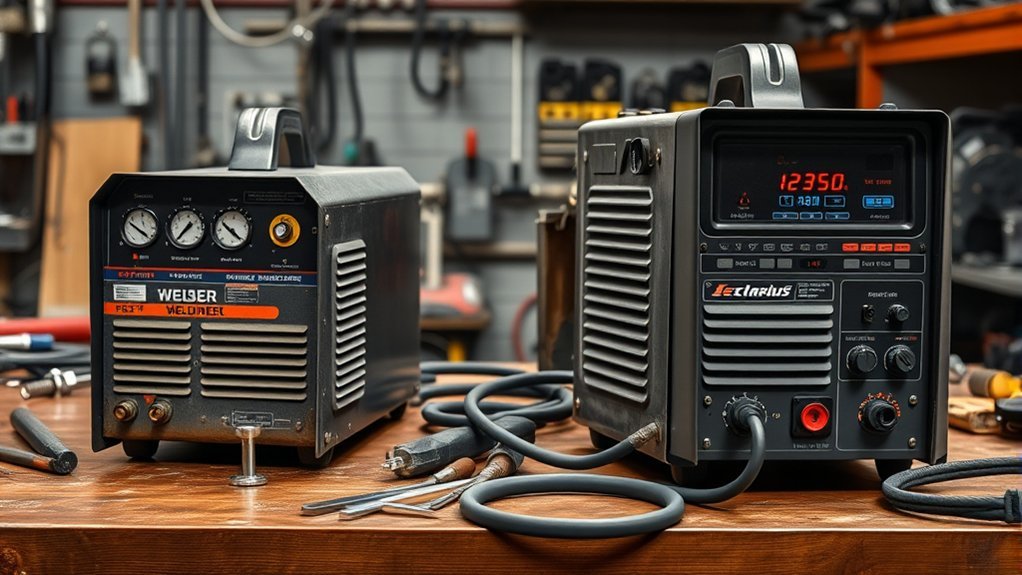
Entry-level and professional machines differ in more than maximum amperage. The key differences are duty cycle, controls, power requirements, process capability, serviceability, cooling, included equipment, and how consistently the machine can support your workload.
| Tier | Current Price Signal | Typical Buyer | What to Prioritize |
|---|---|---|---|
| Entry Portable | Roughly $120 – $600 in many current examples | DIY, learning, occasional repair | Safe input power, required process, material capability, warranty |
| Shop / Advanced Portable | Roughly $500 – $2,500+ in many current examples | Regular fabrication, automotive, maintenance | Duty cycle, dual voltage, process controls, service support |
| Engine-Driven Field Equipment | Roughly $2,400 – $6,850 in current examples | Construction, mobile repair, field work | Weld output, generator output, engine service, fuel, transport |
| Industrial / Specialized | Often dealer- or configuration-dependent | Production and specialized commercial work | Throughput, automation, cooling, integration, service, acceptance requirements |
Do not buy a professional machine only because it has more settings. Pay for the duty cycle, output, process control, reliability, and support your actual workload requires.

The DeLonghi Water Filter helps reduce scale buildup and unwanted impurities that can affect your coffee machine's performance and taste. Its active carbon and ion-exchange technology helps improve brew consistency, maintain flavor, and reduce the need for frequent descaling. Designed as an OEM authorized replacement part, it fits select DeLonghi models for reliable everyday maintenance.

This daily devotional helps parents pray purposefully for their children through a full year of Scripture readings, reflections, and guided prayer prompts. Written to encourage faithful family discipleship, it offers practical, biblically grounded support for parents who want to shape their prayers around God's Word. A foreword by Sinclair B. Ferguson adds trusted theological insight and encouragement.

This versatile cookware set equips home cooks with essential pots, pans, and a steamer insert for everyday meals and larger gatherings. The aluminum-encapsulated base promotes quick, even heating, while Cool Grip handles and tight-fitting glass lids support comfortable, controlled cooking. Designed for stovetop, oven, broiler, and dishwasher use, it offers reliable performance across a wide range of recipes.
Importance of Safety Gear in Welding
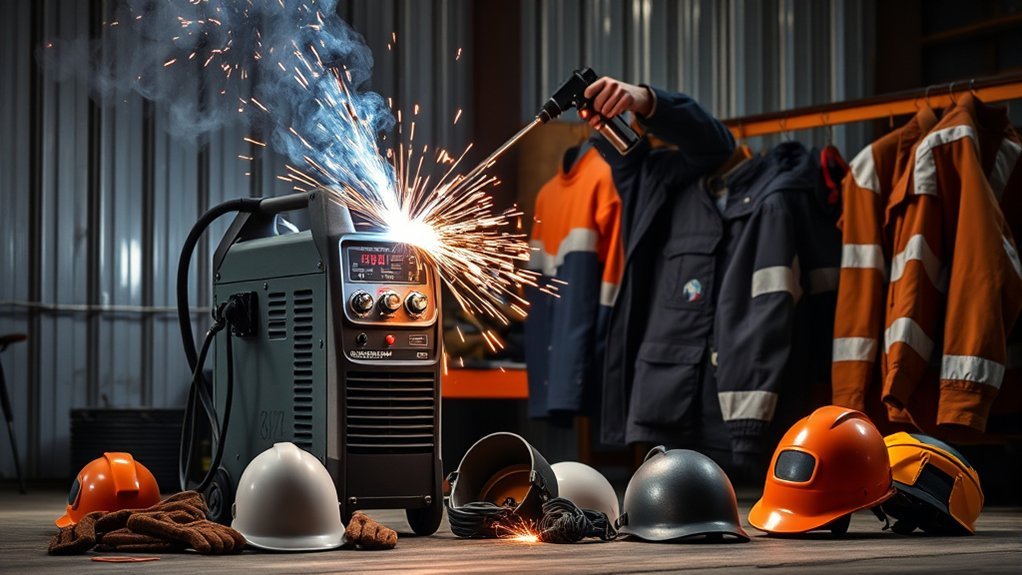
Safety equipment is part of the welding budget, not an optional add-on. Welding creates risks from arc radiation, sparks, hot metal, electrical energy, fumes, gases, noise, and nearby combustible material.
For covered workplaces, OSHA 29 CFR 1910.252 addresses welding, cutting, and brazing requirements, including PPE and ventilation. NIOSH also notes that welding fumes contain metals and that exposure varies with the process, consumables, base metal, coatings, and work environment.
| Safety Category | What to Plan For |
|---|---|
| Eye and Face Protection | Suitable welding helmet or hand shield plus appropriate eye protection for the task. |
| Protective Clothing | Flame-resistant or otherwise suitable clothing that covers exposed skin. |
| Hand Protection | Welding gloves selected for the process and heat exposure. |
| Hearing Protection | Protection where grinding, cutting, gouging, or other noise exposures require it. |
| Fume Control | General or local exhaust ventilation and additional controls appropriate to the material and workspace. |
| Fire Control | Remove or protect combustible material and provide suitable fire-prevention equipment for the work area. |
Ventilation deserves special attention indoors and in confined or enclosed spaces. Local exhaust ventilation captures fumes near the source more effectively than simply moving air around the room. Respiratory protection may also be required in some workplaces and materials, but it must be selected as part of an appropriate hazard-control program.
Long-Term Investment and Equipment Longevity
The lowest purchase price is not always the lowest long-term cost. A useful comparison includes the machine, required accessories, consumables, electrical or gas setup, repair access, downtime, and replacement parts.
Use this simple decision rule:
Five-year equipment cost = purchase price + required setup + consumables + scheduled maintenance + expected repairs + downtime-related cost – expected resale value.
You do not need to predict every dollar perfectly. The point is to compare competing machines using the same assumptions.
A higher-priced welder can make financial sense when it gives you a required process, enough duty cycle for production, local service, or included equipment you would otherwise buy separately. A cheaper machine can be the better choice when your jobs are short, infrequent, and comfortably within its published capacity.
Key Considerations for Choosing the Right Welder
Choose the welding process first and the machine second. Start with the metal, thickness, work location, desired finish, and amount of welding you expect to do.
- Define the process: Decide whether MIG, flux-core, TIG, stick, or a combination actually fits your projects.
- Check the material: Aluminum, stainless steel, mild steel, and coated metals can require different processes, consumables, or controls.
- Check input power: Verify that your workspace can safely supply the voltage and circuit the machine requires.
- Check output and duty cycle: Match them to the thickness and duration of your normal work, not just the maximum advertised amperage.
- Check the package: Confirm whether the gun or torch, leads, regulator, pedal, spool gun, electrode holder, and other required parts are included.
- Check portability: Weight and dual-voltage capability matter if you move between jobsites.
- Check service: Warranty length matters less if obtaining parts or authorized repair is difficult.
- Compare complete cost: Add required accessories, gas, consumables, PPE, electrical work, shipping, and taxes before deciding which machine is cheaper.
For TIG-specific machine and service pricing, see the TIG welding cost guide.
Frequently Asked Questions
How Much Does a Welding Machine Cost in 2026?
Current U.S. major-retailer examples checked September 7, 2026 range from about $120 for compact entry-level machines to about $6,850 for large engine-driven welders. Portable electric MIG, TIG, stick, and multiprocess machines usually fall into narrower ranges. Exact price depends on process, output, duty cycle, input voltage, features, and package contents.
What Is the Cheapest Type of Welding Machine?
Compact flux-core and portable stick machines are among the lowest-cost new options in current retail listings. The cheapest machine is not automatically the cheapest complete setup, so compare required wire or electrodes, gas equipment, leads, PPE, and electrical requirements too.
Is a 120V Welder Enough for Home Use?
A 120V welder can be suitable for lighter repairs and projects that remain within the exact machine’s published material and output limits. For thicker material, longer welds, or higher output, compare 240V or dual-voltage models. Always follow the manufacturer’s circuit requirements.
What Additional Tools Do I Need for Welding?
At minimum, plan for suitable eye and face protection, gloves, protective clothing, work-holding equipment, cleaning and preparation tools, and process-specific consumables. Depending on the machine, you may also need shielding gas, a regulator or flowmeter, a TIG torch, foot control, spool gun, additional leads, or ventilation equipment.
Which Costs Are Usually Not Included in the Welder Price?
Depending on the package, the advertised price may exclude shielding gas, gas cylinder, regulator, TIG torch, foot pedal, spool gun, extra leads, consumables, PPE, ventilation, shipping, tax, or electrical work. Check the included-equipment list before comparing two machines.
Should I Buy a MIG, TIG, Stick, or Multiprocess Welder?
Choose MIG for fast general fabrication and automotive work, stick for outdoor repair and thicker steel, TIG for precise work and suitable aluminum or stainless applications, and multiprocess when you genuinely need several processes in one machine. Verify the exact TIG and aluminum capabilities because multiprocess models differ.
Are There Financing Options Available for Purchasing a Welder?
Some retailers and equipment dealers offer financing or third-party payment plans. Compare the total financed cost, interest, fees, term, warranty coverage, and return policy rather than looking only at the monthly payment.
How Can I Maintain My Welding Machine?
Follow the manufacturer’s maintenance schedule. Inspect leads and connectors, keep cooling passages clear, replace process-specific wear parts, and maintain the gun, torch, wire feeder, cooling system, or engine as applicable. Disconnect the machine from power before performing service that requires it.
What Are the Safety Regulations for Welding at Home?
Workplace OSHA rules and private hobby use are not identical. At home, follow the machine manufacturer’s instructions and applicable local electrical, fire, building, compressed-gas, and property requirements. Use suitable PPE, control welding fumes, remove combustible hazards, and never assume that an open garage automatically provides adequate fume control.
Can I Rent a Welding Machine Instead of Buying?
Yes. Renting can make sense for a short project, an occasional high-output job, or when you want to evaluate a machine class before buying. Compare the full rental cost, including delivery, pickup, fuel, consumables, damage waiver, accessories, and the rental period.
Conclusion
Welding machine cost in 2026 depends mainly on process, output, duty cycle, input power, controls, and what the package includes. Current retail examples range from roughly $120 for compact machines to about $6,850 for engine-driven equipment, but a more useful comparison is the cost of the exact machine class that fits your work.
Choose the welding process first, verify input power and duty cycle second, then compare complete package cost. Include the accessories, gas, consumables, PPE, electrical requirements, service support, and other equipment needed to make the machine usable. That gives you a better buying decision than choosing from the sticker price alone.
Sources Used for the September 2026 Update
- Current Home Depot U.S. welding-machine listings checked September 7, 2026 for representative retail price examples.
- OSHA 29 CFR 1910.252, Welding, Cutting, and Brazing, for workplace PPE, fire-prevention, and ventilation requirements.
- OSHA 29 CFR 1926.353 for ventilation and protection in construction welding, cutting, and heating.
- NIOSH Welding Fumes and Manganese guidance for welding-fume exposure context.
- NIOSH Engineering Controls Database guidance on local exhaust ventilation for welding operations.
- MillerWelds duty-cycle guidance for selecting duty-cycle capacity around expected output and workload.

This self-help book offers practical guidance for breaking free from overthinking, emotional chaos, and self-sabotage. Written by Daniel Chidiac, it helps readers build stronger self-awareness, emotional resilience, and healthier mental habits. A valuable read for anyone looking to regain control of their thoughts and responses.

This versatile Cuisinart cookware set provides essential pots and pans for everyday cooking, from sauces and soups to sautéing, simmering, and frying. The aluminum-encapsulated base promotes fast, even heating, while cool-grip handles and tight-fitting glass lids support comfortable, efficient cooking. Designed for broad compatibility, it is dishwasher safe and oven safe for flexible use across many recipes.

This silky, lightweight K-beauty face primer visibly smooths skin and minimizes the appearance of pores for a refined, velvety look. Its soft-matte finish helps reduce shine and creates a smooth base that supports longer-lasting makeup wear without feeling heavy. Suitable for all skin types, it works well under powder, liquid, or cream foundation and is designed to glide on evenly for a flawless finish.
