

Welding classes range from low-cost community courses to intensive private career programs. The final price depends on the program length, your residency, lab fees, required equipment, and whether testing is included. Before enrolling, compare the school’s complete written cost and training outcomes—not just its advertised tuition.
Quick Answer
Welding classes can cost a few hundred dollars for a short college course. Full certificate, diploma, or degree programs usually cost several thousand dollars, while some private career programs approach $30,000 when equipment and supplies are included. Always compare the school’s published total program cost, not tuition alone.
Key Takeaways
- A single introductory class can cost hundreds of dollars, while complete career programs can cost several thousand to nearly $30,000.
- Add lab fees, books, PPE, boots, hand tools, certification tests, transportation, and living expenses to the advertised tuition.
- Most schools provide welding machines and shop equipment, so do not buy a machine unless it appears on the official supply list.
- A school completion certificate is not automatically the same as an AWS Certified Welder credential or an employer qualification.
- Financial aid and scholarships may help, but the exact school and program must meet the applicable eligibility rules.
At a Glance
| Single Class | Often a few hundred dollars, depending on credits, residency, and supplies |
| Career Program | Several thousand dollars at many public programs; private intensive training can cost much more |
| Common Extras | PPE, boots, hand tools, books, lab fees, consumables, tests, transportation, and housing |
| Best Comparison | Total out-of-pocket cost, hands-on lab hours, included processes, credentials, and local employment outcomes |
Cost Overview of Welding School

There is no reliable single national price for welding classes. A short community-college course, a one-year diploma, and a private pipe-welding program are different products with different costs.
For example, Porterville College publishes a total cost of $360 for its six-unit welding job-skills certificate, including $50 for gloves and safety glasses. At the other end of the range, Arkansas Welding Academy lists $18,713 in tuition and fees plus $11,097 for equipment and supplies for its 26-week Master Pipe and Structural Welding program.
Published welding-program prices can range from a few hundred dollars for a short college credential to nearly $30,000 for intensive private training with equipment and supplies.
These examples are not national averages. They show why you should obtain a written cost sheet from every school you are considering.
Products Worth Considering

ANSI Z87.1 CERTIFIED EYE PROTECTION: Meets the ANSI Z87.1 impact standard to help shield eyes from dust, debris, and flying particles. Clear polycarbonate lenses give sharp visibility for workshops, warehouses, labs, garages, and job sites.

Reinforced Stitching: Features double stitching with flame-resistant thread and rivet design for enhanced durability and longevity under heavy-duty use.

Function: Genuine leather welding hoods are heat and fire resistant and protect your head, face and neck from shooting sparks, debris, sawdust and welding slag.
What Is Included in the Advertised Price?
Ask whether the published amount includes all of the following:
- Tuition for every required course or clock hour
- Registration, technology, activity, and laboratory fees
- Metal, electrodes, wire, gas, and other consumables
- Books, online course access, and blueprint-reading materials
- Welding helmet, jacket, gloves, safety glasses, and boots
- Hand tools, grinders, clamps, gauges, and replacement lenses
- Certification or qualification test fees
- Insurance, drug testing, physical exams, or background checks
- Retesting fees and replacement consumables
Pro Tip: Ask the school for its complete cost-of-attendance sheet and required tool list before paying a deposit. Compare the same categories across every program.
Types of Welding Institutions

Welding education is available through community colleges, public technical schools, private career schools, continuing-education departments, high-school career programs, unions, and employers.
Community Colleges and Public Technical Schools
Public schools may offer individual courses, short certificates, diplomas, and associate degrees. In-district or in-state students often pay less than out-of-district students. Public programs may also provide transferable credits and access to broader student services.
Private Trade and Career Schools
Private programs often use an accelerated schedule with many shop hours each week. This can help students finish sooner, but the total price may be higher. Review the cancellation policy, refund schedule, equipment package, and job-placement claims before signing an enrollment agreement.
Apprenticeships and Employer Training
An apprenticeship or employer training program may let you earn wages while learning. Availability depends on local employers, unions, contractors, and manufacturing companies. These pathways can be competitive and may require travel, entrance testing, or a long-term work commitment.
High-School and Dual-Enrollment Programs
Some students can begin through a high-school career and technical education program or dual enrollment. These options may reduce later tuition, but age, transportation, and laboratory rules vary by district and college.
Program Length and Structure
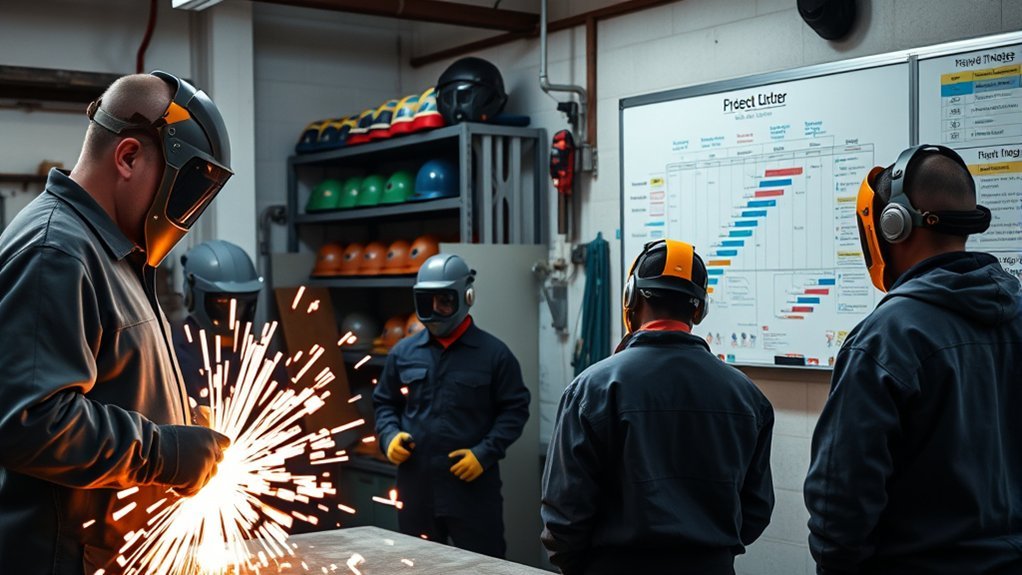
Program length may range from a few weeks for one focused course to two years or more for a degree. Compare clock hours and hands-on lab time instead of choosing a program by calendar length alone.
Individual and Continuing-Education Classes
These courses may focus on basic MIG, TIG, stick, fabrication, art welding, or a specific skill. They can work well for hobbyists, current tradespeople, or students who want to test their interest before entering a full program.
Certificate and Diploma Programs
Career certificates and diplomas usually combine safety, blueprint reading, cutting, fabrication, and several welding processes. A stronger program should provide enough booth time for repeated practice rather than relying mainly on lectures or demonstrations.
Associate and Bachelor’s Degree Programs
An associate degree may add general education, technical math, metallurgy, inspection, and management courses. Four-year welding engineering or welding engineering technology programs are different from entry-level welder training and may prepare students for engineering, automation, quality, or supervisory work.
Note: A shorter program is not automatically a better value. Compare supervised lab hours, class size, equipment access, instructor experience, and the welding processes taught.
Additional Welding School Costs

Tuition is only one part of the cost. Your real budget should include every school charge plus the personal expenses created by attending class.
Products Worth Considering

Comprehensive Welding Protection Package: this welding protection gear set, with a color of yellow, is a handy kit that includes a welding apron, a pair of welding gloves, a pair of welding sleeves, a welding hood and boot covers; This all encompassing package is designed to meet your safety needs and provide full coverage, safeguarding you from welding splashes and intense heat

REPLACEMENT WELDING HELMET HEADGEAR - Jackson Safety's Premium 370 Speed Dial Replacement Headgear offers a perfect fit and secure hold for your welding hood

FR Materials: Crafted from 6.5oz 100% cotton denim treated for fire resistance, featuring FR buttons and FR sewing threads. A clear FR tag is positioned on the arms and lower front, with additional UL certification details on the neck tag. We Attached A Small Sample Inside Package For Cunstomers Simple FR Try
Equipment and Materials Expenses
Students may need a welding helmet, safety glasses, gloves, leather or flame-resistant clothing, work boots, hand tools, replacement lenses, and basic measuring tools. Some schools include these items in a package, while others require students to buy them separately.
Warning: Do not buy a welding machine before school unless the official supply list requires one. Most training labs provide machines, booths, ventilation, and large shop equipment.
Welding also involves serious hazards. The Occupational Safety and Health Administration identifies risks that include metal fumes, ultraviolet radiation, burns, eye injuries, electrical shock, and cuts. A reputable program should teach ventilation, fire prevention, cylinder handling, electrical safety, and correct PPE use from the beginning.
Living Costs Considerations
Students who reduce their work hours, commute long distances, or relocate may spend more outside the classroom than they spend on books and tools. Build a monthly budget before enrolling.
| Budget Category | What to Include |
|---|---|
| Housing and utilities | Rent, electricity, water, internet, deposits, and moving costs |
| Transportation | Fuel, public transit, parking, tolls, repairs, and travel to testing sites |
| Food and personal needs | Meals, work clothing, laundry, phone service, and basic household costs |
| Lost income | Wages lost because of daytime classes, homework, or commuting |
| Family expenses | Child care, dependent care, and schedule changes |
Funding Options for Welding School

Students may be able to combine grants, scholarships, employer support, veterans’ education benefits, work-study, payment plans, and loans. Availability depends on the student, institution, and exact program.
Scholarships and Grants
Search for aid through the school, state workforce agency, local foundations, unions, employers, and industry groups. Grants and scholarships normally do not require repayment, but each award has its own eligibility, deadline, attendance, and grade rules.
Veterans and eligible family members should confirm that the exact welding program is approved for the benefit they plan to use. Approval of one school program does not automatically mean every course at that school qualifies.
Federal Student Loans
The Free Application for Federal Student Aid is free to submit and may help eligible students access grants, work-study, and federal loans for college or career school.
Not every short welding class or private program participates in federal student aid. Ask the financial-aid office for the school’s federal school code and written confirmation that your exact program is eligible.
Direct Subsidized Loans are limited to eligible undergraduate students with financial need. Other federal loans have different rules. Review the interest rate, fees, repayment terms, and total amount borrowed before accepting any loan.
Financial Aid Resources
Use this order when planning how to pay:
- Apply for grants and scholarships.
- Ask about state workforce funding and employer tuition assistance.
- Check whether paid apprenticeship opportunities are available.
- Use savings or an interest-free school payment plan when practical.
- Compare federal loan terms before considering private education loans.
- Borrow only the amount needed after other aid is applied.
Pro Tip: Compare each school’s net price after grants and scholarships. A school with higher advertised tuition may cost less out of pocket if it offers more non-loan aid.
How to Compare Welding Programs
Price matters, but a cheap program is not a bargain if students receive little booth time or leave without the skills local employers test.
Ask each school these questions in writing:
- What is the total cost from enrollment through graduation?
- How many classroom, laboratory, and booth hours are included?
- Which processes are taught: SMAW, GMAW, FCAW, GTAW, oxyfuel, plasma cutting, or others?
- How many students share each booth or machine?
- Which tools and PPE must students buy?
- Are consumables and test plates included?
- Which completion certificates, credentials, or qualification tests are included?
- Are testing and retesting fees included?
- What percentage of enrolled students complete the program?
- How does the school calculate its job-placement rate?
- Which local employers hire recent graduates?
- Can credits transfer to another college?
- What is the withdrawal and refund policy?
- Is the exact program eligible for the financial aid you plan to use?
School Certificate vs. Welding Certification
A school certificate usually confirms that you completed its curriculum. It does not automatically prove that you passed a code-based welding performance test.
The AWS Certified Welder program requires a hands-on performance qualification test at an AWS Accredited Testing Facility. AWS does not require a welding-school diploma or a set amount of experience before that test.
Employers may also require you to qualify for a particular process, metal, position, thickness, or welding procedure. Ask the school to name the exact test and issuing organization instead of accepting a vague promise of “industry certification.”
Career Prospects and Benefits of Attending Welding School
According to the U.S. Bureau of Labor Statistics, welders, cutters, solderers, and brazers had a median annual wage of $51,000 in May 2024. The lowest 10% earned less than $38,130, while the highest 10% earned more than $75,850.
Those figures cover workers at all experience levels. A new graduate may earn less than the median, especially without overtime, travel, specialized qualifications, or prior industrial experience. Pay varies by employer, region, industry, skill, shift, and working conditions.
BLS projects 2% employment growth from 2024 through 2034, which is slower than the average for all occupations. However, it also projects about 45,600 openings per year, mostly because workers change occupations or leave the workforce.
The current national median is $51,000, but training does not guarantee that salary. Local wages, qualifications, experience, overtime, and industry have a major effect on earnings.
A strong training program can help you build practical skills, read blueprints, follow safety procedures, and prepare for employer welding tests. School is one route into the trade, not the only route.
Cost of Living Considerations
Living costs should be based on the city where you will study, not a national estimate or an unexplained statewide average. Housing near a school may cost more than a longer commute, but commuting adds fuel, parking, vehicle wear, and travel time.
Compare at least three realistic plans:
- Remain at home and commute
- Rent near the school
- Choose a nearby part-time, evening, or public program
Include deposits and one-time moving costs as well as monthly expenses. Also consider whether a full-time daytime program will force you to reduce your paid work hours.
Products Worth Considering

Detachable Large Capacity Welding Bag :Removable helmet bag for maximum protect & storage versatile helmet

STRONG & DURABLE WELDING BACKPACK: Made of high quality 600D polyester,four sturdy & waterproof rubber feet on the bottom make the welder bag more wear-resistant.
Travel and Personal Expenses
Travel costs can include fuel, public transportation, parking, tolls, vehicle repairs, and trips to off-campus testing facilities. Students may also spend more on meals, laundry, replacement work clothes, gloves, lenses, grinding discs, and small tools.
Estimate transportation by multiplying your round-trip distance by the number of class days, then add parking and a repair allowance. For public transit, confirm that the schedule works for early-morning, evening, and weekend lab sessions.
Is Welding School Worth the Investment?
Welding school may be worth the cost when it provides substantial supervised practice, teaches the processes used by local employers, fits your schedule, and can be completed without unmanageable debt.
Before enrolling, compare:
- Your total out-of-pocket cost after grants and scholarships
- The number of hands-on training hours
- Local entry-level wages rather than national top-end pay
- The school’s completion and employment outcomes
- The cost of an apprenticeship or employer-training alternative
- The amount and monthly payment of any proposed loan
Be cautious when a school promises a specific salary or job. Employers make their own hiring decisions, and graduates may still need to pass company-specific welding tests.
Frequently Asked Questions
Are there age restrictions for enrolling in welding classes?
Age rules vary by school, course, insurance policy, and laboratory. Some colleges offer high-school dual enrollment, while other programs require a diploma, GED, minimum age, or parental permission. Check the exact admission and shop-safety requirements before applying.
What materials do students need to purchase for welding classes?
Common purchases include a welding helmet, safety glasses, gloves, flame-resistant clothing, leather work boots, pliers, clamps, gauges, and measuring tools. Schools usually provide welding machines and shop equipment, but requirements vary. Buy only from the official supply list.
Can I take welding classes online or only in person?
Safety theory, blueprint reading, welding symbols, and technical math may be taught online. However, career preparation requires supervised in-person practice with welding and cutting equipment. A fully online course cannot provide the hands-on booth time needed to develop welding skill.
What certifications can I earn from welding courses?
You may receive a school completion certificate or prepare for a performance qualification. An AWS Certified Welder credential requires a hands-on test at an AWS Accredited Testing Facility. Ask the school for the exact credential name, issuing organization, test standard, and additional fee.
Is prior welding experience required to enroll?
Beginner classes usually do not require welding experience. Intermediate pipe, TIG, fabrication, and code-preparation courses may require earlier classes or a skills test. Review the prerequisites for each course instead of assuming every program starts at the beginner level.
How long does welding school take?
One focused course may last several weeks. Career certificates and diplomas may take several months to about a year, while an associate degree usually takes about two years. Part-time schedules take longer. Compare clock hours and lab hours as well as the calendar length.
Can financial aid pay for welding school?
It may. Eligible students at participating schools and programs may qualify for grants, work-study, or federal loans after completing the FAFSA. Scholarships, veterans’ benefits, state workforce funding, employer assistance, and payment plans may also help. Confirm eligibility for the exact program.
Do I have to attend welding school to become a welder?
Not always. Welders may learn through technical school, an apprenticeship, military training, employer instruction, or supervised work experience. Employers often care about demonstrated skill and the ability to pass their welding test. Formal school can provide structured practice and broader technical instruction.
Conclusion
Welding classes can cost a few hundred dollars for a short college course or many thousands for a complete career program. The most useful number is the total cost after tuition, fees, tools, PPE, testing, transportation, living expenses, grants, and scholarships are included.
Compare programs by hands-on training hours, safety standards, processes taught, credentials, local employer connections, completion outcomes, and debt—not by tuition alone. Welding school can be a practical investment, but the right choice depends on your local job market, career goal, schedule, and available training alternatives.
Sources
- U.S. Bureau of Labor Statistics: Welders, Cutters, Solderers, and Brazers — national wages, entry requirements, employment outlook, and annual openings
- USAGov: Free Application for Federal Student Aid — FAFSA purpose, aid categories, and application information
- American Welding Society: Certified Welder Program — testing, eligibility, accredited testing facilities, and certification requirements
- Occupational Safety and Health Administration: Welding Hazards and Solutions — welding fumes, radiation, burns, electrical hazards, and PPE
- Porterville College Welding Program — published example of a low-cost college welding credential
- Arkansas Welding Academy Program Cost — published tuition, equipment, supplies, hours, and refund information for an intensive private program
