The cost of living in Australia in 2026 runs about A$2,800–4,200 (US$1,940–2,910) a month for a single person sharing a house, and about A$4,000–6,000 (US$2,770–4,160) for a single person renting a unit alone in a capital city. A couple should plan on roughly A$5,000–7,500 (US$3,470–5,200), and a family of four about A$6,500–10,500 (US$4,505–7,280) before childcare. These figures use the Reserve Bank of Australia rate of US$0.6933 per Australian dollar (October 2, 2026). Rent is the biggest cost by far. A median unit costs A$780 a week in Sydney but A$520 in Hobart. Inflation picked up to 4.0% in August 2026, driven by electricity and fuel. Below you’ll find city rents, food and transport costs, wages, taxes, childcare, healthcare, and sample budgets.
Quick Answer
- Single person, shared house: A$2,800–4,200 (~US$1,940–2,910) a month.
- Single person, renting a unit alone: A$4,000–6,000 (~US$2,770–4,160), more in Sydney.
- Couple: A$5,000–7,500 (~US$3,470–5,200).
- Family of four: A$6,500–10,500 (~US$4,505–7,280) before full-time childcare.
- Median unit rent: A$520–780 a week (A$2,253–3,380 a month) across the capital cities in June 2026.
- Minimum wage: A$26.44 an hour or A$1,004.90 a week from July 1, 2026.
- Inflation: 4.0% in the year to August 2026.

Experience J.R.R. Tolkien's legendary Middle-earth saga in a compact hardcover boxed set that brings together The Hobbit and The Lord of the Rings. This deluxe collection is ideal for readers who want a portable, collectible edition of the classic fantasy adventures, making it perfect for gifting, re-reading, and building a treasured library. The boxed presentation adds display appeal while the hardcovers offer lasting durability for years of enjoyment.

Reparenting the Inner Child offers a compassionate, science-informed guide to understanding and healing long-standing emotional wounds. Written by Dr. Nicole LePera, this hardcover book helps readers recognize patterns from dysfunctional family experiences and build healthier self-awareness, resilience, and relationships.

The Vornado 630 uses signature Vortex air circulation to move air throughout the room for more effective cooling and improved comfort. With three-speed manual controls and an adjustable tilt head, it lets you direct airflow and fine-tune performance for bedrooms, living rooms, or home offices. Built for whole-room circulation with efficient, high-velocity airflow, it also includes support backed by a multi-year replacement promise.
Exchange Rate, Inflation, and Wages in 2026
Three numbers shape what Australia costs you this year.
The exchange rate. The Reserve Bank of Australia set the Australian dollar at US$0.6933 on October 2, 2026. That means A$1,000 is worth about US$693. All US-dollar figures in this guide use that rate.
Inflation. Consumer prices rose 4.0% in the year to August 2026, up from 3.5% in July, according to the Australian Bureau of Statistics (ABS). Electricity jumped 13.2% after Commonwealth energy rebates ended, automotive fuel rose 13.5%, and rents rose 3.6%. The ABS living cost indexes show household costs rose between 3.7% and 4.7% in the year to June 2026, depending on household type. Mortgage interest, food, and rents were the main drivers.
Wages. The national minimum wage rose 4.75% on July 1, 2026, to A$26.44 an hour or A$1,004.90 for a 38-hour week, as reported by Trading Economics. That is about A$4,354 (~US$3,020) a month before tax. Average full-time adult ordinary earnings were A$2,083.70 a week in May 2026, according to ABS earnings data, or about A$9,030 (~US$6,260) a month before tax.
A full-time minimum-wage worker earns about A$4,350 a month before tax. That covers a shared-house budget, but renting a unit alone in Sydney would take most of it.
Living Costs by Household Type

There is no single official dollar figure for what a household needs. The ranges below combine capital-city rents with typical everyday spending. Crowd-sourced data puts everyday costs, excluding rent, at about A$1,600 a month for one person and A$5,750 for a family of four.
| Household | Monthly Range (A$) | Approx. USD | What It Assumes |
|---|---|---|---|
| Single, shared house | 2,800–4,200 | $1,940–2,910 | room rent, groceries, shared bills, public transport, phone, modest spending |
| Single, renting a unit alone | 4,000–6,000 | $2,770–4,160 | capital-city unit, utilities, food, transport, internet, health costs |
| Couple, no children | 5,000–7,500 | $3,470–5,200 | one unit or small house, shared bills, moderate spending |
| Family of four | 6,500–10,500 | $4,505–7,280 | house rent, groceries, utilities, transport, school costs; no full-time childcare |
Add debt repayments, private-school fees, paid parking, frequent dining out, or full-time childcare on top. A 10–15% buffer for irregular bills is sensible.
Cost of Living by City: Rent
Rent is the largest cost in every Australian household budget. The Domain June 2026 Rental Report shows median asking rents for each capital city. Monthly figures use weekly rent × 52 ÷ 12.
| Capital City | House per Week | Unit per Week | Unit per Month | Unit per Month (USD) |
|---|---|---|---|---|
| Sydney | A$850 | A$780 | A$3,380 | US$2,343 |
| Melbourne | A$600 | A$600 | A$2,600 | US$1,803 |
| Brisbane | A$700 | A$660 | A$2,860 | US$1,983 |
| Perth | A$750 | A$700 | A$3,033 | US$2,103 |
| Adelaide | A$650 | A$550 | A$2,383 | US$1,652 |
| Canberra | A$710 | A$580 | A$2,513 | US$1,742 |
| Hobart | A$625 | A$520 | A$2,253 | US$1,562 |
| Darwin | A$760 | A$650 | A$2,817 | US$1,953 |
A few patterns stand out:
- Sydney is the most expensive city. House rents jumped 6.3% in the June quarter alone to A$850 a week.
- Darwin had the fastest growth, with unit rents up 18.2% over the year to A$650 a week.
- Melbourne and Hobart are the cheapest capitals for units, and Melbourne rents have grown slowly.
- Perth rents are high but growth has slowed sharply.
- Regional towns can have lower rents, but fewer listings, less public transport, and longer drives can offset the savings.
Rental Bonds and Upfront Costs
Bond rules are set by each state and territory. New South Wales and Queensland generally cap a standard bond at four weeks’ rent. Victoria usually caps it at one month’s rent when weekly rent is A$900 or less. Before moving in, budget for the bond, two to four weeks’ rent in advance, temporary accommodation while you apply, furniture, and utility connections. Make sure the bond is lodged with the official state bond authority, and never pay for a property you have not inspected.
Utilities, Transport, and Connectivity
Electricity is one of the fastest-rising costs in 2026. Prices were up 13.2% in the year to August, mainly because the federal energy bill rebates ended. Climate, home size, insulation, and air conditioning all change the bill.
| Expense | Monthly Allowance (A$) | Approx. USD |
|---|---|---|
| Electricity, gas, water (small household) | 120–300 | $83–208 |
| Electricity, gas, water (family) | 250–500+ | $173–347+ |
| Home internet (NBN) | 60–100 | $42–69 |
| Mobile plan, per service | 20–60 | $14–42 |
| Public transport (monthly pass, crowd-sourced average) | about 133 | $92 |
| Gasoline (per liter) | about 1.91 | $1.32 |
Public Transport Fares
Fare systems differ by state:
- Queensland: Translink fares are 50 cents per trip on most services in South East Queensland and regional networks.
- New South Wales: adult Opal and contactless travel in Sydney is capped at A$50 a week, with lower daily caps on Fridays, weekends, and public holidays.
- Victoria: Melbourne’s full-fare daily myki cap is A$11, and a seven-day pass costs about A$55.
Check the local transport website before you budget, since fares are reviewed each year.
Owning a Car
Outside the inner suburbs of the big cities, many households need a car. Fuel prices rose 13.5% in the year to August 2026 after global oil prices climbed, and gasoline averages about A$1.91 a liter (~US$5 a gallon). Add registration, compulsory third-party insurance, comprehensive insurance, servicing, tolls in Sydney, Melbourne, and Brisbane, and parking. Together these fixed costs often add more each month than fuel itself, so price them before you buy.
Food: Groceries and Dining Out
A realistic 2026 grocery budget is about A$450–750 (~US$310–520) a month for one adult, A$750–1,200 for a couple, and A$1,200–1,800 for a family of four.
Typical supermarket prices (crowd-sourced, October 2026):
| Item | Typical Cost (A$) | Approx. USD |
|---|---|---|
| Milk (1 liter) | 2.46 | $1.71 |
| Eggs (12) | 7.17 | $4.97 |
| Chicken fillets (1 lb) | 5.96 | $4.13 |
| Beef (1 lb) | 9.74 | $6.75 |
| Cappuccino | 5.66 | $3.92 |
| Meal at an inexpensive restaurant | 25.00 | $17.33 |
| Domestic beer (pint) | 11.00 | $7.63 |
Compare ALDI, Coles, Woolworths, and local markets for the items you buy most. Unit pricing on shelf labels makes it easy to compare pack sizes. Keep takeaway, coffee, and restaurant spending in a separate budget line, since these add up fast.
Buying a A$25 lunch every workday costs about A$540 (~US$375) a month.
Childcare, Schools, and Family Costs
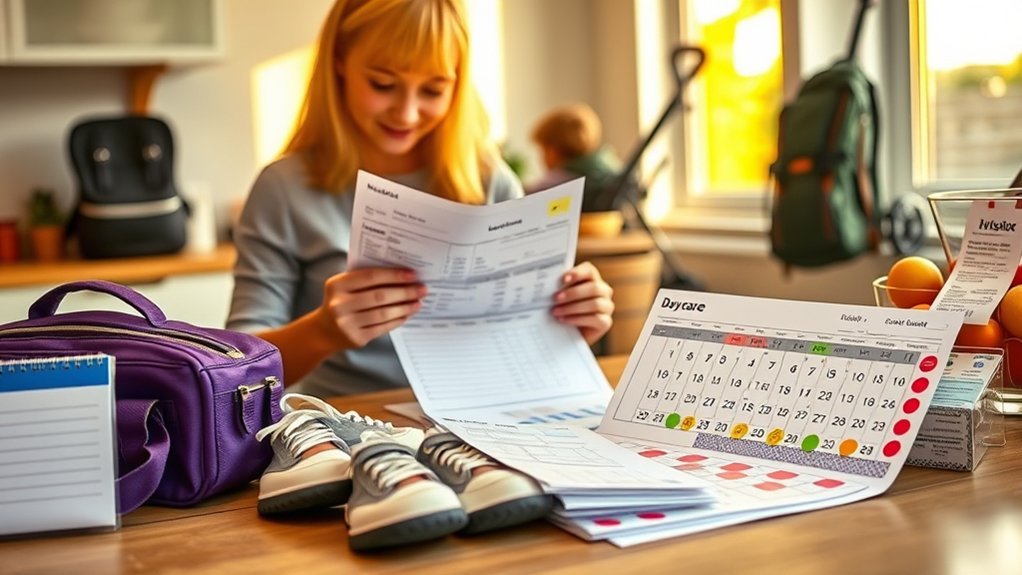
Childcare is the biggest variable for families. Government Child Care Subsidy data for the March 2026 quarter put the average hourly fee at about A$13.75 across approved care, and about A$14.50 for centre-based day care. At A$13.75, a 10-hour day costs A$137.50 before subsidy.
From January 5, 2026, the “3 Day Guarantee” replaced the old activity test. All eligible families can now receive at least 72 hours of subsidised care per child per fortnight, and some families qualify for 100 hours. The subsidy rate still depends on family income, and most families still pay a gap fee.
Public schools are free for citizens and permanent residents, though families pay for uniforms, devices, excursions, and camps. Some temporary visa holders must pay state school fees, so check your state’s rules for your visa type.
Healthcare and Insurance
Medicare covers many medical and hospital costs, but not for everyone. According to Services Australia, Australian citizens, permanent residents, and people who have applied for permanent residence can enrol. Visitors from countries with a reciprocal health care agreement may also qualify for some care.
Most temporary residents need private cover instead:
- Student visa holders must keep Overseas Student Health Cover (OSHC) for their whole stay.
- Other temporary visa holders often need Overseas Visitors Health Cover (OVHC).
- Residents on higher incomes without private hospital cover may pay the Medicare Levy Surcharge on top of the standard 2% Medicare levy.
Dental, optical, and many allied health services are not fully covered by Medicare, so budget for them separately.

This daily devotional helps parents pray purposefully for their children through a full year of Scripture readings, reflections, and guided prayer prompts. Written to encourage faithful family discipleship, it offers practical, biblically grounded support for parents who want to shape their prayers around God's Word. A foreword by Sinclair B. Ferguson adds trusted theological insight and encouragement.

From Brian Tyler Cohen, this book offers a progressive roadmap for protecting democracy and navigating a post-Trump political landscape. It blends political analysis with practical strategy, making it a timely read for voters, activists, and anyone seeking actionable insight into the future of American governance.

This Goldfish Big Smiles variety pack brings together cheddar, colors, and pretzel snack packs for easy grab-and-go snacking. Each serving is baked, not fried, and made with no artificial flavors or preservatives, making it a family-friendly choice for lunches, road trips, and after-school snacks. The assorted single-serve packs are also great for sharing, adding to soups, or serving alongside sandwiches.
Taxes: GST and Income Tax
Goods and services tax (GST) is 10% and is included in shelf prices. Basic fresh food, most health care, and education are GST-free.
Resident income tax rates for 2026–27, from the Australian Taxation Office:
| Taxable Income (A$) | Tax Rate |
|---|---|
| 0–18,200 | 0% |
| 18,201–45,000 | 15% of the amount over 18,200 |
| 45,001–135,000 | A$4,020 + 30% of the amount over 45,000 |
| 135,001–190,000 | A$31,020 + 37% of the amount over 135,000 |
| 190,001 and over | A$51,370 + 45% of the amount over 190,000 |
The lowest rate fell from 16% to 15% on July 1, 2026. A 2% Medicare levy applies on top. On the average full-time salary of about A$108,000 a year, income tax and the Medicare levy together take roughly A$25,000, leaving about A$6,900 a month. Non-residents pay higher rates and do not get the tax-free threshold.
One-Time Setup Costs
- Bond and rent in advance: about five to eight weeks’ rent, or A$2,600–6,200 for a median unit in a capital city.
- Temporary accommodation: two to four weeks in a short-stay rental while you inspect properties.
- Furniture and household goods: most rentals are unfurnished, so budget for a bed, appliances, and basics. Secondhand marketplaces can cut this cost a lot.
- Health cover: OSHC or OVHC premiums, often paid upfront for visa purposes.
- Car: a used car plus registration, insurance, and a roadworthy check if you live outside the inner suburbs.
- Emergency fund: at least two to three months of living costs while you find work or wait for the first pay.
Sample Monthly Budgets
These budgets show a single person renting a unit alone and a family of four renting a house in three cities. They use median rents, crowd-sourced everyday costs excluding rent (A$1,600 single, A$5,750 family), and exclude childcare and private school fees.
| City | Single, Unit Alone | Single (USD) | Family of Four, House | Family (USD) |
|---|---|---|---|---|
| Sydney | A$4,980 | US$3,453 | A$9,433 | US$6,540 |
| Melbourne | A$4,200 | US$2,912 | A$8,350 | US$5,789 |
| Brisbane | A$4,460 | US$3,092 | A$8,783 | US$6,089 |
Sydney everyday costs run above the national average, so treat the Sydney rows as minimums. Sharing a house can cut a single person’s total by A$1,000–2,000 a month.
Salary vs. costs. A full-time minimum-wage worker takes home roughly A$3,750 a month after tax. That covers a shared house in any capital city but not a unit alone in Sydney. A worker on the average full-time salary takes home about A$6,900 a month, enough for a single person renting alone almost anywhere, or a family in Melbourne or Brisbane with careful spending.
Money-Saving Tips
- Share housing at first. A room in a share house is the single biggest saving for newcomers.
- Search along transit lines. Suburbs further out on the same train line can be much cheaper.
- Compare energy plans every year using the government comparison tool for your state.
- Shop by unit price and try ALDI or markets for staples and produce.
- Use fare caps and concessions, and price public transport before buying a car.
- Check your Child Care Subsidy rate before you choose a centre, and compare gap fees.
- Review insurance, internet, and phone plans each year and ask for retention offers.
How Australia Compares With Nearby Countries
Australia is one of the most expensive countries in the Asia-Pacific region, mostly because of rent. The closest comparison is the cost of living in New Zealand, where rents are slightly lower but many goods cost more. For far cheaper Pacific options, see our guide to living costs in Fiji and what it costs to live in Papua New Guinea. Many Australians also compare monthly expenses in Indonesia, especially Bali, for long stays.
Frequently Asked Questions
How much money do you need to live in Australia per month?
A single person needs about A$2,800–4,200 (US$1,940–2,910) a month sharing a house, or A$4,000–6,000 (US$2,770–4,160) renting a unit alone in a capital city. A family of four needs about A$6,500–10,500 (US$4,505–7,280) before full-time childcare.
How much is rent in Australia in 2026?
In June 2026, median unit rents ranged from A$520 a week in Hobart to A$780 in Sydney, or about A$2,253–3,380 a month. Median house rents ranged from A$600 a week in Melbourne to A$850 in Sydney.
What is the minimum wage in Australia in 2026?
From July 1, 2026, the national minimum wage is A$26.44 an hour or A$1,004.90 for a 38-hour week, a 4.75% increase. That is about A$4,354 a month before tax.
Which Australian city is cheapest to live in?
Among the capital cities, Hobart and Melbourne had the lowest median unit rents in June 2026, at A$520 and A$600 a week. Adelaide is also relatively affordable. Sydney is the most expensive.
Is A$10,000 enough to move to Australia?
It can be enough for one person moving into shared housing, but it is tight for someone renting alone or for a family. Bond, rent in advance, temporary accommodation, furniture, health cover, and several weeks without income can use most of it.
Is Australia more expensive than the US?
Overall prices are similar. Crowd-sourced data puts Australia about 4.5% above the US on everyday costs and about 10% below on rent. Costs in a specific city matter more than the national average.
Conclusion
Australia is expensive, and 2026 has added pressure from electricity, fuel, and rising rents. Your city and housing choice decide most of your budget: a single person can manage on about A$2,800–4,200 a month in a share house, but renting alone in Sydney can push costs past A$5,000. Start with real rents for the suburb you want, add transport, health cover, and childcare, and keep a buffer for bills that rise faster than wages.
Sources
- Reserve Bank of Australia – exchange rates, October 2, 2026
- Australian Bureau of Statistics – Consumer Price Index, August 2026
- Australian Bureau of Statistics – Selected Living Cost Indexes, June 2026
- Australian Bureau of Statistics – Average Weekly Earnings, May 2026
- Domain – Rental Report, June 2026
- Trading Economics – Australia minimum wage, July 2026
- Australian Taxation Office – resident tax rates 2025–26 and 2026–27
- Services Australia – enrolling in Medicare
- Department of Education – Child Care Subsidy data, March quarter 2026
- Numbeo – Australia crowd-sourced prices, October 2026

Come Eat offers 100 approachable recipes designed to make everyday cooking more enjoyable, nourishing, and sustainable. With a focus on flavorful meals and practical preparation, this hardcover cookbook is ideal for home cooks looking for inspiration for salads, sides, and main dishes. Author Melissa Ben-Ishay shares recipes that encourage consistent, feel-good eating without sacrificing taste.

Blokus is a fast, easy-to-learn strategy board game that delivers engaging fun for kids and adults alike. Players place their pieces using one simple rule while trying to claim territory, block opponents, and fit as many pieces on the board as possible. Color-blind accessible patterns and family-friendly gameplay make it a great choice for game nights and parties.

These colorful answer buzzers turn lessons, review games, and family activities into lively game-show style challenges that boost participation and make learning more interactive. Each buzzer has a distinct sound to clearly identify who buzzed in first, while the durable, palm-sized design makes them easy for kids and adults to use in classrooms, homeschools, and group settings.