The cost of living in Bosnia and Herzegovina in 2026 runs about 1,240–1,710 KM a month (roughly $710–$980) for a single person living simply in Tuzla, Mostar, or outside a city center, and about 1,900–2,600 KM ($1,100–$1,505) for a comfortable life in Sarajevo. A couple should plan on 2,800–3,600 KM ($1,595–$2,070). These figures use the convertible mark’s fixed rate of 1.95583 KM per euro and the European Central Bank’s rate of $1.1225 per euro on October 2, 2026, which works out to about 1.74 KM per US dollar. Prices rose 4.9% in the year to August 2026, led by transport and housing costs, while the average net wage climbed to 1,732 KM. Below you’ll find city-by-city rents, official food and fuel prices, utilities, healthcare, residence rules, and sample budgets.
Quick Answer
- Single person, lean: about 1,240–1,710 KM (~$710–$980) a month in Tuzla, Mostar, or outer Sarajevo.
- Single person, comfortable: about 1,900–2,600 KM (~$1,100–$1,505) in Sarajevo with a central apartment.
- Couple: about 2,800–3,600 KM (~$1,595–$2,070) a month.
- Family of four: about 4,600–4,900 KM (~$2,640–$2,820) nationally, and about 6,100 KM (~$3,510) in central Sarajevo.
- Rent, one-bedroom: 340–540 KM (~$195–$310) outside the center; 450–805 KM (~$260–$460) in the center, depending on the city.
- Average net wage: 1,732 KM (~$995) a month in July 2026.
- Inflation: 4.9% in August 2026; transport up 22.9% and housing and utilities up 11.3%.
Currency, Wages, and Inflation in 2026
The currency. Bosnia and Herzegovina uses the convertible mark, written KM locally and BAM internationally. The Central Bank of Bosnia and Herzegovina runs a currency board that has fixed the mark at 1.95583 KM per euro since 1997. Against the dollar, the mark moves with the euro. At the ECB reference rate of $1.1225 per euro on October 2, 2026, one US dollar buys about 1.74 KM. Every dollar figure in this guide uses that rate.
Wages. The Agency for Statistics of Bosnia and Herzegovina (BHAS) reported an average net monthly wage of 1,732 KM (~$995) in July 2026, up 8.1% from a year earlier. Pay varies a lot by sector. In June, finance and insurance averaged 2,406 KM and IT 2,244 KM, while hotels and restaurants averaged 1,176 KM.
Inflation. According to the BHAS consumer price index for August 2026, prices were 4.9% higher than a year earlier and rose 1.1% from July. The pattern was uneven: food and drinks were 0.9% cheaper than a year ago, but housing and utilities rose 11.3% and transport 22.9%, mostly from fuel.
Groceries got slightly cheaper in 2026, but rent, heating, electricity, and fuel did not. Budget extra for those, especially for winter.
Cost of Living by City
Rent is where Bosnian cities differ most. The table uses crowd-sourced averages updated in early October 2026. Sarajevo has the most price reports; Mostar, Tuzla, and Banja Luka each have a few dozen contributors, so treat them as rough guides.
| City | 1-Bed, Center | 1-Bed, Outside Center | 3-Bed, Center | Basic Utilities |
|---|---|---|---|---|
| Sarajevo | 794 KM (~$456) | 542 KM (~$311) | 1,739 KM (~$998) | 382 KM (~$219) |
| Banja Luka | 805 KM (~$462) | 539 KM (~$309) | 1,214 KM (~$697) | 278 KM (~$160) |
| Mostar | 749 KM (~$430) | 439 KM (~$252) | 1,150 KM (~$660) | 161 KM (~$92) |
| Tuzla | 450 KM (~$258) | 337 KM (~$193) | 895 KM (~$514) | 233 KM (~$134) |
| National average | 562 KM (~$323) | 413 KM (~$237) | 988 KM (~$567) | 290 KM (~$166) |
A few patterns stand out:
- Sarajevo has the most jobs, international organizations, and services. Central rents and family-sized apartments cost the most here, and winter heating pushes utility bills higher than anywhere else.
- Banja Luka, the main city of Republika Srpska, costs about the same as Sarajevo for a one-bedroom but much less for a family apartment.
- Mostar has a mild climate and the lowest utility bills of the four. Tourism raises rents in the old town during summer.
- Tuzla has the lowest rents among the big cities, with one-bedrooms in the center under 500 KM.
Housing, Utilities, and Internet
A one-bedroom averages about 562 KM (~$323) in a city center and 413 KM (~$237) outside one nationwide. Renovated, furnished, and short-term apartments cost more. Before you sign, ask the landlord to confirm in writing:
- The deposit (usually one month) and any agency fee
- Which utilities are included in the rent
- How heating is billed: by meter, by floor area, or as a fixed building charge
- Whether building maintenance, garbage, and parking are extra
- Who pays for repairs
Utilities. Electricity, heating, water, and garbage for a mid-size apartment average about 290 KM (~$166) a month nationally and about 382 KM (~$219) in Sarajevo. Heating is the big swing factor. Many Sarajevo apartments are on district heating, billed by floor area through the winter, while others use gas, electric heaters, or wood. Household electricity averaged about 0.2 KM per kWh at the high tariff and 0.1 KM at the low (night) tariff in August 2026, according to BHAS.
Internet and phone. Home broadband of 60 Mbps or more averages about 48 KM (~$28) a month, and a mobile plan with 10 GB of data about 30 KM (~$17).
Ask to see one summer and one winter utility bill for the exact apartment. Insulation and the heating system can matter more than floor area.
Food: Groceries and Dining Out
Food is one of the few categories that got cheaper in 2026. BHAS publishes official average consumer prices each month. Its August 2026 figures:
| Item | August 2026 (KM) | Approx. USD |
|---|---|---|
| Wheat bread (1 kg) | 4.0 | $2.30 |
| Whole milk (1 liter) | 1.7 | $0.98 |
| Eggs (each) | 0.4 | $0.23 |
| Fresh chicken (1 kg) | 6.6 | $3.79 |
| Boneless beef (1 kg) | 26.8 | $15.38 |
| Cheese (1 kg) | 14.2 | $8.15 |
| Potatoes (1 kg) | 1.4 | $0.80 |
| Apples (1 kg) | 2.6 | $1.49 |
| Ground coffee (1 kg) | 28.3 | $16.24 |
A single person who cooks most meals typically spends about 350–450 KM (~$200–$260) a month on groceries. Meat-heavy diets and imported products raise that. Open-air markets offer the best prices on seasonal fruit and vegetables.
Eating out is affordable, and café culture is a big part of daily life. Crowd-sourced averages:
- Meal at an inexpensive restaurant: about 12 KM nationally (~$6.90), 15 KM in Sarajevo
- Three-course dinner for two at a mid-range restaurant: about 60 KM (~$34)
- Cappuccino: about 2.90 KM (~$1.66)
- Domestic draft beer (half liter): about 4 KM (~$2.30)
- Fast-food combo meal: about 12.50 KM (~$7.20)
Transportation and Fuel
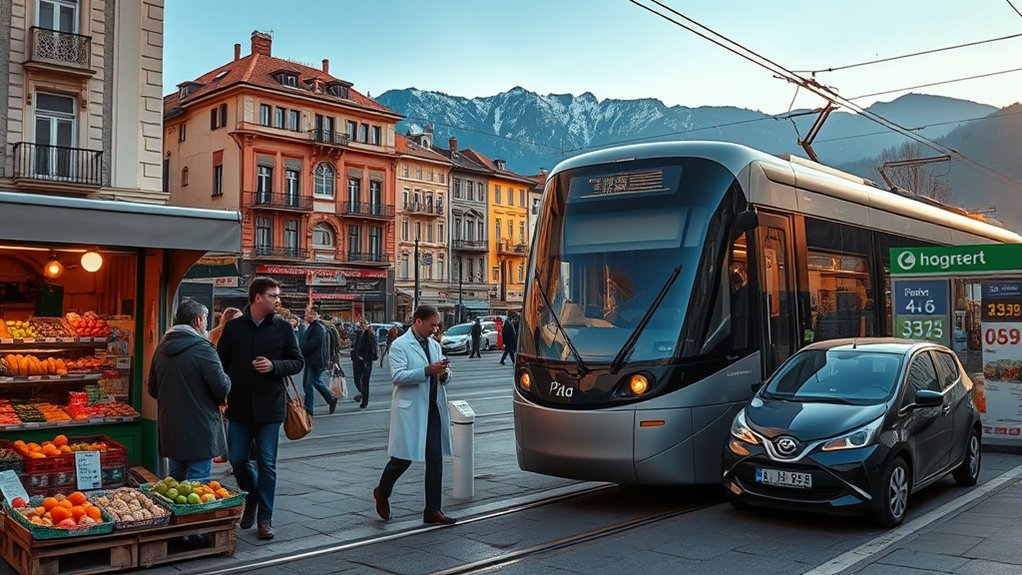
Public transport is cheap. A one-way ticket costs about 2.20 KM (~$1.26) in Sarajevo and most cities. Monthly passes run about 60 KM in Sarajevo, 64 KM in Mostar, 78 KM in Banja Luka, and 84 KM in Tuzla. Sarajevo has trams, trolleybuses, and buses; other cities rely on buses.
Fuel is where 2026 hurt most. BHAS reported average pump prices of 3.0 KM per liter for 95-octane gasoline (~$6.50 per gallon) and 3.4 KM per liter for diesel (~$7.40 per gallon) in August 2026, and transport costs overall were up 22.9% in a year. Taxis start at about 2.50 KM plus roughly 2 KM per kilometer. Owning a car adds registration, insurance, parking, and repairs, so many city residents skip it.
Healthcare and Insurance
Residents with jobs are covered by public health insurance through their canton or entity health fund, paid through payroll contributions. Newcomers on other residence grounds must show health insurance to get a permit.
The US State Department’s country page notes that adequate facilities exist mainly in Sarajevo, care outside major cities may be unavailable, and US Medicare does not apply. Many private clinics expect cash. Plan on:
- Private or international health insurance: the budgets below assume 80–200 KM (~$45–$115) a month for one adult. Replace this with your own quote.
- Prescriptions: bring medicines in original packaging, with a copy of the prescription.
- Emergency numbers: ambulance 124, police 122, fire 123.
Schools and Childcare
- Private full-day preschool: about 350 KM (~$200) a month per child.
- International primary school: about 6,565 KM (~$3,770) a year per child on average. A few international schools in Sarajevo charge considerably more, plus enrollment and transport fees.
- Public schools: free, teaching in Bosnian, Croatian, or Serbian depending on the area.
Taxes
VAT is a single 17% rate across the country and is included in shelf prices. Income tax is set separately by the Federation of Bosnia and Herzegovina, Republika Srpska, and Brčko District, and social contributions are taken from pay. Your home country’s tax rules still apply; US citizens file US returns wherever they live.
Visas and Residency
US, UK, Canadian, and EU citizens can visit without a visa for up to 90 days within six months. Your passport must be valid for at least three months past your planned departure. If you stay in private accommodation for three days or more, you or your host must register you with the local police within 48 hours. Hotels handle this for you.
To stay longer, you need a temporary residence permit. The Service for Foreigners’ Affairs lists grounds including work, study, family reunification, medical treatment, and owning property. Permits last up to one year and can be renewed. After five years of continuous temporary residence you can apply for permanent residence, which carries a 200 KM issuance fee and requires proof of funds, housing, health insurance, and knowledge of a local language.
One-Time Setup Costs
- Deposit, usually one month’s rent, plus any agency fee.
- Short-term lodging while you look for an apartment.
- Residence permit documents: certified translations, apostilles, and the application fee.
- Health insurance for the permit application.
- Winter supplies: an electric heater, warm bedding, or a first load of firewood, depending on the apartment.
- Furniture and appliances for an unfurnished unit.
Sample Monthly Budgets
These budgets combine the figures above.
| Expense (KM) | Single, Lean | Single, Sarajevo | Couple |
|---|---|---|---|
| Rent (1-bed) | 340–450 | 540–800 | 800–1,000 |
| Utilities | 230–290 | 380–420 | 400–450 |
| Internet + mobile | 75–80 | 75 | 105 |
| Groceries | 350–450 | 450–550 | 800–1,000 |
| Eating out + leisure | 100–200 | 250–400 | 350–500 |
| Transport | 60–90 | 60–120 | 120–200 |
| Health coverage | 80–150 | 100–200 | 200–350 |
| Gym | — | 57 | — |
| Total (KM) | 1,235–1,710 | 1,910–2,620 | 2,775–3,605 |
| Total (USD) | $710–$980 | $1,095–$1,505 | $1,595–$2,070 |
Family of four: crowd-sourced averages put a family’s monthly costs at about 3,930 KM (~$2,255) before rent nationally. Add a three-bedroom at 670–990 KM and the total is about 4,600–4,900 KM (~$2,640–$2,820). In central Sarajevo, family costs before rent average about 4,380 KM, and with a central three-bedroom the total reaches roughly 6,100 KM (~$3,510).
Salary vs. costs: the July 2026 average net wage of 1,732 KM covers the lean budget for one person but not a central Sarajevo apartment on its own. Many local households share housing or live with family.
Ways to Lower Your Costs
- Choose Tuzla or Mostar if you don’t need Sarajevo’s job market.
- Live outside the center. One-bedrooms average about 150 KM less outside city centers.
- Check the heating system first. Well-insulated apartments on district heating are often cheaper over a winter than ones with electric heaters.
- Buy local food. Bread, dairy, seasonal produce, and chicken are cheap; imported goods are not.
- Use a monthly transit pass rather than keeping a car, given 2026 fuel prices.
- Carry some cash. Smaller shops and markets may not take cards.
Safety and Practical Tips
The US State Department rates Bosnia and Herzegovina at Level 2, “exercise increased caution,” citing terrorism risk, petty crime such as pickpocketing in Sarajevo, and landmines. Mines and unexploded ordnance from the 1990s war remain in some rural and mountain areas, so stay on paved roads and marked trails. Winter air pollution is serious in Sarajevo, Tuzla, and Zenica, which matters if you have respiratory concerns.
How Bosnia and Herzegovina Compares With Nearby Countries
Bosnia and Herzegovina is one of the cheaper places to live in the Balkans, especially for rent outside Sarajevo. Next door, the cost of living in Croatia is higher, with EU membership and coastal rents to match. Our Serbia living cost guide shows similar prices, with Belgrade costing more than Sarajevo. For the coast at a lower price, see the Montenegro monthly budget breakdown, and for one of the cheapest options in the region, compare the cost of living in North Macedonia.
Frequently Asked Questions
How much money do you need to live in Bosnia and Herzegovina per month?
A single person needs about 1,240–1,710 KM (~$710–$980) a month for a simple life in Tuzla, Mostar, or outside a city center, and about 1,900–2,600 KM (~$1,100–$1,505) for a comfortable life in Sarajevo. A couple should budget about 2,800–3,600 KM (~$1,595–$2,070).
What is the average rent in Sarajevo?
A one-bedroom apartment averages about 794 KM (~$456) a month in central Sarajevo and about 542 KM (~$311) outside the center. A three-bedroom in the center averages about 1,739 KM (~$998).
What is the average salary in Bosnia and Herzegovina?
The average net monthly wage was 1,732 KM (about $995) in July 2026, according to the Agency for Statistics of Bosnia and Herzegovina. Finance and IT pay more than 2,200 KM on average, while hotels and restaurants pay under 1,200 KM.
Which city in Bosnia and Herzegovina is cheapest to live in?
Tuzla has the lowest rents among the large cities, with one-bedrooms averaging about 450 KM in the center and 337 KM outside it. Mostar has the lowest utility bills. Sarajevo and Banja Luka have the highest central rents.
What currency is used in Bosnia and Herzegovina?
The convertible mark, written KM locally and BAM internationally. It is fixed at 1.95583 KM per euro. In early October 2026, one US dollar was worth about 1.74 KM.
How long can Americans stay in Bosnia and Herzegovina?
US citizens can stay up to 90 days within six months without a visa. Your passport must be valid for three months past departure, and private stays of three days or more must be registered with police within 48 hours. Longer stays need a temporary residence permit.
Conclusion
Bosnia and Herzegovina remains affordable by European standards. A single person can live simply on about $710–$980 a month or comfortably in Sarajevo on $1,100–$1,505. Food prices eased in 2026, but fuel, heating, and housing costs rose, and rents in central Sarajevo and Banja Luka now take a large share of a local salary. Pick your city first, check winter heating costs before you sign a lease, and sort out your residence permit early if you plan to stay past 90 days.
Sources
- Central Bank of Bosnia and Herzegovina – convertible mark exchange rate
- European Central Bank – EUR/USD reference rate
- Agency for Statistics of BiH – average net wage, July 2026
- Agency for Statistics of BiH – average net wage by sector, June 2026
- Agency for Statistics of BiH – consumer price index, August 2026
- Agency for Statistics of BiH – average consumer prices, August 2026
- Service for Foreigners’ Affairs – stay of foreigners in BiH
- US Department of State – Bosnia and Herzegovina country information
- Numbeo – Bosnia and Herzegovina, Sarajevo, Banja Luka, Mostar, Tuzla (crowd-sourced averages, July–October 2026)