Panama can offer lower living costs than many large cities in the United States or Canada, but it is no longer accurate to describe every part of the country as extremely cheap. Your housing choice, air-conditioning use, health coverage, transportation, school needs, and preference for imported products will determine whether your monthly budget stays modest or rises quickly.
Quick Answer
A practical 2026 budget is roughly $1,400–$2,600 per month for one person and $2,400–$3,800 for a couple. Panama City, private healthcare, international schools, imported groceries, frequent driving, and beachfront housing can push costs much higher.
Key Takeaways
- Housing is usually the largest expense, with Panama City costing considerably more than many interior towns.
- Imported food, heavy air-conditioning, private insurance, car ownership, and school tuition can erase much of the expected savings.
- Very low budgets below $1,000 normally require owned or shared housing, an unusually simple lifestyle, or substantial local support.
- Panama follows a territorial approach to income tax, but the source of income and your obligations in another country require individual review.
- Rent before buying, collect written healthcare quotes, and test your chosen location during both wet and dry seasons.
Cost of Living in Panama: 2026 Budget Overview
There is no single national cost-of-living figure that works for every newcomer. Current prices vary substantially between central Panama City, outer city districts, Boquete, beach communities, and smaller interior towns.
The following ranges are planning estimates rather than official government budgets. They combine current rental and consumer-price benchmarks with allowances for utilities, food, communication, local transport, and routine personal spending.
| Household and Lifestyle | Planning Range | What It Usually Assumes |
| One person, interior town | $1,400–$2,000 per month | Modest rental, local food, limited driving, and controlled A/C use |
| One person, Panama City | $1,900–$2,800 per month | One-bedroom rental, basic private coverage, public transit, and moderate entertainment |
| Couple, comfortable lifestyle | $2,400–$3,800 per month | Furnished home, mixed local and imported food, insurance, and occasional dining |
| Family with children | $3,500–$6,500+ per month | Larger housing, healthcare, transportation, childcare, or private-school costs |
Note: Panama commonly uses U.S. dollars for everyday payments. The figures in this guide are shown in U.S. dollars. Consumer-price databases are crowdsourced snapshots, so check current rental listings, utility terms, insurance quotes, and school fees before moving.

This hardcover edition by Eric Metaxas offers a compelling look at the origins of the United States during the Colonial Period. It blends historical narrative with engaging storytelling, making it appealing for readers interested in American history, early nation-building, and the ideas that shaped the country. A strong choice for history enthusiasts, students, and anyone exploring the foundations of the nation.

Die With Zero offers a fresh perspective on personal finance by encouraging readers to use money intentionally to create memorable life experiences instead of simply accumulating wealth. Written by Bill Perkins, this book combines practical guidance with a motivating philosophy to help readers align spending, saving, and life goals for a more fulfilling future.

This two-in-one kitchen cleaning tool helps keep countertops and sinks tidy by handling both wet and dry messes with ease. One side works as a squeegee to push spills into the sink, while the other uses nylon bristles to sweep up crumbs and debris. Its ergonomic, balanced design is comfortable to hold, easy to store, and simple to clean in the dishwasher.
Housing: Rent vs. Buying Across Panama
Housing creates the largest difference between a low-cost and high-cost Panama budget. Central neighborhoods, new towers, ocean views, short-term furnished rentals, security, pools, gyms, and walkability all add a premium.
May 2026 crowdsourced data placed the average one-bedroom apartment in central Panama City at about $1,270 per month and a similar apartment outside the center near $913. The reported national averages were lower, at approximately $946 in a city center and $723 outside one.
Boquete was less expensive than Panama City in the same dataset, but it was not a $300 rental market. A one-bedroom averaged roughly $700 outside the center, and furnished properties in popular expat areas could cost more.
| Location | Typical Rental Position | Common Cost Drivers |
| Central Panama City | Highest of the major markets | Walkability, towers, parking, security, amenities, and furnished leases |
| Outer city districts | Moderate, with longer commutes | Transit access, traffic, building age, and neighborhood services |
| Boquete and established expat towns | Below Panama City but not necessarily cheap | Tourism, furnished inventory, mountain views, and seasonal demand |
| Small interior communities | Potentially lowest | Fewer services, limited listings, older homes, and greater need for a vehicle |
A rental advertised for less than $500 may be basic, unfurnished, shared, remote, without reliable air-conditioning, or found through local contacts rather than mainstream listing platforms. Inspect the property in person and confirm what the rent includes.
Pro Tip: Rent for at least six months before buying. A trial lease reveals traffic, noise, humidity, flooding, water reliability, building management, healthcare access, and the true cost of living in the neighborhood.
Rental Costs Beyond the Monthly Payment
Plan for more than the advertised rent. A landlord may request a security deposit and the first month in advance. Furnished rentals may include internet or water but exclude electricity. Unfurnished homes can require appliances, window coverings, furniture, air conditioners, and installation costs.
Before signing a lease, confirm:
- The exact deposit and refund terms
- Which utilities and building fees are included
- Who pays for air-conditioner servicing and appliance repairs
- Parking, pet, guest, and subletting rules
- Notice requirements and early-termination penalties
- Whether the person signing as landlord is authorized to rent the property
Buying Property in Panama
Purchase prices vary too widely by building, title status, condition, location, and view to support a universal “condos start at” promise. Compare the price per square meter, monthly condominium fee, reserve-fund condition, insurance, tax assessment, and expected maintenance instead of focusing only on the listing price.
Warning: Use an independent Panamanian attorney before paying a reservation fee or deposit. Verify registered ownership, liens, tax arrears, boundaries, condominium debt, permits, and contract terms. The U.S. State Department reports complaints involving lost property, broken contracts, additional payment demands, and alleged fraud.
Panama’s ordinary property-tax brackets currently run from 0% to 1.00%, depending on taxable value. Approved principal residences and family patrimony receive separate rates, including a 0% bracket up to B/.120,000. Confirm the current assessment and exemption status through the Dirección General de Ingresos.
Food and Grocery Costs: Local Markets to Supermarkets
Food spending depends less on the number of people in the household than on what they buy. Local rice, beans, chicken, bananas, seasonal produce, and basic household staples can be reasonably priced. Imported snacks, specialty diets, premium meat, international brands, and shopping only at upscale supermarkets can make the grocery bill resemble one in North America.
A useful monthly planning range is:
- One person: about $250–$450 for groceries
- Couple: about $450–$750
- Family: about $700–$1,200 or more
These ranges include ordinary household food but not extensive alcohol, imported specialty products, restaurant spending, or delivery fees.
Current Panama City benchmarks place an inexpensive restaurant meal around $10, with reported prices commonly ranging from $5 to $20. A three-course mid-range meal for two averages around $50 before drinks and gratuity.
How to Spend Less on Food
- Buy seasonal produce at municipal and neighborhood markets.
- Compare unit prices rather than package prices.
- Use supermarkets for products that are difficult to source locally.
- Replace some imported brands with Panamanian or regional alternatives.
- Plan several meals around the same fresh ingredients to reduce waste.
- Keep restaurant meals in a separate budget category.
Imported preferences, not basic local food, are often what push a Panama grocery budget sharply upward.
Transportation and Utilities: Getting Around and Monthly Bills
Public transportation in Panama City is inexpensive, but the full cost of transportation depends on where you live. A lower-rent home can cost more overall when it requires daily ride-hailing, long commutes, or car ownership.
Public Transit Affordability
The official regular Metro fare is B/.0.35 on Line 1 and B/.0.50 on Line 2. The system can keep commuting costs low for people who live and work near stations. Buses expand coverage, although routes, comfort, travel time, and payment procedures may take time for a newcomer to learn.
A modest public-transport budget may be around $20–$60 per person per month. Add a separate ride-hailing allowance for late-night trips, heavy shopping, airport journeys, rain, or destinations outside convenient routes.
- Metro: low official fares and predictable routes
- Bus: broad coverage with variable travel times
- Ride-hailing: convenient but sensitive to distance, traffic, weather, and demand
- Taxi: agree on or confirm the fare before travel where a meter is not used
Fuel and Vehicle Costs
May 2026 crowdsourced data placed gasoline near $0.97–$0.98 per liter. A $30 monthly fuel budget is possible only for limited driving. Most owners should also budget for insurance, registration, parking, tolls, maintenance, tires, repairs, washing, and depreciation.
A realistic monthly car allowance may range from $250 to more than $700 before financing, depending on mileage, parking, insurance, vehicle age, and repair needs. Imported vehicles and parts can create additional costs.
Before choosing a cheaper home outside the city, compare the rent savings with the cost and time of owning a car.
Utilities and Household Bills
Electricity is the most variable household utility. Current Panama City data place basic utilities for an 85 m² apartment near $131 per month on average, with a reported range of roughly $74–$213. Larger homes, inefficient air conditioners, poor insulation, direct sun, and continuous cooling can push the bill much higher.
Internet commonly adds about $35–$60 per month, while a mobile plan with a useful data allowance may cost around $17–$50. Packages, installation charges, contract periods, equipment rentals, and service quality vary by address.
- Ask for recent electricity bills before renting.
- Check the age and efficiency of every air conditioner.
- Use ceiling fans and dehumidification where practical.
- Confirm whether water, gas, garbage, or internet is included in rent.
- Check internet availability at the exact address, not only in the town.
- Keep a reserve for seasonal utility increases.
Healthcare and Insurance Expenses

Panama has Ministry of Health facilities, the Social Security system, and private hospitals and clinics. Access, eligibility, appointment speed, specialist availability, and facility quality differ by system and location.
Do not build a relocation budget around a single advertised doctor, laboratory, dental, or insurance price. Request written prices from providers and insurers based on your age, medical history, deductible, network, prescription needs, and required geographic coverage.
Public vs. Private Care
Public facilities can reduce out-of-pocket costs, but waiting times and specialist access may differ from private care. Workers employed in Panama are generally enrolled in the Caja de Seguro Social through their employer, including qualifying foreign workers.
Many foreign residents maintain private insurance or pay directly for some services. Living near Panama City or another major center usually provides a wider selection of hospitals and specialists than living in a remote community.
The U.S. State Department notes that appropriate medical treatment may be difficult to access outside major cities and encourages travelers to consider medical evacuation coverage.
Insurance Cost Breakdown
Insurance premiums can vary from modest local policies to expensive international plans. The lowest advertised premium may exclude pre-existing conditions, medicines, outpatient treatment, major hospitals, treatment abroad, or evacuation.
Compare these items before choosing a policy:
- Age limits and renewal rules
- Pre-existing-condition exclusions or waiting periods
- Annual and lifetime benefit limits
- Deductible and coinsurance
- Outpatient, hospital, prescription, dental, and vision coverage
- Direct billing versus reimbursement
- Hospital and specialist network
- Coverage outside Panama
- Emergency evacuation and repatriation
Typical Treatment Prices
Routine private appointments and tests may cost less than comparable uninsured care in the United States, but there is no dependable nationwide price for a doctor visit, blood panel, filling, or crown. The hospital, doctor, materials, complexity, and insurance agreement all affect the bill.
Ask for a written estimate before non-emergency treatment and confirm whether professional fees, facility fees, imaging, laboratory work, anesthesia, medicine, and follow-up visits are included.
Warning: This cost guide is not medical or insurance advice. People with ongoing conditions, expensive prescriptions, mobility needs, or regular specialist care should verify local providers and insurance acceptance before choosing a location.
Sample Monthly Budgets by Lifestyle and Location
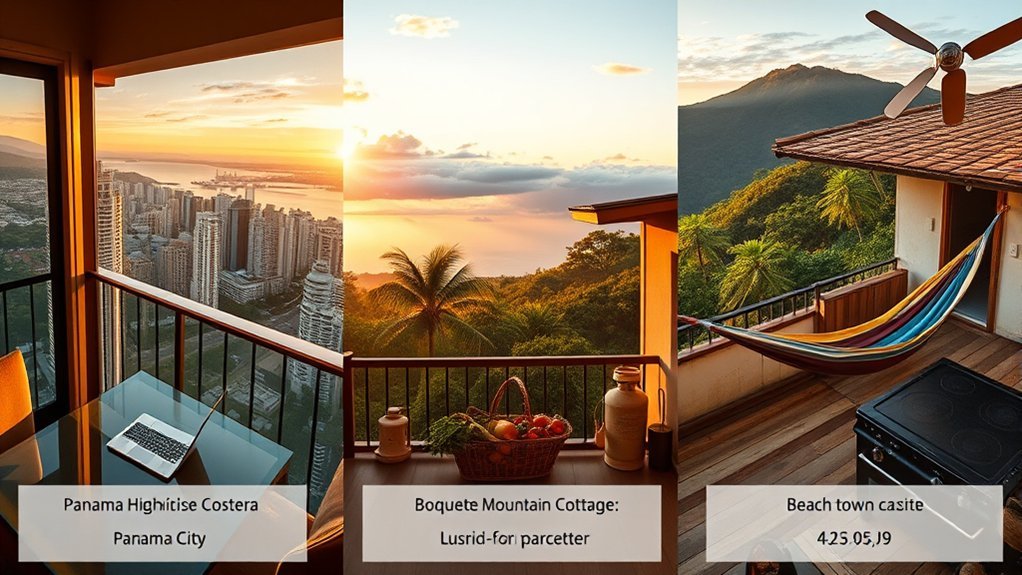
These sample budgets show how housing and lifestyle choices affect total spending. They are planning models, not guaranteed prices.
| Expense | Solo, Interior Town | Solo, Panama City | Couple, Comfortable |
| Rent | $550–$850 | $900–$1,400 | $900–$1,600 |
| Utilities, internet, mobile | $120–$220 | $170–$280 | $200–$350 |
| Groceries | $250–$350 | $300–$450 | $500–$750 |
| Transportation | $50–$300 | $40–$180 | $80–$500 |
| Healthcare and insurance | $100–$300 | $120–$350 | $250–$650 |
| Dining, entertainment, personal | $180–$350 | $250–$500 | $400–$750 |
| Estimated Total | $1,250–$2,370 | $1,780–$3,160 | $2,330–$4,600 |
The lower edge of each range assumes careful choices. It does not include international travel, debt payments, major dental work, household staff, frequent nightlife, luxury housing, or significant savings contributions.

This daily devotional helps parents pray purposefully for their children through a full year of Scripture readings, reflections, and guided prayer prompts. Written to encourage faithful family discipleship, it offers practical, biblically grounded support for parents who want to shape their prayers around God's Word. A foreword by Sinclair B. Ferguson adds trusted theological insight and encouragement.

The Armor All AA255W wet/dry utility vac delivers strong 2 peak HP suction in a compact, portable design for quick cleanup of wet and dry messes. Its 2.5-gallon tank, wheel base, top handle, and built-in storage make it easy to move, organize, and use around the garage, car, or jobsite. It also converts to a blower and comes with multiple accessories for versatile cleaning tasks.

This heavy-duty foam coil cleaner quickly dissolves grease, oil, stains, and dirt from air conditioner coils, fan blades, reusable filters, and other HVAC components. Its self-rinsing, low-VOC formula helps neutralize odors, leaves a fresh lemon scent, and includes corrosion inhibitors to protect metal surfaces while cleaning. Designed for convenient aerosol application, it reaches tight spaces and helps restore efficiency without the need for rinsing in most uses.
Family Costs and Private School
Families should obtain school and childcare quotes before deciding on a neighborhood. May 2026 Panama City data placed private full-day preschool around $500 per month and international primary-school tuition near $10,820 per year on average, with a broad reported range.
Tuition may not include registration, uniforms, books, transport, technology, meals, after-school care, or capital fees. Housing near a preferred school can also command a premium.
One-Time Moving and Setup Costs
Your first months may cost much more than your normal monthly budget. Allow for:
- Exploratory travel and temporary accommodation
- Immigration documents, apostilles, translations, and legal fees
- Rental deposit and advance rent
- Furniture, appliances, and household supplies
- Utility and internet installation
- Vehicle purchase, registration, or shipping
- Insurance deposits or annual premiums
- Pet transport and veterinary documents
- An emergency reserve of at least three to six months of expenses
Taxes, Residency, and Pensionado Benefits
Panama generally applies income tax to income generated from activities carried out within Panama. Its tax authority excludes foreign-source income when calculating taxable income, but determining the source is not always as simple as checking where a client or bank account is located.
A remote worker physically performing services from Panama, a business owner, an investor, and a pensioner can have different tax outcomes. Citizens and residents of another country may also retain tax returns, reporting duties, or social-security obligations there.
Warning: Do not move or restructure income based only on the phrase “territorial tax system.” Have a qualified adviser review where the work is performed, the type of income, tax residence, business structure, treaties, and your home-country rules.
Friendly Nations Residence
The Friendly Nations route is not a minimal-investment shortcut. Under Executive Decree 226, qualifying applicants generally receive provisional residence for two years and must support the application through qualifying employment, real estate valued at least B/.200,000, or an eligible B/.200,000 fixed-term deposit. Employment also requires the appropriate work authorization.
Immigration rules, eligible nationalities, documents, and procedures can change. Check the Servicio Nacional de Migración and use a qualified Panamanian immigration lawyer before applying.
Pensionado Residence and Benefits
The Embassy of Panama states that the Pensionado residence program generally requires a verifiable lifetime pension of at least $1,000 per month, plus $250 per dependent. Applications are processed in Panama through a Panamanian attorney, and foreign documents generally require authentication or an apostille.
Published Pensionado benefits include certain discounts on utilities, transportation, entertainment, hotels, medical services, dental and eye examinations, medicines, and professional services. Eligibility, documentation, exclusions, and how a discount is applied should be confirmed with the provider.
Review the current requirements through the Embassy of Panama’s Pensionado guidance.
Tourist Stay Is Not Residence or Work Permission
U.S. tourists may generally receive up to 180 days, subject to admission by immigration authorities. A tourist stay does not by itself authorize permanent residence or employment. Other nationalities face different entry and visa rules.
Confirm your passport validity, proof-of-funds requirement, return ticket, permitted stay, and visa category before travel.
Tips to Lower Your Cost of Living in Panama
The largest savings usually come from housing, transportation, electricity, insurance, and school choices rather than small daily sacrifices.
- Test the location before committing. Spend several weeks there and compare the wet and dry seasons.
- Rent before buying. Learn the neighborhood, building management, traffic, flooding, and healthcare access first.
- Choose housing near daily needs. A slightly higher rent can be cheaper than owning a car.
- Request electricity history. Ask for actual bills instead of accepting a landlord’s estimate.
- Shop locally. Use markets and regional brands while reserving imported products for priorities.
- Compare complete insurance terms. A low premium can hide a high deductible or narrow hospital network.
- Separate routine and irregular costs. Maintain sinking funds for dental care, travel, repairs, visas, and annual fees.
- Keep an emergency reserve. International moves often produce expenses that do not appear in standard monthly budgets.
- Review tax and immigration rules professionally. Correct planning can prevent penalties and expensive application mistakes.
Pro Tip: Build your budget from real quotes for one exact neighborhood. Combine three rental listings, recent utility bills, an insurance proposal, your normal grocery basket, and your expected weekly transportation.
Frequently Asked Questions
Can U.S. citizens live in Panama?
Yes. U.S. citizens can visit Panama without a tourist visa for an authorized stay and may apply for a qualifying residence category. Tourist admission does not provide permanent residence or permission to work. Check current requirements before traveling or applying.
How much money is needed to retire in Panama?
Many couples should plan for approximately $2,400–$3,800 per month, although a modest interior lifestyle may cost less and premium city or coastal living may cost much more. Keep separate reserves for insurance, major healthcare, travel, repairs, and emergencies.
Can I live on $1,500 a month in Panama?
It may be possible for one person in a lower-cost area with modest rent, local food, limited air-conditioning, public transport, and controlled healthcare costs. It is difficult in central Panama City and leaves little room for international travel, emergencies, major medical bills, or luxury housing.
Is Panama a good place for U.S. citizens to retire?
Panama can suit retirees who value warm weather, use of U.S. dollars, established expat communities, and a formal Pensionado program. It is not ideal for everyone. Humidity, traffic, language, regional healthcare access, bureaucracy, and imported-product costs should be tested during an extended visit.
Is Panama City much more expensive than the rest of Panama?
Usually, especially for centrally located apartments. However, smaller towns can require a car, and popular destinations such as Boquete or established beach communities may still charge premium rents for furnished homes and desirable views.
Does Panama tax foreign income?
Panama generally taxes Panamanian-source income and excludes foreign-source income, but the legal source of remote-work, business, investment, and service income can be complex. Your citizenship or residence elsewhere may also create separate filing obligations.
Conclusion
Panama can provide good value, but the realistic cost of living depends on far more than inexpensive public transit or local produce. Housing, electricity, healthcare, insurance, transportation, schooling, and imported preferences determine the final budget.
A single person may live reasonably on about $1,400–$2,600 per month, while a couple may need roughly $2,400–$3,800. Panama City, beachfront property, private schools, international insurance, frequent travel, and car ownership can raise those totals considerably.
Before relocating, rent temporarily, collect written quotes, review immigration and tax rules, and maintain an emergency reserve. A budget based on one real neighborhood will be far more reliable than a broad national average.
Sources
- Numbeo: Cost of Living in Panama City — May 2026 crowdsourced rent, food, transport, utility, school, and communication benchmarks.
- Metro de Panamá — official regular fares for Metro Lines 1 and 2.
- Dirección General de Ingresos: Property Tax — current property-tax brackets and principal-residence exemptions.
- Dirección General de Ingresos: Income Tax — treatment of Panamanian-source, exempt, and foreign-source income.
- Embassy of Panama: Retire in Panama — Pensionado income requirements, application guidance, and published benefits.
- U.S. Department of State: Panama — entry rules, healthcare limitations, medical evacuation guidance, safety information, and property-purchase cautions.

This hardcover book celebrates the art of gathering with inspiring table settings, thoughtful traditions, and practical ideas for hosting memorable meals. Written by Shea McGee, it offers beautiful design inspiration alongside approachable guidance for creating warm, welcoming spaces for family and friends. It's a charming resource for anyone who loves entertaining, home styling, and making everyday moments feel special.

Come Eat offers 100 approachable recipes designed to make everyday cooking more enjoyable, nourishing, and sustainable. With a focus on flavorful meals and practical preparation, this hardcover cookbook is ideal for home cooks looking for inspiration for salads, sides, and main dishes. Author Melissa Ben-Ishay shares recipes that encourage consistent, feel-good eating without sacrificing taste.

ProDen PlaqueOff Powder is a natural seaweed-based dental care supplement designed to support healthier teeth and gums in dogs. It helps reduce plaque and tartar buildup, freshen breath, and promote better oral hygiene without the need for brushing. Made without additives, flavors, or artificial ingredients, it offers a simple, low-maintenance way to support daily pet dental care.