Criminal lawyer cost varies widely because no official national fee schedule applies to every charge, lawyer, or location. For a benchmark, Clio reports a 2025 average hourly rate of about $216 for criminal lawyers, which is below its $349 average across all practice areas. The amount you pay depends on the alleged offense, the evidence, the number of hearings, the lawyer’s experience, local market rates, and whether the case ends early or proceeds through trial and sentencing.
Quick Answer
For budgeting, criminal defense lawyers may charge about $200–$600+ per hour. Broad flat-fee estimates often run from $1,500–$5,000 for a straightforward misdemeanor and $5,000–$25,000+ for a felony. Trials, federal charges, expert evidence, and complex investigations can push the total much higher.
Warning: These figures are broad U.S. planning estimates, not official national averages or a quote for your case. State laws, court procedures, fee rules, and local prices differ. If you have been arrested or ordered to appear in court, do not miss a deadline while comparing lawyers. Ask the court about appointed counsel if you cannot afford private representation.
Key Takeaways
- There is no single national criminal-defense rate. Obtain written quotes from lawyers who regularly handle similar charges in the same court system.
- A low flat fee may cover only the early stages of a case. Trial, sentencing, appeals, experts, investigators, travel, and records may cost extra.
- Ask whether an upfront payment is a flat fee, an advance deposit against hourly bills, or a true availability retainer.
- Private counsel does not guarantee dismissal, acquittal, or a lighter sentence.
- Financially eligible defendants may receive a public defender or another court-appointed lawyer, although payment and reimbursement rules vary.
Criminal Lawyer Cost at a Glance
The following figures can help with early budgeting. They should not be treated as fixed national prices. A lawyer in a smaller market may charge less, while an experienced lawyer handling a serious charge in a major city may charge substantially more.
Note: Ask each lawyer for a written description of the work included in the quoted amount. Two firms can quote different prices because one includes motions, sentencing, or trial preparation while the other does not.
| Billing Situation | Broad Planning Range | Important Qualification |
|---|---|---|
| Hourly representation | $200–$600+ per hour | Senior counsel and major-market specialists may charge $800–$1,000+ per hour. |
| Straightforward misdemeanor | $1,500–$5,000 flat fee | The fee may cover only pretrial work and a negotiated resolution. |
| Complex misdemeanor | $3,000–$7,500+ | Multiple witnesses, motions, forensic evidence, or licensing consequences can increase the cost. |
| Felony through pretrial or plea stage | $5,000–$15,000+ | Confirm whether sentencing and contested motions are included. |
| Felony involving trial | $10,000–$25,000+ total | Long trials, federal cases, white-collar investigations, or extensive expert evidence can cost far more. |
The final amount may fall outside these ranges. Only a lawyer who reviews the charge, court, evidence, deadlines, and expected scope can provide a meaningful estimate.
Factors Influencing Criminal Lawyer Costs
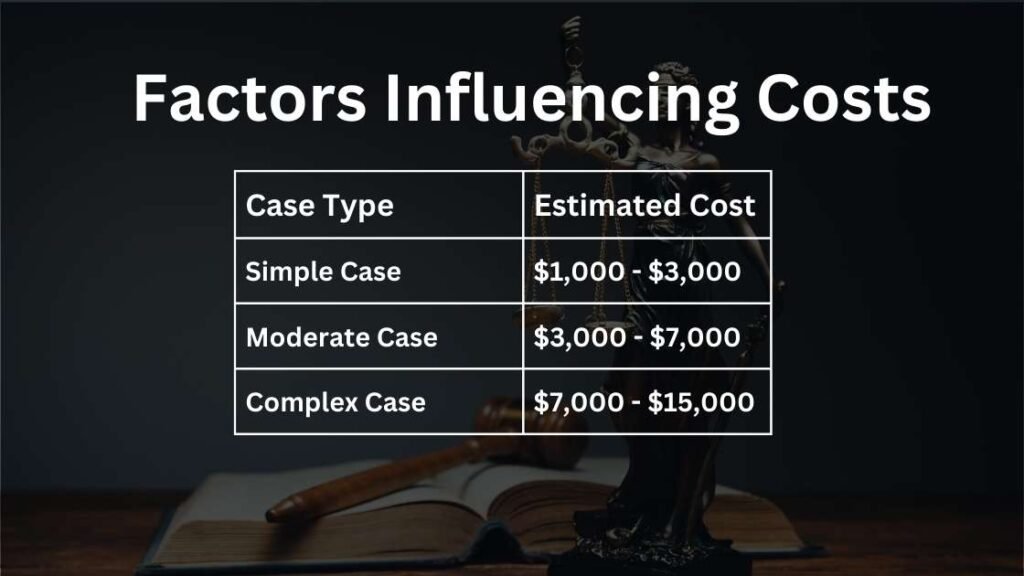
Criminal defense fees are based on more than the name of the charge. Lawyers evaluate the work, risk, deadlines, evidence, staffing needs, and local market before setting an hourly rate, advance deposit, or flat fee.
Experience and Relevant Practice
A lawyer with years of criminal-trial experience may charge more than a newer lawyer. The most useful experience, however, is not simply the number of years in practice. Look for experience with the same type of charge, similar evidence, local court procedures, and the possible collateral consequences of a conviction.
Do not rely only on an advertised “win rate.” Criminal cases have different facts, legal issues, plea offers, and client goals. A higher price may reflect experience, staffing, demand, or overhead, but it does not guarantee a better result.
Case Complexity
A case with limited evidence and an early negotiated resolution usually requires less work than a case involving multiple witnesses, digital devices, laboratory testing, surveillance footage, disputed searches, expert testimony, or several defendants.
Common cost drivers include:
- The seriousness and number of charges
- Whether the case is in state or federal court
- The volume of police reports, videos, messages, and other discovery
- Suppression motions or other contested hearings
- Expert, investigator, interpreter, or forensic-review needs
- Immigration, licensing, employment, firearm, or registration consequences
- The number and length of court appearances
- Whether the case proceeds to trial and sentencing
| Case Type | Broad Flat-Fee Estimate |
|---|---|
| Straightforward misdemeanor | $1,500–$5,000 |
| Moderate or non-trial felony | $5,000–$15,000+ |
| Complex or trial-intensive felony | $15,000–$25,000+, with substantially higher totals possible |
These figures are budgeting estimates rather than guaranteed totals. Ask how the fee changes if the prosecutor adds charges, the court schedules a contested hearing, or the case proceeds to trial.
Types of Criminal Defense Fee Structures
Criminal defense firms commonly use hourly billing, flat fees, staged flat fees, or advance deposits. The written agreement should identify the billing method, scope, payment schedule, expenses, and what happens if the representation ends early.
Hourly Rates
Under hourly billing, the lawyer records time spent on meetings, calls, document review, research, negotiation, hearings, preparation, and other covered work. Associates, paralegals, investigators, and support staff may have separate rates.
| General Market Context | Illustrative Hourly Range |
|---|---|
| Newer lawyer or lower-cost market | $150–$300+ |
| Established criminal defense lawyer | $300–$600+ |
| Senior specialist or complex litigation counsel | $400–$800+ |
| Top partner in a major market | $700–$1,000+ |
Hourly billing can work well when the required work is uncertain. The drawback is that the total may rise as discovery, motions, hearings, or trial preparation expand.
Flat Fees
A flat fee is an agreed amount for a defined scope of work. It provides more cost certainty only when the agreement clearly states what is included.
- Straightforward misdemeanor: approximately $1,500–$5,000
- Complex misdemeanor: approximately $3,000–$7,500+
- Felony through the pretrial stage: approximately $5,000–$15,000+
- Felony including trial: approximately $10,000–$25,000+, with much higher fees possible in complex cases
A flat fee may exclude a jury trial, sentencing hearing, probation violation, retrial, appeal, expungement, travel, experts, investigators, or unusually extensive motions. Read the scope instead of relying on the words “full representation.”
Staged Flat Fees
Some lawyers divide a case into billing stages. For example, the first fee may cover investigation, discovery review, routine appearances, and plea negotiations. A second fee may become due for contested motions, and a separate trial fee may be required before jury selection or final trial preparation begins.
Staged billing can make costs easier to understand, but the agreement should define the event that starts each stage and whether unused portions may be refundable under applicable state rules.
Advance Deposits and Retainers
Law firms often use the word “retainer” for different payment arrangements. An advance deposit is money paid before hourly work is completed. The lawyer bills earned fees against that balance and may require the client to restore it to a minimum amount.
ABA guidance distinguishes an advance payment for future work from a true availability retainer. Under the ABA Model Rules, advance fees generally must be protected until earned, and an unearned portion may need to be returned. State ethics rules control and may differ. Review the ABA comments on Model Rule 1.5 and ask the lawyer how your jurisdiction treats the payment.
Contingency Fees Are Not Used for Criminal Defense
A criminal defense lawyer generally cannot make payment depend on an acquittal, dismissal, reduced charge, or other result. ABA Model Rule 1.5 prohibits contingent fees for representing a defendant in a criminal case. State rules govern the lawyer, but the fee should not operate like a percentage-of-recovery arrangement.
Pro Tip: Compare written scope, not just the headline price. A $4,000 quote that includes motions and sentencing may cost less overall than a $2,500 quote that charges separately for every additional stage.
What a Criminal Defense Fee Quote Should Cover
Before paying, ask the lawyer to identify each included and excluded service. A useful written fee agreement should address the following items.
| Service or Term | What to Confirm |
|---|---|
| Initial appearance and arraignment | Whether immediate court appearances and bail arguments are included. |
| Discovery review | Whether the fee covers all police reports, recordings, digital data, and supplemental evidence. |
| Investigation | Whether investigator time is included or billed separately. |
| Motions and hearings | Whether suppression, evidentiary, discovery, or dismissal motions trigger another fee. |
| Negotiations | Whether discussions with the prosecutor and written plea review are covered. |
| Trial | Whether bench or jury trial preparation and attendance are included, and when a trial fee is due. |
| Sentencing | Whether sentencing research, witnesses, memoranda, and the hearing are covered. |
| Related proceedings | Whether probation violations, protective orders, forfeiture, licensing matters, or immigration advice are separate. |
| Appeal and post-conviction work | These services are commonly excluded unless expressly included. |
| Staffing and communication | Who will handle the case, who attends court, and how associate or paralegal time is billed. |
| Ending representation | How withdrawal, termination, the client file, final billing, and any unearned funds are handled. |
The ABA Criminal Justice Standards for the Defense Function recommend a clear written engagement communication that describes the representation, fee arrangement, costs, and relevant limitations.
Additional Expenses Beyond the Lawyer’s Fee
The attorney’s fee may be only one part of the defense budget. Ask which expenses require your approval, whether the firm adds an administrative charge, and whether unused expense deposits are returned.
Court Costs and Case Expenses
A criminal defendant generally does not pay a civil-style filing fee to make the prosecution begin. However, the defense may incur costs for obtaining records, transcripts, certified documents, service of subpoenas, travel, copying, electronic evidence, and other case needs. Courts may also assess costs after conviction under state or local law.
| Expense | Typical Billing Treatment |
|---|---|
| Records and transcripts | Varies by court, agency, format, and page count. |
| Process server or subpoena service | Often billed per attempt or completed service; approximately $50–$150+ may be used for preliminary budgeting. |
| Travel and lodging | May include mileage, airfare, hotels, parking, and travel time. |
| Court-assessed costs | State-, court-, charge-, and outcome-specific. |
Expert Witnesses and Investigators
Some cases require forensic, toxicology, medical, psychological, accounting, accident-reconstruction, digital-evidence, or other specialists. The total may include review time, testing, a written report, preparation, travel, deposition, and courtroom testimony.
- Forensic or technical specialist: a broad budgeting estimate may start around $200–$500+ per hour.
- Medical or highly specialized expert: budgeting may start around $300–$600+ per hour.
- Private investigator: budgeting may start around $75–$150+ per hour.
Actual quotes can be far outside these ranges. Ask whether the lawyer selects the expert, who signs the expert’s contract, whether an advance deposit is required, and whether you must approve spending above a stated amount.
Costs That Are Not Attorney Fees
Do not confuse the lawyer’s fee with other financial consequences of a criminal case. Depending on the jurisdiction and outcome, separate costs may include:
- Bail, a bail-bond premium, or secured release funds
- Fines, penalties, restitution, or forfeiture
- Probation, supervision, electronic monitoring, or testing fees
- Treatment, classes, evaluation, or counseling costs
- Vehicle towing, storage, or impound charges
- License reinstatement or administrative-hearing costs
- Travel, missed work, childcare, and transportation
Note: Paying a lawyer does not pay bail, fines, restitution, court assessments, or supervision expenses unless the written agreement specifically says the firm will advance or process a particular cost.
Geographic Variations
Local market conditions matter because office overhead, lawyer demand, court travel, customary fees, and case procedures differ by city and state.
Urban vs. Rural Areas
Major metropolitan markets often have higher hourly rates. Rural lawyers may have lower overhead, but a rural case is not automatically inexpensive. Limited local availability, long travel distances, or the need to bring in a specialist can increase the total.
| General Location | Illustrative Hourly Range |
|---|---|
| Major urban market | Approximately $300–$600+, with senior specialists charging more |
| Smaller city or rural market | Approximately $150–$350+, depending on availability and travel |
State and Court Differences
Rates can differ within the same state. A lawyer’s office location may matter less than the court where the case is pending, the charge, and how often counsel must appear. Large markets such as New York City, the San Francisco Bay Area, Los Angeles, Washington, D.C., and Boston often sit near the high end, but an unusually complex case can be expensive anywhere.
Contact at least two or three qualified lawyers when time permits. Give each lawyer the same basic information so that the quotes are easier to compare.
Public Defenders vs. Private Attorneys

Financially eligible defendants may receive representation from a public-defender office, an assigned-counsel program, or a private lawyer appointed from a court panel. The exact system depends on the jurisdiction.
Cost Comparison
| Representation | Possible Cost |
|---|---|
| Public defender or court-appointed counsel | Low or no upfront attorney fee for eligible defendants; application, contribution, or reimbursement rules may apply. |
| Private criminal defense lawyer | Hourly, flat, or staged fees paid by the client or an approved third-party payer. |
The federal Defender Services program provides appointed representation for eligible people who cannot afford adequate representation in covered federal proceedings. State and local eligibility standards differ.
Pros and Cons
- Public defenders and appointed counsel
- Potential advantages: Regular criminal-court experience, familiarity with local judges and prosecutors, and low or no initial private fee for eligible defendants.
- Potential limitations: The client normally cannot select a specific lawyer, and some offices face excessive workloads or limited investigative resources.
- Private attorneys
- Potential advantages: The client can choose counsel based on relevant experience, communication style, staffing, availability, and fee structure.
- Potential limitations: Significant out-of-pocket cost, possible advance deposits, and no guaranteed result.
The National Public Defense Workload Study identified widespread excessive defender workloads. That system-level concern does not mean every public defender provides poor representation. Public defenders are licensed lawyers with substantial criminal-court experience.
Ways to Manage Legal Costs
Do not choose counsel solely by selecting the lowest advertised price. You may be able to control costs by narrowing the scope, using staged payments, comparing written agreements, and identifying expenses early.
Payment Plans
Some firms permit payment over time. Common structures include:
- An initial deposit followed by scheduled installments
- A staged flat fee due as the case reaches specific phases
- A replenishing advance deposit for hourly work
- Payment by an approved family member or other third party
- Third-party financing, subject to interest, fees, and credit terms
Ask what happens after a missed payment. A lawyer usually cannot simply abandon a client during a court proceeding, but counsel may seek permission to withdraw when payment obligations are not met, subject to court rules and professional duties.
Read financing terms carefully. Do not assume a payment plan is interest-free. Confirm the amount due, due dates, late charges, refund terms, and whether the lawyer can require a larger trial deposit later.
Public Defense, Pro Bono Help, and Reduced-Fee Services
For an active criminal prosecution, start by asking the court clerk, public-defender office, or appointed-counsel administrator how to apply for representation. General legal-aid organizations often focus on civil problems and may not defend a person against a pending criminal charge.
Some bar associations, law-school clinics, nonprofit programs, and private lawyers offer limited consultations or reduced-fee help. Availability depends on the charge, income, location, conflicts, and program capacity.
Compare the Scope of Several Quotes
When time allows, request written quotes from several lawyers. Give each lawyer the same charge information, court location, next hearing date, custody status, and known evidence. Compare:
- The lawyer who will personally handle the case
- Experience with similar charges and evidence
- Services included through plea, trial, and sentencing
- Hourly, flat, staged, and trial fees
- Expert, investigator, travel, and record expenses
- Communication practices and response times
- Advance-fee, refund, withdrawal, and file-return terms
How the Case Path Affects Cost
The fee should not depend on whether the lawyer wins or loses. However, the amount of work changes depending on whether the case is dismissed early, resolved through a plea, contested through motions, or tried before a judge or jury.
Plea Negotiations and Early Resolution
A case resolved without trial may cost less because it may require fewer witnesses, motions, preparation hours, and court days. That does not mean a guilty plea is automatically simple or advisable. Plea negotiations may involve evidence review, mitigation, sentencing analysis, immigration consequences, licensing concerns, and detailed advice about the rights being waived.
| Service | How It May Be Billed |
|---|---|
| Initial consultation | Free, fixed-price, or hourly depending on the firm; ask before scheduling. |
| Plea negotiation | Often included in an early-stage flat fee or billed by the hour. |
| Routine court appearances | May be included, billed hourly, or charged by stage or appearance. |
| Sentencing | May be included or require a separate fee, especially when experts or a sentencing memorandum are needed. |
Trials
Trials usually require more attorney time than negotiated resolutions. The lawyer may need to prepare witnesses, organize exhibits, litigate evidentiary issues, draft jury instructions, select a jury, conduct examinations, and prepare opening and closing arguments.
Trial-related billing may include:
- Pretrial preparation: Additional hourly work or a new flat-fee stage for witness preparation, exhibits, motions, and strategy.
- Trial attendance: Hourly, daily, or flat-fee billing for each trial day and related preparation.
- Experts and investigators: Separate deposits, review fees, testing, travel, preparation, and testimony costs.
- Sentencing work: A separate stage if the agreement does not include sentencing after a verdict or plea.
A case scheduled for trial can still resolve before testimony begins. Ask whether any paid trial fee is earned in stages and what happens if the case settles shortly before trial.
Questions to Ask Before Hiring a Criminal Lawyer
A consultation should help you understand both the defense approach and the financial commitment. Consider asking:
- How often do you handle this type of charge in this court?
- Will you personally handle my case and attend court?
- What does the quoted fee include and exclude?
- Is trial included? If not, how is the trial fee calculated?
- Is sentencing included?
- Are appeals, probation violations, expungement, forfeiture, or administrative hearings separate?
- Will associates, paralegals, investigators, or experts work on the matter?
- How are calls, emails, travel, copying, and electronic evidence billed?
- Will you obtain my approval before a major outside expense?
- Is the upfront payment a flat fee or an advance deposit?
- When is each portion considered earned?
- What happens to unearned funds if the representation ends?
- What happens if I cannot replenish the deposit or make an installment?
- How often will I receive bills and case updates?
- What is the next urgent deadline or court date?
You can also check the lawyer’s current license and public disciplinary history through the official bar or licensing authority in the lawyer’s jurisdiction.
Client Rights and Protections

Clients should understand the lawyer’s role, the fee arrangement, major expenses, communication practices, and important choices in the case. The exact protections come from the constitution, statutes, court rules, contracts, and the professional-conduct rules adopted in the jurisdiction.
Fee Transparency
ABA Model Rule 1.5 states that a lawyer may not charge an unreasonable fee or unreasonable expenses. It also says the scope of representation and the basis or rate of the fee and expenses should be communicated to the client, preferably in writing. State requirements may be stricter.
A clear agreement should describe:
- Scope: The work the lawyer will and will not perform
- Hourly or flat fee: The rate, amount, and billing stages
- Advance deposit: How funds are held, applied, replenished, and returned
- Other workers: Associate, paralegal, investigator, and expert charges
- Expenses: Costs paid by the client and approval requirements
- Billing: Invoice frequency, payment dates, interest, and late charges
- Ending representation: Withdrawal, termination, final accounting, and file delivery
Ask questions before signing. Keep copies of the agreement, invoices, receipts, and important written communications.
Right to Counsel and Fair Process
The Sixth Amendment protects the right to counsel in covered criminal prosecutions. In federal court, eligible defendants who cannot afford representation may receive appointed counsel through the Criminal Justice Act system. State systems have their own eligibility and appointment procedures.
The Supreme Court’s decision in Argersinger v. Hamlin explains that an indigent person may not be imprisoned following a criminal prosecution in which the person was denied counsel. The detailed right-to-counsel rules depend on the proceeding, charge, and potential consequences.
A criminal case may end through dismissal, diversion, a negotiated plea, a bench trial, or a jury trial. Not every case reaches a jury. Defense counsel must provide competent representation and explain major decisions, but no lawyer can promise a particular outcome.
The most useful fee quote is not necessarily the lowest one. It is the quote that clearly identifies the lawyer, the covered stages, the outside expenses, the payment schedule, and what happens if the case changes.
Frequently Asked Questions
How much does a criminal lawyer charge?
Clio reports a 2025 average of about 6 per hour for criminal lawyers. Broad planning estimates are approximately $200–$600+ per hour, $1,500–$5,000 for a straightforward misdemeanor, and $5,000–$25,000+ for a felony. These are not official national averages. Local rates, case complexity, trial needs, and the written scope can move the total far outside those ranges.
What factors influence criminal defense lawyer costs?
Important factors include the charge, court, evidence volume, number of hearings, motions, trial length, lawyer experience, local rates, investigators, experts, travel, staffing, and whether sentencing or appeal work is included.
Is a flat fee or hourly rate better?
A flat fee can provide more certainty when the scope is clearly defined. Hourly billing may be more practical when the amount of work is uncertain. Staged flat fees combine the two approaches by assigning a separate price to pretrial work, motions, trial, or sentencing.
What does a flat criminal defense fee include?
It includes only the services listed in the agreement. Ask whether it covers arraignment, discovery, negotiations, motions, trial, sentencing, probation violations, forfeiture, appeals, experts, investigators, and travel. Do not assume “full representation” includes every later proceeding.
Do criminal lawyers offer payment plans?
Some do. A firm may accept installments, staged payments, or a replenishing advance deposit. Interest, financing charges, trial deposits, missed-payment rules, and withdrawal terms vary, so review the written agreement carefully.
Are there additional costs besides attorney fees?
Yes. Possible expenses include investigators, experts, laboratory work, records, transcripts, subpoenas, process servers, travel, copying, electronic evidence, and court-assessed costs. Bail, fines, restitution, supervision, testing, and treatment are also separate from the lawyer’s fee.
Can I get a free consultation?
Some criminal defense lawyers offer a brief free consultation, while others charge a fixed or hourly consultation fee. Ask about the cost, duration, and documents needed before scheduling.
Does a higher fee mean better service?
No. A higher fee may reflect experience, demand, staffing, specialization, or location, but price alone does not prove quality. Compare relevant case experience, preparation, communication, availability, scope, and public disciplinary information.
Are public defenders free?
They are generally provided at low or no upfront attorney cost to financially eligible defendants. Some jurisdictions impose application fees, contributions, or reimbursement obligations. Eligibility and payment rules vary by court and jurisdiction.
Can I negotiate criminal lawyer fees?
You can ask about the fee, scope, payment schedule, staffing, and staged billing. The lawyer does not have to reduce the price. A criminal-defense fee cannot be contingent on obtaining a particular result.
Are appeals included in the original fee?
Usually not unless the agreement expressly includes them. Appeals and post-conviction proceedings involve different deadlines, records, research, briefing, and court appearances and commonly require a new agreement.
Can a family member pay the lawyer?
Often, yes, if the lawyer accepts the arrangement and it complies with applicable ethics rules. The person facing the charge normally remains the client. The payer does not automatically control legal decisions or receive confidential information.
Is hiring a private criminal lawyer worth it?
That depends on the charge, available appointed counsel, finances, lawyer fit, and potential consequences. Private counsel gives you more choice but does not guarantee a result. A qualified public defender or appointed lawyer may also provide experienced representation.
Sources
- Clio: Lawyer Rates by Practice Area – 2025 average hourly rates, including criminal law.
- American Bar Association Model Rule 1.5: Fees — fee reasonableness, scope communication, expenses, and prohibited criminal contingency fees.
- ABA Criminal Justice Standards: Defense Function — engagement letters, fee arrangements, costs, client communication, and defense-counsel responsibilities.
- ABA: Obligations When Receiving Flat Fees and Other Fees Paid in Advance — advance fees, flat fees, earned amounts, and possible refunds.
- United States Courts: Defender Services — federal appointed-counsel system for financially eligible defendants.
- Legal Information Institute: Argersinger v. Hamlin — Supreme Court authority concerning imprisonment and the right to counsel.
- National Public Defense Workload Study — national evidence concerning excessive public-defense workloads.
Related Legal Fee Guides
- DWI lawyer cost in Texas, for a state-specific charge.
- Traffic lawyer cost, for lesser offenses.
- Juvenile lawyer cost, for cases involving minors.
Conclusion
A criminal defense lawyer may charge by the hour, by case stage, or through a flat fee. Broad estimates can help you prepare, but the written scope matters more than a national price range. Confirm whether the quote includes investigation, motions, trial, sentencing, and related proceedings, and ask how experts and other expenses will be approved.
Compare relevant experience, communication, staffing, and fee terms rather than relying only on price or advertised outcomes. Ask about appointed counsel immediately if private representation is beyond your means. This article provides general U.S. information and is not legal advice, a fee quote, or a substitute for advice from a licensed lawyer familiar with your jurisdiction and case.