
Current public attorney fee pages checked September 7, 2026 span about $1,000 to $3,750 for joint or standard Form I-751 representation, with several sampled firms between $1,500 and $2,500. Published waiver or complex-case examples in the same sample run from about $2,500 to $7,500. The USCIS filing fee is separate.
The exact lawyer cost depends less on the form itself than on the work your case requires: joint filing versus a waiver, the strength and organization of your marriage evidence, prior immigration or criminal issues, whether an RFE or interview is included, and the lawyer’s billing scope. USCIS does not require you to hire an attorney for Form I-751.
Last updated: September 7, 2026. We checked the current USCIS fee schedule and seven publicly accessible attorney fee pages. Government fees and law-firm prices can change, so verify the amount and service scope immediately before filing. This article is general information, not legal advice. For broader budgeting, see our immigration lawyer cost for a green card guide.
Quick Answer
- Joint or standard I-751 representation: current published examples in our seven-firm sample range from about $1,000 to $3,750, with several firms between $1,500 and $2,500.
- Waiver or complex I-751 representation: published examples in the same sample range from about $2,500 to $7,500.
- USCIS filing fee: the current general filing fee is $750, and the current fee schedule does not list a separate I-751 biometrics fee. A qualifying battery-or-extreme-cruelty waiver filing has a $0 filing-fee category, and certain other petitioners may qualify to request a fee waiver.
- A lawyer is not mandatory: a straightforward filer may choose to prepare Form I-751 without an attorney, but complex facts can make legal review more valuable.
- Compare scope, not just price: ask whether the quote includes document review, legal strategy, RFE or NOID responses, interview preparation or attendance, translations, mailing, and follow-up work.
Typical I-751 Budget At A Glance
| Filing Scenario | Sample Attorney Fee | USCIS Fee | Sample Combined Budget Before Extras |
|---|---|---|---|
| Joint or standard I-751 | $1,000-$3,750 | $750 general filing fee | About $1,750-$4,500 |
| Waiver or complex I-751 using the general fee category | $2,500-$7,500 | $750 general filing fee | About $3,250-$8,250 |
| Qualifying battery-or-extreme-cruelty filing | Attorney fee varies; sampled waiver/complex fees run $2,500-$7,500 | $0 qualifying USCIS filing-fee category | Depends mainly on the legal-services quote and other case expenses |
Important: these totals combine the published attorney-fee sample in this guide with the current USCIS fee. They are budgeting examples, not national averages or guaranteed quotes. Translations, document retrieval, expert evidence, mailing, an interview, an RFE or NOID, and other case-specific work may be extra.

What Is Form I-751 And When Is It Filed?
Form I-751, Petition to Remove Conditions on Residence, is generally used by a conditional permanent resident who obtained status through a qualifying marriage. USCIS states that joint filers normally submit the petition during the 90-day period immediately before the second anniversary of obtaining conditional permanent resident status. See the USCIS filing-window guidance for the current rule.
Purpose Of I-751
The petition asks USCIS to remove the conditions from a two-year conditional permanent resident’s status. A joint petition generally must show that the qualifying marriage was entered in good faith and not to evade U.S. immigration laws. USCIS also permits individual or waiver filing in specified circumstances, so the correct filing strategy depends on the facts of the case.
When Is A Lawyer Most Useful For I-751?
A lawyer can be especially useful when the filing involves a divorce or other waiver ground, weak or inconsistent relationship evidence, a late filing, prior immigration problems, criminal history, a prior fraud or misrepresentation concern, an RFE or NOID, or an interview. Legal representation does not guarantee approval or faster USCIS processing, but it can help identify legal issues and organize the filing around the applicable requirements.
What Affects I-751 Lawyer Fees?

Attorney fees vary because different I-751 cases require very different amounts of legal analysis, evidence review, drafting, and follow-up.
Joint Filing Versus Waiver Filing
This is one of the clearest price drivers in current public fee schedules. For example, Lefebvre Michel publishes $1,000 for a joint I-751 and $2,500 for a waiver case, while Watkins Immigration Law publishes $1,500 for a joint filing and $2,500 for a good-faith waiver. A waiver can require more legal analysis and evidence development than a routine joint filing.
Experience, Evidence And Scope
Fees may rise when a lawyer must review a large or inconsistent record, analyze prior immigration history, prepare affidavits or legal arguments, respond to USCIS evidence requests, or prepare for an interview. Ask who will perform the work and whether the quoted price is a flat fee, an hourly estimate, or a limited-scope review.
Geographical Location And Firm Overhead
Location and firm overhead can affect pricing, but there is no reliable nationwide USCIS or government table of attorney fees by region. For that reason, compare written quotes for the same services instead of relying on broad regional averages.
How Much Does A Lawyer Cost For Form I-751?
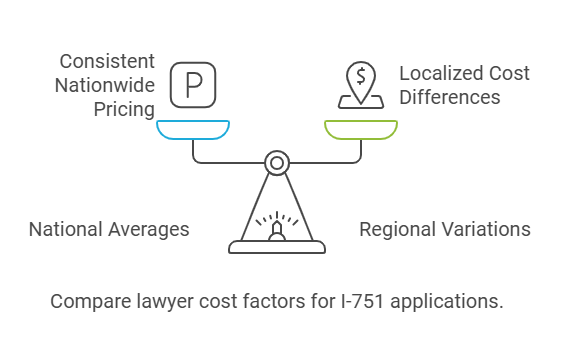
There is no official national attorney fee for Form I-751. A better benchmark is to compare current, publicly posted law-firm prices and note whether each quote is for a joint petition, a waiver, or a more complex matter.
How We Estimated The Range
We checked seven publicly accessible law-firm fee pages on September 7, 2026. We recorded the advertised I-751 legal fee, separated joint or standard cases from waiver or complex cases where the firm did so, and kept government filing fees separate. This is a market sample, not a statistical national average.
Current Published I-751 Attorney Fee Examples
| Published Fee Source | Joint / Standard I-751 | Waiver / Complex I-751 |
|---|---|---|
| Lefebvre Michel | $1,000 joint filing | $2,500 waiver |
| Watkins Immigration Law | $1,500 joint filing | $2,500 good-faith waiver |
| Law Offices of Thomas P. Miller | $1,500-$2,300 I-751; cited page does not split the price by filing type | Not separately listed on the cited fee page |
| Ansari Law Office | $2,000 I-751 legal services fee; cited page does not split the price by filing type | Not separately listed on the cited fee page |
| Law Offices of Sean D. Hummel | $2,500 joint petition | $4,500 complex joint / waiver / self petition |
| Sheri Hoidra Law Office | $3,250 joint filing | $4,000 good-faith waiver |
| Law Offices of Norka M. Schell | $3,750 joint petition | $7,500 waiver / self-petition |
How to read this table: these are examples of posted law-firm prices, not a national average or a promise of what you will pay. In this sample, published joint or standard fees span $1,000 to $3,750, while published waiver or complex-case examples span $2,500 to $7,500.
What Should The Lawyer Fee Include?
Before comparing quotes, ask each firm to price the same scope. Confirm whether the fee includes eligibility review, form preparation, evidence organization, attorney review, filing-package assembly, USCIS correspondence, RFE or NOID responses, interview preparation, interview attendance, and post-filing questions. A lower quote can cost more later if major services are excluded.
Published scope can differ substantially. Watkins Immigration Law states that its listed fees do not add separate postage, payment-processing, RFE, or NOID-response charges. Hummel Law says its flat fees generally include routine USCIS communication and interview preparation, but lists USCIS interview attendance at $1,500. Sheri Hoidra Law Office lists an additional $500 for I-751 interview attendance. These examples show why the cheapest headline fee is not always the cheapest comparable service.
What I-751 Costs Are Extra?
Lawyer fees are only one part of the I-751 budget. Government charges and optional case expenses should be priced separately.
Consultation Fees
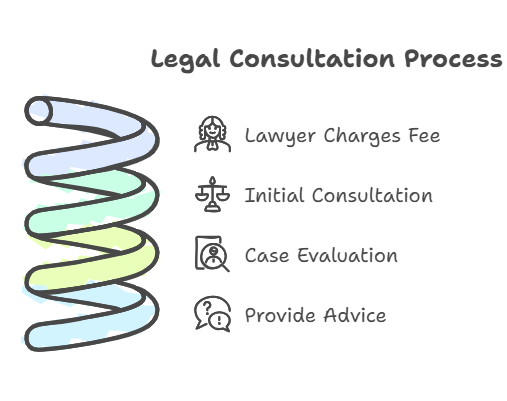
Consultations may be free or paid. Current public examples include a $150 consultation at Lefebvre Michel and a $250 initial consultation at the Law Offices of Sean D. Hummel. Hummel states that its initial consultation is applied as a down payment toward future fees. Other firms may charge more, less, offer a free screening, or use different credit policies.
Filing And Administrative Fees
Beyond the consultation, budget for these items:
- USCIS filing fee: the current general filing fee for Form I-751 is $750. The current USCIS fee schedule does not list a separate I-751 biometrics fee. Verify the amount on the USCIS Fee Schedule immediately before filing.
- Battery or extreme cruelty fee exemption: USCIS lists a $0 filing-fee category for a conditional permanent resident, spouse, or child requesting a waiver of the joint-filing requirement based on battery or extreme cruelty.
- Other fee-waiver requests: USCIS states that certain petitioners may qualify to request a fee waiver. Review Form I-912, Request for Fee Waiver and the current eligibility rules before relying on a waiver.
Some firms may separately charge for translations, copying, document retrieval, mailing, courier service, interview attendance, or responses to later USCIS notices. The written engagement agreement should state what is included and what triggers an additional fee.
Where Can You Find Lower-Cost I-751 Legal Help?
If full private representation is outside your budget, look for authorized lower-cost or nonprofit immigration legal services rather than relying on an unlicensed consultant.
DOJ-recognized Organizations And Accredited Representatives
The Department of Justice’s Recognition and Accreditation Program allows qualifying nonprofit organizations to provide immigration legal services through accredited representatives. Use the DOJ Recognition and Accreditation rosters to find recognized organizations and accredited representatives.
Nonprofit Legal Directories
You can also search the National Immigration Legal Services Directory for nonprofit providers offering free or low-cost immigration legal services. Eligibility, fees, waiting lists, and whether a provider handles I-751 cases vary, so contact the organization directly.
How Can You Save On I-751 Legal Costs?
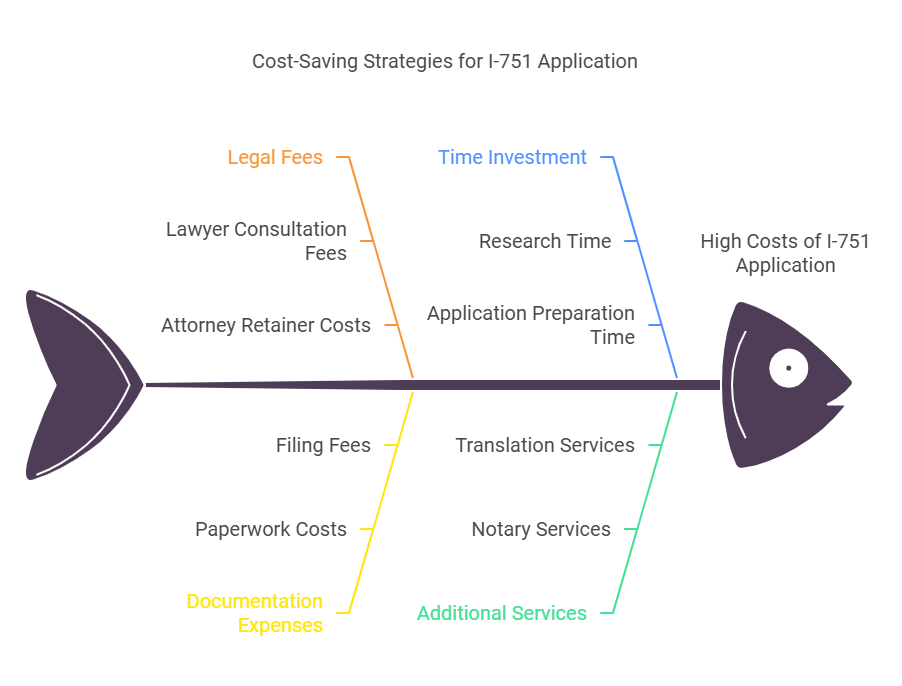
Saving money is most effective when it reduces duplicate work without increasing filing risk.
Organize Your Documents Before The Consultation
Bring copies of your green card, prior immigration filings and notices, marriage and divorce records if applicable, and organized evidence of the qualifying relationship. Good organization can make an hourly consultation more efficient. If the lawyer charges a flat fee, ask whether doing document organization yourself changes the price.
Ask About Limited-Scope Review
If your case appears straightforward, ask whether the lawyer offers a one-time eligibility consultation, form-and-evidence review, or interview-preparation service instead of full representation. Confirm exactly what the limited service excludes and who is responsible for filing and responding to later USCIS notices. A waiver, late filing, prior immigration or criminal issue, fraud concern, prior denial, RFE, NOID, or other complicated fact may require broader case-specific legal analysis.
Use Official DIY Resources
If your case is straightforward and you are considering self-filing, start with official instructions rather than old sample packets or forum posts.
| Resource | What It Provides | Cost |
|---|---|---|
| USCIS Form I-751 page | Current form, instructions, filing information and updates | Free |
| USCIS Fee Schedule | Current filing-fee and exemption information | Free |
| DOJ Recognition and Accreditation rosters | Authorized nonprofit organizations and accredited representatives | Free directory |
Do not copy an old I-751 packet without checking the current form edition, fee, filing address, and instructions. Immigration forms and fees change.
Do You Need A Lawyer For Form I-751?
The right choice depends on the legal risk in your facts, not only on the price of representation. A straightforward joint filer may be comfortable self-filing, while waiver cases and filings involving prior immigration, criminal, fraud, timing, or evidence problems can require much more analysis.
Risk Of Mistakes
Some filing problems are procedural; others affect the legal basis of the petition. The consequences are not all the same.
| Issue | Possible Consequence |
|---|---|
| Incorrect filing fee or rejected payment | USCIS may reject the filing package |
| Missing or weak supporting evidence | USCIS may request more evidence or raise additional questions |
| Late joint filing without an accepted explanation | Conditional resident status can be placed at risk under the I-751 filing rules |
| Waiver, prior immigration issue or criminal-history problem handled incorrectly | The case may require additional legal analysis, evidence, or representation |
USCIS states that a conditional permanent resident generally must file Form I-751 during the required period and that failure to properly file can lead to termination of conditional resident status. Review the USCIS Policy Manual on conditional permanent resident status for the current rule.
Value Of Professional Guidance
An immigration attorney can review whether the filing should be joint or based on a waiver, identify evidence gaps, analyze prior immigration or criminal issues, prepare legal arguments when needed, and explain how later USCIS requests will be handled. No attorney can guarantee approval or a faster adjudication simply because the case is represented.
What Happens After You File?
After a properly filed I-751, USCIS issues notices and may request biometrics, additional evidence, or an interview depending on the case.
The USCIS Receipt Notice And 48-Month Extension
USCIS sends a receipt notice after a properly filed Form I-751. USCIS announced that I-751 receipt notices extend the validity of a conditional permanent resident’s green card for 48 months beyond the card’s expiration date. The receipt notice, together with the expired green card, can serve as evidence of continued status for the period stated in the notice. See the USCIS extension announcement.
Possible Interview Or Additional Evidence
USCIS may approve a case on the record, request additional evidence, schedule an interview, or take another adjudicative action allowed by the governing rules. If an interview is scheduled, follow the notice instructions and bring the requested documents. An attorney can help prepare for the interview, but representation does not guarantee a particular result.
Frequently Asked Questions About I-751 Lawyer Costs
How Much Does A Lawyer Charge For I-751?
Current public fee pages checked September 7, 2026 range from about $1,000 to $3,750 for joint or standard I-751 representation, with several sampled firms between $1,500 and $2,500. Published waiver or complex-case examples in the same sample range from about $2,500 to $7,500. These are market examples, not an official national average.
What Is The Total Cost Of I-751 With A Lawyer?
Using the fee sample in this guide, a joint or standard case combines about $1,000-$3,750 in attorney fees with the $750 general USCIS filing fee, for a sample total of about $1,750-$4,500 before extras. A waiver or complex case using the general filing-fee category combines about $2,500-$7,500 in legal fees with $750 for USCIS, or about $3,250-$8,250 before extras. Qualifying battery-or-extreme-cruelty filings have a $0 USCIS filing-fee category.
Is Hiring A Lawyer For I-751 Necessary?
No. USCIS does not require an attorney to file Form I-751. Legal help may be more valuable when the case involves a waiver, late filing, weak evidence, prior immigration problems, criminal history, an RFE or NOID, or an interview.
What Is The Current USCIS I-751 Filing Fee?
The current general filing fee is $750. USCIS lists a $0 filing-fee category for qualifying battery-or-extreme-cruelty waiver filings, and certain other petitioners may qualify to request a fee waiver. Always recheck Form G-1055 before filing.
Does The I-751 Fee Include Biometrics?
The current USCIS fee schedule lists a $750 general filing fee for Form I-751 and does not list a separate I-751 biometrics fee. USCIS may still require a biometric-services appointment as part of processing, so follow every notice USCIS sends you.
Are USCIS Fees Included In The Lawyer’s Price?
Usually, government filing fees are separate from the attorney’s legal fee unless the engagement agreement clearly says otherwise. Ask for a written breakdown showing legal fees, USCIS fees, translations, mailing, interview work, and possible RFE or NOID charges.
Can I File I-751 Without A Lawyer?
Yes. A person may file Form I-751 without a lawyer. Use the current USCIS form, instructions, fee schedule, and filing information. If your facts are complicated or you are unsure which filing basis applies, consider advice from a licensed immigration attorney or a DOJ-accredited representative.
Are RFE Or Interview Fees Included In An I-751 Lawyer Quote?
It depends on the firm and engagement agreement. Some published fees include later USCIS correspondence or evidence-request work, while other firms charge separately for interview attendance or additional case stages. Compare written quotes for the same scope instead of comparing only the headline legal fee.
How Long Does The I-751 Receipt Extend My Green Card?
USCIS states that I-751 receipt notices extend the validity of the green card for 48 months beyond the card’s expiration date. Keep the receipt notice with the expired card and follow the notice instructions.
Conclusion
A realistic I-751 legal budget depends on case type and service scope. In the public fee pages checked for this September 2026 update, joint or standard representation ranges from about $1,000 to $3,750, with several sampled firms between $1,500 and $2,500. Published waiver or complex-case examples range from about $2,500 to $7,500. Add the separate USCIS fee and any translation, document, interview, RFE, NOID, or follow-up charges. Before hiring a lawyer, compare two or three written quotes for the same scope, verify the current USCIS fee, and use authorized legal help if your case has complications.