Consumer protection lawyer cost ranges from nothing upfront in cases where the law lets you recover attorney fees or the lawyer works on contingency, to roughly $200 to $500+ per hour for hourly work. Clio’s 2025 data put the average U.S. lawyer rate at $349 per hour across all practice areas. Many consumer cases are taken on contingency, typically for about one-third or more of the recovery. Terms vary by lawyer and by state, so these are estimates, not quotes.
Legal information only: This is general information, not legal advice. Fee rules, consumer laws and remedies vary by state and by the facts of your case.
| Fee model | Typical cost | Common use |
|---|---|---|
| Fee-shifting or contingency | Often no upfront fee; the lawyer is paid from a recovery or by the defendant if you win | Credit reporting errors, debt collection abuse, deceptive practices |
| Contingency percentage | Commonly about one-third of the recovery or more; terms vary | Fraud, unfair trade practices, class actions |
| Hourly | About $200 to $500+ per hour (planning range) | Complex disputes, defense against a lawsuit |
| Flat fee | Quoted per task; ask for it in writing | Demand letters, contract reviews, simple arbitration |

What Consumer Protection Lawyers Do
Consumer protection lawyers help people dealing with deceptive or unfair business practices. Federal laws they use include the Fair Credit Reporting Act (FCRA), the Fair Debt Collection Practices Act (FDCPA) and the Telephone Consumer Protection Act (TCPA). Many states also have unfair and deceptive acts and practices (UDAP) laws and lemon laws.
Common cases include credit report errors, abusive debt collection, robocalls, defective vehicles, false advertising and hidden fees.
How Fee-Shifting Can Lower Your Consumer Protection Lawyer Cost
Some consumer laws let a winning consumer recover attorney fees and costs from the company. The FDCPA and the FCRA (for willful or negligent violations) include fee-shifting provisions, and many state consumer laws and warranty and lemon laws do too. That is why many consumer lawyers take these cases with no upfront fee.
Important limits: Fee-shifting usually applies only if you win or settle favorably, and a court decides what fees are reasonable. The TCPA provides statutory damages for violations but does not itself award attorney fees, so ask the lawyer how they will be paid. Always get the fee terms in writing.
What Changes the Cost
- Experience: Specialists in consumer law often charge more per hour but may resolve disputes faster.
- Location: Rates are generally higher in large metro areas than in smaller markets.
- Type of case: A demand letter costs far less than a lawsuit or class action.
- Court or arbitration: Federal court, state court and arbitration have different costs.
- Who pays costs: Ask whether you owe case expenses if you do not win.
Fee Structures Explained
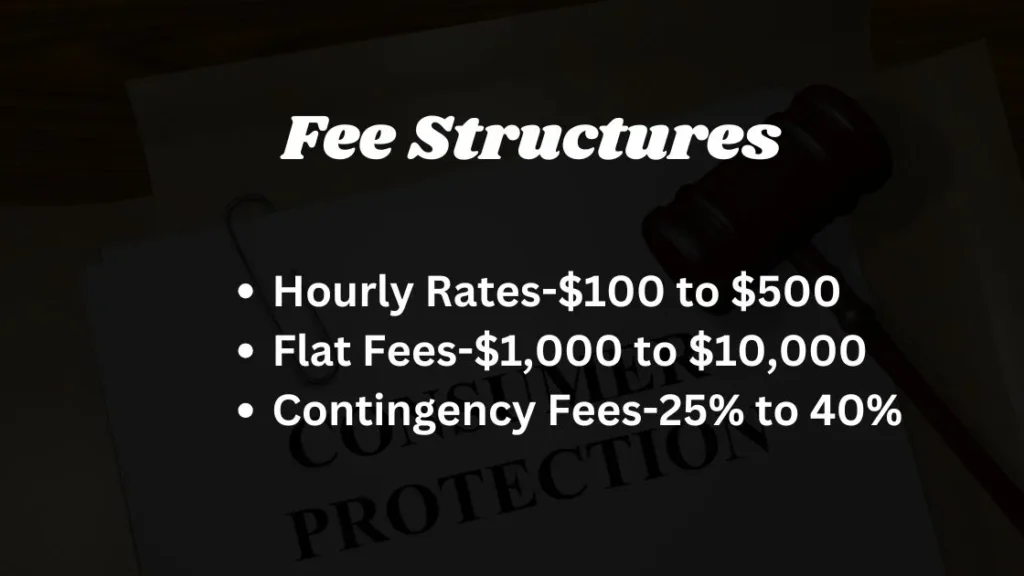
- Hourly with retainer: You pay an advance deposit that the lawyer bills against. Ask about the hourly rate, billing increments and whether unused funds are refunded.
- Flat fee: A fixed price for a defined task, such as a demand letter. Check what is excluded.
- Contingency: The lawyer is paid a percentage of the settlement or award. If there is no recovery, you generally owe no attorney fee, but you may still owe case costs depending on the agreement.
Other Costs to Expect
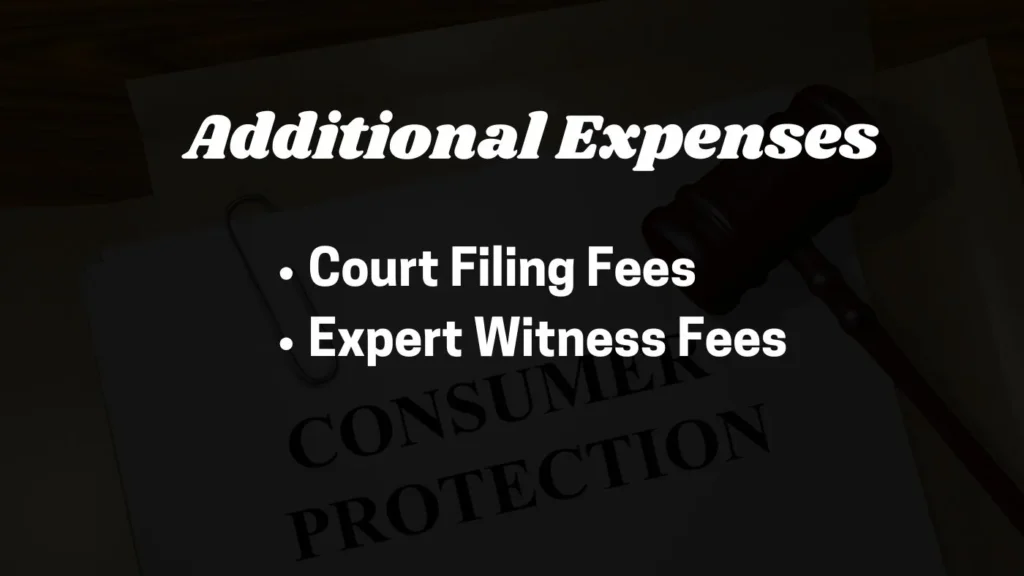
- Federal court filing fee: $405 for a new civil case ($350 filing fee plus a $55 administrative fee). State court fees vary by court.
- Arbitration: Under the American Arbitration Association (AAA) consumer fee schedule, the consumer’s filing fee is capped at $225. Under JAMS consumer minimum standards, the consumer pays no more than $250. The business covers the rest of the administrative and arbitrator costs.
- Experts, records and service: Expert witnesses, certified records and process servers can add cost. Firms often advance these in contingency cases and recover them from a settlement, so ask how that works.
Cheaper Options to Try First
- Government complaints: File a complaint with the CFPB (banking, credit reporting, debt collection), the FTC or your state attorney general. These are free.
- Free consultations: Many consumer lawyers offer a free first review. Ask whether your claim has fee-shifting.
- Legal aid and clinics: Low-income consumers may qualify for free help from legal aid or law-school clinics.
- Small claims court: For smaller losses, small claims court is inexpensive and often does not need a lawyer. Dollar limits vary by state.
How to Compare Consumer Protection Lawyers

| Ask about | Question | Red flag |
|---|---|---|
| Fee structure | Will my case be handled on a fee-shifting or contingency basis? | Refusal to put terms in writing |
| Costs | Am I responsible for litigation costs if we do not win? | Vague or marked-up expenses |
| Experience | How many FCRA, FDCPA or state consumer cases have you handled? | No consumer-law experience |
Request a written fee agreement, and ask for itemized monthly statements if you pay hourly. To compare rates across practice areas, see our guides to employment lawyer cost, debt settlement lawyer cost, bankruptcy lawyer cost and traffic lawyer cost.
Frequently Asked Questions About Consumer Protection Lawyer Cost
How much does a consumer protection lawyer cost?
It depends on the case. Many consumer claims are handled with no upfront fee through contingency or fee-shifting laws. Hourly work is commonly quoted at about $200 to $500+ per hour. Get the terms in writing.
Do consumer protection lawyers offer free consultations?
Many do. Use the consultation to ask whether your claim may qualify for fee-shifting and how costs are handled.
What additional costs might I pay?
Possible costs include court filing fees ($405 in federal court), arbitration fees (consumer filing fee capped at $225 under AAA and $250 under JAMS), experts, records and service of process. In contingency cases the firm often advances these costs.
Can I negotiate a consumer protection lawyer’s fee?
Often, yes. You can ask about a lower contingency percentage, a flat fee for a defined task, or a cap on hours.
Conclusion
Consumer protection lawyer cost can be low or even zero upfront when fee-shifting or contingency applies, and several hundred dollars an hour otherwise. Compare written fee terms, try free agency complaints first, and ask each lawyer how costs are handled if you do not win.
Sources: Clio, Lawyer Rates by Practice Area; AAA Consumer Fee Schedule; JAMS Consumer Minimum Standards; CFPB complaint portal.