Fixing a scratch on a car costs about $10–$40 for a light DIY polish, $100–$300 for professional clear-coat buffing, $150–$500 for localized mobile paint repair, or $400–$1,500+ when a body shop must refinish an entire panel.
Final repair pricing depends on scratch depth, length, location, paint finish type (gloss, metallic, or matte), and whether adjacent panels must be blended. Standard body shop labor rates typically range from $65 to $150+ per hour depending on region and facility type. Estimates reflect standard U.S. retail pricing as of August 2026, before taxes or insurance deductibles.
Quick Answer & Key Price Breakdown
A surface clear-coat scratch costs $10–$40 to polish at home or $100–$300 professionally. Scratches penetrating the base coat or primer cost $150–$500 for localized SMART repair or $400–$1,500+ per panel for full body shop repainting. Specialty tri-coat, pearl, or matte finishes increase total costs by 20% to 50% due to blending complexity.
Key Takeaways
- Fingernail Test: Marks that do not catch a fingernail reside in the clear coat and are ideal candidates for DIY polishing.
- Substrate Exposure: Scratches exposing primer, bare steel, or bumper plastic require touch-up paint or professional refinishing to prevent corrosion.
- Panel Blending: Deep scratches on doors or fenders often require blending paint into adjacent panels to eliminate color mismatch.
- Insurance Threshold: Claims under $1,000 are rarely economical after factoring in deductibles and potential 3-year premium hikes.
- Matte Finish Warning: Matte and satin paints cannot be polished or buffed; damaged matte clear coat requires complete panel repainting.
At a Glance: Car Scratch Repair Summary
| Time Required | 30–90 minutes for DIY polish; 2–4 hours for mobile repair; 1–5 business days for body shop refinishing |
| Difficulty Level | Easy for light clear-coat polishing; Moderate for exact-code touch-up; Advanced for sanding, spraying, and blending |
| Essential Tools | Auto shampoo, microfiber towels, paint-safe compound/polish, wax/sealant, and VIN-matched touch-up paint |
| Estimated Expense | $10–$120 for DIY supplies; $100–$1,500+ for professional body shop service |

“Success is the sum of small efforts, repeated day in and day out.” — commonly attributed to Robert Collier
Car Scratch Repair Costs by Damage Level
The most accurate repair estimate depends on which layer of your vehicle’s paint stack was damaged. Modern automotive factory finishes consist of an electro-coat primer, a colored base coat, and a protective transparent clear coat (typically 1.5 to 2.0 mils thick).
| Damage Type | Common Visual Signs | DIY Cost | Professional Cost | Est. Repair Time | Risk / Blending Need |
|---|---|---|---|---|---|
| Paint Transfer / Surface Scuff | Foreign material sits on top of clear coat; smooth to fingernail touch | $10–$30 | $50–$150 | 20–45 mins | Very Low (Zero paint removal) |
| Clear-Coat Scratch | Shallow line or swirl; color remains uniform; slight or no fingernail catch | $10–$40 | $100–$300 | 30–90 mins | Low (Micro-clear leveling) |
| Base Coat / Color Scratch | Missing vehicle color inside line; fingernail catches firmly | $20–$80 (Touch-Up) | $150–$500 (Mobile) / $400–$1,000 (Shop) | 2 hrs–2 days | Moderate (Requires color match) |
| Primer or Bare Substrate Exposed | Gray/white primer, silver metal, or black bumper plastic visible | $40–$120 (Touch-Up Kit) | $500–$1,500+ per panel | 1–4 days | High (Requires primer + blending) |
| Scratch with Dent, Rust, or Multi-Panel | Metal distortion, cracked plastic, corrosion, or damage across door gaps | Not Recommended | $1,000–$2,500+ | 3–5+ days | Very High (Bodywork + multi-panel) |
Labor rates vary widely across regions. Body shop mechanical and paint labor generally costs $65 to $110 per hour in rural areas and $120 to $160+ per hour in metropolitan markets. Metallic, pearl, and tri-coat finishes require adjacent panel blending to hide minor color mismatches, adding 1.0 to 2.5 additional labor hours per job.
The largest price jump occurs when the repair changes from polishing the existing clear coat to preparing, painting, and clearing an entire panel.
Types of Car Scratches & Specialty Finishes
Accurately identifying scratch depth prevents wasted money on ineffective DIY kits or unnecessary body shop visits. Adjacent components may also require separate estimates; for instance, side scrapes near door glass or mirrors may involve concurrent car side-mirror replacement or car window replacement costs.
Paint Transfer and Surface Scuffs
Paint transfer occurs when soft material (such as bumper rubber, wall paint, or shopping cart plastic) deposits onto your car’s clear coat without cutting into the paint.
- Feels raised or rubbery to the touch.
- Fingernail glides smoothly over the mark without catching in a groove.
- Responds well to specialized bug-and-tar removers or gentle hand polishing.
- Must be thoroughly cleaned before polishing to avoid dragging abrasive debris across clear coat.
Clear-Coat Scratches
Clear-coat scratches affect only the topmost transparent layer. Wash swirls, bush scrapes, and light scuffs usually fall into this category.
- Shallow depression visible under direct sunlight.
- Fingernail glides over smoothly or catches only very slightly.
- Original paint color remains entirely uniform inside the scratch.
- Wetting the mark with water temporarily fills the defect, making it vanish visually until dry.
Color-Coat and Primer Scratches
Deeper cuts slice completely through the clear coat and penetrate the base color coat or electro-coat primer layer.
- Fingernail catches distinctly inside the groove.
- Base color is visibly missing inside the line.
- Gray, off-white, or tan primer material is visible.
- Polishing cannot resolve missing paint; touch-up paint or panel refinishing is mandatory.
Bare-Metal or Plastic Damage
When scratches cut down to silver steel, aluminum, or dark bumper plastic, structural paint restoration is necessary.
Exposed steel oxidizes rapidly when exposed to atmospheric moisture, triggering rust formation under surrounding clear coat within days. Bumper plastic will not corrode, but requires flexible plastic primer and specialized adhesion promoters for paint to bind properly.
Critical Warning: Matte & Specialty Pearl Finishes
- Matte & Satin Paint: NEVER attempt to polish, buff, or wet-sand matte paint. Polishing flattens the textured clear coat, creating permanent glossy spots that require repainting the entire panel.
- Tri-Coat & Pearl Finishes: Pearl paints utilize transparent base coats containing mica crystals. Spot touch-ups remain highly visible; body shops must spray and blend adjacent panels for an acceptable match.
“Do what you can, with what you’ve got, where you are.” — Squire Bill Widener, quoted by Theodore Roosevelt
How to Tell How Deep a Car Scratch Is
- Wash the affected panel: Clean away surface road grime using dedicated automotive shampoo and clean water.
- Dry with clean microfiber: Ensure no grit remains that could cause secondary marring during inspection.
- Inspect under bright, indirect light: Use LED inspection lighting to verify whether original base color is visible inside the groove.
- Perform the gentle fingernail drag test: Drag your fingernail lightly across the scratch at a 90-degree angle. No catch indicates clear-coat damage; a firm catch indicates base-coat or primer depth.
- Perform the water wetness test: Spray clean water over the scratch. If the mark temporarily vanishes while wet, it is isolated to the clear coat.
- Identify exposed substrate color: Note if exposed material appears gray/tan (primer), silver (steel/aluminum), or dark gray/black (plastic bumper).
- Check for structural distortion: Confirm whether metal panels suffer underlying denting, which requires paintless dent repair (PDR) alongside paint correction.
Note: The fingernail test offers a quick estimate but cannot measure remaining clear-coat thickness. Factory clear coat is extremely thin (about as thick as a sticky note). Consult a professional detailer if you are unsure.
DIY Car Scratch Repair Methods
DIY repair works best on minor clear-coat scratches or small chips where protection and cosmetic improvement are acceptable goals.
Before You Start
- Work indoors or in shade on a cool panel (between 60°F and 80°F).
- Never apply polishes or touch-up paint in direct sunlight.
- Decontaminate the paint surface with isopropyl alcohol (IPA) or prep solvent.
- Test compounds on a hidden area (e.g., lower rocker panel) first.
Warning: Never spray automotive primer, 2K clear coat, or solvent base coats inside an unventilated enclosed home garage. Inhaling solvent vapors and isocyanates poses severe respiratory hazards. Spray refinishing requires proper PPE and ventilation facilities per NIOSH autobody safety guidelines.
Using Scratch Remover or Polishing Compound
Consumer scratch removers contain micro-abrasives designed to level sharp scratch edges. Basic kits cost $10–$30. Product tests from automotive publications such as Road & Track and Car and Driver evaluate abrasive aggressiveness across leading consumer brands.

- Apply a pea-sized amount of polish to a clean microfiber applicator pad.
- Work in a 1×1 foot section using moderate pressure in cross-hatch overlapping motions.
- Wipe clean with a high-GSM microfiber towel and inspect.
- If light haze remains, finish with a fine finishing polish before applying synthetic wax or sealant.
Pro Tip: Always start with the least aggressive finishing polish available. You can always step up to a heavier cutting compound if needed, but you cannot restore clear coat once stripped away.
Using Touch-Up Paint
Touch-up paint prevents corrosion on deeper scratches where paint is missing. Always match touch-up paint to the exact manufacturer paint code located on the driver’s door jamb sticker or VIN lookup.
- Clean the groove thoroughly using wax remover or prep solvent.
- Apply rust converter if light surface oxidation is visible on exposed steel.
- Dab a tiny amount of primer into the scratch if substrate is exposed; allow to dry.
- Apply thin layers of color-matched base paint using a fine detail brush or toothpick.
- Allow 20–30 minutes flash time between coats; do not overfill past surrounding clear coat.
- Apply a clear-coat layer over cured paint and allow 48–72 hours cure time before light buffing.
Manufacturer guidelines, such as Dupli-Color touch-up instructions, emphasize thin layer application and strict flash-time adherence for durable results.
What Household Products NOT to Use
- Toothpaste: Contains irregular hydrated silica particles that create micro-marring and dull clear coat.
- Melamine Foam (Magic Erasers): Acts as ultra-fine sandpaper that rapidly strips clear coat gloss.
- Household Abrasive Cleaners: Strips protective layers and leaves chemical hazing.
- WD-40 / Shoe Polish: Temporarily fills scratches with oil without repairing paint; leaves residue that prevents touch-up paint adhesion.
“Excellence, then, is not an act but a habit.” — commonly attributed to Aristotle
Professional Car Scratch Repair Options
Paint Correction & Detailing
Professional detailers use dual-action or rotary machine polishers with specialized pad-and-compound combinations to level surface clear-coat defects. Costs range from $100 to $300 for isolated correction or $400–$800+ for multi-stage whole-vehicle paint correction.
Mobile SMART Repair
SMART (Small to Medium Area Repair Technology) technicians perform localized paint filling, spot spraying, and clear-coat blending at your home or workplace. Typical pricing runs $150 to $500. Ideal for localized bumper scuffs and fender scratches, though severe metallic shade matching may still require body shop blending facilities.
Body Shop Refinishing
When paint damage spans multiple panels, exposes wide rust areas, or includes body panel denting, complete body shop refinishing is required.

Standard single-panel refinishing costs $400 to $1,500+. Body shops strip trim, sand down to sound primer, repair underlying metal/plastic, apply base color, spray two full coats of 2K urethane clear coat, and bake the finish in a spray booth for factory durability.
Cost Breakdown: DIY vs. Professional Repair
| DIY Expense Item | Estimated Retail Cost | Professional Equivalent | Professional Range |
|---|---|---|---|
| Scratch Remover / Compound Kit | $10–$40 | Detailer Machine Polish | $100–$300 |
| Microfiber Towels & Prep Solvents | $15–$30 | Mobile SMART Spot Repair | $150–$500 |
| OEM Touch-Up Paint + Clear Pen | $20–$60 | Body Shop Single-Panel Refinish | $400–$1,500 |
| Substrate Primer & Abrasive Pads | $15–$35 | Multi-Panel Blending & PDR | $1,000–$2,500+ |
Choosing Between DIY and Professional Repair
The 3-Step Decision Heuristic: DIY vs. Body Shop
- Fingernail Test: If nail glides smoothly → DIY Polish ($10–$40).
- Fingernail Catches + Color Missing (Under 2 Inches): → DIY Touch-Up Pen ($20–$60) or Mobile SMART Repair ($150–$300).
- Bare Metal / Bumper Plastic Exposed OR Damage Spans 2+ Panels: → Professional Body Shop ($400–$1,500+).
| Decision Factor | DIY Repair Appropriate | Choose Professional Body Shop |
|---|---|---|
| Scratch Depth | Surface clear coat or minor rock chip | Primer, steel, aluminum, or plastic exposed |
| Finish Type | Standard glossy single-stage or clear coat | Matte, satin, pearl, or multi-stage tri-coat |
| Vehicle Status | Older daily driver; cosmetic improvement acceptable | Lease return, luxury car, or sale preparation |
Preventing Car Scratches
Paint-Safe Washing Techniques
Improper washing causes over 80% of fine clear-coat swirl marks. Comprehensive guidance from AAA Paint Protection Advice highlights key prevention steps:
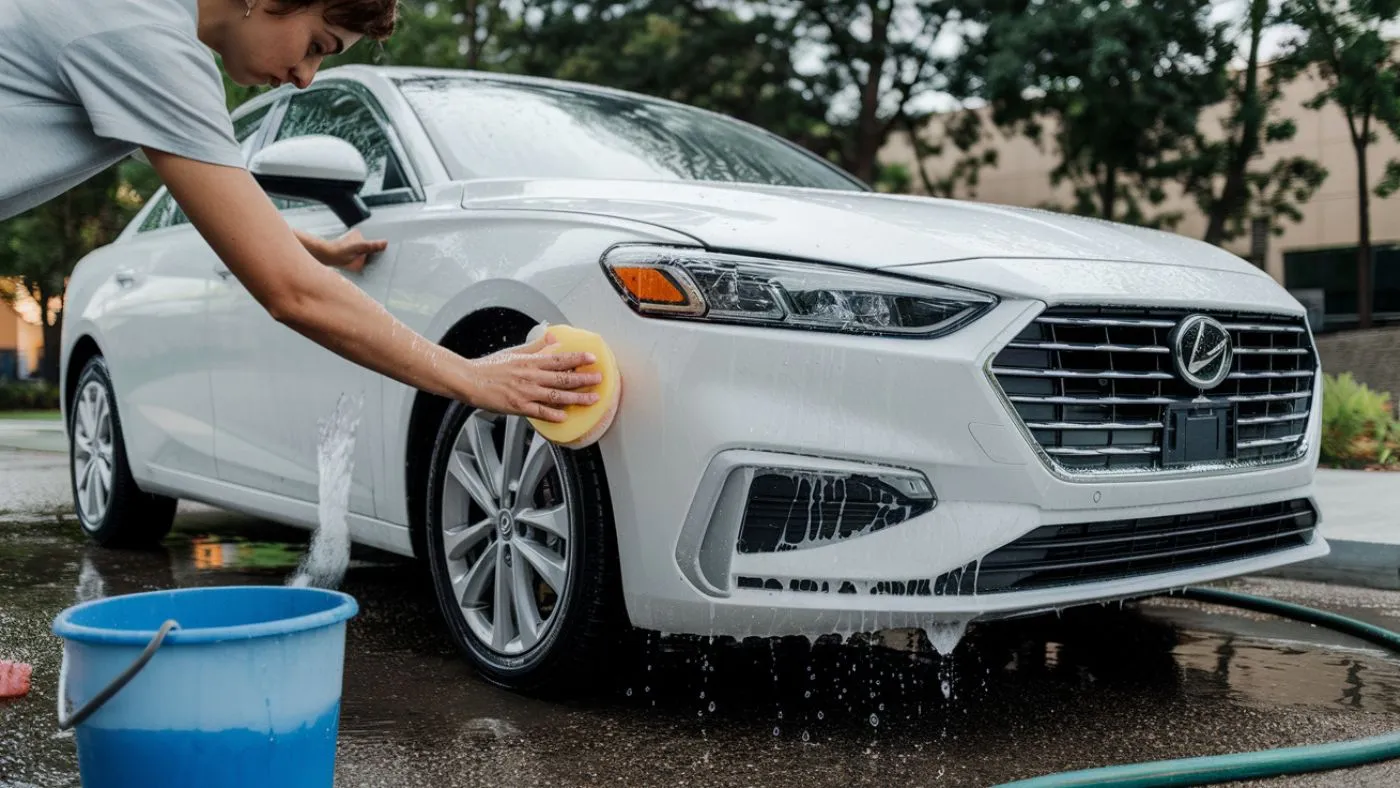
- Use the two-bucket wash method with grit guards in both wash and rinse buckets.
- Use clean, high-pile microfiber wash mitts; never use household sponges.
- Lube dry panels with quick-detailer spray before wiping away dust.
- Consider adding ceramic coating or install physical paint protection film (PPF) on front impact zones.
Insurance Coverage for Car Scratches
Auto insurance policy coverage depends on the underlying cause of damage:
- Comprehensive Coverage: Covers non-collision events like keying vandalism, falling tree branches, or storm damage. Subject to your comprehensive deductible.
- Collision Coverage: Covers scratches resulting from hitting objects, garage posts, guardrails, or vehicle accidents.
Review guidelines from the Insurance Information Institute regarding deductible rules and claim reporting.
The $1,000 Rule: When NOT to File an Insurance Claim
Filing a scratch repair claim is rarely economical if total repair costs are under $1,000. For example, if a body shop quotes $650 to repair a keyed door panel and your comprehensive deductible is $500, insurance pays only $150. However, filing a claim risks losing your premium discount, potentially raising your insurance rates by $150–$300 per year over a 3-year rating window. Pay cash out-of-pocket for repairs under $1,000 unless multi-panel damage warrants a large claim.
Frequently Asked Questions
How much does it cost to fix a minor scratch on a car?
A light clear-coat mark costs $10–$40 to polish at home or $50–$300 for professional detailer buffing. Scratches that cut through base paint or primer cost $150–$500 for localized mobile repair or $400–$1,500+ for body shop panel refinishing.
Can car scratches be buffed out completely?
Paint transfer and light clear-coat scratches can be buffed out completely if they do not penetrate deeper than 25% of the clear coat layer. Buffing cannot restore missing base paint, primer, or substrate metal. Matte and satin finishes must never be buffed.
Are DIY car scratch repair kits effective?
DIY kits are effective for shallow clear-coat scuffs and small cosmetic touch-ups. However, they cannot produce an invisible repair on deep scratches, and aggressive hand sanding risks thinning or burning through surrounding clear coat.
How can I tell whether a scratch went through the clear coat?
Clean the area and run your fingernail gently across the scratch. If your fingernail glides over without catching, it is a surface clear-coat defect. If your nail catches in a distinct groove, or if gray primer or silver metal is visible, the scratch has penetrated past the clear coat.
How long does professional car scratch repair take?
Light polishing or machine paint correction takes 1 to 3 hours. Mobile SMART repairs take 2 to 4 hours. Body shop panel refinishing typically requires 1 to 5 business days to allow for sanding, painting, clear coating, curing, and reassembly.
Should I repair a scratch that exposes bare metal immediately?
Yes. Exposed steel begins oxidizing immediately when exposed to moisture and oxygen, leading to surface rust. Seal bare metal promptly with a rust-inhibiting primer and color-matched touch-up paint or seek professional repair.
Does toothpaste safely remove scratches from car paint?
No. Toothpaste contains inconsistent hydrated silica abrasives designed for tooth enamel. Applying toothpaste to automotive clear coat causes microscopic scratching, dulling, and hazing. Use an engineered automotive polishing compound instead.
Will ceramic coating remove or prevent car scratches?
No. Ceramic coatings form a thin chemical protection layer against UV and contaminants, but they do not hide existing scratches or stop mechanical scratches from keys, bushes, or rocks. Paint protection film (PPF) is required for physical impact defense.
Conclusion
Determining car scratch repair costs comes down to identifying which layer of paint was damaged. Light surface scuffs and clear-coat marks can be safely corrected at home for $10 to $40. Scratches exposing color, primer, or substrate metal warrant localized touch-up paint or professional body shop refinishing ($400–$1,500+ per panel).
Always start with conservative cleaning and polishing before attempting aggressive sanding or repainting. For deep or multi-panel damage, obtain two or three written body shop estimates to compare labor operations, panel blending, and paint warranty terms before authorizing work.
Sources & References
- CCC Intelligent Solutions, Crash Course 2026 — Collision repair labor trends and refinishing complexity metrics.
- AAA Auto Care, Scratch Identification & Paint Layers Guide — Vehicle clear-coat thickness and buffing limitations.
- Dupli-Color Touch-Up Application Guidelines — Paint code matching, flash-time, and clear-coat cure specifications.
- NIOSH Autobody Spray Painting Controls — Chemical hazards, ventilation, and spray booth safety standards.
- Insurance Information Institute, Comprehensive vs. Collision Basics — Policy deductible structures and claim guidance.
- AAA Paint Protection & Care Guidance — Two-bucket wash methods and clear-coat maintenance.