
Welding school costs can range from $5,000 to over $20,000. It all depends on the school and the program you pick. Community colleges usually charge around $5,000 for their two-year programs, while trade schools run $5,000 to $20,000 for hands-on training and certifications. Don’t forget the extra money for equipment and materials—these add up fast. Still, the investment often leads to a lucrative career, so it pays to explore every option and get the full financial picture.
Quick Answer
Here’s the quick rundown on welding school costs and value:
- Typical range: $5,000 to over $20,000 (some specialized programs cost more)
- Community colleges: about $5,000 for a two-year program
- Certificate programs: $3,000–$10,000 and take weeks to months
- Extra costs for gear and supplies: $100–$2,500
- Median welder wage: $51,000 per year
- Financial aid and scholarships can cut your out-of-pocket expense significantly
Understanding Welding School Costs
When you look at welding school costs, you’ll find options that fit different budgets. The average sits between $5,000 and $15,000, though some specialized programs top $20,000.
Community colleges keep things affordable with two-year programs around $5,000 that include general education classes. If you want faster training, certificate programs cost $3,000 to $10,000 and run from a few weeks to a few months.
Be sure to add in the extra expenses for equipment, materials, and safety gear. These can tack on another $100 to $2,500. Staying current with industry trends also helps you pick the right techniques and program so you get the best value for your money.
Types of Welding Institutions
When you’re thinking about welding education, you have several types of schools to choose from, including trade schools and community colleges.
Trade schools focus on hands-on training and usually charge $5,000 to $20,000.
Community colleges offer more affordable programs—around $5,000 for two years—while mixing in general education with the welding courses.
Products Worth Considering

Crafted with precision, our steel plates are laser-cut, offering unparalleled edge smoothness and dimensional accuracy compared to stamped and sheared parts.

Master Your Craft: the welding practice kit is meticulously crafted using laser cut technology; This ensures accurate edges that challenge and enhance your welding skills, featuring the geometric trefoil design, aid in mastering different welding techniques; It's suitable not only for novice welders but likewise furnishes a unique challenge for experienced professional welders

201 STAINLESS STEEL - Made of Premium Type 201 stainless steel with excellent corrosion and heat resistance. Ideal for consistent practice across MIG, TIG, Stick, and wire-feed welding applications.
Trade Schools Overview
Trade schools play an essential role in vocational education. They offer specialized programs focused on welding techniques and give aspiring welders several clear benefits.
- Tuition typically ranges from $5,000 to $20,000, depending on the program length and type.
- Programs can last from a few months for certificates to two years for diplomas, catering to different skill levels.
- Many schools offer certifications upon graduation, enhancing your employability in the welding industry.
- Financial aid, scholarships, and grants are often available, ensuring accessible funding options.
With partnerships in local industries, trade schools also help with networking and job placement opportunities. This makes them an excellent choice for anyone ready to start a welding career.
Community Colleges Benefits
Although many people picture trade schools first, community colleges offer significant benefits that can improve your learning experience. They keep programs affordable at an average of $5,000 for a two-year course.
| Benefits | Details |
|---|---|
| Community Engagement | Strong local partnerships boost job placement opportunities. |
| Skill Enhancement | Combine vocational training with general education classes. |
| Flexible Scheduling | Options available for various commitments and lifestyles. |
With programs ranging from certificates to associate degrees, you can tailor your education to your career goals. Financial aid opportunities often ease the burden so you can focus on building skills and getting involved in the community.
Program Length and Structure

Welding programs come in many different lengths.
Certificate programs might take only a few weeks, diploma programs usually need about a year, and associate degrees typically run two years.
Knowing these timelines helps you pick the right path for your career goals and schedule.
Certificate Programs Duration
Welding certificate programs typically range from a few weeks to several months, depending on the training provided. This flexibility lets you choose a program that fits your schedule and career goals.
Here are some key aspects of certificate duration and structure:
- Hands-on training: Most programs emphasize practical welding techniques to prepare you for entry-level jobs.
- Classroom instruction: You’ll learn essential theories and safety protocols.
- Laboratory experiences: Gain real-world skills in a controlled environment.
- Certificate validation: Upon completion, you receive a certificate that enhances your employment prospects in the welding industry.
With so many options, you can find a program that suits your needs and gives you the best learning experience.
Diploma Programs Overview
Many students find diploma programs in welding an excellent way to gain the skills needed for a successful career. These programs usually last about one year and cost between $5,000 and $15,000, depending on the school and location.
You’ll work through a mix of hands-on training and theoretical coursework that focuses on essential welding techniques and prepares you for entry-level positions. Class sizes vary, which affects how much personalized instruction you receive.
Many programs also include general education courses alongside the specialized welding training, giving you a well-rounded education. Earning certifications during the diploma can greatly improve your job placement opportunities and give you a competitive edge in the welding field.
Associate Degree Timeline
For those who want a more in-depth education in welding, associate degree programs offer a detailed curriculum that typically spans two years. You’ll complete around 60 to 70 credit hours that combine general education with specialized welding courses.
Here are some curriculum details you can expect:
- Hands-on training, allowing you to practice welding techniques in real-world settings
- Courses covering safety standards and welding theory
- Opportunities to earn certifications from recognized organizations like the American Welding Society
- Career preparation for fields such as manufacturing, construction, and underwater welding
With this structured approach, you’ll gain technical skills plus a solid understanding of the welding industry. That combination boosts your employability right after graduation.
Additional Costs to Consider
When you plan your budget for welding school, look beyond tuition. Here’s a quick breakdown of the potential extra expenses you might run into:
| Expense Type | Cost Range | Notes |
|---|---|---|
| Materials & Gear | $100 – $500 | Essential for hands-on training |
| Welding Machines | $500 – $2,000 | Varies by model and features |
| Books & Supplies | $100 – $500 | Necessary for coursework |
| Room & Board | $5,000 – $15,000 | Major factor if relocating |
These costs add up quickly, so build them into your total budget to avoid surprises while you train for the welding profession.
Products Worth Considering

Military Grade Durability Welder Backpack - Exterior made of ballistic grade 6000 Denier nylon for excellent abrasion resistance. 50+ lbs. of carrying capacity.


This card is perfect for your loved one's welding graduation gift.
Financial Aid and Funding Options
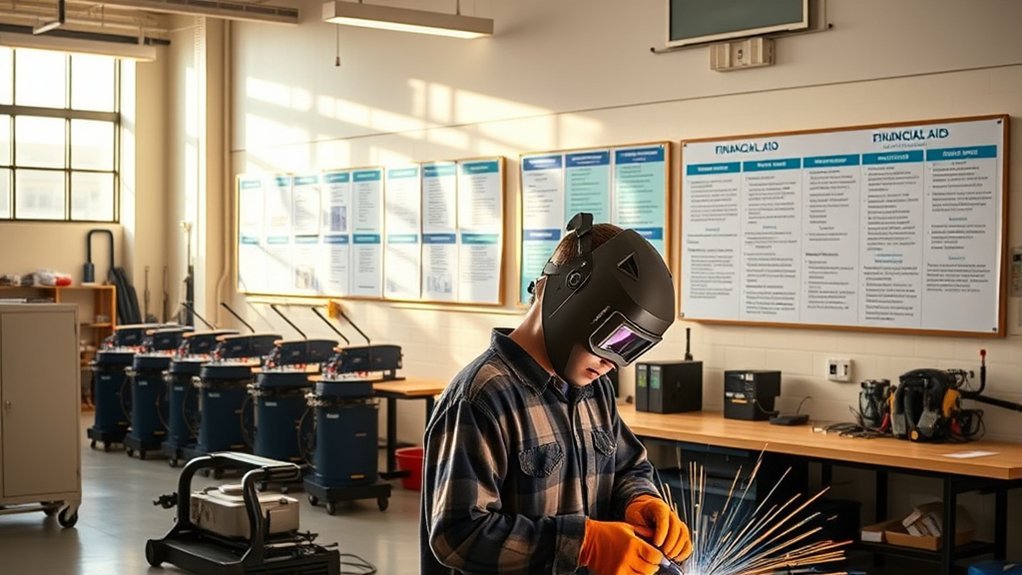
Once you see the extra costs that come with welding school, exploring financial aid and funding options is a smart next step.
You can cut your education expenses a lot by using the resources that are out there. Here are some options worth checking:
- Scholarship opportunities from professional associations and private companies, including those offered by the American Welding Society.
- Grants that don’t require repayment, helping to lower your tuition costs.
- Federal student loans with lower interest rates and flexible repayment options, making them an accessible choice for many students.
- Many technical schools, like MTI, participate in federal financial aid programs, providing various financing options.
Researching and applying for several financial aid opportunities can help you manage costs effectively.
Career Prospects After Welding School
As you finish welding school, you’ll find plenty of career prospects waiting in different industries. The demand for skilled welders keeps growing, especially in construction and manufacturing, which creates many job openings.
Graduates can expect a median annual wage of $51,000 according to the U.S. Bureau of Labor Statistics, though pay can rise sharply in sectors like oil and gas, shipbuilding, and aerospace. Earning certifications, such as those from the American Welding Society, can strengthen your employment prospects and may be required for specialized roles.
Many welding programs support your job search through networking and partnerships with local industries. Career advancement options in supervisory roles or specialized welding can also lead to higher earnings as your skills and experience increase.
Evaluating the Return on Investment
Evaluating the return on investment (ROI) for welding school reveals a promising financial outlook.
Evaluating the ROI for welding school shows a strong potential for financial success in your career.
When you compare costs to potential earnings, here’s what you should know about your investment:
- Cost of tuition: Ranges from $5,000 to $15,000, with community colleges often providing cheaper options.
- Average salary: Welders earn a median annual wage of $51,000, making this a lucrative career path.
- Job opportunities: High-paying positions exist in growing industries like oil and gas, shipbuilding, and aerospace.
- Financial aid: Scholarships and grants can greatly cut down expenses, boosting your ROI.
With entry-level wages starting at approximately $16 per hour, you can expect a quick financial payoff from your welding education.
Products Worth Considering

Richard Finch, Welder's Handbook: A Complete Guide to MIG, TIG, Arc & Oxyacetylene Welding, "Completely Revised and Updated Edition!" paperback
Frequently Asked Questions
Are There Prerequisites for Enrolling in Welding Technical Schools?
Yes, you’ll typically need a high school diploma or GED. Some welding certifications may require extra steps like passing a physical exam or showing basic math skills. Always check with your chosen school for the exact details.
What Kind of Equipment Do Students Need to Purchase?
You’ll need essential welding tools like a helmet, gloves, and protective clothing, plus notebooks and pens for class. Investing in quality equipment improves both your safety and your skills during training.
Can I Attend Welding School Part-Time?
Absolutely. Many welding schools offer part-time options with flexible schedules. This makes it easier to balance work or family while you build the skills you need. Just confirm availability with the school.
Is Online Welding Training Available?
Yes, online welding training exists. You can work toward certifications through virtual workshops and learn key skills from home while keeping your schedule flexible. Shop around to find the program that fits you best.
How Are Instructors Qualified in Welding Programs?
Instructors in welding programs hold relevant certifications and have plenty of real-world industry experience. Their background ensures you learn practical knowledge that prepares you for the challenges and opportunities ahead.
Conclusion
In the world of welding, investing in your education is like laying a strong foundation for a sturdy structure. While costs may vary, the skills and career opportunities you gain can outweigh the initial expense. Financial aid options often help lighten the load. By weighing your choices carefully, you can forge a path to success that’s financially sound and personally fulfilling. Your future in welding is bright—grab that torch and light it up!
