If you plan to fish Delaware’s designated trout-stocked waters, the cost depends on your age and residency. A trout stamp can cost from $2.10 to $6.20, but many anglers age 16 or older also need a fishing license and a free Fisherman Information Network number. The dates, water, and exemptions matter just as much as the price.
Quick Answer
A Delaware trout stamp costs $4.20 for residents ages 16–64, $2.10 for resident anglers ages 12–15, and $6.20 for non-residents age 12 or older. Delaware residents age 65 or older and children under 12 are exempt. Anglers age 16 or older may also need a fishing license and free FIN number.
Key Takeaways
- The state trout-stamp fee ranges from $2.10 to $6.20, depending on age and residency.
- Most anglers age 16 or older also need a Delaware fishing license and a free FIN number.
- The stamp is required only in designated trout-stocked waters during specified periods.
- The age-65 exemption applies to Delaware residents, not every senior visiting the state.
- Free fishing days waive the ordinary fishing-license requirement but do not automatically waive a required trout stamp.
At a Glance
| Time Required | About 5–10 minutes online |
| Difficulty | Easy |
| Tools Needed | Internet-connected device or authorized license agent, identification, and payment method |
| Cost | $2.10–$6.20 for the stamp, plus a fishing license and applicable agent fees when required |
Delaware Trout Stamp Pricing for Residents and Non-Residents
The official stamp price is only part of the amount an angler may need to budget. Most people age 16 or older must also buy a fishing license. The table below combines the current state fees published by the Delaware Department of Natural Resources and Environmental Control.
| Angler | Trout Stamp | Fishing License | State Fee Total |
|---|---|---|---|
| Delaware resident under 12 | Not required | Not required | $0 |
| Delaware resident age 12–15 | $2.10 | Not required | $2.10 |
| Delaware resident age 16–64 | $4.20 | $8.50 annual license | $12.70 |
| Delaware resident age 65 or older | Exempt | Exempt with proof of age and residency | $0 |
| Non-resident under 12 | Not required | Not required | $0 |
| Non-resident age 12–15 | $6.20 | Not required | $6.20 |
| Non-resident age 16 or older | $6.20 | $20 annual or $12.50 for seven consecutive days | $26.20 annual or $18.70 for seven days |
A resident age 16–64 who needs both documents pays $12.70 in state fees. A non-resident adult pays $26.20 with an annual license or $18.70 with a seven-day license.
These totals do not include authorized-agent charges. DNREC’s fee schedule lists a $1 agent fee for a trout stamp and a $2.50 agent fee for a fishing license. An adult resident buying both through an agent may therefore pay $16.20, while an adult non-resident may pay $29.70 with an annual license or $22.20 with a seven-day license.
Warning: The age-65 exemption applies to Delaware residents. A non-resident age 65 or older must still purchase the non-resident stamp and fishing license unless another specific statutory exemption applies.
Exemptions from the Trout Stamp Requirement
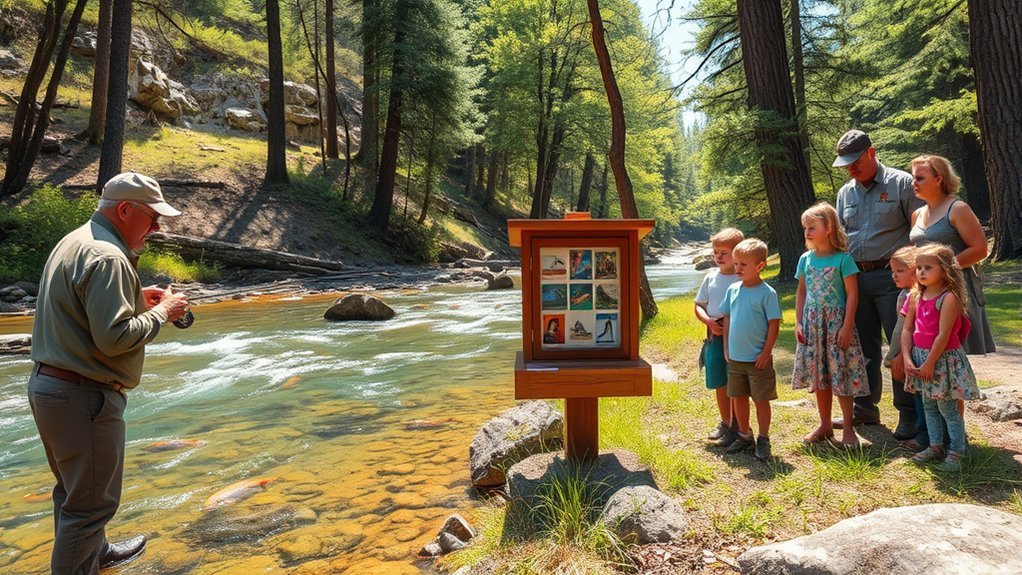
Delaware’s trout-stamp exemptions are narrower than its general fishing-license exemptions. The following anglers generally do not need to purchase a trout stamp:
- Children under age 12: The stamp is not required for residents or non-residents under 12.
- Delaware residents age 65 or older: They are exempt but should carry proof of age and Delaware residency.
- Certain statutorily exempt anglers: Delaware law extends the trout-stamp exemption to specific fishing-license-exempt categories, including some military-hospital patients, qualifying veterans with a service-connected disability, blind persons, certain hospital or rehabilitation patients, residents fishing at qualifying registered fee-fishing operations, and some recently discharged Delaware veterans.
- Owners or bona fide lessees of qualifying land: An owner or bona fide lessee of land crossed by trout-stocked water, along with immediate family members, may fish that water on the property without buying the stamp.
The complete legal language appears in Title 7, Chapter 11, Subchapter II of the Delaware Code. Anglers relying on a military, veteran, disability, hospital, landowner, or other special exemption should confirm their status with DNREC before fishing.
Note: Active-duty service by itself does not create a broad trout-stamp exemption. Full-time active-duty personnel serving in Delaware may be treated as residents for licensing purposes, while separate exemptions apply only to qualifying circumstances defined by law.
Warning: Delaware’s free fishing days waive specified fishing-license requirements, not every fishing rule. When a trout stamp is otherwise required for the water and date, do not assume the free fishing day also waives the stamp.
When and Where a Delaware Trout Stamp Is Required
You do not need a Delaware trout stamp every time you fish anywhere in the state. The requirement applies when fishing designated trout-stocked waters during the periods established by Delaware regulations.
| Designated Water | Trout-Stamp Period |
|---|---|
| Designated trout streams | From the first Saturday in April through June 30, and from the first Saturday in October through November 30 |
| Designated trout ponds | From the first Saturday in March through April 1 |
Delaware’s designated northern New Castle County trout streams include:
- White Clay Creek
- Mill Creek
- Pike Creek
- Christina Creek
- Beaver Run
- Wilson Run
- Red Clay Creek
DNREC also stocks Tidbury Pond in Kent County and Newton Pond near Greenwood in Sussex County. Check the current DNREC Freshwater Trout Fishing page for maps, precise stream boundaries, stocking changes, and seasonal notices.
Note: Much of the public access to northern Delaware trout streams crosses or borders private property. Use official access points, follow posted signs, avoid blocking driveways, and stay within the mapped fishing corridor.
How Trout Stamp Revenue Supports Delaware Fishing
Delaware has required a trout stamp since 1955. According to DNREC, stamp fees provide an average of about $50,000 each year to purchase trout from commercial hatcheries. The revenue also helps Delaware leverage federal Sport Fish Restoration Program funding for its trout fishery.
Delaware law directs trout-stamp revenue toward purchasing trout for restocking and improving waters used for trout fishing.
This program is best described as a self-supporting put-and-take fishery. Delaware’s stream temperatures are generally too warm for dependable trout survival through summer, and DNREC reports no documented natural reproduction in these stocked streams. Anglers are therefore encouraged to harvest stocked trout they intend to use while staying within the legal possession limit.
Stocking is not limited to April. Trout are placed in ponds before the March opening, streams receive spring stockings, and White Clay Creek normally receives supplemental fall stocking.
2026 Update: DNREC reports that only rainbow trout are being stocked in 2026 because of supplier changes. About half are expected to measure 10–12 inches, while the other half are expected to measure 14–17 inches. Trophy trout weighing at least three pounds are also included.
How to Obtain a Delaware Trout Stamp
The fastest option is to purchase the stamp through the Digital DNREC ePermitting system. DNREC replaced its former online licensing platform with this system for recreational licenses, permits, passes, and stamps.
- Confirm that the stamp applies: Check your age, residency, fishing location, and date.
- Determine whether you also need a fishing license: Most residents ages 16–64 and non-residents age 16 or older need one.
- Sign in or create a Digital DNREC account: Enter the requested identity and residency information accurately.
- Select the correct stamp: Choose the resident young angler, resident adult, or non-resident trout stamp.
- Add the appropriate fishing license: Non-residents can choose an annual license or a seven-consecutive-day license.
- Complete payment and save the record: Keep the valid digital or paper document available while fishing.
You can also buy a stamp through an authorized Delaware license agent or at the licensing desk inside DNREC’s Richardson and Robbins Building, 89 Kings Highway SW, Dover, Delaware.
Pro Tip: Save the digital permit to your phone before leaving home and carry a printed copy when fishing in an area with weak cell service. A Fish and Wildlife agent may ask you to display your valid stamp.
Fishing License and FIN Requirements
A trout stamp does not replace a Delaware fishing license. These are separate requirements:
- Fishing license: Residents ages 16–64 generally pay $8.50. Non-residents age 16 or older pay $20 annually or $12.50 for seven consecutive days.
- Trout stamp: Required for anglers age 12 or older who fish designated trout-stocked waters during the stamp periods, unless an exemption applies.
- FIN number: Every Delaware angler age 16 or older must have an annual Fisherman Information Network number. It is free and is normally issued automatically with an individual fishing license.
A license-exempt angler age 16 or older, including a Delaware resident age 65 or older, must obtain a free FIN number separately. Children under age 16 are exempt from both the ordinary fishing-license requirement and the FIN requirement, but anglers ages 12–15 still need the appropriate trout stamp in designated waters during stamp periods.
Delaware Trout Fishing Rules and Tips
Buying the correct stamp is only one part of fishing legally. Current Delaware trout rules include the following:
- No minimum size: Delaware does not publish a minimum size for stocked trout.
- General daily possession limit: Six trout in designated streams and ponds.
- Restricted stream limit: Four trout in designated fly-fishing-only sections.
- After reaching the limit: An angler who possesses six trout may not continue fishing in a designated trout stream or pond that day. Special catch-and-release provisions apply in restricted trout streams after the four-fish limit is reached.
- Restricted tackle: Fly-fishing-only sections allow a fly rod and artificial flies with a single-point hook. Natural bait, spinners, spoons, plugs, and similar lures are prohibited there.
- Fishing hours: Fishing begins at 7 a.m. on the spring youth opening day. On other open days, fishing is allowed from one-half hour before sunrise until one-half hour after sunset.
- Pre-season closure: Designated trout streams close to all fishing for 14 days before the spring opening.
Practical Trout Fishing Tips
- Review the current stocking schedule before choosing a stream or pond because dates can change.
- Use light line and small presentations for stocked rainbow trout, but check whether the section is restricted to artificial flies.
- Approach clear pools quietly and avoid standing where your shadow crosses the water.
- Try deeper pools, current seams, and areas downstream from cover when trout are not visible.
- Keep harvested trout cool and take only the fish you plan to use.
- Clean boots and equipment before moving between waters to reduce the spread of invasive organisms.
Additional Resources for Trout Fishing
Official sources should be your first stop for legal requirements. Local clubs and online angling communities can still be useful for tackle suggestions, access conditions, and recent fishing reports, but informal advice should never replace DNREC regulations.
| Resource Type | How It Helps |
|---|---|
| DNREC Freshwater Trout Fishing | Current requirements, stream maps, access information, stocking updates, limits, and restrictions |
| DNREC License Fees | Current stamp, fishing-license, and authorized-agent fees |
| Digital DNREC | Online purchase of stamps and licenses and registration for a free FIN number |
| Local Fishing Clubs | Community support, technique demonstrations, access etiquette, and local fishing events |
| Online Forums and Fishing Reports | Recent water conditions and angler experiences; verify all legal advice through DNREC |
Note: Fees, stocking schedules, access conditions, and regulations can change. Review the current DNREC fishing information shortly before each trip.
Frequently Asked Questions
What is the purpose of the Delaware trout stamp fee?
The fee supports Delaware’s stocked trout fishery. State law directs trout-stamp revenue toward purchasing trout for restocking and improving waters used for trout fishing.
How is the trout stamp fee used for conservation?
DNREC reports that stamp fees provide an average of about $50,000 annually to purchase hatchery trout. Stamp revenue also helps leverage federal Sport Fish Restoration funding and may support improvements to waters used for trout fishing.
Can the Delaware trout stamp be purchased online?
Yes. You can buy it through the Digital DNREC ePermitting system. It is also available from authorized license agents and at DNREC’s licensing desk in Dover.
Do I need a fishing license in addition to the trout stamp?
Usually, yes, if you are age 16 or older. Residents ages 16–64 generally need an $8.50 fishing license. Non-residents age 16 or older need a $20 annual license or $12.50 seven-day license. Children under 16 are fishing-license-exempt, although anglers ages 12–15 still need a trout stamp in designated waters during stamp periods.
When is a Delaware trout stamp required?
For designated streams, the stamp is required from the first Saturday in April through June 30 and from the first Saturday in October through November 30. For designated ponds, the regulated stamp period runs from the first Saturday in March through April 1.
Are there trout stamp discounts for disabled anglers?
Delaware does not publish a general reduced trout-stamp price based only on disability. However, specific anglers may qualify for a full statutory exemption, including certain qualifying veterans, blind persons, and hospital or rehabilitation patients. Contact DNREC to confirm eligibility before relying on an exemption.
Is a trout stamp required on Delaware free fishing days?
Free fishing days waive specified fishing-license requirements, but anglers remain subject to other fishing statutes and regulations. Do not assume a required trout stamp is waived. Check the annual DNREC announcement and current trout regulations.
Does a non-resident age 65 or older need a trout stamp?
Yes, unless another specific exemption applies. The age-65 trout-stamp and fishing-license exemption is for Delaware residents. A non-resident senior generally pays the $6.20 non-resident stamp and the applicable non-resident fishing-license fee.
What happens if I fish without a required trout stamp?
Fishing for trout in covered waters without a required stamp is a Delaware environmental violation. It is also an offense to lend a stamp, provide false identity information, alter a stamp, or refuse to display it to a Fish and Wildlife agent.
Sources
- DNREC Fish and Wildlife License Fees — current trout-stamp, fishing-license, and authorized-agent fees
- DNREC Freshwater Trout Fishing — designated waters, seasons, limits, maps, access rules, and stocking information
- Delaware Trout Stamp Program — program history, annual revenue, stocking purpose, and federal funding
- DNREC Recreational Licensing — age requirements, FIN numbers, and purchase options
- Delaware Code, Fresh Water Trout Fishing — stamp prices, possession requirements, exemptions, revenue use, and offenses
- Delaware Administrative Code, Non-Tidal Finfish — regulated trout seasons, stamp periods, possession limits, and restricted-stream rules
Conclusion
A Delaware trout stamp is inexpensive, but the full cost and requirement depend on more than the headline price. Check your residency, age, fishing location, and date; add a fishing license when required; and obtain a free FIN number if you are age 16 or older. Confirm the latest DNREC rules and stocking updates before leaving so you can fish legally and help support Delaware’s stocked trout program.