
Michigan gives visiting anglers access to Great Lakes shorelines, inland lakes, rivers, and streams, but most nonresidents age 17 or older need a valid fishing license before they cast. The cost depends on whether you fish for one day or throughout the season, and the rules for surcharges, identification, military status, and license dates are easy to misunderstand.
Quick Answer
For 2026, Michigan lists a nonresident annual all-species fishing license at $76 and a daily license at $10 for each 24-hour period. The annual price includes the $1 statutory surcharge. A separate $1 DNR Sportcard is not required when you use an accepted driver’s license or state ID.
Key Takeaways
- Most nonresidents must buy a license at age 17, not age 16.
- The 2026 annual nonresident fee is $76; a daily license is $10 and lasts 24 hours from the selected start time.
- The $1 surcharge is included in the listed annual fee, while a $1 Sportcard is only an identification option for buyers who need one.
- A license does not override closed seasons, size limits, possession limits, special-water rules, private-property restrictions, or another jurisdiction’s laws.
- Buy through Michigan eLicense, the official Hunt Fish app, or an authorized license agent, and carry the license plus the identification used to purchase it.
Cost of Non-Resident Fishing Licenses
The Michigan Department of Natural Resources license page lists two main fishing-license choices for visiting adults: an annual all-species license and a daily all-species license. The better value depends on how many days you plan to fish.
At a Glance
| Annual nonresident license | $76; the listed fee includes the $1 surcharge |
| Daily license | $10 per 24-hour period; purchaser selects the start date and time |
| Voluntary youth license | $2 for residents or nonresidents age 16 and younger; not required to fish |
| DNR Sportcard | $1 only when needed as an identification record; not a universal add-on |
| License age | Required at age 17 or older when targeting covered species in Michigan public waters |
The annual license works best for anglers who expect to fish eight or more separate days because eight daily licenses would also cost $80. A visitor fishing for one to seven days will usually spend less by buying daily licenses for the exact periods needed.
Michigan calls these “all-species” licenses because they cover species that may legally be targeted or harvested under the current regulations. The license does not create an open season or authorize fishing in every place at every time.

This daily devotional helps parents pray purposefully for their children through a full year of Scripture readings, reflections, and guided prayer prompts. Written to encourage faithful family discipleship, it offers practical, biblically grounded support for parents who want to shape their prayers around God's Word. A foreword by Sinclair B. Ferguson adds trusted theological insight and encouragement.

This hardcover cookbook offers fast, approachable recipes designed for busy days and low-energy nights. Caroline Chambers focuses on simple, flavorful meals that help you get dinner on the table without overthinking it. It's a practical pick for home cooks who want quick weeknight inspiration and minimal-fuss cooking.

These colorful answer buzzers turn lessons, review games, and family activities into lively game-show style challenges that boost participation and make learning more interactive. Each buzzer has a distinct sound to clearly identify who buzzed in first, while the durable, palm-sized design makes them easy for kids and adults to use in classrooms, homeschools, and group settings.
Additional Fees for Non-Residents
Two separate $1 items cause most of the confusion: the annual-license surcharge and the DNR Sportcard. They are not the same charge.
The 2026 Michigan Fishing Regulations state that the $1 surcharge is included in the listed annual fishing-license fee. In other words, the annual nonresident price shown in the fee table is $76, not $76 plus another mandatory $1 at checkout.
A DNR Sportcard costs $1, but it serves as an identification option. A nonresident who has a valid driver’s license from the state of residence generally uses that identification and does not need to buy a Sportcard. The card may be useful when a buyer does not have another accepted state-issued identification record.
The annual license surcharge is already included in the listed $76 fee; a $1 Sportcard is a separate identification option, not a required fishing stamp.
Michigan’s discounted senior annual fishing license is limited to qualifying Michigan residents. There is no general nonresident senior discount, promotional discount, or tourist discount listed by the DNR.
Fishing License Validity Period
For the 2026 regulation year, Michigan announced that the new license season began April 1, 2026, and that 2026 annual fishing licenses remain valid through March 31, 2027. The DNR’s general license page also describes annual licenses as valid from March 1 of a given year through March 31 of the following year, so buyers should rely on the exact dates printed or displayed on their issued license.
License Duration Overview
An annual license is the long-term option and covers the license period shown on the document. A daily license is valid for 24 hours, beginning at the date and time selected by the purchaser. It is not limited to a calendar day ending at midnight.
Anglers age 16 and younger may fish without a license but must follow every season, method, size, and possession rule. The optional $2 youth license helps support fisheries programs and lets younger anglers build a license-purchase history.
Note: Turning 17 during the license season changes the requirement. Purchase a valid license before fishing on or after your 17th birthday.
Renewal Process Explained
You can purchase a new annual license online or through the Michigan DNR Hunt Fish app when the next license becomes available. The DNR also offers an auto-renew option for eligible future online purchases. Review your payment method, contact information, residency status, and identification details before relying on automatic renewal.
If you bought online, save the emailed PDF or access your eLicense purchase history to display or reprint the license. A license agent can also reprint qualifying non-kill-tag items for the DNR’s stated replacement charge.
Validity for Anglers
While fishing, carry the license and the identification used to purchase it. Michigan allows an electronic copy to be displayed on a smartphone or similar device, but a dead battery or poor signal can make a saved offline copy or paper backup useful.
- Confirm the license is active for the exact date and time you plan to fish.
- Keep the matching identification with you.
- Check the current regulation guide for the waterbody and species.
- Do not assume a valid license opens a closed season or grants access across private land.
Purchase Locations for Non-Resident Licenses
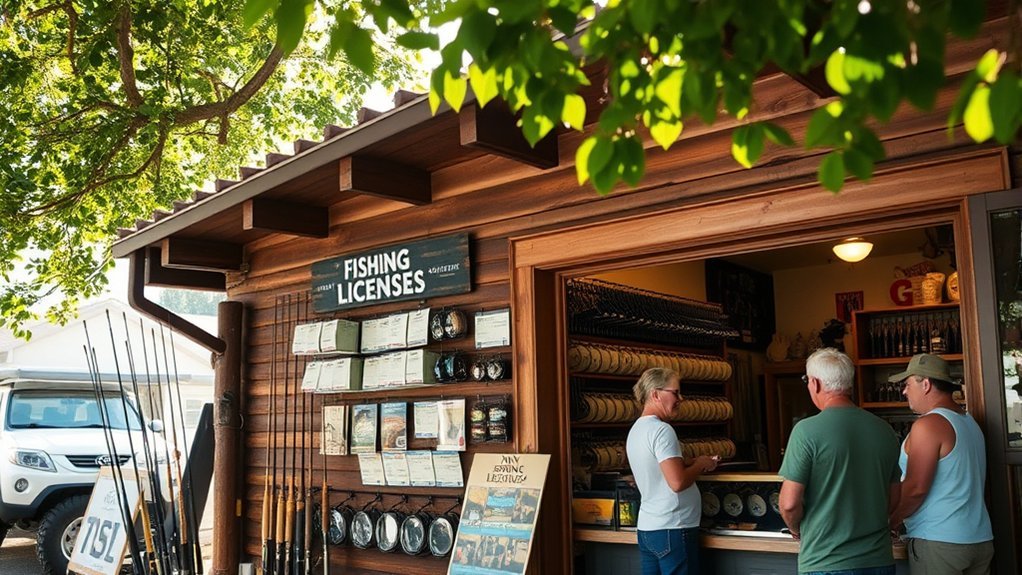
Nonresidents can purchase a license online, in the official mobile app, or from an authorized license agent. Buying before the trip gives you time to confirm your identity information and correct any account problem before reaching the water.
Online Purchase Options
Use Michigan eLicense or the official Michigan DNR Hunt Fish app. The app can store licenses, provide access to regulations and maps, show purchase history, and deliver DNR updates.
- Sign in or create an account using your identification and birth date.
- Select the annual or daily all-species fishing license.
- For a daily license, choose the correct start date and time.
- Review all personal details and the final fee before paying.
- Save the digital license and the emailed PDF for offline access.
Pro Tip: Buy the license before traveling to a remote lake or river. Cell coverage can be unreliable, and the license must be valid before you begin fishing.
In-Person Purchase Locations
Authorized retailers, bait shops, sporting-goods stores, and DNR customer service centers may sell licenses. Use the official Michigan license-agent locator instead of assuming every branch of a national retailer participates.
Bring the identification you will use for the purchase. A nonresident can normally use a valid driver’s license from the state of residence. Ask the agent to confirm the license type, start date, and personal information before leaving the counter.
Daily Fishing License Options
The $10 daily all-species license is available to residents and nonresidents age 17 or older. It lasts 24 hours from the selected start time, making it practical for a charter trip, weekend stop, or single day on an inland lake.
A daily Michigan fishing license runs for a full 24 hours from the chosen start time, not merely until the end of the calendar day.
You can purchase daily licenses as needed. Compare the total with the $76 annual fee: one to seven daily periods cost less, while eight separate daily periods cost $80 and make the annual license the lower-cost choice.
Fishing Regulations for Non-Residents
Residents and nonresidents follow the same fishing seasons, lawful methods, size limits, daily possession limits, and water-specific rules. A license is required when a person age 17 or older targets fish, amphibians, crustaceans, or reptiles in Michigan public waters.
Review the current Michigan Fishing Regulations before each trip. Rules can differ by species, county, lake, river segment, gear type, and date. Some activities, such as underwater spearfishing or lake sturgeon harvest, also have separate licensing, registration, or reporting requirements.
Warning: A fishing license never makes a closed season legal. It also does not excuse an undersized fish, an over-limit catch, illegal bait use, trespass, or failure to complete a required harvest report.
Help prevent invasive species from moving between waters. Remove plants and mud from boats, trailers, waders, nets, and other gear; drain water where required; dispose of unused bait lawfully; and clean or dry equipment before entering another waterbody.
Special Provisions for Non-Resident Anglers
Several provisions can change what a visitor pays or whether a license is required:
- Anglers age 16 and younger: A license is not required, although all fishing rules still apply.
- Free Fishing Weekends: Michigan waives fishing-license fees for residents and out-of-state visitors during two designated weekends each year. All other regulations remain in force. The 2026 dates were February 14–15 and June 13–14.
- Military members stationed in Michigan: The 2026 regulation guide says nonresident active-duty military personnel officially stationed in Michigan qualify for resident rates.
- Michigan-resident active-duty military: Qualifying full-time federal active-duty personnel who maintain Michigan resident status may receive a fee waiver with the required proof.
- Disabled-veteran waiver: The free-license provision applies to qualifying Michigan resident veterans with the specified VA disability status; it is not a general nonresident benefit.
Military status alone does not give every nonresident a free or resident-priced fishing license. Bring military orders or other required documentation and confirm eligibility with DNR licensing staff before purchasing.

This colorful toy boat fleet gives toddlers fun, screen-free water play during bath time, pool days, beach trips, and water table adventures. Designed for little hands, the boats are easy to grip and float well while encouraging imaginative storytelling, pretend ocean journeys, and sensory play.

Nature Made Burp Less Fish Oil provides omega-3 support for heart health in easy-to-take softgels designed to help reduce fish burps. Each serving delivers concentrated EPA and DHA from purified fish oil sourced from wild-caught ocean fish, with no artificial colors, flavors, or preservatives. This gluten-free, dairy-free supplement is a trusted daily option for adults looking to support overall cardiovascular wellness.

This heartfelt memoir blends laugh-out-loud honesty with tender reflections on love, loneliness, and the unexpected healing power of rescue dogs. Isabel Klee shares her journey fostering pups in the city while navigating dating and self-discovery, offering an intimate, relatable story for readers who enjoy emotional, character-driven narratives. It is a warm, engaging read about opening your heart and finding connection in surprising places.
Michigan Fishing Areas Accessible to Non-Residents
A valid Michigan license allows nonresidents to fish public waters under Michigan jurisdiction, subject to the current regulations and lawful public or permitted private access. The license does not guarantee parking, launch access, shoreline access, or permission to cross private property.
Great Lakes Fishing Opportunities
Michigan borders Lakes Superior, Michigan, Huron, and Erie and has access to major connecting waters. Visiting anglers pursue salmon, trout, walleye, perch, bass, muskellunge, and other species, but seasons and limits vary by lake, management unit, and connecting river.
Before a charter or Great Lakes trip, ask which jurisdiction you will fish, whether any special reporting applies, and whether the captain’s service includes gear only or also assists with licensing. Each angler remains responsible for holding the correct license.
Inland Waters Access
Michigan’s inland lakes, rivers, and streams include well-known destinations such as the Au Sable and Manistee river systems. Inland trout streams and designated waters can have special seasons, gear restrictions, or catch-and-release rules, so check the waterbody listing rather than relying on a statewide summary alone.
Public waters do not always mean public shore access. Use established boat launches, public fishing sites, or places where you have landowner permission.
Border Water Regulations
Border waters require extra attention because a boat can cross from Michigan into Wisconsin, Ohio, Indiana, Minnesota, or Canadian jurisdiction. A Michigan license does not automatically replace another state’s, a tribal authority’s, or Ontario’s license requirements.
Confirm the legal boundary, the license-recognition rule for that specific water, and the most restrictive applicable season or possession rule before crossing. Keep location services or a reliable marine chart available when fishing near an international or interstate line.
Importance of Fishing License Fees for Conservation
Fishing-license revenue supports the work that keeps Michigan fisheries usable and productive. The DNR reports that its Fisheries Division is funded largely by fishing-license revenue and federal Dingell-Johnson funds.
Those resources help pay for fish hatcheries and stocking, population surveys, habitat work, public access, research, regulation development, education, and enforcement. The $1 surcharge included in annual licenses supports public education about the benefits of hunting, fishing, trapping, and natural-resource conservation.
License fees also help the state respond to fish disease, invasive species, changing habitat, and pressure on popular waters. Buying the correct license is both a legal requirement and a direct contribution to future fishing opportunities.
Contact Information for License Inquiries
For help with identity records, military eligibility, purchases, auto-renewal, app problems, or reprints, contact Michigan DNR licensing staff:
- Phone: 517-284-6057, Monday through Friday, 8 a.m. to 5 p.m. Eastern Time
- Email: MDNR-E-License@Michigan.gov
- License information: Michigan fishing license information
- Buy online: Michigan eLicense
For questions about a species, season, waterbody, or harvest rule rather than a purchase problem, use the DNR fishing regulations page or contact the appropriate fisheries management unit.
Frequently Asked Questions
Can nonresidents fish without a license in Michigan?
Yes, in limited situations. Anglers age 16 and younger may fish without a license, and Michigan waives license fees during designated Free Fishing Weekends. All seasons, size limits, possession limits, and other fishing regulations still apply.
Are there age restrictions for obtaining a nonresident license?
Michigan requires a fishing license at age 17 or older. Anglers age 16 and younger may fish without one, although a voluntary youth license is available for $2.
What identification is needed to purchase a nonresident license?
A nonresident can generally use a valid driver’s license from the state of residence. A DNR Sportcard may serve as an identification option when the buyer does not have another accepted record. Carry the same identification while fishing.
Can nonresidents fish during closed seasons with a license?
No. A valid license does not override a closed season or water-specific closure. Catch-and-release may be allowed for some species and waters, but only when the current regulations specifically permit it.
Are discounts available for nonresident fishing licenses?
Michigan does not list a general nonresident senior or visitor discount. A nonresident active-duty service member officially stationed in Michigan may qualify for resident rates, but military members should confirm documentation and eligibility with the DNR.
Does every nonresident need a $1 Sportcard?
No. The Sportcard is an identification record, not a required fishing stamp. A buyer using an accepted state-issued driver’s license or ID generally does not need one.
Does a Michigan license cover neighboring states or Ontario?
Not automatically. Requirements depend on the jurisdiction and the specific boundary water. Check the rules for every state, province, or tribal authority whose waters you may enter.
Conclusion
For most visiting anglers age 17 or older, the choice is simple: pay $10 for each 24-hour fishing period or $76 for the 2026 annual nonresident license. The listed annual fee includes the $1 surcharge, and a Sportcard is only needed when it serves as your identification record. Buy before fishing, carry your license and ID, and check the rules for the exact species and waterbody you plan to visit.
Sources
- Michigan DNR Fishing and Hunting License Information — license age, fees, validity, identification, military provisions, and replacement information
- 2026 Michigan Fishing Regulations — official fee table, surcharge treatment, license requirements, and special provisions
- 2026 Michigan Fishing Licenses Now Available — 2026 license prices, 24-hour validity, availability, and season dates
- Michigan Free Fishing Weekend — license-free fishing provisions and 2026 dates
- Michigan Fishing Regulations — current statewide and water-specific rules
- Michigan DNR Funding — how fishing-license revenue supports fisheries and conservation work

Die With Zero offers a fresh perspective on personal finance by encouraging readers to use money intentionally to create memorable life experiences instead of simply accumulating wealth. Written by Bill Perkins, this book combines practical guidance with a motivating philosophy to help readers align spending, saving, and life goals for a more fulfilling future.

The COOK'S CHOICE XL Better Breader Bowl makes coating chicken, fish, vegetables, and more fast, tidy, and consistent. Its extra-long tray helps prevent overcrowding, while the integrated sifter promotes even coverage with less waste. Designed for easy cleanup and convenient storage, it is a practical choice for home cooking, air frying, frying, and outdoor meal prep.

This hardcover edition by Eric Metaxas offers a compelling look at the origins of the United States during the Colonial Period. It blends historical narrative with engaging storytelling, making it appealing for readers interested in American history, early nation-building, and the ideas that shaped the country. A strong choice for history enthusiasts, students, and anyone exploring the foundations of the nation.
