
California’s fishing-license prices increased for 2026, so older fee lists can leave you budgeting the wrong amount. The state uses one general sport fishing license for inland and ocean fishing, with extra validations or report cards required for certain areas, gear, and species. This guide uses the official 2026 California Department of Fish and Wildlife fees.
Quick Answer
In 2026, California’s 365-day sport fishing license costs $64.54 for residents and $174.14 for nonresidents. A one-day license is $21.09, a two-day license is $32.40, and a ten-day nonresident license is $64.54. Validations and species report cards can increase the total.
Key Takeaways
- Anyone age 16 or older generally needs a California sport fishing license, whether fishing in freshwater or saltwater.
- One-day and two-day licenses are available to residents and nonresidents; the ten-day license is for nonresidents only.
- Only one-day and two-day licenses are exempt from the Ocean Enhancement Validation.
- Children, public-pier anglers, and people fishing on Free Fishing Days may still need species report cards.
- Seasons, emergency closures, quotas, marine protected areas, and gear rules must be checked separately from the license.
2026 California Fishing License Fees at a Glance
| 365-Day Resident License | $64.54 |
| 365-Day Nonresident License | $174.14 |
| One-Day License | $21.09 |
| Two-Day License | $32.40 |
| Ten-Day Nonresident License | $64.54 |
| Ocean Enhancement Validation | $7.30 |
| Second Rod Validation | $20.26 |
Most listed fees include California’s license-agent handling fee and nonrefundable application fee. Check the CDFW Sport Fishing Licenses and Report Cards page before purchasing because fees and regulations may be updated.
Sport Fishing License Types and Eligibility
California does not sell a separate general “saltwater fishing license.” Its sport fishing license generally authorizes fishing in both inland and ocean waters. Extra validations, report cards, seasons, and area rules may still apply.
A license is generally required for anyone age 16 or older who attempts to take fish, shellfish, mollusks, crustaceans, invertebrates, amphibians, or reptiles in California waters. This applies to residents and visitors.
CDFW defines a resident as someone who has lived continuously in California for at least six months immediately before applying. Active-duty members of the U.S. Armed Forces and people enrolled in the Job Corps may also qualify as residents under the state definition.
California’s 365-day licenses are valid for a full 365 days from the purchase date—not merely through December 31.
There are important exceptions. Anglers under 16 do not need the general sport fishing license, and anglers fishing from a qualifying public pier in ocean or bay waters may fish without one. Those exemptions do not cancel bag limits, size limits, seasons, gear restrictions, or species report-card requirements.
Note: A senior does not receive an automatic age-based exemption. California’s reduced-fee senior license is limited to qualifying California residents age 65 or older who receive SSI or CAPI benefits.
2026 California Sport Fishing License Fees and Residency Rates
The 2026 resident 365-day sport fishing license costs $64.54. The nonresident 365-day license costs $174.14. Both begin on the purchase date and remain valid for 365 days.
The higher nonresident rate makes trip length important. Visitors fishing for only a few days may spend less with a one-day, two-day, or ten-day license. Frequent visitors may eventually save money with the annual nonresident license.
Products Worth Considering

FISHING LICENSE HOLDER W/ZIP CLOSURE

Material :High-Quality Metal Aluminum With High Gloss Stamped Metal License Plate.Lightweight, Waterproof,Anti-Rust And Very Durable.

Enough to Use: you will receive 6 pieces of fishing license holders, and 6 pieces of safety pins, abundant in quantity, enough for you to choose and replace, can meet your different needs; You can also share them with your friends
Resident vs. Nonresident Rates
A resident who expects to fish four days can already be near the annual-license break-even point. Two separate two-day licenses cost $64.80, which is slightly more than the $64.54 resident annual license. A one-day plus a two-day license costs $53.49, so short-term licenses remain cheaper for a three-day trip.
For nonresidents, one ten-day license costs $64.54 and two cost $129.08. Three ten-day licenses would total $193.62, which is more than the $174.14 nonresident annual license. The annual option may therefore make sense for visitors who expect three separate ten-day periods or more than about 20 fishing days.
These comparisons cover only the base license. Add any required report cards or validations before comparing final totals.
Short-Term License Options
- One-day license — $21.09: Available to residents and nonresidents for one specified day.
- Two-day license — $32.40: Available to residents and nonresidents for two consecutive days.
- Ten-day nonresident license — $64.54: Available only to nonresidents for ten consecutive days.
The one-day and two-day licenses are exempt from the Ocean Enhancement Validation. The ten-day nonresident license is not exempt, so a ten-day holder fishing in ocean waters south of Point Arguello must purchase the $7.30 validation unless another exemption applies.
Short-Term Licenses and When to Use Them
Short-term licenses work best when your fishing dates are fixed and you do not expect to return often during the next 365 days. They cover both inland and ocean fishing, subject to the same species seasons, limits, report cards, and local regulations as an annual license.
Products Worth Considering
CALIFORNIA STATE FLAG DESIGN: Features a textured, raised California flag design for an authentic, high-end look and feel.

Bone fish license plate featuring a fish skeleton in silver accents across the center.

【MATERIAL】: oFloral License plate frame is made from premium quality aluminum, which can provide long-lasting protection from corroding, rusting and aging, durability for long lasting usage.Personalized Car Frame Can Perfect to Put on Your Front of Car or for Decorative Purposes Around the House Like in Your Bedroom, Garage, Basement, Ect.
One- and Two-Day Options
Choose the one-day license for a single charter, lake trip, surf-fishing day, or other one-day outing. Choose the two-day license for a weekend or two consecutive fishing days.
Both licenses can be purchased by residents or nonresidents, and both avoid the Ocean Enhancement Validation charge. The dates are fixed when the license is issued and cannot be stretched across nonconsecutive days.
Best Uses for a Ten-Day License
The ten-day nonresident license is designed for visitors fishing over a longer continuous vacation. At $64.54, its average base cost is about $6.45 per day when all ten days are used.
It can cover inland lakes, rivers, bays, surf fishing, and offshore recreational fishing during the ten-day period. It does not override closed seasons, marine protected areas, species quotas, or gear restrictions.
Pro Tip: Compare the complete cost rather than the base price alone. A nonresident ten-day license plus the Ocean Enhancement Validation costs $71.84 when the validation is required.
Required Validations and Species Report Cards
Validations and report cards are separate from the basic sport fishing license. Requirements depend on where you fish, which gear you use, and which species you target.
| Ocean Enhancement Validation | $7.30. Required when a license is required for ocean fishing south of Point Arguello in Santa Barbara County. Not required with a one-day or two-day license. |
| Second Rod Validation | $20.26. Allows two rods or lines in inland waters where two rods are otherwise permitted. It is not an ocean-fishing requirement. |
| Recreational Crab Trap Validation | $2.98. Required when taking crabs with qualifying crab traps. It is not required for hoop nets or crab loop traps. Beginning January 1, 2026, anglers using crab traps from a Commercial Passenger Fishing Vessel no longer need the personal validation. |
| North Coast Salmon Report Card | $9.21. Required when fishing for salmon in the Smith River System or Klamath-Trinity River System. |
| Steelhead Report Card | $10.29. Required for anyone fishing for steelhead in inland waters. |
| Sturgeon Fishing Report Card | $8.13 for 2026–27. The card is scheduled to become available August 15, 2026, and is valid October 1, 2026, through June 30, 2027. Current white sturgeon fishing is catch-and-release only, and anglers should verify the open period before targeting sturgeon. |
| Spiny Lobster Report Card | $12.70 for 2026–27. Required for every person taking spiny lobster. The 2026–27 card is scheduled to cover October 2, 2026, through March 17, 2027. |
Report cards are required even when the angler is under 16, fishing on a Free Fishing Day, or fishing without a license from a qualifying public pier. The physical report card must generally remain in the angler’s immediate possession.
California’s recreational abalone fishery remains closed, so an abalone report card is not currently sold.
Warning: A fishing license does not prove that a species is open for harvest. Check the current CDFW fishing regulations, emergency closures, quotas, marine protected areas, size limits, bag limits, and legal gear immediately before fishing.
Reduced-Fee, Free, and Lifetime License Options
California offers reduced-fee or free sport fishing licenses to qualifying applicants. Approval is based on specific eligibility documents rather than age alone.
- Disabled veteran: $10.04 at a CDFW office or $10.54 from a license agent after prequalification. The applicant may be a resident or nonresident and must be honorably discharged with a service-connected disability rating of at least 50%.
- Recovering service member: $10.04 at a CDFW office or $10.54 from an agent after prequalification and verification from a commanding officer or military medical doctor.
- Low-income senior: $10.04. Available to California residents age 65 or older who receive SSI or CAPI. This license is issued through CDFW license sales offices and requires annual benefit verification.
- Free licenses: Available under defined criteria for qualifying blind, mobility-impaired, or developmentally disabled applicants and certain low-income Native American residents.
CDFW advises allowing up to 15 business days to review a first free-license application. Once an eligible applicant is established in the licensing system, later renewals may be available through additional sales channels.
Reduced-fee and free licenses do not automatically include report cards or validations. Those items must still be purchased at their regular prices when required.
California residents may also purchase a lifetime fishing license. The 2026 base prices are $709 for ages 0–9, $1,160.25 for ages 10–39, $1,045 for ages 40–61, and $709 for ages 62 and older.
Where and How to Buy or Renew a License
You can purchase a California sport fishing license through the CDFW Online License Sales and Services system, an authorized license agent, select CDFW license sales offices, or telephone sales at (800) 565-1458.
CDFW license counters do not accept cash. They accept checks, money orders, and qualifying Visa or Mastercard debit or credit cards.
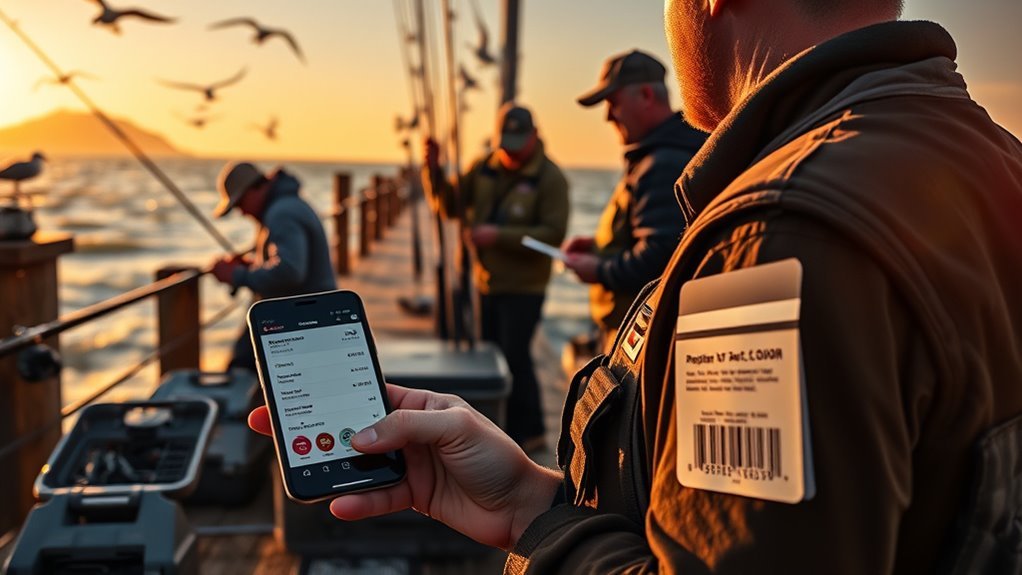
The official CDFW License App can display 365-day and short-term sport fishing licenses, the Ocean Enhancement Validation, Second Rod Validation, and Recreational Crab Trap Validation.
A screenshot or ordinary photograph of a license is not valid electronic proof. The license must be displayed through the CDFW License App. Refresh the app before leaving cellular or Wi-Fi coverage so the active license is stored for offline display.
Pro Tip: Carry a charged phone or the physical license. If your phone cannot display the license because of a dead battery, damaged screen, or app problem, you may be unable to prove that you possess it.
Warning: Digital proof of report-card purchase does not replace the physical report card. Carry the required physical salmon, steelhead, sturgeon, or spiny lobster report card while fishing.
Products Worth Considering

Includes Size, Weight, Location, Food Quality, And Coloring.

PERFORMANCE: Weight transfer system permits long distance cast. Built in Rattle can drag fish far away. Japan made laser holographic deliver amazing reflection in the water.

PERFORMANCE: Weight transfer system permits long distance cast. Built in Rattle can drag fish far away. Japan made laser holographic deliver amazing reflection in the water.
Public Pier, Free Fishing Day, and Other Exemptions
A sport fishing license is not required when recreationally angling from a qualifying California public fishing pier in ocean or bay waters.
To qualify, the structure generally must be connected to the shoreline, provide free and unrestricted public access, and have been built or currently function primarily for fishing. Some publicly owned jetties and breakwaters qualify only when they form the most seaward protective boundary of an ocean harbor.
The exemption does not automatically cover a nearby beach, seawall, interior jetty, marina dock, or rock wall. Stepping off a qualifying pier to land a fish from the beach can place you in an area where a license is required.
Public-pier anglers must still follow seasons, bag limits, size limits, gear restrictions, and report-card rules. The Ocean Enhancement Validation is not required while fishing under the qualifying public-pier exemption.
CDFW designated July 4 and September 5 as California’s 2026 Free Fishing Days. A sport fishing license is not required on those dates, but every other regulation remains in effect. Required report cards must still be carried.
Fishing from a charter or party boat does not create a general passenger exemption. Passengers age 16 or older normally need their own sport fishing license and applicable report cards or validations. The vessel operator is responsible for the commercial vessel licenses and permits that apply to the boat.
Reporting Harvests, Duplicates, and Fee Policies
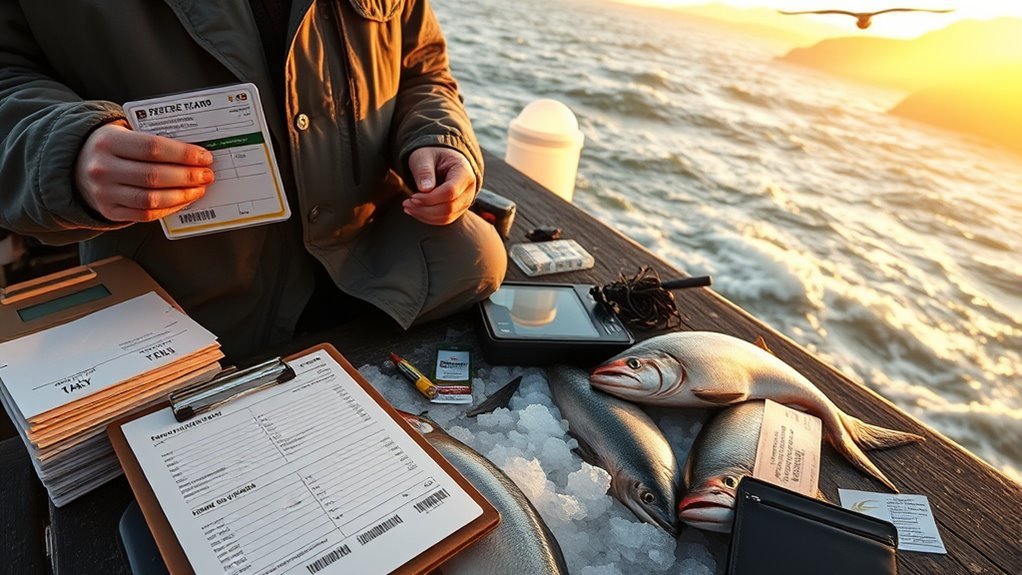
Report-card holders must record fishing activity as directed on the card and report the card by the applicable deadline, even when no fish were kept.
- North Coast salmon, steelhead, and sturgeon: Standard online reporting is generally available January 1 through January 31, followed by a late-reporting period through April 1.
- Spiny lobster: Reporting is generally available after the season through April 30, with late reporting through July 1.
A spiny lobster report-card holder who does not return the card or report online by April 30 is assessed a $21.60 non-reporting fee when purchasing a card for the following season.
The 2026 duplicate fee for a lost or stolen 365-day sport fishing license is $14.30. A replacement Second Rod or Ocean Enhancement Validation costs $3.81, and a replacement Recreational Crab Trap Validation costs $2.98. Duplicate report cards may require an in-person CDFW transaction and additional documentation.
Sport fishing licenses, validations, and report cards are nonrefundable once purchased. A license issued in one person’s name is not transferable. When buying for someone else, you can provide the information needed to issue the license to that person or purchase an eligible resident-license gift voucher for later redemption.
Frequently Asked Questions
Do I need a separate boat permit for an offshore fishing trip?
An ordinary private recreational angler does not usually need a separate personal offshore fishing permit beyond the required sport fishing license, validations, report cards, and normal vessel documentation. Commercial charter operators need separate vessel licenses. A boat owner or operator must file a Multi-Day Fishing Trip Declaration only when seeking the special authority for passengers to possess more than one daily bag limit on a qualifying multi-day trip.
Are there age-based exemptions for California fishing licenses?
Anglers under age 16 do not need the general sport fishing license. They must still carry any required species report card. Seniors are not automatically exempt; the reduced-fee senior license is limited to qualifying California residents age 65 or older who receive SSI or CAPI benefits.
Can I fish from a California pier without a license?
Yes, when the structure meets California’s legal definition of a public fishing pier in ocean or bay waters. The exemption does not apply to every dock, jetty, seawall, or nearby beach. All seasons, limits, gear restrictions, and report-card requirements still apply.
Can I transfer my fishing license to another person?
No. A sport fishing license is issued to a named person and cannot simply be handed to someone else. You may buy a license for a friend when you have the required customer information, or purchase an eligible resident 365-day gift voucher that the recipient redeems in their own name.
Do California fishing-license fees change by coastal zone?
The base California sport fishing license price does not change by coastal zone. However, location can trigger extra requirements. The main example is the Ocean Enhancement Validation for licensed ocean fishing south of Point Arguello. Local access, launch, parking, or lands-pass fees may also be separate from the fishing license.
Does a private recreational angler need a federal Pacific highly migratory species permit?
Generally, no. NOAA’s Pacific Highly Migratory Species permit program applies to commercial vessels and for-hire or charter vessels fishing for or landing covered species off California, Oregon, and Washington. Private recreational anglers must still follow current state and federal seasons, limits, gear rules, and protected-species regulations.
Can I show my California fishing license on my phone?
Yes, when the license or supported validation is displayed through the official CDFW License App. A screenshot or ordinary photograph is not accepted. Physical species report cards must still be carried while fishing.
What are California’s Free Fishing Days in 2026?
California’s 2026 Free Fishing Days are July 4 and September 5. No sport fishing license is required on those dates, but all seasons, bag limits, size limits, closures, gear restrictions, and report-card requirements remain in effect.
Sources
- California Department of Fish and Wildlife — Sport Fishing Licenses and Report Cards — 2026 license, validation, report-card, duplicate, eligibility, and reporting information.
- CDFW 2026 Sport Fishing Items and Fees — official 2026 fee sheet and report-card validity periods.
- CDFW California Beach Fishing — public-pier definition, exemptions, pier list, and gear limits.
- CDFW License App — valid electronic display, offline access, screenshot restrictions, and physical report-card rules.
- CDFW General Ocean Fishing Regulations — ocean gear restrictions and Multi-Day Fishing Trip Declaration rules.
- NOAA Fisheries — Pacific Highly Migratory Species Permits — federal commercial and for-hire or charter vessel permit requirements.
Conclusion
A California sport fishing license costs $64.54 for residents or $174.14 for nonresidents in 2026. Short-term options start at $21.09, but the cheapest choice depends on your residency, trip length, fishing area, gear, and target species.
Before buying, add any required Ocean Enhancement, Second Rod, crab-trap, salmon, steelhead, sturgeon, or spiny lobster items. Carry valid proof of your license and any physical report cards, then check the latest seasons, closures, limits, and gear rules before every trip.
