
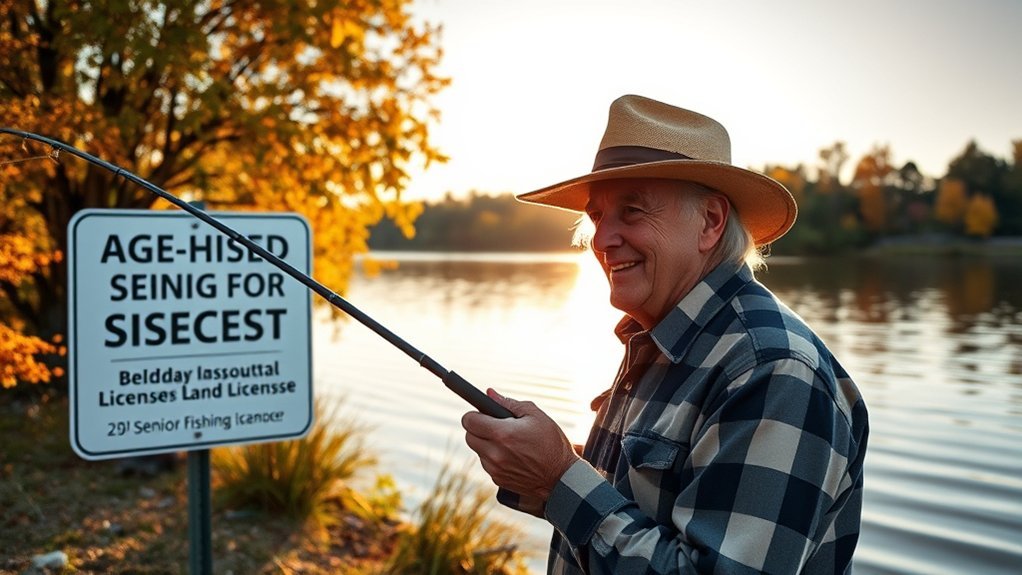
Senior fishing license discounts can lower the cost of getting on the water, but there is no single nationwide senior age, price, or exemption. Each state sets its own rules, and most benefits are limited to residents. Some states offer a reduced annual license, while others provide a free exemption, a low-cost lifetime license, or a discount tied to income.
Quick Answer
Senior fishing license rules vary by state. Eligibility may begin at age 60, 64, 65, or 70, and discounts are usually reserved for residents. Depending on the state, a senior may receive a reduced annual fee, a free exemption, or a low-cost lifetime license. Always check the official state wildlife agency before fishing.
Key Takeaways
- There is no national senior fishing license or standard eligibility age.
- Residency is usually required for a senior discount, exemption, or lifetime license.
- A discounted license may not include trout stamps, saltwater registrations, report cards, tags, or special-area permits.
- Current fees and expiration rules should be confirmed on the official state fish and wildlife website.
Eligibility for Senior Fishing Discounts
Senior fishing license eligibility depends on state law. Age alone is not always enough. A state may also require you to be a resident for a set period, show a state-issued ID, receive a qualifying public benefit, or complete a separate application.
Official state programs show how widely the rules can differ. Alaska residents can qualify for a free permanent identification card at age 60, South Carolina residents can apply for a $9 lifetime license at age 64, many states use age 65, and New York’s reduced annual resident fishing license begins at age 70.
Before applying, confirm all of the following:
- Minimum age: Check the exact birthday requirement rather than assuming every state starts at 65.
- Residency: Most senior programs are for residents only. Nonresidents usually pay the regular nonresident rate.
- Proof: A driver’s license, state ID, residency document, or benefit-verification letter may be required.
- License type: Determine whether the benefit is an annual discount, an exemption, a lifetime license, or an income-based program.
- Extra privileges: Review whether trout, salmon, saltwater, second-rod, report-card, or special-area requirements apply.
Note: A senior discount usually follows your legal state of residence. Owning property, visiting family, or spending part of the year in a state may not qualify you for resident pricing.

This daily devotional helps parents pray purposefully for their children through a full year of Scripture readings, reflections, and guided prayer prompts. Written to encourage faithful family discipleship, it offers practical, biblically grounded support for parents who want to shape their prayers around God's Word. A foreword by Sinclair B. Ferguson adds trusted theological insight and encouragement.

These colorful answer buzzers turn lessons, review games, and family activities into lively game-show style challenges that boost participation and make learning more interactive. Each buzzer has a distinct sound to clearly identify who buzzed in first, while the durable, palm-sized design makes them easy for kids and adults to use in classrooms, homeschools, and group settings.

The Little Tikes First Slide is a beginner-friendly playset designed for toddlers and young children to enjoy safe sliding fun indoors or outdoors. Its compact, foldable design makes setup, storage, and moving simple, while the sturdy build supports active play that helps promote balance and coordination.
Cost Comparison of Senior Fishing Licenses
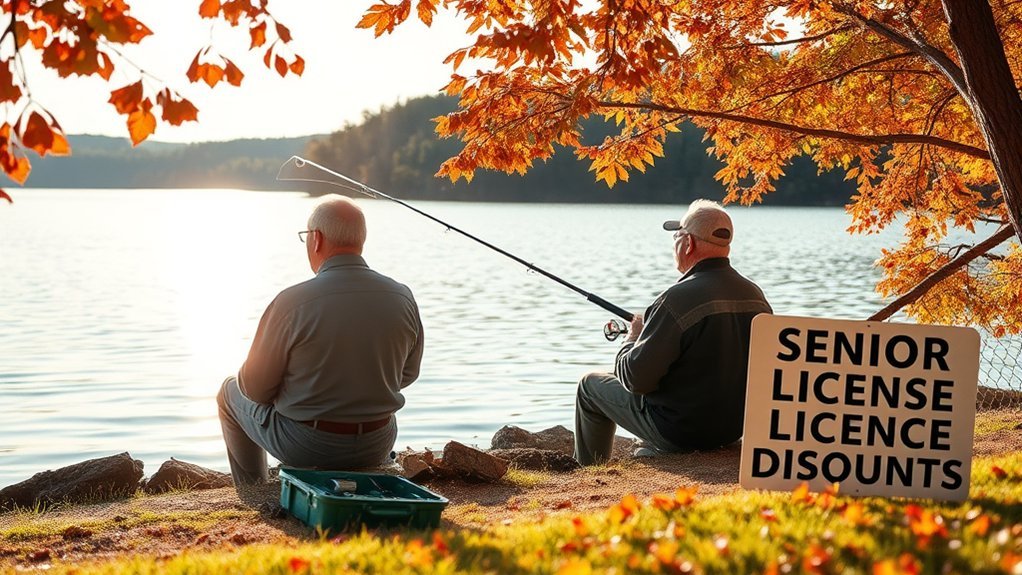
There is no reliable nationwide average for a senior fishing license because states use different fee structures. The examples below show the range of current approaches. They are not a complete list of all 50 states.
| State | Senior eligibility | Current senior option | Important limit |
|---|---|---|---|
| Alaska | Resident age 60+ | Free permanent identification card for sport fishing, hunting, and trapping | Applicant must meet residency rules and be physically present in Alaska to apply. |
| South Carolina | Resident age 64+ | $9 senior lifetime license | A 180-day residency requirement applies, and some tags remain separate. |
| Michigan | Resident age 65+ | $11 annual senior license, plus a $1 surcharge | The discount is for Michigan residents. |
| Florida | Resident age 65+ | Exempt from standard recreational freshwater and saltwater license purchases with proof of age and residency | Some registrations, tags, and federal requirements still apply. |
| Texas | Resident age 65+ | $12 freshwater, $17 saltwater, or $22 all-water senior package | Package validity and endorsement coverage depend on the option selected. |
| Wisconsin | Resident age 65+ | $7 annual senior fishing license | Trout, salmon, and certain sturgeon privileges may cost extra. |
| Pennsylvania | Resident age 65+ | $14.47 annual or $86.97 lifetime senior license in 2026 | Trout and Lake Erie permits are separate unless included in another product. |
| New York | Resident age 70+ | $5 annual freshwater fishing license | The marine fishing registry is a separate, free registration. |
| California | Resident age 65+ who receives SSI or CAPI | $10.04 reduced-fee sport fishing license | Age alone does not qualify; annual benefit verification is required. |
Discounted License Prices
Discounts can be substantial, but the percentage is not consistent from state to state. A state may reduce the base annual fee, waive the license requirement, sell a one-time lifetime license, or limit the discount to seniors who meet an income test.
For example, Michigan’s 2026 annual resident license is $26 and its senior resident license is $11; both carry an additional $1 surcharge. New York charges residents age 70 and older $5 for a 365-day freshwater license. California’s $10.04 senior license is narrower because it is available only to qualifying low-income residents age 65 and older.
Age Eligibility Variations
Senior eligibility can begin earlier or later than age 65. Alaska starts its permanent resident program at 60, South Carolina offers its senior lifetime license at 64, and New York uses 70 for its reduced resident fee. Other states may use a birth-date rule, residency period, or income requirement in addition to age.
Warning: Do not assume a free or discounted base license covers every fishing activity. Special species, trout waters, saltwater programs, report cards, tags, or federal permits may still be required.
Benefits of Age-Based Discounts
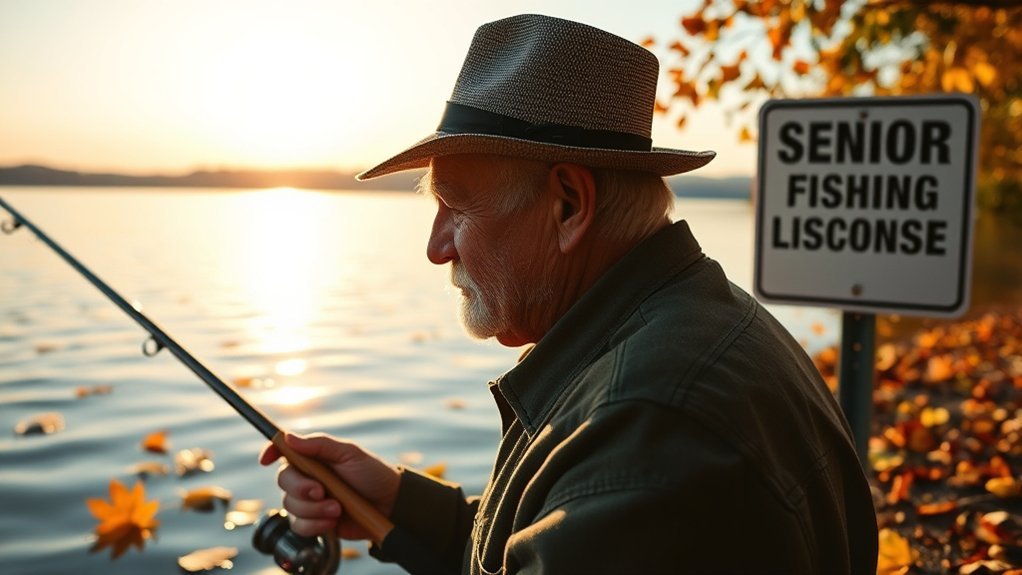
Age-based discounts can make fishing easier to afford for people living on a fixed income. A lower fee may also reduce the cost of trying a new hobby, returning to fishing after a long break, or joining family members on the water.
Potential benefits include:
- Lower entry cost: Discounted annual or lifetime options leave more room in the budget for bait, transportation, and basic gear.
- More outdoor time: Fishing can include walking, casting, carrying light equipment, and spending time outside.
- Social connection: Fishing with friends, relatives, clubs, or community groups can create regular opportunities to connect.
- Long-term convenience: Lifetime or permanent programs reduce repeat purchases, although some states still require annual tags or records.
Research has linked recreational angling with aspects of mental well-being in older adults, including autonomy, competence, and a sense of belonging. However, this evidence should not be treated as proof that fishing prevents or treats a health condition.
States Offering Senior Fishing License Discounts
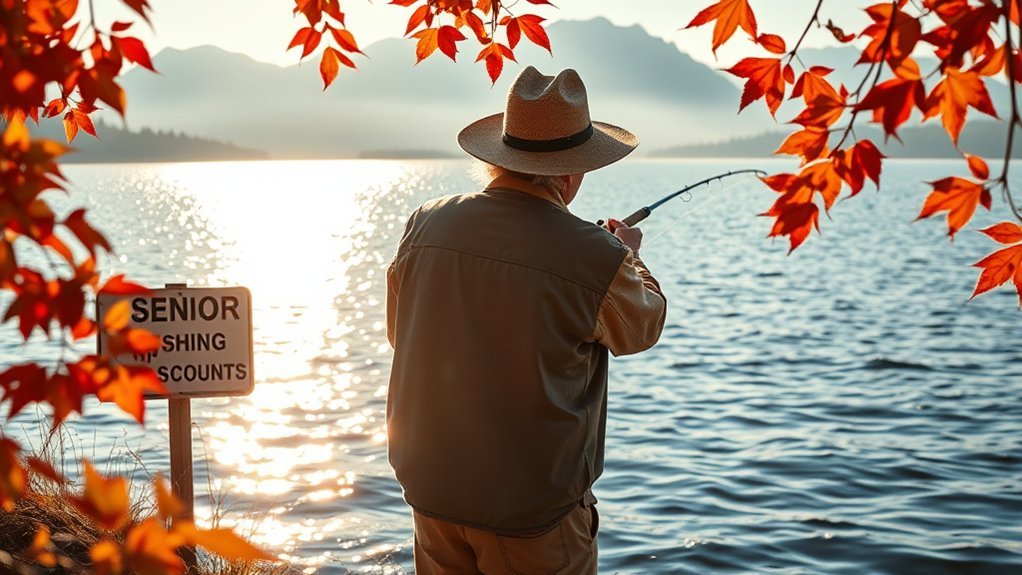
Many states provide some type of senior fishing benefit, but a simple count can be misleading. One state may offer a broad exemption at age 65, while another offers only an income-based discount, a lifetime product, or a lower-cost resident package. Rules can also change during a license year.
Senior programs generally fall into four groups:
- Reduced annual license: Examples include Michigan, New York, Wisconsin, Texas, Pennsylvania, and Georgia.
- License exemption: Florida residents age 65 and older can generally fish without buying standard recreational fishing licenses when they carry proof of age and residency. Missouri residents age 65 and older are generally exempt from the basic fishing permit, although trout requirements may still apply.
- Low-cost lifetime license: South Carolina offers a $9 senior lifetime license to qualifying residents age 64 and older.
- Income-based senior license: California’s reduced-fee senior license requires age, residency, and qualifying SSI or CAPI benefits.
Pro Tip: Search for your state’s official fish and wildlife agency, then open its current license or fee page. Avoid relying on an old blog table, screenshot, or retailer summary because senior prices and eligibility rules can change.
Process for Obtaining a Senior Fishing License
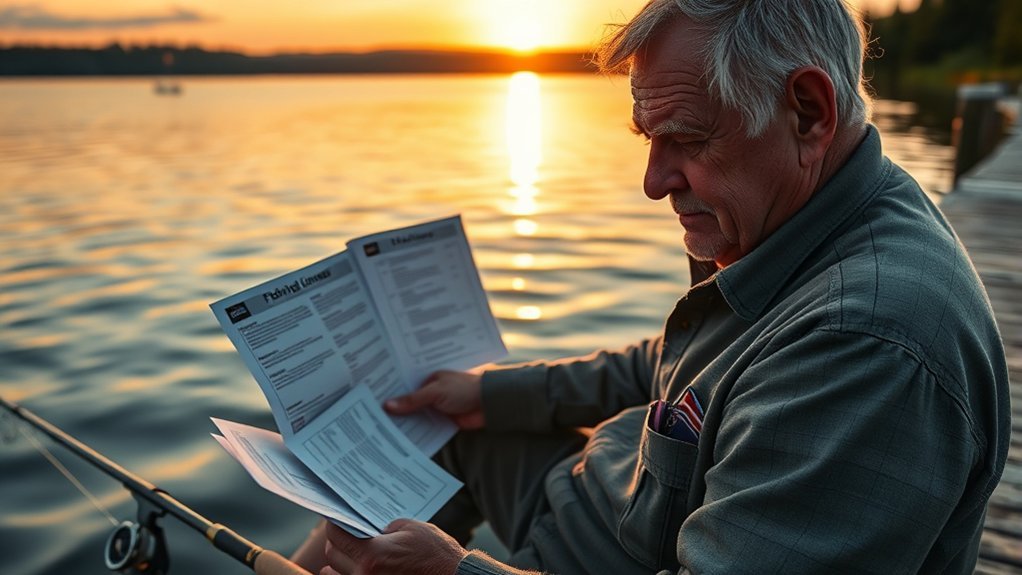
At a Glance
| Time Required | About 5–15 minutes for a standard online or retail purchase; longer for mailed or benefit-based applications |
| Difficulty | Easy for most annual licenses; moderate when residency or income documents require review |
| Tools Needed | State-issued ID, proof of residency, payment method, and any required benefit or disability documents |
| Cost | Free in some states; otherwise a state-specific annual or lifetime fee plus any required stamps, permits, or transaction charges |

This combo kit helps women trying to conceive track fertile days and check for pregnancy with convenient at-home testing. The ovulation strips help monitor LH surge progression and are easy to read, while the pregnancy strips provide quick results with simple line interpretation. Designed for ease of use and dependable family planning support, it offers a practical way to stay on top of your fertility journey.

This heartfelt memoir blends laugh-out-loud honesty with tender reflections on love, loneliness, and the unexpected healing power of rescue dogs. Isabel Klee shares her journey fostering pups in the city while navigating dating and self-discovery, offering an intimate, relatable story for readers who enjoy emotional, character-driven narratives. It is a warm, engaging read about opening your heart and finding connection in surprising places.

Keep papers neatly sorted with this Oxford 8-pocket paper folder designed for classroom, office, and home organization. Eight color-coded pockets help separate subjects or projects, while the comb-bound design opens flat for easy access and page turning. It also includes an inside business card holder and a high-capacity layout that makes managing letter-size documents simple and efficient.
Eligibility Requirements for Seniors
Start with the official licensing page for the state where you legally reside. Confirm the minimum age, residency definition, application method, and documents before paying.
Common requirements include:
- A valid driver’s license or state identification card
- A Social Security number or customer identification number where required by law
- Proof that you meet the state’s residency period
- Proof of qualifying public benefits for an income-based program
- A completed paper application for certain lifetime or permanent licenses
In Michigan, residents age 65 and older can buy the annual all-species senior fishing license for $11 plus a $1 surcharge. Michigan’s annual fishing license runs from March 1 through March 31 of the following year, and licenses are available online, through the Michigan DNR Hunt Fish app, or from an authorized license agent.
Application Process Steps
- Open the official agency website. Use a state government fish and wildlife page, not an unofficial fee chart.
- Confirm the correct license year. Some licenses follow the calendar year, some run for 365 days from purchase, and others end on a fixed annual date.
- Check residency and age rules. Make sure your ID and legal residence match the program requirements.
- Review extra permits. Add any required trout stamp, saltwater registration, endorsement, tag, report card, or special-area permit.
- Apply through an approved channel. Depending on the state, this may be an online portal, mobile app, authorized retailer, county office, agency office, or mail-in form.
- Save your proof. Carry the required paper license, digital license, permanent card, certificate, or proof of exemption while fishing.
- Check regulations before each trip. A valid license does not replace season, size, bag-limit, gear, and location rules.
What a Senior License May Not Cover
A senior license is usually only one part of legal fishing. Depending on the state and water, you may still need:
- A trout, salmon, or Great Lakes stamp
- A saltwater registration or endorsement
- A species report card or harvest record
- A second-rod validation
- A special permit for a controlled area, tribal water, or boundary water
- A federal permit for certain offshore species
Impact of Discounts on Senior Participation in Fishing
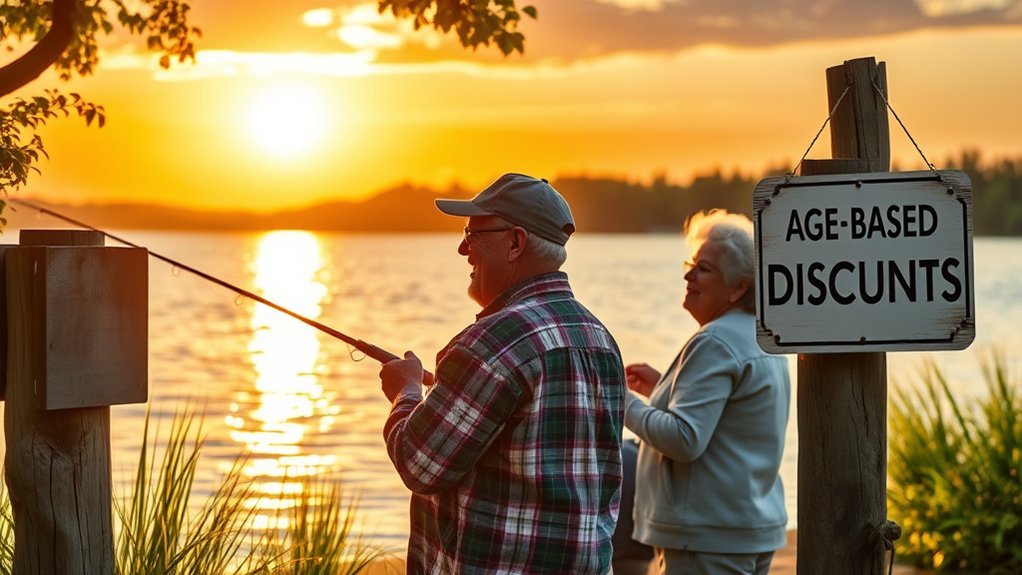
Lower license costs remove one financial barrier to fishing, especially for residents on fixed incomes. However, there is not enough reliable national evidence to claim that a specific percentage of seniors fish more often because of license discounts alone.
Participation also depends on transportation, safe shoreline access, mobility, equipment costs, nearby fishing opportunities, weather, and whether a person has someone to fish with. States and communities can make fishing more accessible by pairing affordable licensing with accessible piers, beginner programs, loaner equipment, and clear regulations.
A senior discount helps most when the angler also knows where the license is valid, which extra permits apply, and how long the privilege lasts.
Other Ways Seniors Can Save on Fishing
If your state does not offer a broad senior discount, you may still be able to reduce costs through:
- Free fishing days: Many states waive the basic license requirement on selected dates, although normal fishing regulations still apply.
- Lifetime licenses: A lifetime option may save money for residents who expect to fish for many years.
- Disability or veteran programs: Separate free or reduced licenses may be available to qualifying applicants.
- One-day licenses: A short-term license may cost less for an occasional trip, but compare it with the senior annual price first.
- Community programs: Local parks, senior centers, veterans groups, and fishing clubs may offer loaner gear or hosted events.
Frequently Asked Questions
Can seniors fish without a license in Michigan?
No. Michigan residents age 65 and older still need a fishing license unless another exemption applies. The 2026 senior annual license is $11 plus a $1 surcharge. Anglers must also follow current seasons, limits, and other regulations.
Are there special fishing-location restrictions for seniors?
Usually not. Seniors generally follow the same water-specific seasons, closures, access rules, size limits, and bag limits as other anglers. A discounted license does not create access to private property, restricted water, or areas that require an additional permit.
How can seniors renew a fishing license?
Renewal depends on the state and license type. Annual licenses can often be renewed online, through an official app, or at an authorized agent. Income-based licenses may require new eligibility proof each year, while a true lifetime or permanent license may not need renewal.
Do senior fishing licenses expire?
Most annual senior licenses expire, but the expiration system varies. Some are valid for 365 days from purchase, while others end on a fixed date. Lifetime licenses, permanent cards, and statutory exemptions follow different rules.
Are there additional discounts for seniors on fishing gear?
Some retailers, clubs, community programs, and local events may offer senior promotions or loaner equipment, but there is no standard nationwide gear discount. Ask the seller directly and compare the final price rather than assuming an age-based discount applies.
Can nonresidents receive senior fishing license discounts?
Usually not. Most senior discounts are limited to residents, although a few states have reciprocal rules or narrow exceptions. A visiting senior should check the nonresident license page for the state where the fishing will occur.
Do seniors still need trout stamps or special permits?
Sometimes. A reduced or free base license may not include trout stamps, salmon privileges, saltwater registrations, report cards, tags, or special-area permits. Check the rules for the species and water before fishing.
Conclusion
Senior fishing license discounts can make the sport more affordable, but the benefit depends on your state, age, residency, and the type of fishing you plan to do. Check the official agency page, confirm any extra permits, and carry the required proof. A few minutes of verification can prevent a citation and help you choose the best annual, lifetime, or exemption option.
Sources
- Michigan Department of Natural Resources — 2026 resident, nonresident, and senior fishing license fees and validity.
- New York State Department of Environmental Conservation — resident senior age, annual fee, and 365-day validity.
- Florida Fish and Wildlife Conservation Commission — resident age-65 exemption and proof requirements.
- California Department of Fish and Wildlife — low-income senior eligibility, fee, renewal, and additional validation rules.
- Texas Parks and Wildlife Department — senior freshwater, saltwater, and all-water package fees.
- Pennsylvania Fish and Boat Commission — 2026 senior annual, lifetime, and additional permit pricing.

These Rawlings practice baseballs are built for young players ages 8 and under, offering an easy grip and consistent feel for recreational play. Each ball features a synthetic leather cover with a solid cork and rubber center, plus official size and weight for reliable training. The set includes a durable bucket for convenient storage and transport, making it a smart choice for coaches, parents, and teams.

The Manbook offers a blunt, practical approach to mental toughness, responsibility, and professional growth. Written by Nick Freitas, it is designed to help readers push through excuses, build discipline, and get the job done with focus and confidence. This hardcover edition is a useful pick for anyone looking for straightforward guidance on self-improvement and resilient living.

This silky, lightweight face primer helps minimize the appearance of pores and fine lines for a smoother-looking complexion. Its translucent, no-oil formula can be worn alone, under makeup, or over makeup to help makeup stay put while blending seamlessly with all skin tones. Enriched with a vitamin E derivative, it delivers a refined finish for everyday beauty routines.
