
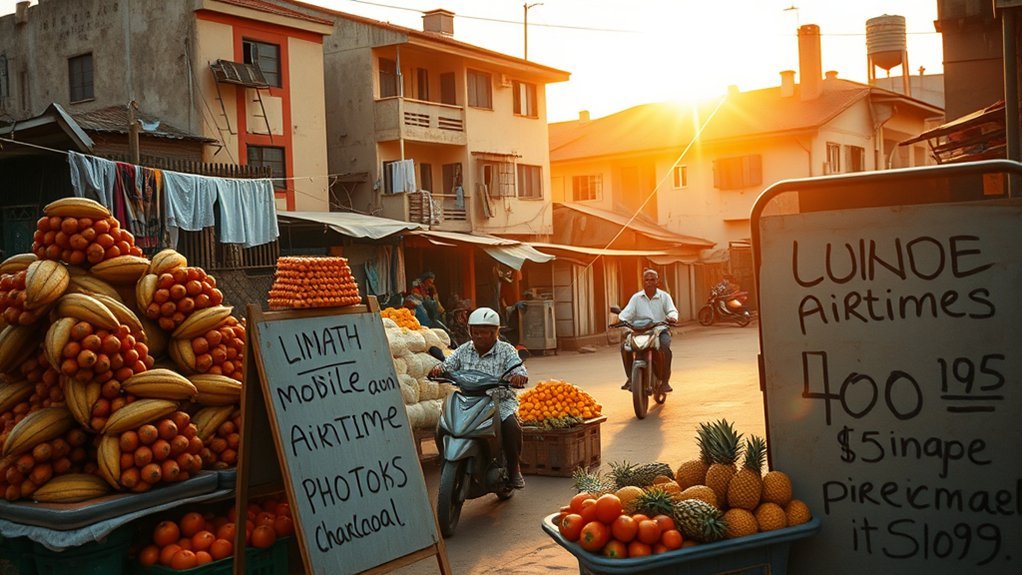
You can live comfortably in Uganda on about €1,000 a month. The cost-of-living index is low (27.6) and essentials — rent, food and transport — are far cheaper than in Western countries. Expect furnished one-bed rents around $300–$500 in Kampala, groceries $100–$150 monthly, meals about $2.70, and public transit under $1 per ride. Utilities and fuel are modest but mortgages are costly. Keep going to see detailed budgets, housing and transport trade-offs.
Quick Answer
- You can live comfortably on about €1,000 a month thanks to the low cost of living.
- Furnished one-bed rents run $300–$500 in Kampala, with groceries at $100–$150 and meals around $2.70.
- Public transport costs less than $1 a ride and utilities stay modest, though high mortgage rates make renting the smarter choice for most.
Cost of Living Overview and Key Indexes

Uganda’s cost of living index sits at 27.6, so you’ll find it markedly more affordable than most Western countries and many regional capitals. A monthly income around €1,000 typically supports a middle-class lifestyle covering housing, food, and transport.
You can benchmark that index against higher-cost cities to see the savings: basic goods and services run notably lower, though prices vary by how close you live to the city center.
Food costs tell the real story — an inexpensive restaurant meal averages about $2.70 and monthly groceries for one person often fall between $100–$150. Your food budget will feel modest compared with Europe.
Food is very affordable — cheap meals around $2.70 and monthly groceries typically $100–$150.
Utilities add roughly $66.67 monthly for basic water and electricity, while internet at about $42.67 can still feel a bit steep. Housing costs follow a clear urban-rural gradient, so when you map your monthly spending the lower daily expenses make up for occasional higher costs like reliable broadband.
That clear, index-driven picture helps you plan realistic budgets.
Housing and Utilities: Rent, Mortgages, and Bills
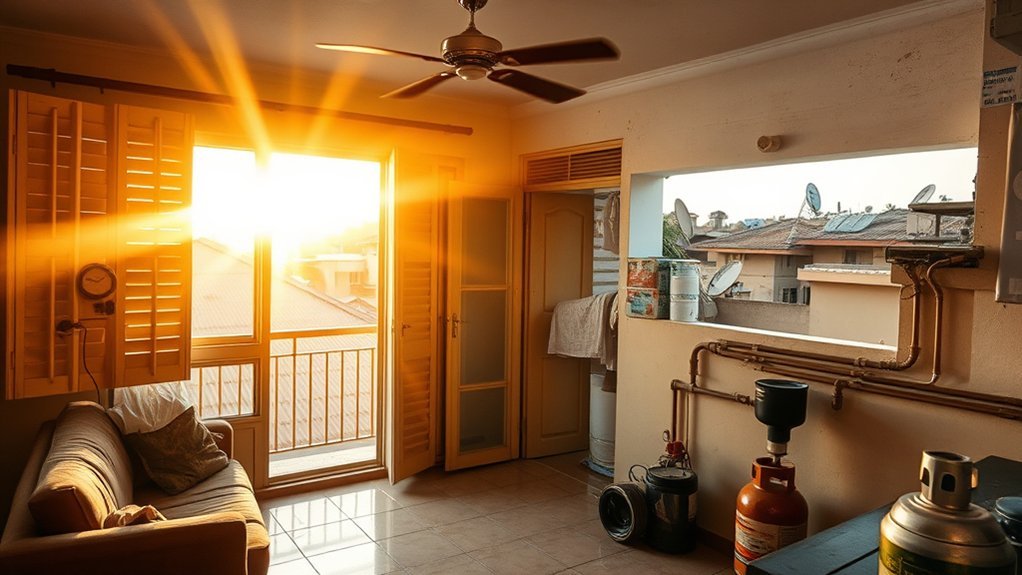
Kampala’s rental market pushes city living costs higher, but you can still find furnished one-bedroom apartments for $300–$600 monthly and three-bed city-center units averaging about $807. Outside urban centers prices drop to roughly $200–$300.
Utilities add about $66.67 per month for basic water and electricity. High mortgage rates — around 20.75% — mean buying often costs substantially more over time than renting, especially for middle-income households.
Housing costs follow a predictable urban-rural gradient: city-center rent premiums reflect proximity to jobs and services, while peripheral locations cut rent by 40–60%. When you model total monthly outlays, include utilities and bills to compare against mortgage repayments inflated by the steep interest rate. Down payments and loan terms will decide whether ownership is feasible.
For short- to medium-term stays, renting often wins on both cost and flexibility. If you plan to buy, run scenario analyses on mortgage repayments versus cumulative rent-plus-utilities to decide which path matches your financial goals.
Food, Groceries, and Eating Out Prices
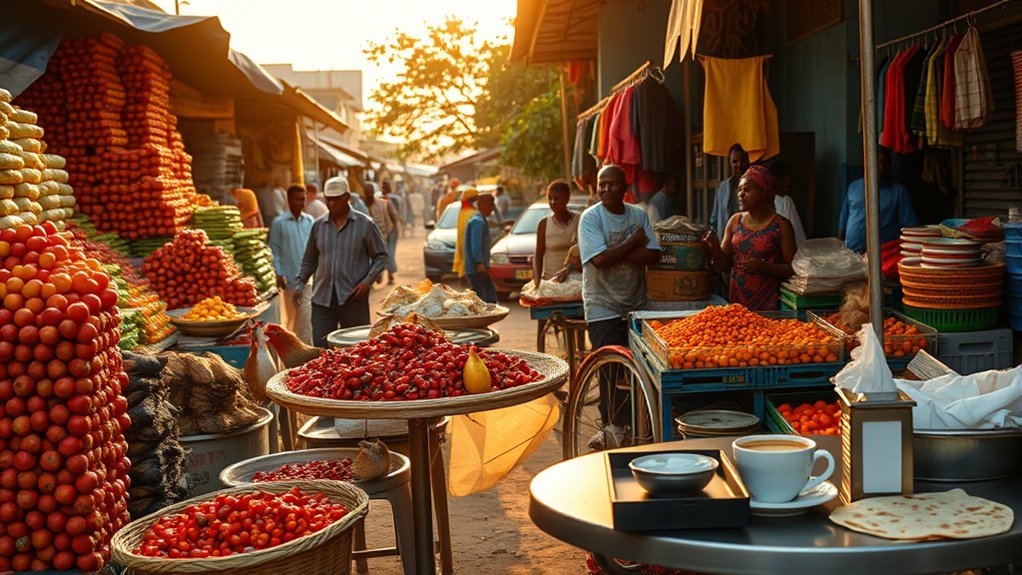
Shop smart and favor local markets over imported goods and you can keep monthly food costs for one person roughly between $100 and $150. Individual meals at inexpensive restaurants average about $2.70.
Food, groceries, and eating out prices in Uganda stay competitive: a fast-food meal averages about $8.75 (remarkably cheaper than typical U.S. equivalents), domestic beer (0.5 L) runs about $1.09, and a 0.33 L bottle of water costs about $0.29.
Your monthly spending will depend on whether you choose local markets or imported items. Markets and grocery stores supply basics at manageable prices, so cooking at home reduces costs considerably.
Monthly food costs depend on choosing local markets over imported goods; cooking at home keeps expenses low.
Eating out remains affordable for occasional meals, but frequent dining at international or upscale venues raises expenses quickly. Use local produce and markets to control your budget, compare supermarket promotions, and prioritize home-cooked meals when you want the most cost-effective balance between convenience and savings.
Transportation, Connectivity, and Local Travel Costs
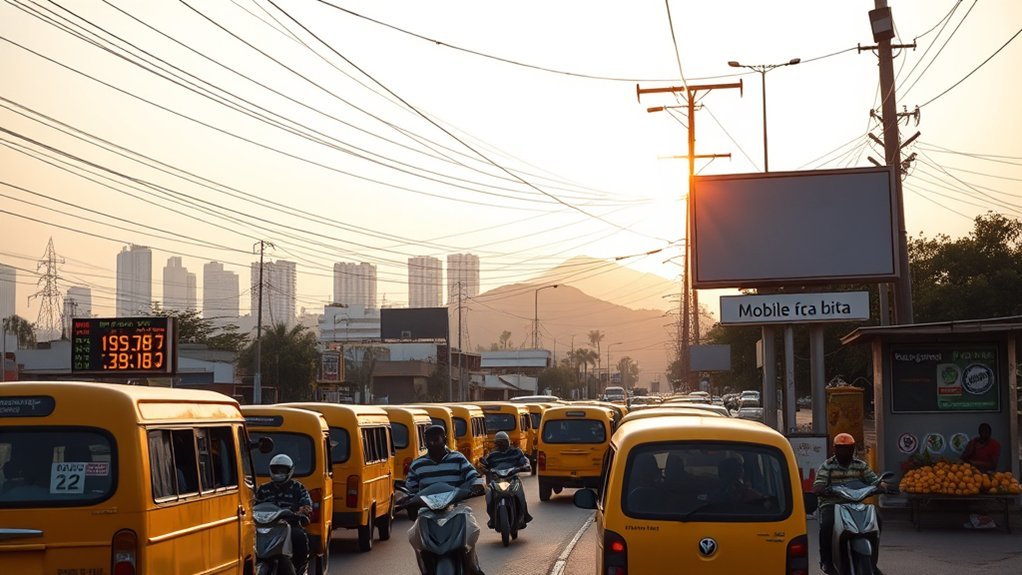
After you trim grocery bills by cooking at home, your next regular expense will likely be getting around town. Uganda’s transport options keep daily travel affordable. One-way public transportation costs about $0.80, and a monthly pass is near $39.80 if you commute frequently. Fuel sits around $1.36 per liter, so driving raises your variable costs. Boda-boda rides usually cost $0.50–$1.50, offering a fast, low-cost alternative for short trips. Buses and taxis are widely accessible, making transportation choices flexible and budgetable.
| Mode | Typical Cost | Notes |
|---|---|---|
| Public one-way | $0.80 | Cheap for occasional riders |
| Monthly pass | $39.80 | Saves if you commute daily |
| Gasoline | $1.36/L | Affects private car budgets |
| Boda-boda | $0.50–$1.50 | Quick last-mile option |
| Bus/Taxi | Varies | Widely available for routes |
Income, Salaries, and Practical Budget Examples
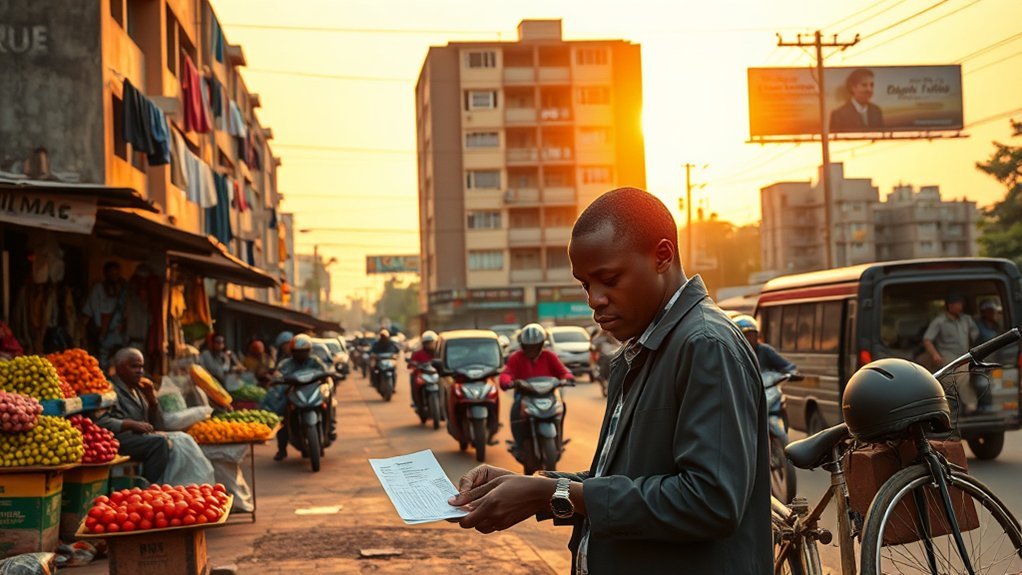
Average pay sits near $190 per month, so you’ll often find income falling short of basic costs for many locals. A city-center one-bedroom rents for about $481 and groceries can take a big chunk of earnings, so budgeting becomes essential.
You’ll compare wages, rent, and living expenses to make smart choices. Low wages and high mortgage rates (~20.75%) push many to rent or live outside city centers. Practical budgets show the trade-offs and priorities.
- Single on tight budget: rent $206 (outside center), groceries ≈33.5% of income, dining out 12.4%.
- City renter: rent $481, groceries still ~33.5%, needs supplemental income or shared housing.
- Aspirational homeowner: faces high mortgage costs (20.75% interest), requires savings or higher earnings.
You’ll use these comparative figures to craft realistic monthly plans, prioritize essentials, and assess whether relocating, sharing housing, or increasing income is necessary given local living expenses.
Frequently Asked Questions
What Is the Average Income in Uganda in US Dollars?
The average income in Uganda is about $190 per month, so you’ll earn far less than in many countries. Compared with urban wages and foreign-currency pay, this amount varies greatly by occupation and location.
Can an American Move to Uganda?
“Where there’s a will, there’s a way.” Yes, you can move to Uganda, but you’ll need visas, careful budgeting given low average wages (~$190), affordable rent/food/transport, and caution about high mortgage rates (~20.75%).
Is Uganda Cheap to Live In?
Yes — you’ll find Uganda cheap: a cost of living index 27.6, $2.70 meals, $480 city rent ($206 outside), $0.80 transit fares, $39.80 monthly pass, and ~$66.67 utilities, much lower than Western countries.
Is Uganda a Good Place to Live?
Yes — you’ll practically stretch euros into infinity in Uganda: it’s affordable, with a low cost of living index (27.6), cheaper rents and transport than neighbors, though salaries are low, so planning and local context matter.
Conclusion
Living in Uganda can feel both affordable and surprisingly costly, depending on your choices. You’ll spend far less on rent and food than in many Western cities, yet pay relatively more for reliable power, imported goods, and fast internet. Compared with regional neighbors, salaries lag while basic living costs stay competitive — so your lifestyle, not just numbers, will decide affordability. With mindful budgeting, you’ll bridge low wages and reasonable prices to live comfortably.
