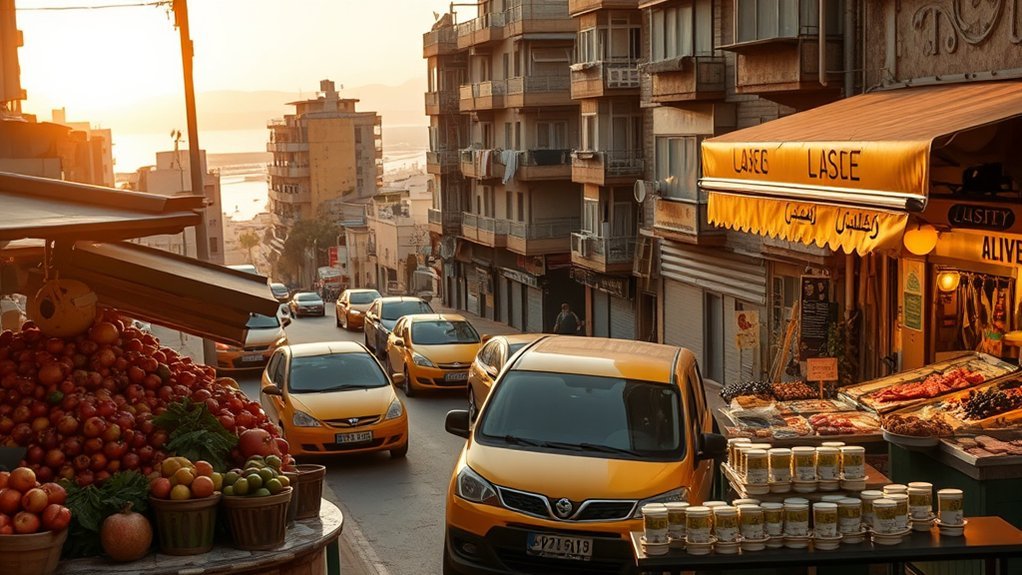
The cost of living in Lebanon in 2026 runs about $1,185–$1,285 a month for a single person living simply outside central Beirut, and about $2,050 for a comfortable single life in the city center. A couple should plan on roughly $1,890–$2,460, and a family of four about $4,050–$4,580 before school fees. These figures use the official rate of LBP 89,500 per US dollar, which held near 89,600 on the market on October 7, 2026. Most rents, generator bills, and private services are priced in dollars, so the pound rate matters less than it did a few years ago. What matters more this year is inflation, which ran at 16.66% in August, and the renewed war that began in March 2026. Below you’ll find rents by city, generator and utility costs, food prices, taxes, residency fees, sample budgets, and the safety picture.
Quick Answer
- Single person: about $1,185–$1,285 (LBP 106–115 million) on a lean budget; about $2,050 (LBP 184 million) for a comfortable one in central Beirut.
- Couple: about $1,890–$2,460 (LBP 169–220 million) a month.
- Family of four: about $4,050–$4,580 (LBP 362–410 million) before private school fees.
- Rent, one-bedroom in Beirut: about $500 outside the center and $945 in the center. Tripoli is roughly half that.
- Utilities: about $200–$230 a month for an 85 m² apartment, including generator power. Internet adds about $38.
- Minimum wage: LBP 28 million a month (~$313).
- Inflation: 16.66% year on year in August 2026.
Exchange Rate, Inflation, and the 2026 War
Three things shape what Lebanon costs you this year.
The exchange rate. After losing more than 95% of its value in the 2019 crisis, the Lebanese pound has been stable at about 89,500 per dollar since 2023. Market data showed LBP 89,600 on October 7, 2026. Shops, landlords, schools, and hospitals often quote in dollars, and many accept both currencies. Cash is used for most payments, since trust in banks has not recovered.
Inflation. The Central Administration of Statistics reported annual inflation of 16.66% in August 2026, with prices up 1.40% in that month alone. Water, electricity, and gas rose 32% over the year, and transport rose about 32%, as higher oil prices fed into fuel and generator bills. Earlier in the year, education costs were up about 36%. The World Bank expects inflation of about 17.5% for 2026.
The war. Fighting between Israel and Hezbollah escalated again in March 2026. By mid-April, more than one million people had been displaced. A US-brokered cessation of hostilities took effect on April 16 and has been extended several times, but strikes have continued, and Israeli forces remain in parts of the south. The World Bank projects the economy will shrink 6.4% in 2026, after growth in 2025. For newcomers, this means higher prices for fuel and imported goods, rents that jump in safer areas when people flee the south, and real security risks. See the safety section below.
At LBP 89,500 per dollar, the LBP 28 million minimum wage equals about $313 a month. A one-bedroom outside central Beirut costs more than one and a half times that.
Cost of Living by City
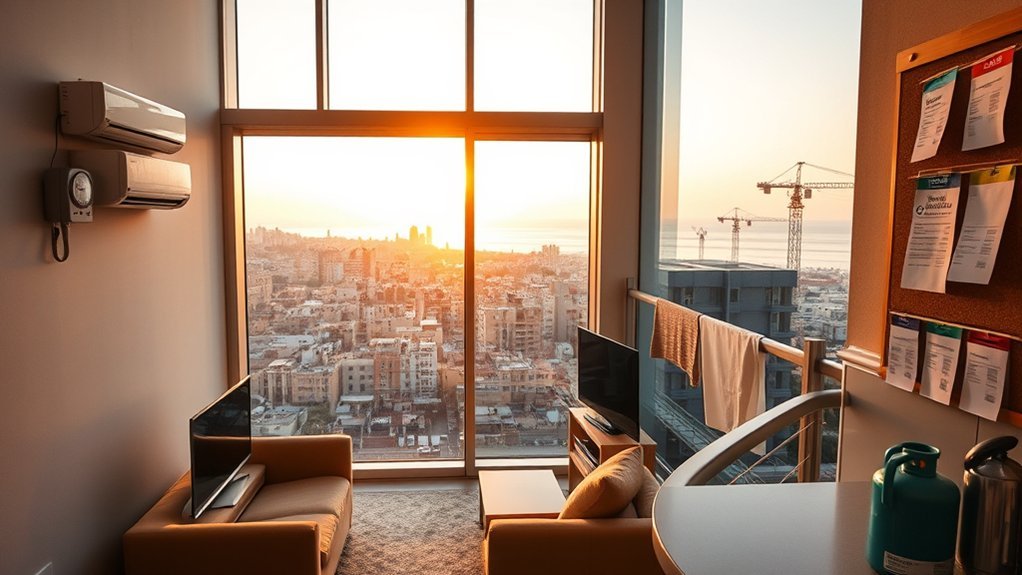
Rent is the biggest cost and the biggest swing factor. The table uses crowd-sourced averages from Numbeo (Beirut and national data updated September 27, 2026; Tripoli updated July 6, 2026). Beirut has 40 contributors in the past year. Tripoli has only about 10, so treat its figures as a rough guide.
| Area | 1-Bed, City Center | 1-Bed, Outside Center | 3-Bed, Outside Center | Basic Utilities (85 m²) |
|---|---|---|---|---|
| Beirut | $944 (LBP 84.5 million) | $497 (LBP 44.4 million) | $1,065 (LBP 95.3 million) | $232 (LBP 20.8 million) |
| Tripoli | $400 (LBP 35.8 million) | $200 (LBP 17.9 million) | $350 (LBP 31.3 million) | $230 (LBP 20.6 million) |
| Lebanon average | $781 (LBP 69.9 million) | $428 (LBP 38.3 million) | $897 (LBP 80.3 million) | $199 (LBP 17.8 million) |
A three-bedroom in central Beirut averages about $2,213 (LBP 198 million). A few patterns stand out:
- Beirut is by far the most expensive place to rent. Ras Beirut, Hamra, Achrafieh, and the downtown area carry the highest prices.
- Tripoli, the second city, has the lowest rents in the data, but far fewer international schools, jobs, and services for foreigners.
- Mount Lebanon suburbs and coastal towns such as Jounieh, Byblos (Jbeil), and Batroun sit between the two. Reliable 2026 rent averages for these towns are not available, so check local listings.
- Utilities cost about the same everywhere, because most homes rely on private generators whose tariff is set nationally. Bills run higher in summer when air conditioning runs all day.
Housing: Rent and Renting as a Foreigner
Most leases for foreigners are priced in US dollars and often paid in cash. Furnished apartments cost more than the unfurnished averages above, and short stays cost more again.
A few things to know before you sign:
- Upfront payments are common. Many landlords ask for a deposit plus several months paid in advance. During past waves of displacement, some asked for six months upfront.
- War moves rents fast. When people flee the south and Beirut’s southern suburbs, rents in safer areas such as the mountain towns above Beirut, Keserwan, and the north rise sharply. In 2023 and 2024, reports described some furnished rents doubling or more within weeks.
- Ask about power. Check whether the building has a generator subscription, how many amperes come with the unit, and whether the building has solar panels or batteries. This affects your bill as much as the rent does.
- Ask about water. Some buildings buy water by truck in summer. Ask who pays and how often it happens.
- Check who pays building fees, such as the concierge, elevator, and generator maintenance.
Buying is expensive relative to local incomes. In mid-2025, apartments in Achrafieh and Ras Beirut sold for about $2,500–$3,500 per m², with new or exceptional units higher. Jounieh and Byblos sold for roughly $1,000–$1,500 per m².
Electricity, Generators, and Utilities
Power is the cost that surprises newcomers most. The state utility, Électricité du Liban (EDL), supplies only part of the day, and production dropped further in August 2026 after a fuel delivery delay. Most households pay two bills: EDL and a private neighborhood generator.
The Ministry of Energy sets a monthly generator tariff. For August 2026, LBCI reported these rates:
| Generator Charge (August 2026) | LBP | Approx. USD |
|---|---|---|
| Per kWh, cities and areas below 700 m | 48,241 | $0.54 |
| Per kWh, villages and areas above 700 m | 53,065 | $0.59 |
| Fixed fee, 5-amp subscription | 385,000 | $4.30 |
| Fixed fee, 10-amp subscription | 685,000 | $7.65 |
| Sample bill, 150 kWh, 5 amps, below 700 m | 7,621,150 | $85 |
| Sample bill, 150 kWh, 5 amps, above 700 m | 8,344,750 | $93 |
The kWh rate rose about 18% from July and was the highest since April, according to L’Orient Today. It is about 60% above February’s rate, because diesel prices rose after the regional war. Generator owners do not always follow the official tariff, so compare your bill with the published rate.
Other monthly connections:
- Basic utilities for an 85 m² apartment (electricity including generator, water, and garbage): about $200–$230 (LBP 17.8–20.8 million). Summer bills can be much higher with air conditioning.
- Home internet (60+ Mbps): about $38 (LBP 3.4 million).
- Mobile plan with 10 GB or more: about $21–$22 (LBP 1.9–2.0 million). Telecom prices were roughly flat over the past year.
- Cooking gas: most homes use bottled gas cylinders bought from local distributors.
Food: Groceries and Dining Out
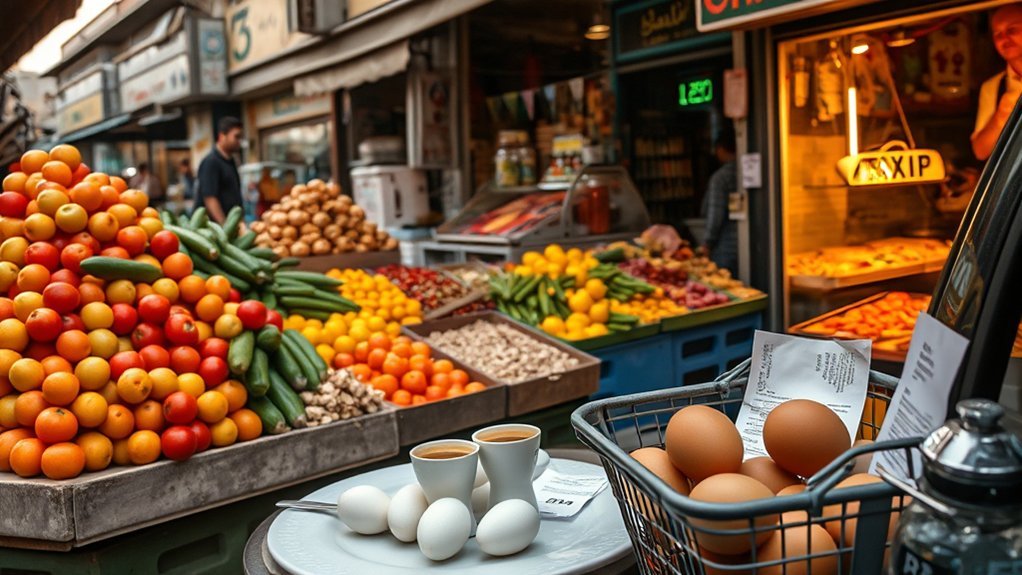
Lebanon imports most of its food, so supermarket prices often match or beat US levels for imported goods. Local produce, bread, and street food stay cheap. A single person who cooks most meals spends about $300–$350 a month on groceries.
Average national prices in late September 2026 (crowd-sourced):
| Item | Typical Cost (LBP) | Approx. USD |
|---|---|---|
| Milk (1 liter) | 163,800 | $1.83 |
| White bread (1 lb) | 70,700 | $0.79 |
| Rice (1 lb) | 85,900 | $0.96 |
| Eggs (12) | 303,400 | $3.39 |
| Chicken fillets (1 lb) | 401,000 | $4.48 |
| Beef (1 lb) | 528,100 | $5.90 |
| Local cheese (1 lb) | 426,900 | $4.77 |
| Tomatoes (1 lb) | 53,700 | $0.60 |
| Bottled water (1.5 liters) | 68,000 | $0.76 |
| Mid-range bottle of wine | 895,000 | $10.00 |
Lebanese wine is good value. Imported cheese, cereals, and branded snacks are where grocery bills climb. Vegetable markets and small neighborhood shops usually beat big supermarkets on produce.
Common restaurant prices:
- Meal at an inexpensive restaurant: about $11.40 (LBP 1.02 million)
- Three-course dinner for two at a mid-range restaurant: about $54 (LBP 4.86 million)
- Fast-food combo meal: about $10 (LBP 895,000)
- Cappuccino: about $4 (LBP 363,000)
- Domestic draft beer (pint): about $5 (LBP 447,500)
Manakish, falafel, and shawarma sandwiches from street bakeries and snack shops are the cheapest way to eat out, often for a few dollars.
Transportation and Getting Around
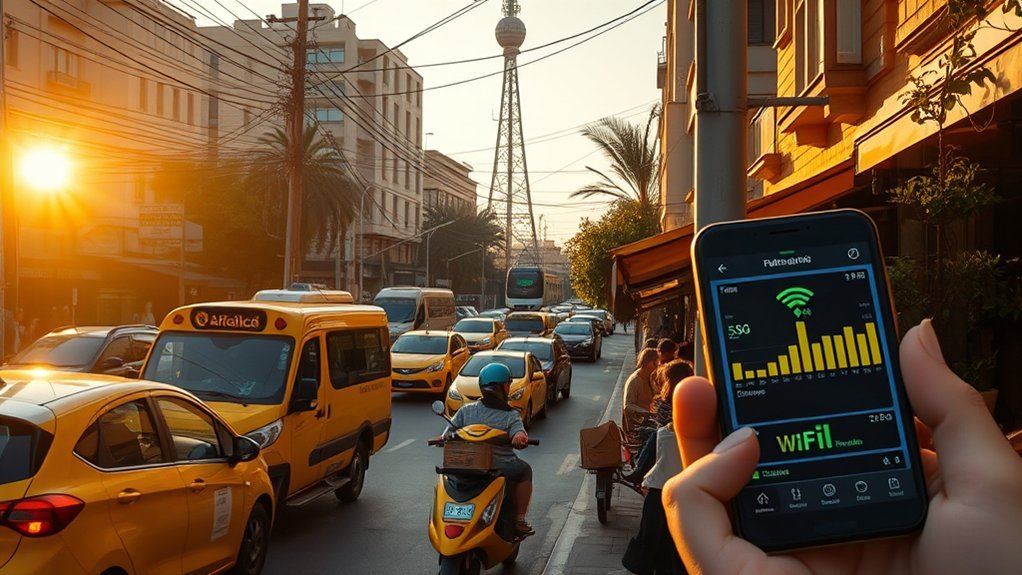
Lebanon has no metro or train. People get around by private car, shared taxis (called “service”), minibuses, and ride-hailing apps. Traffic around Beirut is heavy at rush hour.
| Transport Cost | LBP | Approx. USD |
|---|---|---|
| One-way local bus ticket | 179,000 | $2.00 |
| Monthly transport pass (Beirut) | 6.9 million | $77.50 |
| Taxi start fare | 447,500 | $5.00 |
| Taxi per kilometer | about 179,000 | about $2.00 |
| Gasoline (1 liter) | about 93,000 | about $1.04 |
Fuel prices are set weekly by the Ministry of Energy and Water and are usually quoted per 20 liters. At about $1.04 a liter, a 20-liter fill-up costs roughly $21 (LBP 1.86 million). Gasoline rose about 4% in August alone, and transport prices overall were up about 32% from a year earlier.
A commuter who uses buses and shared taxis spends about $75–$100 a month. Relying on private taxis or ride-hailing for daily trips can easily double that. If you drive, budget for fuel, insurance, parking, and frequent repairs on rough roads.
Healthcare and Insurance
Lebanon has well-trained doctors and good private hospitals in Beirut, but the 2019 crisis badly weakened public coverage. The National Social Security Fund (NSSF) covers formal private-sector employees, yet its payments lost most of their value, so many hospitals and doctors now bill in dollars and ask for payment upfront.
What this means for newcomers:
- Get private or international health insurance before you arrive. Plans are priced in US dollars and rise with age. Get quotes, since prices vary widely by insurer and coverage.
- Check war exclusions. Many policies exclude injuries from war or civil unrest. Read this clause carefully in 2026.
- Expect to pay cash for clinic visits and medicines, then claim reimbursement.
- Pharmacies are everywhere, but some imported medicines run short during supply disruptions. Bring a supply of any medicine you take regularly.
Schools and Childcare
Families face the steepest cost increases. Education prices rose about 36% in the year to May 2026, according to BLOMInvest Bank’s summary of official CPI data.
- International primary school: about $8,740 (LBP 782 million) a year per child on average. Top schools in Beirut charge more, plus registration, bus, and book fees. Most private schools bill partly or fully in dollars.
- Private full-day preschool: about $575 (LBP 51.5 million) a month.
- Public schools: free or nearly free, but they have faced strikes and closures since 2019, and many were used as shelters for displaced families during the fighting.
Two children in international school add about $1,460 (LBP 130 million) a month to a family budget.
Salaries, Minimum Wage, and Taxes
Local pay is low compared with prices. The national minimum wage has been LBP 28 million a month (~$313) since August 1, 2025. Crowd-sourced data puts the average net salary at about $693 a month nationally and $711 in Beirut. That is less than the cost of a central Beirut one-bedroom, which is why many Lebanese households rely on family housing, two incomes, or money sent from relatives abroad.
- VAT: the standard rate is 11% and is included in shelf prices, per PwC’s Lebanon tax summary. Many basic foods and medicines are exempt.
- Salary tax: progressive, from 2% to 25%, on annual brackets that run from LBP 18 million (~$200) up to LBP 675 million (~$7,540). Because the brackets were set in pounds, the top rate now applies to fairly modest dollar incomes.
- Tax residency: you are a Lebanese tax resident if you spend more than 183 days in the country in any 12-month period, have a place of business there, or keep a home permanently available to your family, according to PwC.
If you plan to work remotely from Lebanon for a foreign employer, get advice from a local accountant. Your home country’s tax rules still apply too.
Visas and Residency Fees
Citizens of the US, UK, Canada, and EU countries receive a free one-month visa on arrival, which can be extended to three months, according to General Security. Some other nationalities pay a tourist visa fee of LBP 2 million (~$22). To stay longer, you need a residence permit, usually tied to a job, study, marriage, or property ownership.
| Annual Residence Permit | Fee (LBP) | Approx. USD |
|---|---|---|
| Work residence, category 1 (with family) | 108,000,000 | $1,207 |
| Work residence, category 2 (with family) | 72,000,000 | $804 |
| Work residence, category 3 | 24,000,000 | $268 |
| Work residence, category 4 | 18,000,000 | $201 |
| Student residence | 15,000,000 | $168 |
| Most other categories | 18,000,000 | $201 |
These are the fees listed on the General Security residence fee page. A three-year permit, where granted, costs three times the annual fee, and urgent processing adds LBP 4.9 million (~$55). Work permits from the Ministry of Labor are a separate cost, usually paid by the employer. Confirm current amounts before you apply.
One-Time Setup Costs
Budget for these before your first month:
- Rent deposit and advance: often one month’s deposit plus one to three months in advance; more in high-demand periods.
- Residence permit: about $201 a year for most non-work categories; $201–$1,207 for work residence, depending on category.
- Generator subscription: a fixed monthly fee of about $4–$8 plus usage. Ask whether the previous tenant’s subscription transfers.
- Furnishing an unfurnished apartment: appliances and furniture are mostly imported and priced in dollars, so budget generously.
- Backup power: some renters buy a battery and inverter for outages.
- Health insurance: have a policy in place from day one, since hospitals often require payment upfront.
- Emergency fund: keep several months of costs in cash or in an account outside Lebanon in case you need to leave quickly.
Sample Monthly Budgets
These budgets combine the averages above. Amounts are in US dollars, since that is how most rents and bills are quoted. Health insurance and school fees are not included.
| Expense (USD) | Single, Lean | Single, Central Beirut | Couple | Family of Four |
|---|---|---|---|---|
| Rent | 430–500 (1-bed outside center) | 944 (1-bed center) | 497–944 (1-bed) | 897–1,065 (3-bed outside center) |
| Utilities incl. generator | 200–230 | 232 | 260 | included below |
| Internet + mobile | 60 | 60 | 82 | included below |
| Groceries | 300 | 350 | 600 | included below |
| Eating out + leisure | 120 | 300 | 300–400 | included below |
| Transport | 75 | 100 | 150–175 | included below |
| Gym | — | 67 | — | — |
| Living costs excluding rent | 755–785 | 1,109 | 1,392–1,517 | 3,160–3,512 |
| Total (USD) | $1,185–$1,285 | $2,050 | $1,890–$2,460 | $4,050–$4,580 |
| Total (LBP) | 106–115 million | 184 million | 169–220 million | 362–410 million |
Family of four: the living-cost figure uses crowd-sourced estimates for a family of four, excluding rent: about $3,160 nationally and $3,512 in Beirut. Adding a three-bedroom outside the center gives about $4,050–$4,580. International school for two children pushes that to roughly $5,510–$6,030 (LBP 493–540 million).
Living in Tripoli: a single person renting outside the center for about $200, with similar utilities and lower food and transport costs, can get by on roughly $900–$1,000 a month. Data for Tripoli is thin, so treat this as an estimate.
Compared with local pay: even the lean single budget is almost four times the minimum wage and well above the average salary. Lebanon is affordable mainly for people with income in foreign currency.
Safety and Security in 2026
Safety is a real cost factor in Lebanon this year, and it should shape where you live.
- The US State Department’s Lebanon travel advisory is at Level 4, “Do Not Travel,” as of August 21, 2026. It names southern Lebanon, the Syrian border, Beirut’s southern suburbs (Dahiyeh), and refugee settlements as especially dangerous. Other governments issue similar warnings.
- Embassies have limited ability to help their citizens, and evacuation options can disappear quickly when the airport is disrupted.
- Rents spike in safer areas whenever fighting displaces people, so a cheap lease can be hard to replace.
- Many insurance policies exclude war-related claims.
If you still plan to move, register with your embassy, keep your documents and cash ready, and choose housing away from known high-risk areas.
Money-Saving Tips
- Look outside central Beirut. A one-bedroom outside the center costs about half as much.
- Pick an apartment with good backup power. Buildings with solar panels, batteries, or well-run generators save money and hassle.
- Check your generator bill against the ministry’s monthly tariff. Overcharging is common.
- Carry small bills in both currencies. Change is often given in pounds, and prices may be rounded against you.
- Buy local. Lebanese produce, bread, dairy, and wine cost far less than imported brands.
- Use shared taxis instead of private taxis for regular trips.
- Keep savings outside the local banking system where it is legal, since many depositors still cannot access funds frozen in 2019.
How Lebanon Compares With Nearby Countries
Lebanon’s dollar-priced rents and imported groceries sit uneasily next to very low local wages. People who are weighing a move to the Eastern Mediterranean often compare it with the cost of living in Jordan, which offers more political stability and a currency pegged to the dollar, and the cost of living in Cyprus, an EU member a short flight from Beirut that many Lebanese families moved to after 2019. For lower costs, see the cost of living in Turkey and the cost of living in Egypt. If you are considering the Gulf, where salaries are much higher, compare the cost of living in the United Arab Emirates.
Frequently Asked Questions
How much money do you need to live in Lebanon per month?
A single person needs about $1,185–$1,285 a month on a lean budget outside central Beirut, and about $2,050 for a comfortable life in the city center. A couple should budget about $1,890–$2,460, and a family of four about $4,050–$4,580 before school fees.
Is $1,000 a month enough to live in Lebanon?
Only outside Beirut. $1,000 is about LBP 89.5 million. That can cover a simple life in Tripoli or a smaller town with a cheap apartment, but it falls short of a lean budget in the Beirut area, where a one-bedroom outside the center averages about $500 and utilities add $200 or more.
How much is rent in Beirut in 2026?
A one-bedroom apartment averages about $944 a month in central Beirut and about $497 outside the center. A three-bedroom averages about $2,213 in the center and $1,065 outside it. Rents in safer areas can rise quickly when fighting displaces people.
What currency is used in Lebanon?
The official currency is the Lebanese pound (LBP), which has traded at about 89,500 per US dollar since 2023. In practice, rents, school fees, hospital bills, and many shop prices are quoted in US dollars, and cash is widely used.
What is the minimum wage in Lebanon?
The private-sector minimum wage is LBP 28 million a month, about $313, and has applied since August 1, 2025. The average net salary is about $693 a month, according to crowd-sourced data.
Why are electricity bills so high in Lebanon?
The state utility supplies power for only part of the day, so most homes also pay a private generator. In August 2026 the official generator tariff was LBP 48,241 per kWh (about $0.54), and a 150 kWh bill on a 5-amp subscription came to about $85.
Is it safe to live in Lebanon in 2026?
Lebanon carries serious security risks in 2026. Fighting between Israel and Hezbollah escalated in March, and the US State Department advises against all travel to Lebanon. Southern Lebanon, the Syrian border, and Beirut’s southern suburbs are the highest-risk areas.
Conclusion
Lebanon is not the bargain it looked like after the 2019 crash. The pound is stable, but most costs are now set in dollars, inflation is running near 17%, and generator power adds a bill most countries don’t have. A single person needs about $1,185–$1,285 a month on a lean budget and about $2,050 to live comfortably in central Beirut, while a family of four needs $4,000 or more before school fees. Local wages cover only a fraction of that, so Lebanon works best for people with income from abroad. The renewed war is the biggest factor of all. Check the security situation and your insurance coverage before you commit, and keep a cash buffer for sudden changes.
Sources
- Central Administration of Statistics – Consumer prices, August 2026
- L’Orient Today – CPI components, August 2026
- BLOMInvest Bank – Inflation by category, May 2026
- Trading Economics – USD/LBP exchange rate
- World Bank – Lebanon overview and Economic Monitor, Summer 2026
- LBCI – August 2026 generator tariff breakdown
- L’Orient Today – Generator rates at highest since April
- Numbeo – Lebanon, Beirut, and Tripoli price data (crowd-sourced)
- JSK Real Estate – Residential property prices, Q3 2025
- L’Orient Today – Beirut property prices, 2025
- WageIndicator – Lebanon minimum wage
- PwC – Lebanon VAT
- PwC – Lebanon personal income tax
- PwC – Lebanon tax residence
- General Security – Visa on arrival by nationality
- General Security – Visa types and fees
- General Security – Residence permit fees
- US State Department – Lebanon travel advisory
- Wikipedia – 2026 Israel–Lebanon ceasefire timeline