
In 2026, a practical cost of living in Tunisia is about 1,700–2,300 TND per month for a cost-conscious single person and roughly 2,500–3,500 TND for a more comfortable single lifestyle in Tunis. A family of four should usually plan around 5,000–7,000 TND before major international-school fees. Current September 2026 Expatistan estimates provide a useful cross-check: about 2,528 TND per month for one person nationwide and 2,850 TND in Tunis, while a family of four is estimated near 5,796 TND nationwide and 6,369 TND in Tunis. Expatistan warns that these estimates use limited data, so treat them as planning benchmarks rather than guaranteed household budgets.
Last updated: September 7, 2026. Rent and daily-price benchmarks were rechecked against current 2026 Numbeo and Expatistan data, while inflation, entry, currency, safety, healthcare, and tax guidance were rechecked against official sources.
Quick Answer
A practical 2026 budget is about 1,700–2,300 TND per month for a cost-conscious single person with low-cost housing and 2,500–3,500 TND for a more comfortable single lifestyle in Tunis. A family of four may need roughly 5,000–7,000 TND, excluding major international-school fees and unusually high housing costs.
Key Takeaways
- National rent averages are lower than Tunis prices, but tourist areas are not automatically cheaper, so compare city-level figures before signing a lease.
- Local food, public transport, utilities, and restaurant meals remain inexpensive by U.S. standards.
- Private preschool and international education can become major family expenses.
- Tunisia’s annual inflation rate reached 5.4% in August 2026, while food and beverage prices were 7.5% higher year over year.
- U.S. citizens may visit for up to 90 days without a tourist visa, but longer stays require a residence permit.
Note: Most line-item prices below are June 2026 crowd-sourced averages from Numbeo, not government-set prices. Numbeo’s June Tunisia page used 2,274 entries from 165 contributors, while its Tunis page reported 761 entries from 67 contributors. September Expatistan estimates are newer but are based on a smaller sample. USD figures use a working conversion of about 2.92 TND per $1 for consistency. Exchange and bank rates change, so confirm the current rate before making financial decisions.
How Much Does It Cost to Live in Tunisia Per Month?

A useful Tunisia budget should separate national averages from Tunis prices. June 2026 data from Numbeo’s Tunisia price survey and its Tunis city survey shows that, countrywide, a one-bedroom apartment averages about 460 TND outside a city center and 681 TND in a center. In Tunis, the same averages rise to about 649 TND and 977 TND. Food, transport, and leisure also depend on whether you shop and travel like a local or rely on imported goods, taxis, and tourist-oriented businesses.
Current September estimates provide a useful second check. Expatistan estimates about 2,528 TND per month for one person and 5,796 TND for a family of four nationwide. Its Tunis estimate is about 2,850 TND for one person and 6,369 TND for four people. Expatistan explicitly warns that the estimates are based on limited data, so use them to cross-check a budget rather than as fixed spending requirements.
| Household and lifestyle | Planning range per month | What it generally covers |
| Cost-conscious single person | 1,700–2,300 TND (about $582–$788) |
Outside-center or shared housing, home cooking, public transport, basic leisure |
| Comfortable single person in Tunis | 2,500–3,500 TND (about $856–$1,199) |
Private one-bedroom, utilities, groceries, dining out, taxis or transit, personal spending |
| Couple | 3,200–4,800 TND (about $1,096–$1,644) |
One- or two-bedroom home, shared bills, mixed cooking and dining, moderate leisure |
| Family of four | 5,000–7,000 TND (about $1,712–$2,397) |
Three-bedroom housing, food, utilities, transport, healthcare buffer, local or public schooling |
These are planning ranges rather than official minimums. Your housing choice can move the final total by hundreds of dinars. A $1,200 monthly budget, equal to about 3,500 TND at the working rate above, can support a comfortable single lifestyle in many areas, but it is not a universal benchmark for couples or families.
How Do Tunis, Sousse, Sfax, and Hammamet Compare?
“Smaller city” does not always mean “cheaper.” Crowd-sourced 2026 rent data shows lower one-bedroom averages in Sfax and Sousse than in Tunis, while tourist-oriented Hammamet can be more expensive. The data dates differ by city, so use this table as a direction-of-travel comparison rather than a live rental quote.
Location is the biggest budget swing, but do not assume every coastal or smaller city is cheaper. Compare the actual neighborhood and property type you want before choosing a destination.
Housing Costs: Rent, Utilities, and Buying Property
Housing is usually the largest monthly expense. June 2026 averages show a clear difference between countrywide prices and the capital.
| Housing item | Tunisia average | Tunis average |
| One-bedroom, city center | 681 TND | 977 TND |
| One-bedroom, outside center | 460 TND | 649 TND |
| Three-bedroom, city center | 1,169 TND | 1,536 TND |
| Three-bedroom, outside center | 795 TND | 976 TND |
Basic utilities for an 85 m² apartment average about 162 TND nationally and 177 TND in Tunis. Unlimited broadband at 60 Mbps or faster averages about 58–61 TND, while a mobile plan with calls and at least 10 GB of data averages roughly 25–30 TND.
Buyers face much higher upfront costs. Average asking prices are about 3,061 TND per square meter in a city center and 1,853 TND outside a center nationwide. In Tunis, those figures rise to roughly 4,178 TND and 2,231 TND. Mortgage rates reported by contributors are high, so compare total financing costs rather than looking only at the purchase price.
Pro Tip: Before paying a deposit, confirm whether the rent includes building fees, water, furniture, air conditioning, parking, and maintenance. Inspect water pressure, heating and cooling, internet availability, and the commute at the times you will normally travel.
What One-Time Move-In Costs Should You Budget For?
Your first month can cost much more than a normal month even when the rent itself looks inexpensive. Before relocating, ask for the exact amount and payment terms for each applicable setup cost.
- Rental deposit and first rent payment.
- Agency or broker charges, if you use an agent.
- Utility, internet, or mobile setup costs.
- Furniture, household goods, and appliance purchases for an unfurnished property.
- Temporary accommodation while you inspect long-term housing.
- Residence-permit paperwork, document copies, translations, and local administrative costs.
- Moving, baggage, storage, or international shipping costs.
When using online listings or a local agent, review the listing terms, agency fee, lease language, inventory record, deposit conditions, and local regulations. Do not rely on a platform’s general terms of use as a substitute for a clear written rental contract.
Food and Dining Expenses in Tunisia
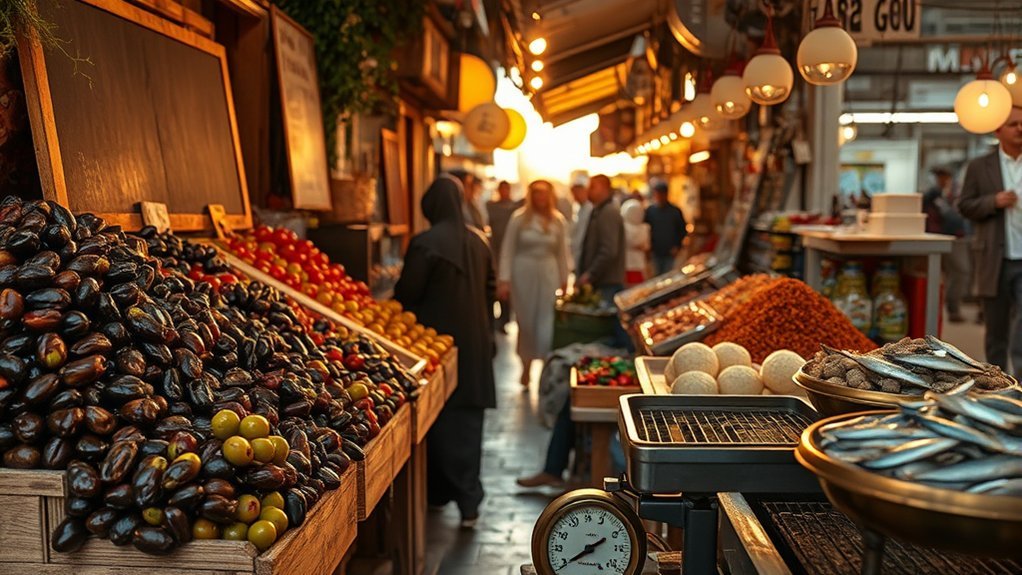
Food can remain economical when you buy seasonal produce, local staples, and Tunisian brands. Imported foods, specialty products, tourist restaurants, and frequent delivery can raise the total quickly. A practical grocery allowance for one person is often about 400–650 TND per month, depending on diet and how often you eat out.
Typical Meal Prices
June 2026 countrywide averages place an inexpensive restaurant meal at about 10.60 TND and a three-course mid-range meal for two at about 60 TND. In Tunis, an inexpensive meal averages about 12 TND, while the mid-range meal for two remains near 60 TND.
- Cappuccino: about 2.84 TND nationally and 3.06 TND in Tunis.
- Domestic draft beer: about 5 TND nationally and 6 TND in Tunis.
- Mid-range bottle of wine: about 22.50 TND in Tunis.
- Small bottled water: about 0.91 TND nationally and 1.15 TND in Tunis.
Restaurant prices vary widely by neighborhood and venue. A local café or brasserie can be inexpensive, while waterfront, hotel, and tourist-area businesses may charge much more.
Grocery Shopping Tips
Current Tunis averages include about 1.48 TND for one liter of milk, 1.01 TND for a 500 g loaf of white bread, 4.62 TND for 12 eggs, 17.56 TND for one kilogram of chicken fillets, and 2.25 TND for one kilogram of tomatoes. These averages are more useful than comparing a subsidized minimum price with a premium U.S. supermarket product.
- Buy produce in neighborhood markets and souks when quality and prices are good.
- Plan meals around seasonal vegetables, couscous, pasta, rice, legumes, eggs, and local poultry.
- Compare unit prices because imported packaging and international brands can cost much more.
- Use home cooking for most meals, then budget separately for cafés and restaurants.
Local-market shopping can lower food costs, but a flat “$200 per month” target will not fit every diet, household, or city.
Transportation and Commuting Costs
Public transport is inexpensive, but service frequency, crowding, and route coverage differ by city. Countrywide, a one-way local ticket averages about 1 TND and a regular monthly pass about 30 TND. In Tunis, the averages are about 1.15 TND and 50 TND.
Public Transport Prices
- One-way local ticket: around 1–1.15 TND.
- Monthly pass: around 30 TND nationally or 50 TND in Tunis.
- Best for: routine commuting along established bus, metro, or rail routes.
- Budget advantage: a pass can cost less than a few longer taxi rides.
Taxi and Fuel Costs
A standard taxi starts at about 0.90 TND, and the reported rate is roughly 0.90–1 TND per kilometer. Gasoline averages about 2.52 TND per liter. Taxis can be economical for occasional short trips, but daily use adds up faster than public transport.
Car ownership is not automatically cheap. A new Volkswagen Golf or equivalent is listed near 118,000–119,000 TND, and you must also budget for insurance, registration, maintenance, tires, parking, and fuel. For many urban residents, public transport plus occasional taxis is the lower-cost choice.
Warning: The U.S. Department of State advises travelers to exercise caution on public transportation because of safety and security concerns. Its guidance specifically notes risks involving overcrowding, driving practices, maintenance, and criminal activity on trains, buses, and louages.
Childcare, Education, and Family-Related Expenses
Family costs vary sharply by school type and city. Countrywide, private full-day preschool averages about 267 TND per month per child, while the Tunis average is about 348 TND. International primary-school tuition averages roughly 8,292 TND per year nationally and 11,600 TND in Tunis, with broad reported ranges.
Those crowd-sourced averages should not be treated as school quotations. Fees can vary greatly by curriculum and institution, and international or foreign-curriculum schools may cost substantially more. Families should obtain the current fee schedule directly from each school.
Those fees are significant beside the crowd-sourced average net salary of about 953 TND nationally and 1,079 TND in Tunis. Families considering private or international education should request a complete fee schedule that includes registration, books, uniforms, transport, meals, activities, and annual increases.
- Compare public, private, bilingual, and international schools by curriculum, accreditation, language, location, and total fees.
- Ask whether preschool charges continue during holidays and whether meals or transport are included.
- Budget international tuition over 12 months instead of treating it as a one-time annual expense.
- Check employer education allowances and any lawful local support for which your family qualifies.
Entertainment, Shopping, and Miscellaneous Spending

Leisure is affordable relative to many Western countries, but older low estimates understate current prices. A cinema ticket averages about 16 TND nationally and 18 TND in Tunis. A monthly fitness-club membership averages about 79 TND nationally and 107 TND in Tunis.
A monthly entertainment allowance of 150–300 TND can cover several modest outings, but the result depends on restaurant choice, nightlife, hobbies, and travel. Community facilities, beaches, parks, cafés, and pay-per-visit classes may cost less than premium gyms or hotel venues.
Clothing is not always dramatically cheaper. Jeans average about 123 TND nationally and 147 TND in Tunis, while international-brand athletic shoes can cost more than 300 TND. Local products and markets may offer better value than imported chain-store goods.
Healthcare, Insurance, and Medical Costs
Tunisia has public and private healthcare, but foreigners should not assume that treatment will be free or that an overseas insurance policy will automatically cover care. The U.S. Department of State’s Tunisia guidance advises travelers to check whether their health insurance provides coverage abroad or reimburses overseas treatment.
Because medical prices vary by provider, treatment, and insurance status, build a separate health allowance rather than relying on one national average. Long-term residents should compare suitable local or international coverage for outpatient care, hospitalization, prescriptions, dental care, and emergencies.
Note: U.S. travel guidance strongly recommends supplemental medical-evacuation coverage. It also advises travelers to carry prescription medicine in its original packaging with the prescription and to bring enough medication for the trip because some medicines can be difficult to obtain in Tunisia.
Salaries, Taxes, and Purchasing Power
Low prices do not always mean high affordability for workers paid local wages. Numbeo contributors report average monthly net salaries near 953 TND nationwide and 1,079 TND in Tunis. A central Tunis one-bedroom therefore approaches the reported average local net salary by itself.
Tunisia’s Ministry of Finance states that people whose habitual residence is in Tunisia are subject to personal income tax, while non-residents may owe tax on Tunisian-source income. Tax treatment can depend on residence, income source, employment status, treaty rules, and foreign reporting duties. Obtain qualified cross-border tax advice before relocating or working remotely.
Comparing Tunisia’s Costs to the United States
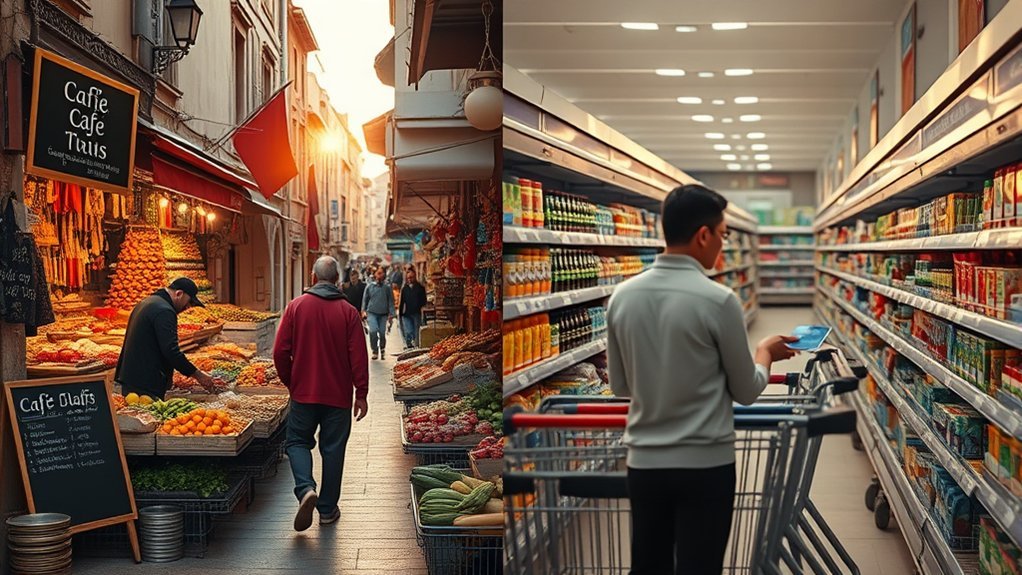
A June 2026 Numbeo comparison shows that housing, restaurants, transit, utilities, and childcare are generally much cheaper in Tunisia than in the United States. However, the difference is not one fixed multiplier, and imported goods, cars, and some branded clothing can be comparatively expensive.
- Inexpensive restaurant meal: about $3.63 in Tunisia versus $20 in the U.S.; the U.S. average is roughly 5.5 times as high.
- One-bedroom city-center rent: about $233 in Tunisia versus $1,646 in the U.S.; the U.S. average is roughly 7.1 times as high.
- Monthly public transport pass: about 30 TND nationally in Tunisia, or roughly $10 at the working exchange rate, versus about $65 in the U.S.
- Basic utilities for an 85 m² apartment: about 162 TND nationally, or roughly $55, versus about $215 in the U.S.
- Gasoline: about 2.52 TND per liter in Tunisia, or roughly $0.86 at the working rate, versus about $0.99 per liter in the U.S.
Tunisia’s biggest savings over the United States are usually rent, services, dining, public transport, and childcare—not every imported or vehicle-related purchase.
For a regional comparison, see our guides to the cost of living in Algeria and the cost of living in Egypt.
Tips for Saving Money and Managing Your Budget in Tunisia

- Choose location carefully: compare rent savings outside the center with the time and cost of commuting.
- Shop locally: use neighborhood markets for seasonal produce and supermarkets for selected packaged items.
- Cook most meals: set separate grocery and dining-out limits so café spending does not disappear into the food budget.
- Use transit strategically: buy a pass when your route and commute frequency make it worthwhile.
- Limit imported brands: food, clothing, electronics, and personal-care imports can weaken the expected savings.
- Track irregular costs: include deposits, agency fees, repairs, school registration, medical care, travel, and visa or residence paperwork.
- Keep an emergency buffer: aim for several months of essential expenses, especially when your income is in another currency.
Tunisia’s National Institute of Statistics reported annual inflation of 5.4% in August 2026. Food and beverage prices were 7.5% higher year over year. Review your budget every few months instead of relying on a fixed annual estimate.
Visa, Residency, Currency, and Safety Basics
According to the U.S. Department of State’s Tunisia information, U.S. citizens do not need a tourist visa for stays of 90 days or less. A residence permit is required for a longer stay and is obtained through the central police station for the resident’s district. Overstaying can lead to recurring fines, so begin the process before the 90-day period ends.
The Tunisian dinar is subject to strict currency controls. U.S. travel guidance says exporting Tunisian dinars is generally prohibited. Travelers who bring in more than the equivalent of 5,000 TND and want to take that declared foreign currency out again should follow the entry-declaration rules. To reconvert leftover dinars into foreign currency, keep the original bank exchange or withdrawal receipt; the State Department notes that ATM receipts are not accepted for this purpose.
As of May 21, 2026, the U.S. Department of State rates Tunisia Level 2: Exercise Increased Caution because of terrorism, crime, and unrest, with specific areas under “Do Not Travel” guidance. This does not mean every residential area has the same risk, but prospective residents should review the current advisory, avoid restricted border and mountain areas, and evaluate neighborhood security.
Frequently Asked Questions
Can a U.S. citizen live in Tunisia?
Yes. A U.S. citizen may visit for up to 90 days without a tourist visa, but a residence permit is required for a longer stay. Employment, tax, housing, and documentation requirements depend on the purpose and length of residence.
How much is rent in Tunisia per month?
Countrywide, a one-bedroom averages about 460 TND outside a city center and 681 TND in a center. In Tunis, averages rise to about 649 TND outside the center and 977 TND in the center. Furnishing, neighborhood, condition, and lease length can move the price far above or below these averages.
How much money do you need to live comfortably in Tunisia?
A comfortable single-person budget is often around 2,500–3,500 TND per month in Tunis, including a private apartment and moderate discretionary spending. Smaller cities or shared housing can cost less, but tourist-oriented areas are not automatically cheaper. Families need more, especially when paying for private childcare or international school.
Is $1,200 per month enough in Tunisia?
For one person, $1,200 is about 3,500 TND at a 2.92 TND-per-dollar working rate and can support a comfortable lifestyle in many locations. It may be insufficient for a family, premium housing, frequent international travel, or international-school tuition.
Is healthcare free for foreigners in Tunisia?
Do not assume so. Tunisia has public and private healthcare, but eligibility and payment depend on coverage and circumstances. Foreign residents should verify what their insurance covers abroad and consider suitable medical and evacuation coverage.
Is Tunisia a good country to live in?
Tunisia can suit people who value lower housing and daily costs, Mediterranean weather, local markets, and access to North Africa and Europe. Tradeoffs may include bureaucracy, limited local salaries, uneven infrastructure, inflation, currency controls, and security concerns in specific areas. Visit first and test your preferred city before committing.
Conclusion
The cost of living in Tunisia remains low compared with the United States, especially for rent, restaurant meals, public transport, utilities, and childcare. A young professional in Tunis might spend roughly 649–977 TND on a one-bedroom apartment, about 237 TND on basic utilities and internet, and 400–650 TND on groceries before transport and personal spending. A realistic total must reflect the city, housing standard, family size, school choice, healthcare, and imported-goods spending.
Start with your preferred city and actual rent, then add food, utilities, transport, healthcare, schooling, and irregular setup costs. Use 2026 prices as a planning baseline, keep the main budget in Tunisian dinars, and refresh the numbers as inflation and exchange rates change.
Sources
- Numbeo: Cost of Living in Tunisia — June 2026 national averages for rent, food, transport, utilities, childcare, leisure, property, and salaries.
- Numbeo: Cost of Living in Tunis — June 2026 capital-city prices, contributor counts, and reported ranges.
- Expatistan: Cost of Living in Tunisia and Cost of Living in Tunis — September 2026 single-person and family estimates used as a cross-check; Expatistan warns that the sample is limited.
- Tunisia National Institute of Statistics: Consumer Price Index, August 2026 — latest available inflation and food-price changes.
- U.S. Department of State: Tunisia International Travel Information — entry, residence, currency, safety, transport, prescription, and medical-insurance guidance.
- Tunisia Ministry of Finance: Tax System Overview — general individual tax-residence and Tunisian-source-income rules.
- Numbeo: United States–Tunisia Cost Comparison — June 2026 country-level comparison used for U.S. benchmarks.