The cost of living in Trinidad and Tobago in 2026 runs about TT$7,000–8,600 (~$1,030–$1,265) a month for a single person living simply outside central Port of Spain, and about TT$10,900–15,500 (~$1,600–$2,280) for a comfortable single life in or near the capital. A couple should plan on roughly TT$13,100–20,200 (~$1,925–$2,970), and a family of four on about TT$20,900–26,700 (~$3,075–$3,925) before private school fees. These figures use an exchange rate of about TT$6.80 per US dollar, the Central Bank selling rate on October 6, 2026. Rent is the biggest swing factor: a one-bedroom averages about TT$2,800 (~$415) outside city centers nationwide but close to TT$6,900 (~$1,010) in central Port of Spain. Fuel and household electricity are cheap by Caribbean standards, while imported food and dining out are not.
Quick Answer
- Single person: TT$7,000–8,600 (~$1,030–$1,265) on a lean budget; TT$10,900–15,500 (~$1,600–$2,280) for a comfortable one.
- Couple: TT$13,100–20,200 (~$1,925–$2,970) a month.
- Family of four: about TT$20,900–26,700 (~$3,075–$3,925) before international school fees.
- Rent, one-bedroom: TT$2,575–3,525 (~$380–$520) outside the center; TT$3,200–6,900 (~$470–$1,010) in the center, depending on the city.
- Utilities: about TT$300–700 (~$44–$103) a month for an 85 m² apartment; internet adds about TT$370 (~$55).
- Fuel: super gasoline is TT$5.97 a liter (~$0.88).
- Minimum wage: TT$20.50 an hour, or about TT$3,550 (~$520) a month full time.
- Taxes: VAT is 12.5%; income tax is 25% above a TT$90,000 personal allowance.
Exchange Rate, Inflation, and Wages in 2026
Three numbers shape what Trinidad and Tobago costs you this year.
The exchange rate. The TT dollar is managed against the US dollar, so it barely moves. The Central Bank of Trinidad and Tobago listed a buying rate of TT$6.7207 and a selling rate of TT$6.7993 per US dollar on October 6, 2026. This guide uses TT$6.80. The bigger issue for newcomers is access, not price: banks often limit how many US dollars customers can buy, so plan how you will move money in and out before you arrive.
Inflation. Prices are rising slowly. The Central Bank reported headline inflation of 0.6% in July 2026, with food inflation at 1.7% and core inflation at 0.2%. That is far calmer than in 2022 and 2023, when food prices jumped sharply.
The minimum wage. The national minimum wage is TT$20.50 an hour, in force since January 1, 2024, according to WageIndicator’s summary of the Minimum Wages Order. For a 40-hour week, that comes to about TT$3,550 (~$520) a month. Crowd-sourced data puts average take-home pay at about TT$6,000 (~$880) a month nationwide.
At TT$6.80 per dollar, a full-time minimum-wage job pays about $520 a month, less than the average rent for a one-bedroom outside the center.
Cost of Living by City
Most newcomers live along the east-west corridor from Port of Spain to Arima, in central Trinidad around Chaguanas, or in the south around San Fernando. The table uses crowd-sourced averages from Numbeo, updated in September and October 2026. Port of Spain has the most price reports; Chaguanas and San Fernando have far fewer, so treat those as rough guides.
| City | 1-Bed, City Center | 1-Bed, Outside Center | Basic Utilities (85 m²) | Internet (60 Mbps+) |
|---|---|---|---|---|
| Port of Spain | TT$6,883 (~$1,012) | TT$3,524 (~$518) | TT$617 (~$91) | TT$383 (~$56) |
| San Fernando | TT$3,500 (~$515) | TT$2,667 (~$392) | TT$300 (~$44)* | TT$308 (~$45) |
| Chaguanas | TT$3,200 (~$471) | TT$2,575 (~$379) | TT$700 (~$103) | TT$347 (~$51) |
| National average | TT$4,103 (~$603) | TT$2,817 (~$414) | TT$596 (~$88) | TT$371 (~$55) |
*San Fernando’s utility figure comes from very few reports. Air conditioning can push real bills well above it.
A few patterns stand out:
- Port of Spain and the western suburbs (Westmoorings, Maraval, St. Clair, Woodbrook) are the most expensive places to rent. Central rents run about 70% above the national average, driven by embassy, energy-sector, and corporate housing demand.
- Chaguanas offers the lowest rents of the three, and its central location makes it a common base for commuters to both Port of Spain and San Fernando.
- San Fernando is the hub of the southern energy industry. Rents sit well below the capital, but you will want a car.
- Tobago has a much smaller rental market and few price reports. Long-term rents in Scarborough and Crown Point can be reasonable, but most groceries arrive by ferry from Trinidad and cost more.
Housing and Rent
Rents for larger homes follow the same pattern as one-bedrooms. National crowd-sourced averages for a three-bedroom are about TT$8,088 (~$1,189) in city centers and TT$5,359 (~$788) outside them. In Port of Spain, a central three-bedroom averages about TT$14,820 (~$2,179) and an outside-center one about TT$8,120 (~$1,194). For more detail by area, see our guide to average rent in Trinidad.
| Home Type | City Center (TT$/month) | Outside Center (TT$/month) | Approx. USD |
|---|---|---|---|
| 1-bedroom, national | 4,103 | 2,817 | $603 / $414 |
| 3-bedroom, national | 8,088 | 5,359 | $1,189 / $788 |
| 1-bedroom, Port of Spain | 6,883 | 3,524 | $1,012 / $518 |
| 3-bedroom, Port of Spain | 14,820 | 8,120 | $2,179 / $1,194 |
Renting as a Foreigner
Foreigners can rent without restriction. Landlords usually ask for the first month’s rent plus a security deposit of one month, and many want a job letter or bank reference. Gated communities and apartment complexes with security are popular with expats and cost more. Furnished units are common in Port of Spain’s western suburbs.
One new cost to watch: since January 1, 2026, landlords must register and pay a business surcharge of 2.5% to 3.5% on rental income, according to PwC’s summary of the 2026 national budget. PwC expects some landlords to pass that cost on to tenants, so lease renewals may come with small increases.
Buying: crowd-sourced apartment prices average about TT$23,900 per m² (~$3,520) in city centers and about TT$12,300 per m² (~$1,810) outside them. The average 20-year fixed mortgage rate is about 5.96%. Non-citizens generally need a license under the Foreign Investment Act to buy more than one acre of land for residential use, so get legal advice first.
Utilities, Internet, and Phone
Basic utilities (electricity, water, and garbage) for an 85 m² apartment average about TT$596 (~$88) a month nationwide. Electricity is cheap because it is generated from local natural gas and heavily subsidized. T&TEC’s published domestic tariff charges TT$0.26 per kWh for the first 400 kWh in each two-month billing cycle, TT$0.32 for the next 600 kWh, and TT$0.37 above that, plus VAT. The Regulated Industries Commission has been reviewing higher, cost-reflective rates since 2023, so check for changes before you sign a lease.
Air conditioning is the main reason bills vary. A small apartment with fans may pay a few hundred TT dollars a month; a large air-conditioned house can pay well over TT$1,000. The 2026 budget added a TT$0.05 per kWh surcharge for commercial and industrial users only, and residential customers are exempt.
Other monthly connections:
- Home internet (60+ Mbps): about TT$371 (~$55) on average.
- Mobile plan with 10 GB+ data: about TT$307 (~$45). Prepaid plans with less data cost much less.
- Cooking gas: household LPG cylinders under 100 lbs remain subsidized after the 2026 budget.
- Water: supplied by WASA and billed on property value, not use, for most homes. Supply interruptions are common in some areas, so many homes have storage tanks.
Food: Groceries and Dining Out
A single person who cooks most meals spends about TT$2,000–2,300 (~$295–$340) a month on groceries. Couples should plan on about double that. Local fruit, vegetables, rice, and chicken are reasonably priced, while imported cheese, cereal, and wine push bills up. The 2026 budget zero-rated VAT on local fruits, vegetables, and several basic foods from October 17, 2025.
Average national prices in October 2026:
| Item | Typical Cost (TT$) | Approx. USD |
|---|---|---|
| Milk (1 liter) | 16.07 | $2.36 |
| Bread (1 lb loaf) | 14.55 | $2.14 |
| Rice (1 lb) | 8.20 | $1.21 |
| Eggs (12) | 29.25 | $4.30 |
| Chicken fillets (1 lb) | 28.73 | $4.23 |
| Beef (1 lb) | 30.17 | $4.44 |
| Local cheese (1 lb) | 23.37 | $3.44 |
| Bananas (1 lb) | 8.12 | $1.19 |
| Tomatoes (1 lb) | 14.88 | $2.19 |
| Mid-range bottle of wine | 120.00 | $17.65 |
Eating out ranges from cheap street food to pricey restaurants. Doubles, roti, and bake and shark are the best value. Other common prices:
- Meal at an inexpensive restaurant: about TT$70 (~$10.30)
- Three-course dinner for two at a mid-range restaurant: about TT$500 (~$73.50)
- Fast-food combo meal: about TT$60 (~$8.80)
- Cappuccino: about TT$25 (~$3.70)
- Domestic beer (pint): about TT$15 (~$2.20)
Excise taxes on rum, beer, and cigarettes doubled on January 1, 2026, so bar tabs and cigarette prices are higher than older guides suggest.
Transportation and Getting Around

Trinidad is built around cars. Public transport exists but is patchy, so many residents use a mix of buses, shared “maxi taxis,” and route taxis.
| Item | Typical Cost (TT$) | Approx. USD |
|---|---|---|
| One-way local ticket | 6 | $0.88 |
| Monthly transit pass (regular price) | 900 | $132 |
| Taxi start | 7 | $1.03 |
| Taxi, per mile | 10.46 | $1.54 |
| Super gasoline (1 liter) | 5.97 | $0.88 |
| Diesel (1 liter) | about 4.40 | about $0.65 |
| New Toyota Corolla or similar | 262,875 | $38,660 |
The government cut the price of super gasoline by TT$1 to TT$5.97 a liter in October 2025, under Legal Notice No. 374 of 2025. Premium gasoline costs more. Fuel is among the cheapest in the Caribbean, which makes car ownership easier to afford, but new and used cars carry high import duties. Traffic between Port of Spain and the east and south is heavy at rush hour.
Other transport notes:
- PTSC buses run on the Priority Bus Route and main highways, with low fares.
- Maxi taxis are color-coded minibuses on fixed routes. They are the main way many people commute.
- Ride-hailing apps operate in the Port of Spain area and are a safer choice at night than hailing a car on the street.
- Inter-island ferry: the Port of Spain–Scarborough sea bridge is the cheapest way to reach Tobago; short flights are faster.
Healthcare and Insurance Costs
Trinidad and Tobago runs public hospitals, district health facilities, and health centers through Regional Health Authorities. Care at these facilities is free at the point of use for citizens, and the Ministry of Health lists 24-hour district facilities with general practice and pharmacy services. Waits can be long, and the US State Department notes that care in rural areas on both islands is limited.
Most expats use private care. Private hospitals and clinics in Port of Spain, St. Augustine, and San Fernando charge for every visit, test, and stay, so private health insurance or an international plan is the norm. Many employers include group health coverage in job offers, so ask about it before you negotiate pay. If you buy your own plan, premiums depend heavily on age, deductible, and whether you need cover abroad. Get quotes from local and international insurers before you move.
National Insurance (NIS) contributions are deducted from wages. They rose by 3% on January 1, 2026, and a further 3% rise is scheduled for January 1, 2027, according to PwC.
Schools and Childcare
- International primary school: about TT$75,900 (~$11,160) a year per child on average. Schools in the Port of Spain area that follow North American or international curricula sit at the top of the range.
- Private full-day preschool: about TT$1,950 (~$287) a month.
- Public schools: tuition-free and taught in English. Entry to top secondary schools is competitive and based on the national exam.
For a family with two children in international school, tuition alone adds about TT$12,650 (~$1,860) a month.
Taxes: VAT and Income Tax
- VAT: the standard rate is 12.5%. Many basic foods and local produce are zero-rated. The government said in the 2026 budget that it will review VAT with a view to replacing it with a simpler sales tax, but no date or rate has been set.
- Personal income tax: 25% on chargeable income up to TT$1 million and 30% above that, after a personal allowance of TT$90,000 (~$13,235) a year. Private pensions became tax-exempt on January 1, 2026.
- Health surcharge and NIS: both are deducted from wages on top of income tax.
The tax figures above come from PwC’s 2026 budget commentary and KPMG’s summary of the 2026 tax measures. The Finance Minister has said Budget 2027 will be presented later in 2026, so check for new measures after it is read.
Visas and Work Permits
Citizens of the US, Canada, the UK, and most EU countries can visit without a visa, generally for up to 90 days on arrival. To work, you need a work permit, which your employer usually applies for. New fees took effect on January 1, 2026, under the Immigration (Amendment) (No. 2) Regulations, 2025:
| Item | Fee (TT$) | Approx. USD |
|---|---|---|
| Work permit application | 1,200 | $176 |
| Work permit, per month of validity | 900 (minimum 2,700) | $132 (minimum $397) |
| 12-month work permit, total | 12,000 | $1,765 |
| Certificate of Residence, non-CARICOM | 2,000 | $294 |
| Certificate of Residence, CARICOM nationals | 800 | $118 |
| Extension of stay beyond 90 days | 200 | $29 |
| Multiple-entry visa | 800 | $118 |
CARICOM nationals pay half of several fees and can use the CSME skills certificate to work without a permit in many occupations. Employers often cover work permit costs, so confirm this in your job offer.
One-Time Setup Costs
Budget for these before your first month:
- Rent deposit and first month: usually two months’ rent up front, or about TT$5,600–13,800 (~$825–$2,030) for a one-bedroom.
- Work permit fees: about TT$12,000 (~$1,765) for a 12-month permit if your employer does not pay.
- Furnishing an unfurnished apartment: roughly TT$15,000–40,000 (~$2,200–$5,900), depending on new or secondhand items and whether you need air conditioners.
- Car: a reliable used car often costs TT$80,000 or more (~$11,800+), plus insurance and registration.
- Health coverage gap: travel or international insurance until an employer plan starts.
Sample Monthly Budgets
These budgets combine the averages above. The lean column assumes a one-bedroom outside the center in Chaguanas or San Fernando. The comfortable and couple columns assume the Port of Spain area. All amounts are in TT$.
| Expense | Single, Lean | Single, Comfortable | Couple | Family of Four |
|---|---|---|---|---|
| Rent | 2,500–2,800 | 4,100–6,900 | 3,500–6,900 | 5,000–5,400 (3-bed) |
| Utilities | 450–600 | 600–700 | 600–800 | 800–1,000 |
| Internet + mobile | 550–680 | 680–735 | 990–1,100 | 1,000–1,300 |
| Groceries | 2,000–2,300 | 2,300–2,600 | 4,000–4,600 | 7,000–8,000 |
| Eating out + leisure | 600–800 | 1,200–1,500 | 1,500–2,500 | 2,000–3,000 |
| Transport | 600–900 | 1,200–1,800 | 1,500–2,500 | 2,500–3,500 |
| Health coverage + misc. | 300–500 | 500–900 | 1,000–1,800 | 1,800–3,000 |
| Gym / school extras | — | 360 | — | 800–1,500 |
| Total (TT$) | 7,000–8,600 | 10,900–15,500 | 13,100–20,200 | 20,900–26,700 |
| Total (USD) | $1,030–$1,265 | $1,600–$2,280 | $1,925–$2,970 | $3,075–$3,925 |
Family of four: the family column assumes public school. Numbeo’s crowd-sourced estimate for a family of four is higher, at about TT$24,600 (~$3,620) a month before rent, because it reflects expat-style spending. Two children in international school add about TT$12,650 (~$1,860) a month.
Transport assumption: the lean column uses maxi taxis and buses. The other columns assume running a car, including fuel, insurance, and maintenance.
Salaries and Purchasing Power
Local pay is the main reason Trinidad and Tobago can feel expensive for residents. Average take-home pay of about TT$5,992 (~$881) a month nationwide, and TT$5,180 (~$762) in Port of Spain, compares with a national one-bedroom rent of TT$4,103 (~$603) in city centers.
| Measure | Amount (TT$) | Approx. USD |
|---|---|---|
| Minimum wage, per hour | 20.50 | $3.01 |
| Minimum wage, full-time monthly | about 3,550 | about $520 |
| Average net salary, national | 5,992 | $881 |
| Average net salary, Port of Spain | 5,180 | $762 |
| 1-bed rent as share of average net pay | 68% (center) / 47% (outside) | — |
That ratio explains why many locals live with family or share homes. If you earn in US dollars or hold a senior energy-sector or corporate job, the picture is very different, and a comfortable life is well within reach.
Safety and Practical Notes
Crime affects daily costs. The US State Department travel advisory rates Trinidad and Tobago at Level 3, “Reconsider Travel,” as of April 13, 2026. It says violent crime has dropped significantly since 2024 but remains a challenge, and that crime is lower in Tobago. A nationwide state of emergency was declared on March 2, 2026, after a spike in violent crime. In practice, many expats pay more for gated housing, alarm systems, and taxis at night. Check local news and your employer’s security advice before choosing a neighborhood.
Money-Saving Tips
- Live outside the capital. A one-bedroom in Chaguanas costs about half of a central Port of Spain apartment.
- Shop at markets. Produce at the Port of Spain Central Market and regional markets is cheaper than at supermarkets, and local produce is now VAT-free.
- Eat local. Doubles, roti, and pelau cost a fraction of a sit-down restaurant meal.
- Use fans before air conditioning. Cooling is the main driver of electricity bills.
- Negotiate your package. Ask employers to cover housing, health insurance, and work permit fees.
- Plan your US dollar access. Keep a foreign account or card for overseas purchases, since local banks may limit US dollar sales.
How Trinidad and Tobago Compares With Nearby Countries
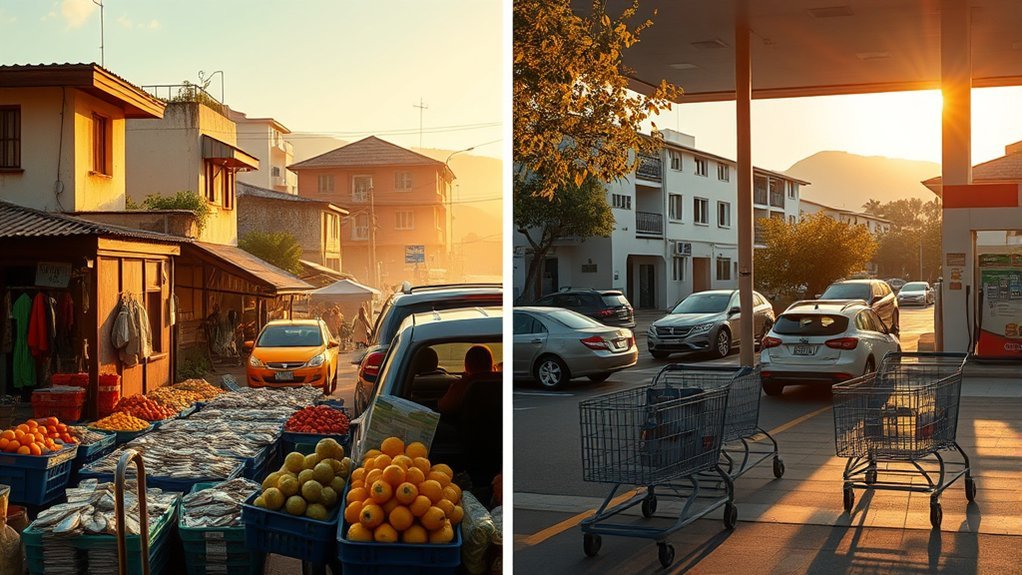
Trinidad and Tobago is one of the cheaper places to run a household in the English-speaking Caribbean, thanks to subsidized fuel and electricity, but Port of Spain rents are high. Neighboring Guyana has seen rents climb fast with its oil boom; compare our guide to the cost of living in Guyana. Barbados usually costs more for groceries, power, and fuel, as covered in our cost of living in Barbados guide. For a larger island with a similar mix of city and rural options, see the cost of living in Jamaica, and for a quieter small-island option nearby, the cost of living in Grenada.
Frequently Asked Questions
How much money do you need to live in Trinidad and Tobago per month?
A single person needs about TT$7,000–8,600 (~$1,030–$1,265) a month for a simple life outside central Port of Spain, and about TT$10,900–15,500 (~$1,600–$2,280) for a comfortable one in or near the capital. A couple should budget about TT$13,100–20,200 (~$1,925–$2,970).
Is $1,500 a month enough to live in Trinidad and Tobago?
Yes, for a single person who rents outside the center. At about TT$6.80 per dollar, $1,500 is roughly TT$10,200. That covers a one-bedroom in Chaguanas or San Fernando, utilities, groceries, and transport with some room left over. It is tight for a city-center apartment in Port of Spain, where a one-bedroom alone averages about TT$6,900 (~$1,010).
How much is rent in Port of Spain in 2026?
Crowd-sourced averages put a one-bedroom at about TT$6,900 (~$1,010) a month in central Port of Spain and about TT$3,500 (~$520) outside the center. A three-bedroom averages about TT$14,800 (~$2,180) in the center and about TT$8,100 (~$1,195) outside it.
What is the minimum wage in Trinidad and Tobago in 2026?
The national minimum wage is TT$20.50 an hour, in place since January 1, 2024. For a 40-hour week that is about TT$3,550 a month, or roughly $520 at current exchange rates.
What is the average salary in Trinidad and Tobago?
Crowd-sourced data puts average take-home pay at about TT$6,000 (~$880) a month nationwide and about TT$5,200 (~$760) in Port of Spain. Energy, finance, and professional jobs pay well above that, while retail and service jobs pay much less.
Is Trinidad and Tobago cheaper than Barbados?
Generally, yes. Trinidad and Tobago has cheap subsidized fuel, low household electricity rates, and a larger local food supply, so daily costs usually run below Barbados. Rent in central Port of Spain can still match or exceed many Barbados neighborhoods.
How much does a work permit cost in Trinidad and Tobago?
Since January 1, 2026, a work permit application costs TT$1,200 (~$176), plus TT$900 (~$132) for each month the permit is valid, with a TT$2,700 minimum. A 12-month permit therefore costs about TT$12,000 (~$1,765) in total fees.
Conclusion
Trinidad and Tobago is affordable for anyone earning a foreign or senior local salary, and tight for those on average local pay. Fuel and electricity are cheap, the TT dollar is stable, and inflation is low in 2026. Rent and imported food are where budgets go wrong. A single person can live simply for about $1,030–$1,265 a month outside the capital, or comfortably for about $1,600–$2,280 in the Port of Spain area. Pick your neighborhood first, since rent and security drive most of the difference, and confirm work permit and insurance costs with your employer before you commit.
Sources
- Central Bank of Trinidad and Tobago – exchange rates and inflation, October 2026
- PwC – Trinidad and Tobago National Budget 2026
- KPMG – Trinidad and Tobago tax measures in the 2026 budget
- Trinidad Express – Tancoo on Budget 2027
- Immigration (Amendment) (No. 2) Regulations, 2025 – fees from January 2026
- Legal Notice No. 374 of 2025 – super gasoline price
- T&TEC – summary of electricity rates
- Ministry of Health – accessing public healthcare
- WageIndicator – minimum wage in Trinidad and Tobago
- US State Department – Trinidad and Tobago travel advisory
- Numbeo – Trinidad and Tobago, Port of Spain, San Fernando, Chaguanas (crowd-sourced averages, September–October 2026)